
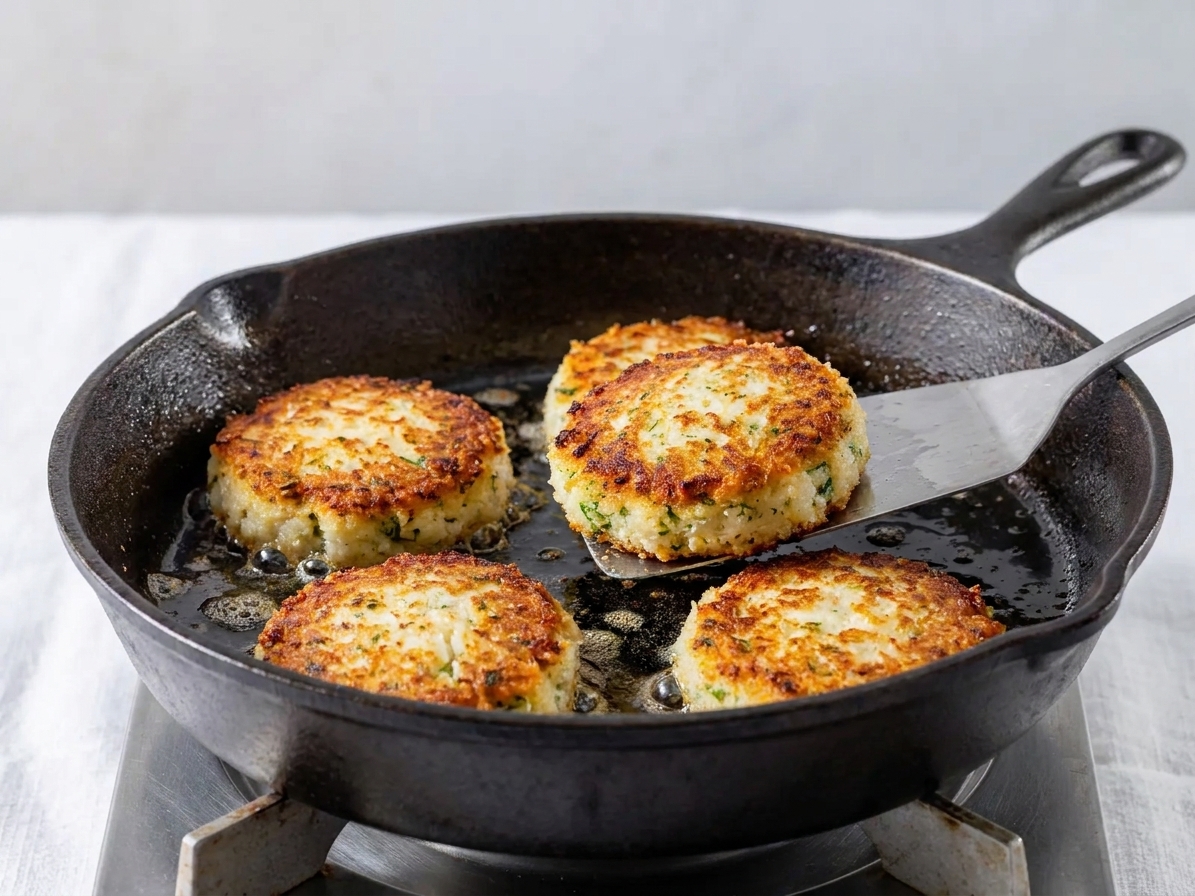
Cod is one of my favorite “quiet hero” weeknight staples because it is mild, usually budget-friendly where I live, and cooks fast. It is also very lean, which is exactly why cod cakes can go wrong so easily. You get a beautiful brown crust, but the inside tastes dry. Or the mixture feels delicate, and the cakes crack when you flip them.
This is the version I make when I want fish cakes that feel like a real dinner, not a sad leftover project. The trick is treating cod like the flaky, low-fat fish it is. I add moisture on purpose, use a binder that holds without turning bready or gummy, and chill the mixture long enough that the cakes stay intact in the pan. (Bonus: chilling also makes the mixture feel more “scoopable” and less sticky, so shaping is calmer.)

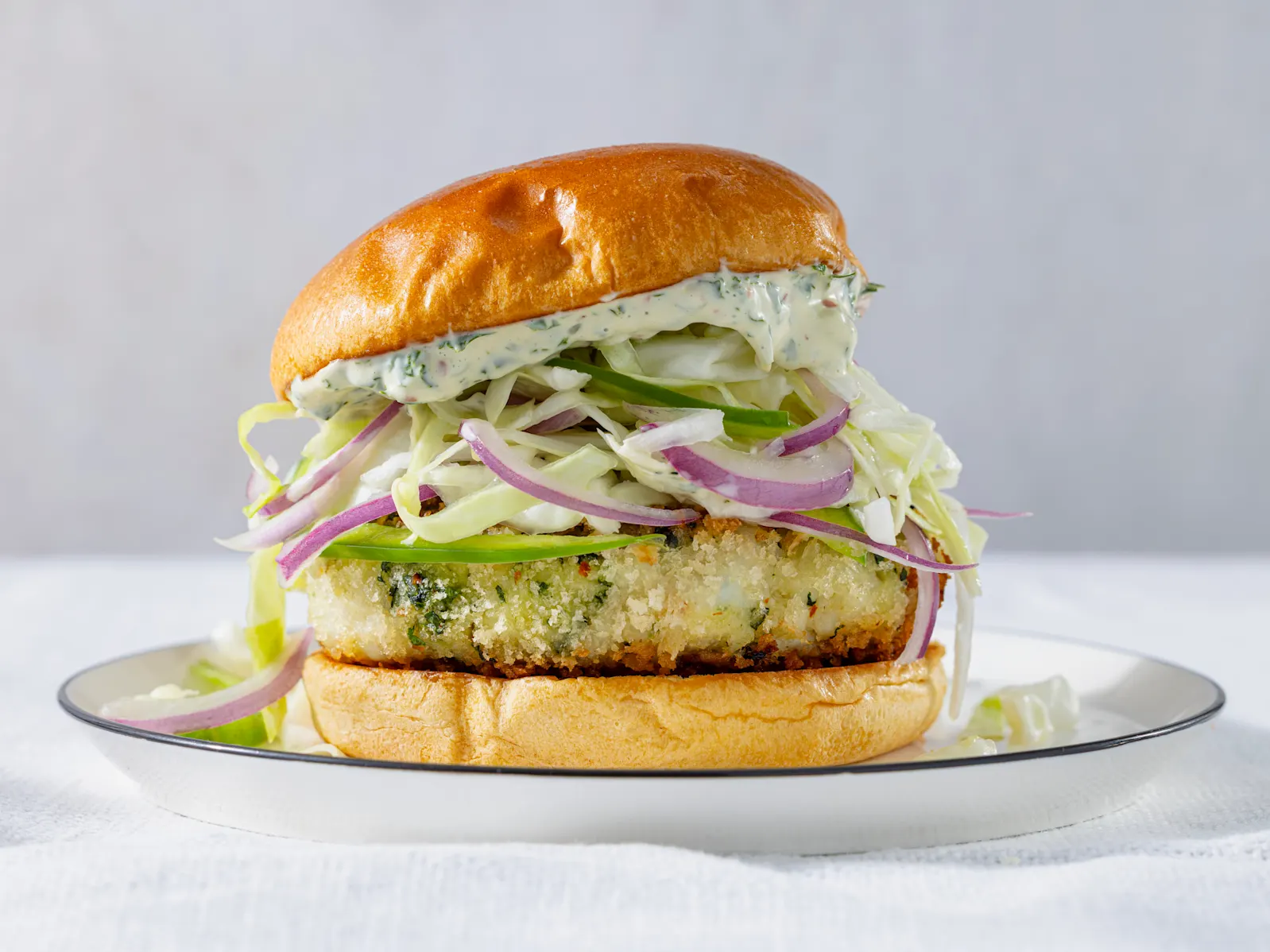
These are great on their own with lemon and a quick sauce, but they also make an excellent sandwich filling. If you have leftover baked or poached cod, cooled and well-drained, this is the happiest possible second act.
What to expect
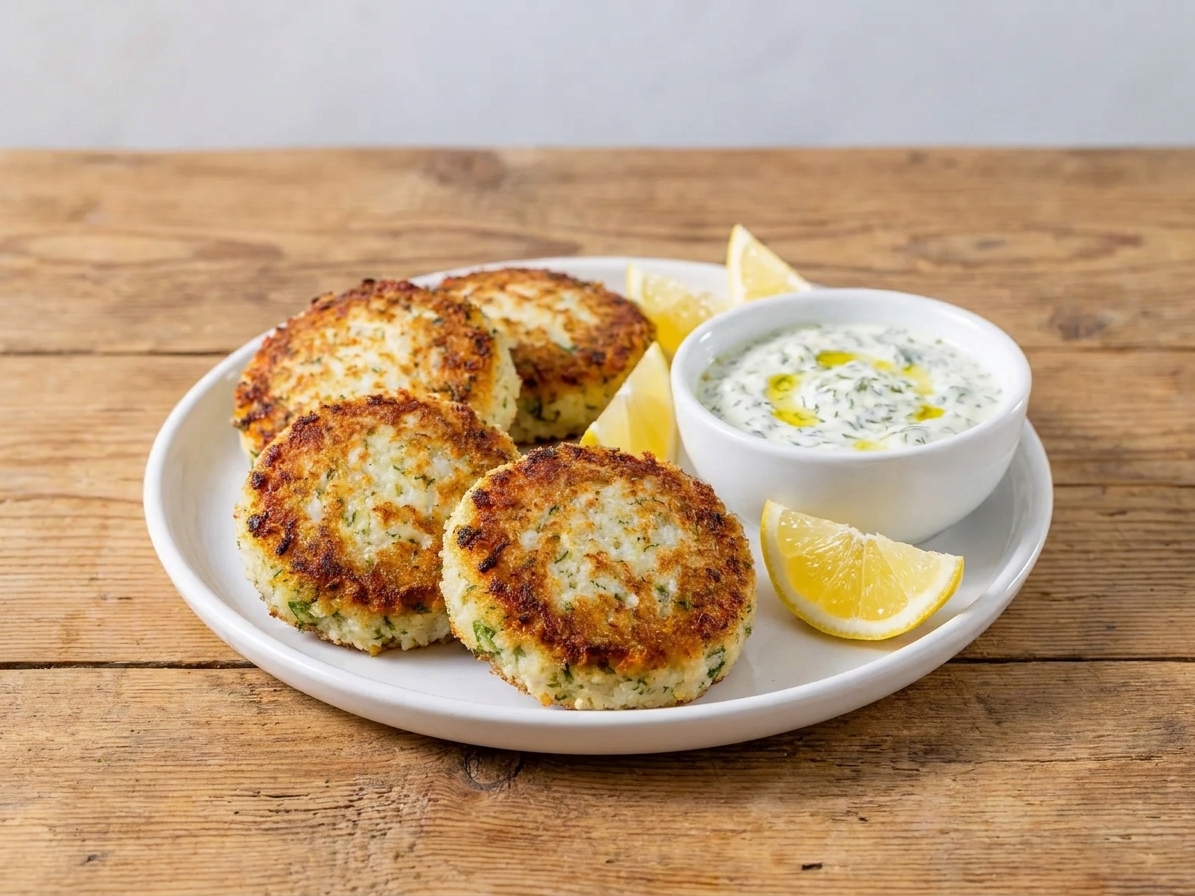
You will mix flaked cooked cod with a small amount of mashed potato for tenderness, a little mayo for moisture, an egg for structure, and panko for a light bind that helps the cakes stay fish-forward instead of heavy. After a short chill, the mixture should feel cool and cohesive and hold together when pressed, like a soft (not wet) scoop. The cakes pan-fry in a shallow layer of oil until deeply golden with crisp edges, then get a brief rest so the centers stay steamy and soft.
A couple pitfalls to keep in mind: if your cod is watery, the cakes can slump or crack, so it helps to blot the fish first. And if you stir too aggressively, you can turn those nice flakes into paste, which makes the texture dense.
Why this recipe works
- Cod needs planned moisture. Because cod is lean, a touch of mayonnaise plus a little mashed potato helps keep the center tender without making the mixture wet.
- Panko binds lightly. Breadcrumbs can turn dense fast. Panko gives structure while staying airy, which helps the cakes taste flaky, not bready.
- Chilling firms everything up. Resting the mixture in the fridge lets the starches hydrate and the mixture set up. That means cleaner edges, easier flipping, and fewer cracks.
- Moderate heat browns without drying. A medium pan temperature builds a crisp crust gradually so the interior warms through before the outside gets too dark.
- A gentle flake, not a paste. Keeping some larger cod flakes gives you that “fish cake” texture instead of a uniform mash.
Ingredient notes
Cooked cod
You can use baked, poached, or steamed cod. Avoid heavily sauced fish. Let it cool, then flake it with your fingers so you keep a mix of small and medium pieces. If your cod looks watery, blot it with paper towels before mixing.
Mashed potato
This is my favorite binder for lean fish. It adds moisture and body without turning gummy. Use plain mashed potato, not loaded with lots of butter or milk. Leftover mashed potatoes work well if they are not overly loose.
Mayonnaise
Mayo is the “secret” moisture insurance policy here. It melts into the mixture as the cakes heat, keeping the center from drying out.
Egg
One egg is enough to help the cakes hold. If you add more, the texture can skew eggy and tight.
Panko breadcrumbs
Panko keeps the cakes light. You will use some inside the mixture and a little extra for shaping if the mixture feels sticky.
Dijon mustard, lemon zest, and herbs
Cod is mild, so it loves bright seasoning. Dijon and lemon wake everything up. Parsley is classic, but dill and chives are also excellent.
Equipment you will need
- Large mixing bowl
- Fork or potato masher for the potato
- Measuring cups and spoons
- Large nonstick or cast iron skillet
- Thin spatula for flipping
- Sheet pan or plate for chilling the shaped cakes
- Wire rack optional, for keeping the crust crisp after frying
Pro tips
- Dry the cod if needed. If your cooked cod is very moist, blot it well. Too much surface moisture is the number one cause of cakes that will not hold.
- Mix gently. Stir just until combined. Overmixing breaks the fish down too far and can make the cakes dense.
- Chill twice for maximum sturdiness. Chill the mixture, then shape the cakes and chill again. Even 15 to 20 minutes after shaping makes flipping easier.
- Use enough oil to shallow-fry. You want about 1/8 to 1/4 inch of oil so the crust forms quickly. Too little oil can cause sticking and pale, dry cakes.
- Do not rush the flip. If the cake resists when you try to lift it, the crust is not set yet. Give it another minute, then try again.
- Keep them warm in the oven. If you are cooking in batches, hold finished cakes on a rack in a 200°F oven so they stay crisp.
Substitutes that work
- No cod: Use haddock, pollock, or another mild white fish. The same moisture and binder logic applies.
- No mashed potato: Try sweet potato for a slightly sweeter cake, or use 2 to 3 tablespoons cream cheese for richness and binding.
- No mayo: Plain Greek yogurt works, but the mixture may be a touch looser. Chill thoroughly.
- Gluten-free: Use gluten-free panko or crushed gluten-free crackers. Add slowly, since absorption varies.
- Egg-free: Use a flax egg (1 tablespoon ground flaxseed plus 3 tablespoons water, rested 5 minutes). Chill longer and flip carefully.
Variations
Old Bay style
Add 1 to 2 teaspoons Old Bay seasoning and swap parsley for a mix of parsley and celery leaves.
Spicy cod cakes
Add 1 minced jalapeño or 1 to 2 teaspoons hot sauce, plus a pinch of smoked paprika for warmth.
Lemon dill cod cakes
Use dill and chives, double the lemon zest, and serve with a yogurt dill sauce.
Caper and herb
Fold in 1 to 2 tablespoons chopped capers and a little extra black pepper. Great with a squeeze of lemon.
Serving ideas
- Simple plate: Cod cakes with lemon wedges, a big green salad, and sliced cucumbers.
- Sandwich: Tuck into a toasted bun with lettuce, tomato, and tartar sauce or a lemony mayo.
- Brunch: Serve with a poached egg and a quick arugula salad.
- Party appetizer: Make smaller cakes and serve with a creamy dipping sauce like remoulade or a garlicky yogurt sauce.
Storage and reheating
Refrigerate
Store cooked cod cakes in an airtight container in the fridge for up to 3 days. Let them cool fully before covering so the crust stays as crisp as possible.
Reheat
For the best texture, reheat in a skillet over medium heat with a small drizzle of oil, 2 to 3 minutes per side, until hot. You can also reheat on a sheet pan in a 375°F oven until warmed through.
Freeze
You can freeze the shaped, uncooked cakes on a parchment-lined sheet pan until firm, then transfer to a freezer bag. Thaw overnight in the fridge before pan-frying. Cooked cakes can also be frozen, but the crust is best when fried fresh.
Common mistakes
- Cakes fall apart in the pan: The mixture is too wet or not chilled enough. Blot the cod next time and do not skip the chill. You can also add 1 to 2 tablespoons more panko and re-chill.
- Dry center: Pan heat was too high or the mixture was too lean. Keep the heat at medium and do not reduce the mayo and potato.
- Pale, soft exterior: The pan was not hot enough or there was not enough oil. Preheat the skillet and use a shallow layer of oil for a quick crust.
- Greasy cakes: Oil was not hot enough, so the cakes absorbed it. Let the oil heat properly, and drain briefly on a rack or paper towels.
- Rubbery texture: Overmixing can break the fish down and tighten the proteins. Fold gently and keep some flakes intact.
FAQ
Can I use raw cod instead of cooked?
This recipe is designed for cooked cod. If you only have raw cod, cook it first by baking, poaching, or steaming, then cool and flake. Starting with cooked fish keeps the cakes from overcooking while you try to brown the outside.
Why do my cod cakes taste bland?
Cod is mild, so it needs assertive seasoning. Salt the mixture well, and do not skip the lemon zest and Dijon. Taste the mixture safely by pan-frying a tiny tester patty, then adjust salt and acidity.
Should I bread the outside?
You can, but you do not have to. These cakes brown nicely as-is. If you want extra crunch, lightly coat the outside with panko before frying, then chill again for 10 minutes to help it adhere.
Can I make the mixture ahead?
Yes. You can mix and refrigerate the cod cake mixture up to 24 hours in advance. Shape and fry when ready. If it firms up a lot overnight, let it sit at room temperature for 10 minutes so shaping is easier.
What sauce goes best with cod cakes?
Tartar sauce is classic, but I also love a lemony mayo, a quick yogurt dill sauce, or even a spoonful of salsa verde for something punchy.
The recipe
Pan-Fried Cod Cakes
Crispy-edged pan-fried cod cakes with a tender, moist center. Built for lean white fish with mashed potato and mayo for moisture, panko and egg for a sturdy bind, and a chill step so the cakes hold together.
- Prep
- 25 minutes
- Cook
- 15 minutes
- Total
- 1 hour 10 minutes
- Yield
- 8 cod cakes
Ingredients
- 1 pound cooked cod, cooled and flaked (about 3 cups loosely packed)
- 3/4 cup mashed potato, plain (cooled)
- 1 large egg
- 1/3 cup mayonnaise
- 2 teaspoons Dijon mustard
- 1 teaspoon lemon zest
- 2 tablespoons lemon juice
- 2 tablespoons chopped fresh parsley (or dill)
- 2 scallions, thinly sliced (about 1/4 cup)
- 1/2 teaspoon garlic powder
- 1/2 teaspoon smoked paprika (optional)
- 1 teaspoon kosher salt, plus more to taste
- 1/4 teaspoon black pepper
- 3/4 cup panko breadcrumbs, plus 1/4 cup more as needed for shaping
- 3 to 4 tablespoons neutral oil for pan-frying (such as canola, avocado, or grapeseed), more as needed
- Lemon wedges, for serving (optional)
Instructions
- Dry and flake the cod. If the cod looks moist, pat it dry with paper towels. Flake into a large bowl, keeping some medium pieces for texture.
- Make the base. Add the mashed potato to the bowl and gently break it up with a fork. Add the egg, mayonnaise, Dijon, lemon zest, lemon juice, parsley, scallions, garlic powder, smoked paprika if using, salt, and pepper. Stir until combined.
- Add the binder. Sprinkle in 3/4 cup panko and fold gently until the mixture holds together when pressed. If it still feels very loose, add 1 to 2 tablespoons more panko.
- Chill the mixture. Cover and refrigerate for 30 minutes. This helps the cakes set and makes shaping easier.
- Shape the cakes. Portion into 8 cakes, about 1/2 cup mixture each. Gently press into 3 inch patties about 3/4 inch thick. If the mixture sticks to your hands, lightly coat your palms with panko. Place the cakes on a plate or sheet pan.
- Chill again. Refrigerate the shaped cakes for 15 minutes so they firm up and hold their shape in the pan.
- Heat the skillet. Set a large skillet over medium heat. Add enough oil to coat the bottom well, about 1/8 to 1/4 inch deep. Heat until the oil shimmers.
- Pan-fry in batches. Add the cakes without crowding. Cook 3 to 4 minutes on the first side, until deeply golden and the edges look set. Flip carefully and cook 3 to 4 minutes more on the second side.
- Finish and drain. Transfer to a wire rack or paper towel-lined plate. Lightly salt while hot. Repeat with remaining cakes, adding more oil as needed and letting it reheat between batches.
- Serve. Serve warm with lemon wedges and your favorite sauce.
Notes
Moisture check: Cod varies a lot. If your fish is very dry, the mixture may look crumbly at first. Mix gently and give it a minute, then reassess before adding extra panko.
Best heat level: Medium is the sweet spot. If the cakes brown too fast, lower the heat slightly so the centers warm through without drying out.
Make-ahead: You can mix the base up to 24 hours ahead and keep it covered in the fridge. Shape and fry when ready.