
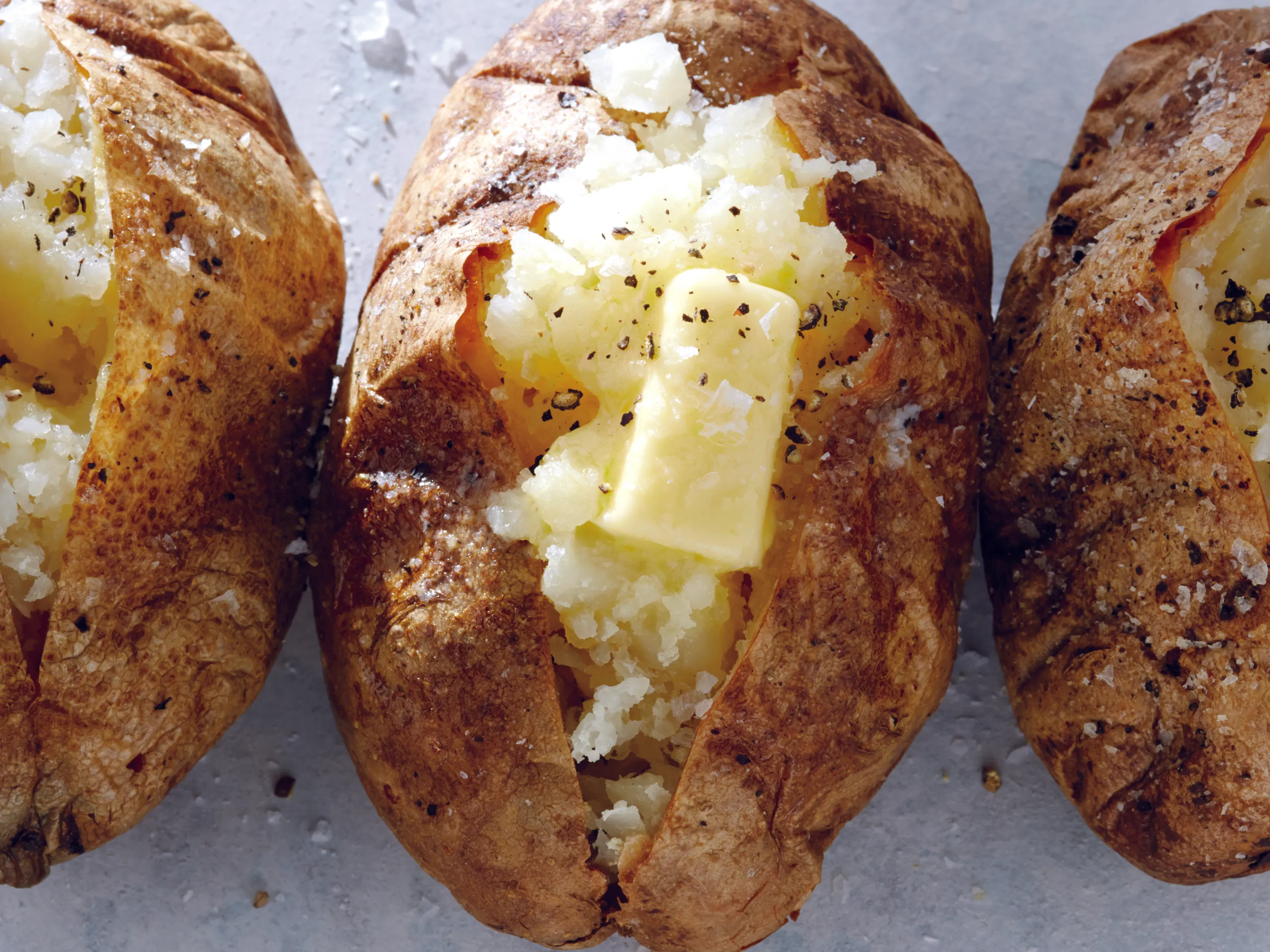
There are a lot of meals that feel like magic when you nail the basics, and a truly great baked potato is one of them. You do not need restaurant tricks or fancy salt. You just need the right potato, a hot oven, and a couple of small choices that add up to crisp skin and a hot, fluffy middle.
I used to bake trays of potatoes at the bakery-cafe I managed for lunch service. We needed them consistent, not precious. That same mindset is what I am bringing you here: dependable, repeatable, and flexible enough for a Tuesday night when you are topping them with leftover chili.

What makes a baked potato great
A baked potato has two jobs: the inside should be fluffy and dry enough to absorb butter, and the skin should be crisp enough to actually want to eat it. If your potatoes come out waxy, dense, or with leathery skin, it is usually one of these culprits.
- Wrong potato. Waxy potatoes (like red potatoes) bake up creamy, not fluffy. They are delicious, just not the classic steakhouse vibe.
- Too low of a temperature. A gentle oven cooks the potato but does not really dry and crisp the skin.
- Foil. Foil traps steam, which softens the skin. Again, not wrong if that is what you want, but it is a different result.
- Not enough time. Bigger potatoes need longer than most people expect. The center has to get fully tender.
Best potatoes for baking
For the classic fluffy interior, reach for russet potatoes (sometimes labeled Idaho). Their higher starch content is what gives you that airy, pull-apart texture.
If you only have other varieties, here is what to expect:
- Yukon Gold: slightly denser and creamier, still very good baked. Skins crisp nicely.
- Red potatoes: moist and waxy inside. Great if you like a firmer bite.
- Sweet potatoes: different cooking chemistry and timing, but the same overall method works. Start checking early since many sweet potatoes are smaller and can finish faster.
One more practical tip: try to pick potatoes that are similar in size so they finish at the same time.
Foolproof baked potato method
This is my everyday method for crisp skin and a fluffy center. It is simple, but each step has a reason. I will explain the why as we go so you can adjust confidently.
1) Heat the oven
Set the oven to 425°F. This temperature gives you the best balance of a fully cooked center and a properly dried, crisp skin.
Timing note: Most medium to large russets take about 50 to 70 minutes, but always go by tenderness.
2) Scrub, dry, and pierce
Scrub the potatoes well, then dry them thoroughly. Moisture on the skin turns to steam, and steam is the enemy of crispness.
Pierce each potato 6 to 8 times with a fork. This gives steam a safe exit route and helps prevent blowouts.
3) Oil and salt the skin
Rub each potato lightly with oil (olive oil, avocado oil, or any neutral oil works). Then sprinkle generously with kosher salt. The oil helps the skin crisp and brown. The salt seasons the skin so it tastes like more than an afterthought.
Salt varies a lot by brand and crystal size, so use the amount as a guide. You want a visible, even coating, not a thick crust.
4) Bake directly on the rack (or on a sheet)
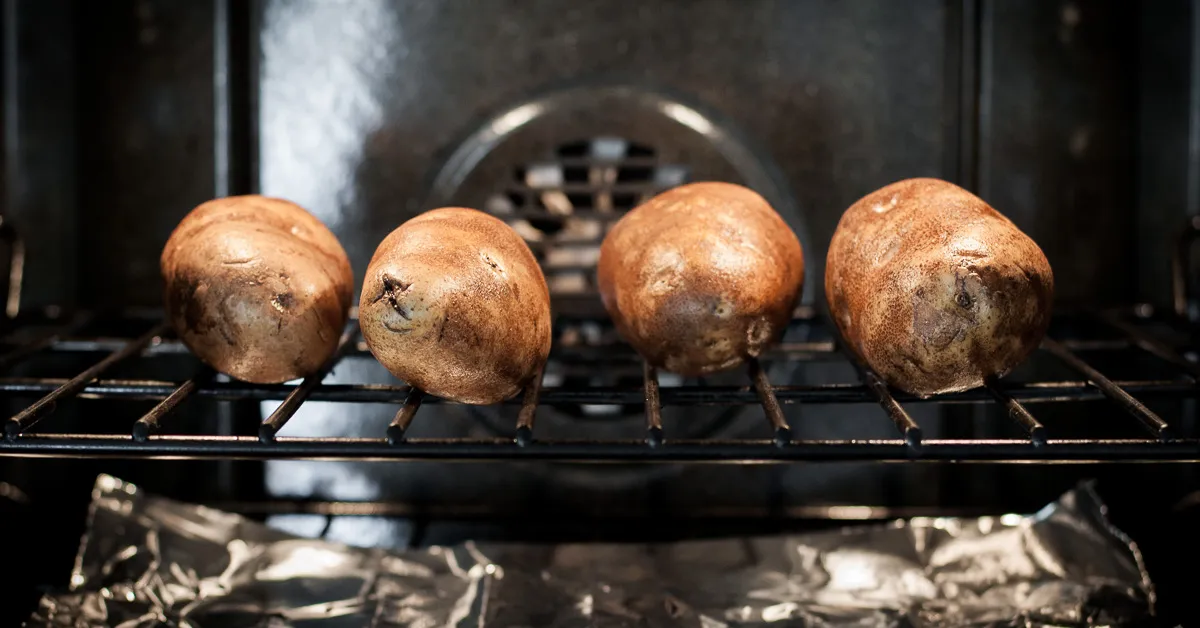
For the crispiest skin, bake directly on the oven rack with a sheet pan on the rack below to catch drips. If you prefer convenience, bake on a sheet pan. You will still get a good result, just slightly less all-around crisp.
5) Bake until fully tender
Bake until a skewer or thin knife slides into the center with almost no resistance.
If you like numbers, aim for an internal temperature of about 205°F or higher for a fluffy interior. Consider temperature a helpful confirmation, not the main test.
6) Split and fluff
Slice a slit down the top, then gently squeeze the ends toward each other to open. Use a fork to fluff the inside. It is a small step that makes the potato feel lighter and more ready for butter.
How long to bake potatoes
Potatoes are honest. They take as long as they take, mostly depending on size. Use this as a starting point, then trust tenderness.
- 375°F: 70 to 90 minutes
- 400°F: 60 to 80 minutes
- 425°F: 50 to 70 minutes
- 450°F: 45 to 65 minutes
Small potatoes can finish closer to 40 to 50 minutes at 425°F. Extra large potatoes can push past 75 minutes. If you are baking a lot at once, you may also need a little more time because the oven loses heat when you open the door and because a crowded oven recovers temperature more slowly.
Convection note: If you are using convection or a fan setting, start checking 5 to 10 minutes early. You may also get deeper browning on the skins.
Foil or no foil
This is one of the biggest baked potato debates, and the answer is really about what texture you want.
- No foil: crisp, flavorful skin with a drier, fluffier interior. This is my default.
- Foil: softer skin and a more steamed interior. Good if you want a tender bite or if you are holding potatoes warm for a while.
If you are serving right away and you want that steakhouse crunch, skip the foil. If you are packing potatoes for a picnic or keeping them warm for a crowd, foil is practical.
Make-ahead and holding tips
Baked potatoes are surprisingly party-friendly once you know how to hold them without turning the skins soggy.
Holding for 1 to 2 hours
- Keep baked potatoes on a sheet pan in a 200°F oven.
- Avoid sealing them in a closed container while hot. That trapped steam softens the skin.
Reheating
For the best texture, reheat in a 400°F oven until hot, about 15 to 20 minutes depending on size. If the potato is already split open, place it cut-side up so the interior can re-crisp a bit.
Microwaving works in a pinch, but the skin will soften. My compromise: microwave to warm the center, then pop it in a hot oven or air fryer for 5 minutes to revive the skin.
Storage and food safety
- Cool leftovers within 2 hours, then refrigerate.
- Store in an airtight container for up to 4 days.
- Reheat until steaming hot all the way through.
Topping ideas
I love baked potatoes because they are a blank canvas and an excellent excuse to use leftovers. Here are a few go-to combinations.
Classic comfort
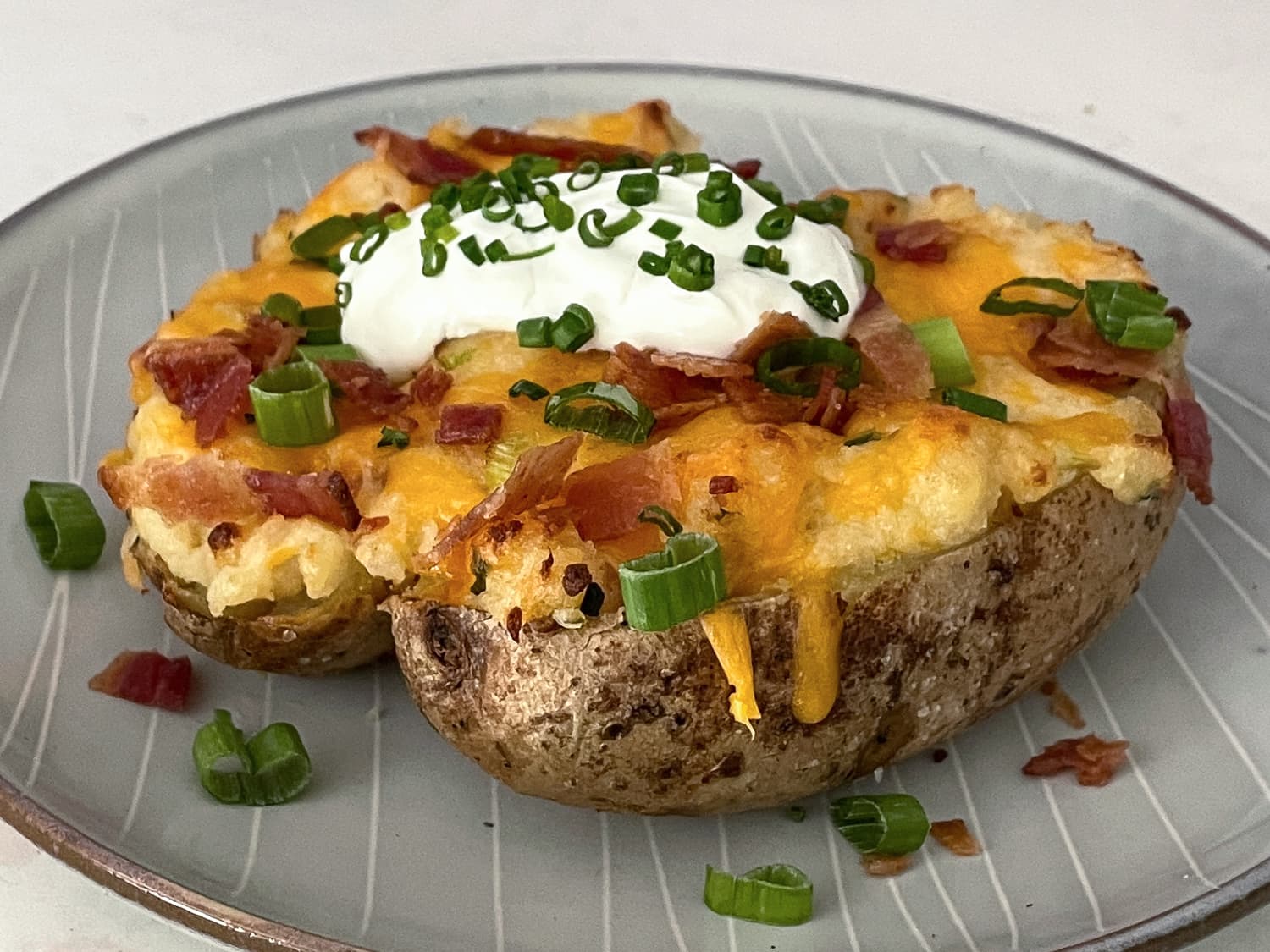
- Butter, sour cream or Greek yogurt, chives or green onion, cheddar
- Broccoli and cheddar with a pinch of garlic powder
- Bacon, scallions, and a little black pepper
Pantry dinner
- Canned chili, shredded cheese, pickled jalapeños
- Tuna salad with chopped dill pickles
- Baked beans and a little sharp cheddar
Market style
- Sautéed mushrooms and onions, a spoon of crème fraîche
- Roasted tomatoes, pesto, and mozzarella
- Garlicky greens, lemon, and feta
Troubleshooting
My potato is hard in the middle
It simply needs more time. Covering with foil will not dramatically speed up the center, but it can help protect the skin if it is getting darker than you like. Keep baking and check every 10 minutes.
My skin is tough
This usually happens when the oven temperature is too low or the potato baked too long without enough oil. Next time, go hotter (425°F) and do not skip the oil rub.
My skin is not crispy
Make sure the potato was dried well after washing, skip foil, and bake on the rack if you can. Also, do not crowd them. Airflow matters.
The inside is gummy or waxy
This is often the potato variety. Use russets for fluffy. Also make sure the potato is fully baked. Underbaked potatoes can have a slightly translucent, waxy center.
Oven Baked Potatoes Recipe
Ingredients (per potato)
- 1 russet potato (8 to 12 ounces), scrubbed
- 1 to 2 teaspoons oil (olive, avocado, or neutral)
- Kosher salt, enough to coat the skin well (amount depends on brand and crystal size)
- Optional toppings: butter, sour cream or Greek yogurt, shredded cheese, chives, bacon, chili
Instructions
- Heat the oven: Preheat to 425°F. If baking on the rack, set a sheet pan on the rack below to catch drips.
- Prep the potatoes: Pat potatoes very dry. Pierce each potato 6 to 8 times with a fork.
- Season the skins: Rub each potato with oil, then sprinkle all over with kosher salt.
- Bake: Bake directly on the rack or on a sheet pan for 50 to 70 minutes, depending on size, until a skewer slides in easily. For a fluffy interior, aim for about 205°F or higher in the center.
- Split and fluff: Cut a slit down the top, squeeze ends to open, fluff with a fork, and add toppings.
Notes
- For softer skins: Wrap in foil after oiling and salting, then bake. Expect a tender, steamed skin.
- To re-crisp: Reheat leftovers in a 400°F oven for 15 to 20 minutes.
- Convection ovens: Start checking 5 to 10 minutes early.
FAQ
Do I need to boil potatoes before baking?
Not for classic baked potatoes. Boiling first is more common for roasted potatoes where you want rough edges that crisp. For baked potatoes, a steady hot oven does the job.
Can I bake potatoes with other dishes?
Yes, just match the temperature as best you can. If your main dish is at 375°F, the potatoes will take longer. If your oven is at 450°F, keep an eye on the skins and start checking earlier.
Is it safe to eat potato skin?
For most people, yes. Just scrub well. If the potato has green patches, lots of sprouts, or tastes bitter, discard it since that can indicate higher solanine levels.