

When I want a dinner that feels like someone is taking care of me, I put on a big pot of red beans. Not the plain “beans until tender” version, and not jambalaya. This is New Orleans-style red beans and rice, where the beans simmer with the holy trinity (onion, bell pepper, celery), smoky seasoning meat, and a few warm spices until the whole pot turns creamy and cohesive.
Here is the part I wish someone had told me years ago: you are not chasing perfectly intact beans. You are cooking them until a few naturally break down, then you help it along by mashing some of the beans right in the pot. That little step is what gives you the thick, velvety body that clings to the rice.

Red beans and rice is also wonderfully flexible. You can soak the beans if you are planning ahead, or go no-soak if Monday came in hot and you are just trying to get food on the table. You can use ham hock, smoked sausage, tasso, or even leftover ham. The goal is the same: a deeply seasoned pot with a smoky, savory backbone and a creamy spoon-coating finish.
Soak or no-soak
Soaked beans tend to cook a little faster and often more predictably. If you can, soak overnight in plenty of cool water. Drain and rinse before cooking.
No-soak beans absolutely work, and I do it often. Just plan on a longer simmer and be ready to add more broth or water as needed. The beans are done when they are fully tender inside, not just wrinkled or split.
About the meat
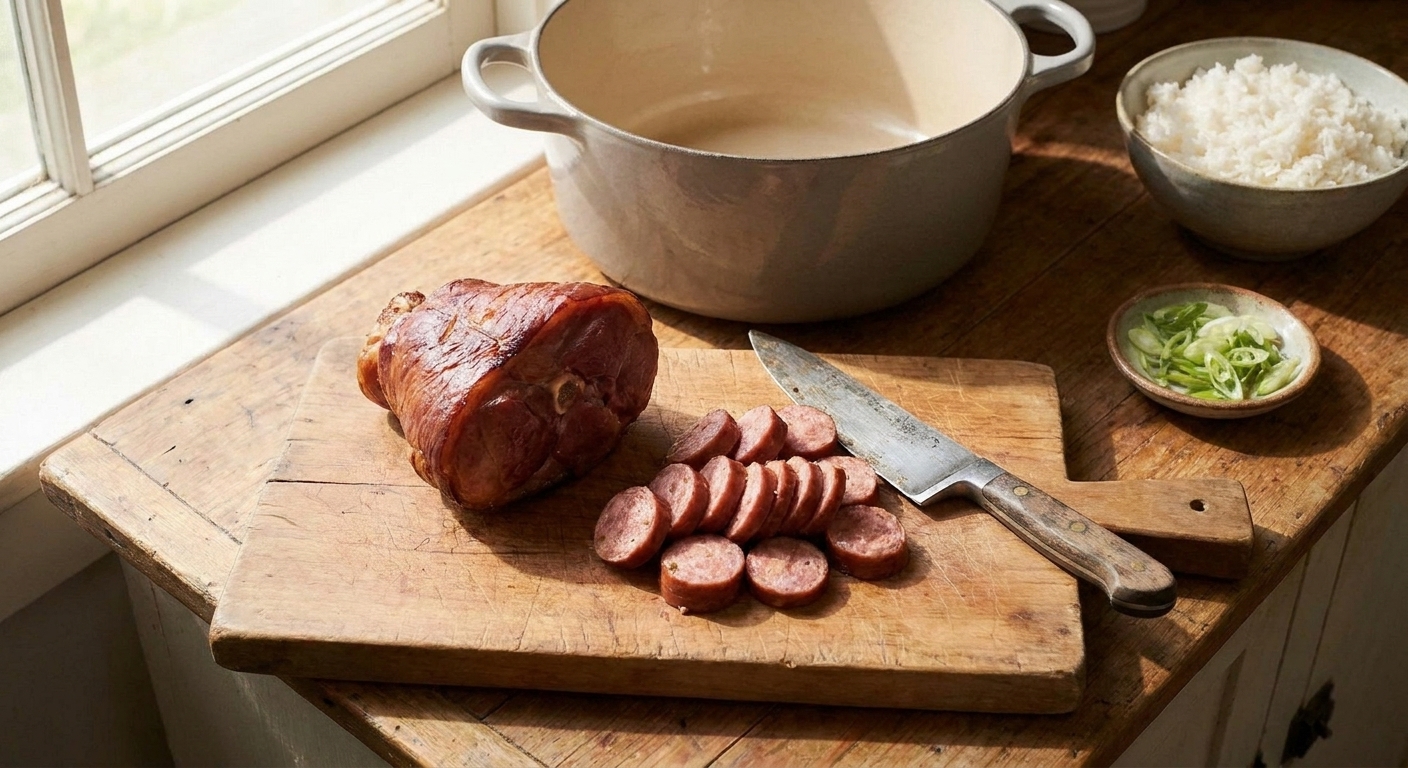
In New Orleans, red beans often start with “seasoning meat,” which is a flavorful smoked or cured cut used to build the base. Think ham hock, pickled pork, tasso, or smoked sausage. I like a combination when I have it: something bony or collagen-rich (ham hock) plus slices of smoked sausage for bite.
On the seasoning front, I think in simple, classic directions: garlic, bay leaf, thyme, black pepper, and a little cayenne. Some people use a Creole or Cajun seasoning blend, which is totally fair, just keep an eye on salt since the meat is doing plenty of heavy lifting already.
Safety and texture
If your “red beans” are actually kidney beans (a common swap), give them a real hard boil before you settle into a long simmer. Bring the pot to a rolling boil and keep it there for at least 10 minutes, then reduce to a gentle simmer until the beans are truly tender.
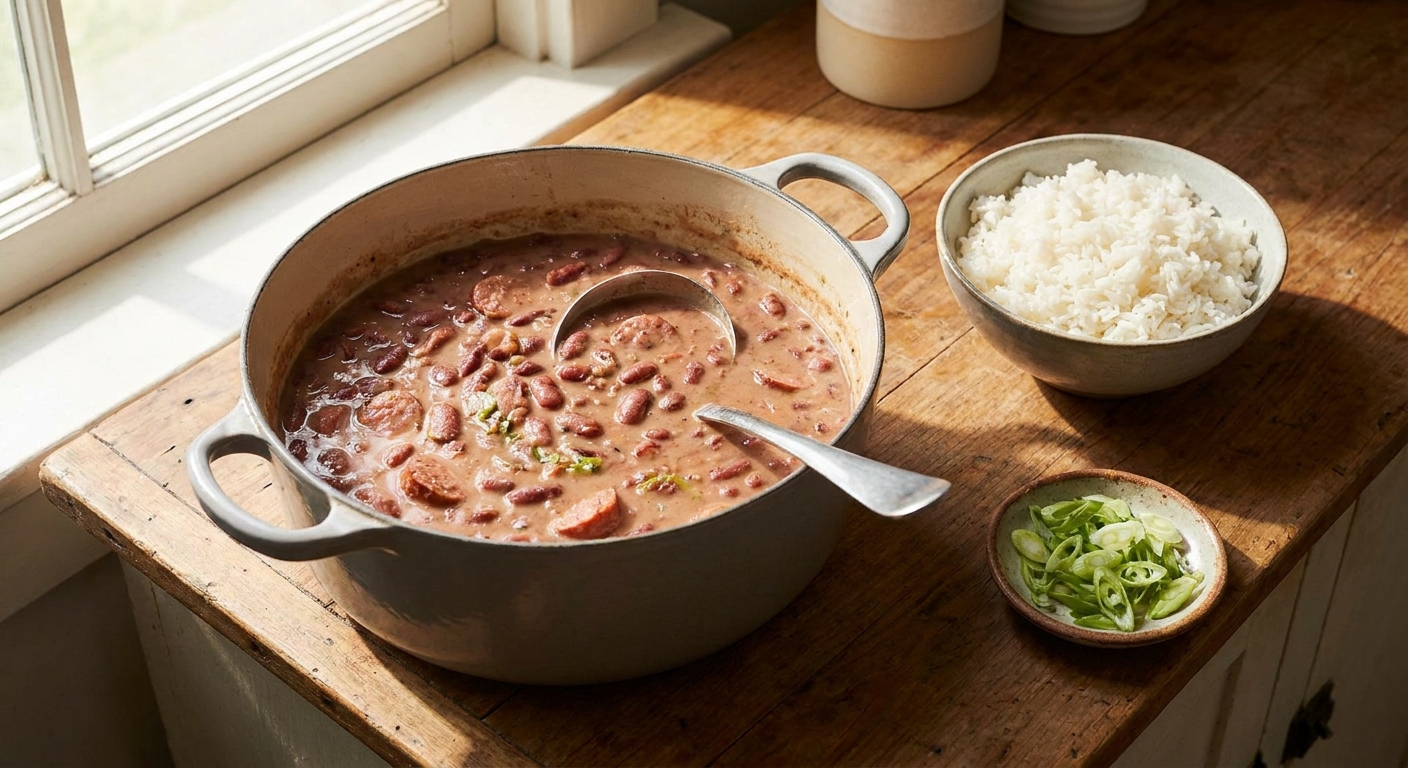
This recipe is intentionally a little rustic. Your pot should be thick but not dry, with beans that are tender enough to mash easily. I like it when it will mound slightly on a spoon but still pour over rice. If you want it soupier, add a splash of hot water or broth at the end. If you want it thicker, simmer uncovered for a few minutes and mash a bit more.
One more practical note: the beans keep thickening as they sit, which is part of why they taste even better the next day. When reheating, loosen with a splash of water or broth and stir until creamy again.
Serve it over rice, top with green onions and hot sauce, and do not be surprised if it tastes even better the next day.
Why this recipe works
- Seasoning meat builds the base. Smoked pork and sausage lend salt, fat, and deep smoky flavor that plain beans cannot create on their own.
- The holy trinity does the heavy lifting. Onion, bell pepper, and celery melt into the broth, turning it savory and sweet in the background.
- Low simmer equals creamy texture. Gentle heat helps the beans soften without turning the pot gritty or scorched.
- Mashing some beans thickens naturally. Instead of relying on starches or flour, you create body from the beans themselves.
- Cooking the rice separately keeps it fluffy. Red beans should be creamy, but rice should stay distinct so the bowl does not turn gluey.
Ingredient notes
Dried red beans
Small red beans are traditional. If you can only find kidney beans, they work, but the texture can be a little firmer. No matter what you use, make sure they are not old. Very old beans can take forever to soften.
Holy trinity
Aim for a fine dice so the vegetables almost melt into the beans. Green bell pepper is classic, but a red bell pepper is fine if that is what you have.
Seasoning meat
Ham hock gives richness and that slow-cooked pork flavor. Smoked sausage adds spice and chewy bites. Leftover ham or a meaty ham bone is also great.
Spices
Cajun or Creole seasoning is a convenient shortcut, but taste it first. Some blends are very salty. I like adding bay leaves, thyme, black pepper, and a pinch of cayenne so I control the heat.
Rice
Long-grain white rice is the standard. Rinse it until the water runs mostly clear for fluffier results.
Equipment you will need
- Large heavy pot or Dutch oven for steady simmering
- Wooden spoon for stirring and scraping the bottom
- Potato masher or the back of a ladle for the mash-some-beans step
- Fine-mesh strainer for rinsing beans and rice
- Medium saucepan with lid for cooking rice
Pro tips
- Start with a gentle saute. Cook the trinity until it softens and smells sweet. That foundation makes the beans taste rounded, not flat.
- Keep the pot at a simmer, not a rolling boil. A hard boil can break skins early and make the pot muddy before the beans are actually tender.
- Salt later if your meat is salty. Smoked sausage and ham hock vary a lot. Taste near the end and adjust.
- Mash strategically. Mash about 1 to 2 cups of beans, then stir it back in. You want creamy body, not total puree.
- Add liquid a little at a time. Beans can go from perfect to too thin if you splash in a lot of broth at once. Warm liquid helps keep the simmer steady.
- Let it rest. Ten minutes off the heat helps the pot thicken slightly and lets the flavors settle.
Substitutes that work
- No ham hock: Use a meaty ham bone, diced ham, smoked turkey neck, or extra smoked sausage.
- No smoked sausage: Andouille is classic, but any smoked pork sausage works. Even smoked kielbasa can be delicious.
- No Cajun or Creole seasoning: Use a mix of paprika, garlic powder, onion powder, black pepper, thyme, oregano, and cayenne, then salt to taste.
- No celery: It will not be identical, but you can use extra onion and bell pepper. Add a pinch of celery seed if you have it.
- Brown rice: Works fine, just cook it separately with its own timing and water ratio.
Variations
Extra creamy
Mash a bit more of the beans, then simmer uncovered for 5 to 10 minutes, stirring often.
More heat
Add more cayenne, serve with hot sauce, or slice in a spicy andouille.
More green finish
Stir in chopped parsley and sliced green onions right before serving for a fresher top note.
Slow cooker approach
You can build the flavor on the stove by sauteing the trinity and browning sausage first, then transfer to a slow cooker with beans and liquid. Cook until tender, then mash some beans at the end. Keep in mind that slow cookers vary a lot in heat, so tenderness is the real finish line.
Serving ideas
- Classic bowl: Red beans ladled over rice with green onions and hot sauce.
- Make it a plate: Serve with cornbread and a crunchy green salad.
- Stretch leftovers: Spoon red beans over baked potatoes or tuck into tortillas for smoky bean burritos.
- Bright side: A quick vinegar slaw or pickled onions cut the richness nicely.
Storage and reheating
Refrigerator
Store beans and rice separately if you can. Refrigerate in airtight containers for up to 4 days.
Freezer
Red beans freeze very well. Cool completely, portion into freezer containers, and freeze for up to 3 months. Rice can be frozen too, but the texture is best if you make fresh rice when serving.
Reheating
Warm beans gently on the stove or in the microwave. Add a splash of water or broth and stir well, because the pot thickens as it chills. Reheat rice separately with a tablespoon or two of water, covered, so it steams back to fluffy.
Common mistakes
- Boiling too hard. If the bottom scorches, the whole pot can taste bitter. Keep it at a lazy simmer and stir occasionally.
- Under-seasoning the base. If you do not saute the trinity long enough, the beans can taste thin. Give the vegetables time to soften and sweeten.
- Salting too early. Salty sausage and ham can trick you. Wait until the beans are tender, then adjust.
- Stopping when the beans are “almost” tender. Beans that are not fully creamy inside will never mash smoothly. Keep simmering until they crush easily between your fingers.
- Skipping the mash step. The pot will taste fine, but it will not have that classic creamy texture that makes red beans and rice so comforting.
FAQ
Do I have to soak the beans overnight?
No. Soaking helps with speed and often more consistent cooking, but no-soak beans still make a great pot. Just plan on a longer simmer and keep extra hot water or broth nearby.
Why are my beans not getting soft?
The most common reason is old beans. Another issue can be simmering too gently for too short a time. Keep the pot at a steady simmer and be patient. If you live at a high altitude, beans can take significantly longer.
How do I make it creamy without dairy?
The creaminess comes from the beans themselves. Mash some of the cooked beans and stir them back in. That is the secret.
Is this the same as jambalaya?
No. Jambalaya cooks the rice with the meat and seasonings. Red beans and rice is a creamy bean pot served over separately cooked rice.
Can I make it vegetarian?
You can, but it will taste different because seasoning meat is a big part of the traditional flavor. For a meatless version, build extra depth with smoked paprika, a little soy sauce, and a good vegetable stock, then lean on the mash step for body.
The recipe
New Orleans Red Beans and Rice
A classic New Orleans style pot of red beans simmered with the holy trinity, smoky seasoning meat, and spices until creamy, then served over fluffy rice with green onions and hot sauce.
- Prep
- 20 minutes (plus optional soaking)
- Cook
- 2 hours 15 minutes
- Total
- 2 hours 35 minutes (plus optional soaking)
- Yield
- 6 servings
Ingredients
- 1 lb dried small red beans, picked over and rinsed (optional: soaked overnight, then drained and rinsed)
- 2 tbsp neutral oil or bacon drippings
- 1 large yellow onion, finely diced
- 1 green bell pepper, finely diced
- 2 celery ribs, finely diced
- 4 cloves garlic, minced
- 12 to 14 oz smoked sausage (andouille preferred), sliced into rounds
- 1 ham hock (or 2 cups diced cooked ham, or a meaty ham bone)
- 2 bay leaves
- 1 tsp dried thyme
- 1 tsp smoked paprika
- 1/2 tsp freshly ground black pepper, plus more to taste
- 1/4 tsp cayenne pepper, plus more to taste
- 6 cups low-sodium chicken stock or water, plus more as needed
- Kosher salt, to taste (start with 1 tsp if using water, less if using stock and salty sausage)
- 3 cups cooked long-grain white rice, for serving
- Sliced green onions, for serving
- Hot sauce, for serving
Instructions
- Brown the sausage. Heat the oil in a large heavy pot or Dutch oven over medium heat. Add the sliced sausage and cook, stirring occasionally, until browned in spots, 4 to 6 minutes. Transfer sausage to a plate, leaving the fat in the pot.
- Saute the trinity. Add the onion, bell pepper, and celery to the pot. Cook, stirring often and scraping up browned bits, until softened and starting to look glossy, 8 to 10 minutes.
- Add garlic and spices. Stir in the garlic, bay leaves, thyme, smoked paprika, black pepper, and cayenne. Cook 30 seconds, just until fragrant.
- Add beans, liquid, and seasoning meat. Add the rinsed beans, stock or water, and the ham hock (or ham bone). Bring to a full boil for 10 minutes, stirring occasionally, then immediately reduce heat to maintain a gentle simmer.
- Simmer until tender. Simmer uncovered, stirring occasionally and adding more stock or water if the beans start peeking above the liquid, until the beans are fully tender, 1 1/2 to 2 1/2 hours. (Soaked beans tend to land on the shorter end.)
- Finish with sausage and mash for creaminess. Stir the browned sausage back into the pot and simmer 10 minutes. Remove the ham hock, pull off any meat, chop it, and return the meat to the pot (discard bone and skin). Using a potato masher or the back of a ladle, mash about 1 to 2 cups of beans directly in the pot, then stir well to thicken.
- Season and rest. Taste and add salt as needed, plus more black pepper or cayenne if you like. Let the pot rest off the heat for 10 minutes to thicken slightly.
- Serve. Spoon red beans over warm cooked rice. Top with sliced green onions and hot sauce.
Notes
Soaking note: If you soak the beans overnight, drain and rinse them before cooking. Start checking for tenderness around the 75 to 90 minute mark.
No-soak note: If you skip soaking, expect closer to 2 to 2 1/2 hours of simmering. Keep extra hot water or stock nearby and add as needed to keep the beans comfortably submerged.
Texture control: If the beans get thicker than you want, stir in a splash of hot water or stock. If you want them thicker, simmer uncovered a few minutes, stirring often.
Rice tip: Cook rice separately and keep it fluffy. Red beans thicken as they sit, and distinct rice grains help the bowl eat nicely.