
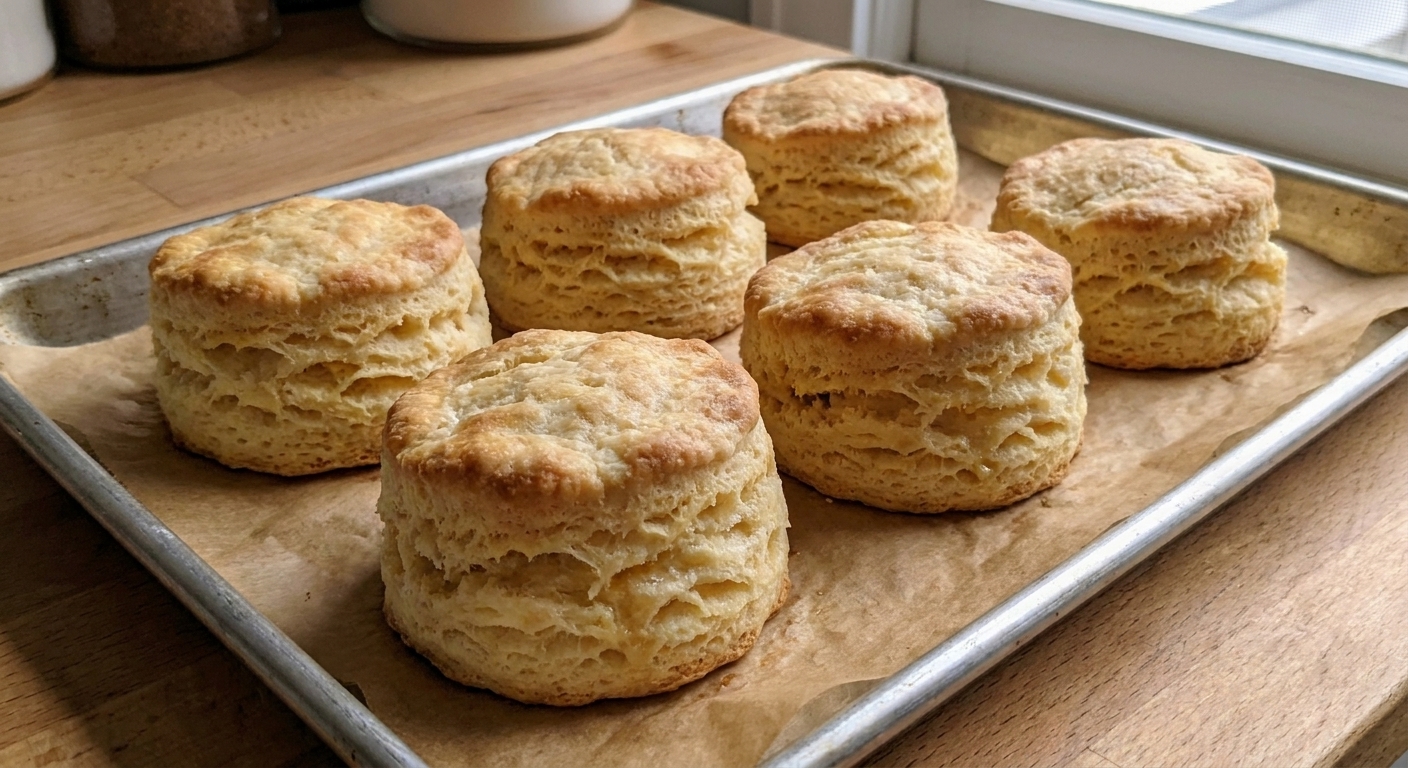
When I managed a bakery, biscuit mornings were loud in the best way: the scrape of a bench knife, the thud of cold butter against flour, and trays sliding into an oven that was already blazing hot. At home, I still chase that same feeling, not perfection, just biscuits that split open with barely any effort and leave little buttery shards all over the plate.
This recipe is my weeknight-friendly version of bakery-style buttermilk biscuits. The goal is simple: keep the butter cold, keep the dough soft, fold just enough to build layers, and bake hot so the biscuits lift fast before the butter has a chance to melt out.

If biscuits have ever felt mysterious, it is usually because the dough gets worked too much or warmed up too much. Here, you will see clear cues for the butter size, the fold, and the cut, plus a doneness test that makes sure the centers stay tender, not dry.
What to expect
- Texture: crisp, browned tops with a soft center and defined flaky layers.
- Flavor: buttery and lightly tangy from buttermilk.
- Skill level: very doable, even if you have had flat biscuits before.
The biscuit mindset
A biscuit is not a yeast loaf and it is not a cake. You are not trying to knead it smooth or wait for it to rise. Think of biscuit dough like a cozy, slightly messy blanket: it should look rough at first, then come together with a few folds, and go straight into a hot oven.
If you remember only three things, make them these: cold butter, soft dough, and no twisting the cutter. Those alone fix most biscuit problems.
Why this recipe works
- Cold butter creates layers. Butter pieces melt in the oven and release steam, which lifts the dough and forms flaky sheets.
- A soft dough bakes tender. Slightly sticky dough means you have enough liquid, so the centers stay moist and plush instead of crumbly and dry.
- Folds replace kneading. A few gentle folds stack dough and butter into layers without developing too much gluten.
- A hot oven sets the rise fast. High heat gives a quick lift before the butter fully melts, helping biscuits bake tall with good definition.
- Clean cuts help the sides climb. Pressing the cutter straight down keeps edges unsealed so the biscuits can rise upward instead of mushrooming sideways.
Ingredient notes
All purpose flour
Standard all purpose flour makes a sturdy but tender biscuit. Measure by spooning flour into the cup and leveling it, or use a kitchen scale if you have one.
Baking powder and baking soda
Baking powder provides most of the lift; baking soda reacts with the acidity in buttermilk for extra rise and browning. Make sure they are fresh for the best height.
Salt
Do not skimp. Salt is what makes a simple biscuit taste like something you want to keep eating.
Cold unsalted butter
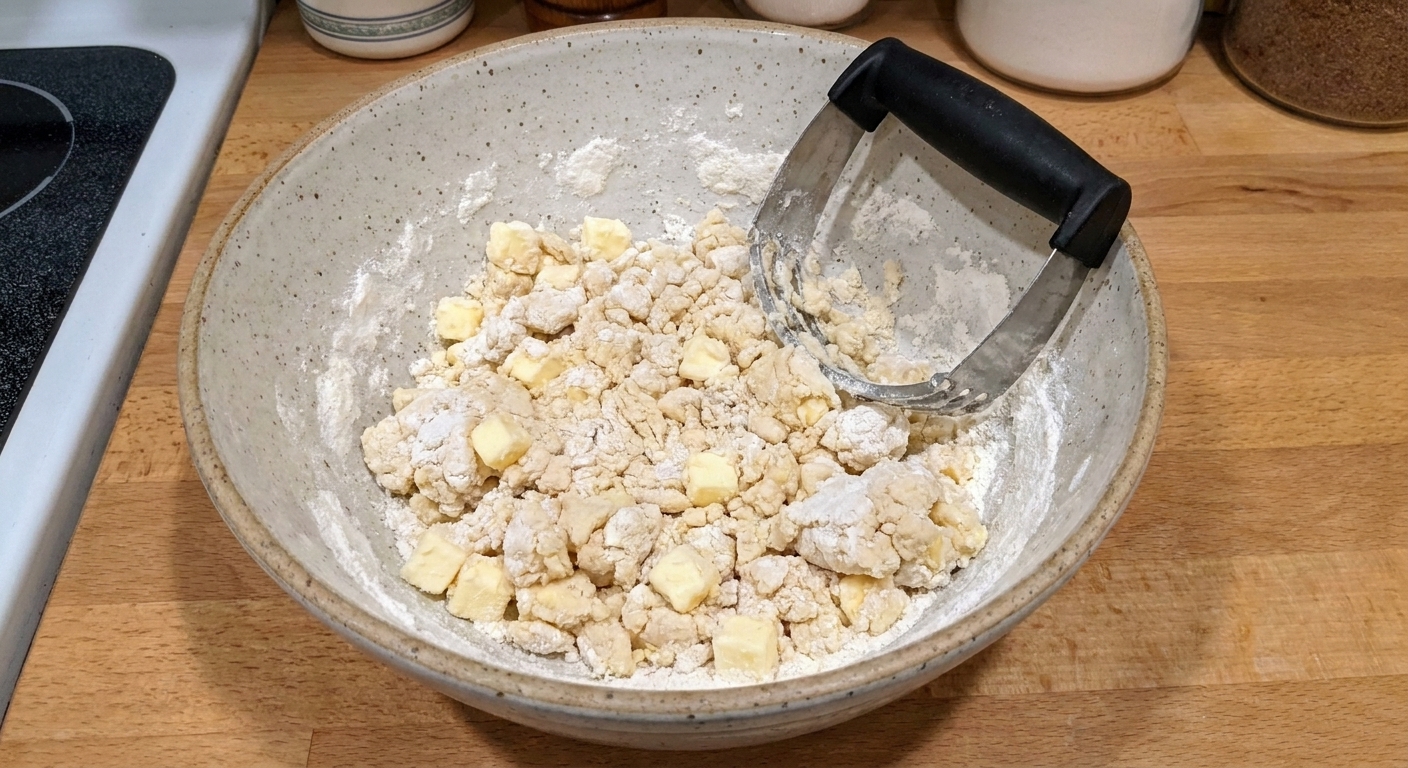
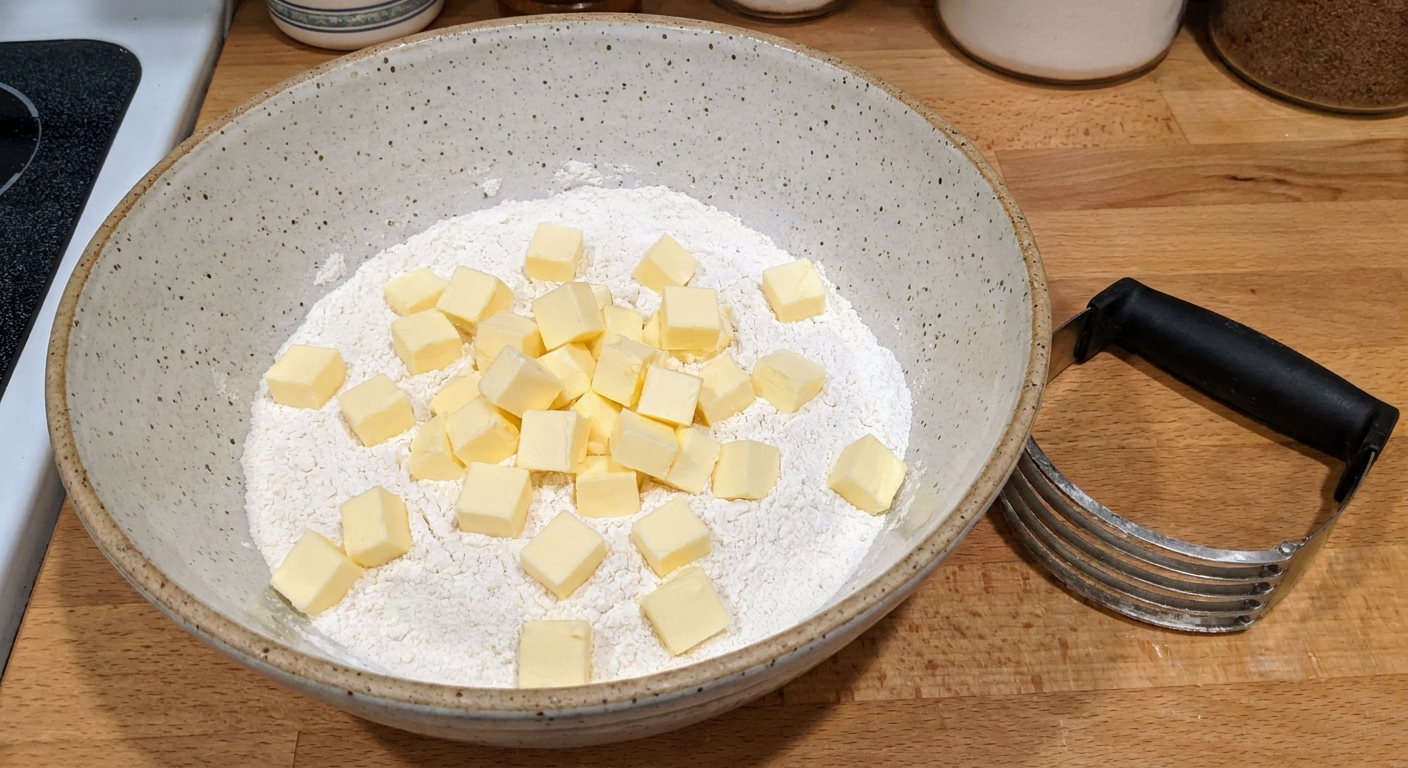
Cut the butter into small cubes. Your target size after working it in is a mix of pea sized pieces and a few flat shards about the size of a dime. If all the butter disappears, you lose flakes. If the butter pieces are huge, you risk greasy gaps.
Cold buttermilk
Cold buttermilk keeps the butter firm and adds tang. If your buttermilk is warm from sitting out, pop it in the fridge while you prep everything else.
Equipment you will need
- Large mixing bowl
- Pastry cutter or two forks, or clean fingertips
- Bench scraper (helpful for folding, optional)
- Rolling pin (optional, you can pat by hand)
- 2.5 inch round biscuit cutter with a sharp edge
- Rimmed baking sheet
- Parchment paper
Pro tips
Butter size: look for peas and shards
Stop cutting the butter in when you see pea sized bits plus some flatter pieces. Those flatter bits are future flaky layers.
Watch the dough, not the clock
After adding buttermilk, the dough should look shaggy but hydrated. When you squeeze a handful, it should hold together with only a little crumbling.
Folding cues
After the first pat into a rough rectangle, fold it like a letter. You want visible layers and a dough that is starting to feel more cohesive, not smooth like pizza dough. If it fights you or springs back hard, you have worked it too much.
Do not twist the cutter
Press straight down and lift straight up. Twisting seals the edges, which is the fastest way to get biscuits that cannot climb.
How close to place the biscuits
For taller sides, place biscuits close together so they support each other as they rise. For crisper edges all around, space them farther apart.
Doneness test for a soft center
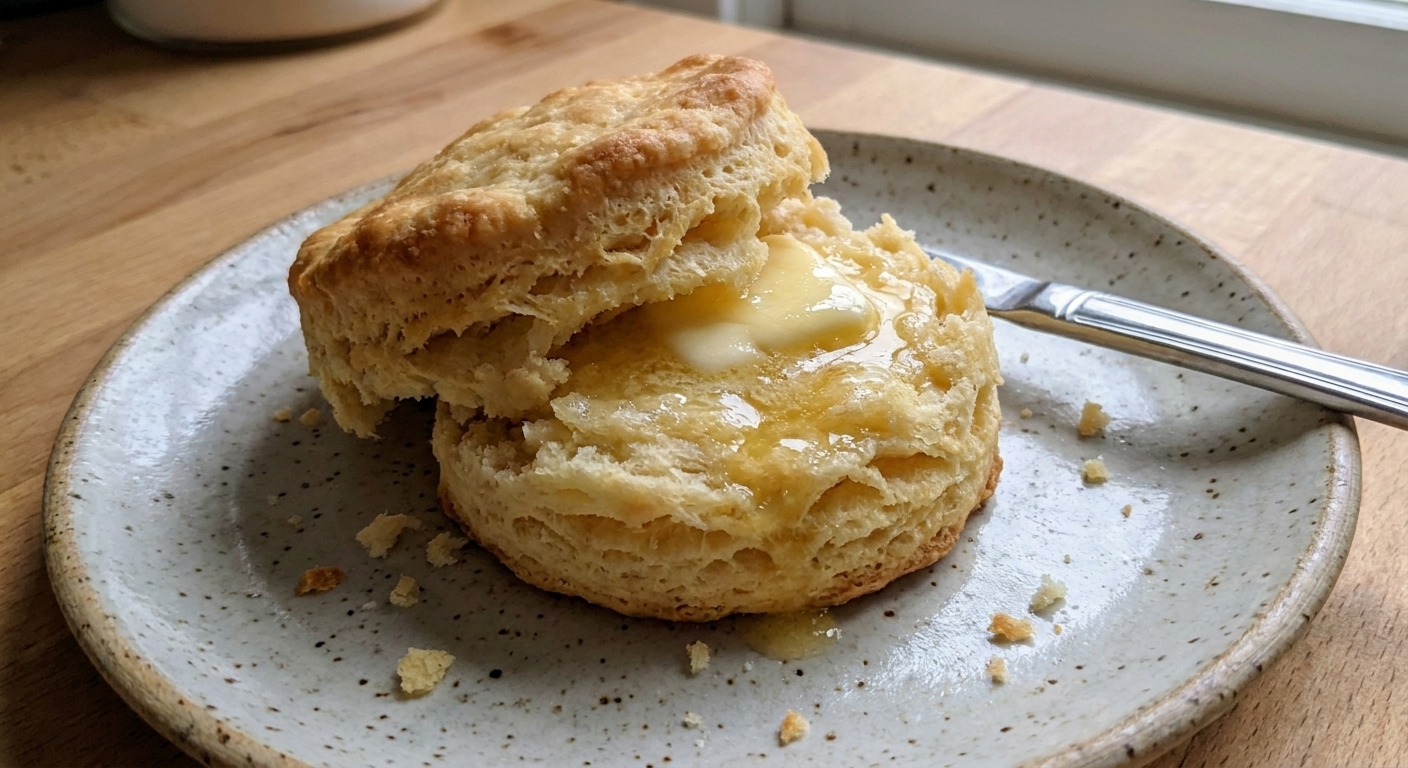
Look for a deep golden top and a biscuit that feels light when lifted. If you split one, the center should be set but still moist, not gummy and not dry. Another quick cue: the layers should separate easily with gentle pressure.
Substitutes that work
No buttermilk?
You have options, though real buttermilk gives the best flavor and tenderness.
- Milk plus acid: Stir 1 tablespoon lemon juice or white vinegar into 1 cup milk. Let stand 5 to 10 minutes, then use it cold.
- Plain kefir: Use 1:1. It is close in tang and thickness.
- Thinned plain yogurt: Mix plain yogurt with a splash of milk until it pours like buttermilk.
Salted butter
You can use it. Reduce added salt slightly, then adjust next time to taste.
Gluten free flour
A 1:1 gluten free baking blend can work, but expect a more delicate biscuit and less dramatic layering. Keep the dough on the thicker side and handle gently.
Variations
Honey butter biscuits
Brush hot biscuits with melted butter mixed with honey and a pinch of salt.
Cheddar chive biscuits
Add shredded sharp cheddar and chopped chives to the dry ingredients before adding buttermilk. Keep mix-ins cold so the butter stays cold.
Black pepper biscuits
Add a generous amount of freshly cracked black pepper to the dry mix for a savory biscuit that loves gravy.
Serving ideas
- Split and serve with butter and jam for breakfast.
- Pair with fried chicken and a crunchy cabbage slaw for the classic plate.
- Turn into a quick sandwich with eggs and cheese.
- Use as the top for a skillet chicken pot pie style bake.
- Serve alongside soup or chili to soak up the last bits in the bowl.
Storage and reheating
Storing baked biscuits
Let biscuits cool completely, then store airtight at room temperature for up to 2 days. For longer storage, freeze.
Freezing
- Baked: Freeze cooled biscuits in a freezer bag for up to 2 months.
- Unbaked: Cut biscuits, freeze on a sheet until firm, then bag. Bake from frozen, adding a few extra minutes.
Reheating
Warm in a 350°F oven until heated through. If you want a softer biscuit, wrap in foil. If you want crisper edges, reheat unwrapped for the last few minutes.
Common mistakes
Warm butter
If the butter feels soft, the dough will smear instead of forming layers. Chill the bowl of flour and butter for 10 minutes if your kitchen is hot.
Overmixing after adding buttermilk
Stir just until the dough looks shaggy. Overmixing develops gluten and leads to tough biscuits.
Rolling too thin
Biscuit dough should be thick. Thin dough bakes up more like a cracker than a fluffy biscuit.
Twisting the cutter
This seals the edges and blocks the rise. Press straight down, then lift.
Underbaking
Pale tops and a gummy center mean they need more time. The tops should be browned and the biscuits should feel light and set when lifted.
FAQ
Why did my biscuits not rise?
The usual culprits are warm butter, overworked dough, old leaveners, or twisting the cutter. Also check that your oven is fully preheated.
Should I use a biscuit cutter or a glass?
A sharp biscuit cutter is best because it cuts clean edges. A glass often compresses the sides and can reduce rise.
Can I make the dough ahead?
Yes. Cut the biscuits and refrigerate them, covered, for a few hours before baking. Keep them cold.
Why are my biscuits dry?
Too much flour or too much baking time. Measure flour carefully and pull the biscuits once the tops are browned and the centers are set but still tender.
How do I know the dough is the right softness?
It should feel slightly tacky and soft, not crumbly and not wet like batter. A few dry streaks are fine before the folds. They hydrate as you pat and fold.
The recipe
Flaky Buttermilk Biscuits
Tall, flaky buttermilk biscuits with cold butter, gentle folds, and a hot bake for a soft, tender center and browned tops.
- Prep
- 20 minutes
- Cook
- 14 to 18 minutes
- Total
- 40 minutes
- Yield
- 8 biscuits
Ingredients
- 2 cups all purpose flour, plus more for the counter
- 1 tablespoon baking powder
- 1/2 teaspoon baking soda
- 1 teaspoon fine salt
- 8 tablespoons (1 stick) unsalted butter, very cold and cubed
- 3/4 to 1 cup cold buttermilk, plus a splash more if needed
- 2 tablespoons melted butter (optional, for brushing)
Instructions
- Heat the oven. Arrange a rack in the middle of the oven and heat to 450°F. Line a baking sheet with parchment.
- Mix the dry ingredients. In a large bowl, whisk together the flour, baking powder, baking soda, and salt.
- Cut in the cold butter. Add the cubed butter and cut it into the flour using a pastry cutter, two forks, or your fingertips. Stop when you have a mix of pea sized pieces plus a few flatter shards.
- Add buttermilk gently. Drizzle in 3/4 cup cold buttermilk and stir with a fork until a shaggy dough forms. If there are very dry patches, add more buttermilk 1 tablespoon at a time until the dough looks evenly moistened. The dough should be soft and a little sticky.
- Pat and fold for layers. Turn the dough onto a lightly floured counter. Gently pat into a rough rectangle about 3/4 to 1 inch thick. Fold the dough into thirds like a letter. Rotate 90 degrees, pat back into a rectangle, and repeat the fold 2 more times. If the dough starts sticking, dust lightly with flour. If it feels warm or greasy, chill for 10 minutes.
- Cut biscuits without twisting. Pat the dough to 3/4 to 1 inch thick. Dip a 2.5 inch biscuit cutter in flour and press straight down to cut. Lift straight up. Do not twist. Gather scraps gently and cut once more if needed.
- Arrange on the pan. Place biscuits on the prepared baking sheet. For taller sides, set them close together so they are almost touching.
- Bake hot. Bake until the tops are deeply golden and the biscuits feel light, 14 to 18 minutes.
- Doneness test. Split one biscuit. The center should be set and tender, not gummy and not dry. If needed, bake 2 to 3 minutes more.
- Finish and serve. Brush with melted butter if using. Serve warm.
Notes
- Butter temperature: Cold butter is the whole game. If your kitchen is warm, chill the flour and mixing bowl for 10 minutes before starting.
- Thickness matters: Keep the dough thick, 3/4 to 1 inch, for tall biscuits.
- Handle with care: Stir and fold just until the dough holds together. Overworking leads to toughness.