
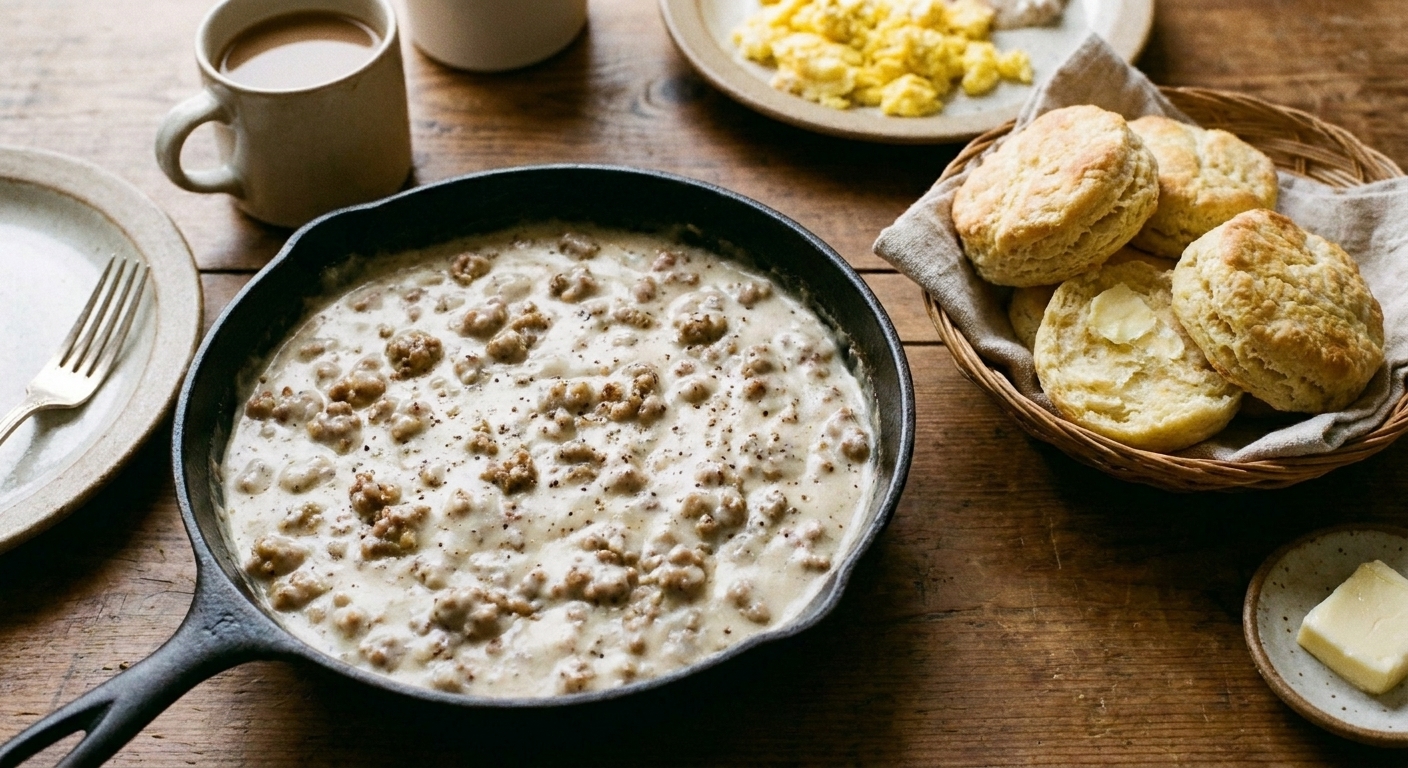
There are a few recipes I can practically make with my eyes half-closed, and sausage gravy is one of them. It was a regular in my loud, multi-generational kitchen growing up, the kind of breakfast that pulled everyone into the room because you could smell the sausage browning from down the hallway.
The version I’m sharing here is intentionally pepper-forward, because black pepper is a signature flavor in many Southern-style sausage gravies. The goal is a smooth gravy that clings to the back of a spoon, with little nuggets of browned breakfast sausage throughout.
If you’re newer to this, a quick note on what I mean by breakfast sausage: the classic ground pork sausage seasoned for breakfast, often with sage and plenty of savory spice. Brands vary a lot in fat content, too, which is why sausage gravy can feel effortless one day and finicky the next. The good news is you can control it once you know what to look for.

If you’ve ever ended up with gravy that’s gritty, floury, or suddenly lumpy, don’t worry. Those issues almost always come down to three moments: how you brown the sausage, how long you cook the flour, and how you add the milk.
I’ll walk you through what to look for so you get a smooth, glossy gravy every time. Two small moves change everything: cook the flour just until it smells lightly nutty, and whisk the milk in gradually.
Think of sausage gravy as a three-act play: brown the sausage, cook the flour, then whisk in milk patiently. Each act matters.
One more thing I say with love: this is not a steak sauce. Sausage gravy is rich and creamy and built for soaking into biscuits. If you want something for steak, you’ll be happier with a pan sauce or a mushroom gravy that starts with drippings, wine, or stock.
Why this recipe works
- Deep sausage flavor without greasiness: Browning creates savory notes, and draining off excess fat gives you control so the gravy stays creamy, not oily.
- A properly cooked roux keeps it smooth: Cooking flour in the sausage fat for a minute or two gets rid of raw flour taste and helps the gravy thicken evenly.
- Gradual milk addition prevents lumps: Adding milk in stages while whisking lets the starches hydrate smoothly, which is the secret to lump-free gravy.
- Big black pepper energy: A generous amount of freshly cracked pepper brings the classic diner-style warmth and bite.
Ingredient notes
Breakfast sausage: Use a classic pork breakfast sausage, either mild or hot. If your sausage is very lean, you may need a small knob of butter to make enough fat for the roux.
Flour: All-purpose flour is the standard. It thickens predictably and gives you that classic, creamy texture.
Milk: Whole milk makes the richest gravy, but 2 percent also works. Very low-fat milk can taste thinner and may look less silky.
Milk temperature: Cold milk is fine if you add it gradually while whisking. If you tend to rush, slightly warm milk can be more forgiving because it keeps the roux from seizing up.
Black pepper: Freshly cracked is worth it here. Start bold, then adjust after the gravy simmers for a minute, because pepper “blooms” and intensifies as it sits.
Salt: Sausage varies a lot. Taste after the gravy thickens and simmering has concentrated the seasoning, then salt as needed.
Equipment you will need
- Large skillet: Cast iron or stainless steel both work well.
- Wooden spoon or spatula: For breaking up sausage and scraping up browned bits.
- Whisk: Your best tool for keeping gravy smooth as you add milk.
- Measuring spoons and cups
Pro tips
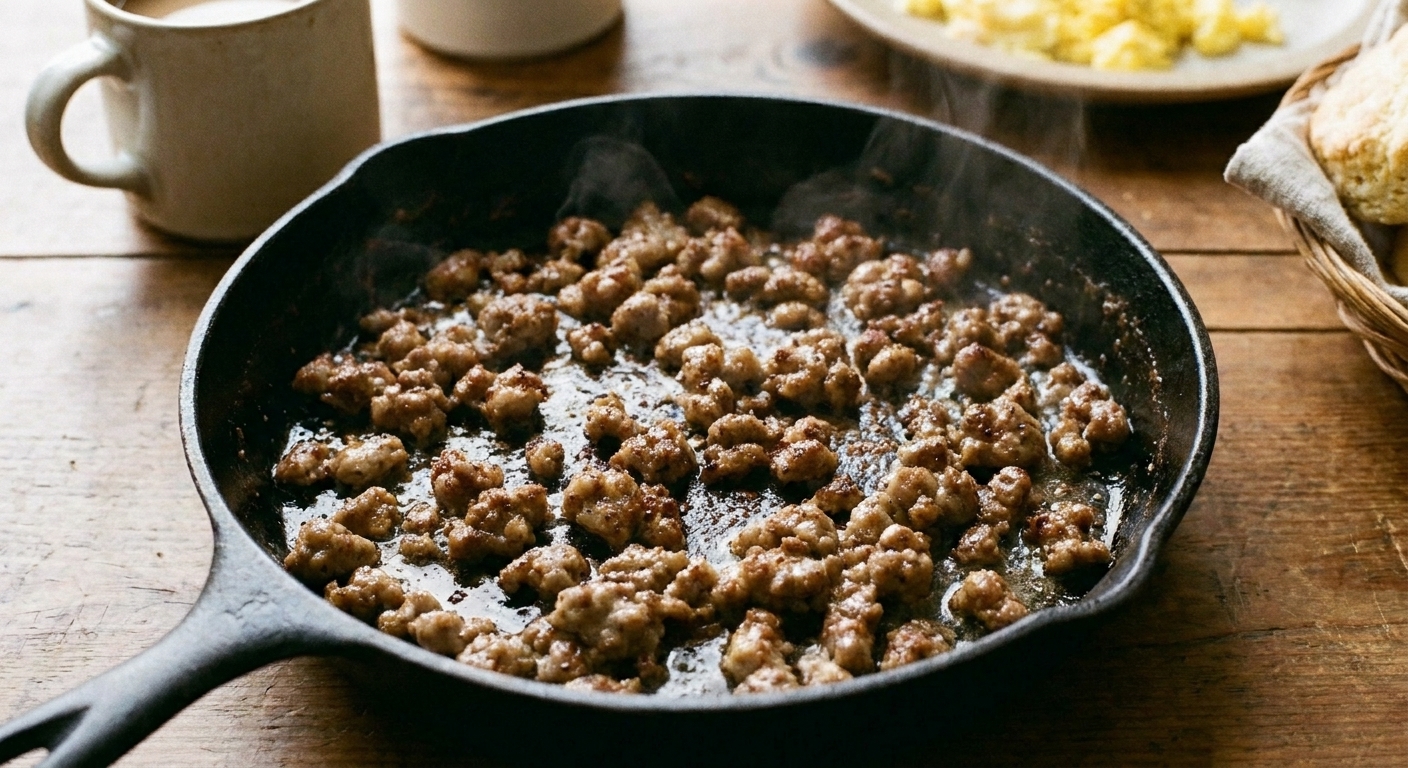
- Brown means flavor: Let the sausage sit against the pan long enough to develop browned edges before stirring too much. Those browned bits dissolve into the gravy later.
- Watch the roux color: For classic biscuits-and-gravy, you want a pale blond roux. Think light tan, not peanut butter brown. Too dark and it can taste toasty and thicken a bit less.
- Add milk in stages: Start with a small splash and whisk until smooth, then add more. This prevents flour lumps better than dumping it all in at once.
- Simmer to your thickness: Once the milk is in, bring it just to a gentle simmer. The gravy thickens most in the first few minutes, then fine-tunes as it bubbles.
- Pepper level: If you love a bold bite, use freshly cracked pepper and don’t be shy. If serving kids or pepper-sensitive eaters, start smaller and pass pepper at the table.
Substitutes that work
- Turkey breakfast sausage: Works, but it often renders less fat. Add 1 to 2 tablespoons butter before adding flour if the pan looks dry.
- Plant-based sausage: Many versions work if they brown well. You may need butter or oil for the roux, and expect seasoning levels to vary.
- Non-dairy milk: Unsweetened plain oat milk tends to be the most neutral. Avoid vanilla or sweetened milks. The texture may be slightly less rich.
- Gluten-free: A 1:1 gluten-free all-purpose flour blend can work, but thickness can vary by brand. Add milk gradually and simmer to adjust.
Variations
- Spicy sausage gravy: Use hot breakfast sausage and add a pinch of cayenne along with the black pepper.
- Sage-forward gravy: Add a small pinch of rubbed sage to lean into that classic sausage seasoning.
- Extra creamy: Replace 1/2 cup of the milk with half-and-half for a richer finish.
- Onion and garlic note: Add a tiny pinch of onion powder and garlic powder to round out the savory base.
Serving ideas
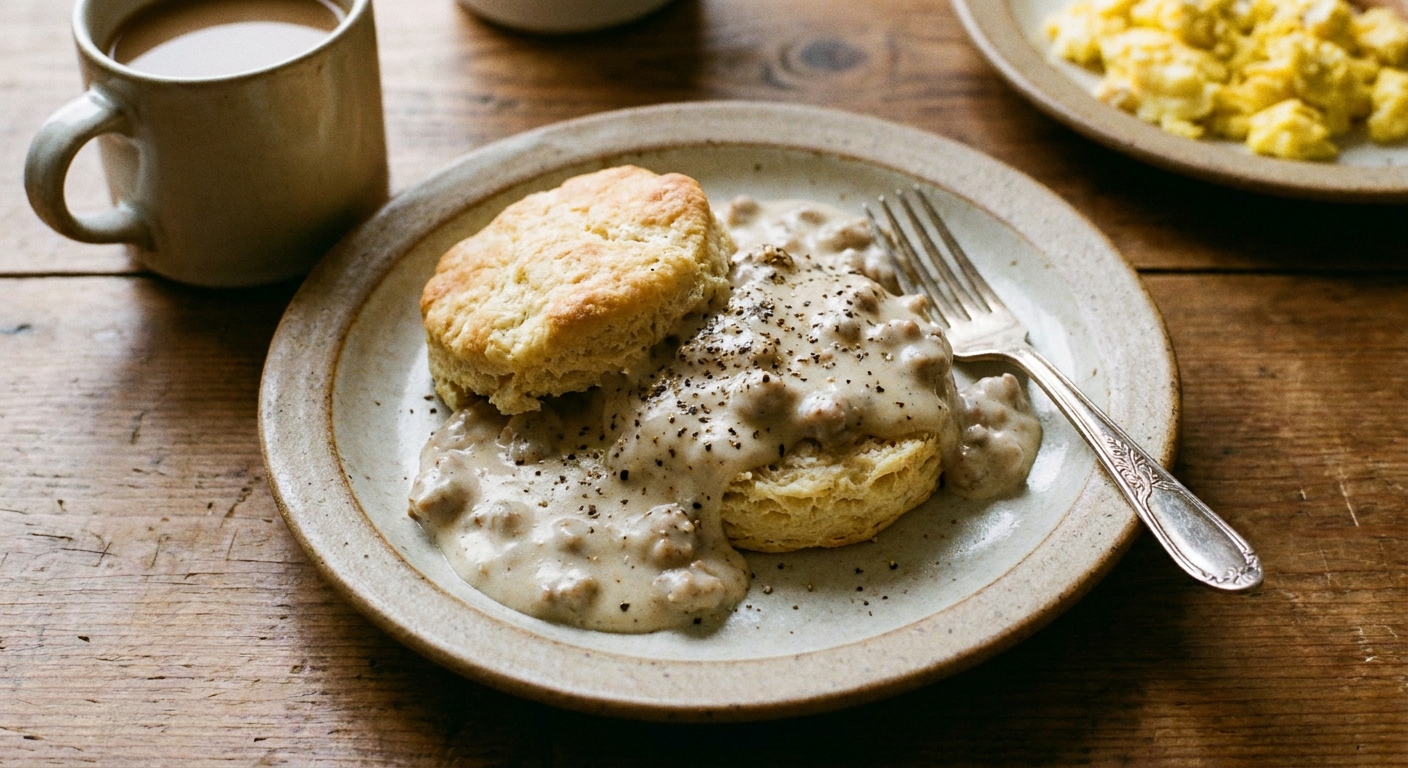
- Classic: Split warm biscuits and ladle gravy over the top with an extra crack of pepper.
- Breakfast plates: Serve alongside scrambled eggs and fruit for balance.
- Potato situation: Spoon over crispy breakfast potatoes or hash browns.
- Southern-style bowl: Biscuits, gravy, and a fried egg on top so the yolk turns into its own sauce.
Storage and reheating
Refrigerate: Cool, then store in an airtight container for up to 3 days.
Reheat: Warm gently in a saucepan over medium-low heat, stirring often. Sausage gravy thickens a lot as it chills, so add a splash of milk a little at a time until it loosens back into a creamy, spoonable sauce.
Freezing: You can freeze it, but dairy-based gravies sometimes separate slightly when thawed. If you do freeze, thaw overnight in the fridge and reheat slowly while whisking to bring it back together.
Common mistakes
- Not browning the sausage enough: Pale sausage gives you pale flavor. Let it get real color in spots.
- Leaving too much grease in the pan: If there’s a large pool of fat, your gravy can turn oily. Drain some off and keep about 2 tablespoons for the roux.
- Under-cooking the flour: If you add milk too soon, the gravy can taste raw and floury. Give the flour a solid 1 to 2 minutes in the fat, stirring constantly.
- Adding milk too fast: This is the biggest cause of lumps. Add gradually and whisk like you mean it.
- Boiling hard: A rapid boil can cause scorching on the bottom and a thicker-than-you-wanted texture. Aim for a gentle simmer.
FAQ
How do I know when sausage gravy is thick enough?
It should coat the back of a spoon, and when you drag a finger through it, the line should hold for a moment. It will also thicken a bit more as it cools off the heat.
Can I use cold milk?
Yes. Cold milk is fine if you add it in stages while whisking. If you pour it all in at once, the roux can clump and you’ll have to whisk much harder to smooth it out.
Why is my gravy lumpy?
Usually it’s from adding milk too quickly or not whisking enough as the milk hits the hot roux. If it happens, keep cooking and whisking. In a pinch, you can carefully blend it with an immersion blender, but ideally you prevent lumps with gradual milk addition.
Can I make it more peppery without it tasting harsh?
Use freshly cracked black pepper and add it in two moments: some while the gravy simmers, then a final crack at the end. The simmered pepper tastes rounder, and the fresh pepper smells amazing.
Is sausage gravy the same thing as country gravy?
They’re closely related. Country gravy is typically a milk gravy thickened with a roux, sometimes made with bacon fat or pan drippings. Sausage gravy is country gravy with browned breakfast sausage mixed in.
The recipe
Peppered Sausage Gravy
A creamy, smooth, pepper-forward sausage gravy made with browned breakfast sausage, a simple flour roux, and milk, simmered until it coats a spoon. Made for biscuits.
- Prep
- 5 minutes
- Cook
- 15 minutes
- Total
- 20 minutes
- Yield
- About 4 servings
Ingredients
- 1 lb breakfast sausage (mild or hot)
- 2 to 3 tbsp sausage fat (drain and reserve as needed)
- 1/4 cup all-purpose flour
- 2 1/2 cups whole milk (or 2%)
- 1 to 1 1/2 tsp freshly cracked black pepper, plus more to taste
- 1/2 tsp kosher salt, plus more to taste
- Optional: 1 to 2 tbsp butter (only if sausage is very lean and pan is dry)
Instructions
- Brown the sausage. Place a large skillet over medium heat. Add the breakfast sausage and cook, breaking it up with a spoon, until deeply browned in spots and cooked through, 7 to 9 minutes. If there is a lot of grease, carefully spoon off and discard some, leaving about 2 to 3 tablespoons fat in the skillet.
- Make the roux. Sprinkle the flour over the sausage and fat. Stir constantly for 1 to 2 minutes, until the flour is fully moistened and turns a pale blond color and smells lightly nutty, not raw.
- Whisk in the milk gradually. While whisking, add a small splash of milk first and stir until completely smooth. Continue adding the milk in a steady stream, whisking the whole time, until all milk is incorporated.
- Simmer until spoon-coating. Bring the gravy to a gentle simmer, then reduce heat to medium-low. Cook, stirring often and scraping the bottom, until thick enough to coat a spoon, 3 to 6 minutes.
- Season boldly. Stir in the black pepper and salt. Taste and adjust pepper and salt. If the gravy gets thicker than you want, whisk in a splash more milk.
- Serve warm. Spoon over split warm biscuits right away.
Notes
Milk temperature: Cold milk is fine, but add it in stages and whisk well to prevent lumps.
Roux color: Keep it pale blond for classic biscuits-and-gravy flavor. A darker roux will taste toastier and may thicken slightly less.
Make ahead: This thickens as it sits. Reheat gently with a splash of milk, stirring often.