
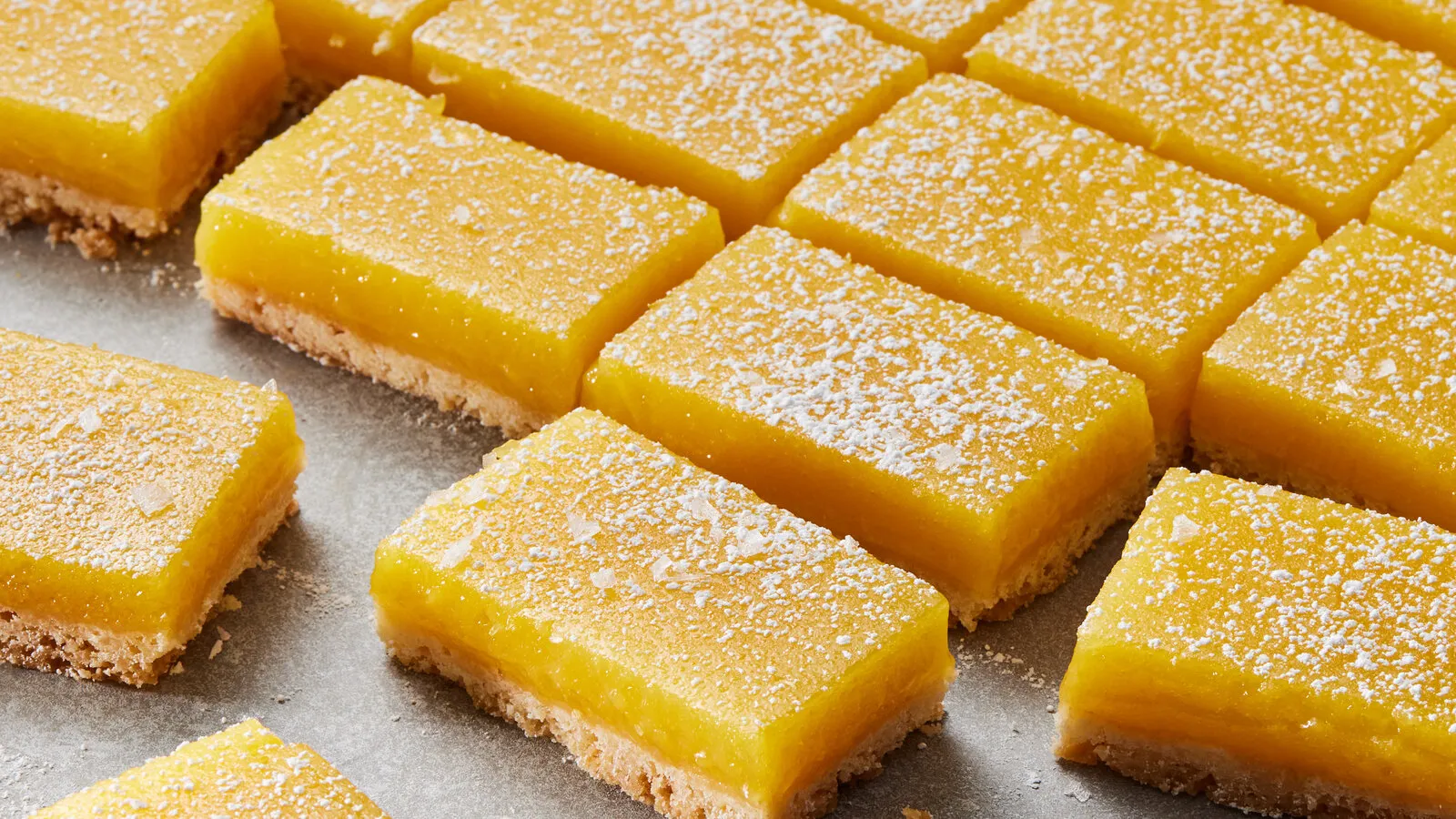
In my house growing up, “lemon bars” meant someone had something to celebrate, or someone needed cheering up. They showed up on paper plates at birthday parties, in mismatched containers at potlucks, and on Sunday afternoons when the kitchen was already warm from other baking. I still love them for the same reason: they feel special, but they are built from everyday pantry ingredients.
This version is the classic for a reason: a crisp, buttery shortbread crust and a bright lemon curd layer that bakes until it is just set. No weepy topping, no gummy crust, no mystery. The key details are simple and reliable: a dependable curd ratio, what “just set” actually looks like (set edges with a slight jiggle in the center, not a wet sheen), and a full chill so you can cut clean squares instead of lemon lava.

These are the thinner, shareable 9x13-style lemon bars, which is exactly why the texture matters. With the right bake cue, the topping stays custardy and sliceable instead of runny or rubbery, and the crust stays sturdy enough to pick up and eat without a fork.
If you have ever had lemon bars that looked done but cracked or oozed when you sliced them, do not worry. That is most often a timing and temperature issue, but it can also happen if the bars are sliced before they are fully chilled, or if the lemon layer balance is a little off. I will walk you through exactly what “done” looks like and how long to chill so they cut like a dream.
What to expect
- Texture: tender-shortbread base with a custardy, sliceable curd topping.
- Flavor: unapologetically lemony, balanced with enough sugar to keep it bright, not sour.
- Difficulty: easy, with a few important cues to watch near the end of baking.
- Make-ahead friendly: after a full chill, the curd sets up, the flavors taste more cohesive, and the bars slice more cleanly.
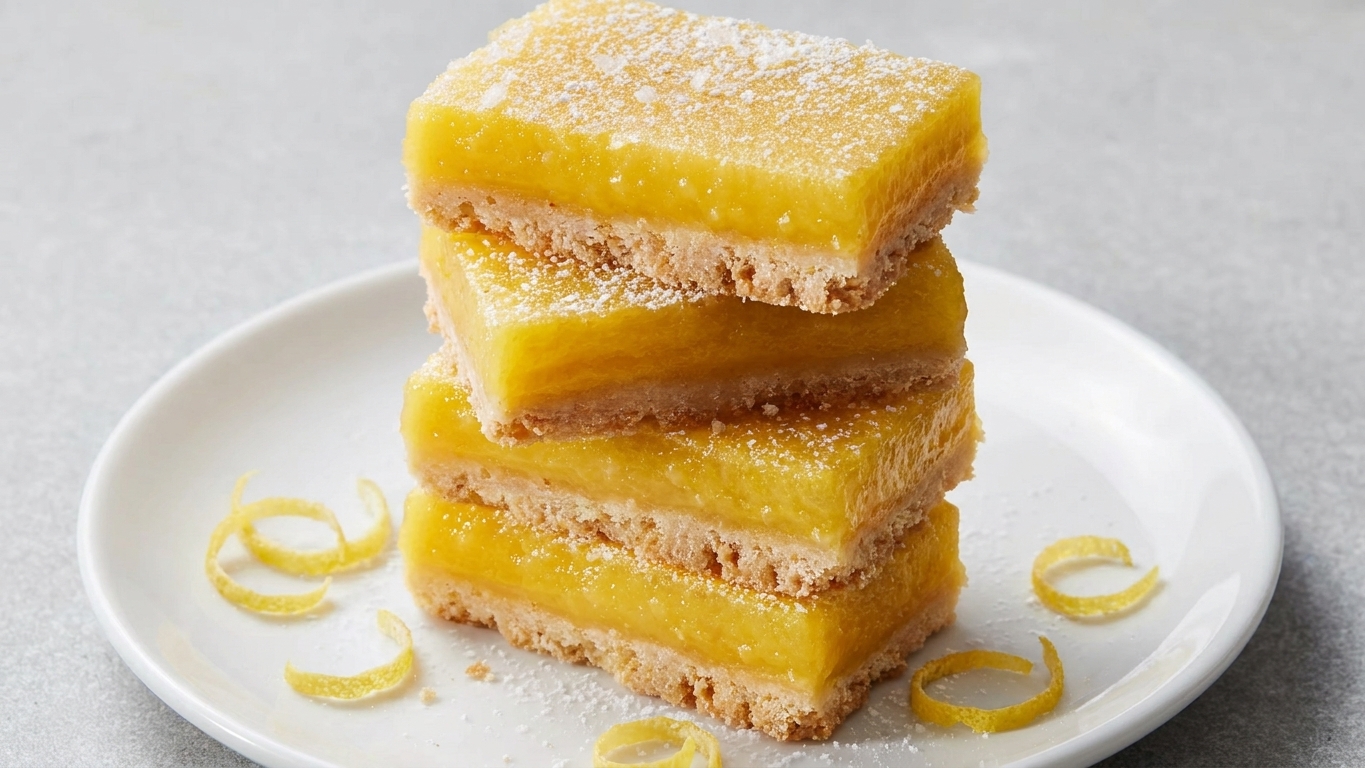
Why this recipe works
Shortbread first, always
Pre-baking the crust sets the butter and cooks off excess moisture, so the base stays crisp-edged and sturdy instead of turning soft under the curd.
The curd ratio is built to set
For a 9x13-inch pan, the topping uses a dependable ratio of about 1 cup lemon juice to 6 large eggs, plus sugar and a little flour. Eggs provide the structure, sugar smooths the curd, and the small amount of flour helps the custard slice cleanly once chilled.
“Just set” is the goal
Lemon curd keeps cooking from residual heat. Pulling the pan when the center has only a slight wobble helps prevent overbaking, which can cause a rubbery texture or cracks.
A full chill equals clean cuts
Warm lemon bars are delicious but messy. Chilling firms the curd and makes the crust less fragile, so you get sharp edges and neat squares.
Ingredient notes
Lemons
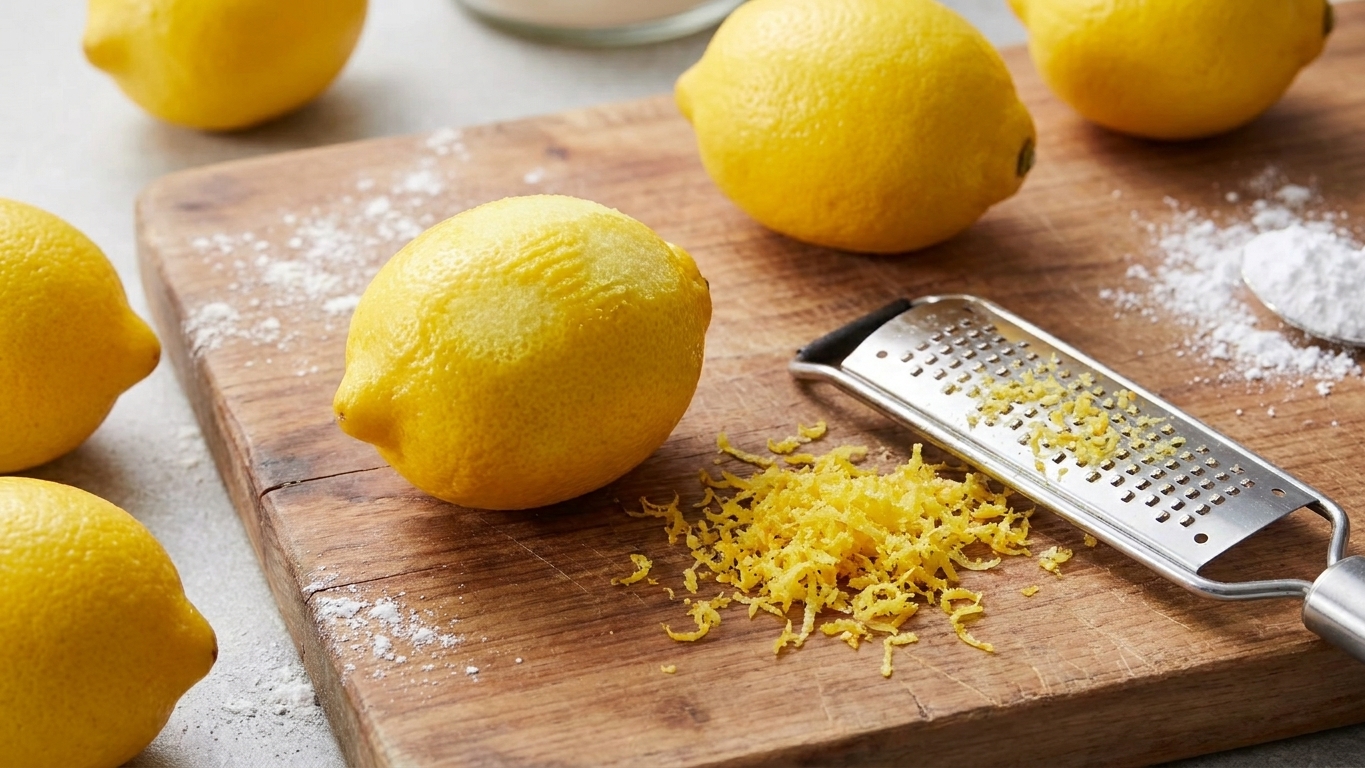
Fresh lemon juice makes a noticeable difference here. You will need about 1 cup juice, which is typically 5 to 7 lemons depending on size and juiciness. Zest the lemons before juicing.
Powdered sugar
Dust only after the bars are fully cooled and chilled. If you dust warm bars, the sugar melts and disappears.
Flour in the curd
A small amount of all-purpose flour helps the curd set into sliceable bars. Whisk it thoroughly into the sugar first to prevent lumps.
Butter
Use unsalted butter so you control the salt level. If you only have salted butter, reduce added salt in the crust.
Eggs
Room temperature eggs mix more smoothly, but cold eggs are fine. Just whisk well so the curd bakes evenly.
Equipment you will need
- 9x13-inch metal baking pan
- Parchment paper (highly recommended for easy lifting and clean slicing)
- Mixing bowls
- Whisk
- Fine-mesh sieve (optional, for extra-smooth curd)
- Microplane or fine grater for zest
- Citrus juicer
- Cooling rack
- Chef’s knife for cutting
Pro tips
Line the pan for stress-free removal
Let the parchment overhang on the long sides. Once chilled, you can lift the whole slab out and cut on a board.
Press the crust firmly and evenly
Use the bottom of a measuring cup to compact the crust. This helps it bake up even and prevents crumbly corners.
Pour curd onto a warm crust
A warm crust helps the curd begin setting immediately, which reduces the chance of separation.
Know the “just set” cue
The edges should look set and slightly puffed. The center should jiggle like set gelatin, not slosh like liquid. If you tap the pan gently, you want a controlled wobble.
Chill before dusting and slicing
Plan for at least 4 hours in the fridge, and overnight is even better. For the cleanest cuts, wipe your knife between slices.
Substitutes that work
Bottled lemon juice
Fresh is best, but in a pinch you can use bottled lemon juice for the 1 cup. If you do, add fresh zest if possible to bring back that bright, fragrant lemon oil.
Gluten-free
Use a 1:1 gluten-free baking flour blend in both the crust and the curd. The texture may be slightly more delicate, so chill thoroughly before lifting and cutting.
Dairy-free
Swap the butter in the crust for a plant-based butter stick. Choose one that is firm when cold for the most shortbread-like texture.
Variations
Meyer lemon bars
Use Meyer lemons for a softer, more floral lemon flavor. Because they are less acidic, the bars taste sweeter even with the same sugar.
Lime bars
Replace lemon juice and zest with lime. The bake cues and chill time stay the same.
Extra-thick lemon layer
If you love a taller curd layer, bake in a slightly smaller pan if you have one that is close (like a deeper 9x13 or a 10x15 with adjusted thickness). Keep the same doneness cue: edges set, center with a gentle wobble.
Coconut finish
Skip the powdered sugar and sprinkle with unsweetened toasted coconut after chilling for a different vibe.
Serving ideas
- Serve chilled with a bowl of fresh berries.
- Add a small spoonful of lightly sweetened whipped cream on the side.
- For a party tray, cut into smaller squares and dust right before setting out.
- Pack for picnics in a single layer with parchment between rows to protect the tops.
Storage and reheating
Refrigerator
Store lemon bars covered in the refrigerator for up to 5 days. For the prettiest powdered sugar top, dust each day’s portion right before serving.
Freezer
Freeze fully chilled, un-dusted bars in a single layer until firm, then wrap and store up to 2 months. Thaw overnight in the fridge and dust with powdered sugar before serving.
Room temperature
Because the topping is an egg-based custard, I treat these as a refrigerator dessert. They can sit out for serving, but I return leftovers to the fridge promptly.
Common mistakes
Pulling them too early
If the center still looks wet or ripples like liquid, it needs more time. You are looking for a gentle wobble, not a wave.
Overbaking the curd
Overbaked lemon bars can crack and taste a little eggy. When in doubt, pull them when the center is just barely set and let carryover heat finish the job.
Skipping the chill
Warm lemon bars cut messily and can seem under-set even when they are not. Chill at least 4 hours for clean slices.
Dusting powdered sugar too soon
Powdered sugar melts into warm curd. Wait until the bars are completely cool and chilled, then dust right before serving.
Not lining the pan
You can do it without parchment, but it is harder to remove and cut neatly. If you skip lining, plan to serve straight from the pan.
FAQ
How do I know lemon bars are done?
The edges should be set and slightly puffed, and the center should jiggle gently when you nudge the pan. It should not look wet or ripple like liquid.
Why did my lemon layer crack?
Cracks usually come from overbaking. Pull the bars sooner next time, when the center is just set, and cool at room temperature before chilling.
Why is my crust soggy?
Usually the crust was not baked long enough before adding the curd, or the bars were underbaked overall. A fully baked, lightly golden crust is your foundation.
Can I make lemon bars ahead?
Yes, and I recommend it. Make them the day before, chill overnight, and dust with powdered sugar right before serving.
Do I have to sift the powdered sugar?
No, but it gives you a more even, bakery-style finish. A small fine-mesh sieve works perfectly.
The recipe
Lemon Bars
Buttery shortbread crust topped with a bright, sliceable lemon curd. Baked until just set, then fully chilled for clean cuts and finished with powdered sugar.
- Prep
- 20 minutes
- Cook
- 45 minutes
- Total
- 5 hours 15 minutes
- Yield
- 24 bars
Ingredients
- For the shortbread crust
- 2 cups (260 g) all-purpose flour
- 1/2 cup (60 g) powdered sugar
- 1/4 tsp fine salt
- 1 cup (227 g) unsalted butter, melted and slightly cooled
- For the lemon curd layer
- 2 1/2 cups (500 g) granulated sugar
- 1/2 cup (65 g) all-purpose flour
- 6 large eggs
- 1 cup (240 ml) fresh lemon juice
- 2 tbsp finely grated lemon zest
- 1/4 tsp fine salt
- To finish
- Powdered sugar, for dusting
Instructions
- Prep the pan and oven. Heat oven to 350°F (177°C). Line a 9x13-inch metal baking pan with parchment paper, leaving overhang on the long sides for lifting.
- Make the crust mixture. In a medium bowl, whisk together flour, powdered sugar, and salt. Add the melted butter and stir until a thick, sandy dough forms.
- Press and bake the crust. Press the dough firmly into an even layer in the prepared pan. Bake for 18 to 22 minutes, until the edges are lightly golden and the surface looks set.
- Mix the lemon layer. While the crust bakes, whisk granulated sugar and flour together in a large bowl until no lumps remain. Add the eggs and whisk until smooth. Whisk in lemon juice, lemon zest, and salt until fully combined.
- Pour onto the warm crust. When the crust comes out of the oven, pour the lemon mixture over the warm crust. (Optional: pour through a fine-mesh sieve for an extra-smooth top.)
- Bake until just set. Return the pan to the oven and bake for 22 to 28 minutes, until the edges are set and the center has a gentle wobble when you nudge the pan. The center should not look wet or ripple like liquid.
- Cool, then chill fully. Cool at room temperature for 1 hour, then refrigerate for at least 4 hours (overnight is great) until thoroughly cold and firm.
- Dust and slice. Lift the chilled bars out using the parchment overhang. Dust generously with powdered sugar, then slice into squares. Wipe the knife between cuts for clean edges.
Notes
- Curd ratio: For this pan size, the setting structure comes from about 1 cup lemon juice to 6 eggs.
- Doneness cue: Pull the bars when the edges look set and the center gently jiggles. They continue to firm as they cool and chill.
- Clean cuts: A full chill is not optional if you want sharp slices. Chill at least 4 hours, and wipe your knife between cuts.
- Powdered sugar timing: Dust right before serving for the prettiest finish.