
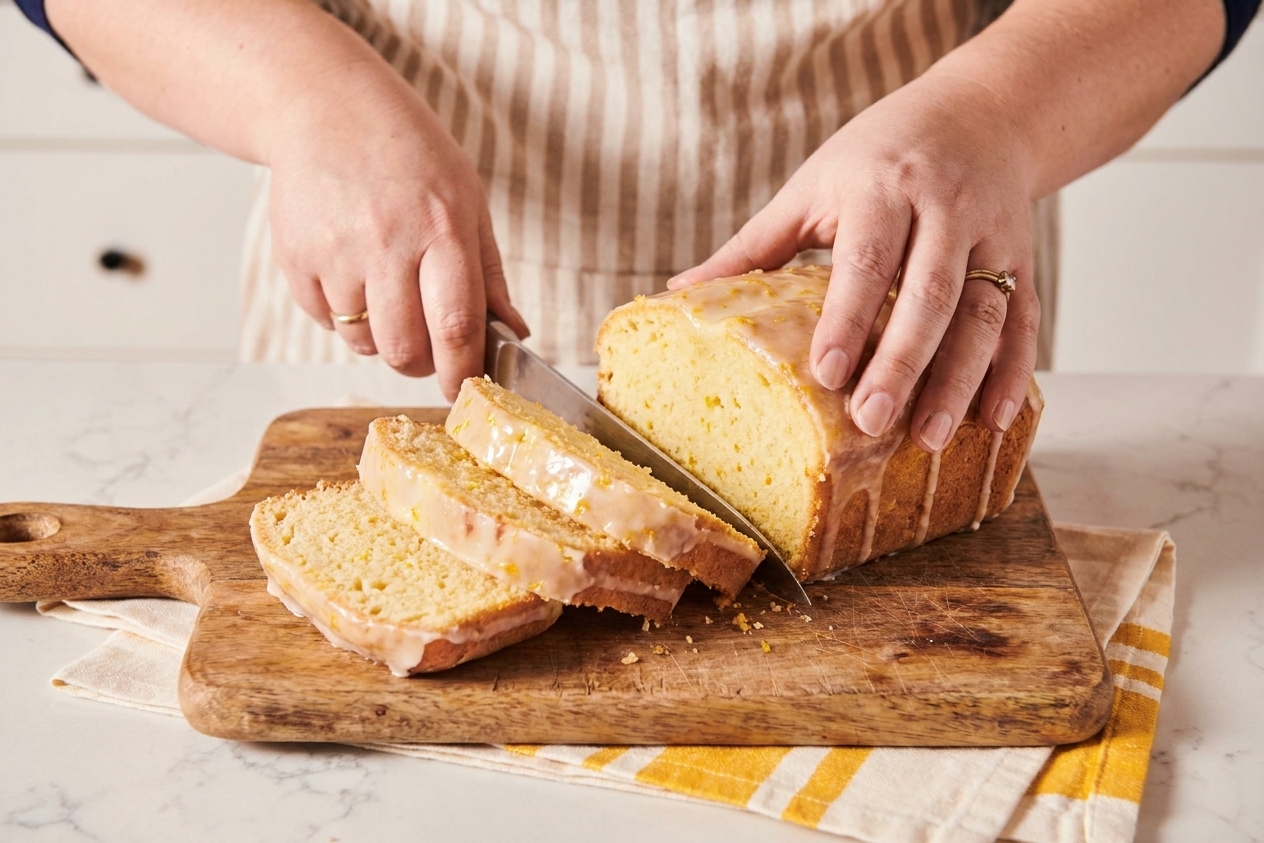
I have a soft spot for lemon loaf because it is the kind of bake that makes an ordinary afternoon feel a little more put together. In the bakery, we used to brush warm loaves with lemon syrup the minute they came out of the oven. It was not for drama, it was for insurance. Syrup is how you get that “stays moist for days” texture without turning the batter itself into a puddle.
This version leans into that same idea: lots of lemon zest in the batter (that is where the aromatic lemon flavor lives), plus a measured splash of lemon juice for brightness and balance, then a lemon syrup poured over the warm loaf so the crumb can drink it in slowly. The goal is bright and fragrant, not sour and soggy.

If you have ever had a lemon loaf sink in the center, it is often because the batter had too much straight lemon juice, or the loaf was underbaked in the middle and collapsed as it cooled. Overmixing and a too-hot or uneven oven can also do it, even when your ingredient list is perfect. In this recipe, the batter keeps the lemon juice modest and lets zest and the post-bake syrup carry the extra lemon punch.
You will also get a clear doneness test (including the internal temperature cue, if you like that level of certainty) and storage guidance that keeps the crust soft and sliceable. This is a loaf pan recipe from start to finish, no bundt pan detours and no savory side quests.
Why this recipe works
- Zest does the heavy lifting. Lemon zest carries aromatic oils that survive baking far better than lemon juice alone, so the loaf tastes sunny instead of flat.
- Measured juice in the batter prevents sinking. For a standard 9 by 5 inch loaf, keep lemon juice in the batter to about 3 tablespoons (45 ml). More than 1/4 cup (60 ml) in the batter tends to thin it too much and can weaken structure, which is when you see gummy streaks or a sunken middle.
- Syrup soak adds moisture after the crumb is set. Pouring syrup over a warm loaf lets it absorb flavor and moisture without compromising the rise.
- Two-part doneness check keeps the center honest. A clean toothpick is good, but checking the center temperature and spring gives you a reliable “it is actually baked” signal.
Ingredient notes
Lemons: Use fresh lemons. You need both zest and juice. If you can, choose heavier lemons with smooth skin for more juice.
Lemon zest: Zest only the yellow part. The white pith is bitter. I like a microplane for fine, even zest that perfumes the batter.
All-purpose flour: Spoon into the measuring cup and level it, or use a scale. Too much flour is the fastest way to a dry loaf.
Baking powder and baking soda: This combo helps the loaf rise evenly and stay tender. The soda also softens the sharpness of the lemon.
Greek yogurt or sour cream: This is the moisture and tenderness engine. Full-fat gives the best crumb, but low-fat works in a pinch.
Neutral oil plus butter: Oil keeps the loaf soft for days. Butter adds flavor. Using both gives you the best of each.
Powdered sugar: For the glaze. If yours is lumpy, sift it. A smooth glaze makes a big difference.
Equipment you will need
- 9 by 5 inch loaf pan
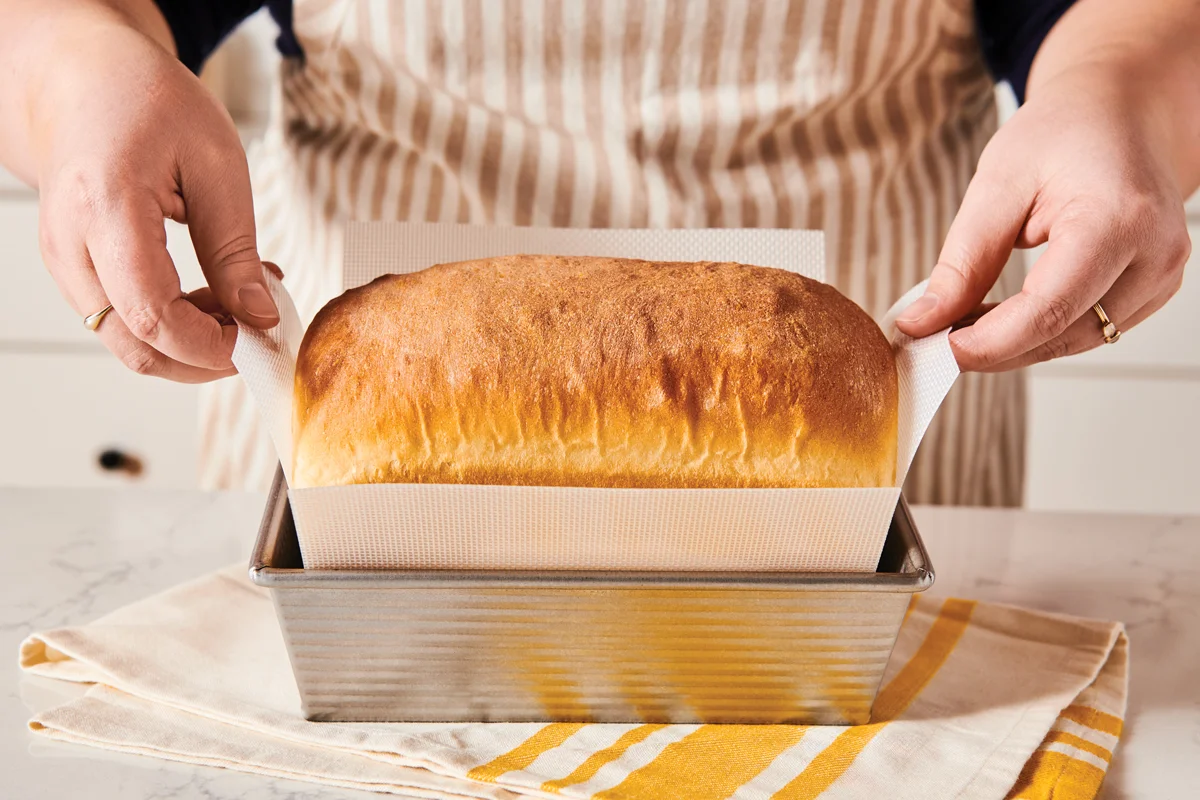
- Parchment paper (highly recommended for easy lift-out)
- Microplane or fine zester
- Mixing bowls
- Whisk and rubber spatula
- Cooling rack
- Instant-read thermometer (optional but very helpful)
Pro tips
- Rub zest into sugar. Before you add wet ingredients, use your fingertips to rub the lemon zest into the granulated sugar until it feels like damp sand. This releases the lemon oils and makes the loaf taste louder.
- Do not overmix once flour is in. Stir just until you stop seeing dry flour. Overmixing makes quick breads tough and can create tunnels.
- How much syrup can the crumb take? This loaf can comfortably absorb up to 1/3 cup (80 ml) of warm lemon syrup without getting wet or sinking. If you try to push it past 1/2 cup (120 ml), slices start to look damp near the bottom and the crumb can compress.
- Doneness test for the center: The top should spring back when lightly pressed, and a toothpick inserted into the very center should come out clean or with a few moist crumbs, not batter. If you have a thermometer, aim for 200 to 205°F (93 to 96°C) in the center.
- Glaze timing: Let the loaf cool at least 20 to 30 minutes before glazing so the glaze sets instead of melting right off.
Substitutes that work
- Greek yogurt or sour cream: You can use plain regular yogurt. If it is very thin, drain it briefly or expect a slightly more delicate crumb.
- Butter: If you only have oil, replace the melted butter with an equal amount of oil. You will lose a bit of buttery flavor but the loaf will stay very soft.
- Milk: Any milk works, including oat or almond.
- Vanilla extract: Optional, but it rounds out the lemon. If you do not have it, skip it.
- Powdered sugar glaze: No powdered sugar? Do the syrup only, or finish with a light sprinkle of granulated sugar right after the syrup soak for sparkle and crunch.
Variations
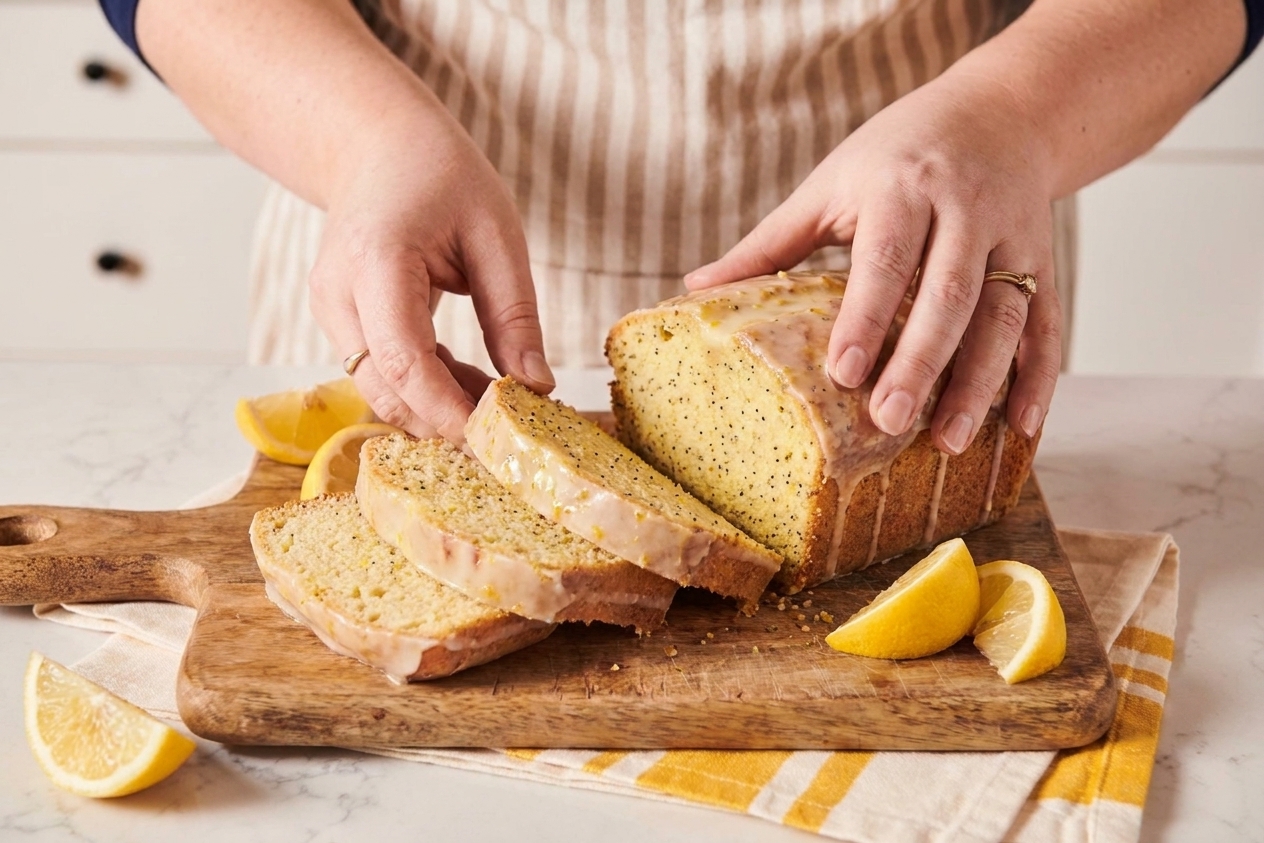
- Poppy seed lemon loaf: Add 1 to 2 tablespoons poppy seeds to the dry ingredients.
- Lemon blueberry loaf: Fold in 1 cup blueberries tossed with 1 tablespoon flour. Increase bake time slightly and tent with foil if the top browns early.
- Extra tangy glaze: Replace some of the glaze liquid with a spoonful of Greek yogurt for a thicker, creamier finish.
- Lemon almond: Swap 1/2 teaspoon almond extract for the vanilla and sprinkle sliced almonds over the glaze before it sets.
Serving ideas
- Serve thick slices with berries and softly whipped cream.
- Toast a slice lightly and spread with salted butter for a sweet-salty moment.
- Pair with tea or coffee as a not-too-sweet breakfast loaf.
- Cube leftover slices and layer into a trifle with yogurt and fruit.
Storage and reheating
To keep the crust soft: Let the loaf cool completely, then wrap it tightly in plastic wrap or beeswax wrap and store at room temperature. If you leave it uncovered, the edges dry out quickly.
Room temperature: 3 to 4 days, wrapped. The syrup helps it stay tender.
Refrigerator: I only refrigerate if your kitchen is very warm. Chill can dry quick bread, so wrap well. Bring slices to room temp or warm briefly before serving.
Freezer: Freeze the loaf (or individual slices) wrapped in plastic wrap, then in a freezer bag for up to 2 months. Thaw wrapped at room temperature so condensation forms on the wrap, not the loaf.
Common mistakes
- Adding too much lemon juice to the batter: Lemon juice is mostly water and acid. Past about 3 tablespoons, you risk a thinner batter and a weaker structure. Get more lemon flavor from zest and syrup.
- Underbaking the center: A loaf can look golden on top and still be underdone inside. Use the center spring test and, if possible, a thermometer.
- Pouring syrup onto a cool loaf: The loaf absorbs best when warm. If it is cool, syrup sits on top and makes a sticky layer instead of soaking in.
- Overmixing: Overworked batter bakes up tight and can crack aggressively on top.
- Glazing too soon: If the loaf is hot, the glaze melts and disappears into the crust, which is delicious but not the look most people want.
FAQ
Can I use bottled lemon juice?
For the syrup and glaze, bottled lemon juice is fine in a pinch. For the loaf itself, you still need fresh lemons for zest, which is where most of the flavor comes from.
How do I know the loaf is done without a thermometer?
Look for a deep golden top, a crack down the center, and a springy feel when you press lightly in the middle. Then do the toothpick test in the exact center. A few moist crumbs are perfect. Wet batter means keep baking.
Why did my lemon loaf sink?
The most common causes are too much liquid (often extra lemon juice), underbaking, or opening the oven door very early so the center collapses. Stick to the measured juice in the batter and bake until the center is truly set.
Can I skip the syrup?
You can, but the loaf will be less moist and the lemon flavor will be lighter. If you only do one finishing step, I vote syrup first. It makes a bigger difference than glaze.
Should I glaze the whole loaf or just slices?
Glazing the whole loaf helps lock in moisture. If you are freezing it, you can freeze unglazed and glaze after thawing for the freshest look.
The recipe
Lemon Loaf
A bright, tender lemon loaf made with lots of zest, then soaked with warm lemon syrup and finished with a simple lemon glaze.
- Prep
- 20 minutes
- Cook
- 55 to 65 minutes
- Total
- 1 hour 30 minutes
- Yield
- 1 loaf (about 10 slices)
Ingredients
- Nonstick spray or softened butter, for the pan
- 2 cups (250 g) all-purpose flour
- 1 1/2 tsp baking powder
- 1/2 tsp baking soda
- 1/2 tsp fine salt
- 1 cup (200 g) granulated sugar
- 2 tbsp finely grated lemon zest (from about 2 large lemons)
- 2 large eggs, room temperature
- 1/2 cup (120 g) Greek yogurt or sour cream (preferably full-fat)
- 1/4 cup (60 ml) neutral oil (like canola, avocado, or grapeseed)
- 1/4 cup (57 g) unsalted butter, melted and cooled slightly
- 1/4 cup (60 ml) milk
- 3 tbsp (45 ml) fresh lemon juice
- 1 tsp vanilla extract (optional)
- For the lemon syrup
- 1/4 cup (60 ml) fresh lemon juice
- 1/4 cup (50 g) granulated sugar
- For the lemon glaze
- 1 cup (120 g) powdered sugar
- 1 1/2 to 2 1/2 tbsp fresh lemon juice (plus more as needed)
- Pinch of salt
Instructions
- Prep the pan and oven. Heat oven to 350°F (175°C). Grease a 9 by 5 inch loaf pan and line with a parchment sling, leaving overhang on the long sides for lifting.
- Mix dry ingredients. In a medium bowl, whisk together flour, baking powder, baking soda, and salt.
- Infuse the sugar with zest. In a large bowl, add granulated sugar and lemon zest. Rub together with your fingertips for 30 to 60 seconds until very fragrant and slightly clumpy.
- Add wet ingredients. Whisk eggs into the sugar mixture until smooth, then whisk in yogurt (or sour cream), oil, melted butter, milk, lemon juice, and vanilla (if using) until fully combined.
- Combine batter. Add dry ingredients to the wet ingredients and fold with a spatula just until you stop seeing dry flour. Do not overmix.
- Bake. Scrape batter into prepared pan and smooth the top. Bake 55 to 65 minutes, or until the center springs back when lightly pressed and a toothpick inserted into the center comes out clean or with a few moist crumbs. If you have an instant-read thermometer, the center should read 200 to 205°F (93 to 96°C). If the top is browning too quickly, tent loosely with foil for the last 10 to 15 minutes.
- Make the syrup. While the loaf bakes, combine 1/4 cup lemon juice and 1/4 cup sugar in a small saucepan. Warm over medium heat, stirring, just until the sugar dissolves. Do not boil hard. Set aside warm.
- Syrup soak. Let loaf cool in the pan for 10 minutes, then lift it out onto a rack (use the parchment overhang). With the loaf still warm, poke the top all over with a toothpick or skewer. Slowly brush or spoon the warm syrup over the top, letting it absorb between additions.
- Cool before glazing. Cool loaf at least 20 to 30 minutes before glazing, or cool completely for the neatest slices.
- Glaze. In a small bowl, whisk powdered sugar, 1 1/2 tablespoons lemon juice, and a pinch of salt until smooth. Add more lemon juice, a little at a time, until it reaches a thick but pourable consistency. Drizzle over the loaf and let set 10 to 15 minutes before slicing.
Notes
Juice limit in the batter: Stick with 3 tablespoons (45 ml) lemon juice in the batter for a strong lemon note without thinning the structure. If you want more lemon punch, increase zest or lean on the syrup and glaze.
Soft crust storage: Once completely cool and glaze is set, wrap the loaf tightly. For the softest crust, avoid storing uncovered or in the fridge unless necessary.