
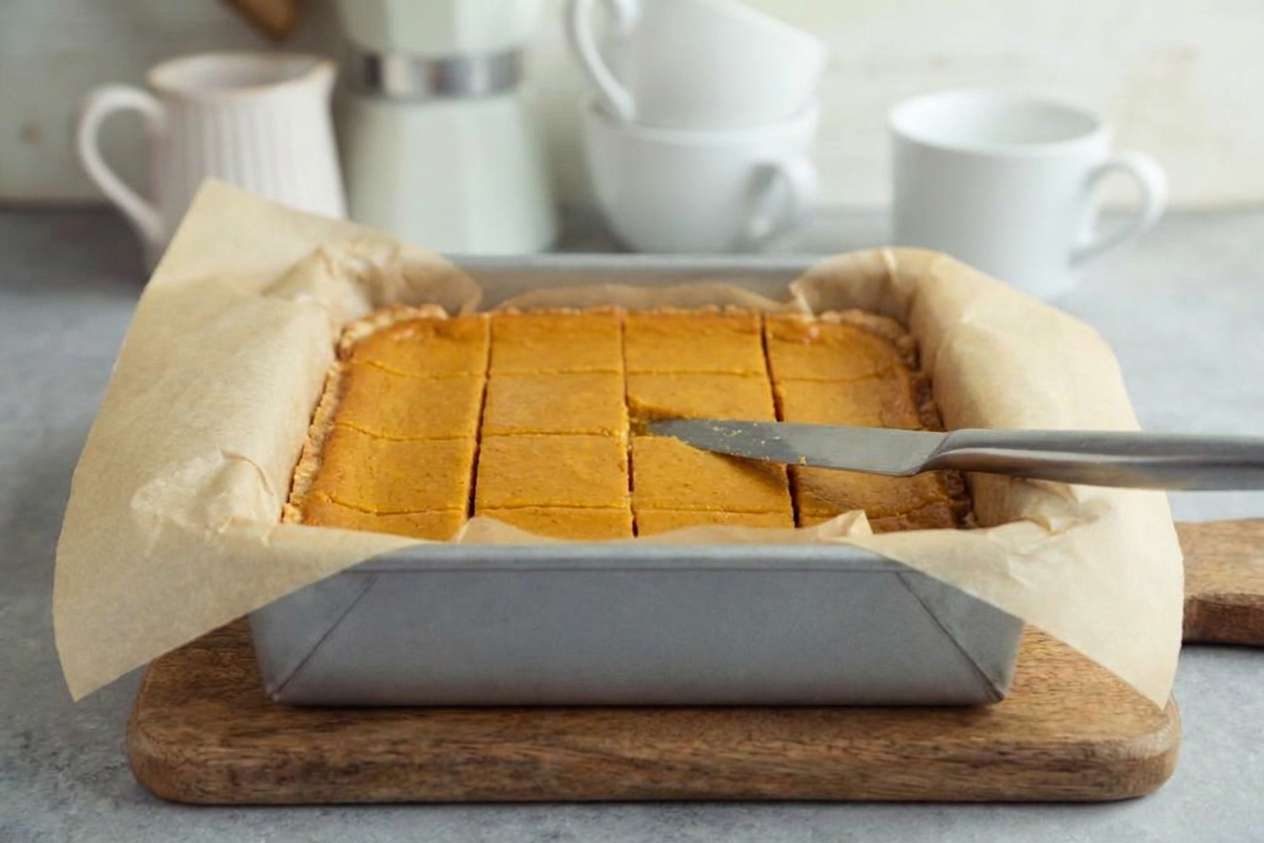
Every fall, I make at least one dessert for the real world. The one where the pie plate is missing, the fridge is too full for a layer cake, and someone is asking if dessert can be handheld. These pumpkin pie bars are that dessert.
You get a crisp, sandy shortbread crust (not a cake base, not a graham cracker press-in), and on top, a classic pumpkin custard that tastes like a proper pumpkin pie. The whole thing bakes in one pan, chills into clean-lifting squares, and travels like a champ.

If you have ever ended up with pumpkin filling that looks set in the oven but turns soupy when you cut it, or a crust that crumbles the second you lift a bar, you are in the right place. In this recipe, crust thickness is intentional, the doneness check is clear (set edges, slight wobble in the center), and the cooling and chilling time is what makes the bars slice clean instead of slumping.
Why this recipe works
- A true shortbread crust: Butter, sugar, flour, and a little salt bake into a sturdy base that slices cleanly and tastes rich instead of bland.
- Pre-baking the crust: A brief bake sets the crust so it does not turn soggy under the custard.
- Custard texture that holds: The filling uses eggs plus a balanced amount of evaporated milk for a pumpkin pie set that is silky, not watery.
- Even baking in a shallow pan: Bars bake more evenly than a deep pie in a round plate, so you get fewer underbaked centers.
- Cooling is part of the recipe: A long cool plus chill firms the custard so you can lift and slice without cracks and smears.
Ingredient notes
Pumpkin puree: Use plain canned pumpkin puree, not pumpkin pie filling. Pumpkin pie filling already contains sugar and spices, which throws off the custard set.
Evaporated milk: This is traditional in pumpkin pie for a reason. It gives richness without thinning the filling. Be sure it is evaporated milk, not sweetened condensed milk.
Eggs: Eggs set the custard. Let them come to room temp if you can so the filling mixes smoothly.
Spices: Pumpkin pie spice is convenient, but I also like adding extra cinnamon because it reads as “pumpkin pie” immediately. Salt matters here too. It keeps the filling from tasting flat.
Shortbread crust thickness: For a 9x9 pan, you want a crust that is thick enough to support the custard, but not so thick it feels like a cookie with a thin smear of filling. Aim for an even press with no bare spots, about 1/4 inch thick.
Equipment you will need
- 9x9-inch square baking pan (metal or glass both work)
- Parchment paper for a sling (for clean lifting)
- Mixing bowls
- Whisk
- Rubber spatula
- Measuring cups and spoons
- Fine mesh sieve (optional, for the smoothest custard)
- Wire rack
- Sharp knife for slicing
Pro tips
How to get the crust right
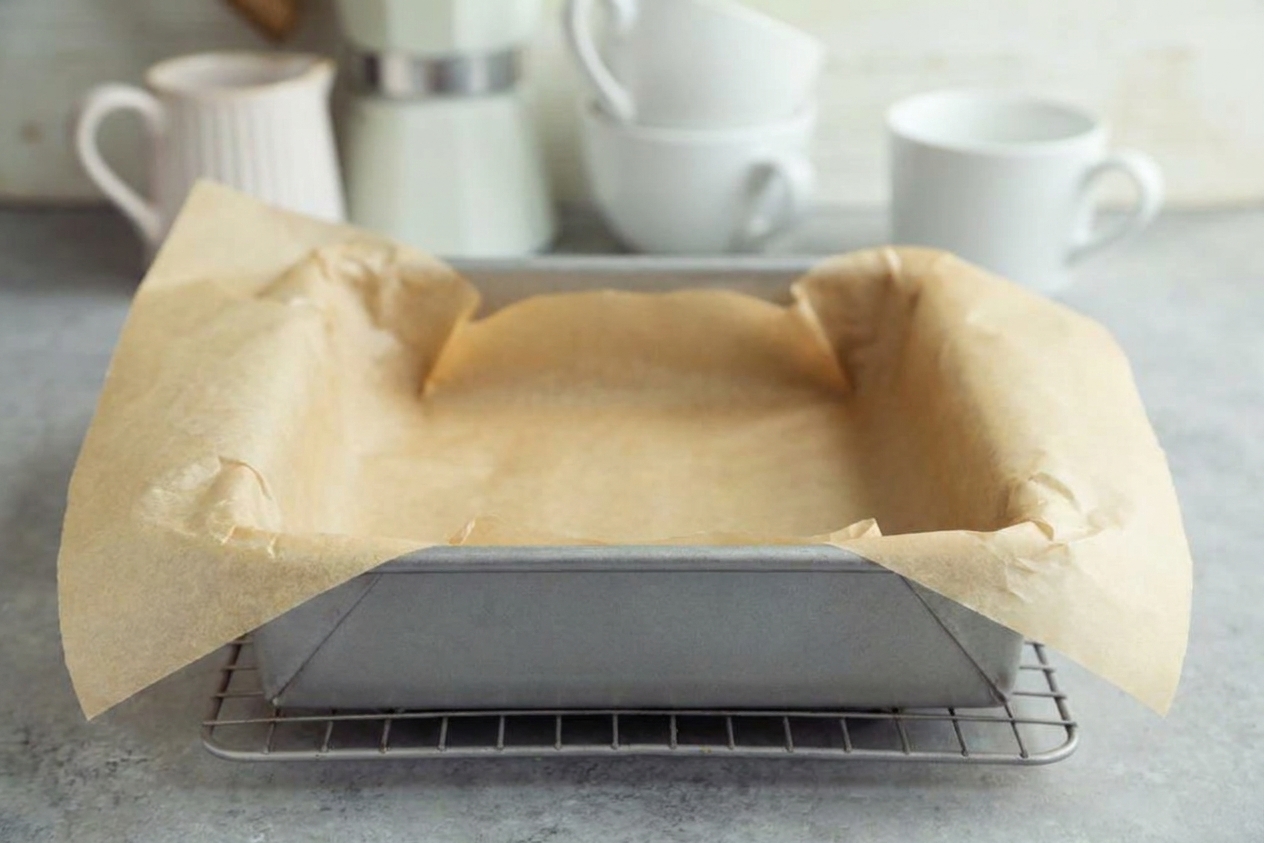
Line the pan so parchment extends up and over two sides. Then press the crust firmly and evenly, especially in the corners. I use the flat bottom of a measuring cup to compact it. A loose press equals a crumbly base.
How to know the custard is set
Think “pumpkin pie,” not “brownies.” The edges should look set and slightly puffed, and the center should still have a gentle jiggle when you nudge the pan. Not a wave, not a slosh, just a soft wobble in the middle 2 to 3 inches.
- If the center ripples like liquid, it needs more time.
- If the whole surface looks firm and dry and it is pulling away aggressively at the edges, it is likely overbaking.
An instant-read thermometer is optional but helpful. A custard is typically set around 175 to 180 F in the center.
Cooling for clean slices
Let the pan cool on a rack until it reaches room temperature, then chill until fully cold. When you lift the bars while they are still warm, the custard is delicate and can crack or smear. Cold custard slices cleanly.
Before slicing, I like to run a thin knife along any edges not covered by parchment, then lift straight up using the parchment handles.
Substitutes that work
- No pumpkin pie spice: Use a blend of cinnamon, ginger, nutmeg, and cloves in the amounts listed in the recipe.
- Dairy swap: In a pinch, half-and-half can work, but the filling will be slightly less classic and can bake softer. Stick with evaporated milk for the most reliable set.
- Gluten-free: A 1:1 gluten-free flour blend can work in the crust, but choose one that contains xanthan gum. Press firmly and expect a slightly more delicate crust.
- Brown sugar: You can swap some or all of the granulated sugar in the filling for light brown sugar for a deeper molasses note. It will also darken the custard.
Variations
- Pecan crunch: Sprinkle 1/2 cup chopped toasted pecans over the par-baked crust before pouring in the filling.
- Maple pumpkin: Replace 2 tablespoons of the sugar in the filling with pure maple syrup. It adds warmth without making the custard overly sweet.
- Extra-spiced: Add a pinch of black pepper or extra ginger if you like a spicier finish.
- Chocolate swirl: Drizzle 2 to 3 tablespoons melted chocolate over the filling right after baking, then chill and slice. Keep it light so it still reads as pumpkin pie, not frosted cake bars.
Serving ideas
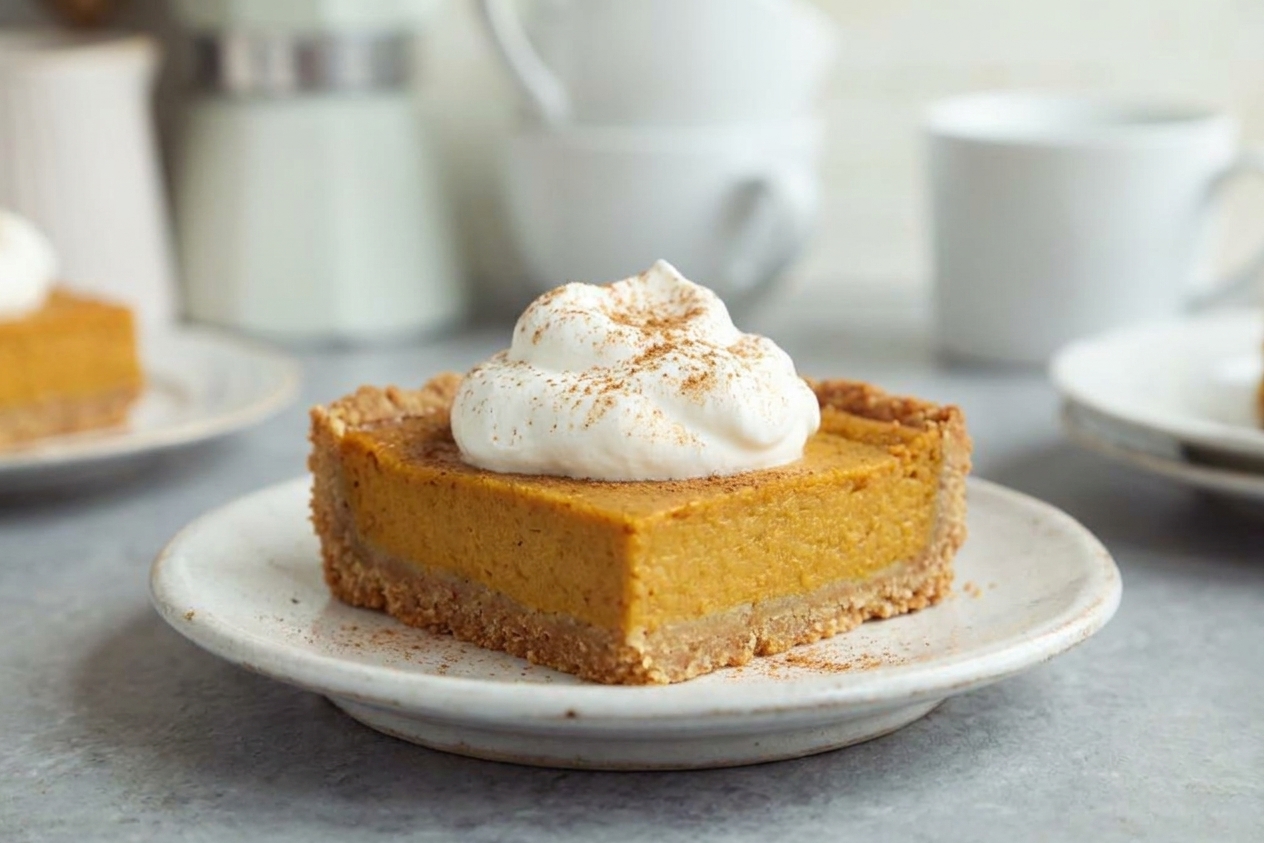
- Serve chilled or cool room temperature with lightly sweetened whipped cream.
- Add a dusting of cinnamon right before serving.
- For a dessert board, pair with apple slices, salted nuts, and sharp cheddar.
- If you want a little elegance, top each square with a small dollop of whipped cream and a few toasted pepitas.
Storage and reheating
Refrigerator: Store bars covered in the fridge for up to 4 days. Custard desserts are happiest cold.
Freezer: Freeze sliced bars on a sheet pan until firm, then wrap individually and store in a freezer bag for up to 2 months. Thaw overnight in the fridge.
Serving after chilling: For the cleanest edges, slice cold. If you prefer a softer bite, let a square sit at room temperature for 10 to 15 minutes before eating.
Common mistakes
- Using pumpkin pie filling instead of puree: It can make the custard overly sweet and change the set.
- Skipping the crust pre-bake: The shortbread needs that head start or it can absorb moisture and crumble.
- Pressing the crust too lightly: Loose crumbs will not support the custard when you lift squares.
- Overbaking: Overbaked custard can crack and turn grainy. Pull it when the center still jiggles gently.
- Cutting while warm: Warm custard smears and can slump. Cool fully, then chill.
- Not lining the pan: The parchment sling is the difference between neat squares and digging bars out with a spatula.
FAQ
Can I make these pumpkin pie bars ahead?
Yes, and they are actually better that way. Make them the day before, chill overnight, then lift and slice when you are ready to serve.
Do these need to be refrigerated?
Yes. Because the topping is an egg-based custard, store them covered in the refrigerator.
My center is still jiggly. Is it underbaked?
Not necessarily. The center should jiggle gently, like a pumpkin pie. If it looks liquid or ripples when you tap the pan, bake a bit longer and check again.
Why did my custard crack?
Cracks usually mean the custard went a little too far in the oven. Next time, pull the pan when the center is still slightly wobbly, and let it finish setting as it cools.
Can I double this for a 9x13 pan?
Yes. Double all ingredients and bake in a 9x13 pan. Start checking for doneness around the lower end of the bake time range and continue as needed until you get that set-edge, gentle-jiggle center.
The recipe
Pumpkin Pie Bars
Buttery shortbread crust topped with smooth, warmly spiced pumpkin pie custard, baked in a square pan and chilled for clean, liftable bars.
- Prep
- 20 minutes
- Cook
- 55 minutes
- Total
- 5 hours 15 minutes
- Yield
- 16 bars
Ingredients
- For the shortbread crust
- 1 cup (2 sticks) unsalted butter, melted and slightly cooled
- 1/2 cup granulated sugar
- 1/2 teaspoon fine salt
- 2 cups all-purpose flour
- For the pumpkin custard
- 1 can (15 oz) pumpkin puree
- 1 can (12 oz) evaporated milk
- 2 large eggs
- 3/4 cup granulated sugar
- 1 1/2 teaspoons ground cinnamon
- 1 teaspoon pumpkin pie spice
- 1/2 teaspoon fine salt
- 1 teaspoon vanilla extract
Instructions
- Heat oven to 350 F. Line a 9x9-inch square baking pan with parchment paper, leaving overhang on two sides to create a sling. Lightly grease any exposed sides if needed.
- Make the crust: In a bowl, whisk together melted butter, sugar, and salt. Add flour and stir with a spatula until a thick, sandy dough forms with no dry flour pockets.
- Press the crust dough firmly and evenly into the bottom of the lined pan, including the corners. Aim for an even layer about 1/4 inch thick.
- Par-bake the crust for 15 minutes, until the edges look lightly golden and the surface looks set.
- While the crust bakes, make the filling: In a large bowl, whisk pumpkin puree, evaporated milk, eggs, sugar, cinnamon, pumpkin pie spice, salt, and vanilla until smooth. For an extra-silky custard, strain through a fine mesh sieve.
- Pour the pumpkin filling over the hot par-baked crust and gently tap the pan on the counter a few times to release bubbles.
- Bake 35 to 45 minutes, until the edges are set and slightly puffed and the center has a gentle jiggle. If using an instant-read thermometer, the center should read about 175 to 180 F.
- Cool the pan on a wire rack until completely room temperature, about 1 1/2 to 2 hours.
- Cover and refrigerate until fully chilled and firm, at least 3 hours and preferably overnight.
- Lift the bars out using the parchment sling. Slice into squares with a sharp knife, wiping the blade clean between cuts for the neatest edges.
Notes
- Clean slices: Slice cold for sharp edges. If the knife drags, run it under hot water, wipe dry, then slice.
- Doneness cue: The center should wobble slightly like pumpkin pie. If it ripples like liquid, bake longer.
- Pan size: A 9x9 pan gives a sturdy crust-to-custard ratio. An 8x8 pan will make thicker bars and may need a few extra minutes in the oven.