
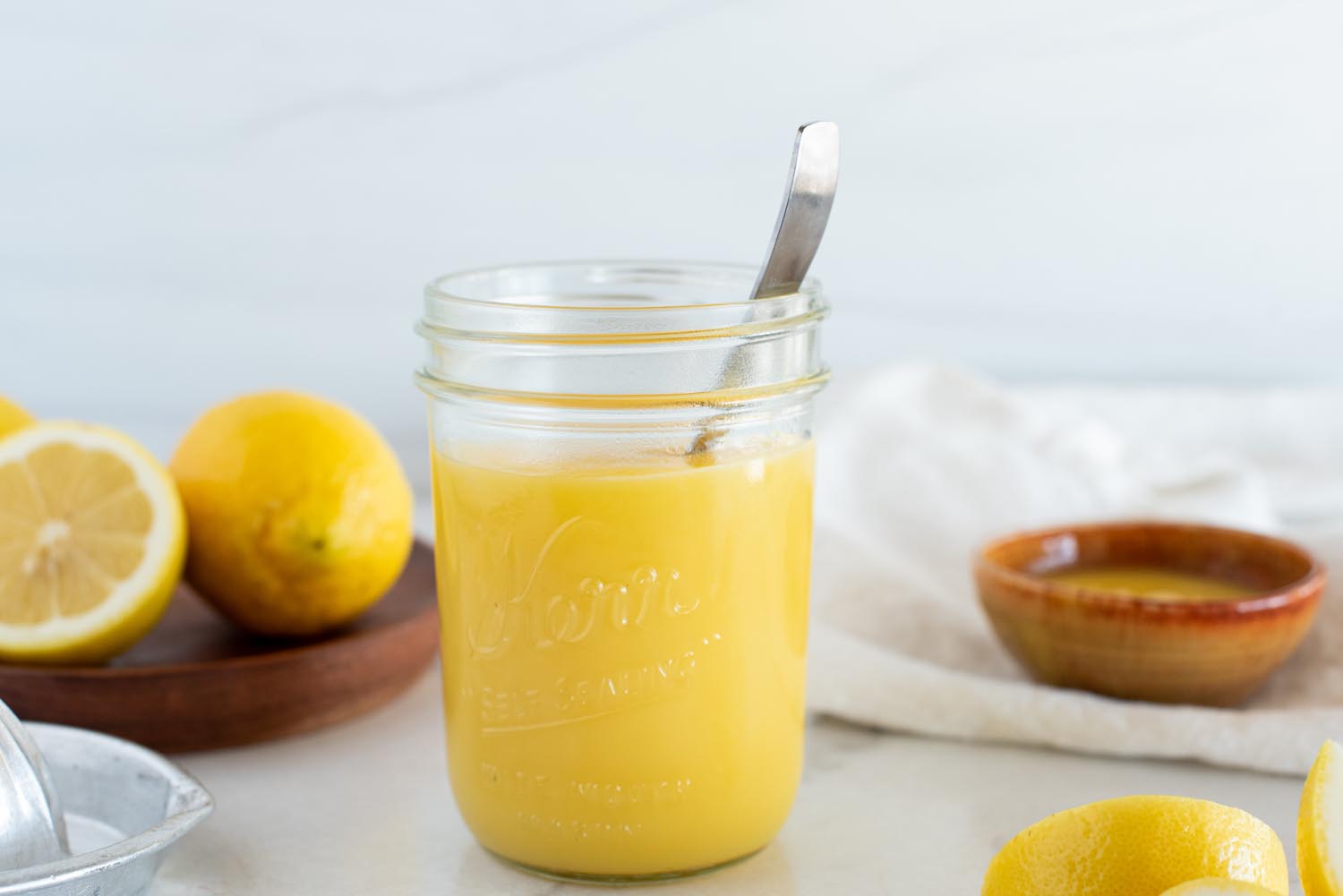
Savory lemon curd is one of those little kitchen tricks that makes dinner feel intentional, even when you are pulling things together on a Tuesday. It has the same silky, spoonable texture as classic lemon curd, but we steer it away from sweets with salt, olive oil and/or butter, and savory add-ins like thyme, chives, pepper, or miso. The result is bright and rich at the same time, like a lemony hollandaise’s more laid-back cousin.
If you’ve ever whisked eggs into something warm and held your breath, this is absolutely doable at home. The whole secret is gentle heat, constant whisking, and knowing what “done” looks like before it turns into scrambled eggs.

What makes it savory
Traditional lemon curd leans on sugar for body and balance. In a savory version, we still need balance, but we get it differently.
- Less sugar, more salt: Many savory versions use a small amount of sugar or honey, just enough to round off the sharp edges of lemon. Salt does the heavy lifting for flavor.
- Fat for silkiness: Butter makes it lush and classic. Olive oil makes it lighter and a little more “sauce-like.” You can also blend the two.
- Umami and aromatics: Mustard, miso, garlic, shallot, chile, herbs, or black pepper are the fastest ways to push the curd into savory territory.
In practice, I think of savory lemon curd as a spreadable sauce that can replace aioli, brighten pan juices, or act like a lemony “glue” in sandwiches.
The method (and why it works)
Curd is basically a controlled custard. Egg yolks thicken when heated, lemon juice provides tang, and fat makes it velvety. The reason curd sometimes fails is heat that is too high or uneven.
Key technique: low heat and patience
- Use a double boiler when you can. A bowl set over a saucepan of gently simmering water gives you built-in protection against scorching and curdling.
- Whisk constantly. Not aggressively, just continuously, so the yolks heat evenly.
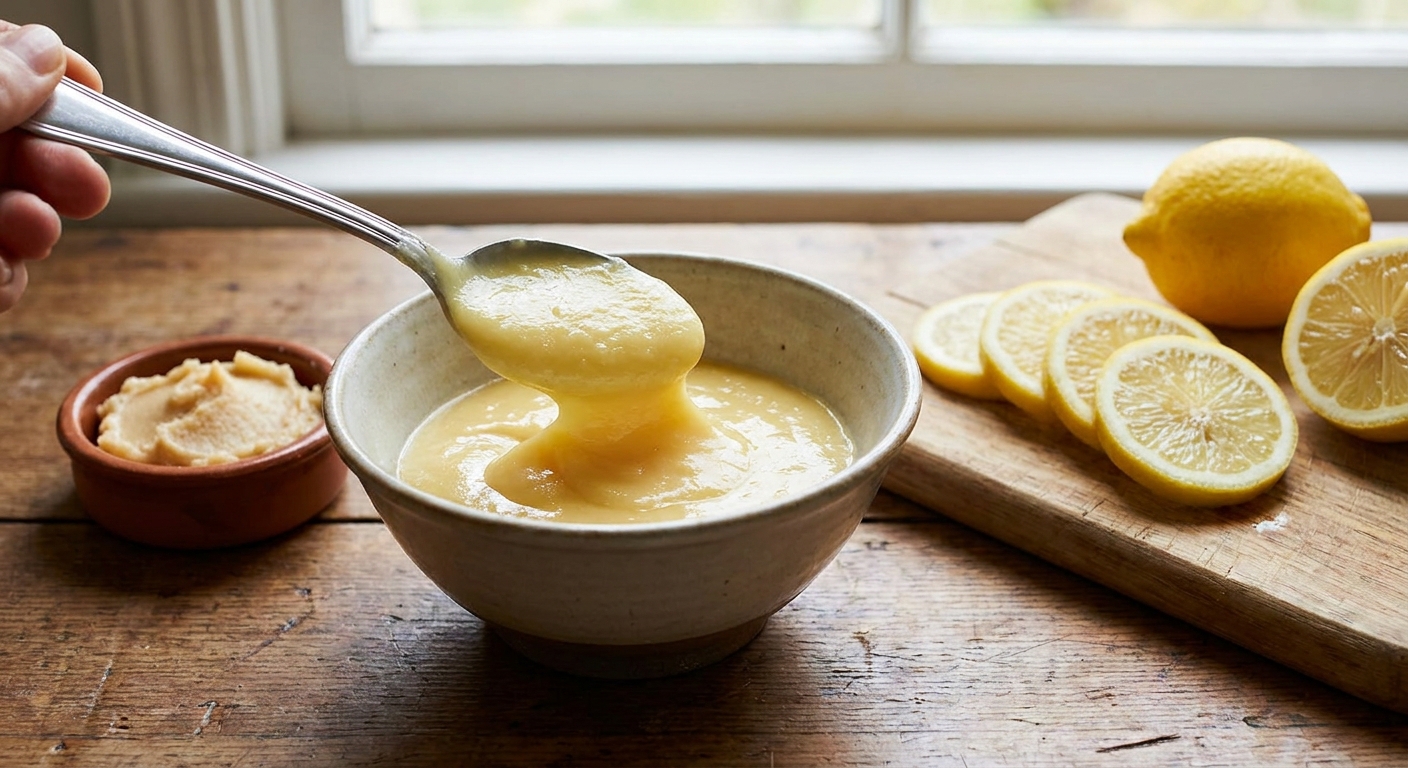
- Pull it at the right moment. Savory lemon curd is done when it thickens enough to coat the back of a spoon and a finger swipe leaves a clean line.
About safety and temperature
If you like a temperature marker, most curds thicken somewhere around 170°F (often a bit lower or higher depending on the recipe). For egg safety, a common benchmark for custards is 160°F. Use temperature as a helpful backstop, but let the visual cues lead. You do not need to boil it, and boiling is where things start to get grainy and eggy.
Bowl note: If you are using a double boiler, choose stainless steel, glass, or ceramic. Very acidic lemon can pick up an off taste from reactive metals like aluminum.
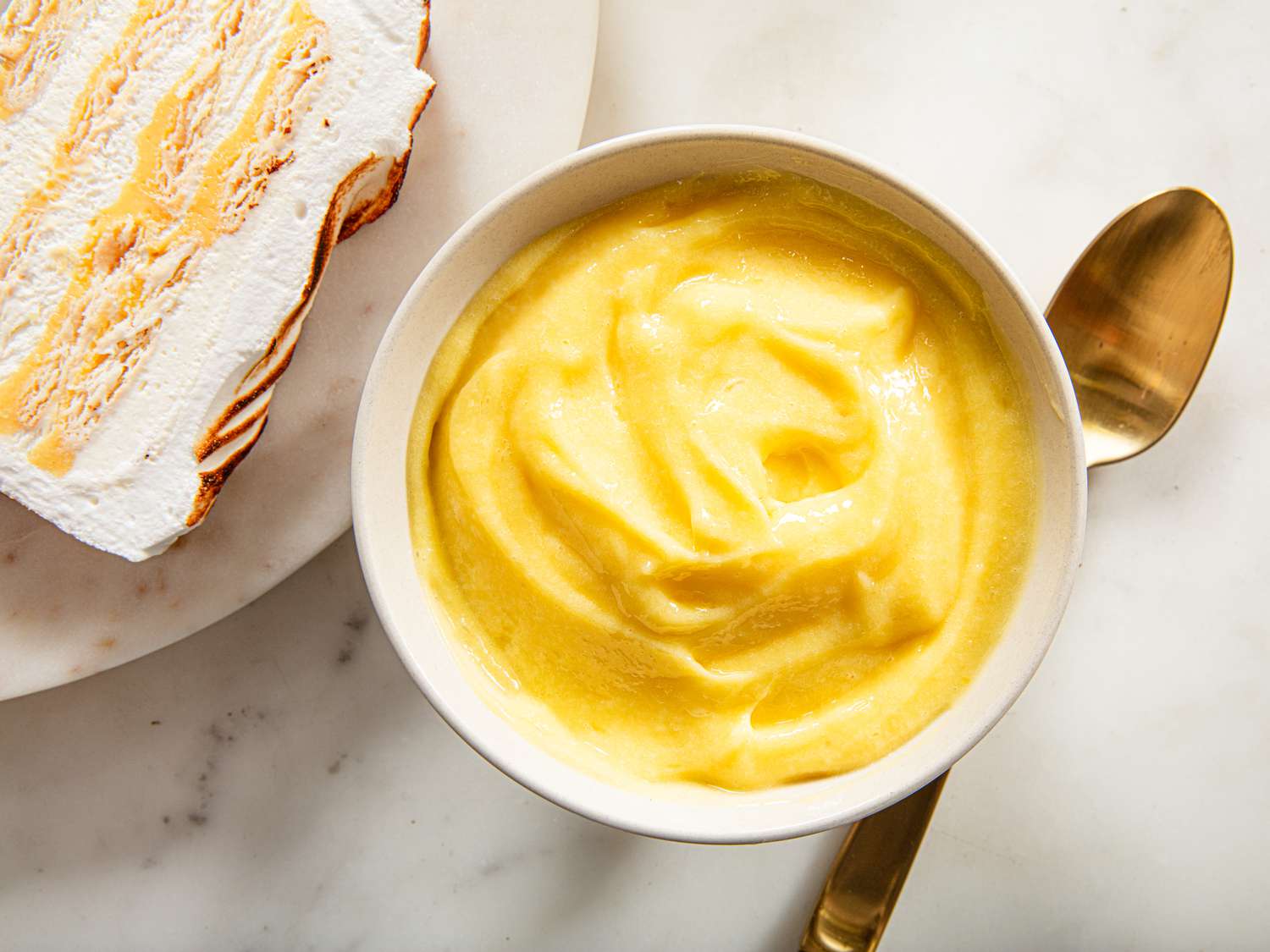
Savory lemon curd recipe
Silky Savory Lemon Curd (Herb-Friendly)
Makes: about 1 cup
Time: 15 to 20 minutes, plus chilling
Ingredients
- 3 large egg yolks
- 1 large egg
- 1/3 cup fresh lemon juice (from about 2 to 3 lemons)
- 1 tablespoon finely grated lemon zest
- 2 to 3 tablespoons honey or sugar (optional but recommended for balance)
- 1/2 teaspoon kosher salt, plus more to taste (start with 1/4 teaspoon if you are salt-sensitive or using fine salt)
- 6 tablespoons unsalted butter, cut into pieces (or 4 tablespoons butter plus 2 tablespoons olive oil)
- 1 to 2 teaspoons finely chopped soft herbs (chives, dill, tarragon, or thyme), optional
- Freshly ground black pepper, to taste
Instructions
- Set up gentle heat. Bring a small saucepan with 1 inch of water to a very gentle simmer. Set a heatproof bowl over the top, making sure the bowl does not touch the water.
- Whisk the base. In the bowl, whisk egg yolks, whole egg, lemon juice, zest, honey or sugar (if using), and salt until smooth.
- Cook slowly. Cook, whisking constantly, until the curd thickens enough to coat the back of a spoon, 8 to 12 minutes. Keep the heat low. You want steam, not a rolling boil. If you are tracking temperature, aim for at least 160°F and expect it to thicken around 170°F, give or take.
- Finish with fat. Take the bowl off the heat. Whisk in butter a few pieces at a time until fully melted and glossy. If using olive oil, whisk it in at the end.
- Season. Add herbs and black pepper. Taste and adjust salt. For more brightness, add a few drops of lemon juice. For more roundness, add a small drizzle of honey.
- Strain (recommended). Push through a fine-mesh sieve into a jar for the silkiest texture.
- Chill. Press plastic wrap directly onto the surface (or just cap the jar) and chill at least 2 hours. It will thicken as it cools.
Notes
- All olive oil option: You can use 6 tablespoons olive oil instead of butter. Expect a looser, more sauce-like set, especially while warm.
- Doubling: You can double the recipe, but it will take longer to thicken. Keep the simmer gentle and be extra consistent with whisking, especially around the edges of the bowl.
- If it thickens too much: Whisk in a teaspoon of warm water to loosen.
- If it looks slightly grainy: Strain, then blend briefly with an immersion blender.
Easy variations
The base recipe is intentionally neutral so you can steer it toward whatever dinner needs help.
1) Herb and pepper
- Add chives and black pepper for a “lemony aioli” vibe.
- Add dill for salmon, smoked fish, or potatoes.
- Add tarragon for chicken, asparagus, or anything French-inspired.
2) Mustard and shallot
- Whisk in 1 to 2 teaspoons Dijon mustard at the end.
- Optionally sweat 1 tablespoon minced shallot in a teaspoon of butter, cool, then whisk in.
3) Miso lemon curd
- Whisk in 1 to 2 teaspoons white miso (start small, it is powerful).
- Use olive oil for the fat portion if you want a lighter, more savory finish.
4) Chili crisp lemon curd
- Swirl in chili crisp right before serving for heat and crunch.
- Keep the base a touch sweeter for balance.
How to use it
This is the fun part. I like to think in categories: proteins, vegetables, grains, and snacking.
With fish and seafood
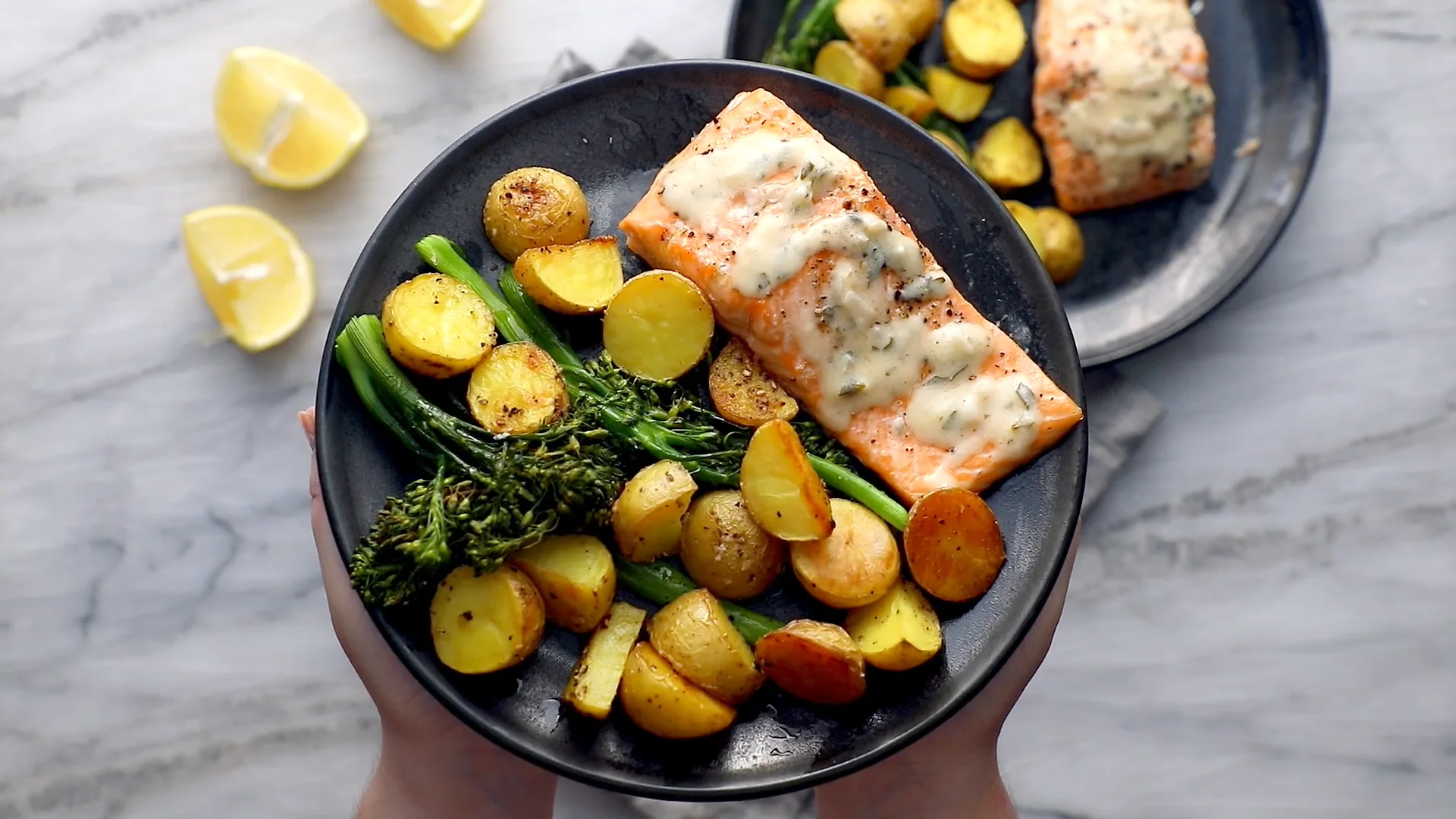
- Salmon: Spoon on after roasting, or use as a glossy finishing sauce.
- Scallops or shrimp: A small swipe on the plate, then top with the seafood and pan drippings.
- Crab cakes: Use in place of tartar sauce, especially with chives.
With chicken and pork
- Roast chicken: Stir a spoonful into the pan juices for an instant lemony pan sauce.
- Pork chops: Pair with thyme or mustard versions to cut through richness.
With vegetables
- Roasted carrots or cauliflower: Toss warm veggies with a spoonful and a splash of water to make it coat.
- Asparagus: Drizzle over grilled or roasted spears.
- Brussels sprouts: Especially good with miso lemon curd.
Sandwiches, toast, and snack boards
- Turkey or ham sandwiches: Swap for mayo.
- Avocado toast: Add a thin spread under the avocado for bright punch.
- Cheese boards: Serve with goat cheese, brie, or aged cheddar, plus crackers and olives.
Storage and make-ahead
- Refrigerator: Store in a clean jar, tightly covered, for 5 to 7 days. If you add fresh herbs, plan on the shorter end.
- Freezer: You can freeze it for up to 2 months. Thaw overnight in the fridge and whisk to smooth.
- Serving temperature: Cold curd is thicker and spreadable. Room temp curd loosens into more of a sauce.
One gentle note: if you add fresh herbs, the flavor is best in the first 3 to 4 days. For the longest shelf life, keep the base plain and stir herbs into the portion you are using.
Troubleshooting
My curd turned grainy
Usually the heat crept too high. Fix: strain it, then blend briefly. Next time, lower the simmer and whisk steadily.
My curd is runny
It likely needs a bit more cooking time, or it has not chilled long enough. Fix: return to gentle heat and cook until it coats a spoon, then chill. Remember it thickens noticeably in the fridge.
It tastes too sharp
Add a tiny bit of honey or sugar and a pinch more salt. Sharpness needs both sweetness and salinity to feel balanced.
It tastes flat
Add more zest, a few drops of lemon juice, or black pepper. Zest is the quickest way to boost lemon without adding extra acidity.
FAQ
Can I make savory lemon curd without sugar?
Yes. It will taste more bracing and intensely lemony. If you skip sugar entirely, I recommend leaning into savory elements like miso, mustard, or herbs, and tasting for salt carefully.
Can I make it dairy-free?
You can swap butter for a good-quality plant butter. Olive oil also works, but the texture will be a little looser and more like a lemony sauce than a thick spread.
Do I have to use a double boiler?
No, but it is the most forgiving. If using a direct saucepan, keep the heat very low and do not stop whisking. A heavy-bottomed pan helps.
What is the best lemon to use?
Any fresh lemon works, but thinner-skinned lemons with fragrant zest tend to shine here because zest plays such a big role in savory versions.