
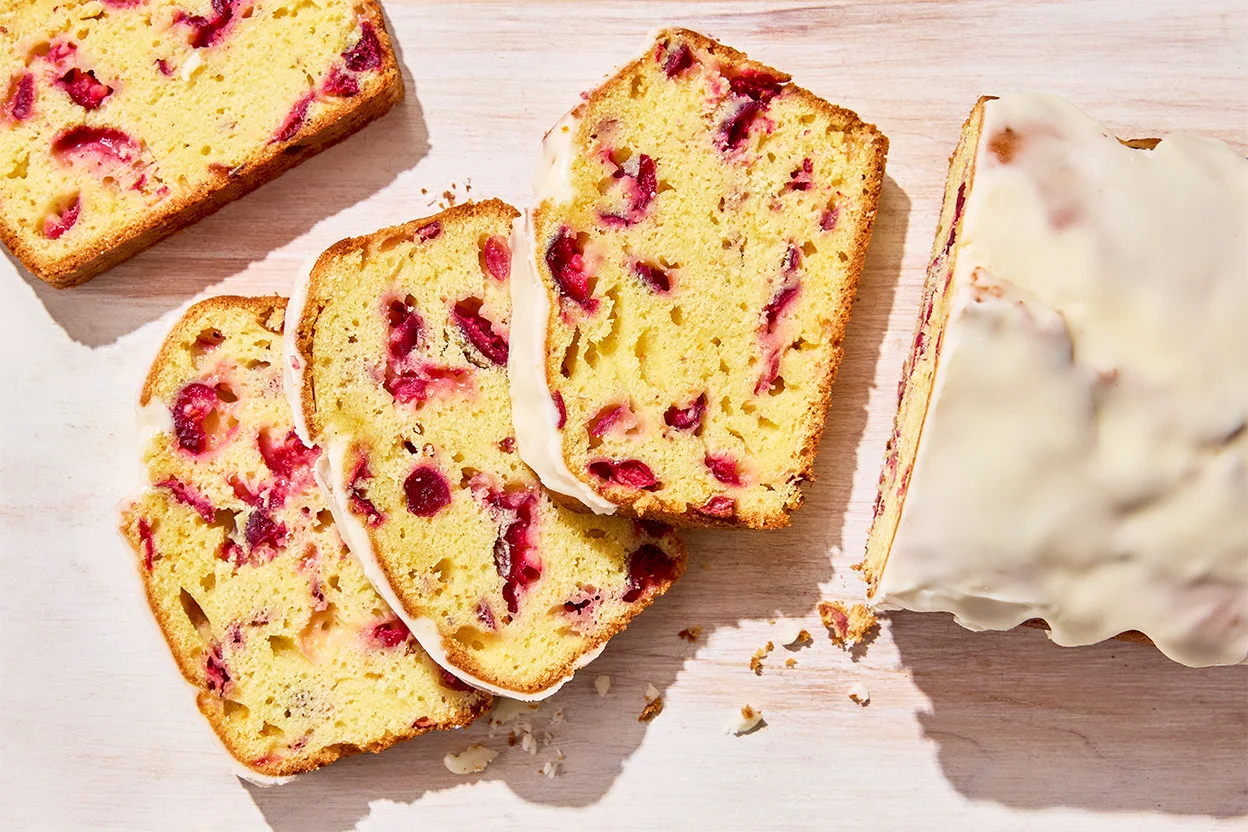
There are a few flavor pairings that feel like turning on the kitchen lights in the middle of a gray week, and cranberry plus orange is one of them. The scent alone makes the house feel warm and busy, like somebody is coming over soon. This loaf is my favorite kind of baking project: one bowl for the dry, one bowl for the wet, a quick fold together, and suddenly you have a bakery-style quick bread cooling on the counter.

What makes cranberry orange bread a little different from other quick breads is that the mix-ins have a mind of their own. Cranberries can sink, and they can bleed more if they get overmixed. They also tend to burst as they bake, which is totally normal and part of their charm. So in this recipe I lean on two simple habits from my bakery days: toss the berries lightly with a spoonful of flour (pulled from the measured dry ingredients) so they are less likely to sink, and fold them in gently at the very end.
You will also notice the batter is looser than something like a pumpkin puree loaf, more like a thick cake batter. That is on purpose. Pumpkin brings thickness and extra solids that help the batter set up faster. Here, we are getting moisture from eggs, yogurt or sour cream, orange juice, and the fat in the batter, which bakes up tender and plush. The tradeoff is that the center can take a little longer to set, so I always rely on a simple doneness check: a skewer in the center should come out without wet batter, and if you hit a cranberry, just test again about 1/2 inch over.
If you want the loaf to feel a little more special, the optional orange glaze comes together quickly and sets into a pretty, bakery-style finish once the loaf is fully cooled. If you skip it, no worries. This bread is still delicious toasted with butter, or sliced thick and served with a mug of tea.
Why this recipe works
- Orange zest does the heavy lifting. Juice adds flavor, but zest brings the fragrant oils that make the whole loaf taste like orange, not just “sweet.”
- A wet batter equals a tender crumb. A looser batter bakes up moist and soft, which is exactly what you want with tart cranberries.
- A light flour coating helps keep berries suspended. Tossing cranberries with a spoonful of flour gives them grip in the batter so they are less likely to sink.
- Gentle folding helps prevent excess bleeding. Overmixing after adding berries can tint the whole loaf. Folding at the end keeps the crumb cleaner and the berry pieces more intact.
- A clear doneness test prevents a gummy center. Quick breads can brown before the middle is fully baked, so we use both visual cues and a reliable skewer test.
Ingredient notes
Cranberries (fresh or frozen)
Both work beautifully. If using frozen cranberries, do not thaw them. Use them straight from the freezer to reduce bleeding and bursting. If your cranberries are very large, you can halve them for more even distribution, but do it quickly and gently.
Orange zest
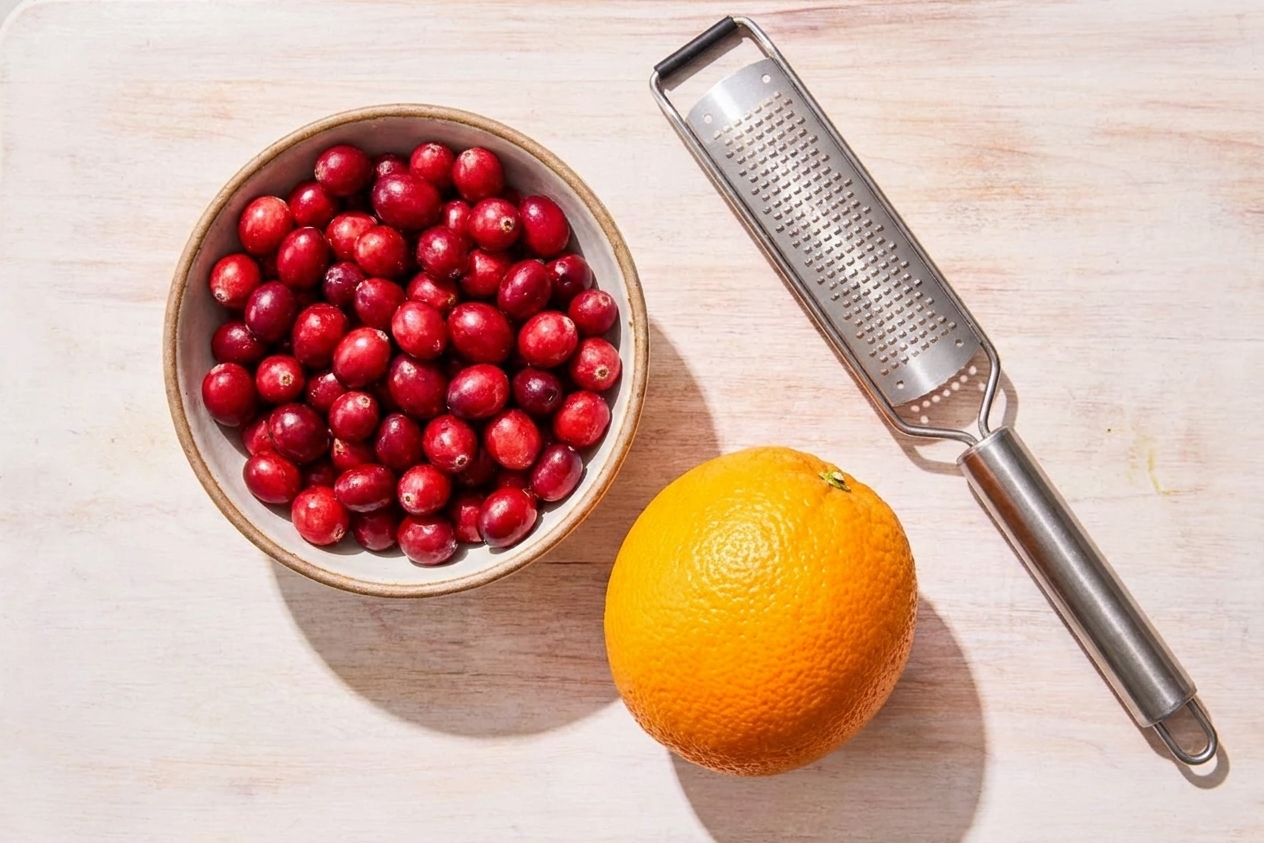
For a standard 9 by 5 inch loaf, I like 1 1/2 to 2 tablespoons of finely grated zest. One large orange often gives you about 1 tablespoon, so plan on 2 oranges if you want a bold orange punch. Zest only the bright orange part, not the white pith, which can taste bitter.
Orange juice
Fresh squeezed tastes best, but bottled works. Juice adds moisture and acidity, which helps tenderness.
Yogurt or sour cream
This is your secret weapon for moisture. Full-fat Greek yogurt or sour cream gives the richest texture, but any plain yogurt works in a pinch.
Flour
All-purpose flour is the default. Measure by spooning flour into the cup and leveling it off so the loaf stays tender.
Leaveners: baking powder and baking soda
Using both gives a reliable rise. The baking soda also reacts with the yogurt or sour cream for extra lift and a fine crumb.
Sugar
Granulated sugar keeps the crumb light. You can use a little brown sugar for warmth, but too much can make the loaf heavier and a bit stickier in the center.
Equipment you will need
- 9 by 5 inch loaf pan
- Parchment paper (highly recommended for easy lifting)
- Mixing bowls (2)
- Whisk and rubber spatula
- Microplane or fine grater for zest
- Cooling rack
- Skewer or thin knife for doneness testing
Pro tips
How to keep cranberries from sinking
- Dry the berries. If they are damp from rinsing, pat them dry well.
- Toss with flour, not a mountain of it. Use about 1 tablespoon flour per 1 1/2 cups cranberries. Too much flour can leave a dusty taste and can thicken pockets of batter.
- Layer the batter. Spread half the batter in the pan, sprinkle in half the cranberries, add the rest of the batter, then top with remaining cranberries. This helps distribution even if a few berries drift downward.
How to prevent bleeding
- Do not thaw frozen cranberries.
- Fold in gently. Stop mixing as soon as you no longer see dry flour.
- Avoid over-stirring once berries are in. A few streaks of berry juice are fine, but vigorous mixing turns the crumb gray-pink.
Best center doneness test
Look for a deeply golden top with a firm, dry-looking crack down the center. Then insert a skewer into the exact center. You want it to come out with no wet batter. Moist crumbs are fine. If you hit a cranberry, test again about 1/2 inch over. If the top is browning too fast before the center is done, tent loosely with foil for the last 10 to 15 minutes.
Glaze without a mess
Cool the loaf for at least 30 to 45 minutes before glazing. If the loaf is too warm, the glaze will melt and disappear into the crust.
Substitutes that work
- No yogurt or sour cream: Use buttermilk (same amount) for a slightly lighter crumb, or plain kefir. If using milk, the loaf will be less tender.
- No fresh oranges: Use bottled orange juice, and add 1 to 2 teaspoons orange extract if you have it to boost aroma.
- No cranberries: Dried cranberries work, but the loaf will be sweeter. Reduce sugar slightly and consider soaking dried cranberries in warm orange juice for 10 minutes, then drain well.
- Butter swap: Neutral oil works for a very moist crumb. The flavor is less rich than butter, but still delicious with the orange.
- Flour swap: A 1:1 gluten-free baking blend can work, but expect a slightly more delicate slice. Let the loaf cool completely before cutting.
Variations
- Cranberry orange walnut: Add 1/2 cup chopped walnuts or pecans for crunch.
- Vanilla glaze: Add 1/2 teaspoon vanilla extract to the glaze for a creamsicle vibe.
- Spiced winter loaf: Add 1 teaspoon cinnamon and a pinch of ground cardamom to the dry ingredients.
- Lemon-orange twist: Use 1 tablespoon orange zest plus 1 tablespoon lemon zest for extra brightness.
Serving ideas
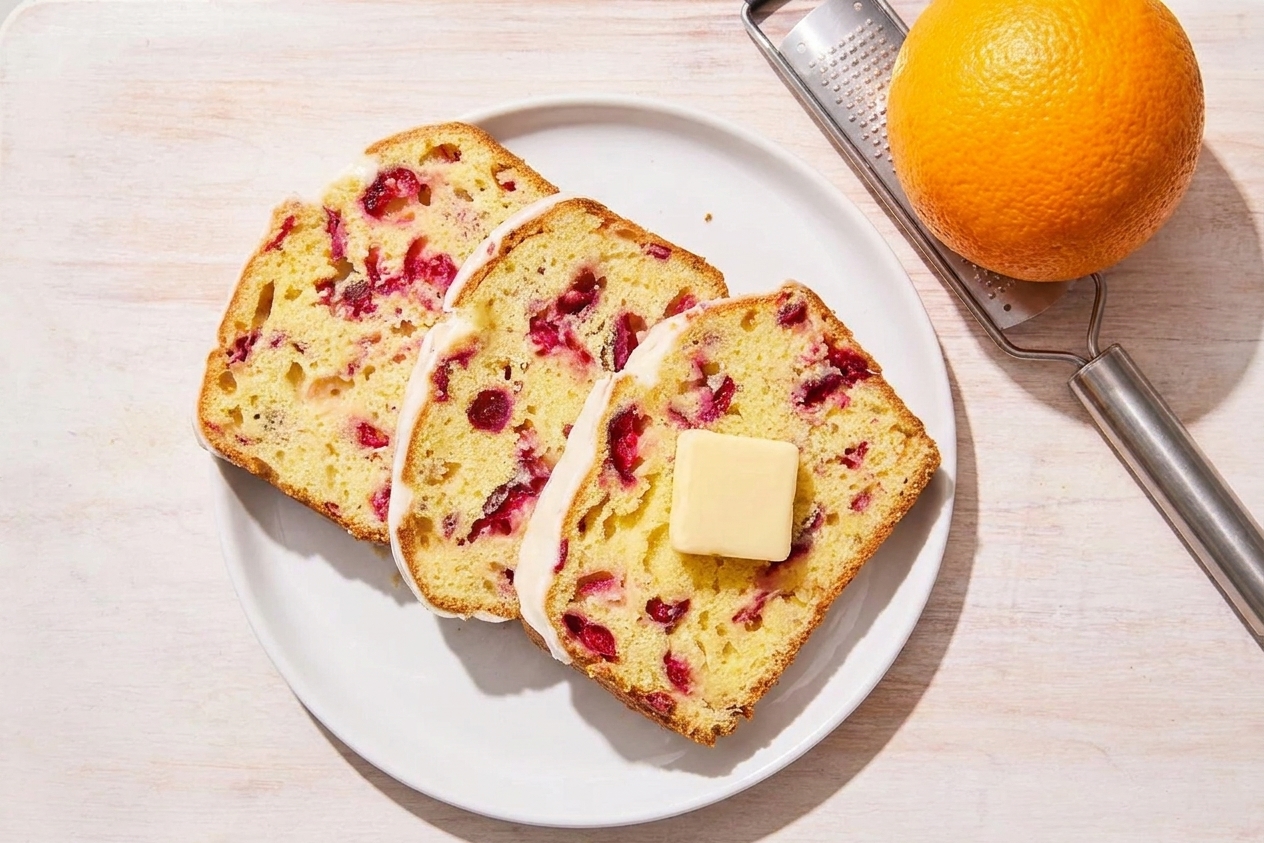
- Slice thick and toast lightly, then spread with salted butter.
- Serve with cream cheese or mascarpone for a tangy, cheesecake-like bite.
- Turn leftovers into French toast. This loaf is sturdy enough once fully cooled.
- Pair with coffee, black tea, or a cozy mug of hot chocolate.
Storage and reheating
Room temperature
Let the loaf cool completely, then wrap tightly. It keeps well at room temperature for 2 to 3 days. If your kitchen is very warm, store it in the fridge after day 2.
Refrigerator
Refrigerate wrapped for up to 5 days. For best texture, warm slices briefly before eating, or toast them.
Freezer
Freeze the whole loaf or individual slices. Wrap in plastic wrap, then foil, and freeze for up to 3 months. Thaw at room temperature, still wrapped, to avoid drying out.
Glazed loaf note
If you glaze the loaf, let the glaze set fully before wrapping. If you need to stack slices, place parchment between them so the glaze does not stick.
Common mistakes
- Overmixing the batter: This makes quick bread tough and can make the berries bleed more. Mix just until the flour disappears.
- Thawing frozen cranberries: Thawed berries leak juice and can lead to streaky, gummy-looking spots in the crumb.
- Underbaking: A browned top does not guarantee the center is cooked. Always do the skewer test in the center.
- Cutting too soon: Warm quick bread is fragile. Wait at least 30 minutes, and ideally longer, for neat slices.
- Too much zest grated with pith: If you grate into the white pith, the loaf can taste bitter. Use light pressure and stop when you see white.
FAQ
How much orange zest should I use?
For a strong orange flavor, use 1 1/2 to 2 tablespoons finely grated zest. If you prefer a milder loaf, use 1 tablespoon.
Why did my cranberries sink?
Common causes are very wet berries, skipping the flour toss, or batter that got overmixed and thinned out. Toss berries with a small amount of flour, fold gently, and consider layering the batter and berries in the pan.
Why did my cranberries burst and turn the crumb pink?
Cranberries often burst as they bake, but the crumb usually turns very pink when the berries bleed from overmixing or from using thawed frozen cranberries. Keep frozen berries frozen and fold them in at the end, gently.
How do I know the center is done?
Use a skewer in the very center. It should come out without wet batter. If you hit a cranberry, test again nearby. If the top is browning too fast, tent with foil and keep baking.
Why is this batter wetter than my pumpkin bread batter?
Pumpkin puree is thick, which makes a naturally dense batter that sets quickly in the oven. Cranberry orange bread relies on thinner liquids like orange juice and yogurt or sour cream for moisture, so the batter is looser. The payoff is a tender, moist crumb, but it needs careful doneness testing so the middle bakes through.
The recipe
Cranberry Orange Bread
A moist, bright cranberry orange quick bread made in a loaf pan with fresh or frozen cranberries, plenty of orange zest, and an optional sweet citrus glaze.
- Prep
- Cook
- Total
- Yield
Ingredients
- Nonstick spray or softened butter, for the pan
- 2 cups all-purpose flour
- 2 teaspoons baking powder
- 1/2 teaspoon baking soda
- 1/2 teaspoon fine salt
- 1 cup granulated sugar
- 2 tablespoons finely grated orange zest (from about 2 oranges)
- 2 large eggs, room temperature
- 1 cup plain Greek yogurt or sour cream
- 1/2 cup neutral oil or melted unsalted butter
- 1/2 cup orange juice
- 1 1/2 cups fresh or frozen cranberries (if frozen, do not thaw)
- 1 tablespoon all-purpose flour (for tossing cranberries)
- Optional: 1/2 cup chopped walnuts or pecans
- Optional orange glaze: 1 cup powdered sugar
- Optional orange glaze: 1 to 2 tablespoons orange juice
- Optional orange glaze: 1/2 teaspoon finely grated orange zest
- Optional orange glaze: Pinch of salt
Instructions
- Heat the oven to 350 F. Grease a 9 by 5 inch loaf pan and line it with parchment, leaving overhang on the long sides for easy lifting.
- In a medium bowl, whisk together the flour, baking powder, baking soda, and salt.
- In a large bowl, whisk the sugar and orange zest together for 20 to 30 seconds, rubbing the zest into the sugar with your fingertips until the sugar looks slightly damp and very fragrant.
- Whisk the eggs into the sugar mixture until smooth. Whisk in the yogurt or sour cream, oil or melted butter, and orange juice until fully combined.
- Add the dry ingredients to the wet ingredients and fold with a spatula just until you no longer see dry flour. Do not overmix.
- In a small bowl, toss the cranberries with 1 tablespoon flour until lightly coated. If using nuts, stir them into the cranberries so the flour coats them too.
- Fold the floured cranberries (and nuts, if using) into the batter gently, using as few strokes as possible to avoid crushing the berries.
- Scrape the batter into the prepared pan and smooth the top. For extra even berry distribution, you can spread half the batter in the pan, sprinkle in half the berries, add the remaining batter, then scatter the remaining berries on top.
- Bake until the loaf is deeply golden and a skewer inserted into the center comes out without wet batter, 50 to 70 minutes. If you hit a cranberry with your skewer, test again about 1/2 inch away so you are checking the crumb, not fruit juice. If the top is browning too quickly before the center is done, tent loosely with foil for the last 10 to 15 minutes.
- Cool in the pan for 15 minutes, then lift out using the parchment and cool completely on a rack before slicing.
- If glazing, whisk the powdered sugar, 1 tablespoon orange juice, orange zest, and salt until smooth. Add more orange juice a teaspoon at a time until the glaze is thick but pourable. Drizzle over the cooled loaf and let set for 10 to 15 minutes before slicing.
Notes
Frozen cranberries: Use straight from the freezer. Thawing leads to more bursting and a streaky crumb.
Doneness: If you hit a cranberry with your skewer, test again about 1/2 inch away so you are checking the crumb, not fruit juice.
Why the batter is wet: This loaf gets moisture from orange juice and yogurt or sour cream, which are thinner than pumpkin puree. A wet batter bakes up tender, but it may need the full bake time to set through the center.