
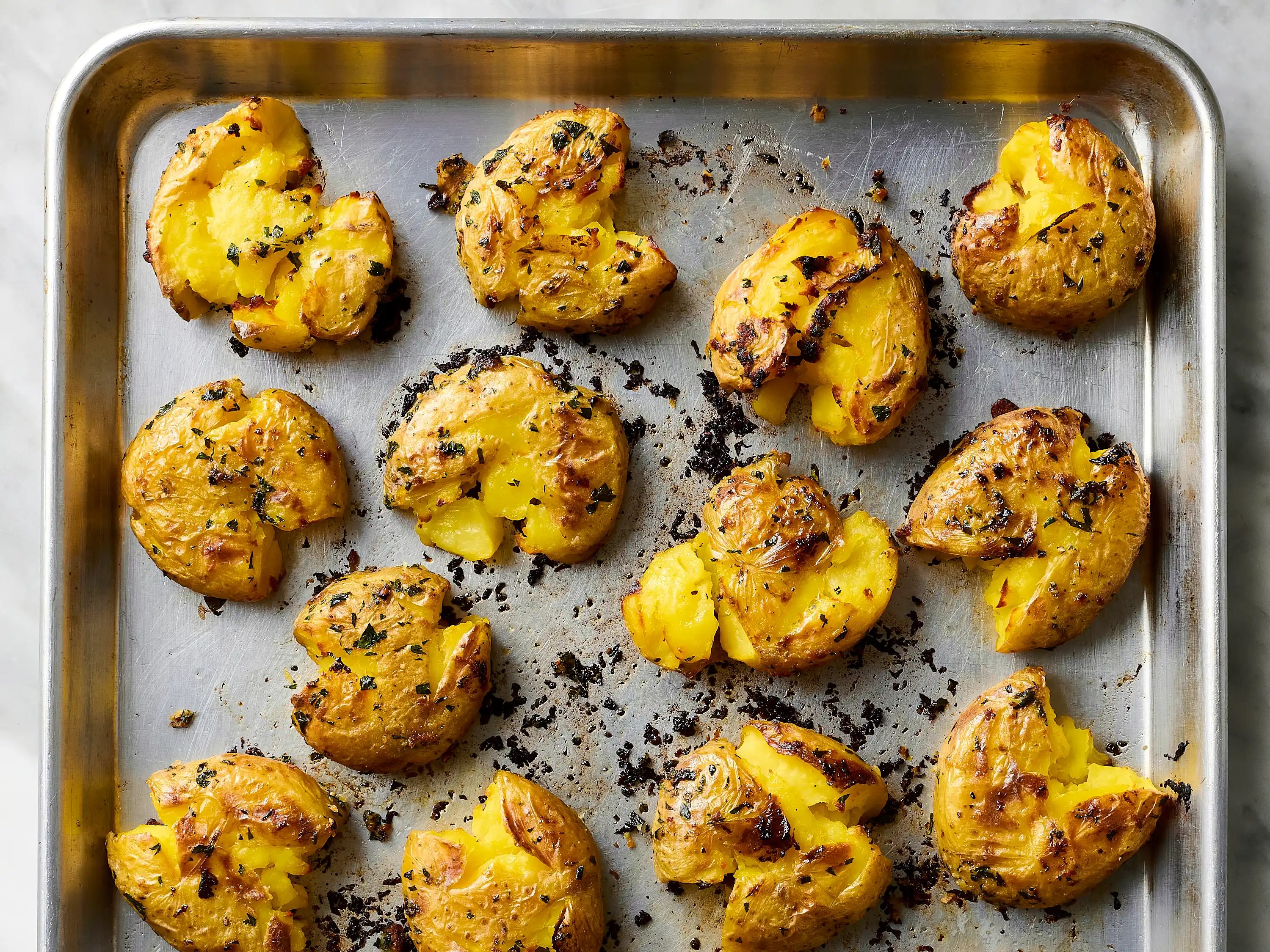
There are two kinds of roasted potatoes: the ones that look promising but come out pale and a little leathery, and the ones with those loud, crunchy edges that make everyone “just grab one more.” This is how to get the second kind, consistently.
The secret is not expensive ingredients or a fancy pan. It is a simple sequence that gives the potatoes a head start on tenderness, then roughs up the outside so the oven can turn those starchy bits into a shattery crust. Once you learn the rhythm, you can swap seasonings endlessly and still land on that golden, crispy finish.

What makes roasted potatoes crispy
Crispiness comes from three things working together: surface starch, high heat, and enough fat to conduct that heat.
- Surface starch is your best friend. When you parboil potatoes and then shake or toss them, you create a thin, rough coating. In the oven, that coating dehydrates and browns into a crust.
- High heat drives off moisture fast. If the oven is too cool, potatoes steam before they brown.
- Enough oil helps conduct heat evenly and encourages browning. Not deep-fry, just a generous coat.
And the unglamorous fourth factor: space. Crowding the pan traps steam, which softens crust. One pan, one layer, breathing room.
Best potatoes to use
You can roast almost any potato, but results vary.
- Yukon Gold: My everyday favorite. Creamy centers, crisp edges, and a naturally buttery flavor.
- Russet: The crispiest potential because they are starchier. The centers can be a little drier, but if you love that fluffy, almost baked-potato interior, russets are excellent.
- Red potatoes: More waxy, so they hold their shape well. Crispness is a bit gentler. Great for herb-heavy, garlicky roasts.
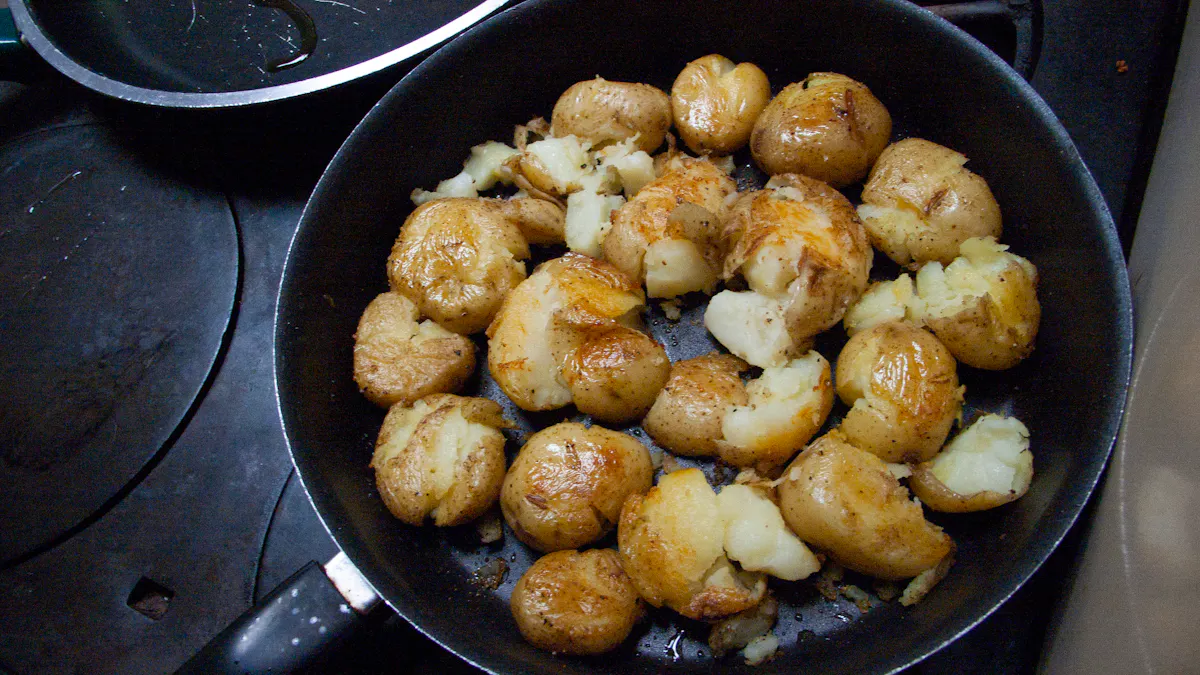
- Baby potatoes: Convenient and adorable. Smash-roasting them (lightly flattening after parboil) increases crisp surface area.
If your priority is maximum crunch, choose russets or Yukon Gold.
Peel or not? Totally your call. Unpeeled potatoes get a slightly more rustic texture and extra color. If you leave the skins on, scrub them well and trim any rough spots.
The foolproof method
1) Heat the oven and the pan
Set the oven to 450°F. Put a large rimmed sheet pan inside while it preheats. A hot pan jump-starts browning the second the potatoes hit the surface.
If you use convection: start at 425°F and check a bit early. Convection runs more aggressively and can brown faster.
Pan size note: For 2 pounds of potatoes, a standard half sheet pan (about 18 x 13 inches) is ideal. If the pieces are crowded or touching too much, use two pans.
2) Cut potatoes into chunky, even pieces
Aim for 1 1/2-inch chunks. Smaller pieces can overcook before browning deeply. Larger pieces take forever to crisp. Keep the size consistent so everything finishes together.
3) Parboil in salted water
Start the potatoes in cold water, salt it well, and bring to a boil. Simmer until the outsides are tender but the centers still resist slightly, usually 7 to 10 minutes depending on size.
This step solves two problems at once: it cooks the inside so the oven can focus on crisping, and it gelatinizes some surface starch which later becomes your crust.
4) Drain well, then rough them up
Drain, then shake the colander a few times to get rid of excess water. Let the potatoes sit in the colander for 2 minutes to steam off moisture. You are looking for the surface to look a little dry and chalky, not wet and glossy.
Return them to the pot, put the lid on, and shake gently until the edges look fuzzy and roughed up.
Those scruffy, roughed-up edges are not a mistake. They are exactly what turns into the crunch.
5) Toss with oil, salt, and one browning helper
Toss the potatoes with 2 to 4 tablespoons oil per 2 pounds potatoes, plus salt. (If you want maximum browning, use 3 to 4 tablespoons. If the potatoes look dry on the pan, you can drizzle on another tablespoon.) Then choose one:
- Baking soda (best crunch): Add 1/2 teaspoon per 2 quarts (2 liters) water to the parboil water. It raises pH, helping the exterior break down and brown more aggressively.
- Cornstarch (easy pantry boost): Toss drained, roughed-up potatoes with 1 tablespoon cornstarch before adding oil. It creates a thin coating that crisps beautifully.
You do not need both. Pick one, or skip them entirely and still get great potatoes.
6) Roast, flip, and finish hot
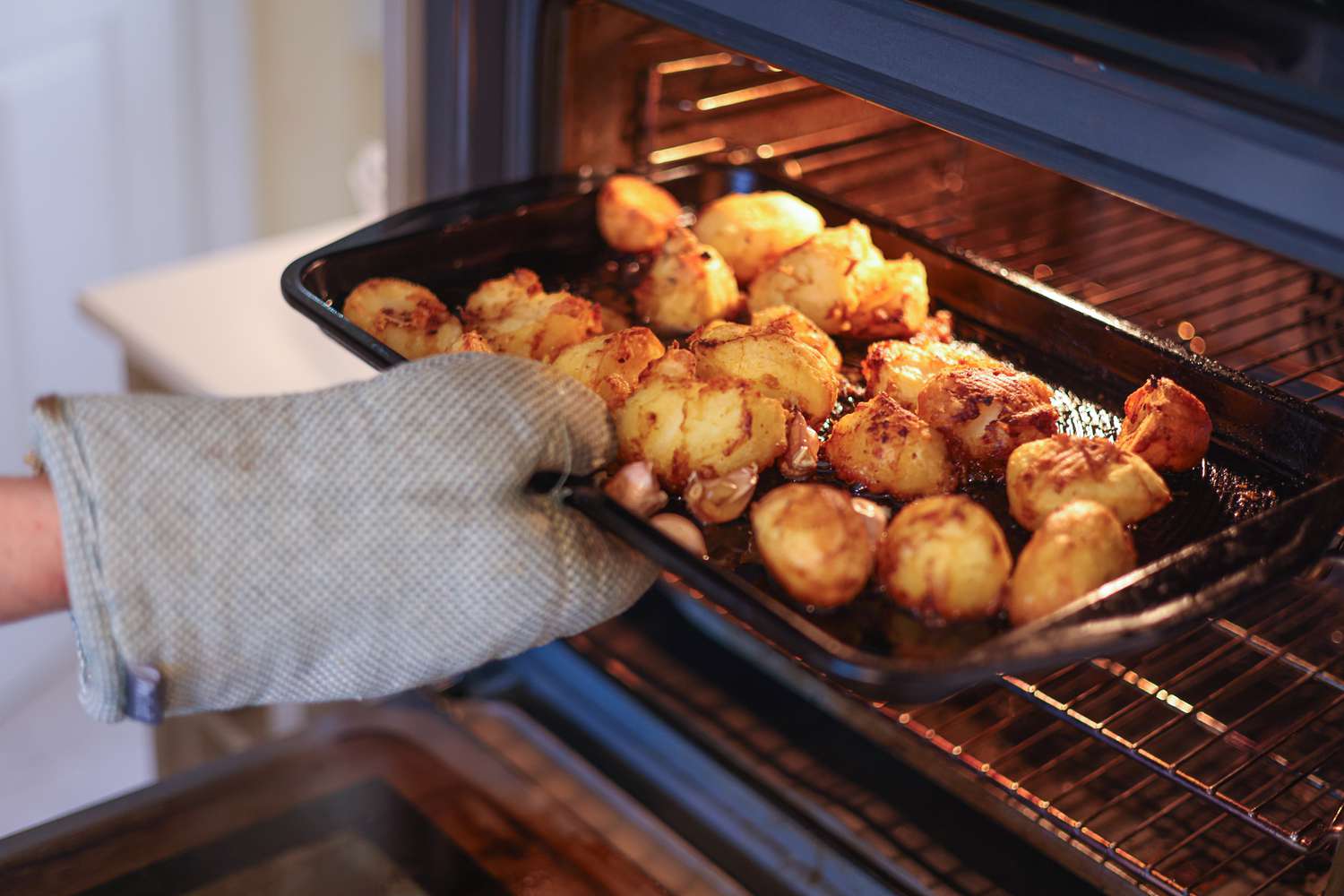
Carefully pull out the hot sheet pan, add the potatoes, and spread in a single layer. Roast 20 minutes, flip, then roast 15 to 25 minutes more until deeply golden and crisp.
If they look pale near the end, give them another 5 to 10 minutes. Potatoes are polite liars. They look done before they taste done. (Also, ovens vary, so start checking a little early if yours runs hot, and give them extra time if yours runs cool.)
Seasoning ideas
One little note from many test batches: garlic powder, smoked paprika, dried herbs, and spice blends can go on from the beginning. Fresh garlic and delicate herbs are best added near the end so they do not burn.
My go-to combos
- Classic and simple: Olive oil, kosher salt, black pepper. Finish with flaky salt.
- Garlic and herb: Garlic powder + dried oregano or thyme. Finish with chopped parsley and a squeeze of lemon.
- Smoky: Smoked paprika + a pinch of cumin. Finish with a little lime.
- Steakhouse: Onion powder + cracked pepper + a tiny pinch of cayenne. Finish with grated Parmesan in the last 5 minutes.
- Rosemary lover: Dried rosemary from the start, then fresh rosemary or rosemary salt at the end.
Finishing touch magic: a quick splash of vinegar (malt, red wine, or sherry) right out of the oven wakes up all the flavors without making them soggy if you use only a teaspoon or two.
Common problems
“My potatoes are soft, not crispy.”
- Pan is crowded: Use two pans or roast in batches.
- Too much moisture: Let them steam dry in the colander and rough them up before oiling.
- Not enough heat: Roast at 450°F, and preheat the sheet pan.
- Not enough oil: Potatoes need a generous coat to brown well.
“They browned, but the inside is not tender.”
- Parboil a little longer next time, or cut pieces slightly smaller.
- If you are mid-roast, lower the oven to 425°F and keep roasting until tender, then bump back up to crisp.
“They stuck to the pan.”
- Make sure the potatoes are well-coated with oil.
- Leave them alone for the first 15 to 20 minutes. Once the crust forms, they release more easily.
- If your pan is older and grabby, line with parchment. You will lose a tiny bit of browning, but gain sanity.
“My garlic burned.”
- Use garlic powder early, add fresh minced garlic in the last 8 to 10 minutes, or toss with garlic butter after roasting.
Make-ahead and leftovers
Roasted potatoes are at their absolute best straight from the oven, but leftovers can still be genuinely delicious if you reheat them like you mean it.
Make-ahead options
- Parboil and rough up up to 24 hours ahead. Cool, cover, and refrigerate. When ready, toss with oil and roast.
- Fully roast, cool, refrigerate. Re-crisp before serving.
Best ways to reheat
- Oven: 425°F on a sheet pan for 10 to 15 minutes, flipping once.
- Air fryer: 380°F for 5 to 8 minutes, shaking halfway through.
- Skillet: Medium heat with a small splash of oil. Let them sit to brown, then toss.
Microwave works for warming, but it will soften the crust. If you have only a microwave, do a quick microwave warm-up, then a few minutes in a hot skillet to bring back texture.
Recipe: Crispy Oven Roasted Potatoes
Ingredients (serves 4)
- 2 lb Yukon Gold or russet potatoes
- 3 tbsp olive oil (or avocado oil), plus more as needed
- 1 1/2 tsp kosher salt, plus more to finish
- 1/2 tsp black pepper
- Optional: 1/2 tsp baking soda per 2 quarts (2 liters) water (for the boiling water) or 1 tbsp cornstarch (for tossing)
- Optional seasonings: 1 tsp garlic powder, 1/2 tsp smoked paprika, dried herbs
- Optional finish: chopped parsley, lemon wedges, grated Parmesan
Instructions
- Preheat oven to 450°F. Place a large rimmed sheet pan (about 18 x 13 inches) in the oven to heat. If using convection, use 425°F.
- Cut potatoes into 1 1/2-inch chunks.
- Parboil: Put potatoes in a pot, cover with cold water by 1 inch, and salt the water well. If using baking soda, add it now (use 1/2 tsp per 2 quarts water). Bring to a boil, then simmer 7 to 10 minutes until the outsides are tender.
- Drain and dry: Drain in a colander, shake off excess water, and let steam dry 2 minutes. Return to the pot, cover, and shake gently to rough up the edges.
- Season: If using cornstarch, sprinkle it on first and toss. Add oil, salt, pepper, and any dried spices. (If you want maximum browning, do not be shy with the oil. Add a little more if the potatoes look dry.)
- Roast: Carefully spread potatoes on the hot pan in a single layer. Roast 20 minutes. Flip. Roast 15 to 25 minutes more until deeply golden and crisp.
- Finish: Taste for salt. Add fresh herbs, lemon, or Parmesan if you like. Serve immediately.
Notes
Do not crowd the pan. If the potatoes are touching in a tight layer, use two sheet pans. More space equals more crunch.
FAQ
Do I have to boil the potatoes first?
You can roast without parboiling, but parboiling makes the centers reliably fluffy and the exteriors dramatically crispier. If you want truly crackly edges, this is the step to keep.
Can I use parchment paper?
Yes. It is great for easy cleanup and helps prevent sticking. For the deepest browning, roast directly on a preheated pan, but parchment is still a win on busy nights.
What oil is best for roasting potatoes?
Olive oil is my everyday choice for flavor. Avocado oil, canola, or vegetable oil also work well and tolerate high heat comfortably.
How do I make them extra crispy?
Use russets, add baking soda to the boiling water, preheat the sheet pan, and give the potatoes space. Those four together are the crispiness cheat code.