
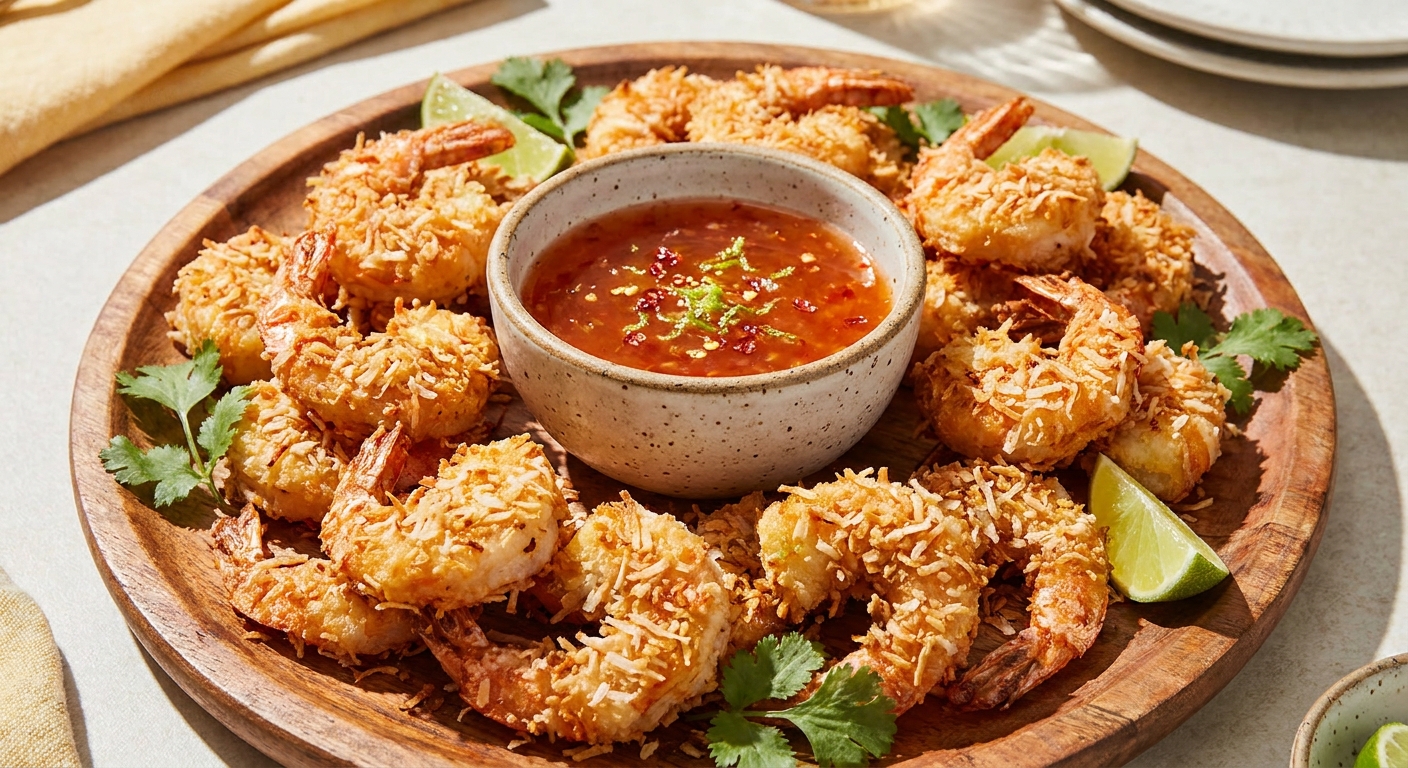
There are a few foods that make everyone hover near the stove, “just to check.” Coconut shrimp is one of them. The moment that coconut hits hot oil, or a very hot sheet pan, your kitchen smells like a beach vacation and a county fair at the same time. In my house, these never make it to a formal platter. They migrate from the rack to little hands and hungry adults in drive-by snack attacks.

The good news: coconut shrimp is not hard. The tricky parts are the ones most recipes rush past: drying the shrimp so the coating can grip, building a breading that clings instead of sliding off, and using the right temperature so the crust browns before the shrimp overcooks. I will walk you through each of those so you can get that restaurant-style crunch at home, whether you fry or bake.
Plan on serving these as a crispy appetizer. They are best fresh, hot, and dipped, with napkins nearby and no shame about going back for “just one more.”
Why this recipe works
- Dry shrimp equals sticky breading. Patting the shrimp very dry helps the flour and egg layer adhere, which is what keeps the coconut from falling off in the oil.
- A three-step coating builds a real crust. Flour gives the egg something to grab, egg binds, and panko plus coconut create the crunch and color.
- Temperature control prevents greasy shrimp. Oil that is too cool makes the coating absorb oil before it sets. Oil that is too hot browns the coconut before the shrimp cooks through. A steady 350 F keeps the crust golden and the shrimp juicy.
- Draining on a rack keeps them crisp. Paper towels trap steam underneath, which softens the crust. A rack lets air circulate so the coating stays crunchy.
- The dip balances sweet, salty, and tangy. Sweet chili sauce plus lime cuts through the richness and plays nicely with coconut.
Ingredient notes
Shrimp: Look for large or extra-large shrimp, already peeled and deveined if possible. Tail-on is classic for dipping and picking up. If your shrimp are wet from the package, give them a quick rinse only if needed, then dry them extremely well.
Sweetened shredded coconut: This is the classic coconut shrimp flavor and browns quickly. If you prefer less sweetness, use unsweetened, but keep an eye on color since it can toast a little differently.
Panko breadcrumbs: Panko makes the coating lighter and crispier than fine breadcrumbs. If you only have regular breadcrumbs, you can use them, but the crust will be tighter and a little less craggy.
Flour: All-purpose flour is the easiest first layer. It absorbs surface moisture and helps the egg cling evenly.
Eggs: Eggs act like glue. Whisk until totally smooth so you do not get patchy coating.
Seasoning: Salt is non-negotiable. I also love a pinch of garlic powder and paprika in the flour for savory balance, but keep it subtle so the coconut still shines.
Oil for frying: Choose a neutral oil with a higher smoke point like canola, vegetable, peanut, or avocado oil. Olive oil is not ideal here.
Sweet chili lime dip: Bottled sweet chili sauce plus lime juice is the fastest route. A little mayo turns it creamy and clingy, but you can keep it light and simply whisk chili sauce with lime and a pinch of salt.
Equipment you will need
- Three shallow bowls or pie plates for the breading station
- Large skillet or Dutch oven if frying, or a rimmed sheet pan if baking
- Instant-read thermometer or a deep-fry thermometer for oil temperature (highly recommended)
- Wire rack set over a sheet pan for draining
- Tongs for turning and transferring shrimp
Pro tips
- Set up your breading station in order: flour, egg, coconut panko. Keep one hand for dry and one hand for wet if you can. It reduces the breading mittens situation.
- Press, then rest. After coating each shrimp, gently press the coconut mixture on. If you have 10 minutes, let the breaded shrimp rest on a rack or tray. That short rest helps the coating hydrate and hold on better.
- Do not crowd the pan. Crowding drops the oil temperature fast and makes the coating soggy. Fry in batches and keep finished shrimp warm on a rack.
- Drain correctly. Move shrimp to a wire rack, not directly to paper towels. If you want, slide a few paper towels under the rack to catch drips without steaming the crust.
- Season while hot. A light sprinkle of salt right after cooking makes a huge difference.
- For baking, use high heat and oil. Coconut needs enough heat to toast. A light spray or brush of oil on the breaded shrimp helps them brown.
Substitutes that work
- No panko: Use regular breadcrumbs. For a crunch boost, mix in a tablespoon or two of crushed cornflakes or rice cereal if you have them.
- Gluten-free: Swap flour for a gluten-free all-purpose blend and use gluten-free panko or crushed rice cereal.
- Egg-free: Use a thick dairy-free yogurt or a vegan mayo thinned with a teaspoon of water as the binder. It is not identical, but it helps the coating stick.
- Sweet chili sauce substitute: Use a mix of honey (or maple syrup), a little hot sauce, lime juice, and a pinch of salt. Add minced garlic if you like it punchier.
Variations
- Spicy coconut shrimp: Add cayenne to the flour and a little sriracha to the egg wash.
- Extra-coconut: Use larger flake coconut for more texture, but press firmly so it adheres.
- Air fryer option: Cook in a single layer and spray the tops with oil. Work in batches. The key is still: dry shrimp, firm pressing, and enough oil mist to brown.
- Sesame-coconut: Add a tablespoon or two of sesame seeds to the coconut panko mixture for a toasty, nutty note.
Serving ideas
- Classic appetizer platter: Coconut shrimp, sweet chili lime dip, lime wedges, and thinly sliced cucumbers for something crisp and cooling.
- Tropical snack board: Add pineapple spears, mango slices, and salty roasted cashews.
- Game day: Serve with two dips, one sweet chili lime and one creamy sriracha mayo.
- As a light meal: Pair with a simple slaw or a big green salad. Keep the shrimp the star.
Storage and reheating
Best day-of: Coconut shrimp is at peak crispness right after cooking.
Refrigerating leftovers: Store cooled shrimp in an airtight container in the fridge. If possible, line with paper towels and do not stack too tightly.
Reheating: Reheat on a wire rack set over a sheet pan in a hot oven until crisp again. Avoid microwaving, which turns the coating soft and chewy.
Make-ahead: You can set up the breading components a few hours ahead. I do not recommend breading the shrimp far in advance, since the coating can get damp and slip off.
Common mistakes
- Skipping the pat-dry step: Wet shrimp is the number one reason the coating slides off.
- Oil too cool: If the shrimp look pale and feel heavy with oil, the temperature dropped. Fry smaller batches and let oil come back up between rounds.
- Oil too hot: Coconut browns fast. If you see dark brown spots quickly, lower the heat and wait a minute before continuing.
- Draining on paper towels: It traps steam and softens the crust. Use a rack.
- Overcooking shrimp: Shrimp cook fast. Pull them as soon as the coating is golden and the shrimp are opaque and just firm.
FAQ
What size shrimp is best for coconut shrimp?
Large or extra-large shrimp are ideal. Small shrimp can overcook before the coating gets fully golden.
How do I keep the coconut from falling off?
Dry the shrimp thoroughly, do the flour and egg steps evenly, and press the coconut panko mixture on firmly. A short rest after breading also helps the coating set.
Should I use sweetened or unsweetened coconut?
Sweetened is the classic restaurant-style flavor and browns nicely. Unsweetened works too if you prefer less sweetness. Either way, watch the heat closely because coconut can go from golden to burnt quickly.
Can I bake coconut shrimp instead of frying?
Yes. Baking can still be very crisp if you use high heat, a preheated sheet pan, and a light coating of oil on the breaded shrimp. Flip halfway for even browning.
Can I freeze coconut shrimp?
You can, but the texture is never quite as perfect as fresh. If you do freeze them, reheat from frozen on a rack in a hot oven until crisp and hot through.
The recipe
Coconut Shrimp
Crispy coconut shrimp with a light panko crunch and a quick sweet chili lime dipping sauce. Choose shallow frying for maximum crunch or bake on a hot sheet pan for a lighter option.
- Prep
- 20 minutes
- Cook
- 10 minutes
- Total
- 30 minutes
- Yield
- 4 (as an appetizer)
Ingredients
- 1 lb large shrimp (about 20 to 24), peeled and deveined, tails on if desired
- 1/2 tsp kosher salt, plus more to finish
- 1/4 tsp black pepper
- 1/2 cup all-purpose flour
- 1/2 tsp garlic powder (optional)
- 1/2 tsp paprika (optional)
- 2 large eggs
- 1 cup panko breadcrumbs
- 1 cup sweetened shredded coconut
- Neutral oil, for frying (canola, vegetable, peanut, or avocado), about 2 to 3 cups depending on pan
- Cooking spray or 2 tbsp oil (only if baking)
- 1/2 cup sweet chili sauce
- 2 tbsp mayonnaise (optional, for a creamy dip)
- 1 to 2 tbsp fresh lime juice, plus lime wedges for serving
- Pinch of salt for the dip
Instructions
- Dry and season the shrimp: Pat the shrimp very dry with paper towels. Season with 1/2 teaspoon kosher salt and the pepper.
- Set up a breading station: In a shallow bowl, mix the flour with garlic powder and paprika if using. In a second bowl, whisk the eggs until smooth. In a third bowl, combine panko and shredded coconut.
- Coat the shrimp so it sticks: Working with a few shrimp at a time, dredge in flour and shake off excess. Dip in egg, letting extra drip off. Press into the coconut panko mixture, coating well and firmly pressing to help it adhere. Place on a rack or plate. Let the breaded shrimp rest 5 to 10 minutes while you heat the oil or oven so the coating sets.
- Make the dipping sauce: In a small bowl, whisk sweet chili sauce with mayonnaise if using. Add 1 tablespoon lime juice and a pinch of salt. Taste and add more lime if you want it tangier. Set aside.
- To fry (crispier option): Set a wire rack over a sheet pan for draining. In a heavy skillet or Dutch oven, heat about 1 inch of neutral oil to 350 F. Fry shrimp in batches, without crowding, 1 to 2 minutes per side, until the coating is golden brown and the shrimp are opaque and just firm. Transfer to the rack and lightly salt while hot. Let oil return to 350 F between batches.
- To bake (lighter option): Heat oven to 425 F. Place a rimmed sheet pan in the oven to preheat. Arrange breaded shrimp on the hot pan (they should sizzle when they hit the surface). Leave a little space between pieces so heat can circulate. Lightly spray the tops with cooking spray or drizzle with oil. Bake 6 minutes, flip, then bake 4 to 6 minutes more until golden and the shrimp are just cooked through.
- Serve: Serve immediately with the dipping sauce and lime wedges.
Notes
- Oil temperature matters: If you do not have a thermometer, watch for steady bubbling around the shrimp. If bubbling is aggressive and the coconut browns too fast, lower the heat. If bubbling is weak and the shrimp look pale, let the oil heat a bit more.
- Dry shrimp equals better breading: If your shrimp are damp, the flour turns pasty and the coating can slide. Pat them dry until the surface feels tacky, not wet.
- Press, then rest: Press the coconut panko mixture on firmly, then give the breaded shrimp 5 to 10 minutes to rest so the coating can set before cooking.
- Baking heat cue: A fully preheated sheet pan helps the bottoms start browning right away, which keeps baked coconut shrimp crisp instead of pale and soft.
- Tail-on tip: If you leave tails on, pinch the very end of the tail as you dip so it stays clean for grabbing.
- Doneness cue: Shrimp are done when they are opaque and springy, not tightly curled and rubbery.