
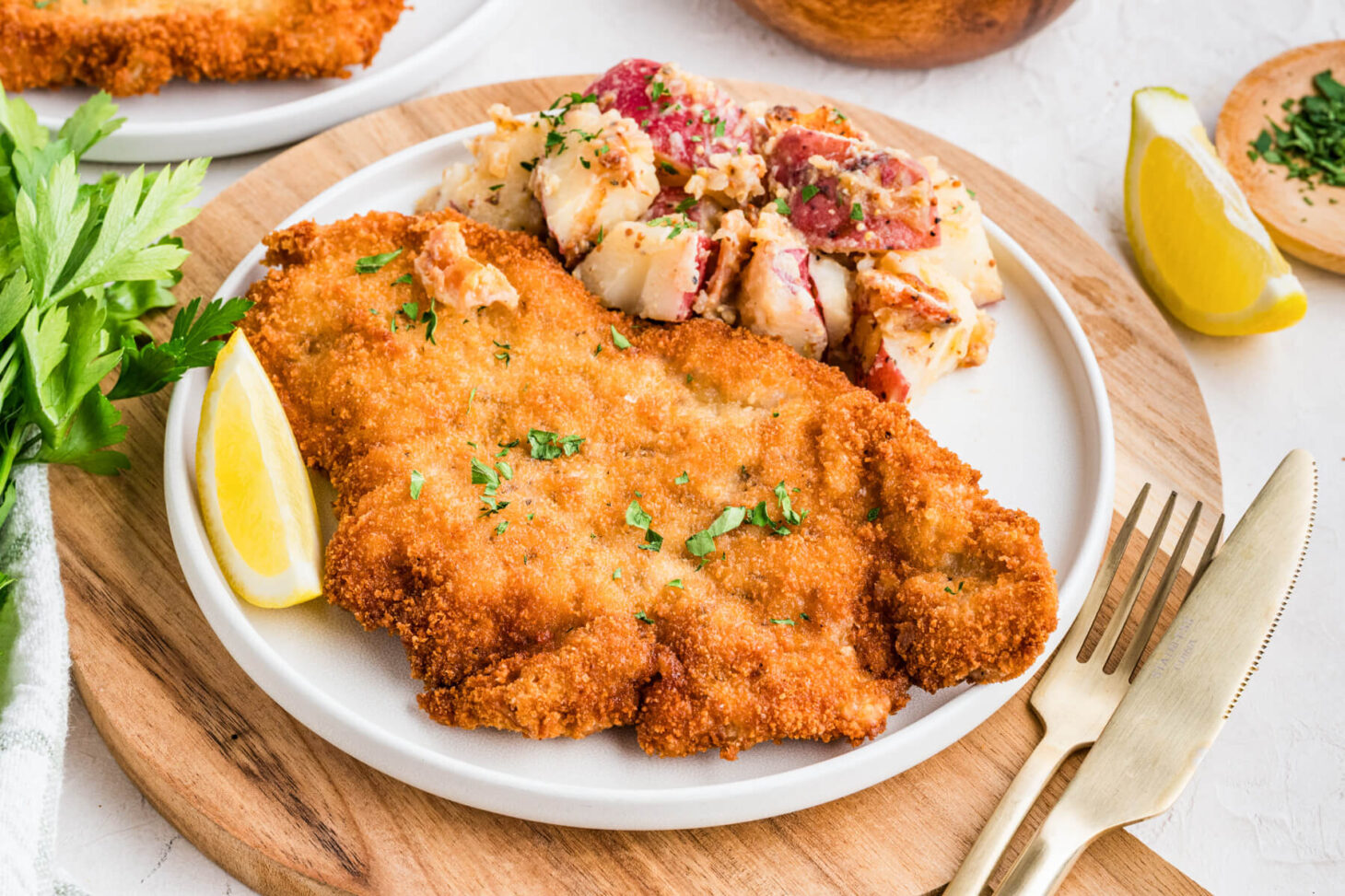
The first time I made schnitzel at home, I treated it like any other breaded cutlet. I rushed the pounding, I crowded the pan, and I wondered why my “crispy” crust went soft before I could even get everyone to the table. Turns out schnitzel is simple, but picky about a few details.
Once you get those details right, it becomes one of the most satisfying dinners you can make with basic kitchen staples: flour, eggs, breadcrumbs, oil, and a lemon. The pork cooks in minutes because it is pounded thin, and that means you are not stuck at the stove all night.

Here is what you can expect: tender pork cutlets pounded to an even thinness, a breading that stays put instead of sliding off in the oil, and a crust that is crisp and light, not greasy. I also finish with lemon not just because it is traditional, but because that little burst of acid makes the whole thing taste brighter and less heavy.
The details that matter
You do not need fancy ingredients, but you do need a few habits that matter.
- Pounding thickness: Aim for about 1/4 inch thick, as evenly as you can. Thin pork cooks quickly, stays tender, and gives you more crunchy surface area per bite.
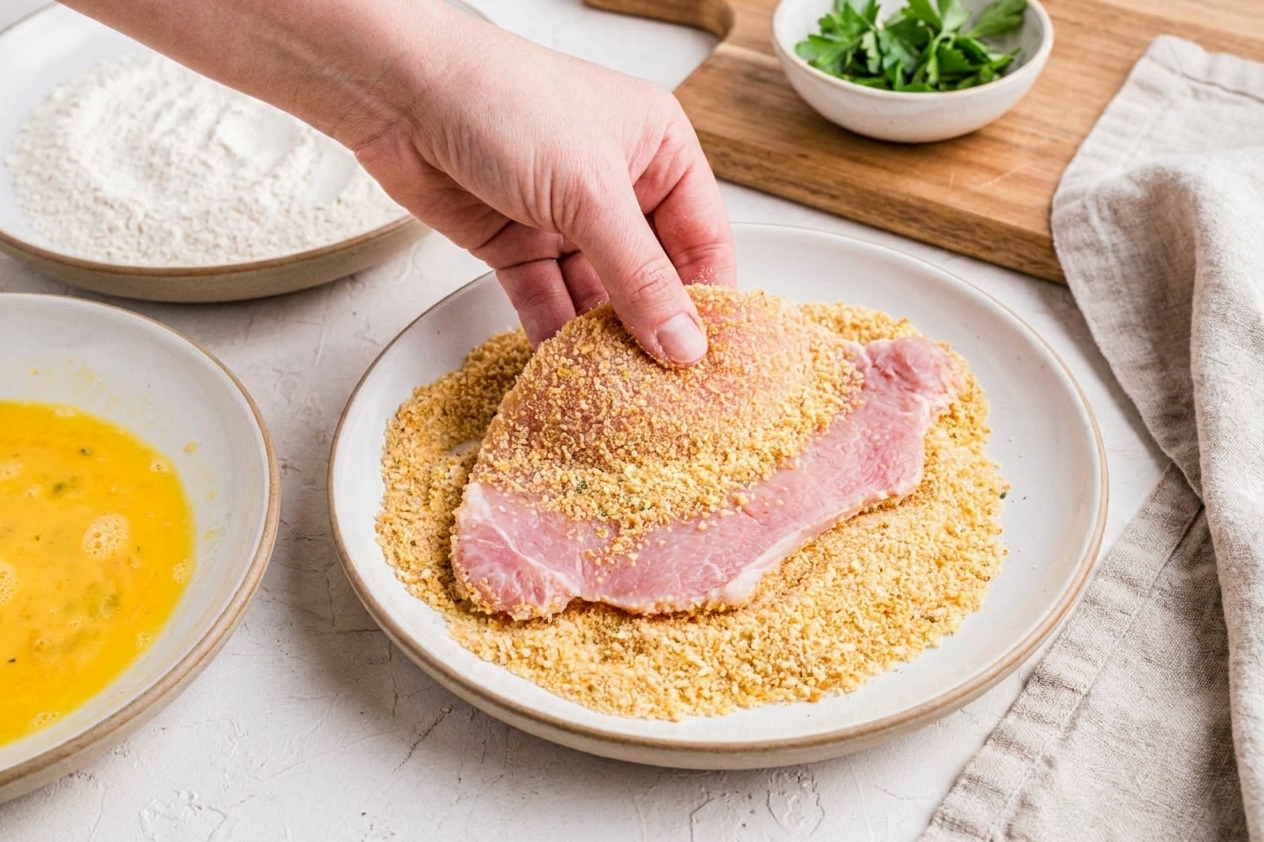
- Breading that sticks: Pat the pork dry, season the meat well, and then lightly season the flour and breadcrumbs (a small pinch goes a long way). Press the breadcrumbs on firmly. A short rest after breading helps the coating hydrate and cling.
- Oil temperature: Keep the oil in the 340 to 360°F range, and adjust as you go. If it is cooler, the schnitzel absorbs oil and gets heavy. If it is too hot for your cutlet thickness and oil depth, the coating can brown too fast before the center is fully heated through.
- Keep it crisp: Fry in batches so the pan does not steam, then drain on a wire rack (not a flat plate) and do not cover or stack the cutlets. Trapped steam is the fastest way to undo all that crunch.
- Lemon finish: Squeeze lemon right at the table so the crust stays crisp and the flavor pops.
Why this recipe works
- Thin, even pounding cooks the pork quickly. At roughly 1/4 inch thick, the cutlet finishes before it has time to dry out.
- A dry surface plus a three-step dredge builds a sturdy coating. Flour helps the egg cling, and the egg helps the breadcrumbs bind so the crust does not slide off in the oil.
- Resting the breaded cutlets briefly prevents bare spots. A 10 minute rest gives the coating time to set and hydrate, which helps it stay attached during frying.
- Shallow-frying in the 340 to 360°F range makes a crisp crust without greasiness. The coating browns fast and the pork gently heats through.
- A wire rack keeps the crust crunchy. Letting air circulate underneath prevents steam from turning that crisp coating soft.
- Lemon at the end balances richness. That bright acidity makes the schnitzel taste lighter and sharper.
Ingredient notes
Pork
Boneless pork chops are the easiest option. Look for chops about 1/2 to 3/4 inch thick so you can pound them thin without tearing. I like loin chops for their mild flavor and tenderness.
Flour
All-purpose flour is perfect. It gives the egg something to grab onto. Shake off the excess so you do not get a gummy layer.
Eggs
Two eggs usually cover four cutlets. Beat until smooth so you do not get stringy bits that create uneven coating.
Breadcrumbs
Plain breadcrumbs give you the classic schnitzel look and crunch. Panko is also great if you like a crunchier, shaggier crust. If your breadcrumbs are very fine, they brown a little faster, so watch your oil temperature closely.
Oil for frying
Use a neutral oil with a higher smoke point, like canola, vegetable, peanut, or sunflower oil. You want enough to come about 1/4 inch up the side of the pan.
Lemon
Do not skip it. Cut into wedges and serve alongside so everyone can squeeze right before eating.
Salt and pepper
Season the pork, and season the breadcrumbs lightly too. This is one of the easiest ways to avoid bland schnitzel without tipping into too-salty territory.
Equipment you will need
- Meat mallet or a rolling pin for pounding
- Plastic wrap or a zip-top bag to cover the pork while pounding
- Three shallow bowls or plates for flour, egg, and breadcrumbs
- Large skillet (cast iron or stainless steel are great)
- Instant-read thermometer (helpful for oil temperature and pork doneness)
- Tongs for flipping
- Wire rack set over a sheet pan (best for staying crisp)
- Paper towels (optional, for a quick blot)
Pro tips
- Split thick chops before pounding. If your pork chops are thicker than 3/4 inch, slice them horizontally into two thinner cutlets first. It is easier to pound evenly.
- Pound from the center out. Gentle, even taps flatten without shredding the meat. If the edges get too thin, focus your pounding on the thicker middle.
- Press the breadcrumbs firmly. I use my palms and a little pressure, then lift and tap off loose crumbs.
- Let the breaded cutlets rest 10 minutes. Put them on a rack or sheet pan while your oil heats. This tiny pause pays off in better adhesion.
- Fry in batches. Give each cutlet space. Crowding drops the oil temperature and makes the crust soggy.
- Keep cooked schnitzel warm the right way. If you are cooking for a group, hold finished cutlets on a rack in a 200°F oven. Do not cover them, or the steam softens the crust.
Substitutes that work
- Chicken instead of pork: Use chicken cutlets or sliced chicken breast, pounded to about 1/4 inch. Cook time is similar, but confirm doneness.
- Gluten-free: Use a gluten-free all-purpose flour blend and gluten-free breadcrumbs. (Some GF crumbs brown faster, so keep an eye on color.)
- Egg-free: Use a plant-based egg replacer prepared for coating, or a thin slurry of mayonnaise and a splash of water. You will still want to press the crumbs firmly and rest before frying.
- Panko versus fine crumbs: Both work. Panko gives a more rugged crunch, fine crumbs give a more classic, even crust.
- Oil options: Canola, vegetable, peanut, or sunflower oil all work well for shallow frying.
Variations
Herb-lemon schnitzel
Add finely chopped parsley or dill to the breadcrumbs, plus a little lemon zest. It tastes bright and springy.
Parmesan schnitzel
Mix a small handful of finely grated Parmesan into the breadcrumbs for extra savory flavor. Keep the oil at temperature since cheese can brown faster.
Spice-kissed schnitzel
Add a pinch of paprika or garlic powder to the flour and breadcrumbs. Not traditional, but very weeknight-friendly.
Schnitzel sandwich
Serve the cutlet on a roll with mayo, lettuce, and pickles. Squeeze lemon over the pork first for balance.
Serving ideas
- Classic: lemon wedges and a simple green salad
- Comforting: mashed potatoes or buttered egg noodles
- Fresh and crunchy: cucumber salad or lightly dressed slaw
- Warm-weather dinner: tomato salad and corn on the cob
- Saucy option: mushroom gravy on the side, not poured on top, so the crust stays crisp
Storage and reheating
Storing
Store leftover schnitzel in an airtight container in the refrigerator for up to 3 days. If you can, place it on a paper towel or a small rack inside the container to reduce sogginess.
Reheating for best crispness
- Oven: Reheat on a wire rack set over a sheet pan at 400°F until hot and crisp, about 8 to 12 minutes.
- Air fryer: Reheat at 375°F until crisp and warmed through, about 4 to 7 minutes.
- Avoid: The microwave, which steams the crust soft.
Freezing
You can freeze cooked schnitzel. Cool completely, freeze in a single layer, then transfer to a freezer bag. Reheat from frozen on a rack in a 400°F oven until hot and crisp.
Common mistakes
- Pounding too thick or uneven: Thick spots stay chewy while thin spots overcook. Aim for an even 1/4 inch.
- Skipping the dry-off step: Moisture is the enemy of adhesion. Pat the pork dry before flouring.
- Over-seasoning every layer: Salt the pork well, then season the coating components lightly. It is easier to add a pinch at the end than to fix an overly salty crust.
- Crowding the pan: It lowers oil temp and traps steam. Fry in batches and keep cooked cutlets warm on a rack.
- Oil too cool: The schnitzel will soak up oil and feel heavy. Use a thermometer if you have one and aim for about 340 to 360°F.
- Draining on a flat plate or covering the cutlets: It traps steam and softens the crust. Use a wire rack and keep them uncovered.
FAQ
What thickness should I pound pork schnitzel to?
About 1/4 inch is my sweet spot. Thin enough to cook fast and stay tender, but thick enough that it does not shred.
How do I keep the breading from falling off?
Pat the pork dry, dredge in flour first, then egg, then press firmly into breadcrumbs. Let the breaded cutlets rest about 10 minutes before frying, and flip gently with tongs.
What oil temperature is best for frying schnitzel?
I aim for about 340 to 360°F. If you do not have a thermometer, drop in a breadcrumb. It should sizzle actively right away and turn golden within about 30 to 60 seconds.
Can I make schnitzel ahead of time?
You can bread the cutlets a few hours ahead and refrigerate them on a sheet pan. Fry right before serving for the best crunch.
Do I need deep frying?
No. Shallow frying works beautifully. You just want enough oil to come about 1/4 inch up the side of the pan so the crust fries evenly.
The recipe
Pork Schnitzel
Thin pork cutlets breaded in flour, egg, and breadcrumbs, then shallow-fried until crisp and golden and finished with lemon wedges.
- Prep
- 20 minutes
- Cook
- 15 minutes
- Total
- 35 minutes
- Yield
- 4 servings
Ingredients
- 4 boneless pork chops (about 1/2 to 3/4 inch thick)
- 1 tsp kosher salt, plus more to taste
- 1/2 tsp freshly ground black pepper
- 1/2 cup all-purpose flour
- 2 large eggs
- 1 tbsp water (optional, to loosen the eggs)
- 1 1/2 cups plain breadcrumbs (or panko)
- Neutral oil for frying (such as canola or vegetable), enough to reach about 1/4 inch depth in the skillet
- 1 to 2 lemons, cut into wedges
- Chopped parsley (optional, for serving)
Instructions
- Pound the pork. Place one pork chop between two pieces of plastic wrap or inside a zip-top bag. Pound with the flat side of a meat mallet (or roll with a rolling pin) until about 1/4 inch thick, working from the center outward. Repeat with remaining chops.
- Season and dry. Pat the cutlets dry with paper towels. Season both sides with salt and pepper.
- Set up the breading station. Place flour in a shallow bowl. In a second bowl, beat eggs with the water (if using) until smooth. In a third bowl, add breadcrumbs and season lightly with a pinch of salt and pepper.
- Bread the cutlets. Dredge each cutlet in flour, shaking off excess. Dip into egg, letting extra drip off. Press into breadcrumbs firmly on both sides so the coating adheres.
- Rest the breaded pork. Place breaded cutlets on a rack or sheet pan and let rest 10 minutes while you heat the oil. This helps the coating set.
- Heat the oil. Pour oil into a large skillet to about 1/4 inch depth. Heat over medium to medium-high until the oil reaches about 340 to 360°F.
- Fry in batches. Fry 1 to 2 cutlets at a time, without crowding, until deep golden brown, about 2 to 3 minutes per side. Adjust heat as needed to keep the oil in the 340 to 360°F range.
- Drain and keep crisp. Transfer to a wire rack set over a sheet pan. Sprinkle with a pinch of salt while hot. Do not cover or stack. Repeat with remaining cutlets, letting the oil return to temperature between batches.
- Finish with lemon. Serve immediately with lemon wedges for squeezing over the schnitzel. Add parsley if you like.
Notes
Oil temperature matters: Aim for about 340 to 360°F. If the schnitzel is browning too fast, lower the heat slightly. If it is taking too long to brown, raise it. Thickness and pan size matter, so use color and sizzling as cues along with the thermometer.
Keeping warm: Hold cooked schnitzel on a rack in a 200°F oven while you finish frying the rest. Do not cover, or the crust softens.
Seasoning tip: Salt the pork well, then season the flour and breadcrumbs lightly. It is easy to overdo it if every layer is heavily salted.
Breadcrumb choice: Plain fine breadcrumbs give a classic, tight crust. Panko gives a crunchier, more textured coating.