
The first time I made chile rellenos at home, I treated them like any other stuffed pepper: fill, bake, call it dinner. Delicious? Sure. But not that kind of delicious, the kind you get at a little family-run spot where the batter is airy, the chile tastes smoky, and the cheese stretches just enough to make everyone at the table stare.
Chile rellenos can be a weekend project, but they are not a mystery. Once you understand the order of operations, it all clicks: roast and peel first, then stuff and seal, then batter and fry. There is one more detail that makes or breaks the whole experience, especially if you love that saucy finish. Many chile rellenos are served with a tomato-based caldillo or salsa, but the trick is adding it in a way that keeps your hard-won crust crisp.
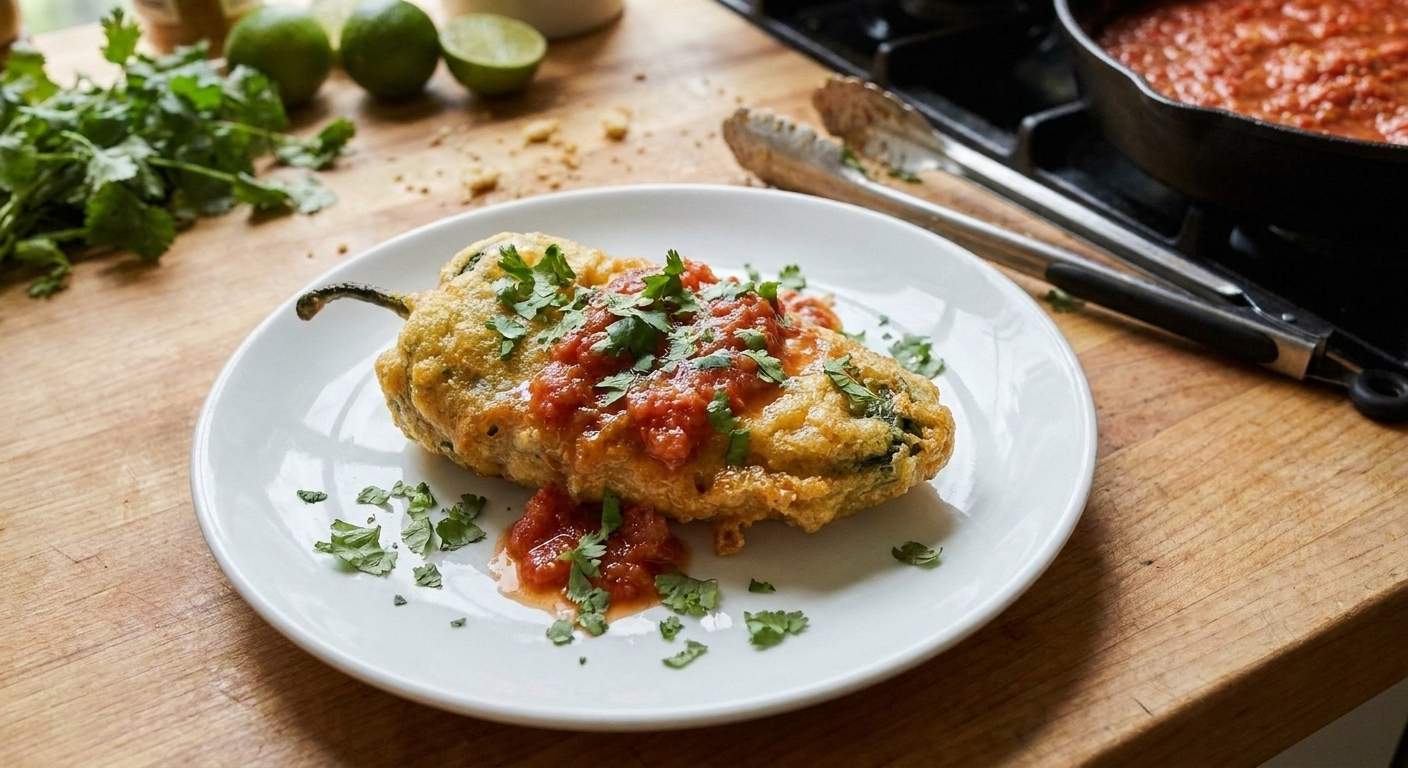
The payoff is simple and dramatic: pool a little warm sauce on the plate, set the relleno on top, and spoon just a bit more over one side right before serving. You get that tomato-forward bite without watching the batter go soft.

This version sticks to a cheese-stuffed filling, which is one of the most common and forgiving ways to make chile rellenos at home. Cheese does not dry out while you are learning the rhythm, it melts into the chile instead of fighting it, and it gives you that perfect pull when you cut in. If you are cooking for people you love, it is hard to beat the combination of smoky roasted poblano, savory egg batter, and molten cheese.
The flow that makes it easy
Think of chile rellenos as four mini-recipes that stack on top of each other. When you treat each part like its own job, the whole thing stops feeling intimidating.
- Roast and peel the poblanos for smoky flavor and tender flesh.
- Stuff and seal so the filling stays put when it hits the oil.
- Whip and coat with a light egg batter that clings instead of sliding.
- Fry and sauce with a little restraint so you keep the crunch and still get that saucy bite.
Try to do it all at once and it feels chaotic. Do it in stages and it feels like cooking, the kind where you can actually enjoy the process and still sit down to a plate that looks like you meant it.
Why this recipe works
- Roasting the poblanos first gives you smoky flavor and pliable chiles that fold around the filling instead of tearing.
- Drying the peeled chiles well helps the batter adhere and keeps oil from splattering.
- Sealing the slit with toothpicks keeps cheese inside during frying, especially once it starts to melt.
- A flour dusting before battering gives the egg foam something to grab, which means better coverage and fewer bare spots.
- Separating and whipping the egg whites creates a soufflé-like batter that fries up light instead of heavy.
- Frying at a steady 350°F sets the batter quickly so it does not absorb excess oil while still cooking through.
- Serving sauce underneath or on the side preserves the crispy exterior while still delivering that tomato finish many people expect.
Ingredient notes
Poblano chiles
Look for poblanos that are long, glossy, and relatively straight. Curvy chiles are still fine, they are just a little trickier to stuff. Poblanos range from mild to moderately spicy, so if you are sensitive to heat, buy a couple extra and taste a tiny sliver after roasting before you commit.
Cheese filling
Chile rellenos are often made with queso Oaxaca for that dreamy melt, but low-moisture mozzarella is an excellent, easy swap. I like adding a little Monterey Jack or mild cheddar for flavor. Whatever you use, avoid very wet fresh mozzarella. It tends to leak.
Eggs
The batter is essentially a whipped egg foam. Fresh eggs separate more cleanly, but any eggs work. The key is no yolk in the whites, even a little fat can prevent them from whipping up properly.
Flour
A light coating of all-purpose flour helps the batter cling. You are not making a thick dredge here, just a whisper of flour.
Oil for frying
Use a neutral oil with a higher smoke point, like canola, vegetable, avocado, or peanut oil. You want enough depth to let the chile float a bit, which helps it brown evenly.
Tomato sauce
This simple sauce is blended smooth and simmered briefly. The biggest tip: serve it warm, not boiling hot, and do not drown the rellenos if you want the crust to stay crisp.
Equipment you will need
- Broiler, grill, or gas burner for blistering poblanos
- Sheet pan and tongs for roasting and handling hot chiles
- Large bowl and plate or plastic wrap to steam chiles after roasting
- Paper towels for drying peeled chiles
- Toothpicks to secure the slit closed
- Stand mixer, hand mixer, or sturdy whisk for whipping egg whites
- Shallow dish for flour dusting
- Heavy skillet or Dutch oven for frying
- Thermometer (highly recommended) to keep oil near 350°F
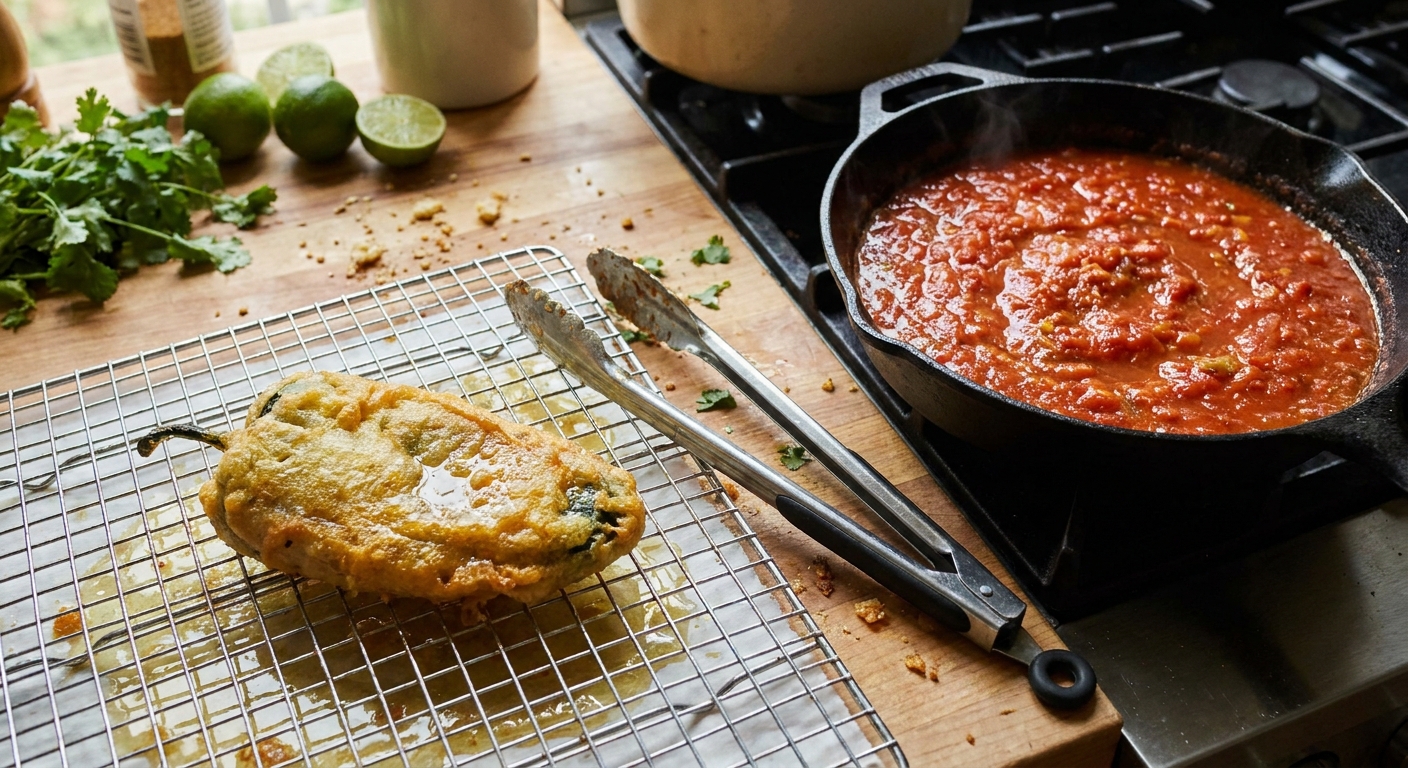
- Wire rack over a sheet pan for draining (better than paper towels alone)
- Blender for smooth tomato sauce
Pro tips
Blister hard, then steam
You want the skins deeply blistered and blackened in spots. After roasting, trap the chiles in a covered bowl or wrapped on a plate for 10 to 15 minutes. Steam loosens the skin so it slides off without taking the flesh with it.
Peel gently, then dry thoroughly
Rub off the skin with your fingers or a paper towel. Do not rinse under water unless you absolutely need to, because you wash away some of the smoky flavor. Once peeled, pat the chiles very dry. Wet chiles equal slipping batter and angry oil splatters.
Cut a small slit and keep the stem
Make one slit lengthwise and leave the stem intact so the chile stays sturdy. When you remove seeds, keep the interior ribs mostly in place if the chile feels flimsy. It helps the chile hold its shape.
Seal like you mean it
After stuffing, close the slit with toothpicks. If cheese is peeking out, tuck it in. Any exposed cheese can leak, and leaked cheese in hot oil turns into a smoky little landmine.
Get the batter to soft peak
Whip the whites to soft peaks, then fold in yolks and a pinch of salt. The batter should be airy but not dry. If it looks clumpy and stiff, it is over-whipped and will not coat as smoothly.
Hold the oil temperature steady
Aim for 350°F. If the oil is too cool, the batter absorbs oil and gets heavy. Too hot, and the outside browns before the inside warms and the cheese melts.
Sauce without sogginess
My favorite approach is to spoon a little warm sauce onto the plate, set the relleno on top, then add a small extra spoonful over just part of the chile. You get sauce in every bite, but the crust stays crisp.
Substitutes that work
- Cheese: Oaxaca, low-moisture mozzarella, Monterey Jack, mild cheddar, or a mix. Avoid very wet cheeses.
- Chiles: Poblanos are traditional. Anaheim peppers work if poblanos are unavailable, but they are thinner and more delicate, so handle gently.
- Sauce shortcut: In a pinch, use a good-quality plain tomato sauce and simmer it with a little onion, garlic, and a pinch of cumin to round it out.
- Gluten-free: Use a gluten-free all-purpose flour blend for the light dusting. The batter itself is egg-based.
Variations
Picadillo-stuffed
Swap the cheese for a cooked picadillo filling (seasoned ground beef with tomato, onion, and warm spices). Let the filling cool before stuffing so it does not steam the chile from the inside.
Bean and cheese
Add a spoonful of thick refried beans under the cheese. Keep it thick, not runny, so the relleno stays sealed.
Corn and poblano
Mix roasted corn kernels with shredded cheese and a pinch of cumin. It is sweet, smoky, and very Sunday-dinner friendly.
Extra-crisp serving style
Skip saucing on top entirely. Serve the sauce on the side for dipping, like a very good, very dramatic mozzarella stick.
Serving ideas
- Classic plate: chile relleno, warm tomato sauce, Mexican rice, and a simple shredded lettuce salad with lime.
- Brunch energy: top with a fried egg and serve with black beans.
- Taco night twist: serve one smaller relleno per person with tortillas, salsa, and sliced avocado.
- Fresh finish: cilantro, thinly sliced radish, and a squeeze of lime right before eating.
Storage and reheating
Storing
Chile rellenos are at their crispiest right after frying, but leftovers can still be very tasty. Store cooled rellenos in an airtight container in the refrigerator for up to 3 days. Store sauce separately if possible.
Reheating for best texture
- Oven or air fryer: Reheat at 375°F until hot and re-crisped, about 10 to 15 minutes depending on size.
- Skillet: Reheat in a dry nonstick skillet over medium-low, turning carefully, until warmed through.
- Microwave: It works, but the crust will soften. If you microwave, finish in a hot oven or skillet to revive crispness.
Freezing
You can freeze fried, cooled rellenos on a sheet pan, then transfer to a freezer bag for up to 2 months. Reheat from frozen in a 375°F oven until hot in the center. Sauce fresh when serving.
Common mistakes
- Not blistering enough: If the skin is not well-charred, it is harder to peel and you will tear the chile.
- Skipping the drying step: Moisture is the enemy of good batter adhesion and calm frying.
- Overstuffing: Too much cheese pushes the slit open and leaks into the oil.
- Under-whipped whites: You will get a thin coating that slides off. Look for soft peaks.
- Over-whipped whites: The batter turns grainy and dry, and it will not coat smoothly.
- Oil too cool: Greasy, heavy crust. Use a thermometer and let the oil recover between batches.
- Pouring sauce over everything: It tastes great, but it turns that crisp crust soft fast. Sauce lightly, or serve underneath or on the side.
FAQ
How do I keep chile rellenos from getting soggy?
Drain on a wire rack, not paper towels alone, and keep them in a warm oven (around 200°F) while you fry the rest. When serving, spoon sauce onto the plate first or serve sauce on the side. If you must sauce on top, use a small amount of warm, not boiling, sauce.
Do I really have to peel the poblanos?
For classic chile rellenos, yes. The skin gets papery and can separate from the batter. Peeling also helps the chile feel tender instead of chewy.
Can I bake them instead of frying?
Traditional chile rellenos are fried because the egg batter is designed to puff and set in hot oil. You can bake, but the texture will be different and usually less airy. If you want a lower-oil option, consider skipping the egg batter and baking stuffed roasted poblanos like a casserole style relleno.
Why is my batter falling off?
Usually it is one of three things: the chiles are wet, you skipped the flour dusting, or the whites were not whipped enough to hold structure. Pat the chiles dry, dust lightly with flour, and make sure your whites reach soft peaks.
What oil temperature is best?
About 350°F. Fry in batches so the oil does not drop too much when the chiles go in.
Can I make parts ahead?
Yes. Roast and peel the poblanos up to 1 day ahead, then refrigerate them well covered. You can also make the tomato sauce a couple days ahead. Batter should be made right before frying for best lift.
The recipe
Chile Rellenos
Smoky roasted poblanos stuffed with melty cheese, dipped in fluffy egg batter, fried until golden, and served with a bright tomato sauce that will not steal your crunch.
- Prep
- 30 minutes
- Cook
- 30 minutes
- Total
- 1 hour
- Yield
- 4
Ingredients
- 4 large poblano chiles
- 12 oz queso Oaxaca or low-moisture mozzarella, cut into sticks or shredded
- 2 oz Monterey Jack (optional, for extra flavor), shredded
- 1/2 tsp kosher salt, plus more to taste
- 1/4 tsp ground cumin (optional)
- 1/2 cup all-purpose flour (for dusting)
- 4 large eggs, separated
- Neutral frying oil (canola, vegetable, avocado, or peanut), enough for 1 1/2 to 2 inches depth in your pan
- Tomato sauce
- 1 tbsp neutral oil
- 1/2 medium white onion, roughly chopped
- 2 cloves garlic, peeled
- 1 1/2 lb ripe tomatoes, chopped (or 1 (28 oz) can whole peeled tomatoes, drained slightly)
- 1/2 cup low-sodium chicken or vegetable broth, plus more as needed
- 1/2 tsp kosher salt, plus more to taste
Instructions
- Roast the poblanos. Set poblanos on a sheet pan under the broiler (or directly over a gas flame or on a grill). Turn as needed until skins are blistered and blackened in spots on all sides, 6 to 12 minutes total depending on heat source.
- Steam, then peel. Transfer hot chiles to a bowl and cover (or wrap on a plate). Let steam 10 to 15 minutes. Peel off loose skin with your fingers or a paper towel. Do not rinse unless needed. Pat the peeled chiles very dry.
- Make a slit and remove seeds. Using a small knife, cut one slit lengthwise down each chile, keeping the stem intact. Gently open and scrape out seeds. If you want milder rellenos, remove more ribs. If the chile feels delicate, leave some ribs to help it hold its shape.
- Stuff and seal. Fill each chile with cheese (and Monterey Jack, if using). Keep filling below the cut line so the slit can close. Secure the opening with 2 to 3 toothpicks as needed.
- Make the tomato sauce. In a blender, combine onion, garlic, tomatoes, broth, and salt. Blend until smooth. Heat 1 tablespoon oil in a saucepan over medium heat. Carefully pour in the blended sauce and simmer, stirring occasionally, until slightly thickened and no longer tastes raw, 10 to 15 minutes. If the sauce gets too thick, add a splash more broth. Taste and adjust salt. Keep warm.
- Heat the frying oil. Pour neutral oil into a heavy skillet or Dutch oven to a depth of 1 1/2 to 2 inches. Heat to 350°F.
- Prep for battering. Set a wire rack over a sheet pan for draining. Place flour in a shallow dish.
- Whip the egg whites. In a clean bowl, whip egg whites until soft peaks form. Add 1/2 teaspoon salt. Add egg yolks and gently fold until mostly combined and airy.
- Flour, then batter. Lightly dust each stuffed chile in flour, shaking off excess. Dip into egg batter and use a spoon to help coat fully.
- Fry. Carefully lower battered chiles into the oil. Fry until golden brown and set, 2 to 4 minutes per side, turning gently with tongs or a slotted spoon. Adjust heat as needed to keep oil near 350°F. Fry in batches to avoid crowding.
- Drain and keep warm. Transfer fried chiles to the wire rack. If needed, keep finished chiles warm in a 200°F oven while frying the remaining batches.
- Serve without sogginess. Spoon a little warm tomato sauce onto each plate, set a chile relleno on top, and add a small extra spoonful over part of the chile, or serve sauce on the side for dipping. Remove toothpicks before eating.
Notes
Best sauce strategy: For the crispiest crust, sauce the plate first or serve sauce on the side. If you pour sauce over the whole chile, it will soften quickly.
Make-ahead: Roast and peel poblanos up to 1 day ahead and refrigerate well covered. Make sauce up to 3 days ahead. Fry and batter just before serving for best texture.
Safety: Make sure chiles are dried well before frying to reduce splatter. Do not overcrowd the pan.