
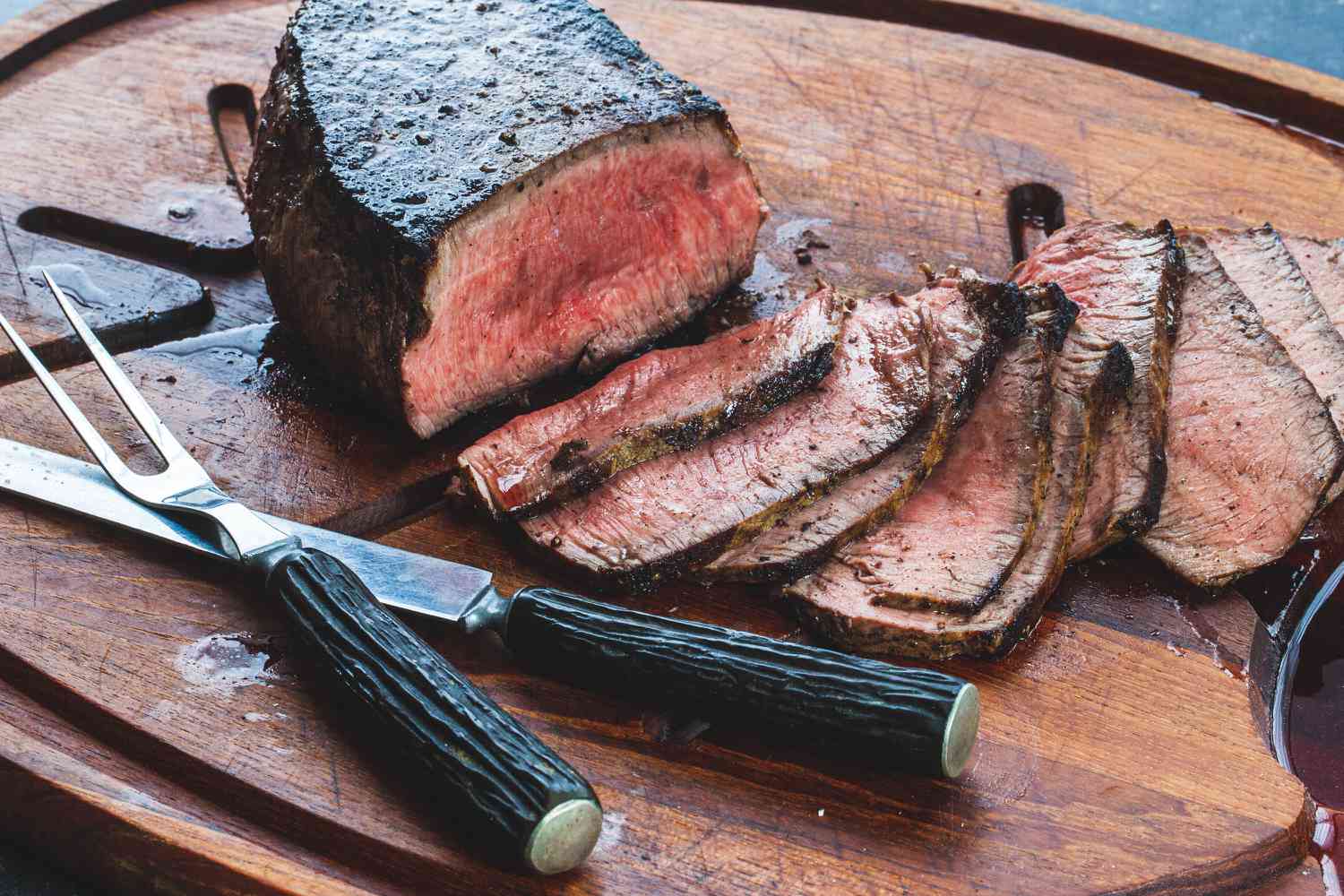
London broil has a reputation for being a little moody: delicious when it is treated right, chewy when it is rushed. The good news is that “treated right” is mostly three things you can absolutely do at home: a balanced marinade, high heat for a quick cook, and slicing thin against the grain.
This version is my dependable one. It tastes like the kind of steak you would happily build a whole dinner around, but it starts with a budget-friendly cut that is easy to find. If you have ever brought home a London broil and felt unsure what to do next, you are in the right place.

What it is
“London broil” is a little confusing because it is often used like a cut name, but it is really a method: marinate a lean, tougher steak, cook it fast over high heat, then slice it thin.
At the store, London broil usually means one of these:
- Top round: very lean, strong grain, great value. Needs marinade and thin slicing.
- Flank steak: beefier flavor with a long, pronounced grain. Still benefits from marinade.
- Top sirloin (occasionally labeled this way): more naturally tender, but still great with this marinade. Labeling varies by store and region.
No matter which one you have, the technique stays the same. Lean beef plus high heat plus correct slicing is the whole game.
The marinade
For tenderness, you want a marinade that does three jobs: seasons the meat throughout, helps it stay juicy, and lightly tenderizes without turning the surface mealy.
My go-to London broil marinade
- Soy sauce (or tamari): deep salt and savory flavor that penetrates well.
- Olive oil: carries flavor and helps prevent the surface from drying out under the broiler.
- Acid (balsamic or red wine vinegar, or lemon juice): brightens and gently loosens the muscle fibers. Not too much.
- Brown sugar or honey: balances the salt and helps browning and char.
- Garlic: because of course.
- Black pepper and optional chili flakes: heat that reads as “steakhouse.”
- Optional Dijon mustard: adds tang and helps emulsify the marinade so it clings.
How long to marinate: Aim for 6 to 12 hours. Minimum 2 hours if you are in a hurry. Try not to exceed 24 hours, especially if your marinade is heavy on vinegar or lemon. Too much time in a very acidic marinade can make the outside a little soft in a not-so-great way.
My best tenderness trick is not more marinade. It is thinner slicing. A London broil sliced correctly eats tender even when the cut is naturally lean.
Recipe: Tender Marinated London Broil
Ingredients
- 1 London broil (about 1 1/2 to 2 pounds), top round or flank steak
- 1/3 cup low-sodium soy sauce
- 3 tablespoons olive oil
- 2 tablespoons balsamic vinegar (or red wine vinegar)
- 1 1/2 tablespoons brown sugar (or honey)
- 1 tablespoon Dijon mustard (optional, but recommended)
- 4 garlic cloves, minced
- 1 teaspoon kosher salt (start with 1/2 teaspoon if you are salt-sensitive, or omit if using regular soy sauce)
- 1 teaspoon freshly ground black pepper
- 1/2 teaspoon smoked paprika (optional)
- Pinch of red pepper flakes (optional)
Instructions
- Make the marinade: In a bowl or large measuring cup, whisk soy sauce, olive oil, vinegar, brown sugar, Dijon, garlic, salt, pepper, and any optional spices.
- Marinate: Place the steak in a zip-top bag or shallow dish. Pour marinade over, press out extra air, and refrigerate 6 to 12 hours, flipping once or twice.
- Bring toward room temp: About 30 to 45 minutes before cooking, take the steak out of the fridge. This helps it cook more evenly.
- Prep your cooking method:
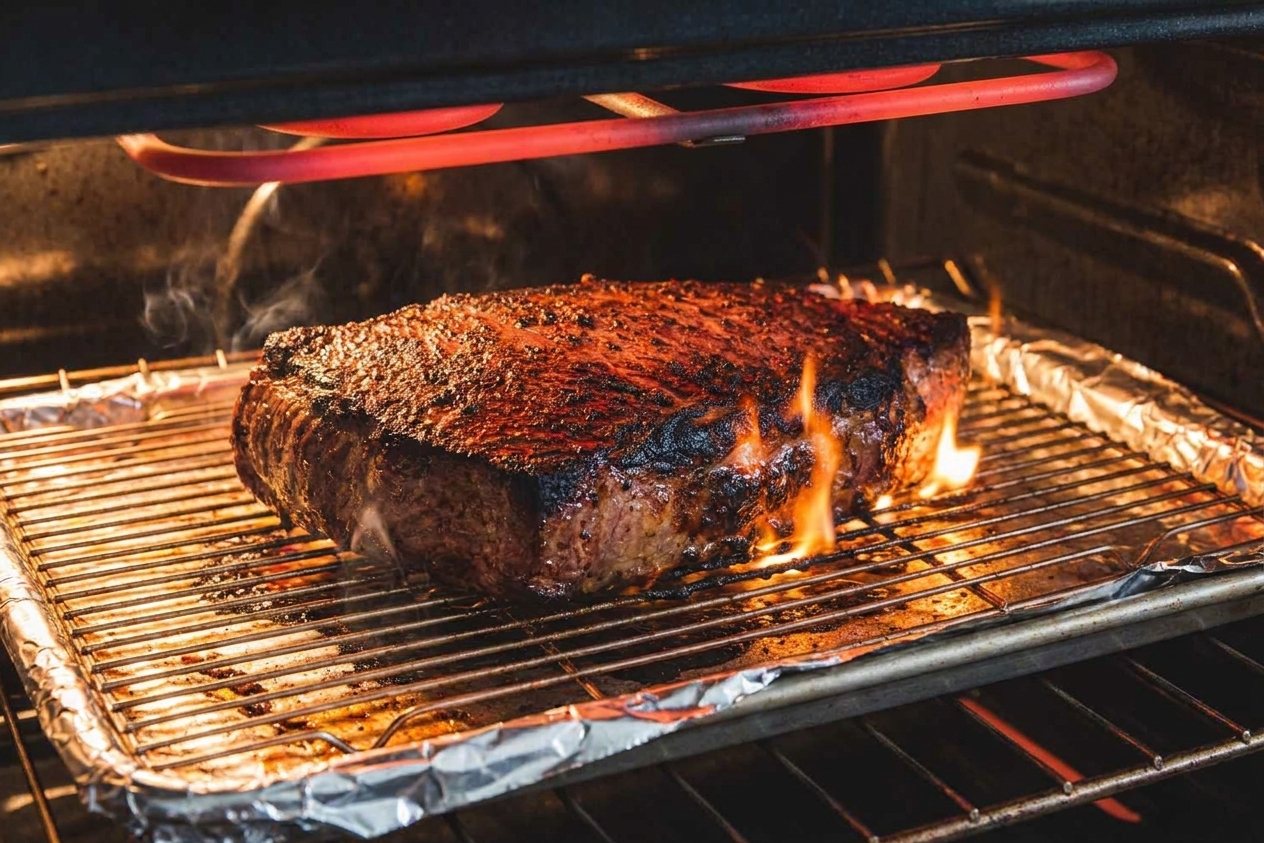
- Broiler: Position a rack 4 to 6 inches from the broiler element. Heat broiler on high. Line a sheet pan with foil for easy cleanup and set a wire rack on top if you have one.
- Grill: Preheat to high heat (you want a strong sizzle the second the steak hits the grates).
- Dry the surface: Lift the steak from the marinade and let excess drip off. Pat it dry with paper towels. This is how you get browning instead of steaming.
- Cook:
- Broil: Broil 5 to 7 minutes per side, depending on thickness and your broiler’s intensity.
- Grill: Grill 4 to 6 minutes per side.
Timing note: Thickness changes everything. A thick top round London broil (often 1 1/2 to 2 inches) will usually take longer than a thinner flank steak. Cook to temperature, not strictly by the clock.
For most London broil cuts, aim to pull at 125 to 130°F for medium-rare, 130 to 135°F for medium (measured at the thickest part). The temperature will rise a few degrees while resting.
- Rest: Transfer to a cutting board and rest 10 minutes. Do not skip this. It keeps the juices where you want them.
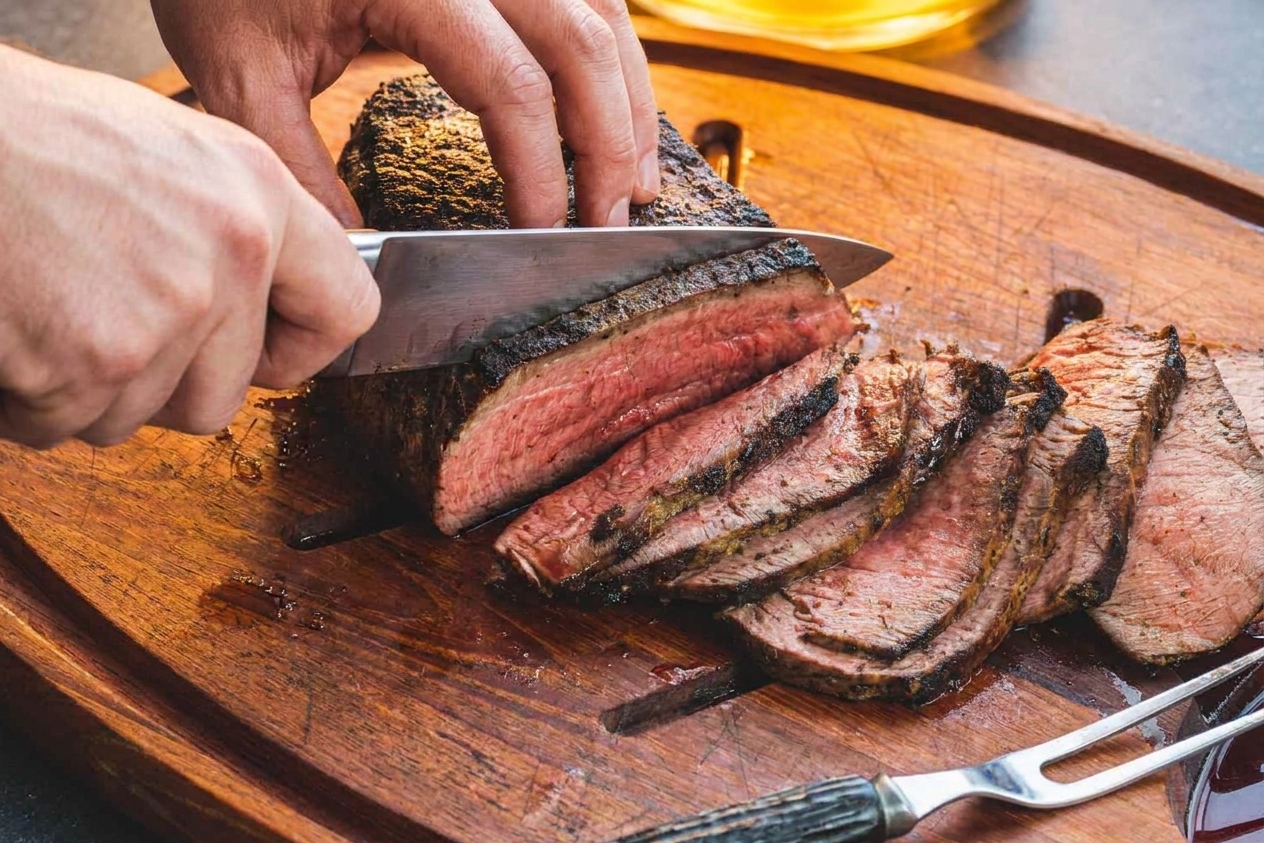
- Slice thin against the grain: Find the direction of the long muscle fibers and slice across them at a slight angle, as thin as you can manage.
Yield
Serves 4 to 6 (depending on appetites and side dishes)
Doneness
London broil is lean, so it goes from juicy to dry faster than a fattier steak. A thermometer is the calmest way to cook it.
- Medium-rare: pull at 125 to 130°F, it will rise a few degrees while resting
- Medium: pull at 130 to 135°F
- Medium-well: pull at 140°F (expect less tenderness, so slice extra thin)
- 145°F and above: this is the USDA safe minimum for whole cuts with a rest, but on lean London broil it will be noticeably drier
If you do not have a thermometer, watch for a deep brown surface and a little spring when you press the center. But if you cook London broil often, a thermometer is one of those small tools that pays you back immediately.
Slicing
If London broil has ever felt chewy, slicing is almost always the reason. The grain on top round and flank steak is pronounced. When you slice with the grain, you end up chewing through long muscle fibers. When you slice against the grain, you shorten those fibers and it feels dramatically more tender.
How to find the grain
- Look for the lines running across the surface of the meat.
- Before cooking, you can even make a tiny notch along the grain as a reminder.
- If the steak is wide, you might need to rotate it as you slice because the grain can shift direction.
Thickness matters: Think deli-thin, not steakhouse-thick. For top round especially, thinner slices are your best friend.
Broiler, grill, or stovetop
You can cook London broil a few different ways. Here is how I decide.
Broiler (my easiest option)
Fast, reliable, and great when you want char without firing up the grill. Use a rack if you have one so heat circulates and the underside does not get soggy.
Grill (best smoky flavor)
Preheat properly. A lukewarm grill encourages sticking and overcooking while you wait for color. Clean and oil the grates, then cook hot and fast.
Stovetop to oven (if you do not have a broiler or grill)
Sear in a ripping-hot cast iron skillet for 3 to 4 minutes per side, then finish in a 425°F oven until it hits temperature. This is a little slower but still very doable.
Swaps and variations
This marinade is flexible. Keep the same general balance of salt, fat, and acid and you can make it your own.
- No soy sauce: Use coconut aminos, or try 2 tablespoons Worcestershire plus 2 tablespoons water plus 1 extra pinch of salt.
- No balsamic: Red wine vinegar or apple cider vinegar work well. Lemon juice is great, just keep it to 1 1/2 tablespoons.
- Extra herby: Add a tablespoon of chopped rosemary or thyme, or 1 teaspoon dried Italian seasoning.
- Spicy: Add 1 teaspoon chipotle powder or a spoonful of adobo sauce.
- Sweeter glaze vibe: Add 1 extra teaspoon honey and finish with a quick brush of marinade you reserved before adding it to raw meat.
Troubleshooting
Why is my London broil tough?
Most common causes: overcooking, slicing with the grain, or slicing too thick. Next time, pull it earlier and slice thinner. If it is already cooked, slice it paper-thin and serve it with a saucy side like chimichurri, salsa verde, or a quick pan sauce.
Why did it not brown?
Surface moisture. Pat the steak dry after marinating and make sure your broiler or grill is truly hot. Sugar also helps browning, which is why the marinade includes a little.
Can I poke holes in the steak?
You can, but you do not need to. If you want a more mechanical approach, lightly scoring the surface in a shallow crosshatch helps marinade cling without turning the interior mushy. Keep the cuts shallow, not deep.
What to serve with it
I like to pair this with something starchy to catch the juices and something crisp to balance the richness.
- Roasted potatoes or simple mashed potatoes
- Rice pilaf or buttered noodles
- Charred green beans or a lemony arugula salad
- Warm tortillas for steak tacos with leftover slices
- Crusty bread and a big tomato salad when it is hot out
Storage and leftovers
London broil leftovers are surprisingly useful because the meat is flavorful and slices neatly.
- Store: Refrigerate in an airtight container for up to 4 days.
- Freeze: Freeze sliced meat tightly wrapped for up to 2 months.
- Reheat gently: Warm slices in a covered skillet with a splash of broth or water, just until heated through. Hard reheating makes it tougher.
Leftover ideas
- Steak salad with crunchy cucumbers, tomatoes, and a tangy vinaigrette
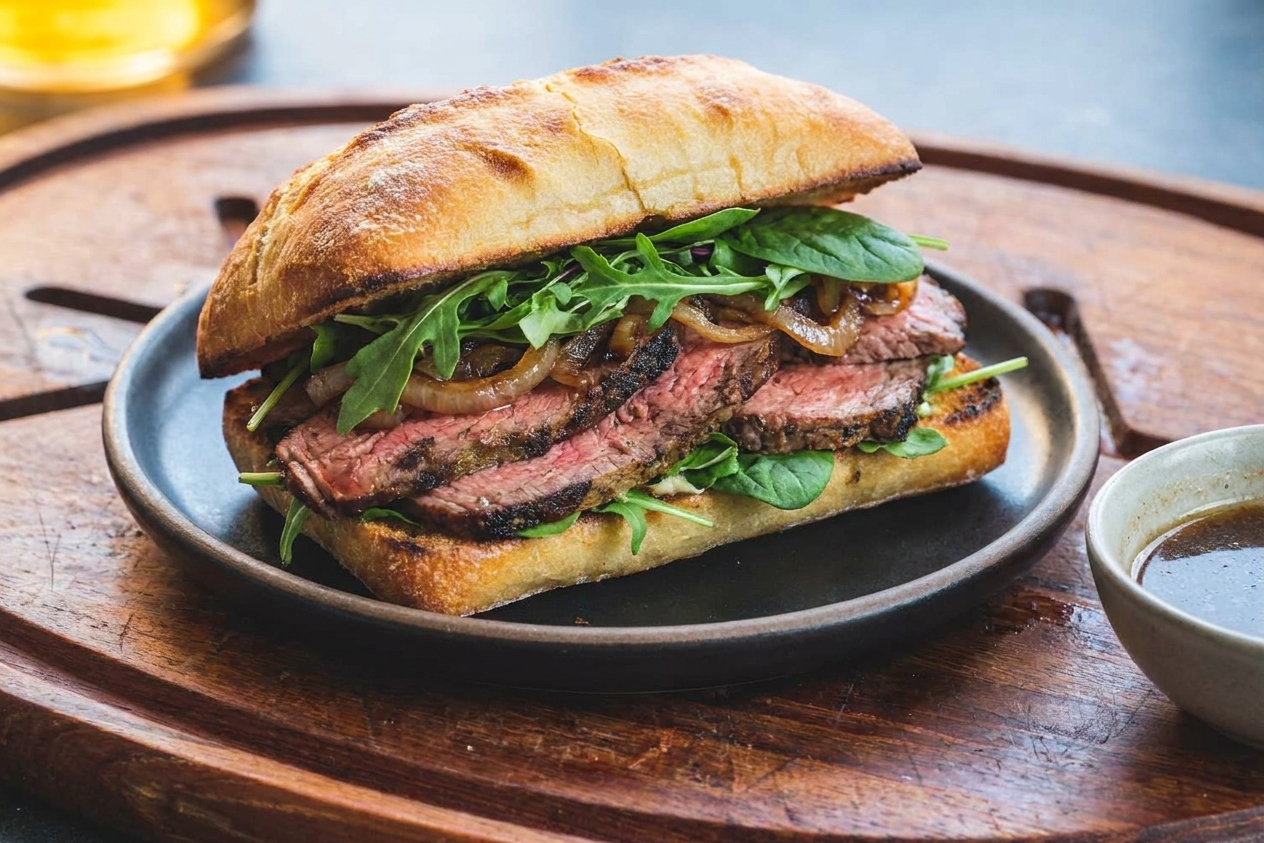
- Steak sandwiches with caramelized onions and a swipe of horseradish mayo
- Quick fried rice with thin strips of steak stirred in at the end
- Breakfast hash with potatoes, peppers, and a runny egg
FAQ
Is London broil the same as flank steak?
Not exactly. London broil is often sold as top round, but flank steak can also be labeled or used as London broil. Either way, marinate, cook quickly over high heat, and slice thin against the grain.
How long should I marinate London broil?
Best is 6 to 12 hours. Minimum 2 hours. Try not to go past 24 hours, especially with a more acidic marinade.
Can I use the marinade as a sauce?
Yes, but do it safely. The cleanest option is to reserve a few tablespoons of marinade before it touches raw meat and use that for finishing. If you want to use the used marinade, pour it into a small saucepan, bring it to a full rolling boil and boil for 1 to 3 minutes (or until it reaches 165°F throughout), then simmer briefly to reduce. It will taste saltier as it reduces, so go slowly.
What if I want it more tender without changing the cook?
Slice thinner. I know it sounds too simple, but it is the biggest tenderness lever you have with this cut.