
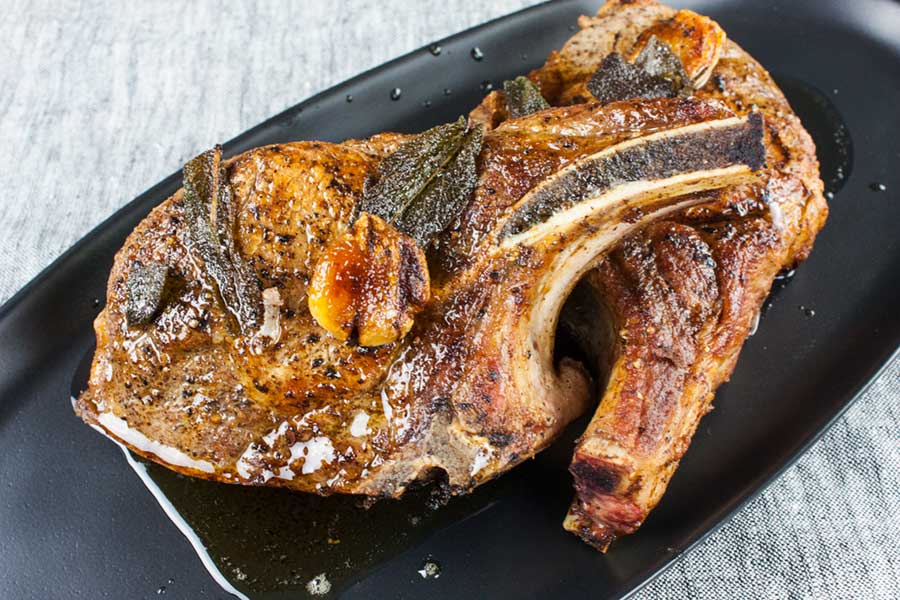
Pork chops used to have a reputation for being dry, tough, and a little… sad. If you grew up eating them cooked until they were pale and squeaky, you are not alone. The good news is that pork today is generally leaner than it was decades ago, and so are our expectations. Modern pork chops are all about three things: picking a chop that can stay juicy, cooking it to the right temperature, and using the pan for a quick sauce that tastes like you planned ahead.
I am going to walk you through the “why” behind each step, then give you a recipe that is Tuesday-night doable but still feels special. You do not need a fancy pantry. You just need a good pan and the confidence to pull your pork before it dries out.

What makes a pork chop “modern”?
To me, modern pork chops are less about a specific flavor trend and more about a smarter approach.
- We cook to temperature, not to fear. The goal is juicy pork that is just cooked through, not overcooked “to be safe.”
- We choose cuts that forgive us. A thicker chop buys you time and tenderness.
- We finish with a sauce. Not a heavy gravy. Think bright, glossy pan sauces made from the browned bits in the skillet.
- We embrace bold but practical flavors. Mustard, miso, gochujang, maple, citrus, herbs, garlic, and quick pickles. Big payoff, minimal effort.
Buying pork chops that stay juicy
Here is the truth: the cut does a lot of the work. If you start with a thin, super-lean chop, you have a smaller window between “perfect” and “dry.”
Best choices for weeknight success
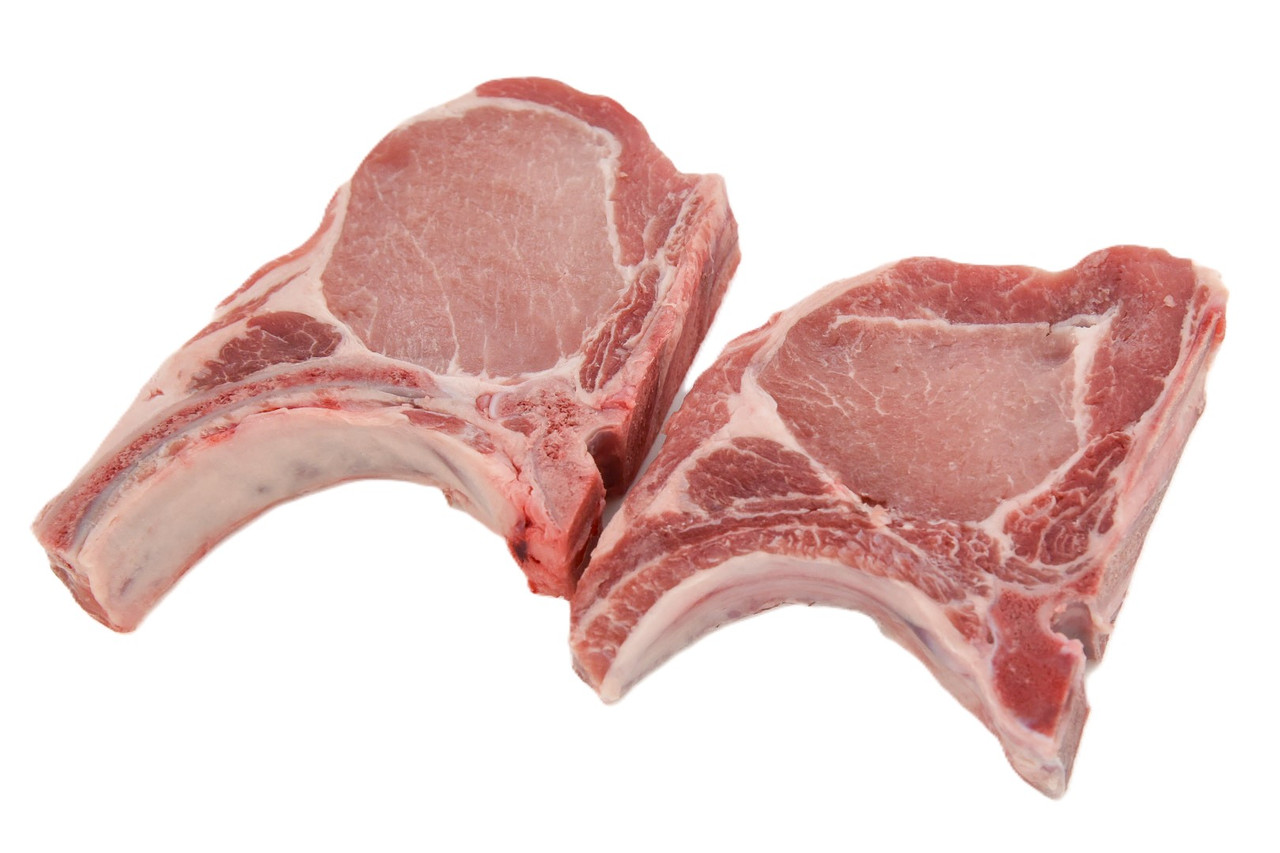
- Bone-in rib chop (center cut rib): My favorite. Great flavor, tender, and usually thick enough to give you a little more margin.
- Thick-cut loin chop: Leaner than rib chops, still tasty. Buy them at least 1 inch thick, ideally 1 1/4 inches.
- Shoulder chop (blade chop): More marbling and more flavor. Not as “neat” looking, but very forgiving and delicious.
What to avoid (unless you love a challenge)
- Very thin boneless chops: They can be fine, but they cook so fast that you can overshoot the temperature in a blink.
- “Extra lean” chops: Lean is not the enemy, but ultra-lean plus high heat plus a minute too long equals dryness.
Look for: thickness, a little marbling, and a chop that is not weeping lots of liquid in the package. If you can, ask the butcher for 1 1/4-inch chops. It is the easiest upgrade you can make.
The core technique
This is the method I rely on when I want chops that taste like they came from a bistro: a hard sear for color and flavor, then a lower, steadier finish so the inside stays juicy.
Step 1: Dry brine if you have time
If you can, salt your chops 30 minutes to 24 hours ahead and refrigerate them uncovered. This seasons the meat more deeply and helps it retain moisture. If you cannot, salt them right before cooking. It will still be good, just slightly less “seasoned all the way through.”
Quick note: If you dry brine, you have already salted them, so do not salt again right before they hit the pan.
Step 2: Pat dry like you mean it
Moisture is the enemy of browning. Use paper towels and get the surface dry so you get a deep golden crust instead of a pale steam.
Step 3: Sear, then turn down the heat
Start hot for browning, then lower the heat to finish. This gives you that restaurant crust without pushing the interior past the point of tenderness.
Step 4: Use a thermometer
This is the biggest confidence-builder. For chops, I like to pull them from the heat at 135 to 140°F and let carryover cooking bring them to 140 to 145°F while they rest.
USDA guidance for whole muscle cuts of pork is 145°F with a 3-minute rest. Insert the thermometer into the thickest part of the chop and avoid touching the bone, which can skew the reading.
If you are cooking for pregnant, elderly, or immunocompromised guests, or you just want maximum peace of mind, cook to 145°F and give it the full rest.
If pork chops have disappointed you before, it is almost never because you did not use enough seasoning. It is because they cooked 10 degrees too far.
Flavor ideas
Once you nail the cooking, the fun part is flavor. Here are combinations that taste current but do not require a scavenger hunt.
- Mustard + herbs + lemon: Dijon, parsley, thyme, lemon zest. Bright and classic.
- Miso + butter + scallions: Whisk miso into the pan sauce for salty depth. Finish with sliced scallions.
- Maple + cider vinegar + rosemary: Sweet, tangy, and cozy.
- Gochujang + honey + lime: A gentle spicy-sweet glaze vibe.
- Apple + sage: Sauté thin apple slices in the same pan, then splash in stock.
If you are cooking for picky eaters, start with mustard-butter. It tastes familiar but still feels a little elevated.
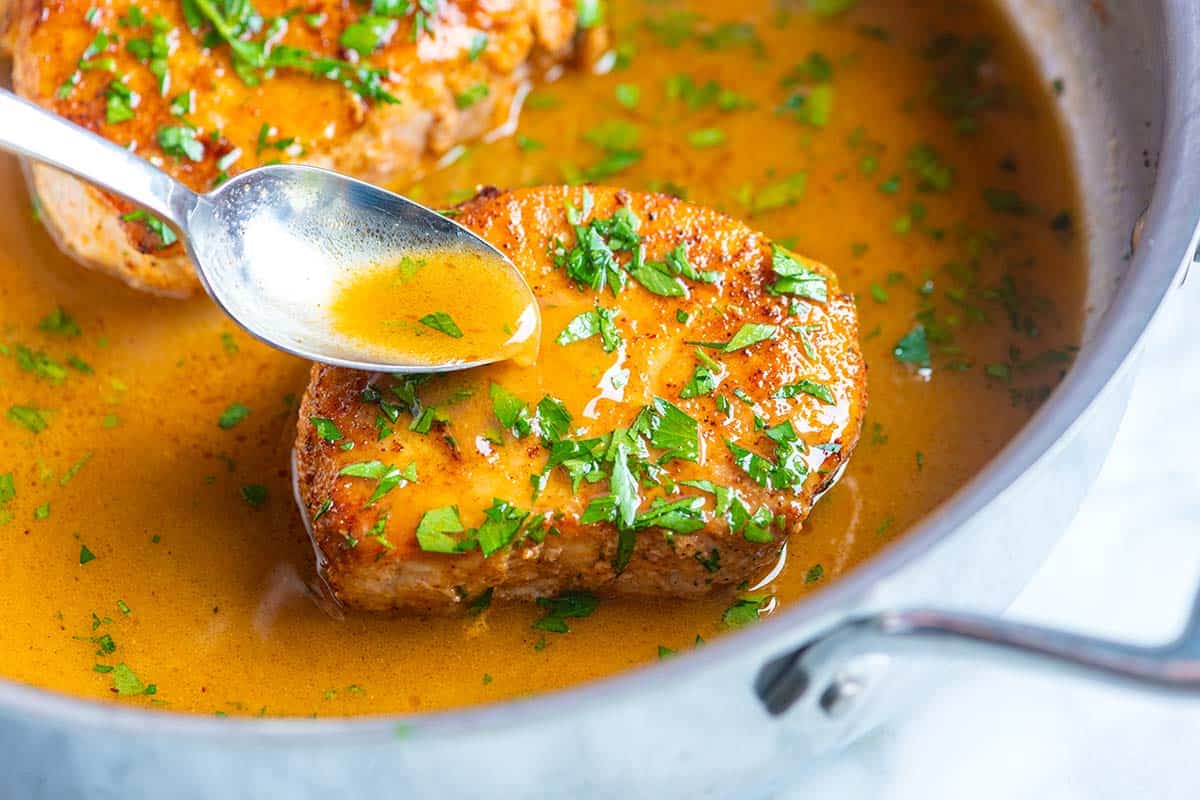
Modern Pork Chops with Dijon Pan Sauce
This is my default “modern pork chop” dinner: a confident sear, a quick pan sauce, and a finish that tastes like you did more than you actually did. The sauce is tangy and buttery with just enough brightness to cut through the richness.
Recipe
Serves: 2 to 4
Time: 25 minutes (plus optional dry brine time)
Ingredients
- 2 large bone-in pork chops, 1 to 1 1/4 inches thick (about 10 to 14 oz each)
- 1 1/2 tsp kosher salt (use 1 tsp if your salt is fine-grained)
- 1/2 tsp black pepper
- 1 tbsp neutral oil (avocado, grapeseed, or canola)
- 2 tbsp unsalted butter, divided
- 2 cloves garlic, smashed
- 1/2 cup chicken stock (or water in a pinch)
- 2 tbsp Dijon mustard
- 1 tsp honey (optional but lovely)
- 1 to 2 tsp lemon juice (or 1 tsp apple cider vinegar)
- 1 tbsp chopped parsley or chives
Instructions
- Optional dry brine: Salt the chops on all sides. Refrigerate uncovered for at least 30 minutes, or up to 24 hours.
- Prep: Pat chops very dry. If you dry brined, do not add more salt. Season with pepper. Let sit at room temperature for 10 to 30 minutes while you heat the pan (do not leave out longer than 1 hour).
- Sear: Heat a large skillet (cast iron or stainless steel) over medium-high. Add oil. When it shimmers, add chops. Sear 3 to 4 minutes per side, until deeply golden. If your chops have a fat cap, stand them on the edge for 30 to 60 seconds to render and brown.
- Finish gently: Reduce heat to medium-low. Add 1 tbsp butter and the garlic. Spoon the butter over the chops for 1 minute, then continue cooking, flipping every minute or so, until the thickest part reads 135 to 140°F. For 1 to 1 1/4-inch chops, this usually takes another 4 to 8 minutes, depending on your stove and the chop.
- Rest: Transfer chops to a plate and tent loosely with foil. Rest 5 to 7 minutes.
- Make the sauce: Pour off excess fat if needed, leaving about 1 tbsp in the pan. Add stock and scrape up browned bits. Simmer 1 to 2 minutes. Whisk in Dijon and honey. Turn off heat and whisk in remaining 1 tbsp butter. Add lemon juice or vinegar to taste.
- Serve: Slice chops and spoon sauce over. Finish with herbs and a pinch of pepper.
Notes and substitutions
- No stock? Use water plus an extra pinch of salt, or a splash of white wine diluted with water.
- No Dijon? Whole grain mustard works. Yellow mustard is sharper and less complex, but still usable with a touch more honey.
- Want it creamier? Add 2 to 3 tbsp heavy cream at the end and warm gently.
- Cooking thin chops? Keep heat at medium-high and start checking temperature early. They may hit 140°F fast, so have your resting plate ready.
Common problems
“My chops are always dry.”
Most likely they cooked too long. Use a thermometer, pull at 135 to 140°F, and rest. Also consider switching to rib or shoulder chops, or buying thicker cuts.
“They are browned outside but raw inside.”
Your heat is too high for the thickness. Sear for color, then lower the heat and flip more frequently. Thick chops love a gentler finish.
“The seasoning tastes only on the outside.”
Try the dry brine. Even 30 minutes helps the salt move in and season more evenly.
“My sauce breaks or looks greasy.”
Take the pan off the heat before whisking in the final butter, and whisk steadily. If it still looks separated, add a tablespoon of warm stock or water and whisk to bring it back together.
What to serve with pork chops
I like sides that either soak up sauce or bring something fresh and crunchy to the plate.
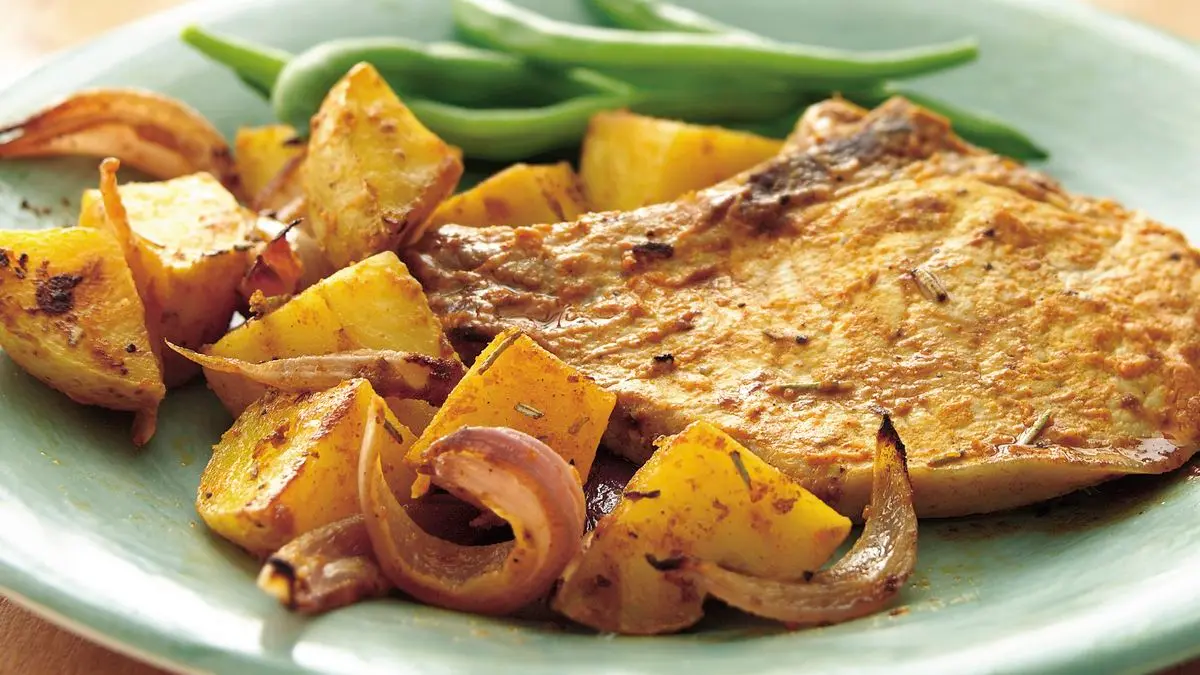
- Crispy roasted potatoes or smashed baby potatoes
- Buttery rice or a simple pilaf
- Garlicky sautéed greens like spinach, kale, or broccolini
- Apple and fennel salad for a bright, crunchy counterpoint
- Pan-fried green beans with lemon
Storing and reheating leftovers
Leftover pork chops are where dryness usually happens, so go gentle.
- Store: Refrigerate in an airtight container up to 3 days. Store sauce separately if you can.
- Reheat best method: Slice the chop and warm it in a skillet with a splash of water or stock over low heat, covered, just until warmed through.
- Microwave method: Slice, add a spoonful of sauce or a splash of water, cover loosely, and heat at 50 percent power in short bursts.
Leftover magic: Thinly slice and tuck into a toasted sandwich with mustard and arugula, or chop and toss into fried rice with any vegetables you need to use up.
FAQ
Is it safe to eat pork at 145°F?
Yes. For whole cuts like chops, 145°F followed by a 3-minute rest is the standard USDA guidance. The rest time matters because the temperature stays elevated and the meat finishes gently.
Should pork chops be pink in the middle?
A very slight blush can be normal at 145°F, especially near the bone. What matters most is the internal temperature and a proper rest.
Do I need to rinse pork chops?
No. Pat them dry with paper towels. Rinsing can spread bacteria around the sink and does not improve flavor.
Cast iron or stainless steel?
Both work. Cast iron holds heat well and browns beautifully. Stainless is excellent for pan sauce because you get lots of browned bits to deglaze. Nonstick is not ideal for building fond, but you can still cook chops in it if that is what you have. Just plan on a simpler sauce made separately.