
Balsamic vinaigrette is one of those little kitchen wins that pays you back all week. It takes about five minutes, can cost less than a store-bought bottle, and tastes like you meant to make dinner feel special even if it is Tuesday. Even if you are eating salad out of the big mixing bowl.
My goal here is to give you a dressing that is both reliable and flexible. You will get a go-to base recipe, the why behind the ratios, and easy adjustments that make it work for everything from peppery arugula to roasted vegetables.

What it should taste like
A great balsamic vinaigrette hits four notes at once:
- Tangy from vinegar, but not harsh
- Fruity and slightly sweet from balsamic
- Round and silky from good olive oil
- Well-seasoned, meaning enough salt to make everything else pop
If yours tastes sharp or flat, do not toss it. Most dressings just need a tiny correction, like a pinch of salt or a half teaspoon of sweetener. I will walk you through fixes further down.
The ratio (and why it works)
Classic vinaigrette is often taught as 3 parts oil to 1 part vinegar, but think of that as a starting point, not a law. With balsamic, I tend to land closer to 2 parts oil to 1 part balsamic because balsamic is usually more mellow and naturally sweet than some other vinegars.
Here is the simple idea:
- More oil = softer, richer, less tang
- More vinegar = brighter, sharper, more punch
- Mustard (and sometimes a touch of honey) = helps it stay mixed longer and taste balanced
Once you know that, you can tailor it to whatever you are eating. Tender butter lettuce likes a gentler dressing. Hearty kale can take a bolder one.
5-minute balsamic vinaigrette
This makes about 1/2 cup, enough for several salads or a few lunches worth of grain bowls. It also doubles or triples easily.
Ingredients
- 3 tablespoons balsamic vinegar
- 6 tablespoons extra-virgin olive oil
- 1 teaspoon Dijon mustard
- 1 to 2 teaspoons honey or maple syrup (optional but recommended)
- 1 small garlic clove, finely grated, or 1/4 teaspoon garlic powder
- 1/2 teaspoon kosher salt, plus more to taste
- Freshly ground black pepper
Method
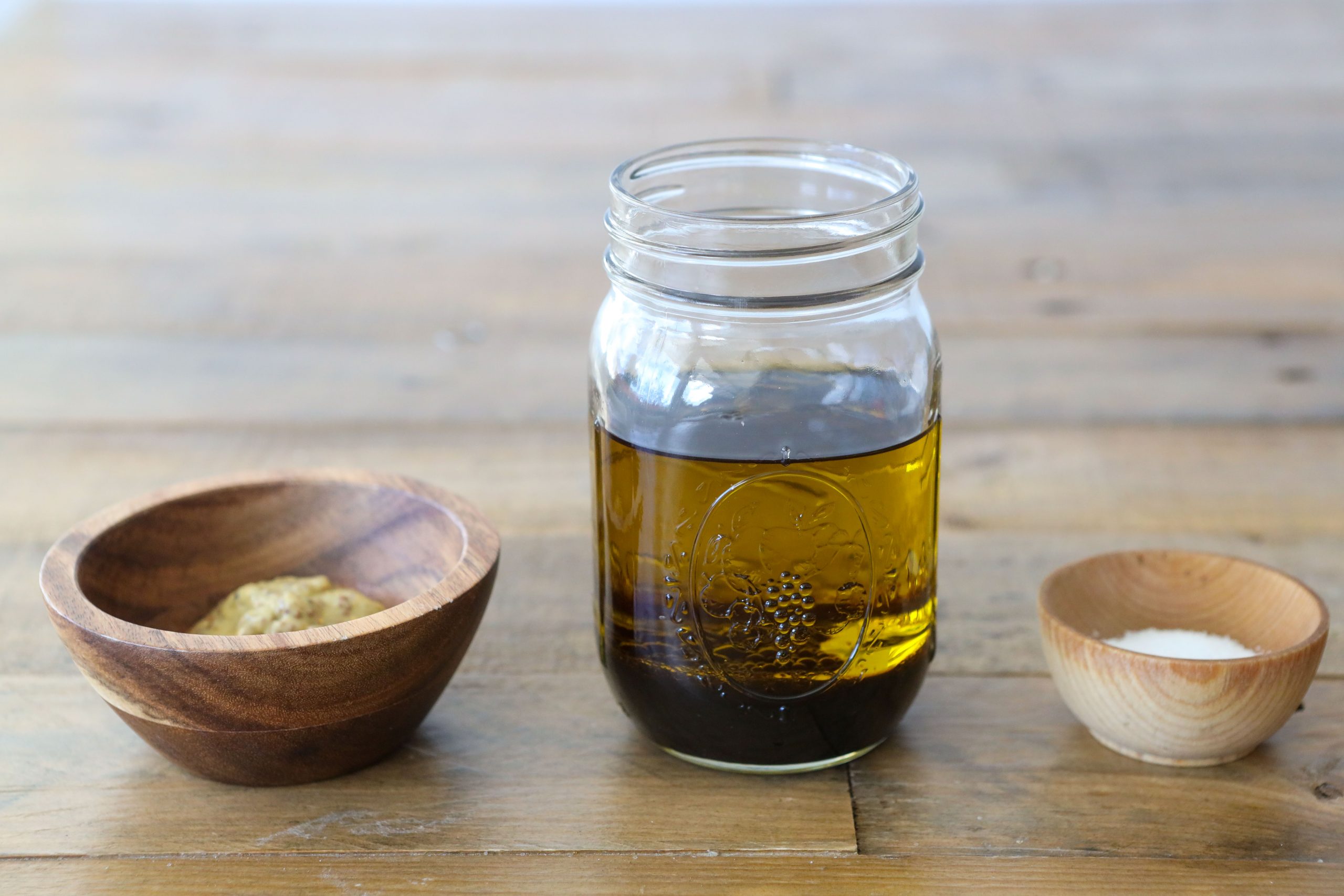
Start with the vinegar base. In a bowl or jar, combine balsamic vinegar, Dijon, honey (if using), garlic, salt, and a few grinds of pepper.
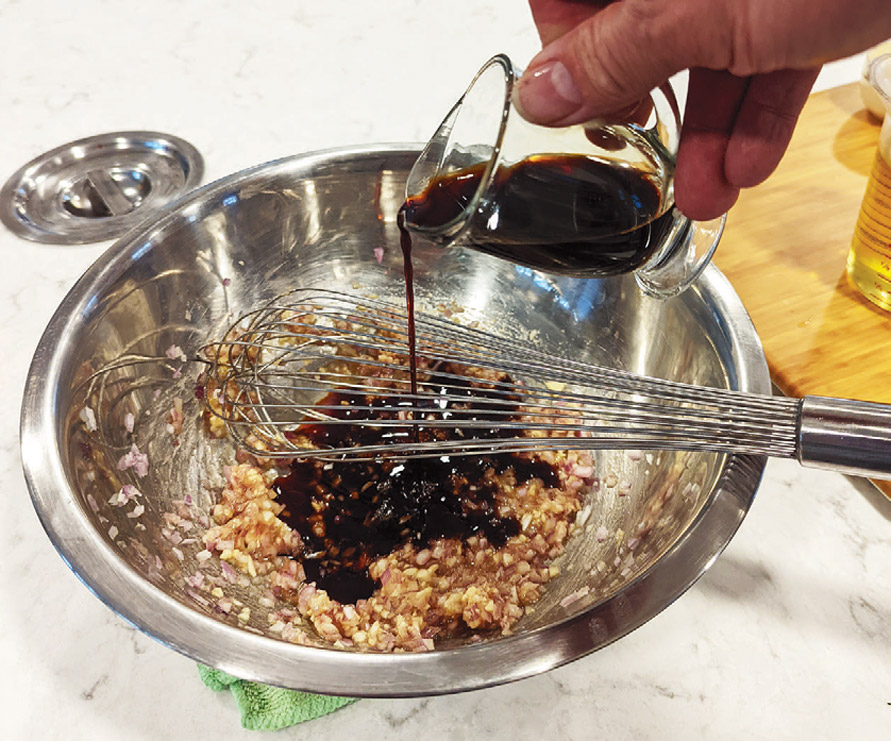
Whisk in the oil slowly. While whisking constantly, drizzle in the olive oil. This helps the vinaigrette emulsify so it looks slightly thicker and stays mixed longer.
Taste and adjust. Add a pinch of salt if it tastes dull, or a touch more honey if it tastes too sharp. If it feels heavy, whisk in 1 teaspoon water at a time to lighten it.
Jar method: Add everything to a jar with a tight lid and shake hard for 15 to 20 seconds. It will separate sooner than the slow-whisk method, but it is still delicious. Just shake again before using.
How to keep it mixed
Vinaigrette is a temporary relationship between oil and vinegar, so some separation is normal. But you can help it stay together longer:
- Use an emulsifier. Dijon mustard is my favorite because it adds flavor and helps the dressing stay creamy.
- Drizzle the oil slowly while whisking. This breaks the oil into tiny droplets that stay suspended longer.
- Season well. Salt is mostly about flavor, but it also makes the whole thing taste more cohesive.
If it separates in the fridge, you did nothing wrong. Let it sit at room temperature for 5 to 10 minutes and shake or whisk again.
Choosing balsamic vinegar
At the store, balsamic ranges from thin and tangy to thick and syrupy. You can make good vinaigrette with almost any of them, but here is how to set yourself up for success:
- If your balsamic is very sharp: Use a little more honey, or increase oil slightly.
- If your balsamic is thick and sweet: Reduce or skip added sweetener so the dressing does not taste candy-like.
- If your balsamic is very thin: Dijon helps give the vinaigrette body.
A note from my bakery days: if your balsamic is aggressively acidic, a small sweetener tweak can make it taste like a different product entirely. Add sweetness in tiny amounts and re-taste.
Easy variations
Once you have the base, you can steer it in a dozen directions depending on what is in your fridge.
Lemon-balsamic
- Replace 1 tablespoon of balsamic with 1 tablespoon lemon juice.
- Add a little lemon zest if you have it.
Shallot balsamic
- Add 1 tablespoon finely minced shallot.
- Let it sit 10 minutes before serving to mellow the bite.
Herby balsamic
- Add 1 to 2 tablespoons chopped fresh herbs like basil, parsley, or dill.
- Best used within 2 days for the brightest flavor.
Creamy balsamic
- Whisk in 1 tablespoon mayonnaise or Greek yogurt.
- Great for sturdier greens, pasta salad, or chicken.
Honey-balsamic for fruit-forward salads
- Use the full 2 teaspoons honey and a pinch of flaky salt.
- Perfect with strawberries, peaches, goat cheese, and toasted nuts.
What to serve with it
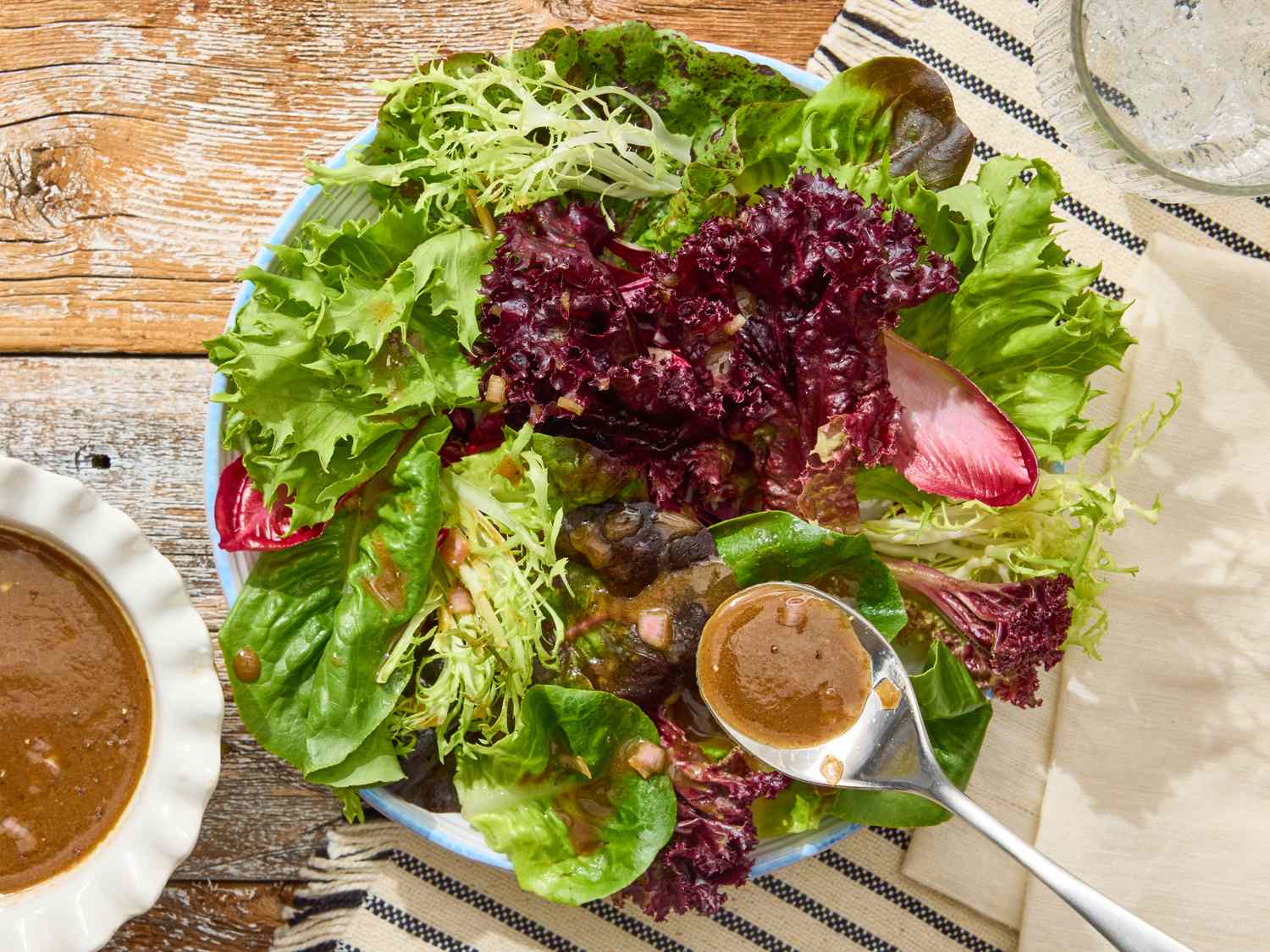
This dressing is not just for salad. Here are a few of my favorite use-it-up moves:
- Roasted vegetables: Toss warm roasted Brussels sprouts, carrots, or cauliflower with a tablespoon or two right before serving.
- Grain bowls: Drizzle over farro, quinoa, or rice with roasted veggies and a soft-boiled egg.
- Tomato and mozzarella: Swap in this vinaigrette when you want a punchier twist on a caprese-style plate.
- Marinade shortcut: Use as a quick marinade for chicken thighs or portobellos for 20 to 30 minutes, then cook.
- Sandwich helper: Brush on bread, especially for veggie sandwiches that need brightness.
Troubleshooting
It is too acidic.
- Add 1/2 teaspoon honey or maple syrup.
- Add a little more oil, 1 teaspoon at a time.
- Add a pinch more salt. This often surprises people, but it works.
It tastes oily or heavy.
- Whisk in 1 to 2 teaspoons vinegar or lemon juice.
- Whisk in 1 teaspoon water to lighten the texture without increasing sharpness too much.
It tastes flat.
- Add salt first.
- Then add pepper or a tiny squeeze of lemon.
My garlic is too strong.
- Switch to garlic powder next time.
- Or make the dressing and let it sit 10 minutes, then taste again. Garlic calms down as it disperses.
Storage and make-ahead
Homemade balsamic vinaigrette keeps well, which is exactly why I love making it.
- Fridge: Store in a sealed jar. If you used fresh garlic, aim to use it within 3 to 5 days. If you used garlic powder, it will keep well up to 7 days.
- Olive oil solidifying: Totally normal. Let the jar sit at room temperature 10 to 15 minutes, then shake.
- Herbs added: Best within 2 to 3 days for the freshest flavor.
If you are meal-prepping salads, keep dressing separate and add it right before eating so your greens stay crisp.
FAQ
Can I make balsamic vinaigrette without Dijon mustard?
Yes. The mustard helps it stay emulsified and adds a little bite, but you can leave it out. If you want another helper, try 1 teaspoon mayonnaise or a small spoonful of Greek yogurt.
Is balsamic vinaigrette gluten-free?
Usually, yes, especially if you are using pure balsamic vinegar, olive oil, and basic seasonings. If you are sensitive, check the label on your mustard and vinegar to be safe.
Can I use regular balsamic vinegar and not the expensive kind?
Absolutely. The base recipe is designed to taste good with everyday grocery store balsamic. If yours is sharp, lean on a touch of honey and do not be shy with the salt.
How much dressing should I use per salad?
For a big dinner salad serving 2 to 3, start with 2 to 3 tablespoons total. Toss, taste, then add more if needed. It is easier to add than to take away.
Balsamic Vinaigrette Dressing
Yield: About 1/2 cup
Time: 5 minutes
Ingredients
- 3 tablespoons balsamic vinegar
- 6 tablespoons extra-virgin olive oil
- 1 teaspoon Dijon mustard
- 1 to 2 teaspoons honey or maple syrup (optional but recommended)
- 1 small garlic clove, finely grated (or 1/4 teaspoon garlic powder)
- 1/2 teaspoon kosher salt, plus more to taste
- Freshly ground black pepper
Instructions
In a bowl or jar, combine balsamic vinegar, Dijon, honey (if using), garlic, salt, and black pepper.
Whisking constantly, slowly drizzle in the olive oil until the dressing looks slightly thickened and cohesive. (Or seal the jar and shake vigorously for 15 to 20 seconds.)
Taste and adjust: add a pinch of salt if needed, a touch more honey if it is too sharp, or 1 teaspoon water at a time to lighten the texture.
Storage
Store in a sealed jar in the refrigerator. If using fresh garlic, use within 3 to 5 days. If using garlic powder, it will keep well up to 7 days. Let sit at room temperature 10 to 15 minutes if the oil solidifies, then shake to recombine.