
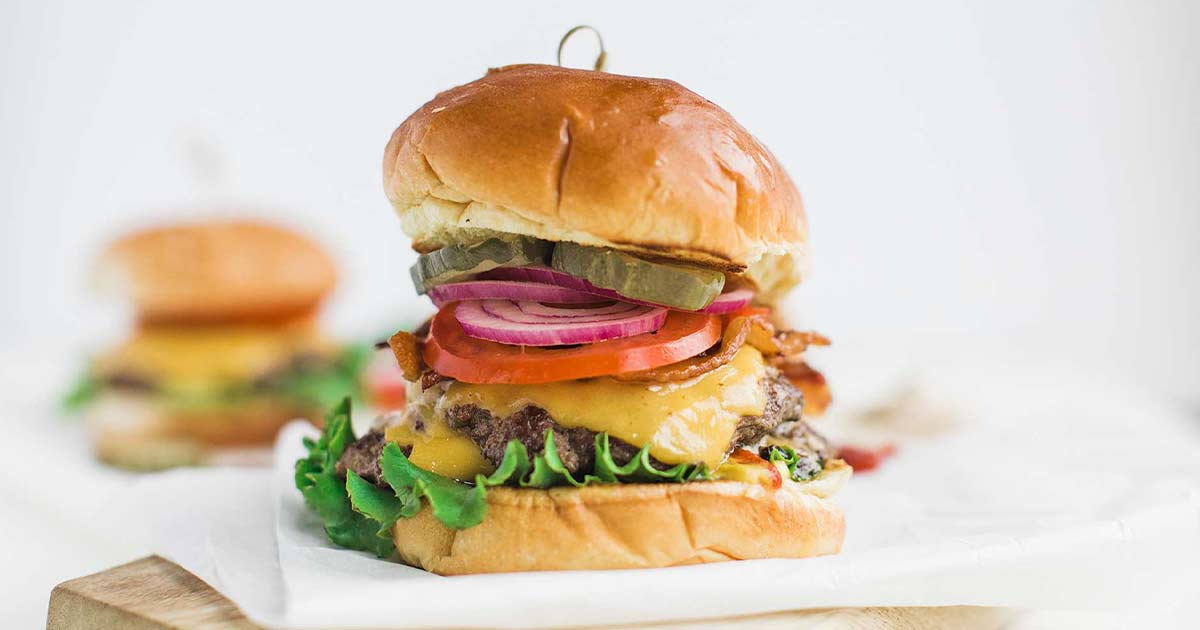
If you have ever bitten into a burger that was technically “fine” but felt kind of heavy and flat, this one is your reset. The goal here is a burger that is still unapologetically juicy and beefy, but finished with bright, crunchy, tangy elements that make each bite feel fresh instead of sleepy.
My former bakery-manager brain loves repeatable systems, so this recipe is built on a few small choices that stack up: keep the beef cold, handle it minimally, add a quick thumb dimple so it stays flat, and finish with a lemony herb sauce that wakes everything up. You can grill it or cook it in a skillet, and you can absolutely pull it off on a weeknight.

Why this recipe works
Freshness in a burger is not about making it “lighter.” It is about contrast. Rich beef loves something crunchy and something acidic, plus a little herbal lift.
- Acid: lemon, vinegar, pickles, pepperoncini, or a sharp mustard.
- Crunch: shredded lettuce, thin onion, quick pickles, or cabbage slaw.
- Herbs: parsley, cilantro, chives, basil, or even arugula.
- Salt and fat: still essential. Fresh does not mean bland.
This recipe builds those contrasts in with a simple green herb sauce and a crisp topping formula you can remix all summer.
Ingredient notes
For the patties
- Ground beef: 80/20 is the sweet spot for juiciness and flavor. If you use leaner beef, you will want to be extra careful not to overcook.
- Kosher salt and black pepper: keep it classic.
- Garlic powder (optional): adds gentle savoriness without turning the patty into meatloaf.
- Worcestershire sauce (optional): a tiny splash deepens the beef flavor. Totally optional.
For the fresh herb sauce
- Mayonnaise: the creamy base.
- Lemon juice: brightness and balance.
- Fresh herbs: parsley and chives are an everyday combo, but cilantro or basil work too.
- Garlic: one small clove, finely grated, goes a long way.
- Salt and pepper: to taste.
For building burgers
- Buns: brioche, potato rolls, or sesame buns. Toasting is non-negotiable for structure.
- Cheese: American for melt, cheddar for sharpness, pepper jack for a little kick.
- Fresh toppings: shredded lettuce, sliced tomato, thin red onion, pickles, or quick pickled onions.
Equipment you will need
- Grill (set up for medium-high heat; a two-zone setup is a helpful safety net).
- Cast iron skillet (for stovetop cooking).
- Spatula (to flip, and to avoid pressing the patties).
- Instant-read thermometer (recommended for doneness and safety).
- Small bowl (for mixing the herb sauce).
Pro tips
- Make the herb sauce first: You want it a little punchy because it will mellow against the beef and bun.
- Give the sauce 10 minutes if it tastes “too lemony”: the garlic and herbs settle in and round it out.
- Keep the beef cold and handle it minimally: cold beef is easier to shape and helps you avoid overworking the fat.
- Add a thumb dimple: press a shallow dimple into the center so the burger cooks flat instead of doming.
- Season the outside right before cooking: for best texture.
- Cook to temperature, not the clock: times are a starting point, not a promise.
- Do not press the patties: pressing squeezes out juice you actually want to eat.
- Toast the buns: it keeps buns from soaking up juices and getting soggy.
- Rest before serving: let burgers rest 2 to 3 minutes so juices settle into the patty.
Substitutes that work
Herbs in the sauce
- Use cilantro or basil instead of (or alongside) parsley and chives.
- Chives can be swapped for thinly sliced scallion greens.
Buns
- Use brioche, potato rolls, or sesame buns.
- For gluten-free: use gluten-free buns, or serve the patty over a crunchy salad with the herb sauce as dressing.
Cheese and dairy-free option
- Cheese options: American, cheddar, or pepper jack.
- For dairy-free: skip cheese and use the herb sauce plus extra pickles.
- For dairy-free sauce: use a good vegan mayo.
Protein
- Ground turkey or chicken works too. Choose a higher-fat grind if possible, and cook poultry burgers to 165°F. The herb sauce is especially helpful because it adds moisture and brightness.
Variations
Make it extra vibrant
- Add quick pickled onions: thinly slice red onion and soak in equal parts vinegar and water with a pinch of sugar and salt for 15 minutes.
- Use peppery greens: swap lettuce for arugula.
- Tomato upgrade: sprinkle tomato slices with salt 10 minutes ahead for better flavor.
Serving ideas
Use a simple “freshness stack” to keep each bite crisp and balanced. A favorite order:
- Bottom bun
- Herb sauce
- Lettuce (acts like a little raincoat)
- Burger patty + cheese
- Tomato
- Onion
- Pickles
- Top bun + more sauce if you want
Another easy serving idea for leftovers: slice the cold patty and tuck it into a salad with extra herb sauce as dressing.
Storage and reheating
Herb sauce
Make up to 3 days ahead. Store covered in the fridge. Stir before using. If it thickens, a teaspoon of water or lemon juice loosens it back up.
How much you will have: This makes about 1/2 cup, which is usually plenty for 4 burgers if you do a nice swipe on both buns. If you are a “double sauce” person, consider scaling it up.
Patties
Form patties up to 24 hours ahead, stack between parchment, and refrigerate. Season right before cooking for best texture.
Leftovers
Leftover patties reheat best gently in a covered skillet with a splash of water to steam, about 2 to 3 minutes per side. Or slice cold and tuck into a salad with extra herb sauce as dressing.
Common mistakes
- Overcooking: final juiciness comes down to not overcooking. If you can, stop at medium or medium-well instead of well-done.
- Overworking the meat: keep beef cold and handle it minimally when forming patties.
- Mixing in egg, breadcrumbs, onions, or lots of liquid: great for meatballs, but it makes burger texture bouncy and less “beefy.”
- Pressing the patties: squeezes out juices.
- Flipping too early: let the first side get a good sear before you flip so the burger releases more easily.
- Skipping the dimple: can lead to burgers puffing up in the middle.
- Not toasting buns: increases the chance of soggy buns.
Common burger problems and fixes
My burgers are dry
- Use 80/20 beef.
- Stop at medium or medium-well instead of well-done if you can.
- Do not overwork the meat when forming patties.
My burgers fall apart
- Make sure patties are thick enough and well-shaped.
- Flip only once if possible.
- Let the first side get a good sear before you flip.
My burgers puff up in the middle
- That thumb dimple really helps.
- Also check thickness. A very thick center with thin edges tends to dome.
FAQ
Should I salt the meat before forming patties?
For the most tender texture, shape patties first and salt the outside right before cooking. Mixing salt into ground beef can make the texture a little tighter, almost sausage-like. Not always bad, just not what is wanted for a classic burger.
Can I use ground turkey or chicken?
You can. Choose a higher-fat grind if possible, and cook poultry burgers to 165°F. The herb sauce is especially helpful here because it adds moisture and brightness.
How do I keep burgers from sticking to the grill?
Preheat well, oil the grates, and do not try to flip too early. Once a good crust forms, the burger releases more easily.
What is the best cheese for melt?
American cheese melts the smoothest. If you want sharper flavor, use cheddar and cover the pan or close the grill lid for the last minute to help it melt evenly.
The recipe
Fresh and Vibrant Best Burger Recipe
Juicy 80/20 beef patties cooked on the grill or in a hot cast iron skillet, finished with a lemony fresh herb sauce and crisp, tangy toppings for a brighter, more vibrant burger.
- Prep
- 15 minutes
- Cook
- 10 minutes
- Total
- 25 minutes
- Yield
- Makes 4 burgers
Ingredients
- 1 1/2 pounds ground beef (80/20)
- 1 1/4 teaspoons kosher salt (for seasoning the outside of the patties)
- 1/2 teaspoon black pepper
- 1/2 teaspoon garlic powder (optional)
- 1 teaspoon Worcestershire sauce (optional)
- 4 burger buns
- 4 slices cheese (American, cheddar, or pepper jack), optional
- 1/2 cup mayonnaise
- 1 1/2 tablespoons lemon juice (about 1/2 lemon), plus more to taste
- 1/4 cup chopped fresh parsley
- 2 tablespoons chopped chives (or thinly sliced scallion greens)
- 1 small garlic clove, finely grated
- 1/4 teaspoon kosher salt, plus more to taste
- Black pepper to taste
- Shredded lettuce or arugula
- Sliced tomato
- Thinly sliced red onion
- Pickles or pepperoncini
Instructions
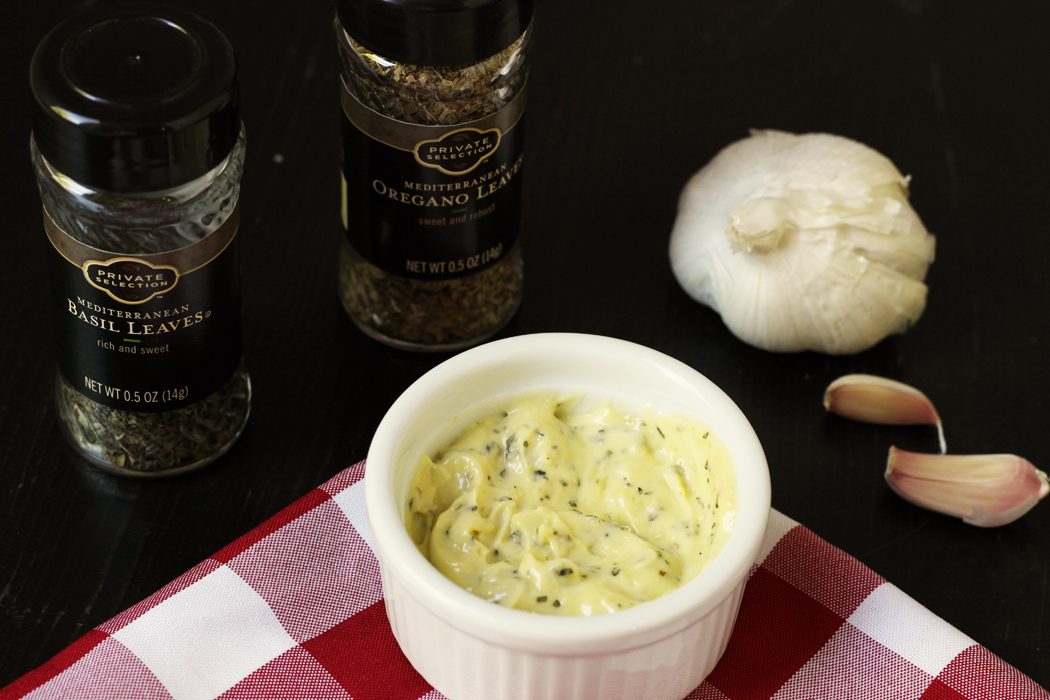
- Make the herb sauce: In a small bowl, stir together mayonnaise, lemon juice, parsley, chives, garlic, salt, and pepper. Taste and adjust with more lemon or salt if needed. Refrigerate while you cook.
- Form patties: Divide beef into 4 portions. Gently shape into 3/4-inch thick patties, slightly wider than your buns. Press a shallow dimple in the center of each patty. Do not overwork.
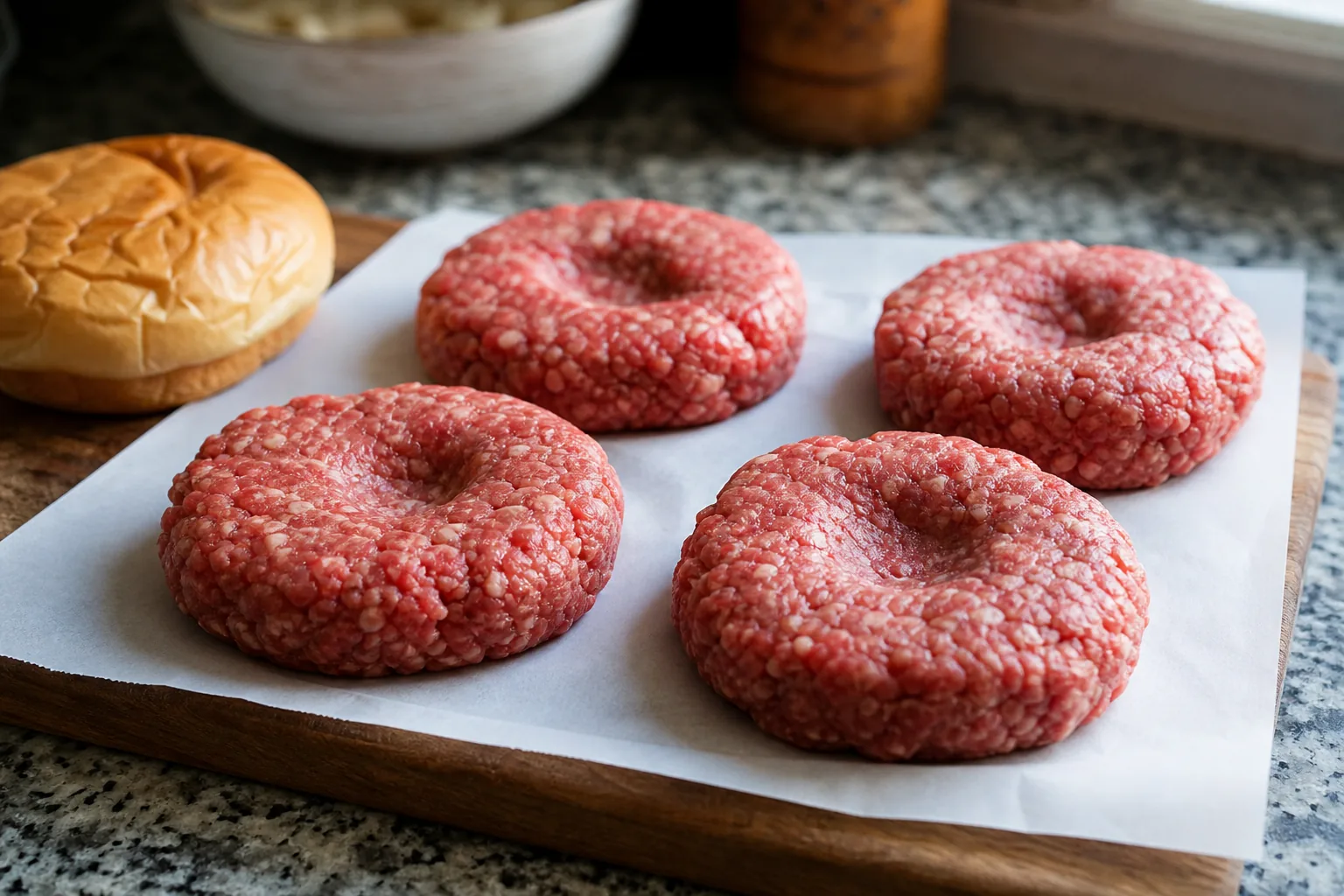
Gently shape 3/4-inch patties and press a dimple in the center. - Season: Sprinkle both sides of patties evenly with the measured salt and pepper right before cooking (about 1/4 teaspoon salt per patty, total, plus a little extra if you like your burgers well-seasoned).
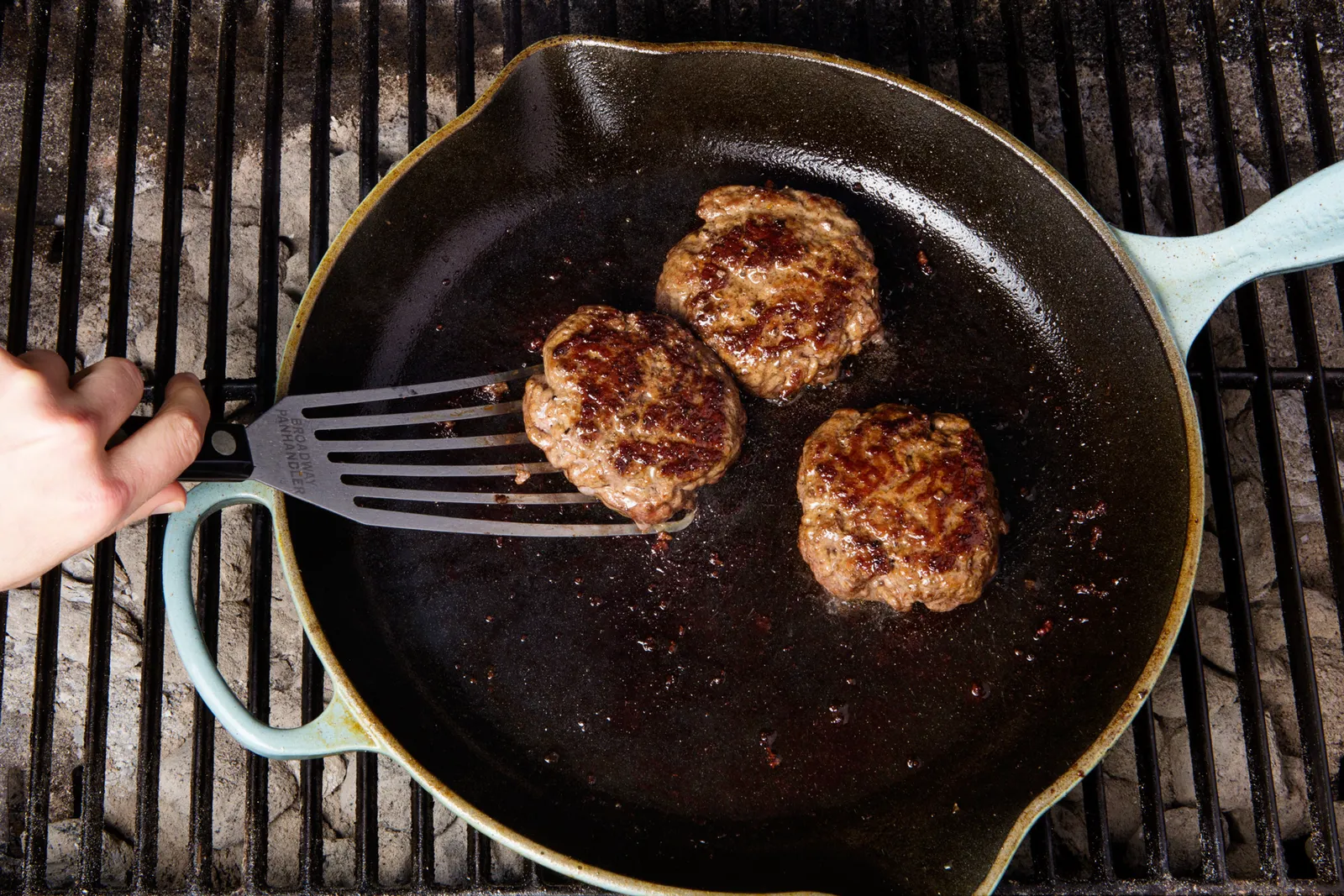
- Cook: Grill over medium-high heat or sear in a very hot cast iron skillet, about 3 to 5 minutes per side for medium, depending on thickness and heat. For best results, cook to temperature, not the clock. Add cheese during the last minute and cover to melt if using.
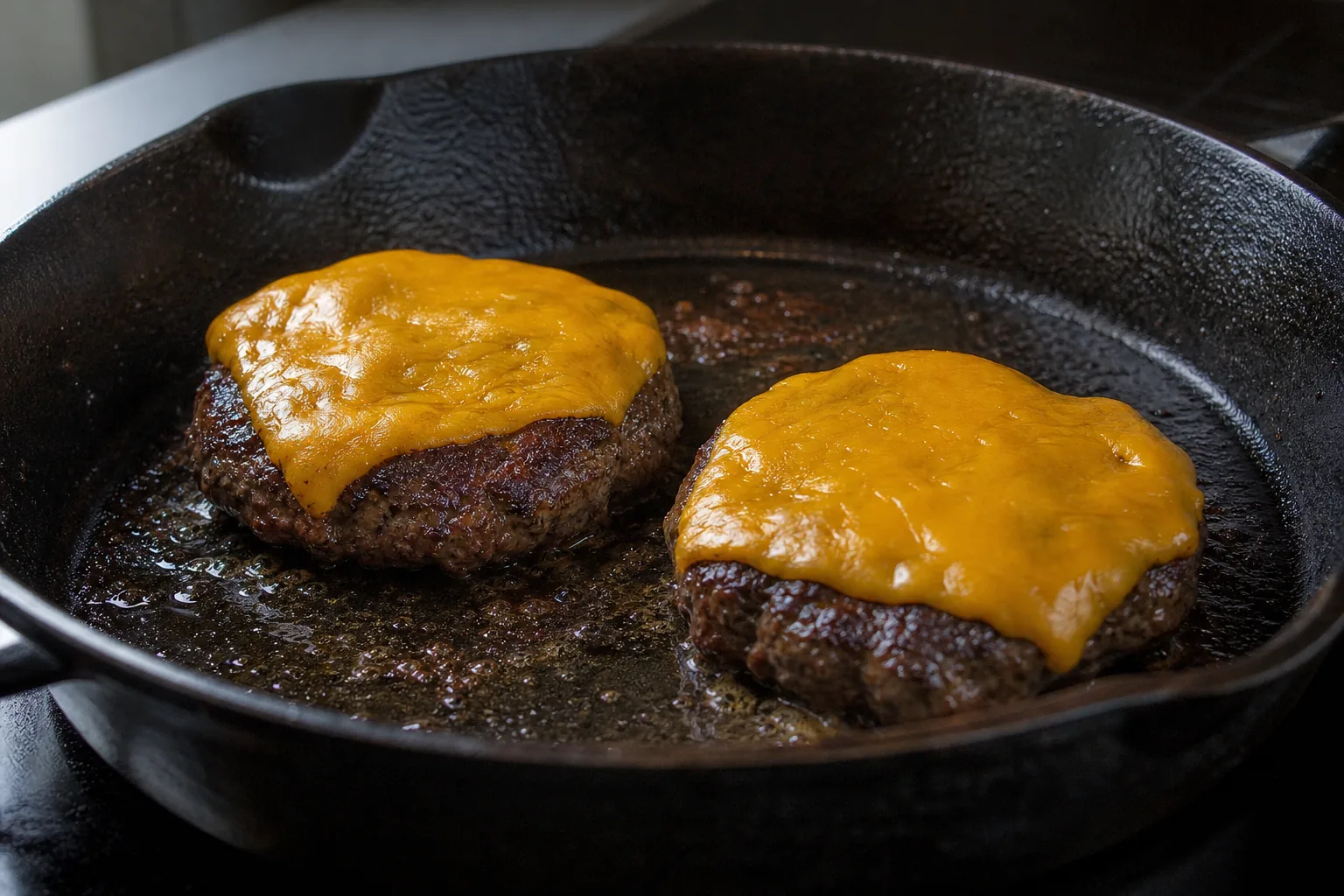
Sear over high heat and melt the cheese during the last minute. - Toast buns: Toast cut-side down on the grill or in a skillet until golden.
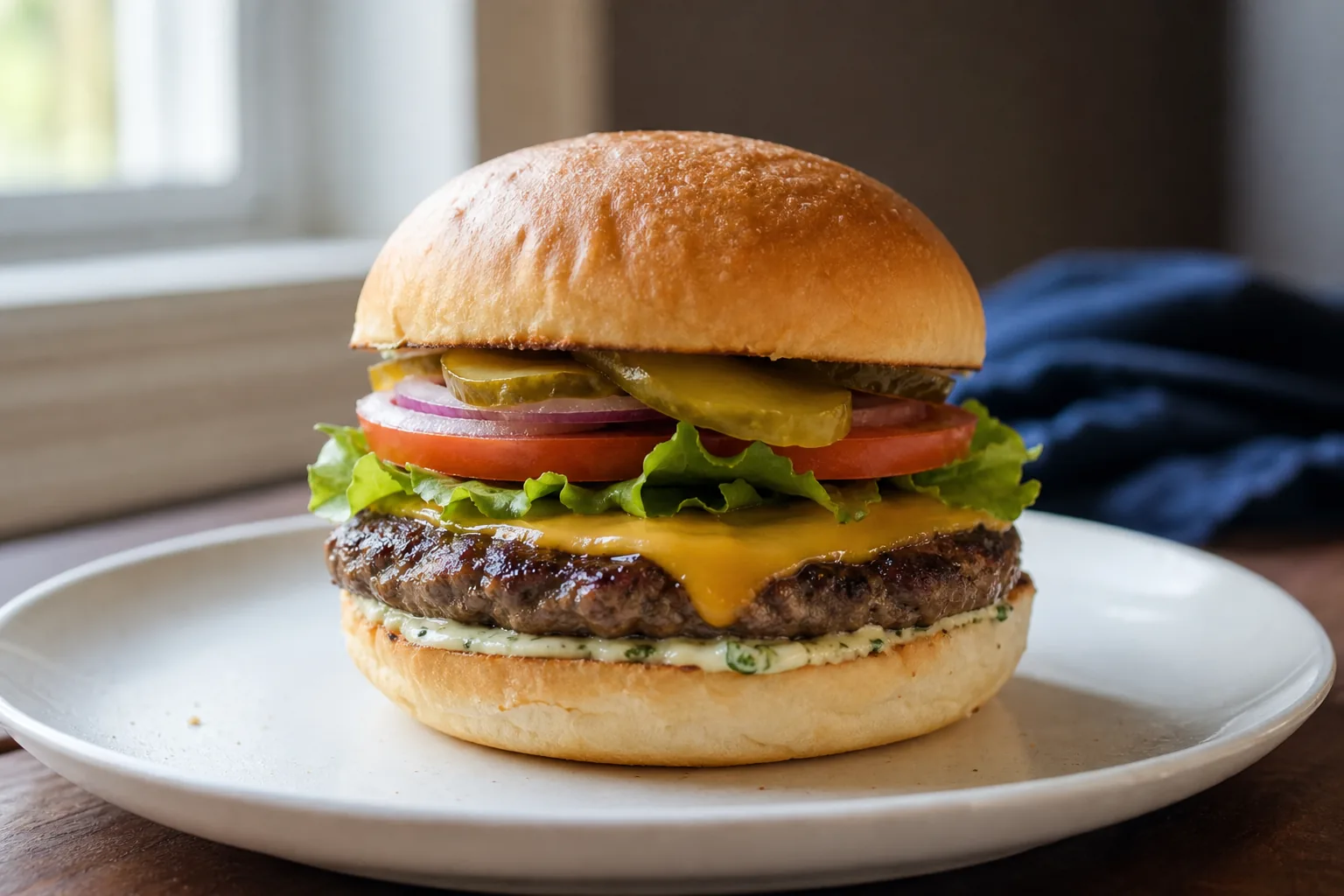
- Assemble: Spread herb sauce on buns. Add lettuce, patty, tomato, onion, and pickles. Serve immediately.
Notes
- Best beef: 80/20 stays juiciest and tastes the most “burger-y.”
- Safety: USDA recommends 160°F for ground beef. Lower temperatures carry more risk.
- Thermometer guide: 140 to 145°F for medium; 160°F+ for well-done.
- Extra fresh: Add quick pickled onions or swap lettuce for arugula.
Nutrition
- Calories: ~720
- Fat: ~46 g
- Carbs: ~32 g
- Protein: ~42 g
- Fiber: ~2 g
- Sugar: ~4 g
- Sodium: ~1050 mg
Nutrition values are approximate and will vary with bun size, cheese choice, and how much sauce and toppings you use.