
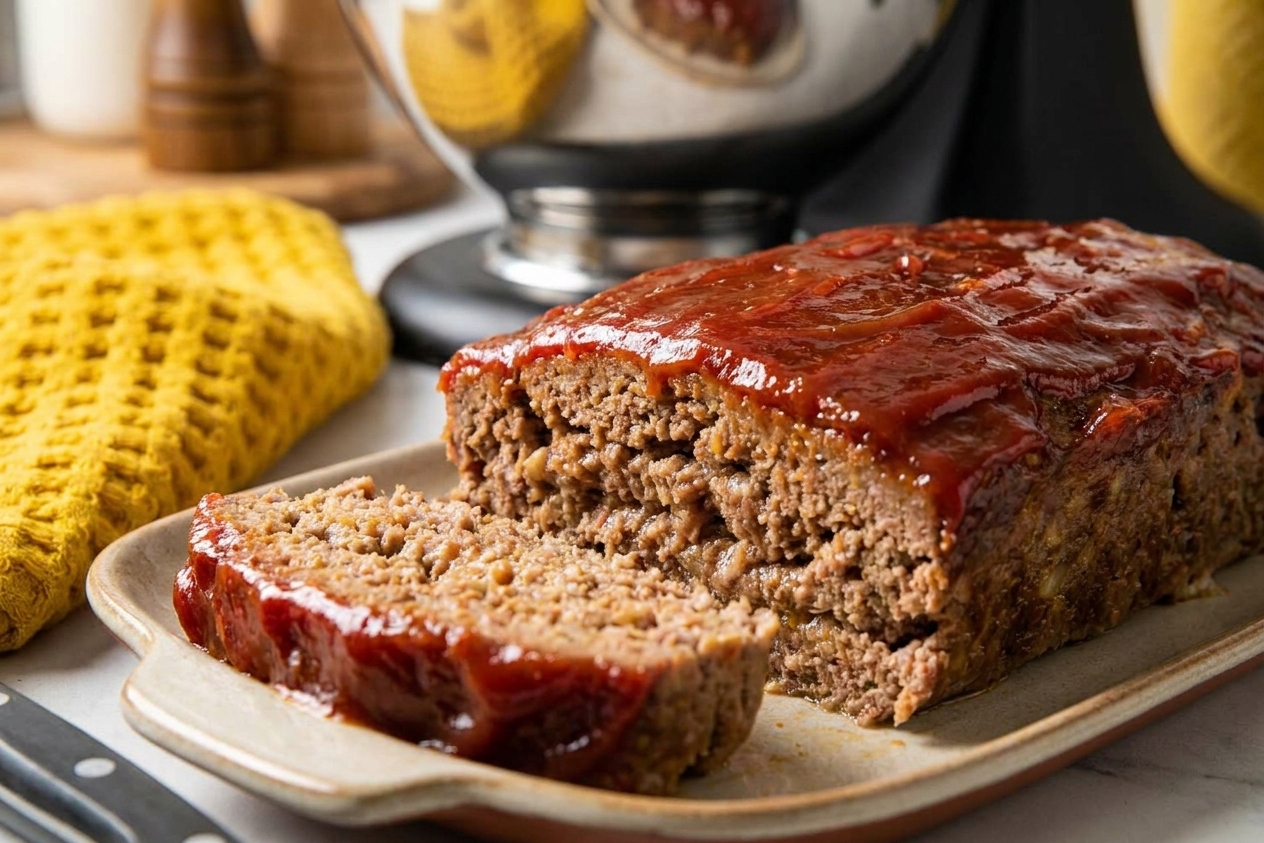
Meatloaf gets a bad rap when it turns out dry, crumbly, or oddly spongy. The good news is that classic meatloaf is one of the easiest comfort foods to fix. Once you know how to keep it juicy and cohesive, it becomes a reliable weeknight favorite.
That spongy texture is usually a binder issue, too much breadcrumbs or too many eggs, or a heavy hand when mixing. This recipe keeps the ratios in the sweet spot, and it leans on a simple trick that does a lot of work: letting the breadcrumbs soak in milk before the meat goes in, so the loaf stays tender instead of bouncy.
Our PlateDo test-kitchen version leans old-school in the best way: a gentle mix of beef and pork for richness, sautéed aromatics so you get flavor without crunchy onion bits, and a ketchup glaze sweetened with brown sugar that turns glossy and sticky in the oven. It bakes up tender enough to eat with a fork, but still slices cleanly for sandwiches the next day.

If you are cooking for picky eaters, feeding a crowd, or just craving something that pairs beautifully with mashed potatoes, this is the kind of recipe you can keep in your back pocket. For the best results, bake it to 160°F (71°C) in the center and let it rest 10 to 15 minutes before slicing, so the juices stay where they belong.
If your meatloaf has ever turned out dry, it is often not you. The usual culprits are too-lean meat, too much mixing, overbaking, or slicing before it has time to settle.
Why this recipe works
- Panade for moisture: Breadcrumbs soaked with milk create a soft paste that locks in moisture and keeps the loaf tender.
- Two-meat blend: Beef brings that classic flavor; a little pork adds fat and sweetness so the texture stays juicy.
- Sautéed onion and garlic: Cooking them first removes harsh bite and adds mellow, savory depth throughout.
- Gentle mixing: Stir just until combined so the proteins do not tighten up and turn the loaf dense.
- Glaze timing: A two-stage glaze builds flavor and shine without burning.
- Resting before slicing: A short rest lets the juices redistribute so slices hold together.
Ingredient notes
Ground meat: Aim for 80 to 85 percent lean beef. If you go very lean, the loaf can dry out. Pork can be plain ground pork or mild Italian sausage if you like extra seasoning.
Breadcrumbs: Plain breadcrumbs give the most classic texture. Panko works too, but it tends to make a slightly looser, lighter crumb. Fresh breadcrumbs are great if you have them.
Milk: Whole milk is ideal, but 2 percent works. The milk hydrates the crumbs and helps keep everything tender.
Eggs: Eggs bind the mixture and help it slice. If your loaves have fallen apart in the past, eggs and enough hydrated crumbs are usually the fix.
Worcestershire: This is the quiet backbone of savory flavor. Soy sauce can pinch-hit if needed.
Glaze: Ketchup is the classic base. A little brown sugar balances acidity and helps caramelization. Vinegar or mustard adds tang so it does not taste flat.
Equipment you will need
- Rimmed baking sheet or roasting pan
- Mixing bowl
- Small skillet for sautéing aromatics
- Measuring cups and spoons
- Instant-read thermometer (highly recommended)
- Parchment paper or foil for easy cleanup
Pro tips
- Shape it free-form: Baking meatloaf on a sheet pan lets fat render away and gives you more browned edges. If you prefer a loaf pan, pour off excess grease halfway through.
- Use a thermometer: Pull it when the center hits 160°F (71°C). Carryover heat will finish the job without drying it out.
- Mix with a light hand: Use a fork or your fingertips and stop once you do not see streaks of egg or dry crumbs.
- Chill for cleaner shaping: If your kitchen is warm, refrigerate the shaped loaf for 10 to 15 minutes before baking. It helps it hold its form.
- Rest, then slice: Give it 10 to 15 minutes after baking so the juices stay in the loaf, not on the cutting board.
Substitutes that work
- No pork: Use all beef (80 to 85 percent lean), or swap in ground turkey thigh for part of the beef for a lighter loaf.
- No breadcrumbs: Crushed saltines, rolled oats, or cooked and cooled rice can work. Keep the same volume and hydrate with milk.
- Dairy-free: Use unsweetened non-dairy milk or broth for the panade.
- No Worcestershire: Use 1 to 2 teaspoons soy sauce plus a small splash of vinegar.
- Glaze alternatives: Chili sauce in place of ketchup is classic-diner delicious. Barbecue sauce works, but choose one you like straight from the bottle.
Variations
- BBQ meatloaf: Swap the glaze for your favorite barbecue sauce and add a pinch of smoked paprika to the meat mixture.
- Italian-style: Use half mild Italian sausage, add grated Parmesan, and top with marinara instead of ketchup glaze.
- Veggie-boosted: Finely grate carrot or zucchini, squeeze out excess moisture, and fold in for extra tenderness.
- Mini meatloaves: Shape into 4 to 6 smaller loaves. They cook faster and get more glaze-to-meat ratio.
Serving ideas
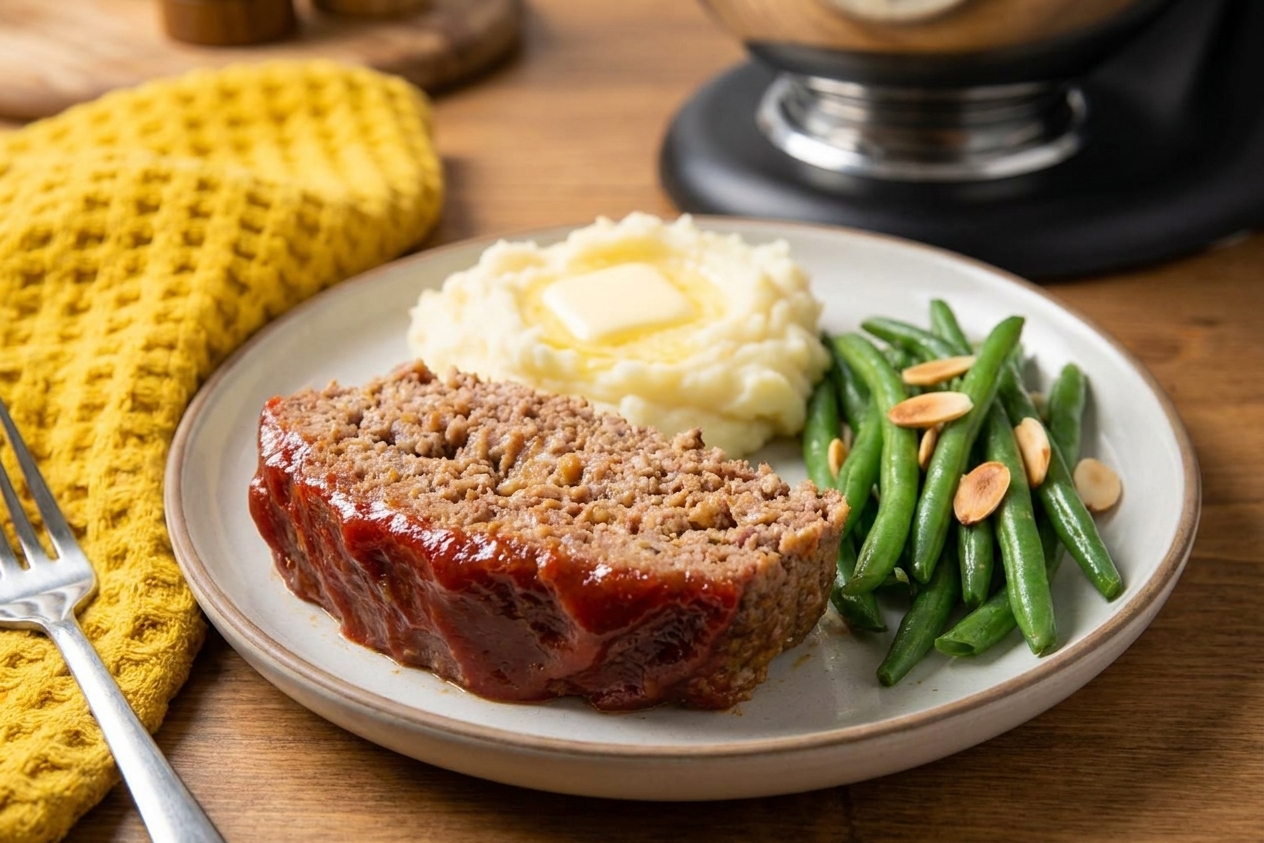
- Mashed potatoes or roasted garlic potatoes
- Green beans, buttery peas, or sautéed spinach
- Mac and cheese for an extra-cozy plate
- Classic wedge salad or simple vinaigrette salad to cut the richness
- Next-day sandwich: Thick slice on toasted bread with mayo, extra ketchup glaze, and crisp lettuce
Storage and reheating
Refrigerate: Store cooled slices in an airtight container for up to 4 days. Slicing before storing makes reheating quicker and helps you grab lunch portions easily.
Freeze: Wrap individual slices tightly and freeze up to 3 months. For best texture, freeze slices rather than the whole loaf.
Reheat: Warm slices in a covered skillet with a splash of water or broth, or microwave in short bursts. In the oven, cover with foil at 325°F (163°C) until heated through. Add a little extra ketchup or glaze to keep the top moist.
Common mistakes
- Using very lean meat: Meatloaf needs some fat to stay tender. If you must use lean, add a bit more milk in the panade and do not overbake.
- Overmixing: This is the fastest path to a tight, rubbery loaf. Mix only until combined.
- Skipping the panade: Dry crumbs alone do not hydrate evenly. Let the crumbs soak with milk first.
- Slicing immediately: Hot meatloaf is fragile. Resting helps it set and slice cleanly.
- Baking in a deep loaf pan without draining: The loaf can steam in its own fat and turn greasy. If using a pan, drain carefully during baking.
FAQ
What internal temperature should meatloaf be?
For a beef and pork meatloaf, aim for 160°F (71°C) in the center. Let it rest 10 to 15 minutes before slicing.
Why does my meatloaf fall apart?
Usually it needs a better binder or more time to rest. Make sure you use eggs, hydrate the breadcrumbs with milk, and do not skip the resting time. Also, avoid chopping the onion too large since big pieces can create weak spots.
Should I bake meatloaf covered or uncovered?
Uncovered gives you browning and a glazed top. If the top is browning too quickly, tent loosely with foil for the last 15 to 20 minutes.
Can I make meatloaf ahead of time?
Yes. You can mix and shape the loaf, cover it well, and refrigerate up to 24 hours before baking. Add a few extra minutes to the bake time since it starts cold.
How do I keep meatloaf moist?
Use 80 to 85 percent lean meat, include the milk-soaked breadcrumb panade, mix gently, and pull it at temperature rather than waiting for it to look done.
The recipe
Classic Meatloaf
Tender classic meatloaf with sautéed onion, a milk-soaked breadcrumb panade for moisture, and a sweet tangy glaze that bakes up glossy and caramelized.
- Prep
- 20 minutes
- Cook
- 55 minutes
- Total
- 1 hour 25 minutes
- Yield
- 6 to 8 servings
Ingredients
- 1 tablespoon olive oil
- 1 medium yellow onion, finely diced
- 3 cloves garlic, minced
- 2 large eggs
- 1/2 cup whole milk
- 3/4 cup plain breadcrumbs
- 2 tablespoons Worcestershire sauce
- 2 tablespoons ketchup (for the meat mixture)
- 1 1/2 teaspoons kosher salt
- 1/2 teaspoon black pepper
- 1 teaspoon dried thyme (or 1 tablespoon chopped fresh parsley)
- 1 1/2 pounds ground beef (80 to 85 percent lean)
- 1/2 pound ground pork
- Glaze
- 1/2 cup ketchup
- 2 tablespoons brown sugar
- 1 tablespoon apple cider vinegar
- 1 teaspoon Dijon mustard
Instructions
- Heat oven to 375°F (190°C). Line a rimmed baking sheet with parchment or foil.
- Warm the olive oil in a small skillet over medium heat. Add onion and cook until softened, 5 to 7 minutes. Add garlic and cook 30 seconds more. Scrape into a large bowl and let cool for a few minutes.
- In the bowl with the onion mixture, whisk the eggs, milk, breadcrumbs, Worcestershire, ketchup, salt, pepper, and thyme. Let sit 5 minutes so the breadcrumbs hydrate.
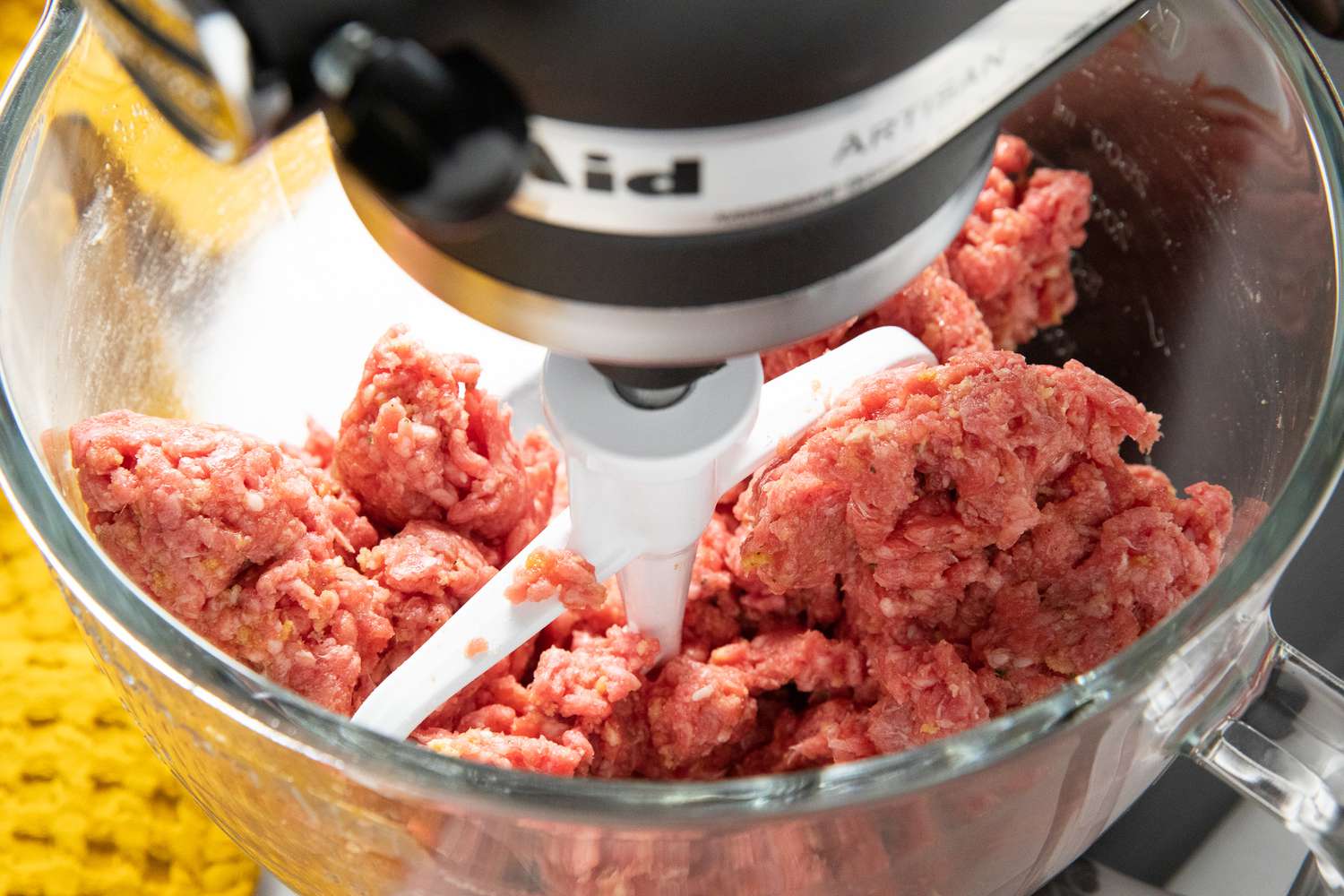
- Add the ground beef and ground pork. Mix gently with a fork or your hands just until combined, stopping as soon as the mixture looks even.
- Shape into a loaf about 9 by 5 inches on the prepared baking sheet. Smooth the surface so the glaze spreads evenly.
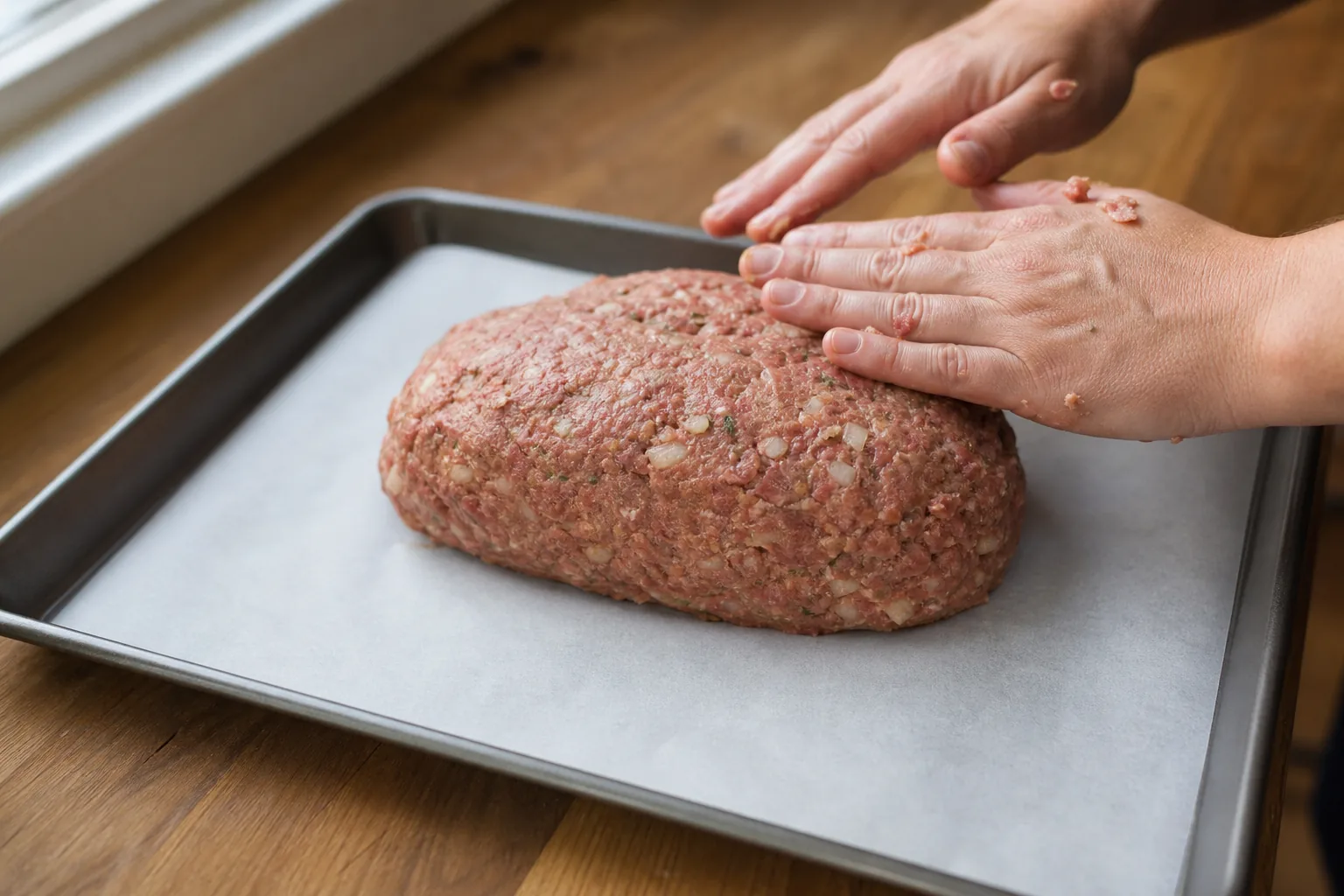
Shape into a loaf about 9 by 5 inches and smooth the surface. - Stir together all glaze ingredients. Brush about half over the top and sides of the loaf.
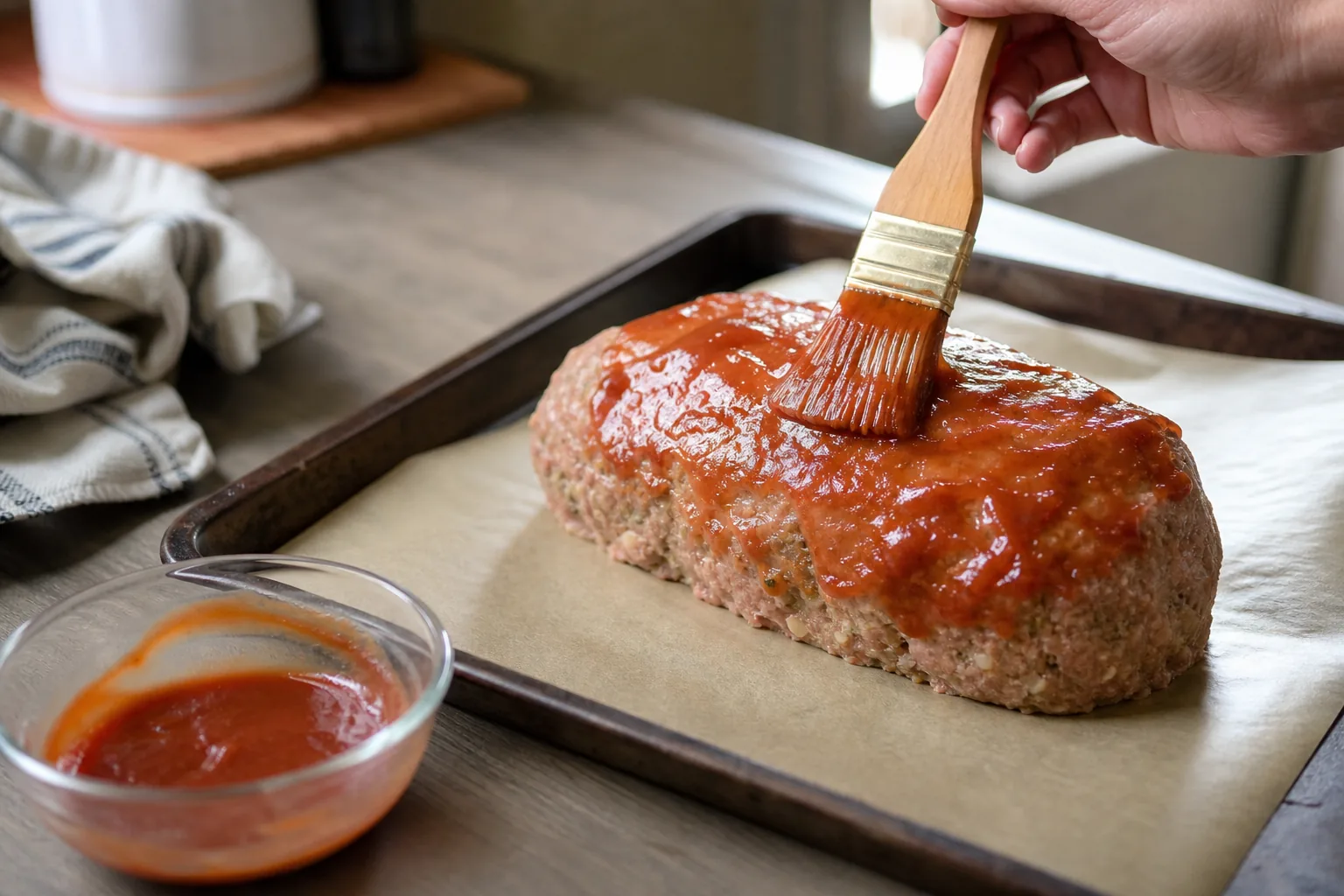
Brush about half the glaze over the top and sides. - Bake 40 minutes. Brush with remaining glaze, then bake 10 to 15 minutes more, until the center reaches 160°F (71°C).
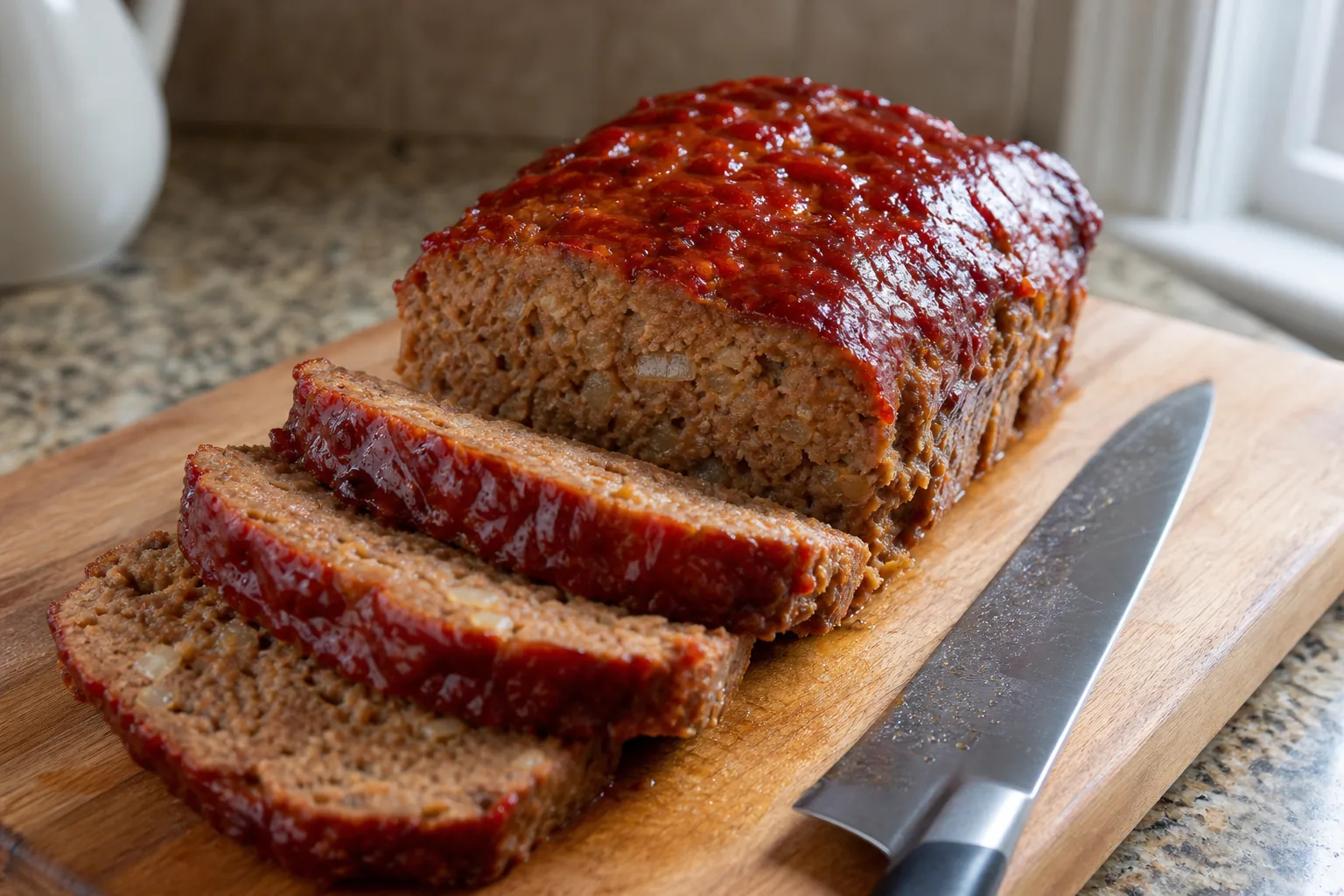
- Rest 10 to 15 minutes before slicing and serving.
Notes
- Loaf pan option: You can bake it in a 9 by 5 inch loaf pan, but drain off excess grease carefully around the 30 minute mark for a less greasy result.
- Make-ahead: Mix and shape the loaf up to 24 hours ahead. Cover and refrigerate. Bake straight from the fridge, adding 5 to 10 minutes as needed.
- Mini loaves: Divide into 4 smaller loaves and start checking temperature around 25 to 30 minutes.
- Clean slices: Use a serrated knife and wipe it between cuts for bakery-style slices.
Nutrition
Approximate per serving (based on 8 servings): 360 calories, 24 g protein, 24 g fat, 12 g carbohydrates, 3 g sugar, 2 g fiber, 780 mg sodium.