
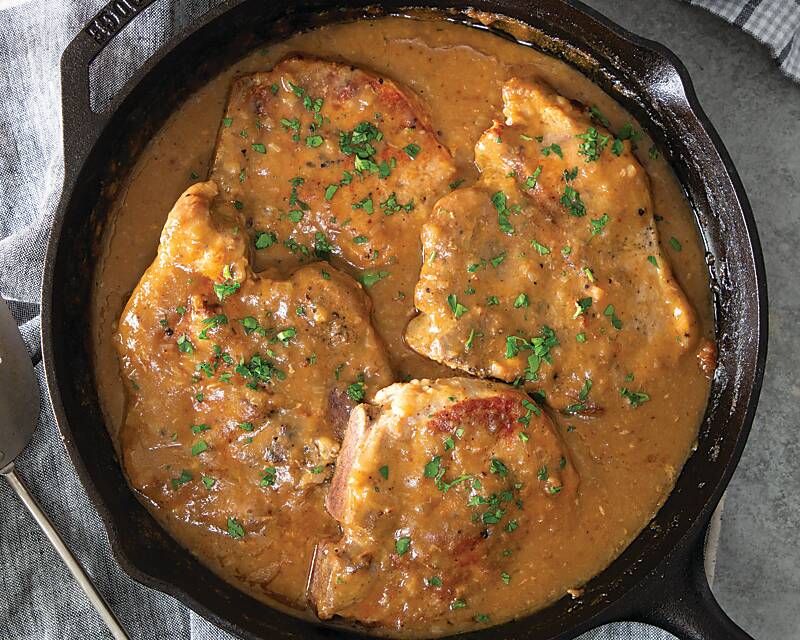
Smothered pork chops are one of those dishes that feels like a warm sweater. You get that first hit of browned pork and sweet onions, and then the gravy comes in glossy, savory, and thick enough to cling to mashed potatoes.
When I was managing a bakery, I learned to love recipes that forgive you for being tired. Smothered chops are exactly that kind of dinner. You do one focused thing up front: brown the meat. After that, the stove does the heavy lifting while you set the table, warm up leftover rice, or help with homework.

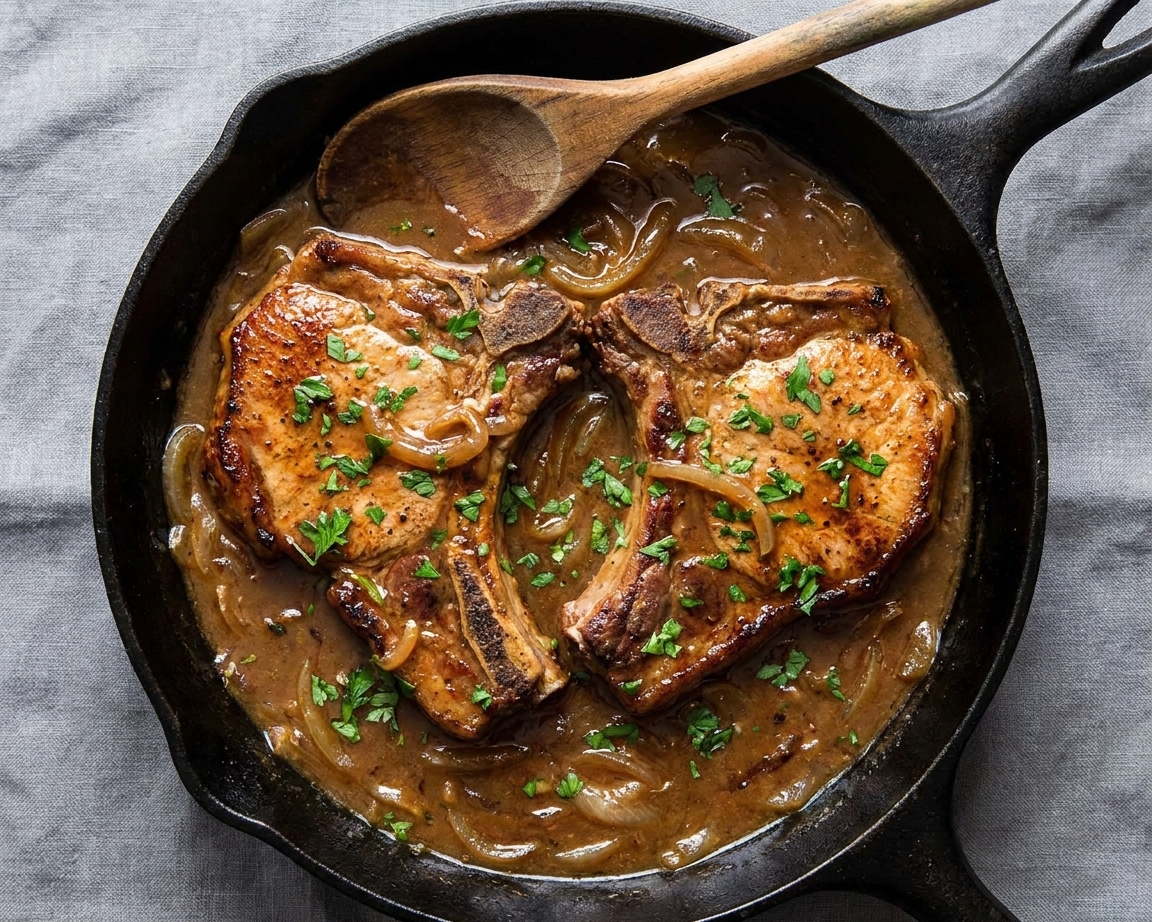
This version is a true covered braise. That means the chops finish in a shallow bath of onion gravy with the lid on, at a low simmer. The goal is simple: keep the meat juicy while the onions melt into the gravy and everything turns rich and spoonable. In the recipe card below, I get specific about the liquid level before the lid goes on and the quick adjustments at the end so you land on a gravy that coats a spoon.
If you have ever had pork chops turn tough, you are not alone. With today’s leaner chops, the difference between juicy and dry can be just a few minutes. The fix is gentle heat, enough moisture, and a short rest at the end so the chops hold onto more of their moisture when you serve them.
Why this recipe works
- It is a real braise, not a quick sauce. Browning builds flavor, then a covered simmer keeps the chops from drying out while the onions soften into the gravy.
- The liquid level is intentionally shallow. You want the gravy to come about halfway up the chops, not cover them. That keeps the top portion from getting waterlogged while still protecting the meat with steam.
- A flour thickener plus a quick uncovered finish gives you the right texture. The gravy starts slightly looser than you want, then tightens as it simmers and as you reduce it briefly at the end.
- Low heat protects lean meat. A gentle simmer, not a boil, helps modern pork chops stay tender.
Ingredient notes
- Pork chops: Bone-in chops that are 3/4 to 1 inch thick are the easiest to keep juicy. Boneless works too, but check early since they cook faster.
- Onions: Yellow onions are classic. Slice them 1/4-inch thick so they melt into the gravy without disappearing completely.
- Flour: All-purpose flour coats the chops for browning and also thickens the gravy later. If you prefer, you can skip dredging and thicken only with a slurry at the end, but you will miss some of that classic crusty flavor.
- Broth: Low-sodium chicken broth is my go-to. If you have pork broth, even better. Using low-sodium lets you season the gravy precisely.
- Dairy: A small splash of milk or cream at the end is optional but lovely. It softens any sharp edges and makes the gravy extra silky.
- Seasonings: Garlic, black pepper, and a touch of thyme are simple and reliable. A tiny pinch of cayenne is great if you want warmth, not heat.
Equipment you will need
- Large skillet with a lid (12-inch is ideal). Cast iron or a heavy stainless skillet holds heat well.
- Tongs for flipping the chops without tearing the crust.
- Whisk to smooth out the gravy as you add liquid.
- Instant-read thermometer for stress-free doneness checks.
Pro tips
- Brown hard, then braise gently. Get a good sear first, then turn the heat down before adding the liquid. If the gravy boils, the chops are more likely to tighten up.
- Before covering, check the gravy level. You want it about halfway up the pork chops. If it is higher, ladle a bit out. If it is lower, add a splash more broth.
- What “thick enough” looks like: When you drag a spoon through the gravy, it should leave a trail that slowly fills in. If it snaps back instantly, it is too thin. If it stands like paste, loosen with broth.
- Simmer time that stays juicy: Most 3/4-inch to 1-inch chops are tender after about 25 to 35 minutes of gentle covered simmering. Thicker chops can take closer to 40 minutes. Start checking at 20 minutes.
- Use a thermometer, but trust texture too. Aim for 140 to 145°F in the thickest part, then rest. In a braise, they often feel tender before they hit that number, so check both.
- Finish uncovered if needed. If the chops are done but the gravy is still loose, pull the chops to a plate, simmer the gravy uncovered for a few minutes, then return the chops to rewarm.
Substitutes that work
- Gluten-free: Swap the flour for a gluten-free all-purpose blend for dredging, or skip dredging and thicken with a cornstarch slurry at the end (1 tablespoon cornstarch mixed with 1 tablespoon cold water, added gradually).
- No broth: Water works in a pinch, but add more seasoning. A small splash of soy sauce or Worcestershire helps replace depth.
- No milk or cream: Leave it out. The gravy will still be rich from onions and pan drippings.
- Onion shortcut: Frozen sliced onions can work. Cook them longer at the start to drive off extra water before you add broth.
Variations
- Southern-style: Add a pinch of smoked paprika and a few dashes of hot sauce to the gravy. Serve with rice or biscuits.
- Mushroom onion gravy: Sauté 8 ounces of sliced mushrooms after the onions start to soften, then proceed as written.
- Apple and onion: Add 1 small apple, peeled and thinly sliced, with the onions. The sweetness is subtle and really good with pork.
- Herb-forward: Stir in chopped fresh parsley at the end for brightness.
Serving ideas
- Mashed potatoes are the classic. The gravy was made for them.
- Steamed rice is my weeknight favorite because it is hands-off and soaks up every bit.
- Egg noodles make it feel like pork chop stroganoff, in a good way.
- Something green: Sautéed green beans, garlicky spinach, or a crisp salad balances the richness.
Storage and reheating
- Refrigerate: Store pork chops with gravy in an airtight container for up to 3 days.
- Reheat gently: Warm in a covered skillet over low heat with a splash of broth or water to loosen the gravy. Microwaving works too, but use medium power and stir the gravy halfway through so it heats evenly.
- Freezing: You can freeze leftovers for up to 2 months. The gravy may separate slightly when thawed. Reheat slowly and whisk to bring it back together.
Common mistakes
- Boiling the gravy. A hard boil makes lean chops tense up. Keep it at a gentle simmer, with just a few lazy bubbles.
- Too much liquid. If the chops are fully submerged, you are closer to stewing than smothering. Aim for halfway up the meat.
- Making the gravy thick too early. If you start with gravy that is already very thick, it can scorch during the covered simmer. Begin slightly looser, then adjust at the end.
- Skipping the scrape. Those browned bits on the bottom of the pan are flavor. When you add broth, scrape them up and let them melt into the gravy.
- Overcooking “just to be safe.” Pork is safest when cooked properly, not endlessly. Use a thermometer and pull the chops when they are tender and at temperature.
FAQ
How long should I simmer smothered pork chops?
For 3/4-inch to 1-inch chops, plan on about 25 to 35 minutes at a gentle covered simmer. Start checking at 20 minutes. The moment they are tender and read 140 to 145°F in the thickest part, you are there.
How much liquid should be in the pan for a smothered chop braise?
Aim for the gravy to come about halfway up the pork chops before you cover. That shallow level creates a moist braising environment without turning the dish into soup.
My gravy is too thin. What do I do?
First, remove the chops to a plate and keep them warm. Simmer the gravy uncovered for a few minutes to reduce. If it still needs help, whisk in a cornstarch slurry (1 tablespoon cornstarch plus 1 tablespoon cold water) a little at a time and simmer 1 to 2 minutes.
My gravy is too thick. Can I fix it?
Absolutely. Add a splash of warm broth, whisk, and keep adding just until it coats a spoon and slowly runs off.
Can I make this with boneless pork chops?
Yes. Boneless chops usually finish faster, so start checking early. The method is the same, just keep the simmer gentle and do not overshoot doneness.
Should I cover the pan the whole time?
Cover for the majority of the simmer so the chops stay moist. At the end, uncover if you need to reduce and tighten the gravy, then return the chops briefly to warm through.
The recipe
Smothered Pork Chops
Browned pork chops gently braised in a thick onion gravy until tender, then finished with a quick reduction for a rich, spoonable sauce.
- Prep
- 15 minutes
- Cook
- 40 minutes
- Total
- 55 minutes
- Yield
- 4 servings
Ingredients
- 4 bone-in pork chops, 3/4 to 1 inch thick (about 2 to 2 1/2 pounds total)
- 1 1/2 teaspoons kosher salt, divided, plus more to taste
- 1 teaspoon black pepper, divided, plus more to taste
- 1/2 teaspoon garlic powder
- 1/3 cup all-purpose flour
- 2 tablespoons neutral oil (or bacon drippings)
- 2 tablespoons unsalted butter
- 2 large yellow onions, thinly sliced
- 3 cloves garlic, minced
- 2 1/2 cups low-sodium chicken broth, plus more as needed
- 1 teaspoon Worcestershire sauce (optional but recommended)
- 1/2 teaspoon dried thyme (or 1 teaspoon fresh thyme leaves)
- 1/4 cup milk or heavy cream (optional, for a silkier gravy)
- Chopped fresh parsley, for serving (optional)
Instructions
- Season and dredge the chops. Pat pork chops dry. Season both sides with 1 teaspoon kosher salt, 1/2 teaspoon black pepper, and the garlic powder. Place flour on a plate and lightly dredge each chop, shaking off excess. Reserve any remaining flour.
- Brown the pork chops. Heat oil in a large lidded skillet over medium-high heat until shimmering. Add pork chops in a single layer and sear until well browned, 3 to 4 minutes per side. Transfer chops to a plate. The centers will not be cooked through yet.
- Cook the onions. Reduce heat to medium. Add butter, then add sliced onions with a pinch of salt. Cook, stirring and scraping up browned bits, until onions soften and begin to turn golden, 8 to 12 minutes. Add garlic and cook 30 seconds.
- Build the gravy. Sprinkle 2 tablespoons of the reserved flour (or fresh flour if none remains) over the onions. Stir constantly for 1 minute to cook off the raw flour smell. Slowly whisk in chicken broth, a splash at a time at first, until smooth, then add the rest. Stir in Worcestershire (if using) and thyme. Bring to a gentle simmer.
- Set the braise level. Return pork chops and any accumulated juices to the skillet, nestling them into the gravy. The liquid should come about halfway up the sides of the chops. If needed, add a little more broth to reach that level.
- Cover and simmer gently. Cover the skillet, reduce heat to low, and maintain a gentle simmer (a few small bubbles, not a boil) for 25 to 35 minutes, flipping the chops once halfway through. Thicker chops may need up to 40 minutes. The chops are done when tender and an instant-read thermometer registers 140 to 145°F in the thickest part.
- Thicken and finish the gravy. Transfer chops to a plate and loosely tent with foil. Let rest 5 minutes. Simmer the gravy uncovered over medium-low heat for 3 to 8 minutes, stirring, until it is thick enough to coat the back of a spoon and slowly run off. If desired, stir in milk or cream and simmer 1 minute more. Taste and adjust salt and pepper.
- Serve. Return chops to the skillet to warm for 1 to 2 minutes. Spoon onion gravy over the top and finish with parsley if you like.
Notes
- Gravy texture checkpoint: Before covering, the gravy should look a touch looser than you want on the plate. It will tighten a bit as it simmers, then you can fine-tune it quickly uncovered at the end.
- If the gravy reduces too much during the braise: Add a splash of broth to keep the level about halfway up the chops and prevent scorching.
- If you prefer a deeper sear: Brown the chops in two batches so you do not crowd the pan.