
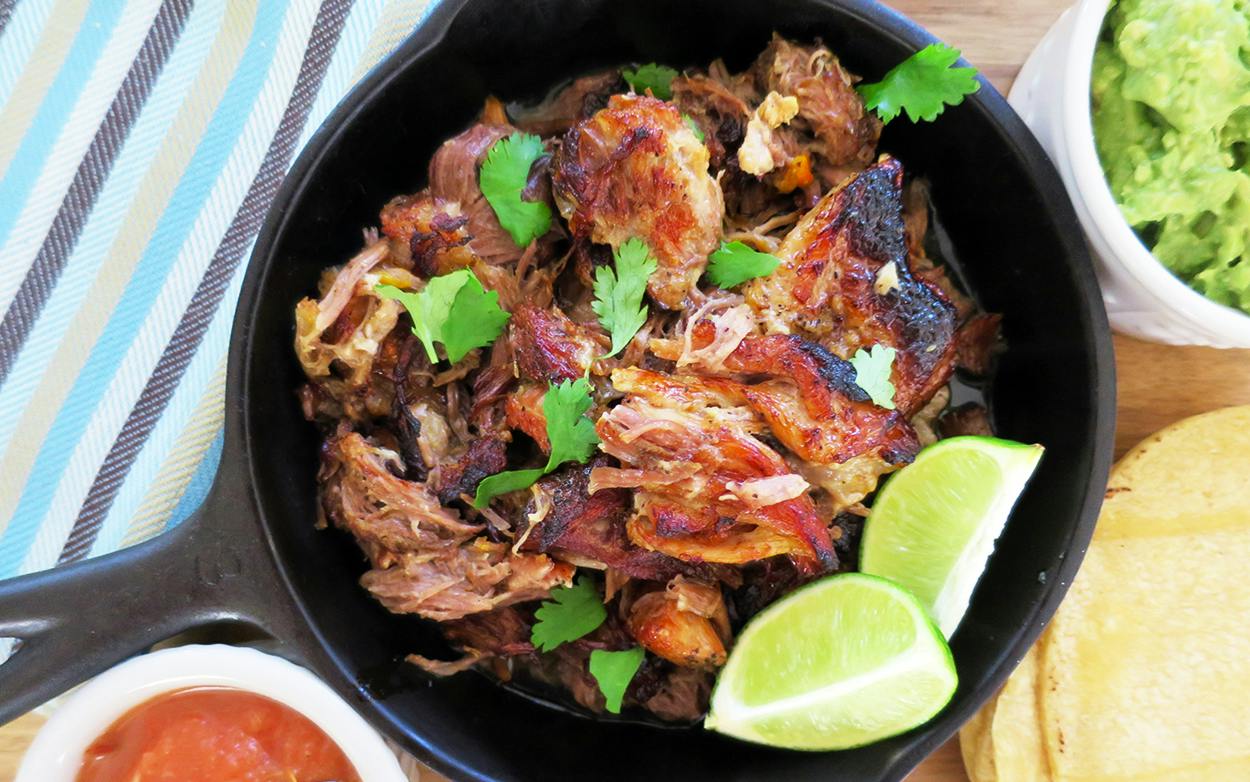
The first time I made carnitas at home, I thought the braise would do all the work. The pork turned out tender, sure, but I kept thinking, where is that magical contrast? The crispy bits that cling to the juicy shreds, the ones you fight over at the table.
The secret is that carnitas are a two-step dish. The braise makes the pork succulent and flavorful. Then a final blast of high heat gives you the signature carnitas texture: browned, crispy edges with juicy strands underneath.

In this recipe, we simmer pork shoulder with citrus and spices until it is pull-apart tender, then shred it and quickly crisp it in a wide skillet or under a broiler. You get caramelized edges, juicy interior strands, and enough drippings to spoon over the top like liquid gold.
You can serve these in tacos, of course, but I also love carnitas on rice bowls, tucked into quesadillas, or scattered over a salad when I am trying to be the responsible adult in the room.
Skillet or broiler
Both methods work. I reach for a skillet when I want maximum crunch and I have time to do a couple batches. I use the broiler when I want hands-off crisping and I am feeding more people.
- Skillet: best for the deepest browning and the crispiest edges. Work in a single layer and do not crowd the pan so the pork fries instead of steaming.
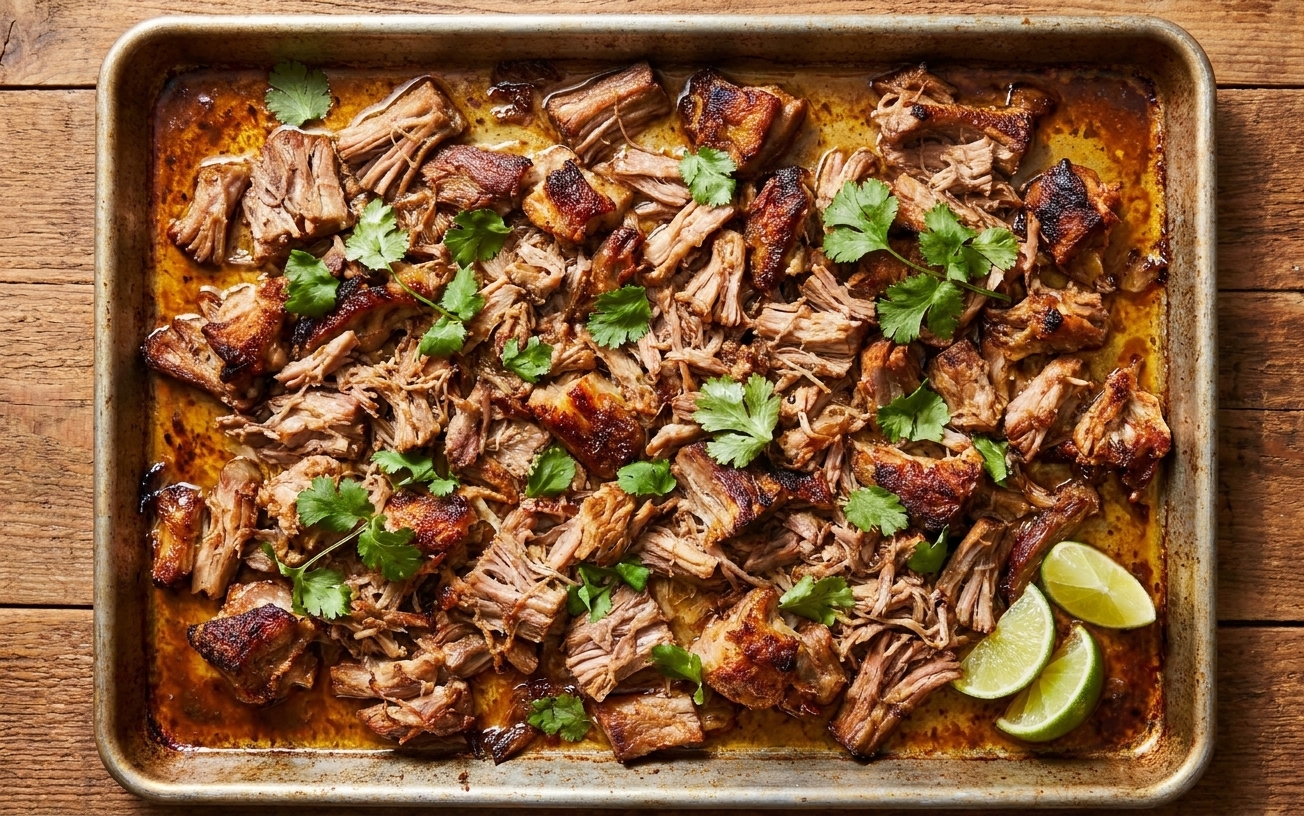
- Broiler: best for big batches. Spread pork on a sheet pan, drizzle with a little fat, then broil until the tips char and crisp. Stay close and toss once so it browns without burning.
Why this recipe works
- Pork shoulder has the right fat and collagen. Slow simmering melts connective tissue so the meat turns silky and shreddable, not dry.
- Citrus plus aromatics builds carnitas flavor. Orange and lime add brightness that balances richness, while garlic and spices perfume the braising liquid.
- Reducing the braising liquid concentrates everything. A quick simmer after braising turns the pot juices into a spoonable, glossy sauce.
- High-heat crisping creates that taco stand contrast. Spreading the pork in a single layer lets the edges brown and crisp while the centers stay moist.
Ingredient notes
Pork shoulder
Look for boneless pork shoulder or Boston butt. A little fat cap is your friend. It keeps the meat juicy and helps the final crisping taste like the best parts of a taco stand order.
Orange and lime
I like using both. Orange brings sweetness and body, lime brings sharper brightness. If your oranges are not very juicy, add a splash of extra water so the pork stays partially submerged during the simmer.
Garlic and onion
These form the backbone of the braise. Smash the garlic cloves so they give up flavor easily.
Spices
Cumin and oregano give that familiar carnitas warmth. A bay leaf adds savory depth. If you like a little heat, add a pinch of chili flakes or a small dried chile.
Salt
Seasoning early matters. Pork shoulder is thick, and salt needs time to work its way in. Taste the reduced braising liquid before serving and adjust.
Equipment you will need
- Large Dutch oven or heavy pot with a lid
- Tongs
- Cutting board and sharp knife
- Two forks for shredding, or a stand mixer with paddle (optional)
- Wide skillet (cast iron is great) for crisping, or a rimmed sheet pan for broiling
- Slotted spoon for transferring pork (helpful)
Pro tips
- Cut the pork into large chunks. Think 2 to 3 inch pieces. Smaller pieces can dry out before the collagen fully breaks down.
- Keep it at a gentle simmer. You want slow bubbles, not a rolling boil. Boiling can make the meat tougher and the liquid cloudy.
- Do not shred too finely. Bigger shreds create more surface area for crisp edges without turning the whole thing into dry pork confetti.
- Crisp in batches. Overcrowding is the number one reason carnitas stay pale and soft.
- Finish with juices. Toss the crisped pork with a few spoonfuls of reduced braising liquid right before serving for maximum flavor and moisture.
Substitutes that work
- No pork shoulder: Pork butt is essentially the same cut and works perfectly. Pork leg can work, but it is leaner, so be extra careful not to over-crisp it.
- No fresh oranges: Use bottled orange juice if you must. Choose one that is 100 percent juice, not a sugary drink. Add a little extra lime to keep it bright.
- No Mexican oregano: Regular dried oregano is fine. Use a bit less since it can taste more grassy.
- No Dutch oven: A deep, heavy pot with a tight lid works. If your lid is loose, cover with foil under the lid to reduce evaporation.
Variations
Slow cooker carnitas
Do the braise in a slow cooker on low until the pork is fall-apart tender, then shred and crisp using the skillet or broiler method. You still need the final crisp, even with the slow cooker.
Extra crispy sheet pan method
After shredding, spread pork on a sheet pan, drizzle with a few spoonfuls of fat skimmed from the braising liquid, then broil. Toss and broil again for more crispy tips.
Spicy carnitas
Add a chipotle in adobo or a dried chile to the braise. Keep it subtle at first. Smoke can take over quickly.
Carnitas bowls
Serve over rice with black beans, quick pickled onions, and an avocado-lime drizzle. It is meal prep gold.
Serving ideas
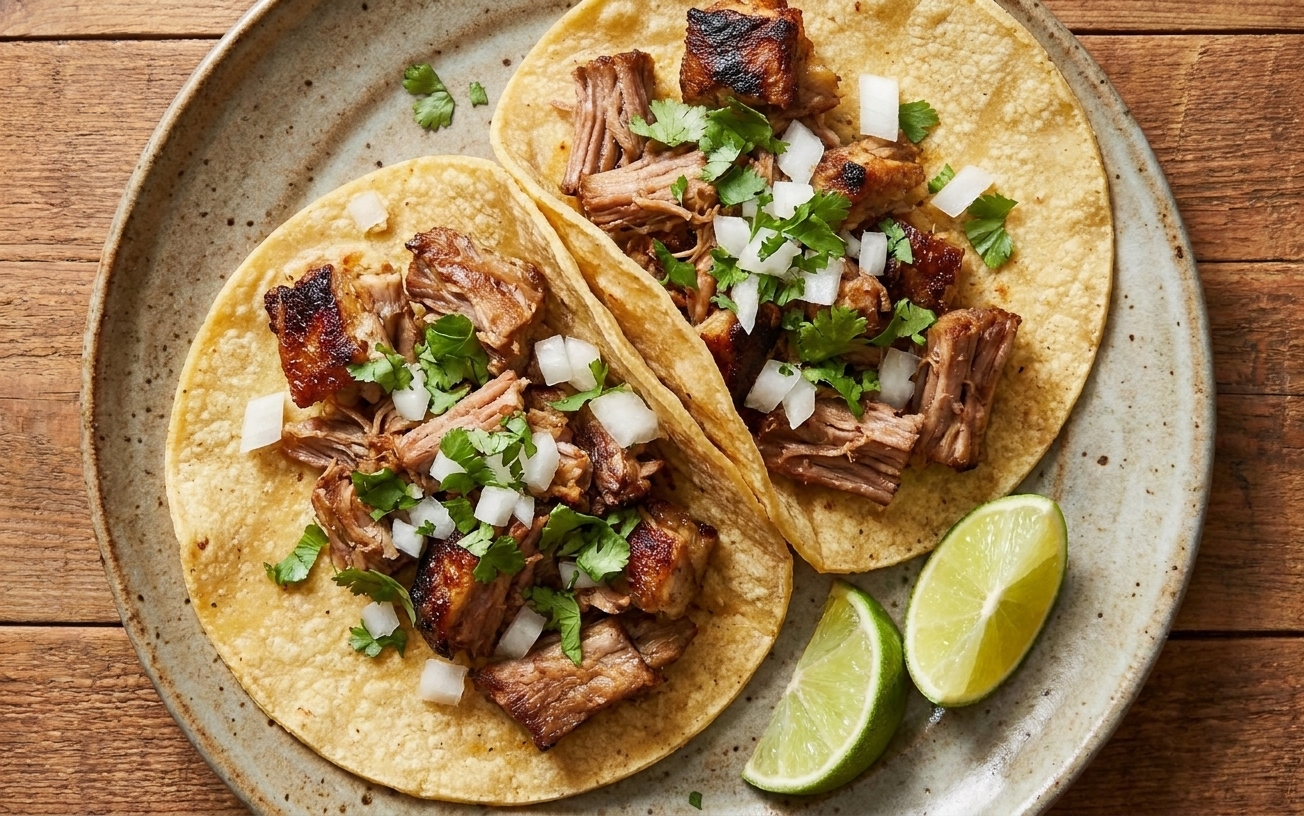
- Tacos: Warm corn tortillas, crispy carnitas, diced onion, cilantro, and lime wedges. Add salsa verde or pico de gallo.
- Quesadillas: Crisp carnitas in a skillet, then fold into a tortilla with melty cheese and a little chopped jalapeño.
- Nachos: Scatter carnitas over chips, add beans and cheese, bake, then finish with crema and pickled onions.
- Breakfast: Carnitas with scrambled eggs and a spoonful of salsa is the kind of morning that fixes everything.
Storage and reheating
Refrigerate
Store carnitas in an airtight container for up to 4 days. If you have extra reduced braising liquid, store it separately and spoon it over when reheating.
Freeze
Freeze shredded, un-crisped pork for best results, up to 3 months. Thaw overnight in the fridge, then crisp right before serving. You can freeze already-crisped carnitas too, but you will lose some crunch.
Reheat
- Skillet: Reheat in a wide skillet with a splash of juices or water, then let it sit undisturbed to re-crisp.
- Oven: Spread on a sheet pan at 425°F until hot, then broil briefly to restore crisp edges.
- Microwave: Works for warming, not for crisping. Use it only if you plan to finish in a skillet.
Common mistakes
- Skipping the crisping step. Tender braised pork is delicious, but it is the browning and crisp edges that give you that classic carnitas vibe.
- Boiling hard instead of simmering gently. A rolling boil can make the meat seize and the liquid reduce too quickly.
- Overcrowding the pan. If the pork is piled up, it steams. Spread it out so moisture can evaporate and browning can happen.
- Not reducing the braising liquid. Those juices are flavor. Reduce and use them like a finishing sauce.
- Over-shredding. Tiny shreds dry out fast. Aim for chunky strands.
FAQ
What cut of pork is best for carnitas?
Pork shoulder, also sold as pork butt or Boston butt, is the classic choice because it has enough fat to stay juicy through a long simmer and enough connective tissue to turn tender and shreddable.
Do I need lard?
No. Traditional carnitas are often cooked in lard, but you can get amazing results by braising first and then crisping in a little of the rendered pork fat or a neutral oil.
How do I know when the pork is done?
It should be fork-tender and shred with very little resistance. If it still feels tight or rubbery when you try to pull it apart, keep simmering and check again in 15 to 20 minutes.
How do I keep carnitas moist after crisping?
Crisp quickly over high heat, then immediately toss with a few spoonfuls of reduced braising liquid. Also, do not crisp all of it if you are planning leftovers. Keep some shredded pork un-crisped and crisp fresh portions as you go.
Can I make carnitas ahead?
Yes. Braise and shred the pork up to 3 days ahead, store it with some juices, then crisp right before serving. This is my favorite make-ahead plan for taco night.
Skillet or broiler, which is better?
Skillet gives you the most intense browning and crunchy bits. Broiler is easier for larger batches. If you want the best of both worlds, broil to crisp, then finish one quick skillet batch for extra crunchy topping.
The recipe
Crispy Carnitas
Pork shoulder simmered with orange, lime, garlic, and spices until tender, then shredded and crisped fast for crunchy edges and juicy bites. Includes skillet and broiler crisping options.
- Prep
- 20 minutes
- Cook
- 3 hours 15 minutes
- Total
- 3 hours 35 minutes
- Yield
- 8 servings
Ingredients
- 4 lb boneless pork shoulder (pork butt), cut into 2 to 3 inch chunks
- 2 tsp kosher salt, plus more to taste
- 1 tsp freshly ground black pepper
- 1 large onion, sliced
- 6 garlic cloves, smashed
- 1 tbsp ground cumin
- 2 tsp dried oregano (Mexican oregano if you have it)
- 1 bay leaf
- 1 orange, zest removed in wide strips (optional) and juiced (about 1/2 to 3/4 cup juice)
- 2 limes, juiced (about 1/4 cup juice)
- 2 cups water, plus more as needed to keep pork partially submerged
- 2 tbsp neutral oil (or use rendered fat from the braise) for crisping, as needed
Instructions
- Season the pork. Pat pork dry. Season all over with 2 teaspoons kosher salt and the pepper.
- Start the braise. In a large Dutch oven, add onion, garlic, cumin, oregano, and bay leaf. Nestle in the pork. Pour in orange juice, lime juice, and 2 cups water. Add orange zest strips if using. Liquid should come about halfway up the meat. Add a splash more water if needed.
- Simmer gently. Bring to a light simmer over medium-high heat. Cover, reduce heat to low, and maintain a gentle simmer for 2 1/2 to 3 hours, turning the pork once or twice, until it is very tender and easily shreds with a fork. If you have to tug hard with the fork, it needs more time.
- Reduce the juices. Transfer pork to a rimmed tray or large bowl. Skim excess fat from the pot if desired, but reserve a few tablespoons for crisping. Bring braising liquid to a simmer and cook uncovered for 10 to 15 minutes until slightly reduced and more flavorful. Taste and season with more salt if needed.
- Shred. Shred pork into chunky strands with two forks. Moisten with a few spoonfuls of the reduced braising liquid.
- Crisp (skillet method). Heat 1 tablespoon oil or reserved pork fat in a wide skillet over medium-high heat. Add a layer of shredded pork (do not overcrowd). Cook undisturbed 3 to 5 minutes until the underside is deeply browned and crispy. Toss and crisp 2 to 3 minutes more. Transfer to a serving bowl and repeat with remaining pork, adding more oil as needed. Finish by tossing with a few more spoonfuls of reduced braising liquid.
- Or crisp (broiler method). Heat broiler to high and position a rack 4 to 6 inches from the heat. Spread shredded pork on a rimmed sheet pan in an even layer. Drizzle with 2 to 3 tablespoons reserved pork fat or oil, plus a few spoonfuls of reduced braising liquid. Broil 3 to 6 minutes, watching closely, until tips are browned and crispy. Toss, then broil 1 to 3 minutes more if you want extra crisp edges. Toss with more reduced braising liquid to serve.
Notes
Chunky shredding matters: Bigger strands crisp beautifully without drying out.
Make ahead: Braise and shred up to 3 days ahead. Refrigerate pork with some juices, then crisp right before serving.
Batching: For maximum crunch, crisp in a skillet in 2 to 3 batches. Overcrowding leads to steaming.