

When I managed a bakery, pumpkin season meant the same thing every year: a parade of sweet loaves and muffins perfuming the whole place. At home, though, I crave pumpkin in a totally different direction. I want a savory bowl that tastes like a cozy sweater, not dessert.
This creamy pumpkin soup is built like a restaurant soup, with home-kitchen guardrails. We start with sautéed aromatics to build real depth, bloom the spices in the fat so they turn fully aromatic, then simmer pumpkin with broth until it becomes velvety and spoon-coating.

The finishing moves are what make it. A small splash of acid keeps the soup from tasting flat, sage gives you that classic fall-herb warmth, and if you want smoky heat, chipotle or smoked paprika can take it in that direction. And if your pot goes off the rails and ends up watery or too sweet, you are not stuck. You will see quick, one-pot fixes, like a short uncovered simmer to tighten it up and small seasoning tweaks to bring it back into balance.
Why this recipe works
- Sautéed aromatics first: Onion and garlic cooked until soft and lightly golden create a savory backbone that pumpkin alone does not have.
- Spices bloomed in fat: Briefly toasting spices in butter or olive oil wakes up their aroma and keeps the soup from tasting dull.
- Broth, not water: Broth gives you seasoning and body, so the soup tastes rich even before cream.
- Creamy finish, your way: Heavy cream is luxurious, but coconut milk or half-and-half also work with a few small adjustments.
- Acid at the end: Lemon juice or apple cider vinegar brightens the whole pot and balances pumpkin’s natural sweetness.
Ingredient notes
Pumpkin: Canned pumpkin purée is the easiest, most consistent option. Look for 100% pumpkin, not pumpkin pie filling. If you cook your own pumpkin, drain it well and purée until very smooth so the soup stays silky.
Aromatics: Yellow onion plus garlic is classic. If you have a leek, swap it for half the onion for a softer, slightly sweet allium flavor that still reads savory.
Broth: Vegetable or chicken broth both work. Choose low-sodium if you want more control, then season to taste at the end.
Creamy element: Heavy cream gives the richest mouthfeel. Half-and-half makes a lighter soup. Full-fat coconut milk is wonderful with chili, cumin, and lime.
Sage: Fresh sage has the cleanest, woodsy flavor. Dried sage works in a pinch, but use less and give it time to hydrate in the simmer.
Chili options: Red pepper flakes add quick heat. Smoked paprika adds warmth without sharp spice. A spoonful of chipotle in adobo makes it smoky and bistro-style.
Acid: Lemon juice is bright and neutral. Apple cider vinegar adds a subtle fruity tang that plays nicely with pumpkin.
Sweetness control: A small amount of carrot can push the soup sweet quickly. If you add carrot, keep it modest and balance with salt, acid, and a little heat.
Equipment you will need
- Large pot or Dutch oven
- Wooden spoon or silicone spatula
- Blender or immersion blender (immersion is easiest for soup)
- Measuring spoons and cups
If you use a countertop blender, blend in batches and do not fill the jar more than halfway. Hot soup expands, and that is how lids pop off.
Pro tips
- Take your time with the onions: You do not need a deep caramelization, but you do want them soft and glossy so they melt into the soup.
- Season in layers: A pinch of salt on the onions, then again after adding broth and pumpkin, prevents a bland final pot.
- Blend for silkiness: Even canned pumpkin can taste slightly grainy until it is blended with broth and fat. Blend longer than you think, then taste.
- Add acid slowly: Start with a teaspoon or two, stir, taste, and repeat. The goal is “alive,” not “sour.”
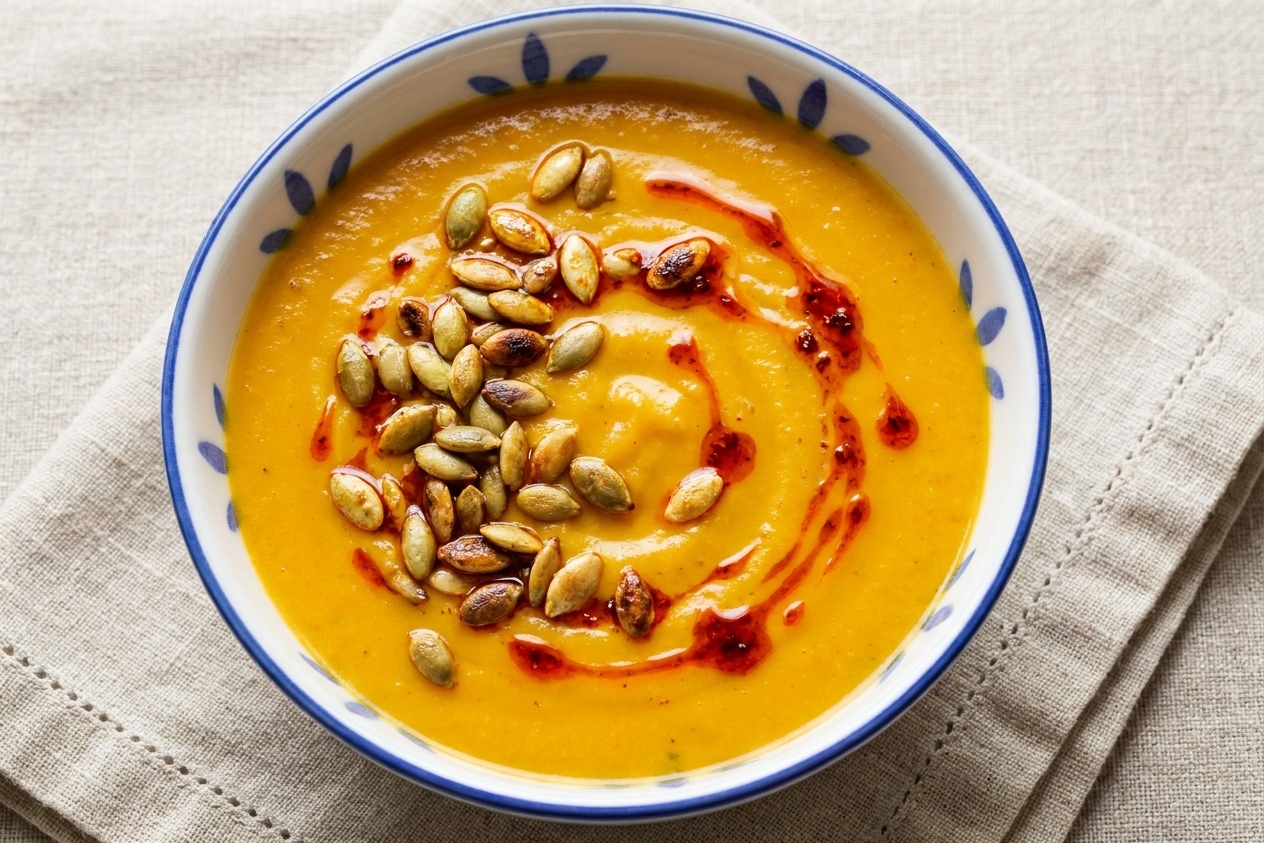
- Finish with texture: Creamy soup loves a crunchy topping. Think pepitas, croutons, or a handful of toasted nuts.

Substitutes that work
- Butternut squash instead of pumpkin: Use roasted or steamed squash purée in the same amount. It is slightly sweeter, so plan on a bit more acid and salt.
- No cream: Use half-and-half for lighter richness, or full-fat coconut milk for a dairy-free finish.
- No fresh sage: Use dried sage, but reduce the amount since it is more concentrated.
- Broth swaps: Water works only if you build extra flavor elsewhere. If you must use water, increase aromatics and seasoning, and do not skip the finishing acid.
- Acid swaps: Lemon juice, apple cider vinegar, or a splash of white wine vinegar all work. Lime is best with chili and coconut milk.
Variations
Sage brown butter pumpkin soup
Brown the butter first, then add sage to crisp, remove the leaves for garnish, and use the browned butter base to sauté onion and garlic. It tastes restaurant-level with basically no extra effort.
Smoky chili pumpkin soup
Add smoked paprika and a small spoonful of chipotle in adobo while sautéing the aromatics. Finish with lime juice and coconut milk. Top with pepitas.
Ginger coconut pumpkin soup
Add fresh grated ginger with the garlic and finish with coconut milk plus lime. It is bright, cozy, and great with a little chili oil.
Serving ideas
- Serve with crusty bread or garlic toast for dipping.
- Top with toasted pepitas, croutons, or crispy fried onions for crunch.
- Add a swirl of cream or coconut milk plus cracked black pepper.
- Make it a meal with a simple salad dressed with lemon and olive oil.
- For extra protein, serve with a grilled cheese or add crispy chickpeas on top.
Storage and reheating
Refrigerator: Store in an airtight container for up to 4 days. The soup thickens as it sits. Thin with a splash of broth when reheating.
Freezer: Freeze up to 3 months. For the smoothest texture, freeze the soup before adding dairy. Reheat, then stir in cream at the end. If it is already creamed, it can still freeze, but it may separate slightly. A quick whisk or brief re-blend brings it back.
Reheating: Warm gently over medium-low heat, stirring often, until steaming. Avoid a hard boil after adding cream.
Common mistakes
- It tastes flat: Add salt first, then add acid in small splashes. If it still tastes muted, a pinch of chili flakes or smoked paprika can lift it.
- The soup is watery: Simmer uncovered to reduce and concentrate flavor. If you want a faster fix, blend in more pumpkin purée, or whisk 1 to 2 tablespoons of tomato paste into the pot and simmer a few minutes for extra body and savory depth.
- The soup is overly sweet: Balance with salt and acid, then add bitter or savory notes like black pepper, sage, or a small spoon of Dijon mustard. Heat helps too, even just a pinch of red pepper flakes.
- It tastes “pumpkin-y” but not rich: Add a little fat. A splash of cream, a spoon of butter, or a drizzle of olive oil at the end rounds everything out.
- Grainy texture: Blend longer, and if needed, pass through a fine-mesh strainer. Graininess is usually under-blending, not a failed recipe.
FAQ
Can I make this with fresh pumpkin?
Yes. Roast or steam peeled pumpkin until very tender, then purée until smooth. Fresh pumpkin can carry extra water, so you may need a longer uncovered simmer to concentrate it.
How do I make it thicker without adding flour?
Reduce it uncovered, or blend in extra pumpkin purée. You can also add a small handful of cooked white beans and blend them in. They thicken without tasting “bean-y” when used modestly.
What is the best acid for pumpkin soup?
Lemon juice is the cleanest all-purpose option. Apple cider vinegar is wonderful if you want a faint fruity tang. Lime is my pick for chili and coconut milk versions.
Is pumpkin soup supposed to be sweet?
It has natural sweetness, but a savory pumpkin soup should taste balanced. Salt, acid, and a savory herb like sage keep it firmly in dinner territory.
Can I make it spicy?
Absolutely. Red pepper flakes, cayenne, smoked paprika, or chipotle in adobo all work. Add a little early for flavor, then adjust at the end for heat.
The recipe
Creamy Pumpkin Soup
A silky, savory pumpkin soup made on the stovetop with sautéed onion and garlic, warm spices, broth, and a creamy finish. Choose classic sage or a smoky chili twist, and finish with a splash of acid to keep every spoonful bright.
- Prep
- 10 minutes
- Cook
- 25 minutes
- Total
- 35 minutes
- Yield
- 6 servings
Ingredients
- 2 tbsp unsalted butter or olive oil
- 1 medium yellow onion, finely chopped
- 3 garlic cloves, minced
- 1 tbsp fresh sage, finely chopped (or 1 tsp dried sage)
- 1 tsp kosher salt, plus more to taste
- 1/2 tsp black pepper
- 1/2 tsp ground cumin
- 1/4 tsp ground nutmeg (optional)
- Pinch of red pepper flakes, to taste (optional)
- 4 cups low-sodium vegetable broth or chicken broth
- 1 (15 oz) can pumpkin purée
- 1/2 cup heavy cream (or full-fat coconut milk)
- 1 to 2 tsp lemon juice or apple cider vinegar, plus more to taste
- Optional toppings: crispy sage leaves, toasted pepitas, croutons, a drizzle of cream or chili oil
Instructions
- Sauté the aromatics: In a large pot or Dutch oven over medium heat, melt the butter. Add the onion and cook, stirring occasionally, until softened and translucent, 6 to 8 minutes.
- Add garlic and spices: Stir in the garlic and chopped sage and cook until fragrant, about 30 seconds. Add the salt, pepper, cumin, nutmeg (if using), and red pepper flakes (if using). Stir constantly for 30 seconds to bloom the spices.
- Simmer: Pour in the broth and whisk in the pumpkin purée until smooth. Bring to a gentle simmer, then reduce heat to medium-low and simmer 10 to 12 minutes, stirring occasionally.
- Blend until silky: Use an immersion blender to blend directly in the pot until very smooth. If using a countertop blender, blend in batches and return to the pot.
- Make it creamy: Stir in the cream (or coconut milk). Warm for 2 to 3 minutes until steaming, but do not boil.
- Finish with acid and adjust: Stir in 1 teaspoon lemon juice or vinegar. Taste and add more acid, salt, pepper, or chili as needed.
- Serve: Ladle into bowls and top with your favorite crunchy topping or a swirl of cream.
Notes
Fix a watery pot: Simmer uncovered for 5 to 10 minutes to reduce, then taste again. For a faster thickener, blend in an extra 1/2 cup pumpkin purée.
Fix an overly sweet pot: Add 1/2 teaspoon salt, then add acid in 1/2 teaspoon increments until balanced. A pinch of chili flakes or extra black pepper also helps.
Countertop blender safety: Let the soup cool for a few minutes, blend in small batches, and vent the lid.
Nutrition