
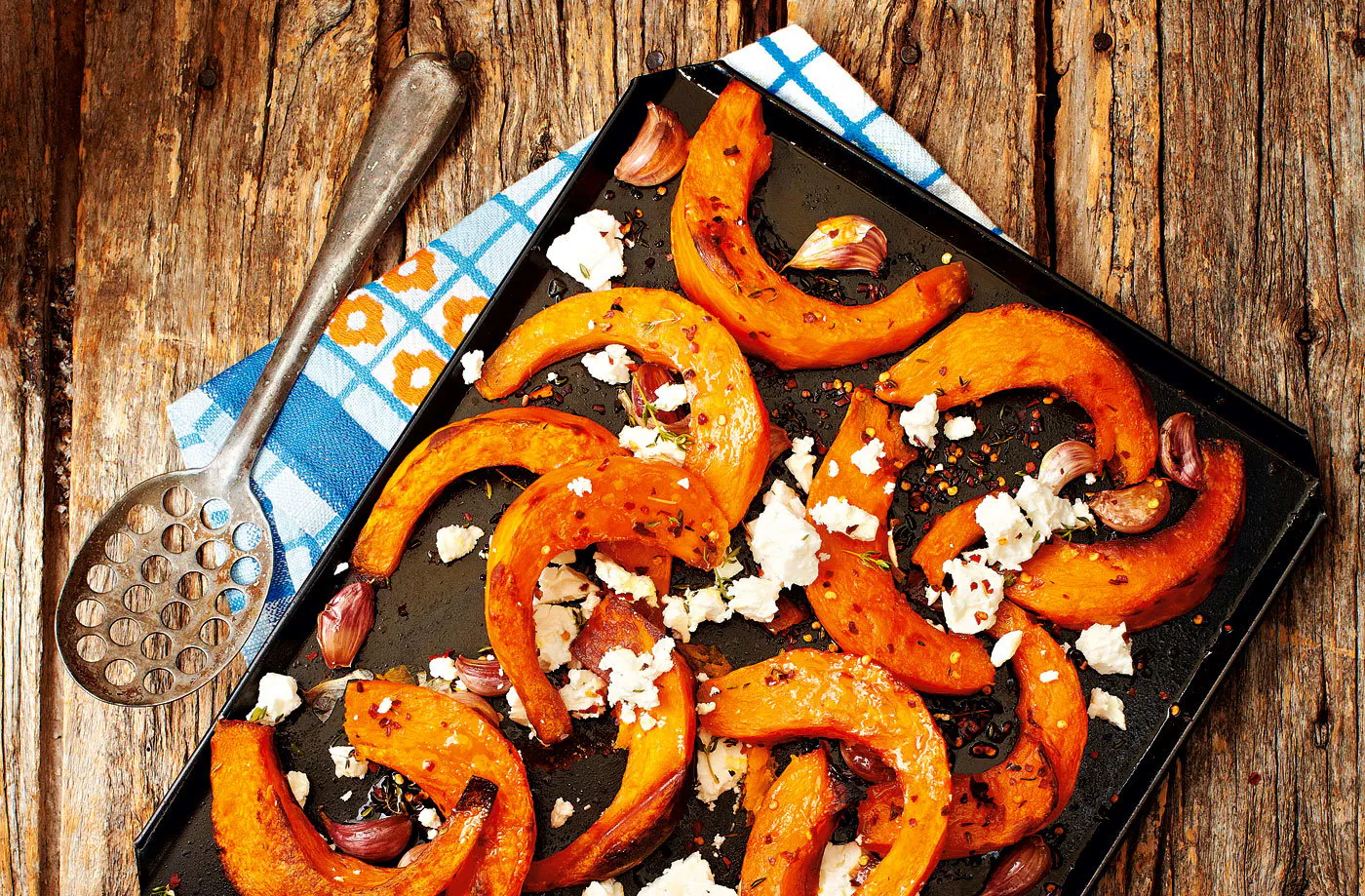
I love pumpkin, but I will be honest: I do not always want it whipped into a puree or hidden in a batter. Sometimes I want actual pieces on the plate, the kind you can spear with a fork, drag through a little sauce, and eat like you would roasted potatoes.
That is exactly what these roasted pumpkin wedges do. They caramelize where the flesh meets the pan, the edges get a little toasty, and the inside turns silky without collapsing into mush. The trick is choosing the right pumpkin and cutting it in a way that lets the slices roast evenly instead of steaming.

If you have ever roasted pumpkin and ended up with watery pieces that slump and fall apart, you did nothing wrong. Most of the time, it is simply the variety. Big carving pumpkins are made for jack o lanterns, not dinner. For wedges that hold their shape, you want a dense, sweet cooking pumpkin or a close cousin like kabocha.
Once you have the right one, the rest is wonderfully simple: oil, salt, plenty of heat, and enough space on the pan so the wedges roast instead of sweat. I will also give you my favorite fork-tender cue so you know exactly when to pull them, because a few minutes is the difference between creamy and collapsing.
Choosing a pumpkin that stays in wedges
For clean slices that keep their structure, look for pumpkins that are dense and meant for cooking. These are the ones I reach for most often:
- Sugar pumpkin (pie pumpkin): Small, heavy for its size, and reliably less watery than carving pumpkins.
- Kabocha: Technically squash, but an excellent choice for wedges. It roasts up sweet and chestnutty and holds its shape beautifully.
- Red kuri (Hokkaido): Slightly drier flesh that roasts into a creamy center with good structure.
If you only see large carving pumpkins, you can still roast them, but expect a softer, more watery result. When that is the only option, keep wedges thicker and roast hot so evaporation has a fighting chance.
How to cut pumpkin into wedges safely
Hard winter squash and pumpkins can be intimidating, so here is the approach I used back when I had to prep cases of squash without losing my mind.
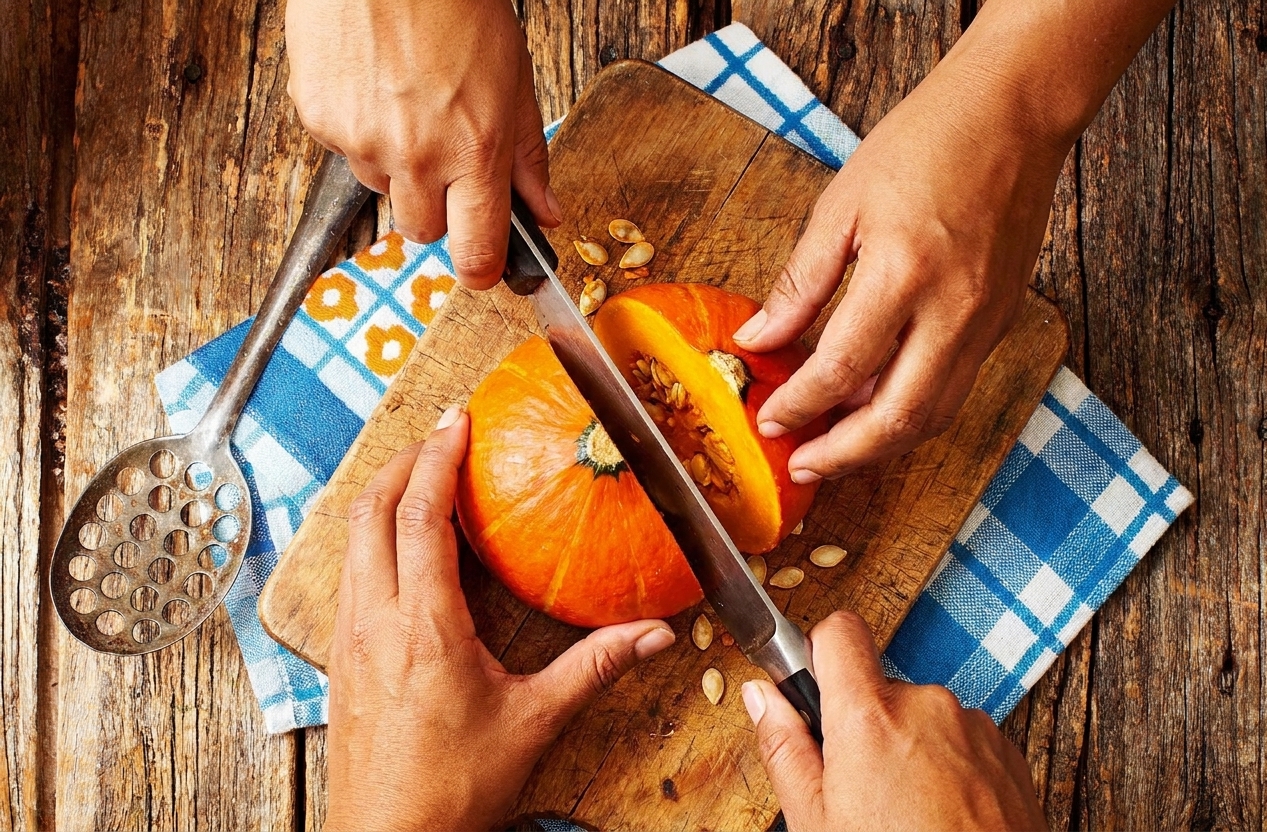
- Stabilize first: Slice a thin piece off the bottom to create a flat base, then stand the pumpkin up so it cannot roll.
- Halve it: Cut down through the stem end. If the knife sticks, do not force it. Rock gently, or tap the spine of the knife with the heel of your hand to help it move.
- Scoop seeds: Use a sturdy spoon. Scrape until mostly clean.
- Cut into wedges: Each half becomes 4 to 6 wedges depending on size. Aim for similar thickness so they roast at the same pace.
- Peel or not: For most pumpkins, I peel because the skin can be tough. For kabocha and red kuri, the skin can be edible when roasted, but it still depends on the thickness. If you are unsure, peel.
My biggest safety tip: if the pumpkin is rock hard, microwave the whole pumpkin for 2 to 3 minutes to soften the exterior slightly. Let it sit a minute, then cut. It makes a surprising difference.
Oil, salt, and heat: the simple formula
These wedges do not need much. The basics are:
- Oil: Enough to lightly coat every surface. Oil helps conduct heat, prevents sticking, and encourages browning.
- Salt: Season before roasting. Salt pulls a little moisture to the surface, then the high heat helps it evaporate, leaving better flavor and browning behind.
- High oven temperature: I roast at 425°F. At lower temps, pumpkin is more likely to turn soft before the edges caramelize.
One non-negotiable: space on the pan. If the wedges are crowded, they steam and stay pale. Give them breathing room, or use two sheet pans.
The fork-tender cue that keeps wedges intact
The goal is tender, not falling apart. Here is the doneness cue I trust:
Slide a fork into the thickest part of a wedge. It should go in with gentle resistance, like a baked sweet potato that still holds its shape when sliced. If it glides in like pudding, you are a little past the wedge stage. Still delicious, just softer.
Visually, look for deep golden edges and a slightly wrinkled surface on the flesh. That is where the caramelization lives.
Why this recipe works
- The right pumpkin variety: Dense cooking pumpkins and kabocha have less free water, so they roast into slices instead of collapsing.
- High heat (425°F): Drives off moisture quickly and encourages caramelization before the interior overcooks.
- Enough oil to coat: Helps heat transfer and browning, and keeps the wedges from drying out.
- Single layer spacing: Prevents steaming so the wedges actually roast and develop browned edges.
- A clear doneness cue: Fork-tender with slight resistance gives you a creamy center while keeping wedge structure.
Ingredient notes
- Pumpkin: Choose sugar pumpkin or pie pumpkin for the best wedge texture. Avoid large carving pumpkins when possible because they are more watery.
- Olive oil: Extra virgin is great for flavor, but any neutral oil with a higher smoke point works too if you prefer.
- Kosher salt: Seasoning before roasting is key. If using fine table salt, use a lighter hand since it measures saltier by volume.
- Black pepper: Optional, but it plays nicely with pumpkin's sweetness.
- Garlic powder and smoked paprika: Optional, savory boosters that make the wedges taste more dinner-ready.
- Fresh herbs: Sage, thyme, or rosemary are excellent added at the end so they stay fragrant.
Equipment you will need
- Large, sturdy cutting board
- Sharp chef's knife
- Spoon for scooping seeds
- Rimmed sheet pan
- Parchment paper (recommended for easier flipping and cleanup)
- Large bowl for tossing wedges with oil and salt
Pro tips
- Cut for even roasting: Aim for wedges about 1 to 1 1/2 inches thick at the widest part so they get tender without turning to mash.
- Preheat the oven fully: Give it a solid 15 to 20 minutes after it beeps. Pumpkin loves steady heat.
- Do not skimp on space: Use two pans if needed. Crowding is the fastest route to pale, soft wedges.
- Flip once: Turn wedges halfway through for browning on both sides. Use a thin spatula if they stick at first. They release as they brown.
- Finish with a final pinch of salt: A little flaky salt right after roasting makes the flavor pop.
- Want extra caramelization? Roast cut-side down for the first half, then flip. That maximizes contact with the hot pan.
Substitutes that work
- No pumpkin: Swap in kabocha, butternut squash, delicata (halved and seeded), or acorn squash wedges. Keep thickness similar.
- No olive oil: Use avocado oil, grapeseed oil, or melted ghee. Coconut oil works if you do not mind a hint of coconut.
- No garlic powder: Use 1 to 2 fresh garlic cloves, finely grated and tossed with the hot wedges after roasting so it does not burn.
- No smoked paprika: Regular paprika or ground cumin are both good savory options.
Variations
Sage and brown butter
Roast the wedges simply with oil and salt, then drizzle with brown butter and crisped sage leaves right before serving.
Spicy maple chile
Toss roasted wedges with a small drizzle of maple syrup and a pinch of chile flakes. Keep it light so the wedges stay savory, not dessert-sweet.
Middle Eastern-ish
Season with cumin, coriander, and a pinch of cinnamon. Finish with lemon juice and chopped parsley.
Parmesan and pepper
When the wedges come out hot, shower lightly with finely grated Parmesan and lots of black pepper. The cheese melts into the edges.
Serving ideas
- Serve alongside roast chicken, pork chops, or sausages with mustard.
- Pair with a grain bowl: farro or quinoa, chickpeas, greens, and a tahini lemon dressing.
- Add to a fall salad with arugula, toasted pepitas, and feta.
- Turn leftovers into tacos with black beans, pickled onions, and a lime crema.
- Make it a cozy plate with a fried egg on top and hot sauce.
Storage and reheating
Refrigerate: Store cooled wedges in an airtight container for up to 4 days.
Reheat: For the best texture, reheat on a sheet pan at 400°F until warmed through and the edges re-crisp, about 8 to 12 minutes depending on thickness. The microwave works, but the wedges will soften.
Freeze: You can freeze roasted pumpkin wedges, but they will be softer when thawed. Freeze in a single layer, then transfer to a freezer bag for up to 2 months.
Common mistakes
- Using a carving pumpkin and expecting firm wedges: Those pumpkins are watery. Choose sugar pumpkin or kabocha for the best structure.
- Cutting wedges too thin: Thin wedges overcook fast and turn floppy. Keep them thick enough to stay hearty.
- Crowding the pan: Crowding traps steam. Spread out or use two pans.
- Too low of an oven temperature: Low heat tends to dry the surface slowly and soften the interior before browning happens.
- Waiting too long to salt: Salt before roasting for seasoning that penetrates and better surface flavor.
- Over-roasting: If a fork slides in with no resistance, you are edging toward mash. Pull them when tender with a little bite.
FAQ
Do I need to peel pumpkin for wedges?
For most pumpkins, yes. Pumpkin skin is often tough. Kabocha and red kuri skin can be edible after roasting, but if it feels thick or leathery, peel it for the nicest bite.
What temperature is best for roasted pumpkin wedges?
I like 425°F. It is hot enough to brown and evaporate excess moisture, which helps the wedges hold their shape.
How do I know when the wedges are done?
Look for browned edges and test the thickest wedge with a fork. It should be fork-tender with slight resistance. The wedge should lift without collapsing.
Why are my roasted pumpkin wedges watery?
Usually it is the variety (carving pumpkin) or a crowded pan that causes steaming. Choose a denser pumpkin and roast in a single layer with space.
Can I roast pumpkin wedges ahead of time?
Yes. Roast, cool, and refrigerate. Reheat on a sheet pan at 400°F to bring back some crisp edges.
The recipe
Roasted Pumpkin Wedges
Savory roasted pumpkin wedges with caramelized edges and a tender center. A simple oil and salt method at high heat, plus a fork-tender cue so the slices stay sturdy enough to serve as a true side dish.
- Prep
- 20 minutes
- Cook
- 30 minutes
- Total
- 50 minutes
- Yield
- 4 servings
Ingredients
- 1 small sugar pumpkin (about 3 to 4 pounds), or 1 small kabocha squash
- 2 to 3 tablespoons olive oil (enough to coat)
- 1 to 1 1/4 teaspoons kosher salt, plus more to finish
- 1/2 teaspoon freshly ground black pepper (optional)
- 1/2 teaspoon garlic powder (optional)
- 1/2 teaspoon smoked paprika (optional)
- 1 to 2 teaspoons chopped fresh thyme or sage (optional, for finishing)
Instructions
- Heat the oven. Arrange a rack in the middle of the oven and preheat to 425°F. Line a rimmed sheet pan with parchment paper.
- Cut the pumpkin safely. If needed, microwave the whole pumpkin for 2 to 3 minutes to slightly soften the exterior, then let it sit 1 minute. Slice a thin piece off the bottom to create a flat base. Stand it upright and cut it in half through the stem end.
- Scoop and slice. Scoop out seeds and stringy bits with a spoon. Cut each half into 4 to 6 wedges. Peel the skin if it is tough (recommended for most pumpkins).
- Season. In a large bowl, toss wedges with olive oil, kosher salt, and pepper. Add garlic powder and smoked paprika if using. Toss until every wedge is lightly coated.
- Roast. Arrange wedges in a single layer with space between them. Roast 15 minutes, then flip wedges and roast 12 to 18 minutes more, until browned at the edges and fork-tender.
- Check doneness. Insert a fork into the thickest part of a wedge. It should go in easily with slight resistance. The wedge should lift without collapsing.
- Finish and serve. Sprinkle with a pinch of extra salt (flaky salt is great) and fresh herbs if using. Serve warm.
Notes
Pumpkin choice matters: Sugar or pie pumpkins are best for wedges. Large carving pumpkins tend to be watery and softer when roasted.
Cut size: For wedges that stay intact, aim for about 1 to 1 1/2 inches thick at the widest part.
Do not crowd: If your pan looks packed, split across two sheet pans to avoid steaming.
Peel guidance: Kabocha and red kuri skin can be edible when roasted, but if it is thick, peel for the best texture.