
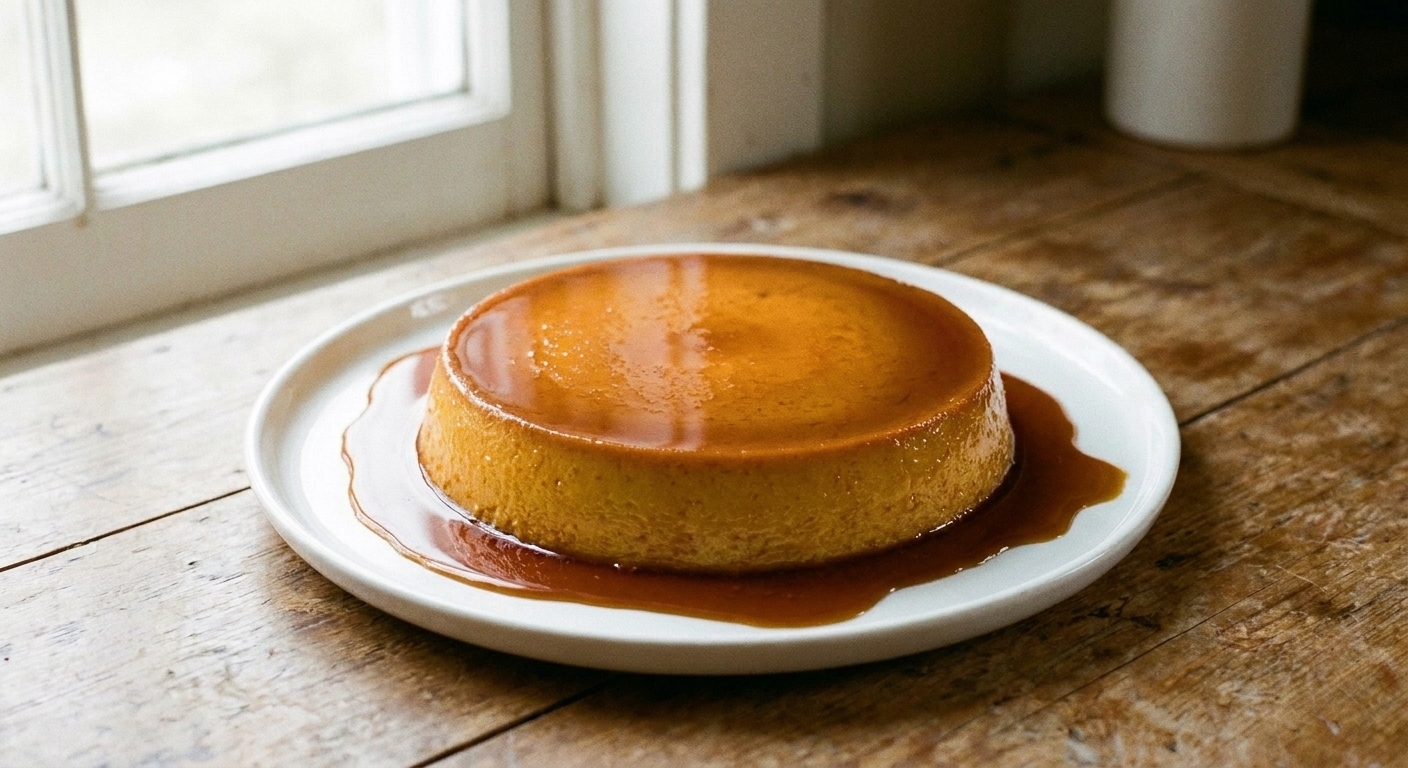
I have a soft spot for desserts you can make ahead, forget about for a few hours, and then dramatically flip onto a plate like you meant to do that all along. Flan is exactly that dessert. And when you whisk pumpkin into the custard, you get something that scratches the pumpkin pie itch without ever touching a pie crust.
This recipe is a baked pumpkin flan turned out of a mold so the caramel becomes its own sauce. It is flan, not pie, not cheesecake . The texture should be smooth and sliceable, not airy like mousse and not dense like a cream cheese cheesecake.

If flan makes you nervous, I get it. Caramel can feel like it goes from perfectly golden to bitter in the time it takes to blink. The good news is you do not need fancy equipment. You need attention for a few minutes at the stove, and you are watching for cues more than the clock: a deep amber color and a lightly toasted, nutty aroma. After that, it is a calm, low-stress bake in a water bath.
The final secret is patience. A thorough chill (ideally overnight) gives the custard time to set firmly, and as everything cools the flan contracts slightly, which helps it release. If it ever acts stubborn, a thin knife around the edge or a quick warm dip of the mold usually convinces it to behave.
What to expect
Flavor-wise, think warm pumpkin and vanilla with a gentle cinnamon note, plus a pleasantly bitter edge that keeps caramel from tasting like straight sugar. Texture-wise, you are aiming for custard that is set at the edges with a soft wobble in the center when you nudge the pan. It should not slosh.
You will make caramel first, pour it into the mold, then whisk together the custard and bake it low and slow in a water bath. After baking, the flan cools, chills, and then gets inverted right before serving so every slice is bathed in caramel.
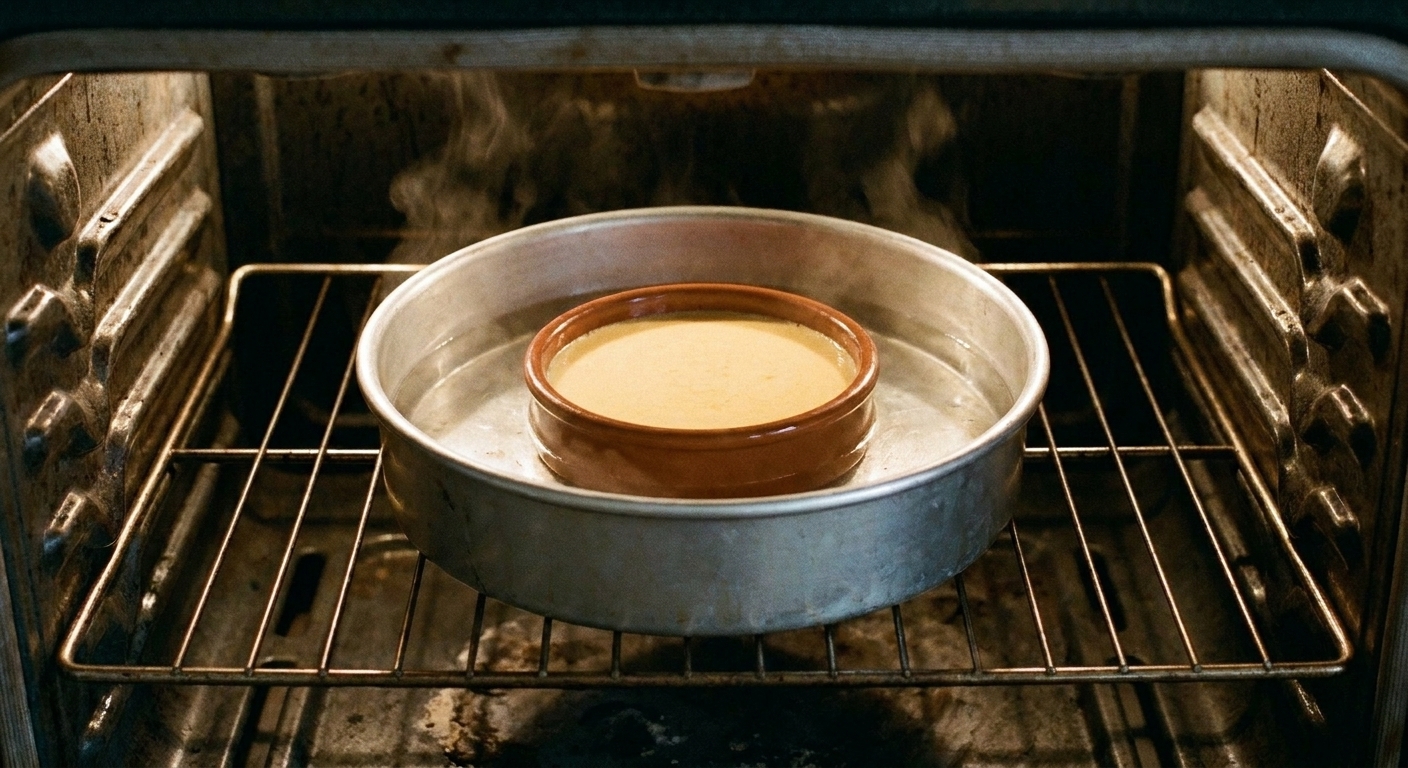
If you are wondering about the pan, this is forgiving. A classic round flan mold is great, but a cake pan or loaf pan works too, as long as it fits inside a larger roasting pan or deep baking dish for the water bath. One water-bath tip that saves sanity: place the pan on the oven rack first, then carefully pour in hot water so you are not sloshing it across your kitchen.
Why this recipe works
- Caramel first, custard second: Pouring hot caramel into the mold creates the sauce and also forms a slick layer that helps with release later.
- A balanced custard ratio: Eggs set the custard, dairy provides creaminess, and pumpkin adds body. Using whole eggs plus extra yolks keeps it sliceable and silky instead of spongy.
- Gentle water-bath baking: The water bath buffers the heat so the custard cooks evenly. That is the difference between smooth flan and flan with tiny bubbles or a curdled edge.
- Chilling time does real work: A long chill finishes setting the custard, and as the custard cools it firms and contracts slightly, helping it release cleanly.
Ingredient notes
Pumpkin puree
Use plain canned pumpkin puree, not pumpkin pie filling. If your puree looks watery, blot it lightly with paper towels or let it drain in a fine-mesh sieve for 10 minutes. Excess water is a common cause of soft, weepy flan.
Sugar (for caramel)
Regular granulated sugar is perfect. The caramel should be a deep amber, not pale gold. Pale caramel tastes sweet but flat.
Eggs and yolks
Whole eggs give structure, while extra yolks add richness and that satiny custard feel. If you only use whole eggs, the flan can skew firmer and a little more “eggy.”
Dairy
Sweetened condensed milk is classic for a silky, stable custard. Paired with whole milk, it keeps the texture rich but not heavy. If you go too high on cream, the flan can feel greasy and may not set as cleanly.
Spices
I keep it simple: cinnamon plus vanilla. You can add a pinch of nutmeg if you want, but resist the urge to throw in the whole spice cabinet. Flan is about smooth, clean flavor.
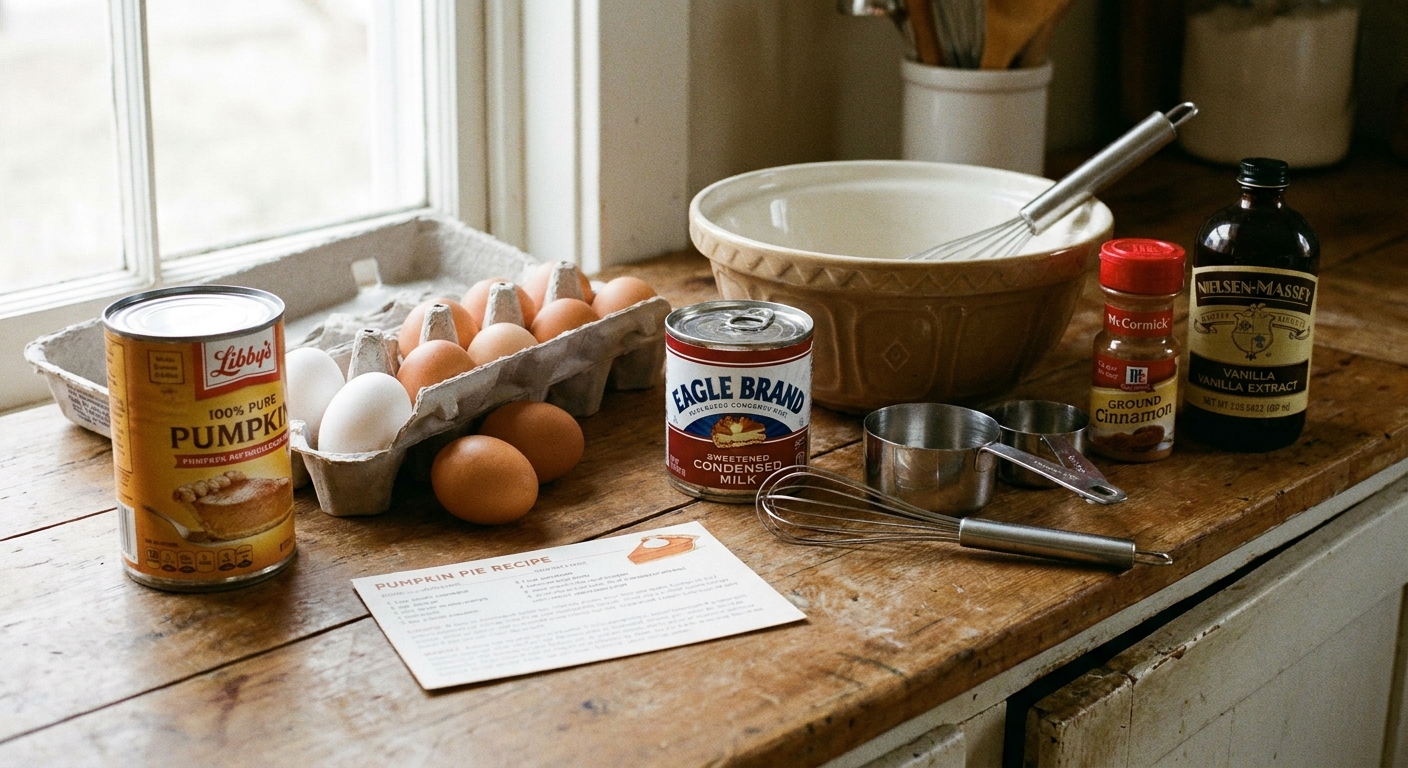
Equipment you will need
- Flan mold or loaf pan: An 8 to 9 inch round flanera or cake pan works well. A loaf pan also works for a taller slice.
- Roasting pan or large baking dish: Big enough to hold the flan mold with space around it for water.
- Kettle or saucepan for hot water: Makes filling the water bath safer and cleaner.
- Fine-mesh strainer (recommended): Straining the custard is the easiest way to guarantee a silky texture.
- Whisk and mixing bowl
- Foil: Optional, but helpful if your oven runs hot or you notice the top browning.
Pro tips
- Caramel color cue: Take it to a deep amber, the color of a copper penny. If you stop at light honey, the caramel will taste overly sweet instead of complex.
- Swirl, do not stir: Once the sugar begins to melt, swirling the pan promotes even caramelization and helps prevent crystallization.
- Pour quickly and carefully: Caramel sets fast in the mold. Tilt the mold right away to coat the bottom evenly.
- Strain for smoothness: Pouring the custard through a strainer catches any eggy bits and pumpkin fibers for a cleaner slice.
- Water-bath level: Aim for hot water reaching about halfway up the sides of the flan mold.
- Know when it is done: The edges should be set and the center should jiggle as one piece. If it ripples like a wave, it needs more time.
- Chill thoroughly: Give it at least 6 hours, preferably overnight. This is not optional if you want a clean unmold.
- Unmold with confidence: Run a thin knife around the edge, invert onto a rimmed plate, then wait 10 to 20 seconds before lifting the mold. That pause lets the caramel find its way out.
Substitutes that work
- Evaporated milk: If you do not have sweetened condensed milk, you can use evaporated milk and increase the sugar in the custard. The texture will be a little lighter and less velvety.
- Brown sugar caramel: Swap part of the granulated sugar in the caramel for light brown sugar for a slightly deeper, molasses-like note. Watch closely as it can darken faster.
- Spice swap: Pumpkin pie spice works in place of cinnamon. Use a light hand so the custard still tastes clean.
- Dairy-free (texture will change): Full-fat coconut milk can work, but the flan will set softer and taste coconut-forward. Chill overnight and expect a slightly more delicate unmold.
Variations
- Orange zest pumpkin flan: Add finely grated orange zest to the custard for a brighter finish.
- Maple pumpkin flan: Replace a small portion of the sugar in the custard with maple syrup. Keep the caramel as written so it still releases well.
- Espresso caramel: Add 1 teaspoon espresso powder to the caramel after it has melted (off the heat). It brings out a toasty bitterness that plays beautifully with pumpkin.
- Individual flans: Divide caramel and custard among ramekins. They bake faster, so start checking early and pull them when centers still jiggle.
Serving ideas
- Keep it classic: Serve chilled with extra caramel spooned over the top.
- Light topping: A small cloud of softly whipped cream is lovely, especially if you add a pinch of cinnamon.
- Crunch contrast: Sprinkle toasted pepitas on the plate right before serving for a salty crunch.
- Fruit: Thin slices of pear or a few tart berries balance the caramel sweetness.
Storage and reheating
- Refrigerator: Store the flan covered in the mold for up to 4 days. Unmold right before serving for the neatest presentation.
- After unmolding: Keep leftovers covered in the refrigerator. The caramel will continue to loosen and pool, which is not a bad thing.
- Freezing: I do not recommend freezing. Custards tend to weep and turn grainy after thawing.
- Reheating: Flan is meant to be served cold or cool. Warm flan tends to soften too much and can lose its clean slice.
Common mistakes
- Caramel that turns bitter: It cooked too dark or too long after it reached amber. Next time, pull it sooner and remember it continues to darken from residual heat.
- Caramel that crystallizes: Sugar crystals on the sides of the pan can seed crystallization. Use a clean pan, avoid stirring, and swirl gently instead.
- Rubbery or curdled texture: The oven temperature was too high or it baked without a water bath. Custard needs gentle, moist heat.
- Tiny bubbles throughout: The custard was whisked too aggressively or blended on high speed, or the bake was too hot. Whisk gently and strain.
- Flan will not release: It did not chill long enough, or the edges were not loosened with a knife. If it still sticks, set the mold in warm water for 20 to 30 seconds, then invert again.
- Watery puddle (weeping): Overbaked custard squeezes out moisture as it cools. Pull it when the center jiggles as one piece and chill fully before unmolding.
FAQ
How do I know when the caramel is the right color?
Look for deep amber, like a copper penny. If you are unsure, err slightly lighter rather than darker. You can always cook it a few seconds more, but you cannot undo burnt caramel.
Can I use fresh pumpkin instead of canned puree?
Yes, but make sure it is thick like canned. Roast pumpkin, puree it, then drain it in a sieve until it is not watery. Excess liquid makes a soft set and can cause weeping.
Do I really need a water bath?
For baked flan, yes. It is the simplest way to protect the custard from high, direct oven heat and keep the texture smooth.
Why does my flan have holes or a spongy texture?
That usually means the custard overheated or the custard mixture had lots of incorporated air. Keep the oven moderate, use a water bath, and whisk gently.
Can I make it the day before?
Please do. Flan is at its best after a full overnight chill. The flavor settles, the custard firms, and unmolding is much easier.
The recipe
Pumpkin Flan
A silky, crustless pumpkin flan baked in a water bath and turned out onto a glossy caramel sauce. Make it ahead and unmold right before serving for the cleanest slices.
- Prep
- 25 minutes
- Cook
- 55 minutes
- Total
- 8 hours 20 minutes
- Yield
- 8 servings
Ingredients
- 1 cup (200 g) granulated sugar
- 3 tablespoons water
- 1 teaspoon fresh lemon juice (optional, helps prevent crystallization)
- 1 cup (245 g) pumpkin puree
- 1 can (14 oz or 396 g) sweetened condensed milk
- 1 1/2 cups (360 g) whole milk
- 3 large eggs
- 2 large egg yolks
- 1 1/2 teaspoons vanilla extract
- 1 1/2 teaspoons ground cinnamon
- 1/2 teaspoon fine salt
Instructions
- Heat the oven and prep the pans. Preheat oven to 325°F (163°C). Set a kettle of water to boil. Place an 8 to 9 inch round flan mold, cake pan, or a standard loaf pan inside a large roasting pan or deep baking dish (for the water bath).
- Make the caramel. In a small, heavy-bottomed saucepan, combine sugar and water (and lemon juice, if using). Cook over medium heat, gently swirling the pan occasionally, until the sugar dissolves and the mixture turns deep amber, 5 to 8 minutes. Do not stir once it begins to simmer. Immediately pour the caramel into the flan mold and carefully tilt to coat the bottom evenly. Set aside to harden while you make the custard.
- Mix the pumpkin custard. In a large bowl, whisk together pumpkin puree, sweetened condensed milk, and whole milk until smooth. Whisk in the eggs and yolks gently, followed by vanilla, cinnamon, and salt. Try not to whip in lots of air.
- Strain (recommended). Pour the custard through a fine-mesh strainer into a large measuring cup or bowl with a spout, then pour into the caramel-lined mold.
- Set up the water bath. Slide the roasting pan with the filled mold onto the oven rack. Carefully pour boiling water into the roasting pan until it reaches about halfway up the sides of the flan mold. If you like, loosely tent the top of the flan mold with foil to prevent browning.
- Bake. Bake until the edges are set and the center jiggles as a single mass when gently nudged, 50 to 65 minutes. A knife inserted near the edge should come out mostly clean. Do not bake until the center is completely firm.
- Cool, then chill thoroughly. Carefully remove the flan mold from the water bath. Cool at room temperature for about 1 hour, then cover and refrigerate at least 6 hours, preferably overnight.
- Unmold. Run a thin knife around the edge of the flan to loosen. Place a rimmed serving plate over the mold and invert in one confident motion. Let it sit inverted for 10 to 20 seconds, then lift off the mold so the caramel can flow over the flan.
- Slice and serve. Slice with a thin knife, wiping between cuts for clean edges. Spoon caramel sauce over each serving.
Notes
Caramel safety: Caramel is extremely hot. Pour carefully and keep kids and pets out of the kitchen for this step.
Pan options: A loaf pan makes a taller, narrower flan. An 8 to 9 inch round pan makes wider slices. Baking time may vary slightly based on pan shape and material.
Doneness cue: If the center looks puffed and firm, it is likely overbaked. Aim for a steady jiggle in the middle.
Stuck flan fix: If it does not release, set the mold in warm water for 20 to 30 seconds, dry the bottom, and invert again.