
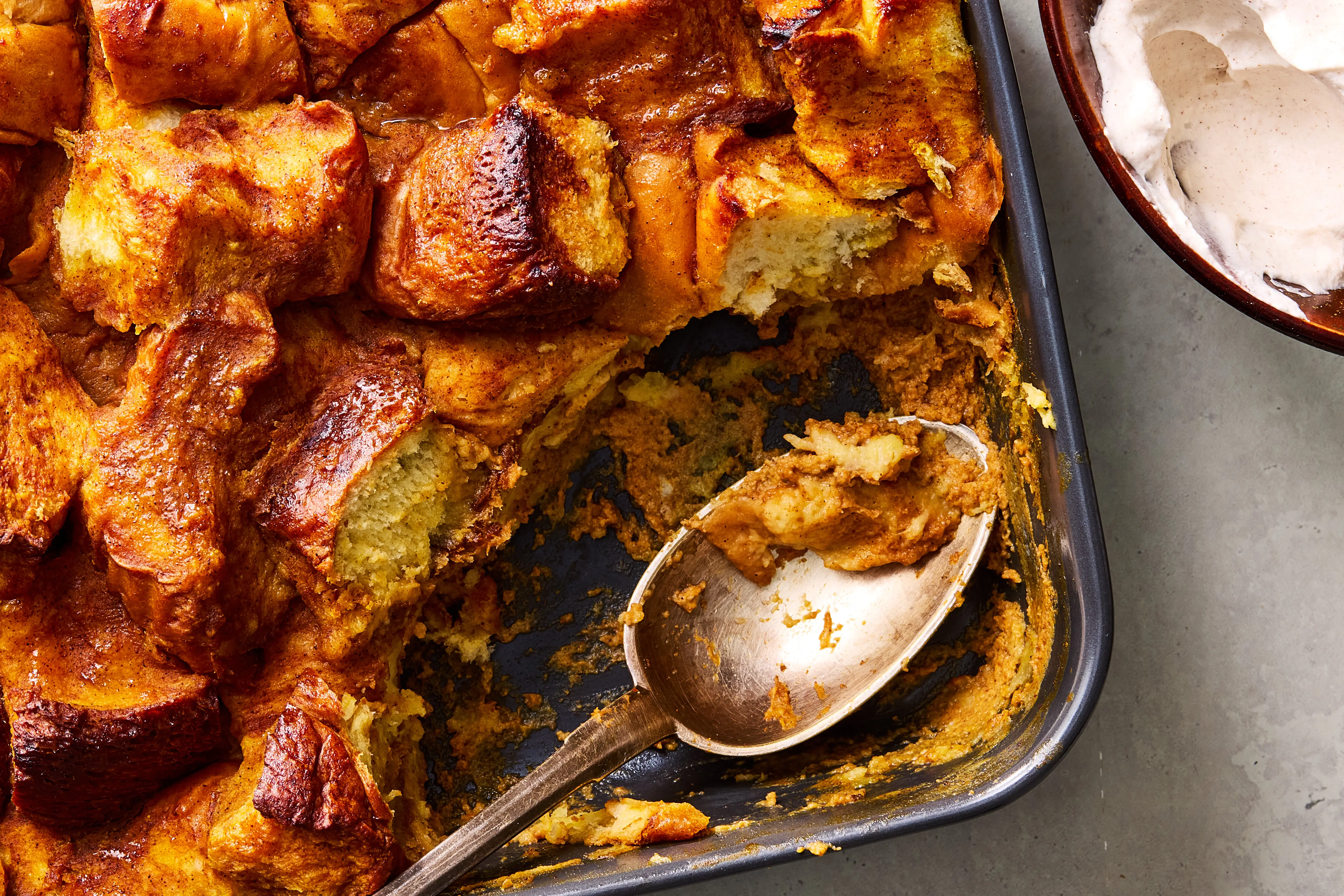
In my family’s kitchen, bread pudding was never a fussy dessert. It was the delicious magic trick that turned odds and ends of bread into something you could carry to the table in a baking dish and serve by the scoop. This pumpkin version keeps that same cozy spirit, but uses a custard flavored with pumpkin puree, warm spices, and brown sugar. You get a creamy center, golden edges, and that unmistakable bakery-window aroma while it bakes.
The secret, in my experience, is not “more pumpkin” or “more eggs.” It is balance. Bread pudding usually comes down to two make-or-break choices: the bread you start with and how much custard you give it. Too little custard and it bakes up dry. Too much and you end up with a wet, under-set middle that never quite turns into that spoonable, custardy scoop.

I’ll walk you through a bread choice that actually absorbs custard, a simple “no-pooling” way to judge custard levels without doing math, and the doneness cues I rely on, because the timer is only part of the story. And since bread pudding is practically made for leftovers, I included my best reheating methods so tomorrow’s bowl is just as soft and satisfying as tonight’s.
Bread matters
For pumpkin bread pudding, I want bread that can soak up custard without collapsing into paste. Brioche and challah are my first picks when I am leaning dessert, because they bake up soft and plush. French bread is my choice when I want more definition in each bite, with little edges and corners that stay distinct.
No matter which loaf you use, the goal is the same: start with cubes that feel dry on the outside and slightly firm, not squishy. That bit of dryness is what lets the custard move into the bread instead of sliding around it. The result is a pudding that feels creamy, not gummy.
The no-pooling test
I am not interested in turning bread pudding into a measuring exercise mid-recipe. After the bread has had its soak and rest period, take a look at the bottom of the bowl or baking dish. What you want is bread that looks uniformly damp, with little to no loose custard collecting underneath.
If you see a shallow puddle, do not panic. Give the mixture a gentle fold and let it stand a few more minutes. Often the bread just needs time to catch up. If the liquid still sits there like it is waiting for permission, that is your clue that the bread is at capacity. In my experience, more baking time often does not fully fix that kind of excess. It can set some of it, but you still risk a center that feels heavy or a top that dries out before the middle behaves. Bread pudding is happiest when the bread has actually absorbed what you poured over it.
A quick extra check I use is a light press on the top with the back of a spoon. Custard should rise slowly, then settle back in. If it splashes or streams around the bread, the mixture is telling you it is still too loose.
Doneness cues
The timer gets you close, but the pan tells you when you are done. I look for edges that are set and lightly puffed, with a top that has taken on some color. Then I do what I call the wobble check: nudge the dish gently. The center should jiggle like a custard. It should not slosh like liquid.
If you like a firmer, more sliceable result, you can keep baking until the center jiggle is smaller, but remember this is a dessert that continues setting as it cools. Pulling it when it is just set is what keeps it creamy, especially if you are planning on leftovers.
Leftovers and reheating
Bread pudding is one of those desserts that can be even better the next day, as long as you reheat it with a little kindness. My rule is simple: gentle heat plus a touch of moisture.
For a single serving, a small splash of milk or cream and a loose cover in the microwave keeps it soft instead of rubbery. For a larger portion, I like a low oven with the dish covered, which warms it through without drying the top into something tough. If you miss the crisp edges, uncover it briefly at the end and let the surface perk back up.
If you are baking this specifically for leftovers, the best “reheating hack” actually happens on day one: do not overbake it. A bread pudding pushed too far in the oven does not magically regain moisture later, no matter how careful you are with the warm-up.
Why this recipe works
- Dried bread cubes absorb custard more evenly. A quick toast in the oven helps prevent an overly soft, gummy texture and makes the pudding bake up tender instead of soggy.
- A milk plus cream base keeps the pumpkin custard silky. Pumpkin puree can make custard feel dense, so a richer dairy mix keeps the final texture soft and scoopable.
- Resting time before baking reduces dry spots. Giving the bread a short soak lets the custard penetrate instead of pooling only at the bottom.
- Baking until just set protects moisture. Pulling the dish when the center still has a slight wobble keeps it creamy. Carryover heat finishes the set.
Ingredient notes
Pumpkin puree
Use plain canned pumpkin puree, not pumpkin pie filling. Pie filling is pre-sweetened and spiced, which throws off the custard balance.
Bread
Brioche and challah are my favorites for a dessert-style bread pudding. French bread works well if you prefer a little more chew. Aim for about 1 inch cubes so they stay distinct after soaking.
Eggs
Eggs are what set the custard. Whisk thoroughly so you do not get bits of cooked egg in the finished pudding.
Dairy
Whole milk plus heavy cream creates a rich custard that still bakes up soft. You can use half-and-half in place of both if that is what you have.
Spices
Cinnamon, ginger, nutmeg, and cloves give that classic pumpkin profile. If you only have pumpkin pie spice, it is a perfectly fine swap.
Brown sugar
Brown sugar brings caramel notes that pair beautifully with pumpkin. Dark brown sugar tastes deeper, but light brown is great too.
Vanilla and salt
Vanilla rounds everything out. Salt is not optional in sweet custards. It is what makes the spices taste like more than just “sweet.”
Equipment you will need
- 9x13-inch baking dish (or a similarly sized 3-quart casserole)
- Large mixing bowl
- Whisk
- Measuring cups and spoons
- Baking sheet (to dry the bread cubes)
- Fine-mesh sieve (optional, for extra-smooth custard)
Pro tips
Bread that absorbs custard
I reach for brioche or challah when I want a dessert-leaning pudding with a soft, rich bite, and French bread when I want more structure and chew. Whichever you choose, what matters most is that the bread can take on custard without collapsing into paste.
The cue I look for before the bread ever touches custard is simple: the cubes should feel dry and a little firm on the outside, but not toasted like croutons. If you pinch one, it should not squish. This quick drying step gives the bread a head start on absorption, so the custard moves into the cube instead of sitting around it.
The no-pooling custard test
I am not interested in turning bread pudding into a math problem. After the bread has had its soak and rest, look at the bottom of the bowl or baking dish. You want the bread to look uniformly damp, with little to no loose custard pooling underneath.
If you see a shallow puddle, give the mixture a gentle fold and a few more minutes. Often the bread simply needs time to catch up. If the liquid level stays high, the batch is telling you the bread is at capacity. In my experience, baking longer can set some of that extra liquid, but it often does not solve it cleanly without drying the top. The better fix is usually a bit more bread.
Another quick check I use is a light press with the back of a spoon. Custard should rise slowly and settle back into the bread. If it splashes or streams around the cubes, that is a sign there is more liquid than the bread can comfortably hold.
Doneness cues I trust
The timer gets you in the neighborhood, but the pan tells you when it is actually done. I look for set, slightly puffed edges and a top that has turned golden. Then I nudge the center. It should jiggle like custard, not slosh like liquid.
If you prefer a more structured slice, you can bake until the center jiggle is smaller, but keep in mind that carryover heat continues to set the pudding as it cools. Pulling it when it is just set is what keeps it creamy the next day.
Reheating without drying it out
Leftover bread pudding is one of those desserts that can be even better on day two, as long as you warm it gently. My rule is moisture plus cover.
- For a single serving: A small splash of milk or cream and a loose cover in the microwave keeps it soft instead of rubbery.
- For a larger portion: Cover the dish with foil and warm it in a low oven. If you want the top to crisp up again, uncover it briefly at the end.
If you know you are baking for leftovers, it helps to avoid overbaking on day one. A pudding that goes too far in the oven does not magically regain moisture later, no matter how careful the reheat.
Substitutes that work
- Half-and-half: Replace the milk and cream with an equal amount of half-and-half.
- Pumpkin pie spice: Use 2 teaspoons pumpkin pie spice instead of the individual spices.
- Maple syrup: Replace up to half of the brown sugar with maple syrup for a maple-pumpkin vibe. The custard will be slightly looser, but still sets well.
- Gluten-free bread: Use a sturdy gluten-free loaf and dry it well. Gluten-free bread benefits from extra drying time to avoid a gummy texture.
Variations
- Pecan praline top: Sprinkle chopped pecans mixed with a little brown sugar and melted butter over the top before baking for extra crunch.
- Chocolate chip pumpkin bread pudding: Fold 1/2 cup semisweet chocolate chips into the soaked bread right before baking.
- Bourbon pumpkin bread pudding: Add 1 tablespoon bourbon to the custard along with the vanilla.
- Cranberry orange: Add 1/2 cup dried cranberries and the zest of 1 orange to the bread cubes before pouring in the custard.
Serving ideas
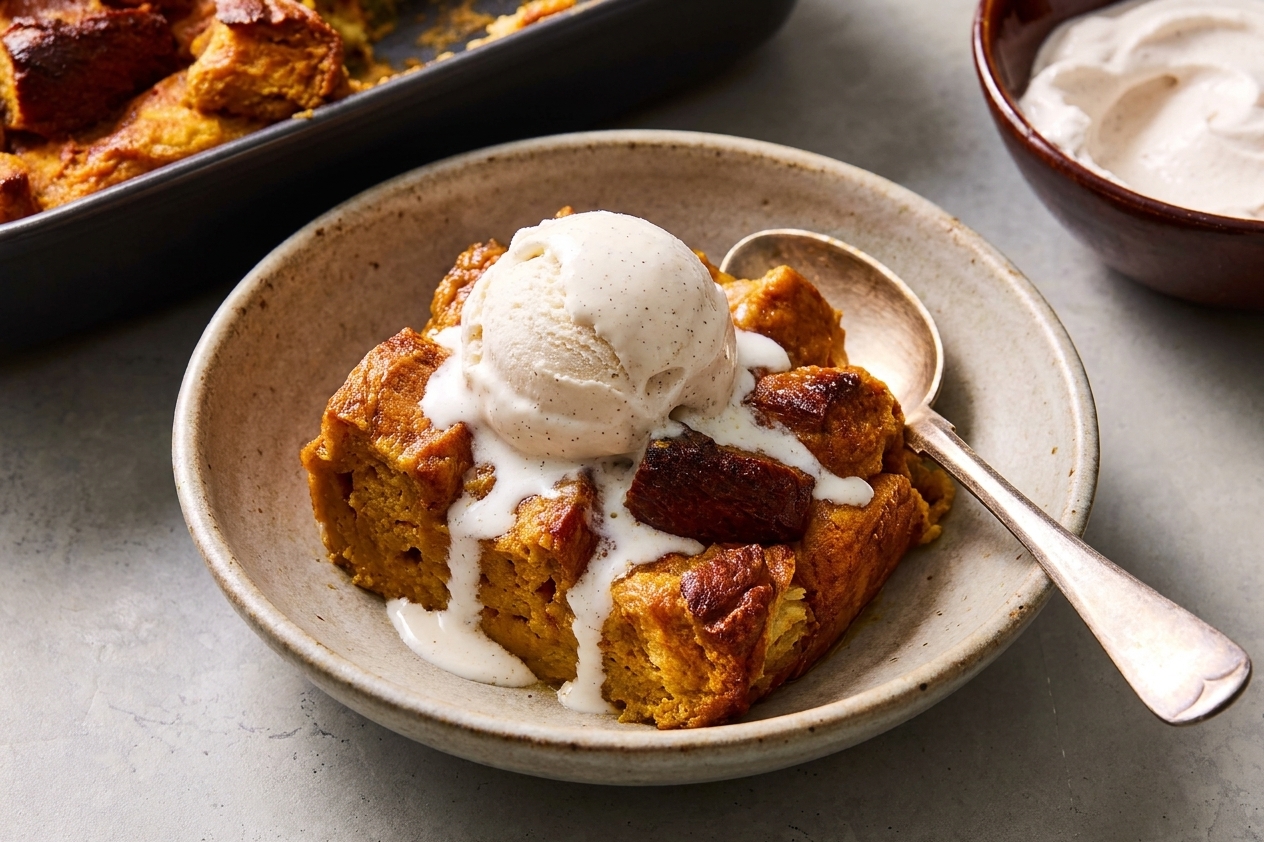
This is a scoop-and-serve dessert, which means you get to be delightfully casual about it.
- Classic: Warm bread pudding with vanilla ice cream.
- Cozy bakery style: A drizzle of warm caramel sauce.
- Light and tangy: A spoonful of lightly sweetened Greek yogurt or crème fraîche on top.
- Extra fall: Toasted pecans and a dusting of cinnamon.
Storage and reheating
How to store leftovers
Let the bread pudding cool completely, then cover the baking dish tightly or transfer portions to airtight containers. Refrigerate for up to 4 days.
How to reheat without drying it out
Bread pudding can dry out if it is blasted with high heat. The fix is gentle heat plus a little added moisture.
- Microwave (best for single servings): Place a portion in a bowl, splash 1 to 2 teaspoons milk or cream over the top, cover loosely, and microwave in 20 to 30 second bursts until warmed through.
- Oven or toaster oven (best for a larger amount): Cover the dish with foil and warm at 300°F until heated through, about 15 to 25 minutes depending on thickness. For a slightly crisp top, uncover for the last 3 to 5 minutes.
If you know you will be reheating later, it can help to bake the original dish just until set. A bread pudding that is pushed too far in the oven is much harder to bring back to life.
Freezing
You can freeze bread pudding, but the texture will be a little softer after thawing. Wrap portions well and freeze up to 2 months. Thaw overnight in the fridge before reheating gently.
Common mistakes
- Using very soft bread without drying it first. The custard absorbs unevenly and can bake up gummy, especially if the bread is very fine-crumbed or the mixture is extra wet.
- Not whisking the custard thoroughly. Streaky egg can lead to bits of cooked egg in the final texture.
- Skipping the soak time. The top layer may dry out while the bottom turns overly wet.
- Baking until the center is completely firm. That usually means it is already overbaked, and it will feel drier as it cools.
- Reheating uncovered at high heat. This is the fastest route to dry leftovers. Cover and add a splash of dairy.
FAQ
How do I know when pumpkin bread pudding is done?
The edges should be set and slightly puffed, and the center should still have a gentle jiggle when you nudge the dish. If you insert a knife near the center, it should come out mostly clean with a little custardy moisture, not raw liquid.
Should bread pudding be wet in the middle?
It should be moist and custardy, but not soupy. If it is wet and runny, it needs more baking time, or the bread-to-custard ratio was too heavy on custard.
Can I make it ahead?
Yes. You can assemble it, cover, and refrigerate for up to 12 hours. Bring it toward room temperature while the oven preheats, then bake. Cold-from-the-fridge dishes often need a few extra minutes.
Can I use homemade pumpkin puree?
You can, but homemade puree varies in water content. If it seems watery, drain it in a fine-mesh sieve for 15 to 30 minutes so the custard sets properly.
Do I need a water bath?
No. This is meant to be a rustic, scoopable bake with crisp edges. A water bath makes it more like a custard casserole and takes away that browned top that makes bread pudding so good.
The recipe
Pumpkin Bread Pudding
Cubed bread soaked in a warmly spiced pumpkin custard, baked until just set, then served by the scoop with ice cream or caramel.
- Prep
- 20 minutes
- Cook
- 45 to 55 minutes
- Total
- 1 hour 20 minutes
- Yield
- 10 servings
Ingredients
- 10 cups 1-inch bread cubes (about 1 pound brioche, challah, or French bread)
- 1 cup canned pumpkin puree
- 4 large eggs
- 1 cup whole milk
- 1 cup heavy cream
- 3/4 cup packed brown sugar
- 2 teaspoons ground cinnamon
- 1 teaspoon ground ginger
- 1/2 teaspoon ground nutmeg
- 1/8 teaspoon ground cloves
- 2 teaspoons vanilla extract
- 1/2 teaspoon fine salt
- 2 tablespoons unsalted butter, melted (for greasing the dish, plus extra for the top if desired)
- Optional for serving: vanilla ice cream, caramel sauce, toasted pecans
Instructions
- Heat the oven and dry the bread. Preheat the oven to 300°F. Spread the bread cubes on a baking sheet in an even layer and bake for 10 to 15 minutes, stirring once, until the cubes feel dry on the outside but are not deeply browned.
- Prepare the baking dish. Increase oven temperature to 350°F. Brush a 9x13-inch baking dish with some of the melted butter.
- Make the pumpkin custard. In a large bowl, whisk together the pumpkin puree, eggs, milk, heavy cream, brown sugar, cinnamon, ginger, nutmeg, cloves, vanilla, and salt until very smooth.
- Soak the bread. Add the dried bread cubes to the bowl and gently fold until every piece is coated. Let the mixture stand for 10 to 15 minutes, folding once or twice, so the bread absorbs the custard.
- Fill the dish. Pour the soaked bread mixture into the buttered baking dish and press the cubes down lightly so the top layer is mostly moistened. If you like a richer top, drizzle a little of the remaining melted butter over the surface.
- Bake until just set. Bake for 45 to 55 minutes, until the edges are set and golden and the center has a gentle jiggle. If the top browns too quickly, tent loosely with foil for the last 10 to 15 minutes.
- Cool, then scoop and serve. Let cool for 15 to 20 minutes to settle. Serve warm by the scoop, topped with ice cream, caramel sauce, or toasted pecans if you like.
Notes
Make-ahead: Assemble the bread pudding, cover, and refrigerate up to 12 hours. Let it sit at room temperature while the oven preheats, then bake, adding a few minutes if needed.
Doneness cue: Look for a set, slightly puffed perimeter and a center that jiggles softly like custard. If the center sloshes, it needs more time.
Reheating tip: To keep leftovers moist, add a small splash of milk or cream and reheat covered, either in the microwave in short bursts or in a 300°F oven under foil.