
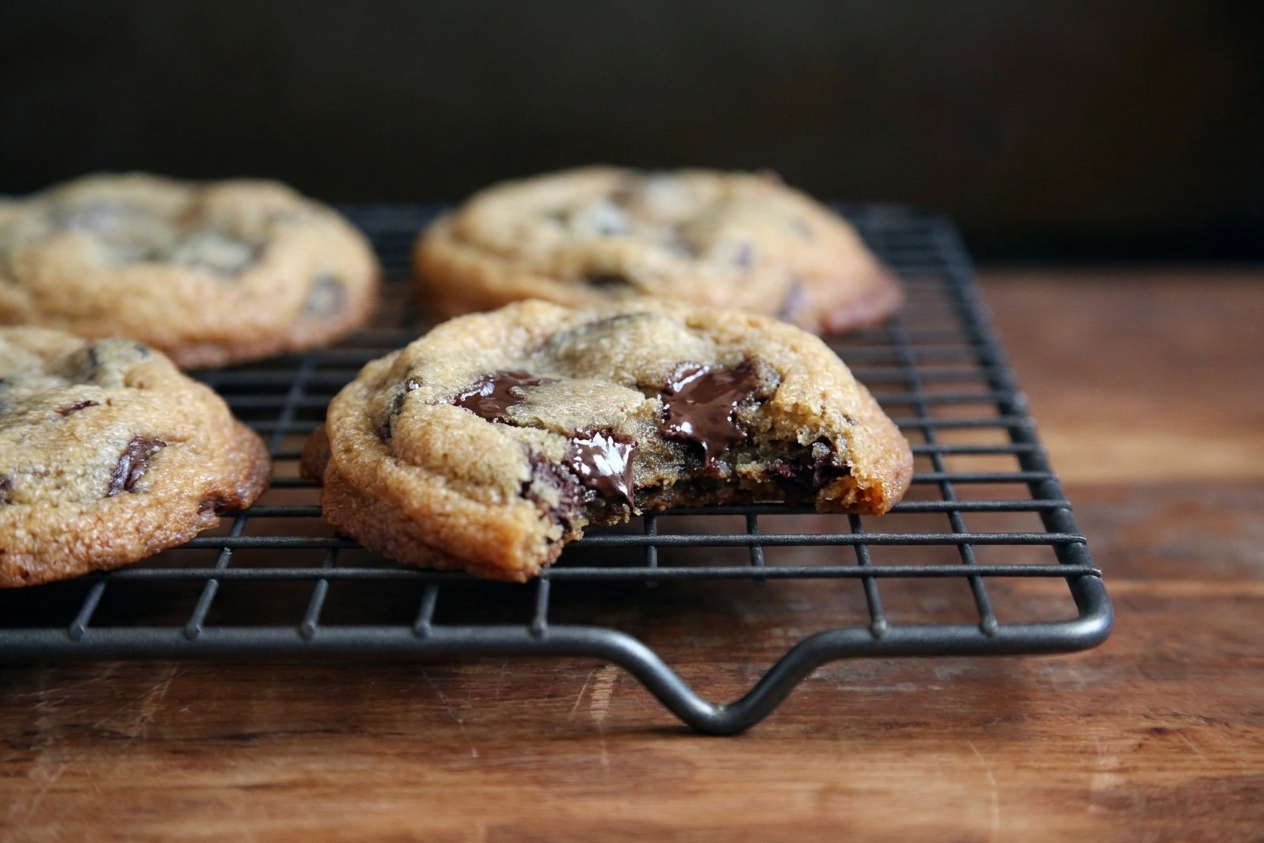
There are cookies you bake because you want to impress, and cookies you bake because you want your kitchen to smell like home. Nestlé Toll House chocolate chip cookies fall squarely into the second category for me. They are classic for a reason, with that familiar balance of buttery dough and melty chocolate.
This tested take stays close to the back-of-the-bag classic, but I’ll share the small details that help you get the results you want. For thicker cookies, a little chill time and a gentle hand with flour go a long way. If your cookies keep spreading into thin puddles, it usually comes down to butter that is too warm or baking sheets that have not fully cooled. And if you love a chewy center, you will know exactly what “done” looks like when you pull the tray.

One more thing: you do not need fancy ingredients or bakery equipment to nail this. A bowl and a spoon (or mixer), plus a quick check on dough texture, get you there. For rounded tablespoon portions baked at 375 F, start checking around 9 minutes, but timing can vary based on scoop size, whether the dough is chilled, and even pan color. Pull the cookies when the edges are golden and the centers still look a touch soft. You will typically get about 5 dozen cookies, give or take depending on how generously you scoop.
What to expect
These cookies bake up with a warm caramel-like aroma from brown sugar, a tender crumb, and plenty of chocolate in every bite. You can bake them right away, but a short chill often helps them bake up a little thicker and chewier. Expect crisp, golden edges with softer centers, especially if you pull them when the middles still look slightly soft. They are quick enough for a weeknight craving, classic enough for a holiday tray, and the dough freezes well so you can bake a few at a time when the craving hits. If you bake from frozen, plan on needing an extra minute or two.
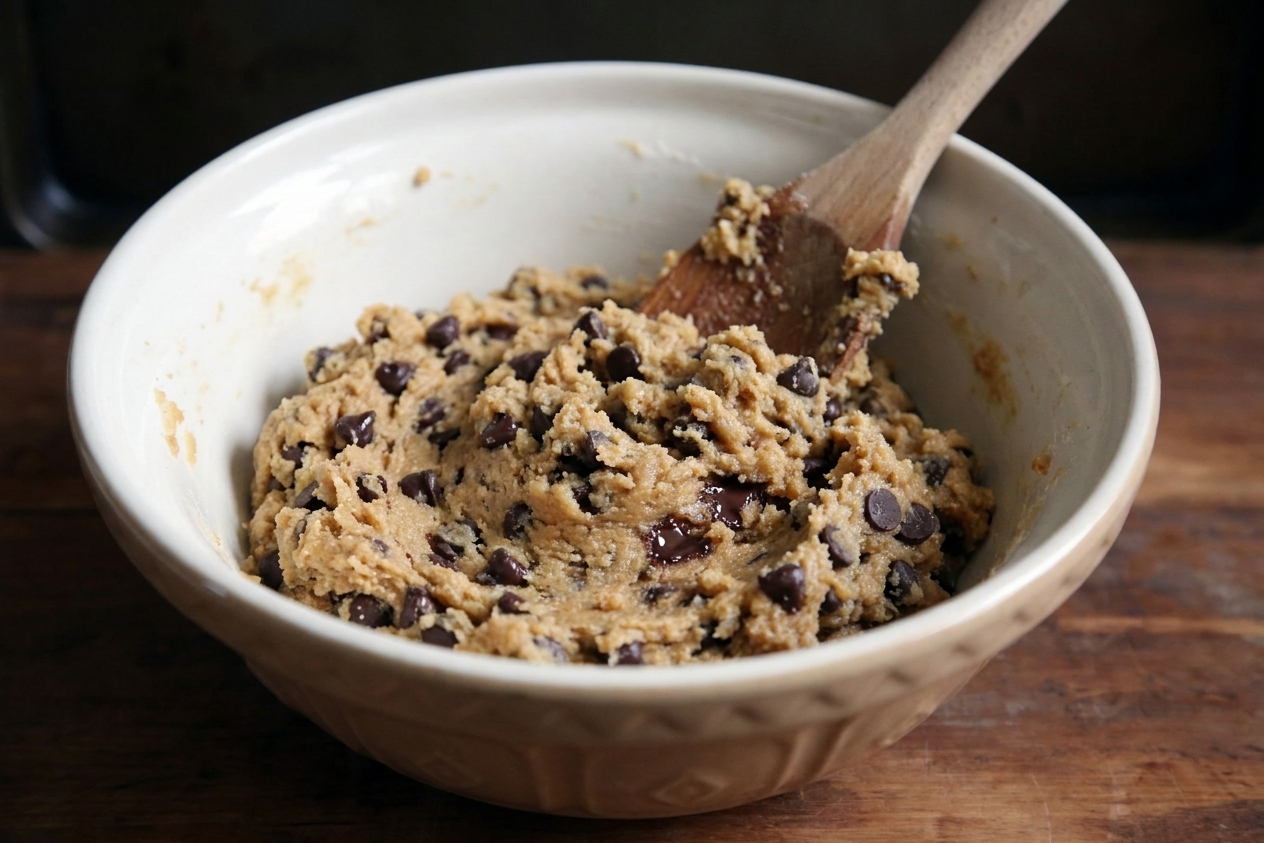
Why this recipe works
- Two sugars, two jobs: Granulated sugar helps cookies spread and crisp at the edges, while brown sugar adds moisture and chew.
- Proper creaming builds structure: Beating butter and sugar incorporates air so the cookies lift instead of baking dense.
- Eggs bind and hydrate: Eggs add moisture and protein so the dough holds together and bakes up tender.
- Flour ratio is balanced for a classic texture: Enough flour to hold shape, not so much that the cookies turn cakey.
- Pulling at the right moment keeps centers soft: Cookies continue to bake from residual heat, so slightly underdone is the goal.
Ingredient notes
All-purpose flour
Spoon flour into your measuring cup and level it off. Scooping straight from the bag packs flour and can make cookies thicker but drier. If you have a scale, even better.
Baking soda
Make sure it is fresh. Old baking soda can leave you with cookies that spread oddly and taste a little flat.
Butter
Use softened butter, not melted. Softened means it gives when you press it, but still holds its shape. If butter is too warm, cookies spread fast and bake thin.
Brown sugar
Pack it into the measuring cup. Light brown sugar is the classic choice for that caramel note and chewy center.
Vanilla extract
A full teaspoon matters here. Vanilla is part of the “chocolate chip cookie” flavor you recognize.
Chocolate chips
Semi-sweet Toll House style chips are the classic. If you like puddles of chocolate, swap some chips for chopped chocolate.
Nuts (optional)
Chopped walnuts are traditional. Toast them first if you have five extra minutes. The flavor payoff is big.
Equipment you will need
- Mixing bowl and sturdy spatula, or a stand mixer or hand mixer
- Measuring cups and spoons, or a kitchen scale
- Baking sheets
- Parchment paper or a silicone baking mat
- Cookie scoop or tablespoon
- Wire rack for cooling
Pro tips
- Chill for thicker cookies: Even 30 minutes in the fridge helps reduce spread and can deepen the flavor. Overnight chill is wonderful if you plan ahead.
- Keep trays cool between batches: If you reuse a baking sheet while it is still warm, your next batch can spread before the edges set. Rotate between two sheets or cool the sheet under running water, then dry it well.
- Mix just until no dry flour remains: Overmixing after adding flour can make cookies tougher.
- Use a scoop for consistent baking: Same size dough balls means the whole tray finishes at the same time.
- For prettier cookies: Press a few extra chips on top of each dough ball right before baking.
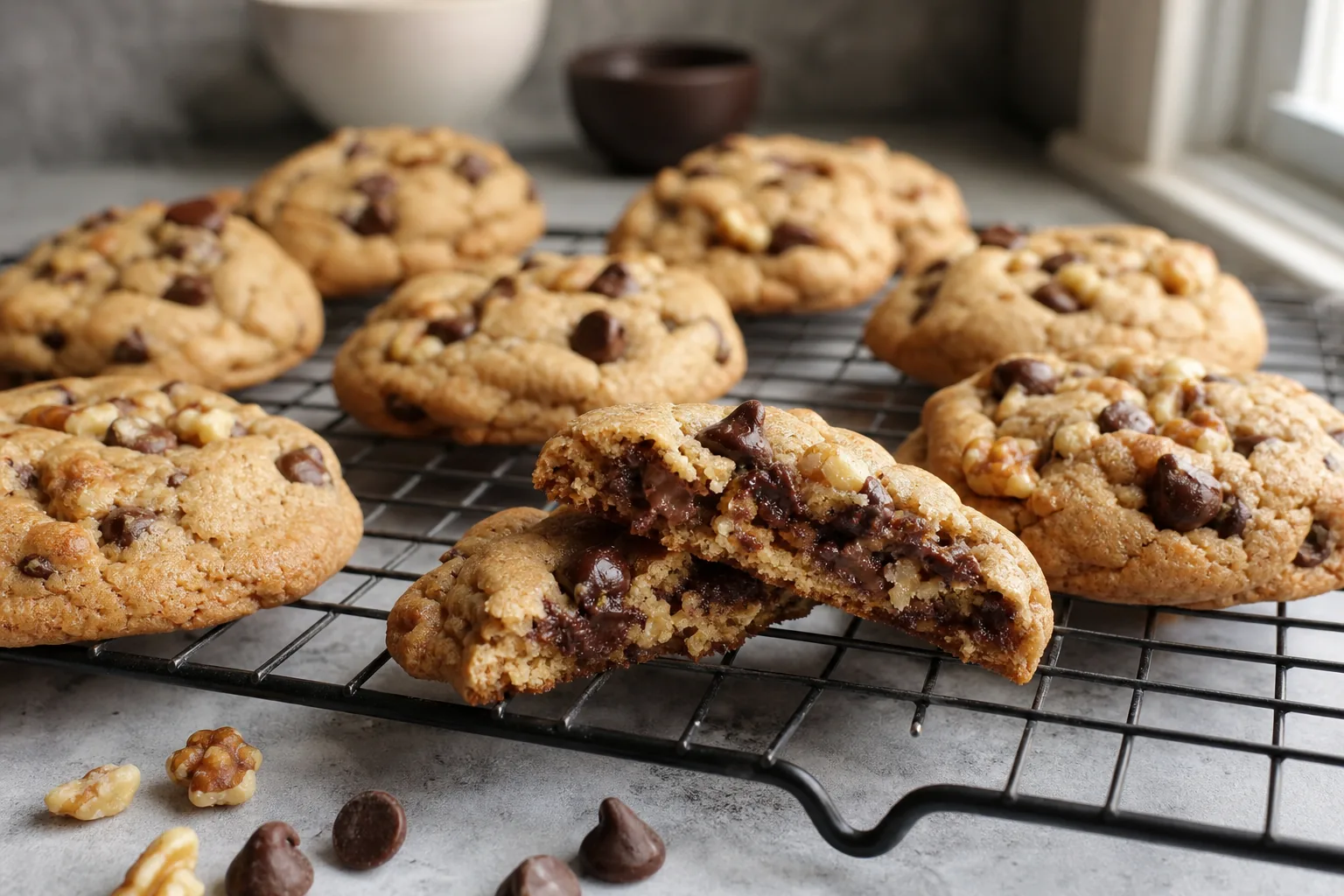
- Know the pull point: Take cookies out when the edges are golden and the centers still look slightly underdone and puffy. They will settle as they cool.
Substitutes that work
- Butter: If you only have salted butter, use it and reduce added salt to 1/2 teaspoon.
- Chocolate chips: Swap semi-sweet for bittersweet chunks, milk chocolate chips, or a mix. White chocolate chips work too, but they make the cookies much sweeter.
- Nuts: Use pecans instead of walnuts, or skip nuts entirely.
- Flour: A small portion of whole wheat flour can add a nutty flavor. Start by replacing 1/2 cup of the all-purpose flour.
- Vanilla: If you are out, the cookies still bake up, but the flavor will be less warm and rounded. Almond extract is potent, so use only a tiny splash if substituting.
Variations
Thick and chewy
Chill the dough at least 2 hours, scoop larger portions, and bake until edges set but centers stay soft. You can also use a mix of chips and chopped chocolate for more molten pockets.
Crispier cookies
Flatten the dough balls slightly and bake a minute or two longer, watching the edges closely. Using all granulated sugar makes them crisper, but you lose some chew.
Extra chocolate
Use two kinds of chocolate, like semi-sweet chips plus chopped dark chocolate. A pinch of flaky salt on top after baking is magic here.
Oatmeal chocolate chip
Replace a portion of flour with old-fashioned oats for a heartier chew. Keep an eye on bake time since oats change spread.
Serving ideas
- Serve warm with a glass of cold milk or hot coffee.
- Make cookie ice cream sandwiches with vanilla ice cream, then freeze until firm.
- Crumble over yogurt with berries for a dessert-y breakfast moment.
- Turn day-two cookies into a quick cookie crumb topping for pudding or whipped cream.
Storage and reheating
Storing baked cookies
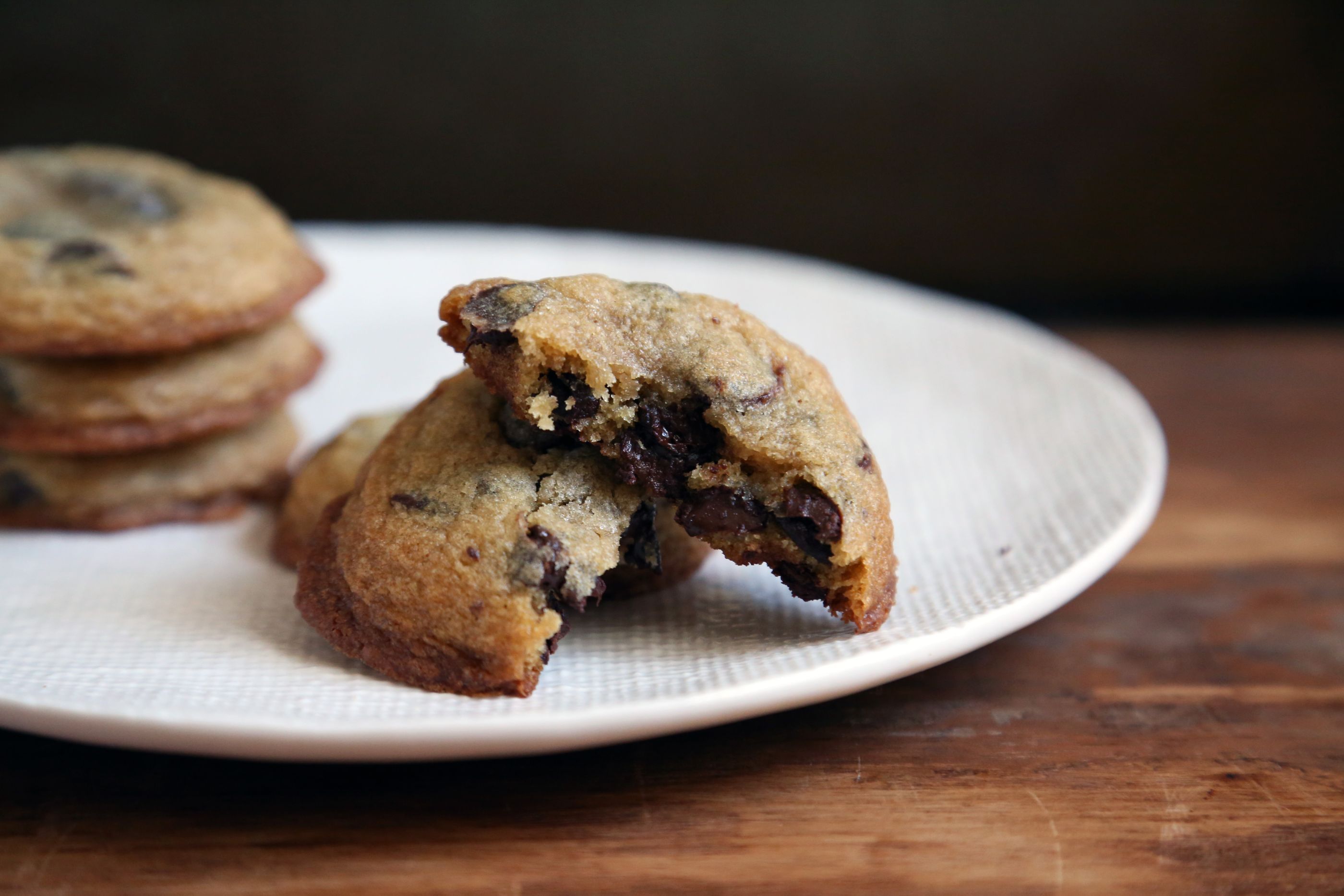
Store cooled cookies in an airtight container at room temperature for up to 4 days. If you like them softer, add a slice of sandwich bread to the container. The bread will dry out as the cookies stay tender.
Freezing baked cookies
Freeze completely cooled cookies in a zip-top bag or airtight container for up to 2 months. Thaw at room temperature, or warm briefly in a low oven.
Freezing cookie dough
Scoop dough into balls and freeze on a baking sheet until solid, then transfer to a bag. Bake from frozen, adding 1 to 2 minutes to the bake time. This is my favorite way to have “emergency cookies” ready.
Common mistakes
- Butter too warm: This is the number one reason cookies spread too much. If your kitchen is hot, chill the dough before baking.
- Measuring flour by scooping: Packed flour can throw off texture. Spoon and level for consistency.
- Overbaking: If you wait until the centers look fully done in the oven, they will be dry once cooled.
- Baking on a hot sheet: Warm pans cause premature spreading and uneven browning.
- Overmixing after adding flour: This can develop gluten and make cookies tougher.
- Crowding the pan: Give cookies space. They need room to spread and bake evenly.
FAQ
Do I really need to chill the dough?
No. You can bake right away and still get classic results. Chilling often makes the cookies thicker and chewier, and can help the flavor taste a little more caramel-y.
Why did my cookies turn out flat?
The usual culprits are butter that was too soft or melted, dough that was warm, or baking sheets that were still hot from the last batch. Chilling the dough and starting with cool pans fixes most flat-cookie issues.
How do I get gooey centers?
Pull the cookies when the edges are golden but the centers look slightly underdone and puffy. Let them cool on the baking sheet for a few minutes before moving to a rack.
Can I halve the recipe?
Yes. Halving works well. Beat the egg and use half by volume, or use one small egg if that is what you have.
Can I make the dough ahead?
Absolutely. Refrigerate the dough tightly covered for up to 72 hours, or freeze scooped dough balls for longer storage.
Why are my cookies cakey?
Too much flour and overmixing are the common reasons. Another possibility is using very cold butter that never properly creams with the sugar. Aim for softened butter and spoon-and-level flour measurements.
The recipe
Nestlé Toll House Chocolate Chip Cookies
Classic Toll House style cookies with buttery dough, chewy centers, and golden edges, plus optional walnuts for that old-school bakery case vibe.
- Prep
- 15 minutes
- Cook
- 9 to 11 minutes
- Total
- 30 minutes
- Yield
- About 5 dozen cookies
Ingredients
- 2 1/4 cups all-purpose flour
- 1 teaspoon baking soda
- 1 teaspoon fine salt
- 1 cup (2 sticks) unsalted butter, softened
- 3/4 cup granulated sugar
- 3/4 cup packed light brown sugar
- 1 teaspoon vanilla extract
- 2 large eggs
- 2 cups semi-sweet chocolate chips
- 1 cup chopped walnuts (optional)
Instructions
- Heat the oven to 375 F. Line baking sheets with parchment paper.
- In a medium bowl, whisk together the flour, baking soda, and salt.
- In a large bowl, beat the softened butter with the granulated sugar and brown sugar until light and fluffy, about 2 to 3 minutes.
- Beat in the vanilla, then add the eggs one at a time, mixing until combined.
- Add the flour mixture and mix on low speed just until no dry flour remains. Stir in chocolate chips and walnuts, if using.
- Scoop rounded tablespoons of dough onto prepared baking sheets, spacing them about 2 inches apart.
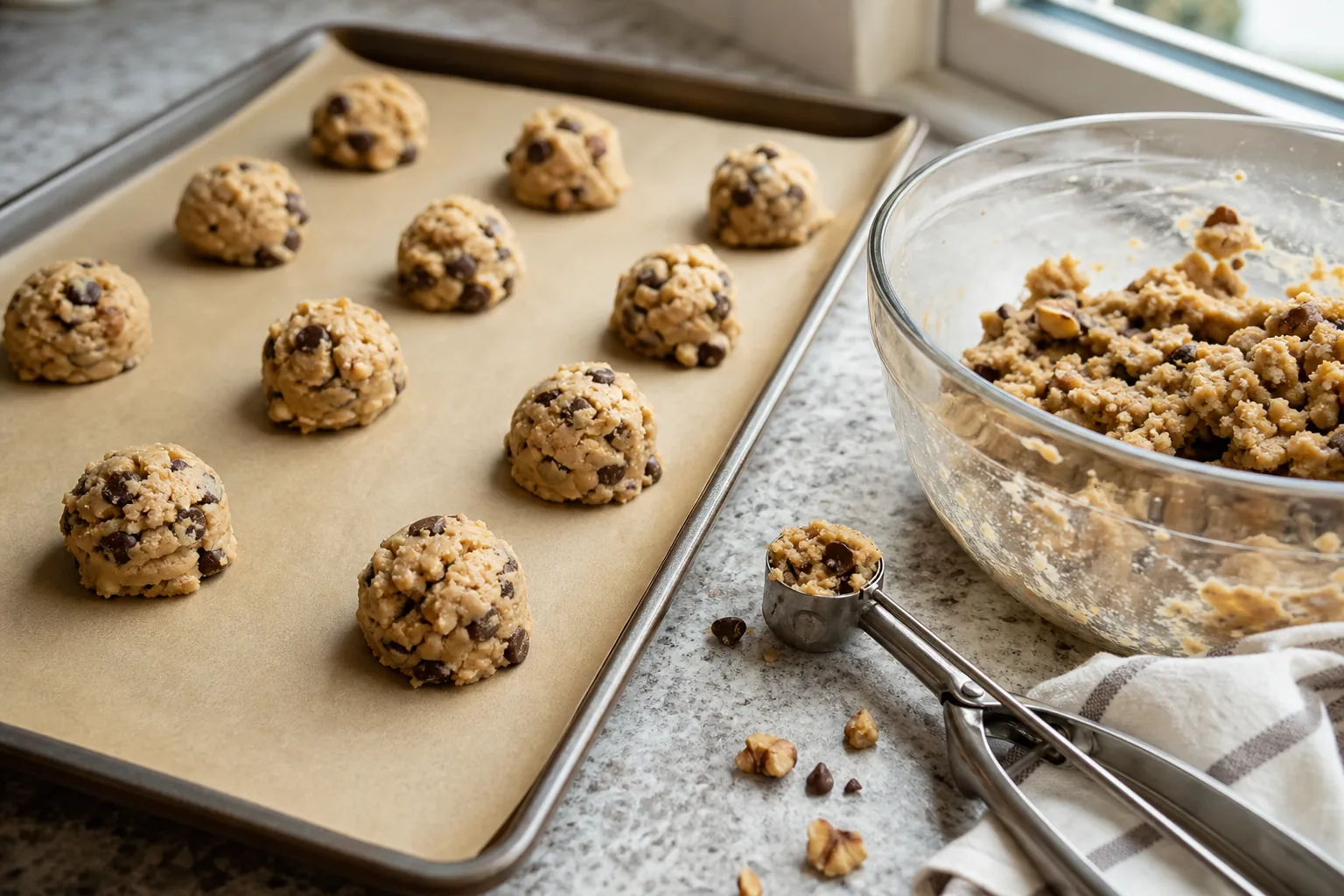
Scoop rounded tablespoons of dough about 2 inches apart. - Bake for 9 to 11 minutes, or until the edges are golden and the centers look slightly soft.
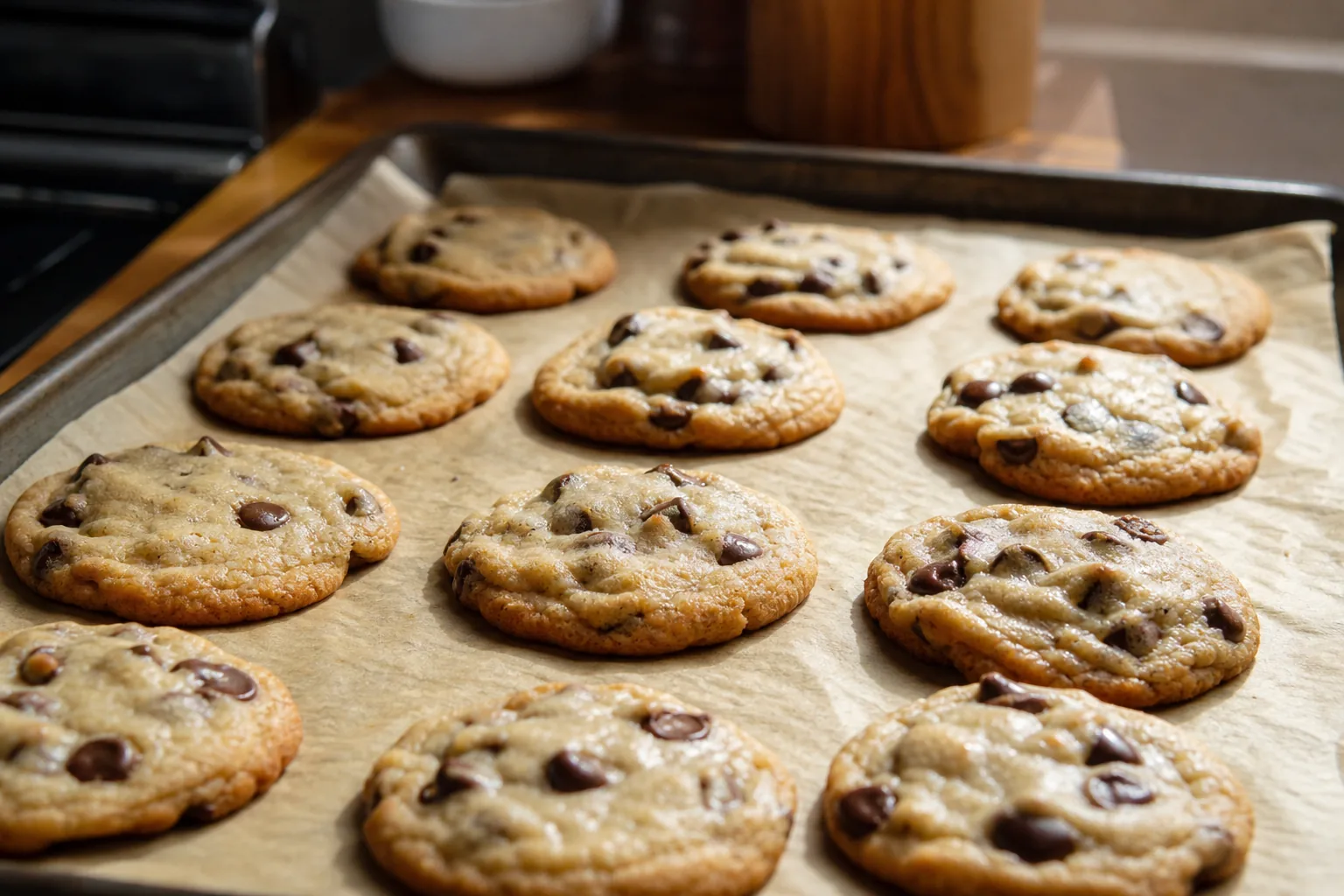
Bake until the edges are golden and the centers look slightly soft. - Cool on the baking sheet for 5 minutes, then transfer to a wire rack to cool completely.
Notes
For thicker cookies: Chill the dough 30 minutes to 2 hours before baking.
For consistent results: Let baking sheets cool completely between batches.
Make ahead: Refrigerate dough tightly covered up to 72 hours, or freeze portioned dough balls up to 2 months. Bake from frozen with 1 to 2 extra minutes.
Doneness cue: If you want chewy centers, do not wait for the middle to look fully set in the oven.
Nutrition
Estimated per cookie (based on 60 cookies, without walnuts): 110 calories, 6 g fat, 14 g carbohydrates, 1 g protein, 9 g sugar, 85 mg sodium. Values vary by brand and portion size.