
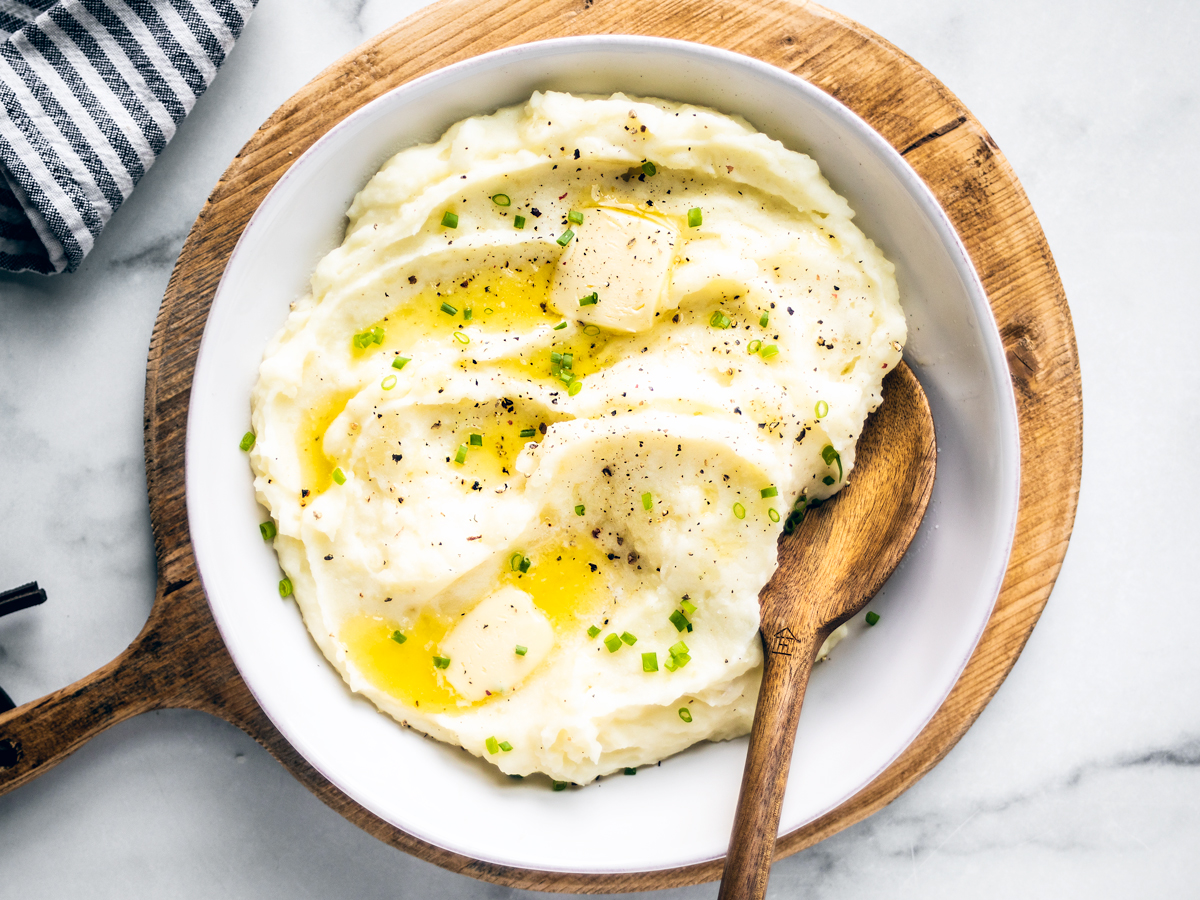
When I managed a bakery, we used to joke that people think comfort food is “simple” until they actually have to feed a table of hungry humans at the same time. Mashed potatoes live in that exact space. They are humble, yes, but they are also unforgiving if you rush them or whip them like cake batter.
The good news is you do not need fancy ingredients or a culinary degree to make mashed potatoes that feel like a warm blanket. You just need a few small choices that add up: the right potato, a cold-water start, properly salted water, warm dairy, and a gentle hand when you mash.

This recipe is my everyday version: creamy and fluffy with enough butter to taste rich, but not so much that the potatoes feel heavy. I will also walk you through how to keep mashed potatoes warm for a crowd, plus the quick refresh trick that brings them back to life if they start to tighten up.
What makes them fluffy
Mashed potatoes get gluey when you overwork the starch. Potatoes are full of starch granules, and when you beat or blend them aggressively, those granules burst and turn your mash stretchy and pasty.
- Choose the right potato: Starchier potatoes mash up fluffy. Waxy potatoes can turn dense and a bit gummy if you overmix, though they still make tasty mashed potatoes with a gentler hand.
- Cook evenly: Start in cold water so the outside does not overcook while the inside stays firm.
- Dry the potatoes: A quick return to the hot pot after draining drives off steam so your mash stays light, not watery.
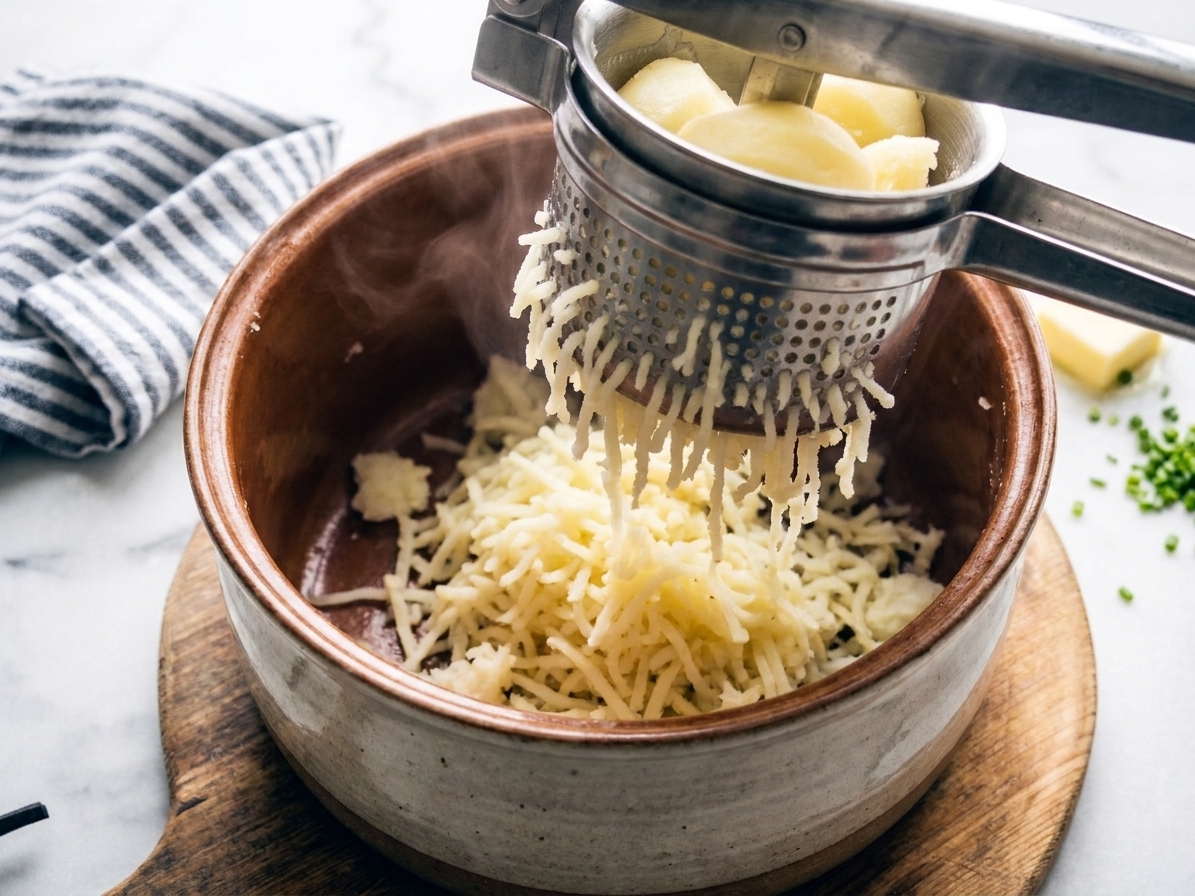
- Mash gently: Use a potato masher or ricer, not a blender or food processor. A stand mixer is also risky, especially on higher speeds.
How creamy to make them
Creaminess is a sliding scale, and you get to choose where you land. My baseline is “spoonable, holds soft peaks” and looks satiny, not runny. If you want them more scoopable for plating, hold back a splash of milk. If you want them extra lush for a holiday table, add a bit more warm dairy at the end until they relax.
How to keep them warm
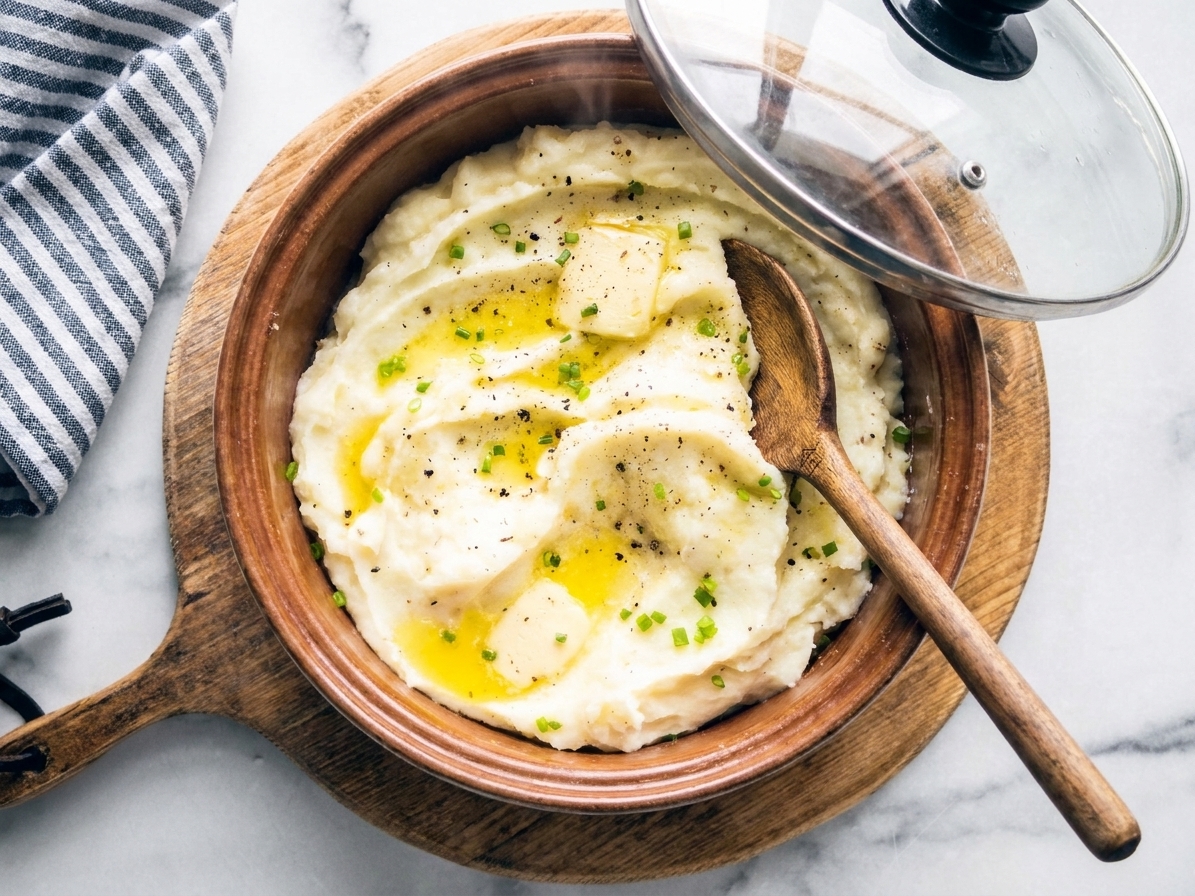
This is the part everyone forgets until the gravy is done and the potatoes are sitting there like a cooling brick. The goal is gentle heat and a little insurance against drying out. Cover them well, and plan on one or two calm stirs, not constant fussing.
- Slow cooker: For a crowd, this is the easiest hold. Keep it on warm, keep it covered, and give it one or two stirs so the edges do not dry. If the mash tightens up, loosen it with a small splash of warm milk. For extra protection, dot a few small pieces of butter over the top before you cover it.
- Bowl over simmering water: If your stove is already busy, set the potatoes in a heatproof bowl over barely simmering water and cover tightly. Stir every 20 to 30 minutes and add a touch of warm milk if needed. Gentle steam heat keeps them soft without cooking them again.
- Low stove heat, short hold: If you are only holding for a little while, a covered pot on very low heat works. Stir occasionally and scrape the bottom so nothing scorches. If the pot runs hot, slide it off the burner between stirs.
If you want to make them ahead, you can mash them earlier in the day, cool, refrigerate, then rewarm slowly using the slow cooker or the bowl-over-simmering-water method. When you reheat, add warm milk a splash at a time and a small pat of butter to bring back that just-made texture.
One important note from too many dinner services: do not crank the heat to “fix” cooling potatoes. High heat turns the bottom into a gluey, scorched mess while the top still cools off. Low and steady wins here. Also, do not leave the pot uncovered. Mashed potatoes dry out fast, and once they do, you end up stirring harder than you should to bring them back.
Why this recipe works
- Starchy potatoes plus a cold-water start cook evenly and mash up light instead of dense.
- Salting the water seasons the potatoes all the way through, not just on the surface.
- Drying the drained potatoes evaporates excess moisture so you can add butter and milk without getting watery mash.
- Warm butter and warm milk absorb smoothly into the potatoes, giving a creamy texture without needing aggressive mixing.
- Gentle mashing protects the starch structure so the potatoes stay fluffy, not gluey.
Ingredient notes
Potatoes
Yukon Gold is my top pick for most home cooks. It lands right between fluffy and creamy, and it has a naturally buttery flavor. Russets are starchier and make the fluffiest mash, especially if you like a lighter, drier texture that drinks up butter and gravy. If you want ultra-silky mashed potatoes, a 50 50 mix of Yukon Gold and Russet is a beautiful compromise.
Waxy potatoes like many red varieties can still work if you like a more rustic, slightly chunky style. Just keep the mixing minimal, since they are easier to push from creamy into dense if you get heavy-handed.
Butter
Butter is the main flavor in classic mashed potatoes. For 3 pounds of potatoes, 6 tablespoons gives you rich, satisfying mash. For a more holiday-style version, you can bump it to 8 tablespoons.
Milk or cream
Whole milk makes great mashed potatoes. Heavy cream makes them richer. Half-and-half sits in the middle. The most important detail is to warm it before adding so the potatoes stay hot and absorb it smoothly.
Salt
Salt the cooking water generously. If you only salt at the end, you will need more salt overall, and the potatoes will still taste a little flat inside.
Optional flavor builders
- Sour cream or cream cheese: Adds tang and extra creaminess. Use in small amounts so the potatoes stay light.
- Garlic: You can boil a few peeled cloves with the potatoes for a gentle garlic flavor.
- Chives or scallions: Add at the end for freshness.
Equipment you will need
- Large pot for boiling potatoes
- Colander for draining
- Potato masher for classic texture, or potato ricer for extra fluffy, fine texture
- Small saucepan to warm milk and melt butter (or a microwave-safe measuring cup)
- Rubber spatula for folding and scraping the pot
Pro tips
Start in cold, salted water
Put the cut potatoes in the pot, cover with cold water by about an inch, then salt the water. Starting cold means the potatoes heat through gradually and cook evenly.
Cut to a consistent size
Even chunks finish at the same time. Think golf ball to small egg size pieces.
Do not overboil
Cook until a knife slides in easily and the potato piece is starting to look slightly ragged at the edges. If they are falling apart in the water, they can absorb too much water and taste diluted.
Dry them in the hot pot
After draining, return potatoes to the pot and set over low heat for 1 to 2 minutes, shaking gently, until you see steam. This step is small but it makes a big difference.
Add butter first, then warm milk
Butter coats the starch and helps keep texture plush. Then add warm milk gradually until it is as creamy as you like.
Keep them warm gently
For a crowd, keep mashed potatoes warm in a slow cooker on low or warm, or in a heatproof bowl set over barely simmering water. Keep the lid on, stir once in a while, and add a little extra warm milk if they tighten up.
Substitutes that work
- Milk: Swap in half-and-half or cream for richer potatoes. Use unsweetened plain oat milk or almond milk in a pinch, but choose neutral flavors and add a bit more butter for richness.
- Butter: Use olive oil for a dairy-free version, or a plant-based butter alternative. Flavor will shift, but the texture can still be lovely.
- Yukon Gold: Use Russets for a fluffier result. If using red potatoes, keep the mixing minimal and expect a more rustic texture.
- Fresh chives: Try thinly sliced scallions or a small pinch of dried chives.
Variations
Garlic mashed potatoes
Boil 4 to 6 peeled garlic cloves with the potatoes, then mash them right in. For a stronger flavor, stir in a spoonful of roasted garlic at the end.
Buttermilk mashed potatoes
Replace part of the milk with warm buttermilk for a gentle tang. Add slowly and taste as you go.
Sour cream and chive
Stir in 1 3 cup sour cream at the end, then fold in chopped chives.
Brown butter mashed potatoes
Brown the butter in a small pan until it smells nutty and the milk solids are golden. Pour over the mash and fold gently. This one feels extra special with very little extra work.
Serving ideas
- Serve with gravy, pan drippings, or a quick butter and herb sauce.
- Make a mashed potato bar for parties: set out crispy bacon, chives, shredded cheddar, sautéed mushrooms, caramelized onions, and hot gravy.
- Pair with crispy chicken, meatloaf, roast turkey, pot roast, or garlicky green beans.
- Use leftovers to top shepherd’s pie or make crispy potato cakes.
Storage and reheating
Refrigerating
Cool leftovers quickly, then store in an airtight container in the refrigerator for up to 4 days.
Reheating
Mashed potatoes thicken as they cool. Reheat gently and add warm milk a splash at a time.
- Stovetop: Low heat, frequent stirring, add milk as needed.
- Microwave: Cover loosely, heat in bursts, stirring between rounds.
- Slow cooker: Great for big batches. Add a little milk and a pat of butter, stir occasionally.
Keeping them warm for a crowd
If you are holding mashed potatoes for 30 to 90 minutes, I like either:
- Slow cooker method: Grease the insert with butter, add mashed potatoes, dot with butter, cover, and keep on warm. Stir once or twice.
- Double boiler method: Put the mash in a heatproof bowl over barely simmering water, cover, and stir occasionally.
If they tighten up, fold in a splash of warm milk, then taste for salt again.
Common mistakes
- Starting in boiling water: The outside turns mushy before the inside is tender, and you end up mashing longer than you should.
- Not salting the cooking water: Your mash will taste bland no matter how much butter you add later.
- Overmixing: The fastest road to gluey potatoes. Skip the blender and food processor.
- Adding cold milk or butter: It cools the potatoes and makes it harder to mix smoothly, which tempts you to overwork them.
- Skipping the drying step: Wet potatoes can turn runny or watery, then stiff later as they sit.
FAQ
Should I peel the potatoes?
For classic creamy mashed potatoes, yes, peel them. If you like a rustic texture and are using thin-skinned potatoes like Yukon Gold, you can leave some peel on. Just know the mash will be more textured.
How much butter and milk do I really need?
For 3 pounds of potatoes, I start with 6 tablespoons butter and about 3 4 cup warm milk, then adjust. Your exact amount depends on potato variety and how dry they are after draining.
Can I make mashed potatoes ahead of time?
Yes. Make them, then keep them warm using a slow cooker on warm or a covered bowl over barely simmering water. If you are making them hours ahead, refrigerate and reheat gently with extra warm milk.
Why did my mashed potatoes turn gluey?
Usually it is overmixing or using a high-speed tool like a blender or food processor. It can also happen when you mash too aggressively after the potatoes have cooled and stiffened.
Can I use a stand mixer?
I do not recommend it for most batches, especially at anything above the lowest speed. If you insist, use the paddle on the lowest speed for a very short time, but it is still easy to overwork. A masher or ricer is safer.
How do I fix mashed potatoes that are too thick?
Warm a little milk (or cream), then fold it in gradually until the texture loosens. Taste for salt after adjusting.
How do I fix mashed potatoes that are too runny?
Return them to low heat and stir gently to evaporate some moisture. Next time, dry the potatoes in the pot after draining and add milk slowly.
The recipe
Homemade Mashed Potatoes
Creamy, fluffy mashed potatoes with buttery flavor and a light, spoonable texture. Includes the small technique choices that prevent gumminess and keep a big batch warm for serving.
- Prep
- 15 minutes
- Cook
- 20 minutes
- Total
- 35 minutes
- Yield
- 8 servings
Ingredients
- 3 pounds Yukon Gold potatoes (or Russet potatoes), peeled and cut into evenly sized chunks
- 2 tablespoons kosher salt, plus more to taste
- 6 tablespoons unsalted butter, plus more for serving (optional)
- 3/4 cup whole milk, warmed, plus more as needed
- Freshly ground black pepper, to taste
- 2 tablespoons chopped chives or sliced scallions (optional)
Instructions
- Start in cold water: Put the peeled, cut potatoes in a large pot. Add cold water to cover by about 1 inch. Stir in the salt.
- Boil, then simmer: Bring to a boil over high heat, then reduce to a steady simmer. Cook 15 to 20 minutes, or until the potatoes are very tender and a knife slides in easily.
- Warm the dairy: While the potatoes cook, warm the milk and melt the butter together in a small saucepan over low heat (or warm the milk and melt the butter separately). Keep warm. Do not boil.
- Drain well: Drain the potatoes in a colander, then return them to the hot pot.
- Dry the potatoes: Set the pot over low heat for 1 to 2 minutes, shaking gently, until you see steam rising and the potatoes look a little dry on the surface.
- Mash gently: Remove from heat. Mash with a potato masher (or press through a ricer back into the pot) until mostly smooth.
- Add butter, then milk: Pour in the warm melted butter first and fold until absorbed. Add the warm milk gradually, folding gently, until the potatoes are creamy and fluffy.
- Season: Taste and add more salt if needed, plus black pepper. Fold in chives or scallions if using.
- Serve warm: Spoon into a bowl and top with an extra pat of butter if you like. If holding for a crowd, keep warm covered on low heat, stirring occasionally, and add a splash of warm milk if they tighten up.
Notes
Best potato choice: Yukon Gold gives creamy mash with a naturally buttery flavor. Russets give the fluffiest texture. A 50 50 mix is my favorite for a crowd.
How to avoid gluey potatoes: Do not use a blender or food processor. Mash or rice while hot, then fold in warm butter and milk with a gentle hand.
Keeping mashed potatoes warm: For 30 to 90 minutes, hold in a buttered slow cooker on warm, or in a covered heatproof bowl over barely simmering water. Stir once or twice and loosen with warm milk if needed.