
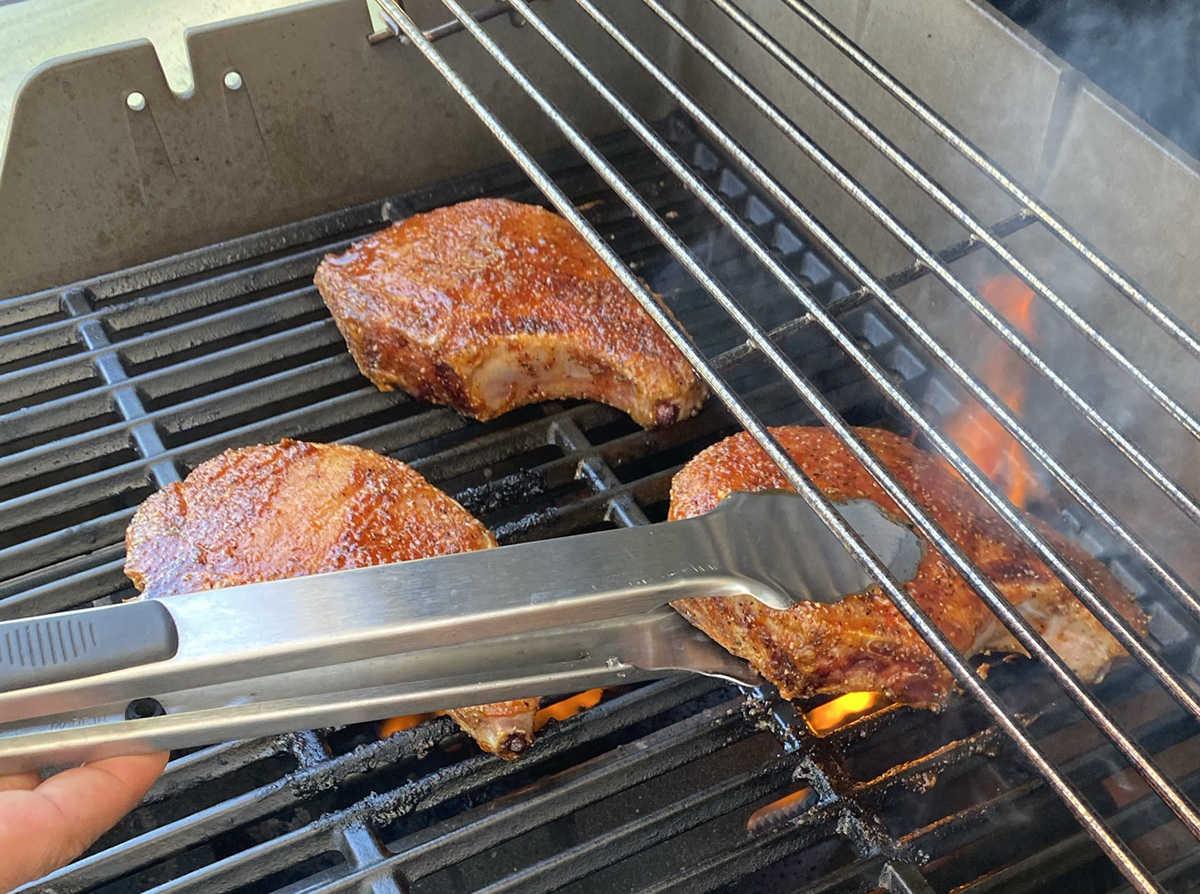
When I managed a bakery, my whole job was reading cues: color, aroma, timing, and knowing when to move something from hot to not-so-hot before it crossed the line. Grilling pork chops feels exactly the same, just with more smoke and a higher chance of you yelling, "Why is it on fire?"
This recipe is built for real life grilling, the kind where the wind shifts, the fat renders when it wants to, and you need a plan that does not involve sprinting back inside for a skillet. We are going to prep the grate so the chops actually release, use direct heat for sear plus a cooler zone for control, and flip with purpose so the inside stays tender.

The biggest secret is also the simplest: pull your chops when they hit 145°F at the thickest part, then let them rest. Pork today is leaner than it used to be, and the grill can dry it out fast. Temperature plus a short rest is how you keep that juicy bite.
Direct heat or two-zone heat
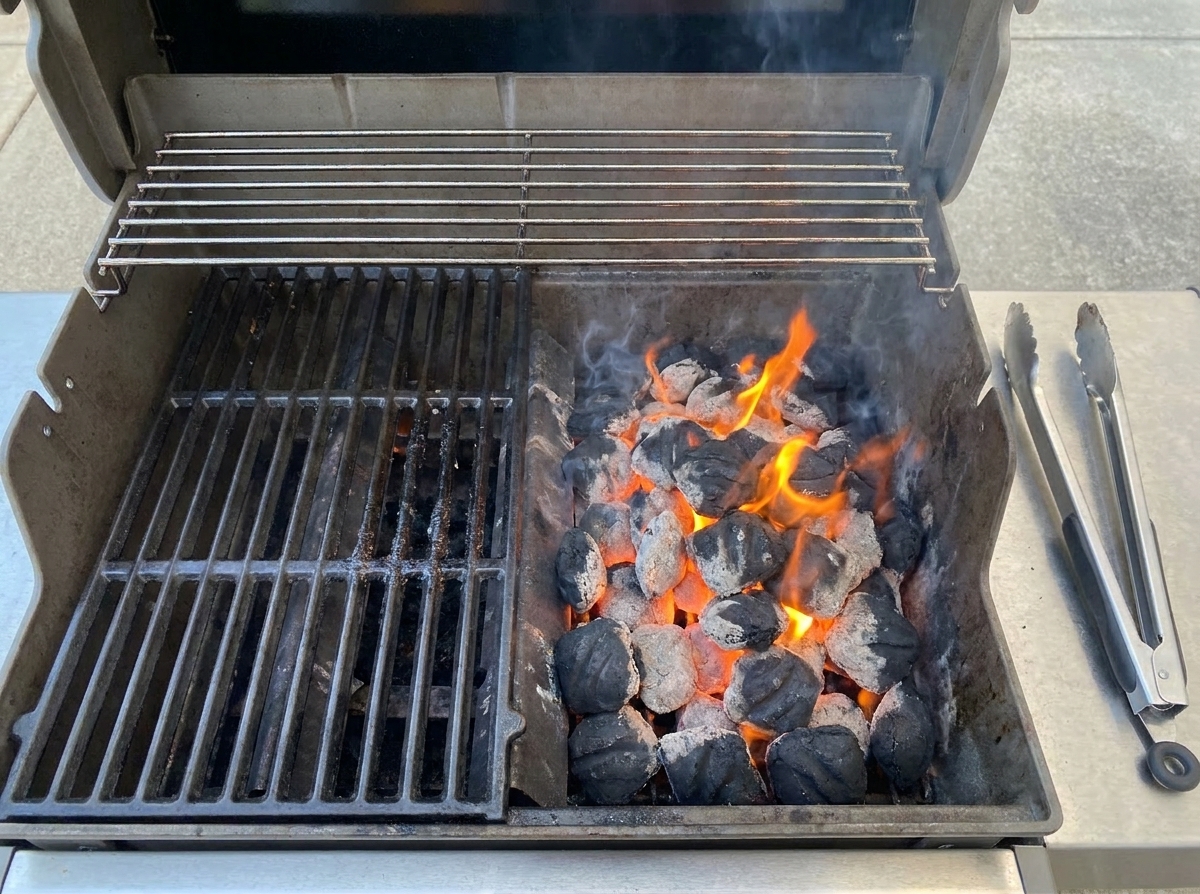
If your chops are thin, direct heat works fine as long as you watch the clock and the color. If they are thicker, or if you want the most forgiving setup, two-zone heat is your best friend.
- Direct heat: All burners on, or coals spread evenly. Great for chops about 3/4 inch thick.
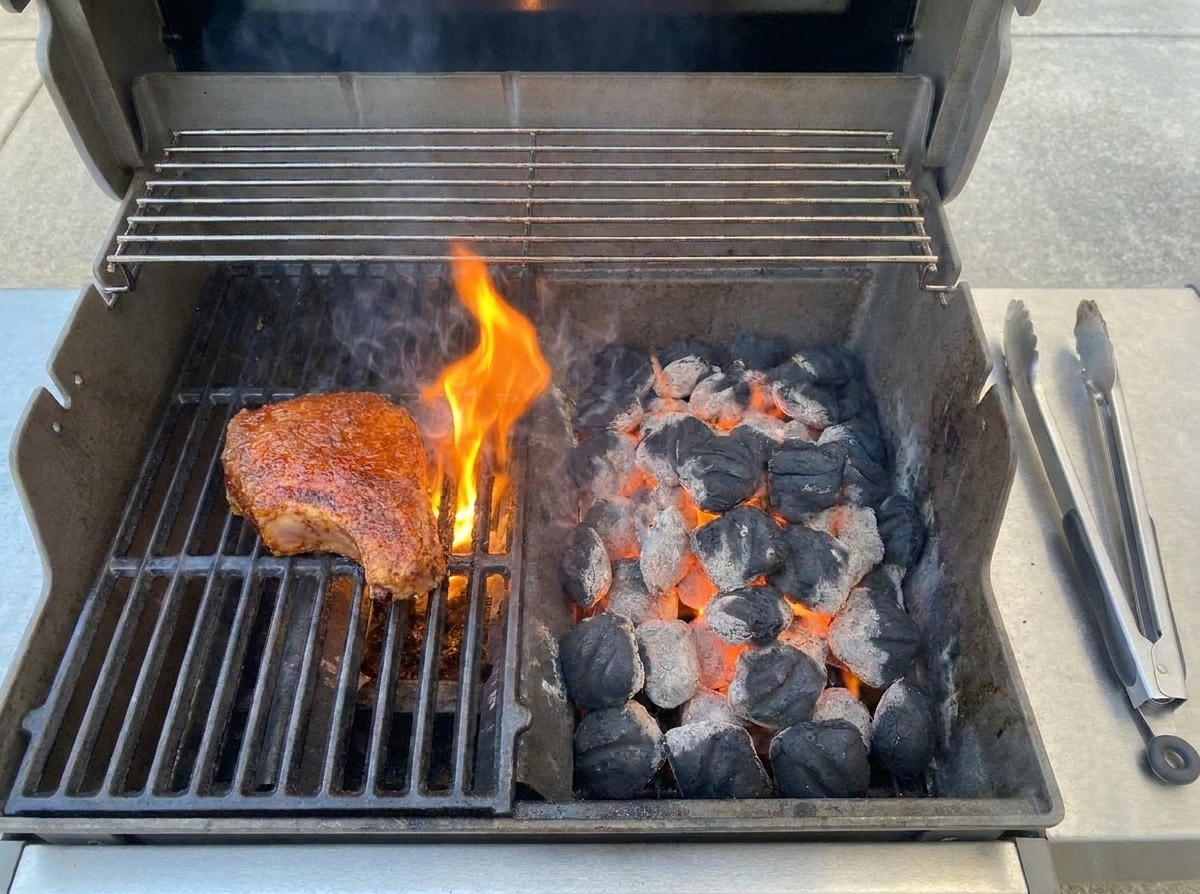
- Two-zone heat: One hot side for searing and one cooler side for gentle finishing. Best for chops 1 to 1 1/2 inches thick, bone-in, or whenever you want more control.
I like two-zone even on weeknights because it gives you an instant escape hatch. If the outside is getting dark too fast, you slide the chop to the cooler side and keep going, no drama.
Grate prep and sticking prevention
Sticking is usually a grate issue, not a meat issue. Here is the order that works consistently:
- Preheat first. A hot grate releases better.
- Brush second. Scrape off old bits once the grate is hot.
- Oil third. Dip a folded paper towel in a little neutral oil and, using tongs, wipe the grates. You want a sheen, not a drip.
Then place the chops down and leave them alone long enough to develop real grill marks. If you try to flip too early, they cling.
Flare-ups and how to stay in control
Pork chop flare-ups come from rendered fat hitting flame. A little flare is normal. A sustained flare that blackens the surface is your cue to act.
- Keep the lid open if flames surge up. Closing the lid can feed the fire on some grills.
- Move the chop to the cooler zone until the flames die down, then return to finish.
- Do not spray water. It can kick up ash on charcoal, and it often just smears the problem around on gas grills.
- Trim excess fat if a chop has a thick fat cap that tends to drip aggressively.
If you are using a sweet glaze, apply it near the end. Sugar scorches fast and can make flare-ups more intense.
Why this recipe works
- Two-zone heat gives you options. You get the sear from direct heat and the safety net of a cooler side to finish gently.
- Clean, oiled grates prevent tearing. Better release means better grill marks and less sticking panic.
- Flipping on a schedule builds even cooking. A steady rhythm keeps the outside from overbrowning before the center is done.
- 145°F plus a rest keeps chops juicy. You get a safe, tender chop without pushing into dry territory.
Ingredient notes
Pork chops
Look for chops that are 1 to 1 1/2 inches thick for the juiciest results. Bone-in chops are especially forgiving on the grill, but boneless works too. If your chops are thinner than 3/4 inch, they will cook very fast, so keep your heat slightly lower and your flipping frequent.
Salt
Salt is not just seasoning, it helps the chop hold on to moisture. Even a short, 20 to 30 minute salt window while the grill heats up makes a difference.
Oil
Use a neutral high-heat oil like avocado, canola, or grapeseed. Olive oil is fine in a pinch, just avoid anything unrefined with a low smoke point.
Optional sugar
If you add brown sugar to a rub, expect faster browning. Keep it on the cooler side of the grill once color is where you like it.
Equipment you will need
- Gas or charcoal grill with a lid
- Instant-read thermometer
- Long tongs
- Grill brush
- Small bowl and paper towel for oiling the grate
Pro tips
- Preheat longer than you think. Give the grill time to fully heat so you get sear without sticking. For most grills, that means at least 10 minutes with the lid closed.
- Pat chops dry before seasoning. Surface moisture steams and slows browning.
- Use the "release" cue. When the chop is ready to flip, it will lift with only gentle resistance. If it feels glued down, give it another minute.
- Flip every 2 to 3 minutes for thicker chops. Frequent flips help the center heat evenly and reduce the gray, overcooked band near the surface.
- Pull at 145°F. Measure at the thickest part, avoiding the bone. Then rest 3 to 5 minutes so juices redistribute.
- Handle flare-ups by moving, not panicking. Slide the chop to the cooler zone, lid open, and let the flames calm down.
Substitutes that work
- Bone-in for boneless: Cook by temperature, not minutes. Boneless often cooks a touch faster.
- Pork loin chops for rib chops: Loin chops are leaner, so be extra strict about pulling at 145°F and resting.
- Smoked paprika for regular paprika: Adds a gentle smoky flavor that plays nicely with grill char.
- Garlic powder for fresh garlic: Better for high heat grilling because it will not burn as quickly as minced garlic.
Variations
Classic BBQ-style
Add a light brush of barbecue sauce during the last 2 to 3 minutes of cooking, flipping once so it sets without burning.
Chili-lime
Season with chili powder and finish with fresh lime juice after resting.
Herb and lemon
Finish the rested chops with a squeeze of lemon and a sprinkle of chopped parsley or oregano for a bright, fresh contrast.
Serving ideas
- Grilled corn and a simple tomato salad
- Roasted potatoes or potato salad for a cookout feel
- Grilled peaches or pineapple on the cooler side of the grill while the chops rest
- A crunchy slaw to balance the richness
Storage and reheating
Store leftover pork chops in an airtight container in the refrigerator and use within 3 to 4 days.
For reheating without drying them out, slice the chop and warm gently. If you are using the grill again, set up a cooler zone and reheat the slices over low heat with the lid closed just until warmed through.
Common mistakes
- Starting with dirty grates: Old residue makes sticking and bitter flavors more likely.
- Skipping a cooler zone: Without one, you have nowhere to go when flare-ups hit or browning happens too quickly.
- Flipping too early: If the chop sticks, it is usually not ready. Give it another minute and try again.
- Cooking by minutes only: Thickness varies. Use a thermometer and pull at 145°F.
- Cutting immediately: Resting is part of cooking. Give it 3 to 5 minutes so the juices stay in the meat.
FAQ
What temperature should grilled pork chops be?
Pull pork chops from the grill at 145°F measured at the thickest part, then rest 3 to 5 minutes.
How do I keep pork chops from drying out on the grill?
Choose thicker chops when you can, use two-zone heat, and cook to temperature instead of time. Pull at 145°F and rest before slicing.
Should I grill pork chops with the lid open or closed?
For most of the cook, keep the lid closed so the grill acts like an oven and cooks the center evenly. Open the lid to manage flare-ups or when you need to flip and check color.
How often should I flip pork chops on the grill?
For thicker chops, flipping every 2 to 3 minutes helps them cook evenly. For thinner chops, one flip may be enough, but stay close and watch browning.
Why do my pork chops stick to the grill?
Usually the grates are not hot enough, not clean enough, or not lightly oiled. Also, if you try to flip too early, the meat has not released yet.
The recipe
Grilled Pork Chops
Juicy, well-seasoned grilled pork chops with crisp grill marks and tender centers, using two-zone heat, smart flipping, and a simple 145°F pull temperature.
- Prep
- 10 minutes
- Cook
- 12 minutes
- Total
- 25 minutes
- Yield
- 4 servings
Ingredients
- 4 pork chops (1 to 1 1/2 inches thick, bone-in or boneless, about 8 to 10 oz each)
- 2 tsp kosher salt
- 1 tsp black pepper
- 1 tsp garlic powder
- 1 tsp smoked paprika (optional)
- 1 tbsp neutral oil (avocado, canola, or grapeseed), plus a little more for oiling grates
Instructions
- Preheat the grill and set up two zones. Heat your grill with a hot direct side and a cooler indirect side. For gas, leave one burner off for the cool side. For charcoal, bank coals on one side. Close the lid and preheat about 10 minutes.
- Prep the chops. Pat pork chops dry with paper towels. Season all over with kosher salt, pepper, garlic powder, and smoked paprika if using. Drizzle with 1 tablespoon oil and rub to coat.
- Clean and oil the grates. With the grill hot, brush grates clean. Lightly oil the grates by wiping with an oiled paper towel held in tongs.
- Sear over direct heat. Place chops on the hot side. Grill 2 to 3 minutes with the lid closed, then flip. Grill 2 to 3 minutes more to build color and grill marks.
- Finish gently and manage flare-ups. Continue flipping every 2 to 3 minutes, moving chops to the cooler zone any time flare-ups surge or browning gets ahead of the center. Keep the lid closed between flips.
- Cook to temperature. Check the thickest part with an instant-read thermometer, avoiding the bone. Pull chops as soon as they reach 145°F.
- Rest, then serve. Rest chops 3 to 5 minutes, then serve right away.
Notes
Thin chops: If your chops are about 3/4 inch thick, they may be done after just one flip. Start checking temperature early.
Flare-up plan: If flames appear, slide chops to the cooler side and keep the lid open until the flames calm down.
Doneness reminder: Color is helpful, but temperature is the real guarantee of juicy pork. Pull at 145°F, then rest.