
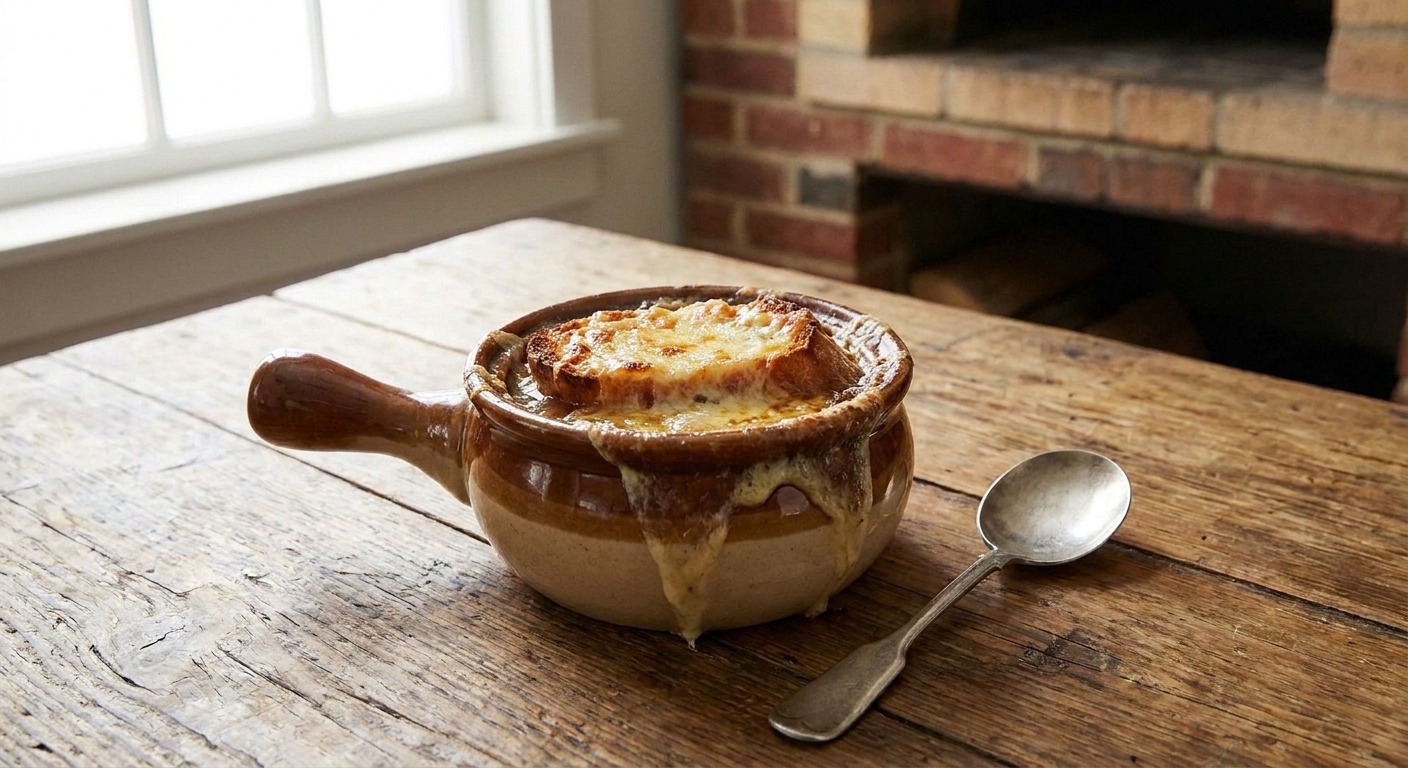
French onion soup is one of those dishes that feels restaurant-worthy, but it is really just patience plus onions. When I managed a bakery, we used to stash day-old baguette specifically for soup bowls, because nothing makes people happier than that toasted slice soaking up broth under a blanket of melted cheese.
This version is classic and deeply flavored: onions cooked low and slow until they turn the color of dark honey, a savory broth base that tastes like it has been simmering all day, and the signature broiled top you crack through with a spoon. If you have ever made onion soup that tasted flat or looked pale, the fix is most often the same: give the onions enough time. You are not just softening them. You are building the entire backbone of the soup. That said, weak stock, under-seasoning, or skipping a proper deglaze can also leave you with a soup that never quite lands.

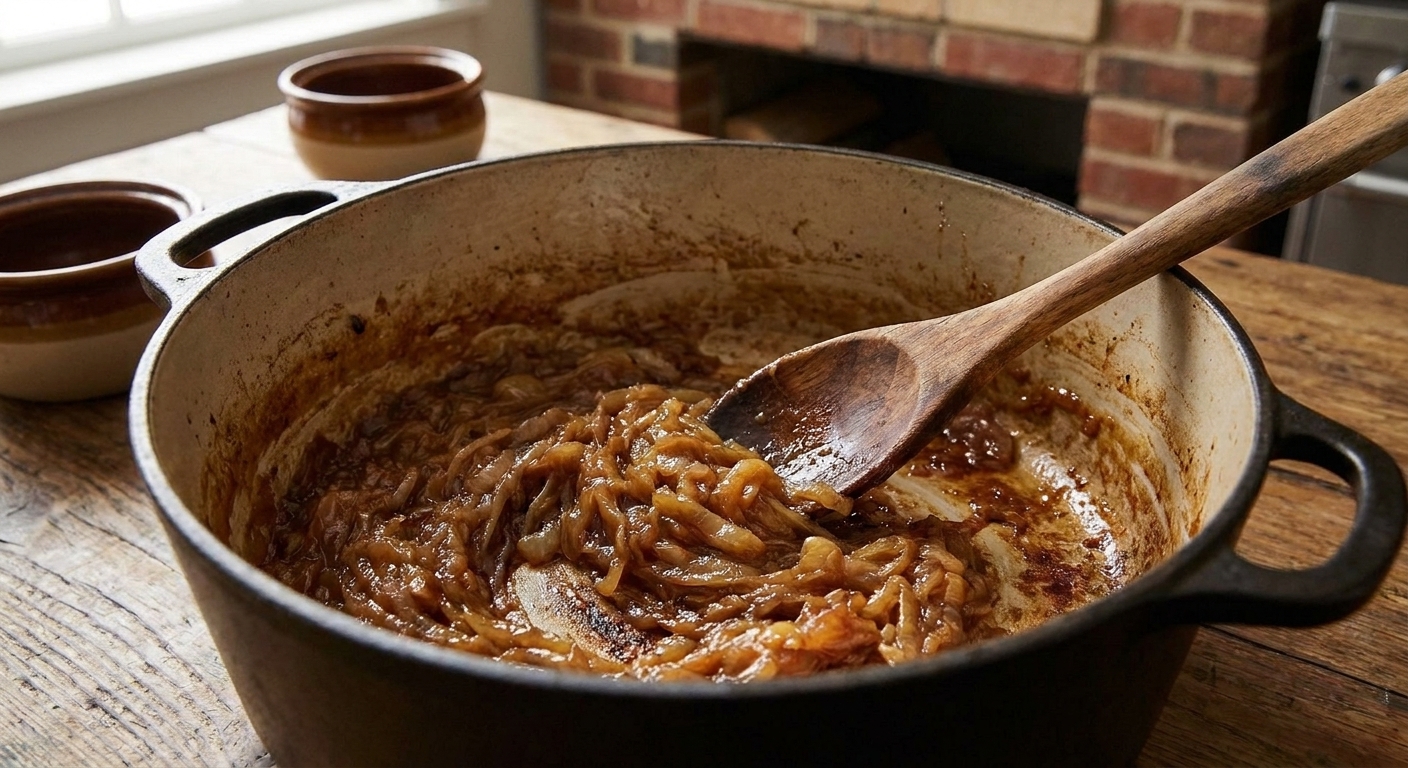
I will walk you through what I look for as the onions caramelize (think deep amber and jammy, not just golden), how to season the broth so it tastes full and balanced, and the broil cue I use every single time: the cheese should be melted, blistered in spots, and just starting to drip over the edges of the bread. One small detail that makes this batch taste like it came from a bistro is taking a moment to deglaze the pot, so every browned bit ends up in the bowl where it belongs.
Why this recipe works
- Long onion cook time builds real depth. Caramelization takes time. Cooking the onions until they are a deep golden brown concentrates their sweetness and adds that signature savory edge.
- Deglazing captures flavor. Scraping up the browned bits from the pot after the onions caramelize pulls all that flavor into the broth where it belongs.
- Layered seasoning makes the broth taste “finished”. A little thyme and bay leaf, plus a final salt check, keeps the soup from tasting like plain broth with onions.
- Toasting the bread protects the topping. Toasted bread holds its shape longer, so you get that perfect spoonful: brothy soup, tender onions, and gooey cheese all together.
- Broiling at the end delivers the classic crust. The high heat quickly melts and browns the cheese without overcooking the soup.
Ingredient notes
- Onions: Yellow onions are the classic choice for a reason. They caramelize evenly and strike the best balance of sweet and savory. Sweet onions work, but the soup can skew sweeter.
- Butter and olive oil: Butter brings flavor; oil helps keep the butter from browning too fast while the onions take their time.
- Beef broth: Use a broth you genuinely like the taste of. If it is very salty, hold back on added salt until the end. If it tastes thin, a splash of Worcestershire or a little extra thyme can help round it out.
- Dry sherry or dry white wine (optional but recommended): This is your deglazing liquid. It lifts the browned bits and adds brightness so the soup tastes rich, not heavy.
- Bread: A baguette slice is traditional. Slightly stale bread is a plus because it toasts up sturdier.
- Cheese: Gruyère is the classic. Swiss is a budget-friendly stand-in. For extra stretch, a little mozzarella mixed in is not traditional, but it is very satisfying.
Equipment you will need
- Large heavy-bottomed pot or Dutch oven: Helps the onions caramelize evenly without scorching.
- Wooden spoon: Great for scraping up fond as the onions brown and when you deglaze.
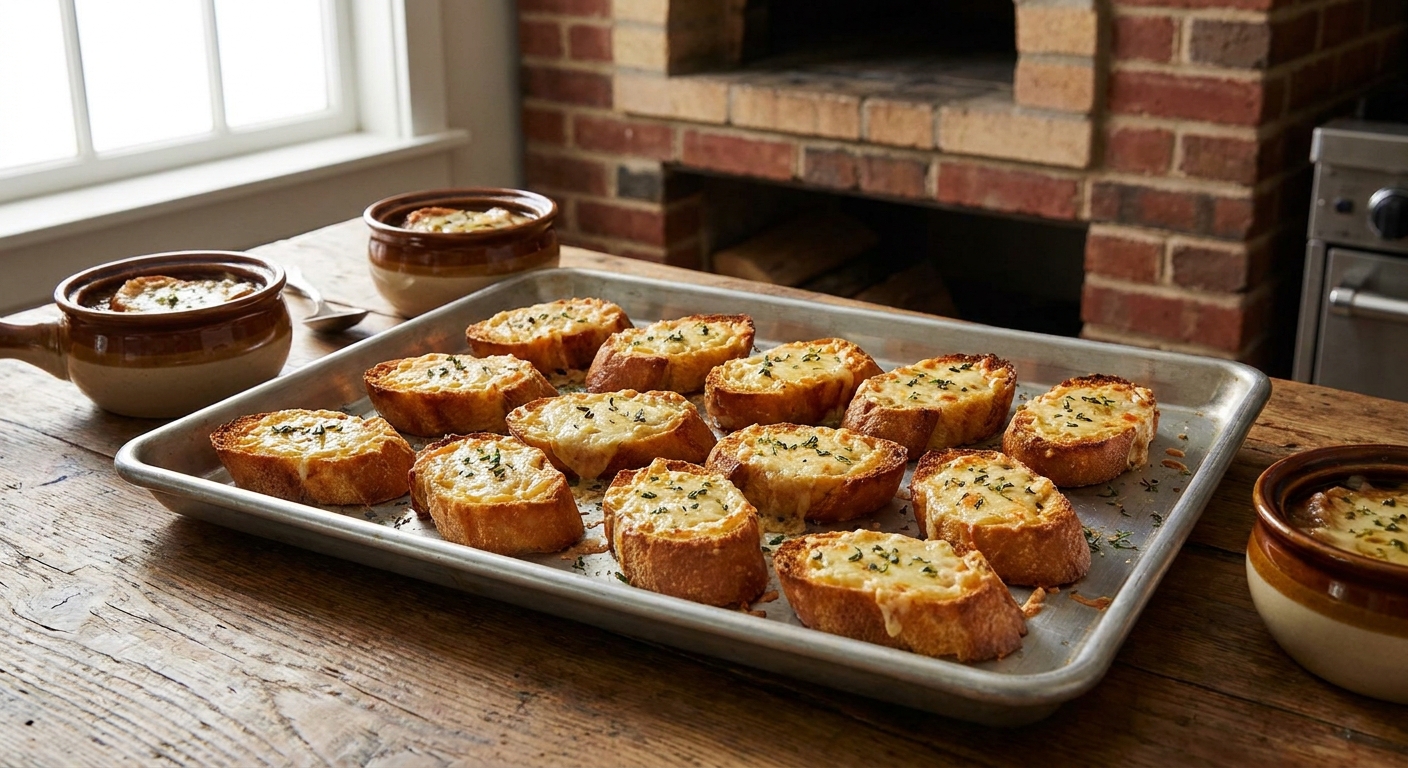
- Sheet pan: For toasting the bread (and for holding crocks under the broiler if needed).
- Oven-safe bowls or crocks: Essential if you want the classic broiled cheese cap. If you do not have them, see the FAQ for an easy workaround.
- Broiler: The quickest way to melt and brown the cheese topping.
Pro tips
- Plan for 45 to 75 minutes for the onions. Timing varies by pot size and heat, so use visual cues too. You want deep amber color and a jammy, reduced texture. Keep it medium-low and stir regularly.
- Use salt strategically. A small pinch early helps draw moisture from the onions. Save most of the salt for the end, after the broth has simmered.
- Do not fear the brown bits. Fond is flavor. Deglaze with sherry or wine and scrape well.
- Toast the bread hard. You want it dry and crisp. That way it floats and supports the cheese instead of dissolving instantly.
- Broil cue: The cheese is ready when it is fully melted, blistered in spots, and turning deep golden brown at the highest points. If it is just melted but pale, give it another 30 to 60 seconds.
- Keep an eye on the broiler. The difference between gorgeous and scorched happens fast.
Substitutes that work
- No beef broth: Use chicken broth for a lighter soup, or vegetable broth for a vegetarian base (add a splash of soy sauce or Worcestershire-style vegetarian sauce for extra savoriness).
- No sherry or wine: Deglaze with a few tablespoons of apple cider vinegar diluted with water, or use broth and add a squeeze of lemon at the end for brightness.
- No Gruyère: Swiss, Comté, Emmental, or a blend of Swiss and mozzarella all melt well.
- Gluten-free: Use gluten-free bread for the toast, or skip the bread and melt cheese directly on top of the soup (it will sink a bit, but still tastes great).
Variations
- Extra-herby: Add fresh thyme at the end along with the toasted bread.
- Roasted garlic French onion soup: Stir in a spoonful of roasted garlic paste when you add the broth.
- Spirits-forward: Replace some of the deglazing wine with a small splash of brandy for a classic bistro vibe.
- Vegetarian “French onion”: Use vegetable broth and add sautéed mushrooms for deeper savory flavor.
Serving ideas
- Simple salad: A crisp green salad with a sharp vinaigrette is perfect next to a rich soup.
- Roast chicken night: Serve smaller bowls as a first course.
- Bakery-style spread: Put out extra toasted bread and a little crock of Dijon butter for swiping.
- Sunday dinner: Make the soup base ahead, then broil the cheese tops right before everyone sits down.
Storage and reheating
- Store: Refrigerate soup (without bread and cheese) in an airtight container for up to 4 days.
- Reheat: Warm gently on the stove until steaming hot. Taste and adjust salt after reheating.
- Make-ahead: The soup base actually gets better overnight. Toast bread fresh and broil cheese right before serving.
- Freeze: Freeze the soup base for up to 3 months. Thaw in the fridge overnight, reheat, then add toasted bread and cheese topping.
Common mistakes
- Stopping the onions too early: If they are only soft and light golden, the soup will taste one-note. Push them to deep golden brown for real flavor.
- Too much heat: High heat can scorch the onions before they caramelize. Medium-low and time are your friends.
- Under-seasoning the broth: Broth varies a lot. Always simmer, taste, then adjust salt, pepper, and acidity.
- Skipping the toast: Untoasted bread disintegrates quickly and can make the top feel mushy instead of luxurious.
- Walking away from the broiler: The cheese can go from perfect to burned in under a minute.
FAQ
How long should I caramelize onions for French onion soup?
Expect 45 to 75 minutes. The onions should be deeply browned, sweet, and jammy, not just softened. The exact timing depends on your pot, heat level, and how crowded the pan is, so go by color and texture.
What is the best onion to use?
Yellow onions are the classic. They caramelize beautifully and keep the flavor balanced. You can mix in a sweet onion for extra sweetness, but I would not use all sweet onions unless you really love a sweeter soup.
Can I make French onion soup without oven-safe bowls?
Yes. Toast the bread, melt cheese on the bread on a sheet pan under the broiler until bubbling and browned, then carefully slide that cheesy toast onto each bowl of hot soup right before serving.
How do I know when the cheese is done under the broiler?
Look for fully melted cheese with browned, blistered spots. The edges should be bubbling, and you may see a little cheese drip down the bread. If it is pale, give it another 30 to 60 seconds and watch closely.
Why does my soup taste bitter?
Usually it is scorched onions or burned fond. Keep the heat lower, stir more often, and deglaze as soon as you see deep browning. If it is only slightly bitter, a tiny pinch of sugar and a splash of acid (sherry, wine, or lemon) can help balance it.
The recipe
French Onion Soup
Classic French onion soup with deeply caramelized onions in a savory beef broth, finished with toasted bread and a bubbling, browned cheese cap.
- Prep
- 15 minutes
- Cook
- 1 hour 20 minutes
- Total
- 1 hour 35 minutes
- Yield
- 6 servings
Ingredients
- 3 tbsp unsalted butter
- 1 tbsp olive oil
- 4 large yellow onions, thinly sliced (about 3 to 3 1/2 lb)
- 1 tsp kosher salt, plus more to taste
- 1/2 tsp black pepper, plus more to taste
- 2 cloves garlic, minced
- 2 tbsp all-purpose flour
- 1/2 cup dry sherry or dry white wine
- 8 cups beef broth
- 2 sprigs fresh thyme (or 1/2 tsp dried thyme)
- 1 bay leaf
- 1 tsp Worcestershire sauce (optional)
- 6 to 12 slices baguette, toasted
- 2 to 3 cups shredded Gruyère cheese (or Swiss), plus more as needed
Instructions
- Caramelize the onions: In a large Dutch oven or heavy-bottomed pot, melt the butter with the olive oil over medium heat. Add the onions, salt, and pepper. Cook, stirring often, until the onions release their liquid and begin to soften, about 10 to 15 minutes. Reduce heat to medium-low and continue cooking, stirring and scraping the bottom regularly, until the onions are deeply caramelized and dark golden brown, 45 to 75 minutes total cook time. If the pot looks dry or the onions threaten to stick, add a tablespoon or two of water and scrape up the browned bits.
- Add garlic and flour: Stir in the garlic and cook 30 seconds until fragrant. Sprinkle in the flour and stir constantly for 1 to 2 minutes so it coats the onions and cooks off any raw taste.
- Deglaze: Pour in the sherry or wine. Stir well, scraping up any browned bits from the bottom of the pot, and simmer 2 to 3 minutes.
- Simmer the soup: Add the beef broth, thyme, bay leaf, and Worcestershire sauce (if using). Bring to a simmer, then reduce heat to maintain a gentle simmer for 20 to 30 minutes.
- Season the broth: Remove and discard the thyme sprigs and bay leaf. Taste and adjust with more salt and pepper as needed. If the soup tastes heavy, add a small splash of sherry or a few drops of lemon juice to brighten it.
- Toast the bread: While the soup simmers, toast baguette slices on a sheet pan at 400°F until crisp and golden, 8 to 12 minutes, flipping once.
- Broil the cheese topping: Heat the broiler to high. Ladle hot soup into oven-safe bowls or crocks set on a sheet pan. Top each bowl with 1 to 2 toasted baguette slices, then cover generously with shredded Gruyère. Broil 1 to 3 minutes, watching closely, until the cheese is melted, bubbling, and blistered with deep golden brown spots. Serve immediately.
Notes
Onion cook time matters: Budget at least 45 minutes for caramelizing, and do not be afraid to go longer for deeper color and flavor.
No oven-safe bowls: Broil the cheese-topped toast on a sheet pan, then place it on top of each bowl of soup.
Broil cue: Pull the bowls when the cheese is fully melted and bubbling, with browned blisters across the top. If it is pale, it is not done yet.