
When I managed a bakery, I learned a lesson that applies to eggs as much as it does to brioche: you cannot force softness with extra liquid. You build it with technique. The good news is scrambled eggs are one of the fastest places to practice that skill.
This no-milk method gives you eggs that are fluffy but still creamy, with small, tender curds instead of big, dry chunks. You will use gentle heat, a little patience, and one simple habit that changes everything: you stop cooking before they look done.

The technique in plain English
Tender scrambled eggs are mostly about controlling how fast the proteins set and how much moisture they squeeze out as they cook. Whisking well helps the eggs cook as one smooth mixture, and gentle heat keeps them from tightening up into rubber.
Milk is not required, and adding a splash can dilute flavor. If you add a lot of liquid, it can also make timing trickier because you end up cooking longer to drive off that extra moisture. The simplest path to fluffy, creamy eggs is just eggs, fat, and heat control.
Here’s the flow:
- Whisk well to fully combine whites and yolks into one uniform mixture.
- Use medium-low heat so the eggs set gently.
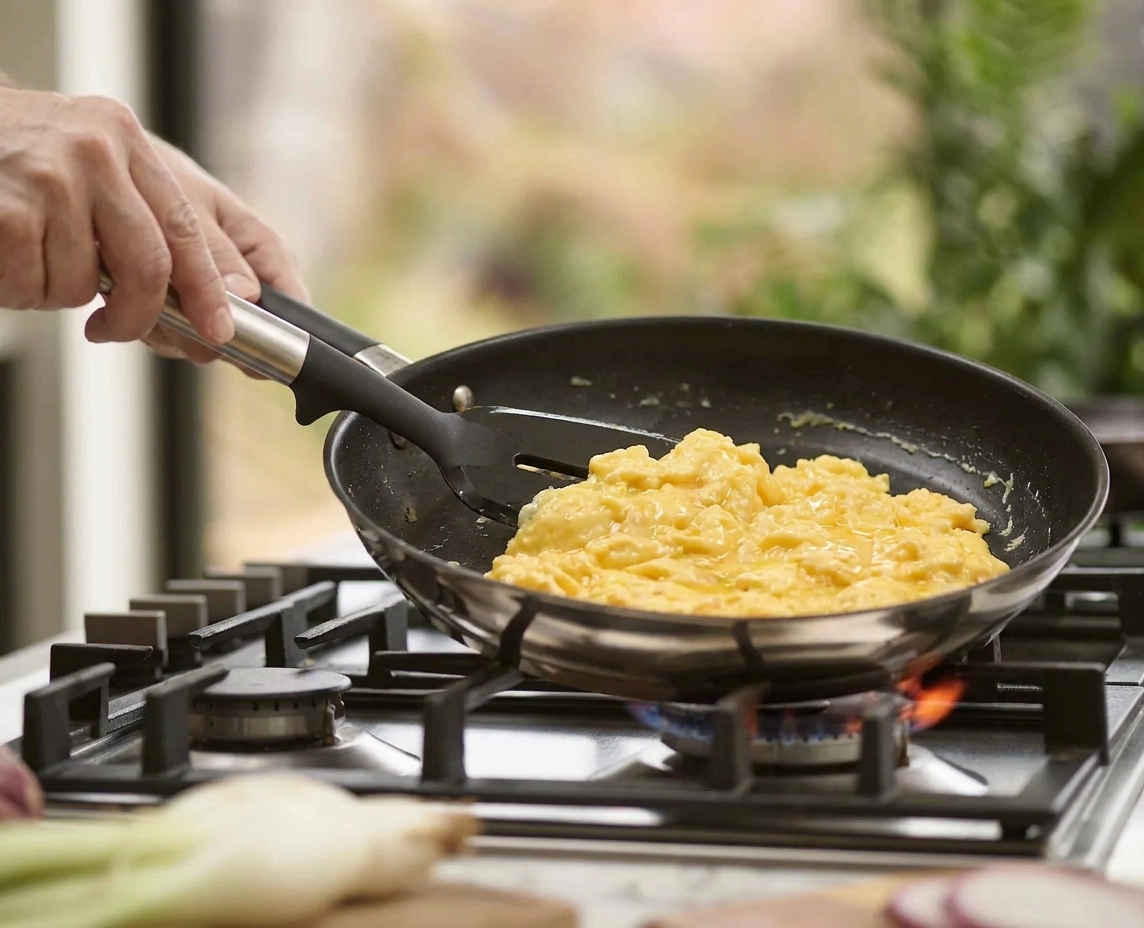
- Stir continuously in slow strokes to form small curds and prevent dry spots.
- Pull early, when the eggs still look glossy and softly set. Carryover heat finishes them.
- Plate right away because eggs keep cooking in a hot pan.
Base method
If you want a simple starting point, this is it:
- Per person: 2 eggs + a small pat of butter
- Pan: 8 to 10-inch nonstick for 2 to 4 eggs
- Heat: medium-low
- Time: about 2 to 4 minutes of active cooking
- Doneness cue: no puddles of raw egg, still glossy, soft folds that look just a little underdone in the pan
If you want extra creaminess without milk, finish with a spoonful of sour cream or creme fraiche off heat. It is optional, but it works.
Quick seasoning ideas
Eggs love simple seasoning, but timing matters. Salt works before cooking or at the end. If you salt early, whisk it in well and let the eggs sit for a couple minutes so it dissolves evenly. Pepper is best at the end if you want it to taste fresh and aromatic.
- Classic: fine salt + black pepper + a small pat of butter at the end.
- Bright: salt + chives or scallions + a squeeze of lemon right before serving.
- Smoky: salt + smoked paprika + a tiny pinch of garlic powder.
- Cheesy: salt + grated Parmesan or cheddar stirred in off heat.
- Spicy: salt + hot sauce or chili crisp drizzled over the top.
What makes eggs rubbery or dry
If your scrambled eggs go from almost done to why is this squeaking on my teeth in 30 seconds, it is nearly always one of these:
- Heat too high: fast-setting proteins tighten and squeeze out moisture.
- Cooking too long: eggs keep cooking after you turn off the heat, and they keep cooking even faster if they sit in the hot pan.
- Not enough fat: butter or oil helps prevent sticking and protects the curds.
- Too much added liquid: extra milk or water can push you into longer cook times and drier eggs by the time the moisture is gone.
- Walking away: eggs reward attention. The whole cook time is only a few minutes.
Why this recipe works
- No milk keeps flavor focused. Eggs taste richer, and you do not have extra liquid complicating timing.
- Thorough whisking smooths the texture. Fully blended eggs cook as one mixture, creating tender curds instead of stringy whites.
- Medium-low heat limits moisture loss. Gentle heat sets proteins slowly, so the eggs stay soft and fluffy.
- Carryover cooking does the final set. Pulling the pan early and plating right away helps you avoid overcooking.
Ingredient notes
Eggs
Use the freshest eggs you can. Fresher eggs have tighter whites and tend to cook up with a cleaner, softer texture. Plan on 2 eggs per person for a light breakfast, or 3 if eggs are the main event.
Butter
Butter adds flavor and creates a thin protective layer that helps the curds slide instead of sticking. If you only have oil, you can absolutely use it, but butter gives the most classic scrambled egg flavor.
Salt
Fine salt dissolves quickly and seasons evenly. If you like, you can salt the eggs before cooking and let them sit briefly, but do not overthink it. The heat control matters more.
Optional finishing touch
A spoonful of sour cream, creme fraiche, or even plain Greek yogurt stirred in off heat makes eggs extra creamy without adding a lot of liquid up front. This is optional, not required.
Equipment you will need
- 8 to 10-inch nonstick skillet for 2 to 4 eggs (or a larger pan for more)
- Silicone spatula for gentle stirring and scraping
- Medium bowl for whisking
- Whisk or a fork (a whisk is faster and blends whites and yolks more evenly)
Pro tips
- Whisk until no streaks remain. If you still see clear strands of white, keep going. Those strands turn into rubbery bits.
- Preheat briefly, not aggressively. Warm the pan over medium-low for about 30 to 60 seconds, then add butter.
- Stir continuously in slow, sweeping motions. Scrape the bottom and push the eggs from the edges toward the center to build small, tender curds.
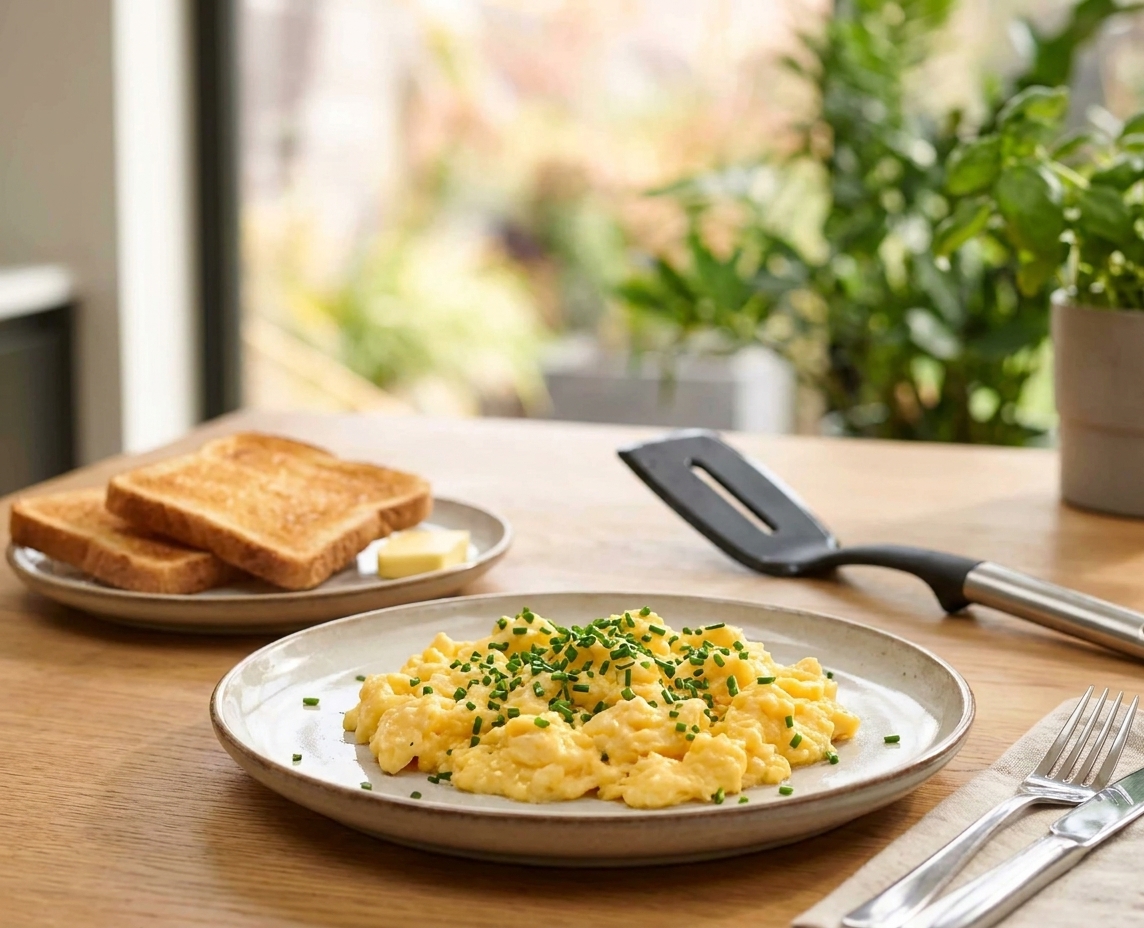
- Use the glossy rule. Take the pan off the heat when the eggs are mostly set but still glossy and a little loose, with no visible puddles of raw egg.
- Plate immediately. Scrambled eggs lose their magic as they sit, especially in a hot pan. If you have to wait, keep them slightly underdone.
Substitutes that work
- Butter substitute: olive oil works well. Use about 1 to 2 teaspoons for 4 eggs.
- Nonstick pan substitute: a well-seasoned cast iron or carbon steel pan can work, but keep the heat low and use enough fat to prevent sticking.
- Extra creaminess without milk: stir in 1 tablespoon sour cream, creme fraiche, or plain Greek yogurt for every 4 eggs, off heat.
- Dairy-free finish: a small spoonful of vegan butter or a drizzle of olive oil at the end helps keep the curds tender.
Variations
Soft and custardy
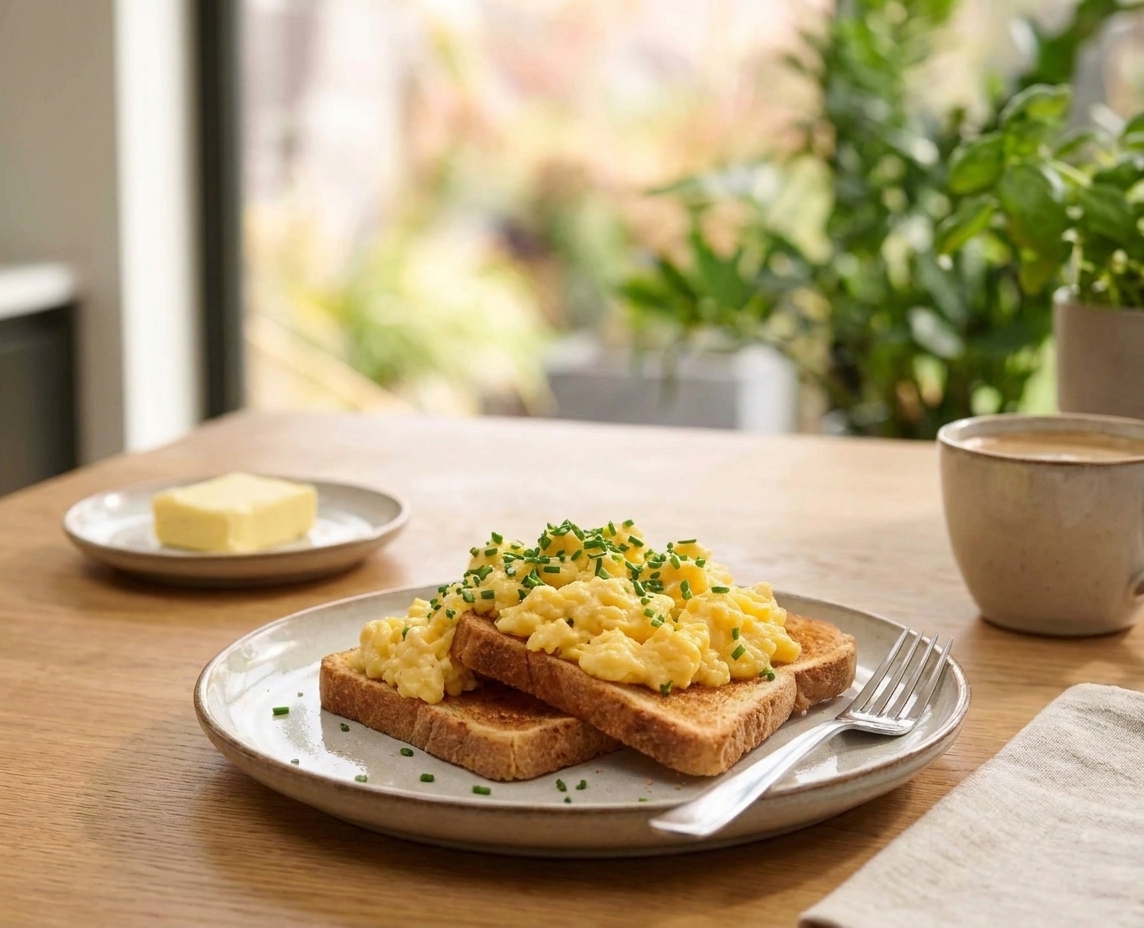
Cook on low to medium-low and stir continuously. Pull very early. This is my favorite for toast.
Fluffy and pillowy
Let the eggs sit for 10 to 15 seconds between gentle folds. You will get slightly larger, airy curds.
Cheese fold-in
Add 2 to 3 tablespoons shredded cheese when the eggs are almost set, then remove from heat and fold until melted.
Veggie scramble
Cook vegetables first, then add eggs. Good options: sauteed mushrooms, wilted spinach, or leftover roasted peppers. Make sure veggies are not watery so the eggs stay fluffy.
Serving ideas
- On buttered toast with flaky salt and pepper
- With avocado slices, lime, and a pinch of chili flakes
- In a warm tortilla with salsa for a quick breakfast taco
- Over rice with soy sauce and scallions for a fast comfort meal
- Alongside roasted potatoes and fruit for a weekend plate
Storage and reheating
Scrambled eggs are best fresh, full stop. But real life happens, so here is the least-sad way to handle leftovers.
To store
Cool quickly, then refrigerate in an airtight container for up to 2 days.
To reheat
- Stovetop: reheat gently in a nonstick skillet on low with a small pat of butter, stirring until just warmed.
- Microwave: use 50 percent power in 15 to 20 second bursts, stirring between rounds. Stop while they still look a touch underdone, then let them sit for 30 seconds.
If you know you will be reheating, cook the eggs slightly under your ideal doneness the first time.
Common mistakes
- Adding a lot of milk to make them fluffy. A small splash is not a crime, but too much liquid can dilute flavor and make timing harder.
- Using high heat to go faster. High heat makes tough curds. Low and steady tastes better and only takes a minute or two longer.
- Salting so late that it does not dissolve. If you use coarse salt at the table, it can taste spotty. Fine salt fixes that.
- Waiting until eggs look fully done in the pan. They keep cooking from residual heat. Pull them when they are glossy and softly set, then plate.
- Not scraping the pan. Those little stuck bits are overcooked egg. Constant scraping prevents them.
FAQ
Do scrambled eggs need milk?
No. Milk is optional, and for fluffy eggs it is not necessary. The texture comes from whisking well and using gentle heat, not adding extra liquid.
Why do my scrambled eggs turn watery?
Usually it is either added liquid (milk or water) that is not fully cooked off, or vegetables releasing moisture. Cook watery vegetables first and drain if needed, and keep the eggs simple.
Should I add salt before or after cooking?
Either works. Salting before can help seasoning dissolve evenly if you whisk well and give it a couple minutes. Salting at the end is also fine, especially with fine salt.
How do I make scrambled eggs fluffy but not dry?
Cook over medium-low, stir continuously in slow strokes, and remove from the heat while the eggs still look glossy and softly set. Plate immediately so carryover heat does not push them too far.
What is the best pan for scrambled eggs?
A nonstick skillet is the most forgiving for soft scrambled eggs. It lets you stir constantly without sticking and without needing lots of fat. Stainless steel can work, but it takes more heat and fat control.
The recipe
Fluffy Scrambled Eggs Without Milk
Soft, fluffy scrambled eggs without milk, made with gentle heat and a simple whisk-and-stir method that keeps the curds tender and creamy.
- Prep
- 5 minutes
- Cook
- 4 minutes
- Total
- 9 minutes
- Yield
- 2 servings
Ingredients
- 4 large eggs
- 1/4 teaspoon fine salt, plus more to taste
- 1 tablespoon unsalted butter
- Freshly ground black pepper, to taste
- Optional: 1 tablespoon sour cream or creme fraiche (for extra creaminess, stirred in off heat)
Instructions
- Whisk the eggs. Crack eggs into a medium bowl, add salt, and whisk vigorously until the mixture is completely uniform and slightly foamy, about 20 to 30 seconds.
- Warm the pan. Place a nonstick skillet over medium-low heat for 30 to 60 seconds. Add butter and let it melt and foam, but do not let it brown.
- Add eggs and stir in slow, steady strokes. Pour in the eggs. Using a silicone spatula, stir continuously, scraping the bottom and sweeping eggs from the edges toward the center to build small, tender curds.
- Control the set. If the eggs start setting too fast, briefly lift the pan off the heat while you keep stirring, then return it to the burner.
- Finish off heat. When the eggs are mostly set with no visible puddles of raw egg but still glossy and a little loose, remove the pan from heat. If using sour cream or creme fraiche, fold it in now.
- Season and serve. Add black pepper and an extra pinch of salt if needed. Plate immediately and serve.
Notes
- Doneness cue: Stop while the eggs are shiny and softly set. If they look fully dry in the pan, they are already overcooked.
- Scaling: For 6 to 8 eggs, use a 10 to 12-inch skillet so the eggs cook evenly.
- Add-ins: If adding cooked vegetables or meat, warm them in the pan first, then pour eggs over and proceed. Avoid adding cold, wet ingredients.
Nutrition
Estimated per serving: 190 calories, 14g protein, 14g fat, 1g carbs, 0g fiber, 320mg sodium. (Nutrition varies by egg size and optional add-ins.)