A curated list of fast, nutritious, family-approved dinners you can get on the table in 30 minutes or less, with flexible swaps and time-saving tips.
recipes
Healthy Microwave Meals That Taste Good

Elena Martinez
Elena Martinez is a former bakery manager turned full-time food writer and recipe developer. With over a decade of experience translating professional culinary techniques into approachable home cooking, she believes that a great meal doesn't require a culinary degree or expensive ingredients.
Created September 21, 2026
Last updated September 21, 2026
If you have ever felt like the microwave is only good for reheating leftovers and melting butter, I want to gently (and enthusiastically) change your mind. A microwave can steam vegetables that stay bright and crisp-tender, cook grains with surprisingly good texture, and turn simple proteins into fast, weeknight-friendly meals.
This guide is built for real life. We are talking minimal dishes, flexible ingredients, and enough flavor that you do not feel like you are eating “microwave food.”
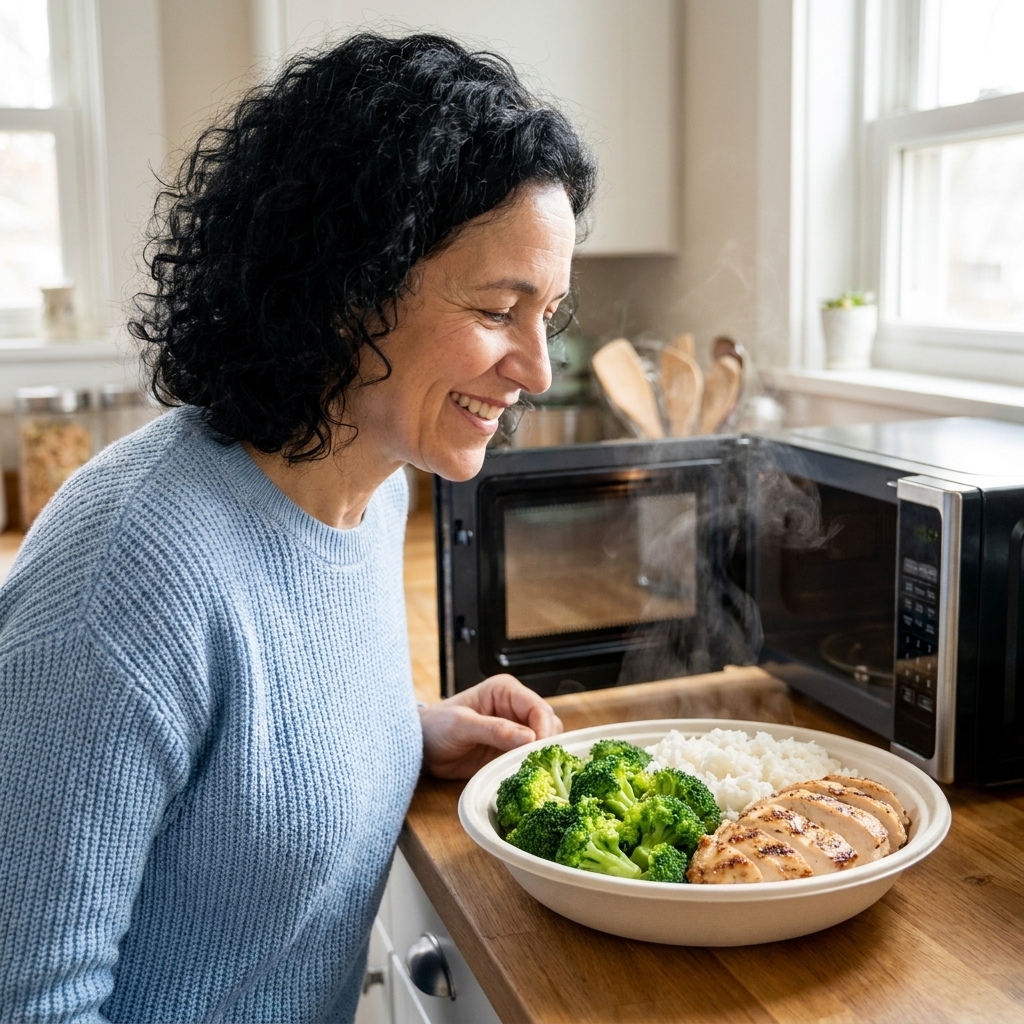
Microwave basics that make food taste better
Quick timing note: Microwave power varies a lot. The times below assume a typical 900 to 1100W microwave. If yours runs hot, start on the low end and add time in short bursts.
Use the right dish
- Best: microwave-safe glass or ceramic bowls, and a glass loaf pan for grains.
- Plastic: microwave-safe plastic is fine if it is labeled as such. Avoid old, scratched, or flimsy plastic that warps.
- Skip: metal (obviously).
- Shape matters: wide, shallow bowls heat more evenly than tall, narrow ones.
Cover your food on purpose
Covering traps steam, which is what cooks most microwave meals evenly. My go-to: a microwave-safe plate set on top of a bowl, or a vented microwave lid.
- Covered is good, sealed is not: do not use airtight containers or fully sealed wraps. Leave a small vent so steam can escape.
- Steaming veggies: cover snugly to trap steam, but keep it vented.
- Grains: cover and vent so it does not boil over.
- Proteins: cover loosely to prevent splatters and keep moisture in.
Stir, rotate, and rest
Microwaves heat unevenly. Two small habits fix that:
- Stir or flip halfway whenever you can.
- Rest 1 to 3 minutes after cooking so heat finishes the job. This is especially important for eggs, chicken, and fish.
Microwave safety basics (worth reading)
- Avoid sealed containers: pressure builds fast and can cause bursts.
- Superheated liquids are real: water and broth can overheat without visibly boiling. Let liquids rest briefly, then stir carefully before sipping.
- Pierce foods that can burst: poke potatoes, sausages, and egg yolks (if cooking yolks) with a fork or toothpick.
- Even thickness cooks evenly: for chicken and fish, aim for uniform pieces and arrange in a single layer when possible.
Salt and fat are not the enemy, they are the tools
Healthy food tastes good when it is seasoned. Add salt in layers, and use a little fat strategically (olive oil, sesame oil, avocado, yogurt). You do not need much. You just need it in the right places.
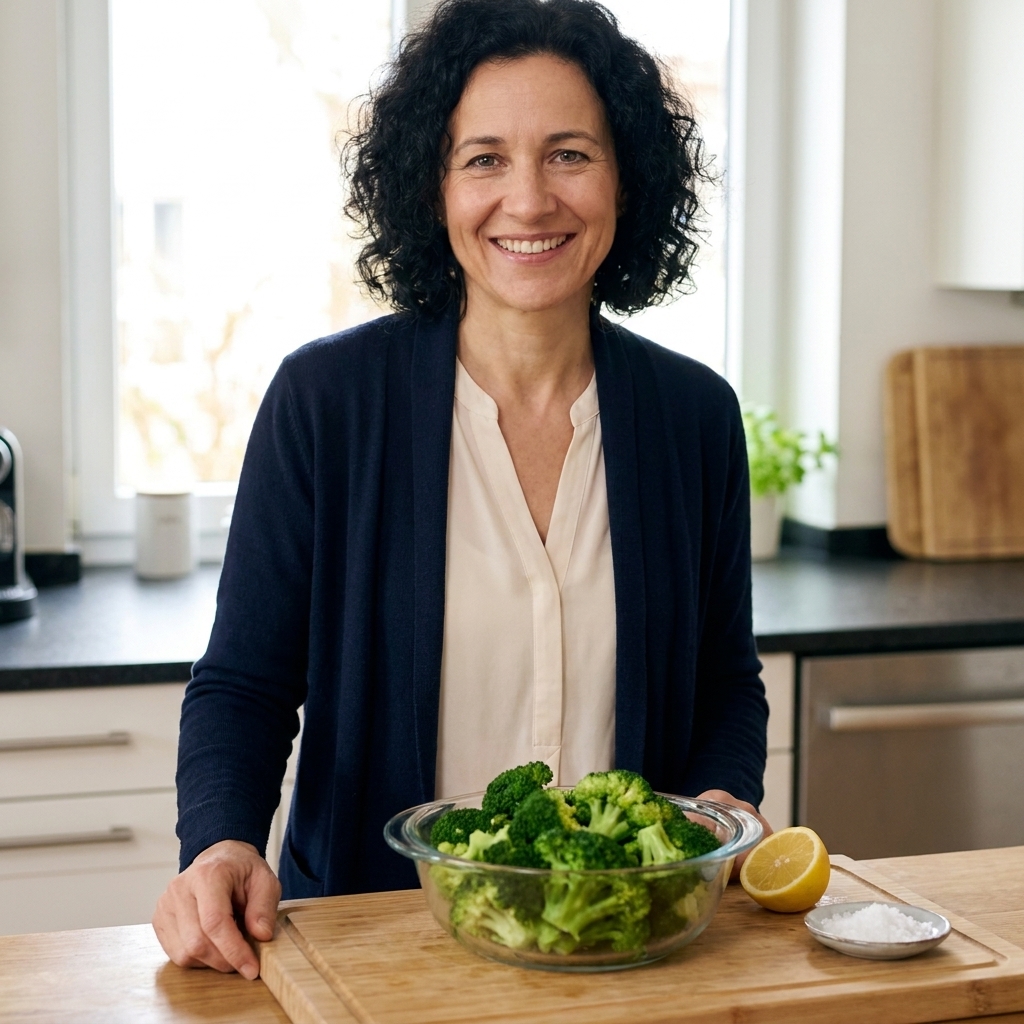
How to steam vegetables in the microwave
The secret is a tiny splash of water and the right timing. You want steam to cook the vegetable, not a puddle to boil it.
Quick method
- Cut vegetables into even pieces.
- Add to a bowl with 1 to 2 tablespoons water.
- Cover with a lid or plate, leaving a small vent.
- Microwave on High until crisp-tender, then let rest 1 minute.
- Drain any excess water. Season immediately.
Timing guide (approximate)
- Broccoli florets: 2 to 4 minutes
- Green beans: 3 to 5 minutes
- Cauliflower florets: 3 to 6 minutes
- Carrots (thin slices): 4 to 6 minutes
- Spinach: 45 to 90 seconds
- Frozen mixed veg: 4 to 7 minutes (stir halfway)
Make it taste like a real side dish: finish with one of these after steaming: olive oil + lemon + salt, butter + garlic powder, soy sauce + sesame oil, pesto, salsa verde, or a spoonful of tahini thinned with water.
How to cook grains in the microwave
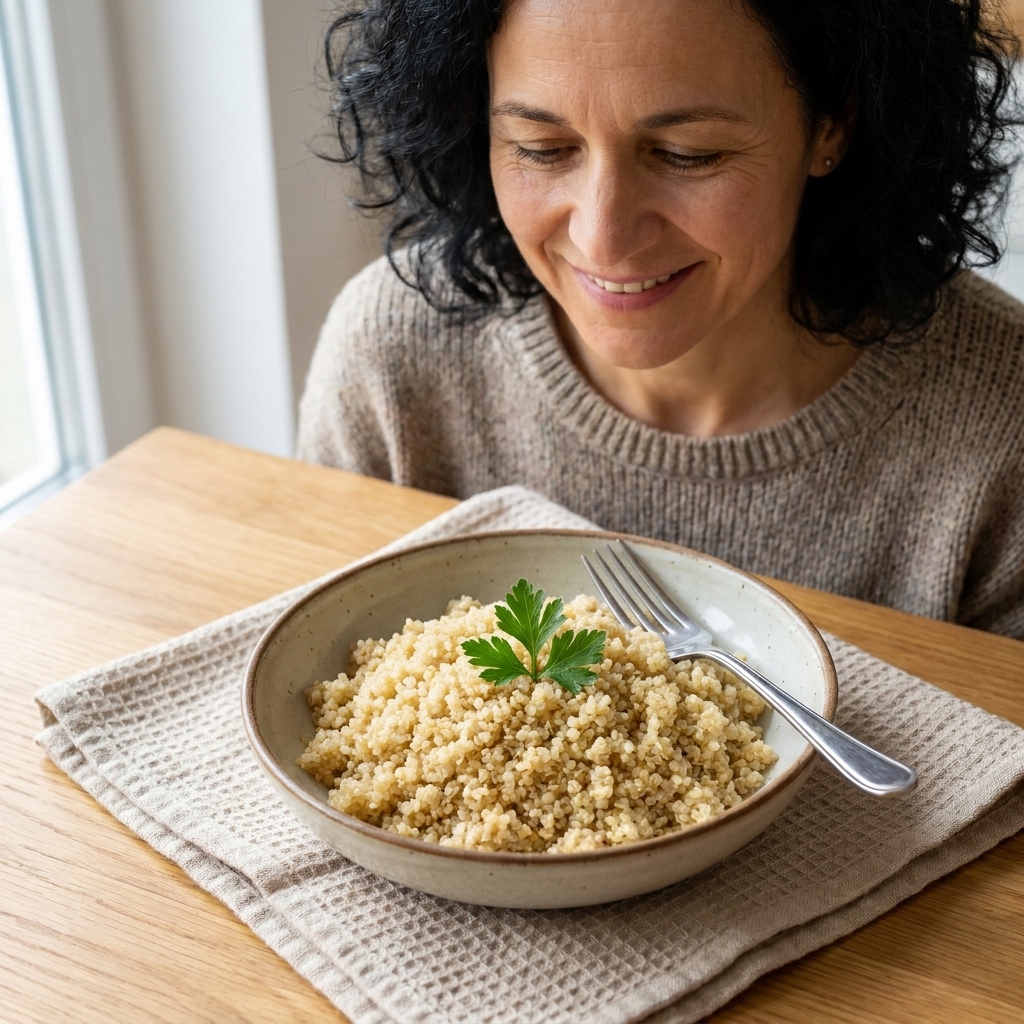
Microwave grains are my favorite quiet productivity trick. You can cook the base while you prep toppings, and it is very hands-off.
Best success tip: For rice and quinoa, a two-stage approach is more reliable than blasting on High the whole time: start on High to get things boiling, then finish at Medium power so it cooks through without boiling over.
Microwave rice (white or brown)
White rice ratio: 1 cup rice + 1 3/4 cups water + pinch of salt
Brown rice ratio: 1 cup rice + 2 1/4 cups water + pinch of salt
- Rinse rice until water runs mostly clear (helps texture).
- Combine in a large microwave-safe bowl (extra room prevents boil-overs).
- Cover and vent (lid slightly ajar).
- Microwave on High 5 minutes to bring to a strong simmer.
- Microwave on 50 percent power until tender: white rice 10 to 15 minutes, brown rice 20 to 30 minutes.
- Rest covered 5 to 10 minutes, then fluff.
Doneness check: If there is still water pooled at the bottom, cook 2 minutes more at 50 percent. If it looks dry but the rice is still firm, add 2 tablespoons hot water, cover, and cook 2 to 3 minutes more, then rest.
Microwave quinoa
Ratio: 1 cup quinoa + 2 cups water or broth + pinch of salt
- Rinse quinoa well.
- Combine in a large bowl. Cover and vent.
- Microwave on High 6 minutes.
- Microwave on 50 to 70 percent power 8 to 12 minutes, until the liquid is absorbed and the spiral “tails” show.
- Rest covered 5 minutes, fluff.
Doneness check: If it is still wet, cook 2 minutes more. If it is dry but still crunchy, add 2 tablespoons water, cook 2 minutes, then rest.
Microwave oats
Use a big bowl. Oats love to boil over.
- Rolled oats: 1/2 cup oats + 1 cup water or milk, microwave 2 to 3 minutes, rest 1 minute.
- Steel-cut quick: follow package, usually 5 to 7 minutes plus rest.
Flavor trick: cook grains in low-sodium broth, or add a bay leaf and a pinch of cumin. Then remove the bay leaf before serving.
How to cook proteins in the microwave
Microwave proteins get a bad reputation because people blast them uncovered until they turn rubbery. The fix is gentler cooking, moisture, and a short rest.
Eggs
- Scrambled in a mug: whisk 2 eggs with a splash of milk or water and a pinch of salt. Microwave 30 seconds, stir, then 20 to 30 seconds more until just set. Rest 30 seconds.
- “Poached” egg (safer method): crack into a small bowl with 1/3 cup water. Pierce the yolk gently with a toothpick or tip of a knife. Cover and microwave in 20 to 30 second bursts until the white is set, usually 60 to 90 seconds total. Rest 1 minute. Be careful when uncovering and stirring the water.
Chicken
Best use: quick chicken for bowls, wraps, and salads.
- Cut chicken breast into even 1/2-inch pieces, or use tenders. Arrange in a single layer if possible.
- Toss with 1 teaspoon oil, salt, pepper, and a spoonful of salsa or broth for moisture.
- Cover loosely and microwave 2 minutes.
- Stir and microwave in 1 minute bursts until cooked through, usually 1 to 4 minutes more depending on your microwave and the amount of chicken.
- Rest 2 to 3 minutes, then shred or slice.
Food safety note: Microwaves can cook unevenly. Chicken should reach 165°F (74°C) in the thickest pieces. Check multiple pieces, then let it rest so carryover heat finishes the job.
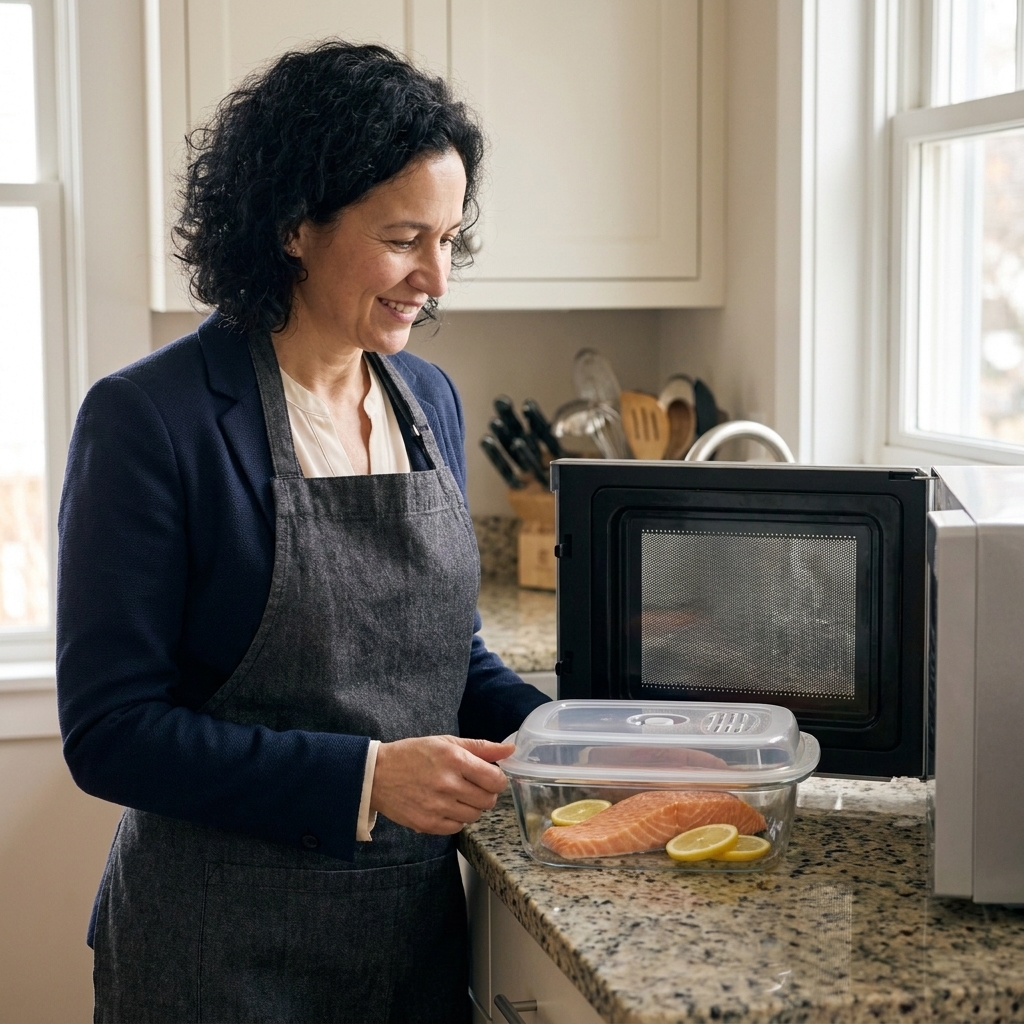
Fish
Use thin fillets like salmon, cod, or tilapia. Keep thickness as even as you can.
- Place fish in a shallow dish. Add salt and pepper and a drizzle of olive oil.
- Add lemon slices or a spoonful of pesto on top.
- Cover and microwave 2 to 4 minutes depending on thickness.
- Rest 2 minutes. It will finish gently.
Tofu
Press briefly with paper towels, cube, then microwave 1 to 2 minutes to warm through. Toss with sauce after. If you want crisp edges, the microwave is not the tool, but for fast, saucy bowls it is perfect.
Beans and edamame (the easiest plant protein)
Rinse canned beans or use frozen shelled edamame. Warm with a splash of water or broth, covered, 1 to 3 minutes. Finish with salt and something punchy (lemon, salsa, chili crisp, or a quick sauce).
Your flavor toolkit
When microwave meals taste bland, it is usually not the microwave. It is the lack of finishing flavor. Keep one or two of these in the fridge and suddenly your random ingredients bowl tastes intentional.
5 two-minute sauces
- Lemon yogurt: Greek yogurt + lemon juice + garlic powder + salt
- Peanut-lime: peanut butter + lime juice + soy sauce + warm water to thin
- Quick tahini: tahini + lemon + warm water + salt (add cumin if you like)
- Salsa crema: salsa + plain yogurt or sour cream + pinch of salt
- Ginger soy: soy sauce + grated ginger (or ground) + honey + sesame oil
Crunch and brightness
- Crunch: toasted nuts, pumpkin seeds, crispy chickpeas, crushed tortilla chips, fried onions
- Brightness: lemon or lime, vinegar, pickled onions, kimchi, sauerkraut
- Fresh finish: scallions, cilantro, basil, parsley
10 healthy microwave meals
Each of these is designed to be doable with one bowl, one plate, and a spoon. Think of them as templates, not rules.
1) Lemon-Garlic Chicken and Broccoli Bowl
- Base: microwave rice or quinoa
- Veg: steam broccoli (2 to 4 minutes)
- Protein: microwave diced chicken with a splash of broth
- Finish: olive oil, lemon juice, garlic powder, salt, pepper
2) Salsa Egg Breakfast Burrito Bowl
- Base: leftover rice or microwaved potatoes
- Protein: scrambled eggs in a bowl
- Add: black beans (rinsed), salsa, a little cheese
- Finish: crushed tortilla chips, cilantro, lime
3) Miso Veggie Noodle Soup
- In a big bowl: broth + miso paste + frozen mixed veg
- Microwave: 4 to 7 minutes until steaming, stir halfway
- Add: cooked noodles or quick-cook ramen noodles (without the seasoning packet)
- Finish: tofu cubes, sesame oil, scallions
4) Tuna and White Bean Lemon Salad
- Optional: steam green beans or microwave frozen green beans
- Mix: tuna + white beans + chopped celery or cucumber
- Dressing: olive oil + lemon + Dijon + salt + pepper
5) Sweet Potato, Black Bean, and Lime Yogurt Bowl
- Microwave: pierce a sweet potato, microwave 6 to 10 minutes (turn halfway)
- Top: black beans, salsa, corn
- Sauce: yogurt + lime + salt
6) Microwave Salmon with Pesto Peas
- Protein: steam salmon with lemon (2 to 4 minutes, rest 2 minutes)
- Veg: microwave frozen peas (2 to 3 minutes), drain
- Toss peas: with pesto and a pinch of salt
- Serve: with microwaved couscous or rice
7) Chickpea Curry in a Hurry
- In a bowl: chickpeas + frozen spinach + a spoonful of curry paste or powder
- Add: canned light coconut milk or a little broth
- Microwave: 3 to 6 minutes, stir halfway
- Finish: lime, salt, serve over rice
8) Turkey and Veggie Marinara Melt Bowl
- Base: cooked pasta or microwaved zucchini noodles
- Add: marinara + pre-cooked turkey meatballs (or leftover turkey)
- Microwave: until hot, then top with mozzarella and heat 30 seconds more
- Finish: basil or Italian seasoning
9) Edamame Fried Rice-ish Bowl
- Base: cold leftover rice (best texture)
- Add: frozen edamame + frozen peas and carrots
- Sauce: soy sauce + sesame oil
- Protein: scramble an egg separately, then mix in
10) Cottage Cheese Tomato Pasta Bowl
- Base: hot cooked pasta
- Stir in: cottage cheese + salt + pepper
- Add: cherry tomatoes (halved) and baby spinach to wilt from the heat
- Finish: olive oil and lots of black pepper
My “this will taste good” rule: each bowl gets (1) a base, (2) a protein, (3) a vegetable, and (4) a sauce or punchy topping. If you hit those four, you are in great shape.
Meal prep with a microwave
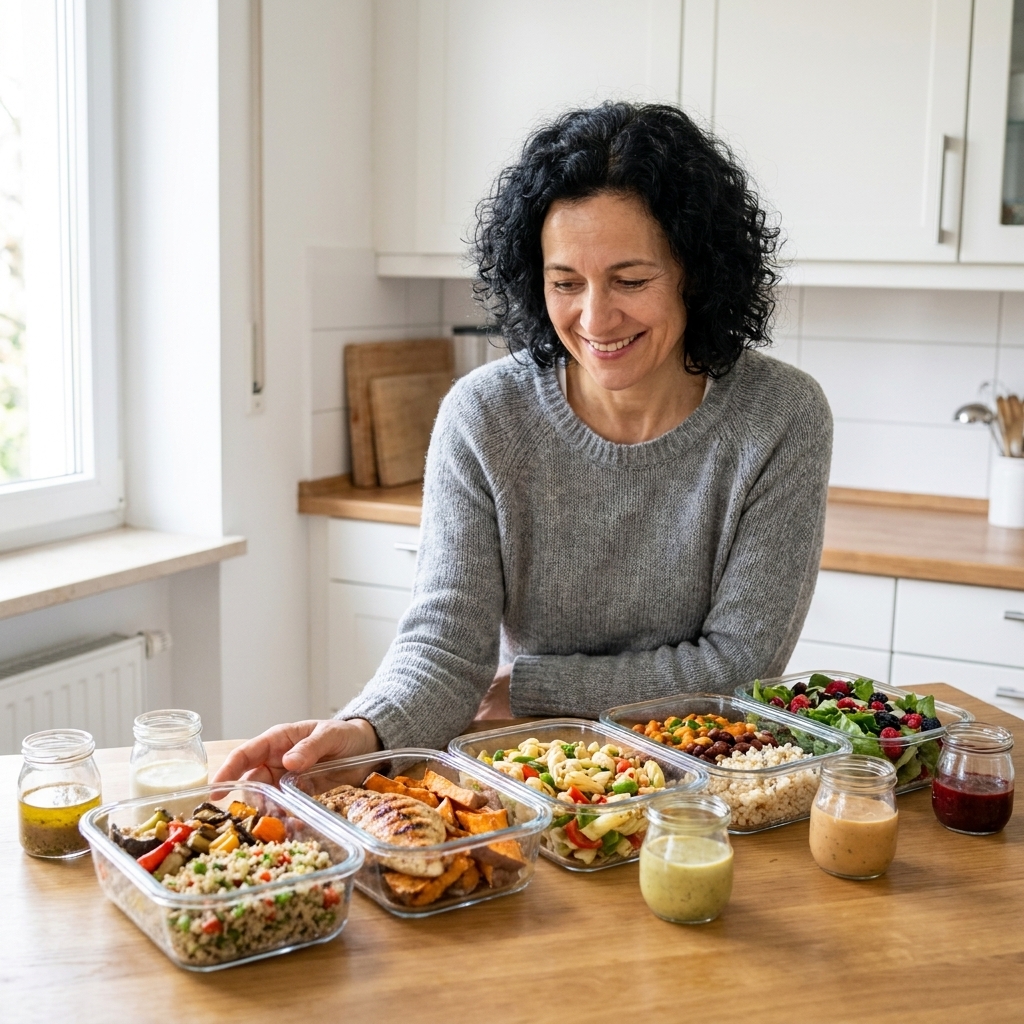
If you want future-you to feel wildly cared for, spend 20 minutes making components you can remix.
Do this once, eat all week
- Cook a grain (rice or quinoa).
- Steam a big container of vegetables (broccoli, green beans, cauliflower).
- Make one sauce (peanut-lime or lemon yogurt).
- Stock 2 quick proteins (eggs, canned beans, rotisserie chicken, tofu, edamame).
Storage tips
- Keep sauce separate until serving.
- Let hot food cool slightly before sealing containers to avoid condensation.
- Add crunchy toppings at the end, always.
Troubleshooting
“My food is rubbery.”
It usually means overcooked protein. Use shorter bursts, cover, and rest. For chicken and fish, add a little moisture (broth, salsa, lemon slices). If your microwave is powerful, try finishing proteins at 70 percent power.
“My vegetables are mushy.”
Too much water or too long. Use 1 to 2 tablespoons water, and pull them when they are crisp-tender because they keep cooking as they rest.
“My grains boiled over.”
Your bowl is too small or the power is too high. Use a larger bowl, cover with a vent, and finish at 50 percent power once it is simmering.
“It tastes bland.”
Add salt, acid, and a finishing drizzle. A squeeze of lemon and a pinch of salt at the end can make the whole bowl snap into focus.
Microwave meal FAQ
Is microwaving food healthy?
Yes. Microwaving is simply a heating method. It can help preserve nutrients well because cooking times are short and you often use less water than boiling.
What are the healthiest microwave meals?
Meals built around whole foods: grains, beans, eggs, fish or chicken, and lots of vegetables. The microwave is great for steaming and for quick protein cooking when you keep moisture in the dish.
Can I cook raw chicken in the microwave?
You can, but cut it into smaller, even pieces for more even cooking, cover it, and confirm it reaches 165°F (74°C). Microwaves can leave cold spots, so check multiple pieces and use standing time. If you are unsure, start with pre-cooked options like rotisserie chicken, canned beans, or eggs while you build confidence.
How do I make microwave meals taste less like leftovers?
Finish with fresh elements: herbs, citrus, crunchy toppings, and a sauce you love. Also, do not overcook. Texture is half the battle.
A little encouragement
If your microwave meals in the past have been disappointing, it was not a personal failing. You just did not have a roadmap. Try one technique first, like steaming broccoli or cooking quinoa, then build a bowl around it. Once you taste how good microwave food can be, it becomes a tool you reach for on purpose.