
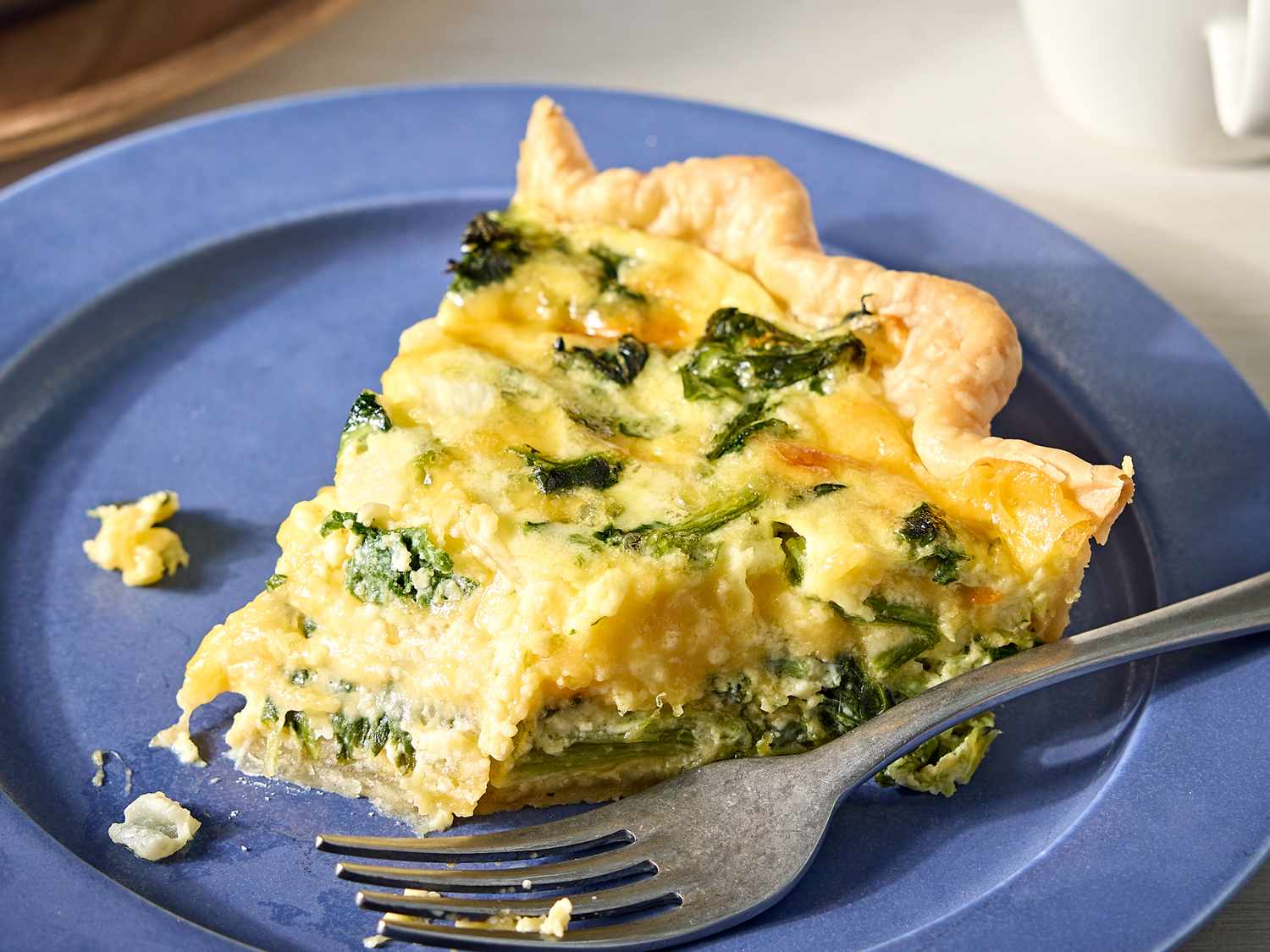
There are two kinds of quiche: the dense, egg-forward kind that can eat a little heavy, and the kind I keep coming back to, plush, custardy, and so light it practically trembles when you nudge the pan. This classic quiche is the second kind. It’s what I make when I want something that feels a little special, but still fits into real life, like a Sunday dinner that turns into Monday lunch.
The secret is not a fancy ingredient. It is a handful of small choices that add up: a thoroughly baked crust so the bottom stays crisp, a custard with the right balance of eggs to dairy so it bakes up silky instead of rubbery, and a gentle oven approach so the center sets without curdling. For a standard-depth 9-inch pie dish, a great starting point is 4 large eggs to about 2 cups of dairy (milk, cream, or a mix). If you are using a deep-dish pan, very wet fillings, or you simply want a taller quiche, you will likely need a little more custard and a few extra minutes in the oven.
Dairy choice matters more than people think. More cream means a richer, plusher set. More milk keeps it lighter, but it can feel less lush. A mix, or half-and-half, lands in the sweet spot for that bakery-case tenderness without tipping into heavy.
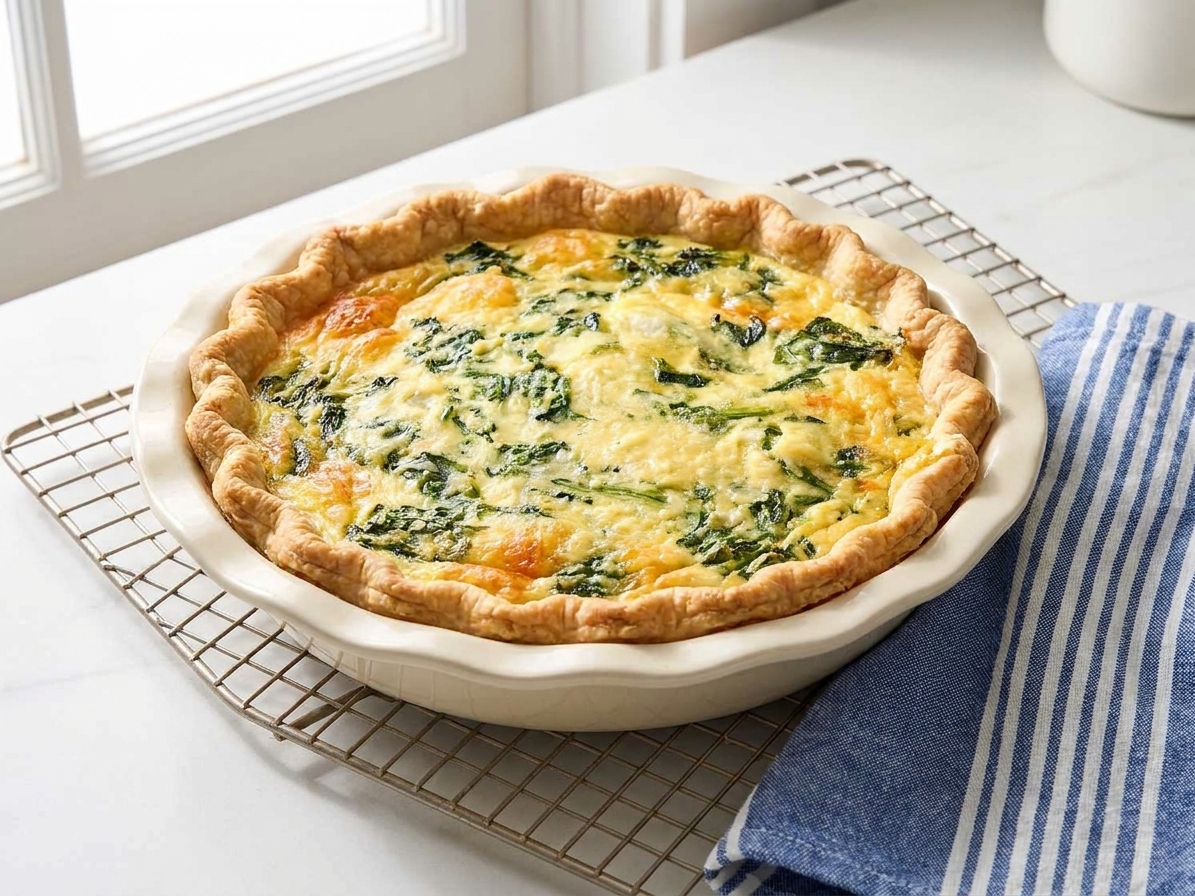
You will know it is right when the quiche comes out lightly bronzed at the edges, puffed in the middle, and it gives you that soft wobble like set panna cotta. Do not wait for the center to go fully firm in the oven. Carryover heat finishes the job as it rests, and that is what keeps the texture tender instead of tight.

Think of this recipe as your base layer. Once you get the custard and crust rhythm down, you can use what you have: leftover roasted vegetables, a few ounces of cheese that need using, that last handful of herbs from the crisper. I will walk you through the why as we go, and the recipe card below includes the exact bake temperatures, timing range, and the doneness cue that keeps it tender.
What makes it light
“Light and fluffy” in quiche is less about whipping air into eggs and more about baking a delicate custard on purpose. Too many eggs without enough dairy makes a quiche firm and omelet-like. Too much heat makes the eggs tighten and squeeze out moisture, which can show up as little watery pockets after baking.
This recipe leans into a creamy dairy base and a moderate oven temperature. In practice, that usually means baking in the 350 to 375°F range and pulling it when the center still quivers. Look for set edges and a center that moves like gelatin when you gently shake the dish. If the middle is rigid while it is still in the oven, it is already past the sweet spot.
Crust basics
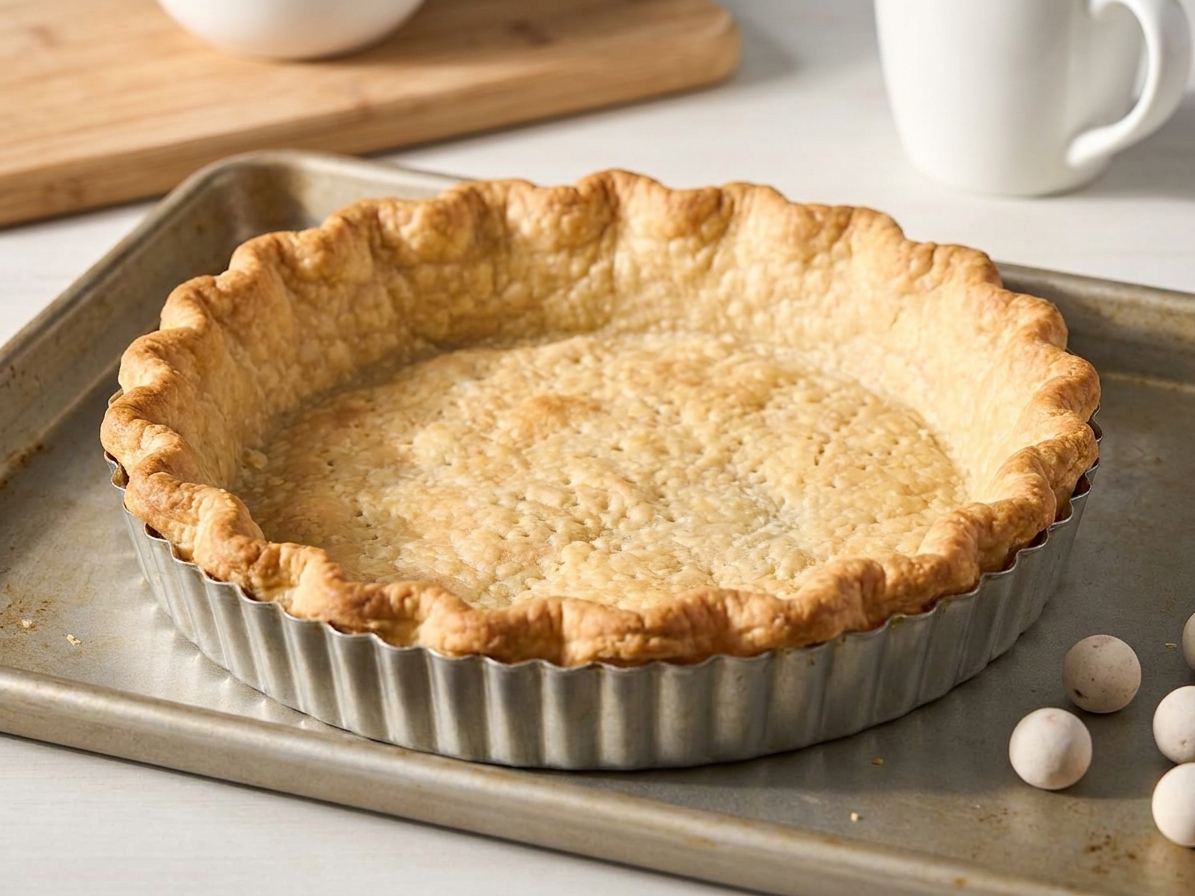
I love a homemade pie crust, but I also spent enough time managing a bakery to tell you the truth: a good store-bought crust can still make a fantastic quiche. What matters most is blind baking. Quiche filling is wet, and an unbaked crust will soak it up like a sponge. Baking the crust first gives you that shattering, golden bottom that makes people think you did something complicated.
Fillings without puddles
Quiche is friendly, but it does have limits. Watery fillings can break the custard texture. If you add vegetables, cook them first and drive off excess moisture. If you add greens like spinach, squeeze them dry. If you add mushrooms, sauté until they stop steaming and start browning.
Two practical anchors help: keep total add-ins to about 1 1/2 to 2 cups for a standard 9-inch quiche, and make sure the filling tastes great on its own before it goes into the crust. Quiche does not have enough time in the oven to rescue bland, under-seasoned add-ins.
When to serve
This is a classic for brunch, but I make it just as often for dinner with a big salad. It is also one of my favorite “future me” meals. Bake it, cool it, and the next day you have tidy slices that reheat beautifully.
Quiche is the rare dish that feels fancy, travels well, and still makes a great midnight snack straight from the fridge.
Why this recipe works
- Blind baking prevents a soggy bottom: Pre-baking the crust sets the fat and dries the base so it stays crisp under a wet custard.
- Balanced custard for a tender set: The egg-to-dairy ratio is tuned for silky structure, not an omelet texture.
- Gentle baking means no curdling: Moderate heat sets eggs slowly, keeping the quiche light and preventing weeping.
- Resting time finishes the job: A short rest lets the custard settle so slices are clean and the texture stays plush.
Ingredient notes
Pie crust
Use a standard 9-inch pie crust in a standard-depth pie dish. If using store-bought, let it thaw as directed so it does not crack when you fit it into the pan.
Eggs
Large eggs are the baseline here. If your eggs are extra-large, your custard can set firmer than intended. Stick with large if you can.
Dairy
A mix of heavy cream and whole milk gives you richness and a lighter finish. All heavy cream works but can feel heavier. All milk is lighter but can bake up less lush. If you want a single-dairy shortcut, half-and-half is a reliable middle ground.
Cheese
Gruyère is classic, Swiss is a great budget-friendly stand-in, and sharp cheddar brings more punch. Grate it yourself if possible for smoother melting.
Ham
Use a flavorful ham and dice it small so it distributes evenly. If you are using very salty ham, go a little lighter on added salt in the custard.
Nutmeg
Just a pinch makes the quiche taste like a French bakery case in the best way. It is subtle, not sweet.
Equipment you will need
- 9-inch pie dish (glass or ceramic both work)
- Rimmed baking sheet (catches drips and helps with even heat)
- Pie weights or dried beans (for blind baking)
- Parchment paper or foil (to hold the weights)
- Whisk and medium bowl
- Measuring cups and spoons
Pro tips
- Dock and chill the crust: Prick the bottom with a fork, then chill 10 to 15 minutes before blind baking to help it hold its shape.
- Preheat the baking sheet: Set your rimmed sheet in the oven while it preheats. Putting the pie dish onto a hot sheet encourages a crisp bottom.
- Do not overfill: Leave a little headroom. Quiche puffs as it bakes, and overflow is heartbreak.
- Look for the wobble: The edges should be set, the center should jiggle slightly, like gelatin. It will finish setting as it cools.
- Rest before slicing: Give it at least 15 minutes so the custard firms enough to cut clean slices.
Substitutes that work
- No heavy cream: Use half-and-half for the cream portion. The quiche will be a touch less rich but still tender.
- No whole milk: Use 2 percent milk. Avoid skim if you can, since it can bake up a bit thinner and less silky.
- No Gruyère: Swap in Swiss, Emmental, fontina, or sharp white cheddar.
- Gluten-free: Use a gluten-free pie crust and still blind bake it well.
- Vegetarian: Replace ham with sautéed mushrooms, caramelized onions, roasted peppers, or broccoli florets cooked until tender and dry.
Variations
Lorraine style
Keep it simple with ham (or bacon) and Gruyère. Add a spoonful of sautéed onions if you like a sweeter note.
Spinach and feta
Sauté spinach, squeeze it very dry, then pair with feta and a little lemon zest in the custard.
Roasted veggies
Roast zucchini, peppers, or tomatoes until browned and concentrated. Cool before adding so they do not steam the custard.
Smoked salmon and dill
Use small pieces of smoked salmon and a handful of chopped dill. Go easy on salt since smoked salmon brings plenty.
Serving ideas
- Simple salad: Arugula or mixed greens with a sharp vinaigrette to cut the richness.
- Brunch spread: Fresh fruit, roasted breakfast potatoes, and hot coffee.
- Soup and slice: Tomato soup or a brothy vegetable soup for an easy dinner.
- Make it a picnic: Quiche is lovely at room temperature. Pack slices with a crunchy salad and grapes.
Storage and reheating
Refrigerate
Cool completely, then cover and refrigerate for up to 4 days.
Freeze
Wrap individual slices tightly and freeze up to 2 months. Thaw overnight in the fridge for best texture.
Reheat
For the best crust, reheat in a 325°F oven until warmed through. Microwave works in a pinch, but the crust will soften.
Common mistakes
- Skipping blind baking: This is the fastest path to a soggy bottom. Bake the crust until it looks dry and lightly golden.
- Using watery add-ins: Cook vegetables first and let them cool. Steam is the enemy of a fluffy custard.
- Baking too hot: High heat can make the custard puff dramatically, then sink and weep. Moderate heat gives you a creamy set.
- Overbaking: If the center is completely firm in the oven, it is likely overdone. Pull it when the center still has a gentle jiggle.
- Slicing too soon: Hot quiche is fragile. Resting helps it set and keeps slices neat.
FAQ
How do I know when quiche is done?
The edges should be set and lightly golden. The center should still jiggle slightly when you gently shake the dish. It will finish setting as it cools.
Why did my quiche turn watery?
Usually it is either watery fillings (vegetables not cooked down) or overbaking at too high a temperature, which can cause the eggs to curdle and release moisture.
Can I make quiche ahead?
Yes. Quiche is one of those dishes that actually slices better once chilled. Bake it, cool it completely, then refrigerate. Reheat gently in the oven.
Should I pre-cook the ham?
If your ham is fully cooked, you do not need to. If it is very wet, pat it dry and dice it small so it does not pool liquid.
Can I make it crustless?
You can. Grease the pie dish well, and expect a softer slice and a shorter bake time. The flavor is still great, just less crisp.
The recipe
Classic Quiche (Light and Fluffy)
A classic, light and fluffy quiche with a crisp crust and silky custard. Perfect for brunch, easy to prep ahead, and endlessly customizable with whatever you have in the fridge.
- Prep
- 20 minutes
- Cook
- 55 minutes
- Total
- 1 hour 15 minutes
- Yield
- 8 slices
Ingredients
- 1 (9-inch) pie crust, homemade or store-bought
- 1 cup (120 g) shredded Gruyère (or Swiss)
- 3/4 cup (110 g) diced ham
- 4 large eggs
- 1 cup (240 ml) heavy cream
- 1 cup (240 ml) whole milk
- 1/2 tsp kosher salt, plus more to taste
- 1/4 tsp black pepper
- Pinch of freshly grated nutmeg (optional)
Instructions
- Preheat the oven. Arrange a rack in the lower third of the oven and preheat to 375°F. Set a rimmed baking sheet in the oven while it preheats.
- Fit the crust. Press the pie crust into a 9-inch pie dish and crimp the edge. Prick the bottom all over with a fork. Chill for 10 to 15 minutes.
- Blind bake. Line the crust with parchment paper or foil and fill with pie weights or dried beans. Bake on the preheated baking sheet for 15 minutes. Carefully remove the weights and liner, then bake 8 to 10 minutes more, until the bottom looks dry and is lightly golden.
- Add fillings. Sprinkle the cheese evenly over the warm crust, then scatter the ham over the top.
- Make the custard. In a bowl, whisk the eggs, heavy cream, milk, salt, pepper, and nutmeg (if using) until smooth.
- Fill the crust. Slowly pour the custard into the crust. Stop if you are close to the rim. You might not need every last drop.
- Bake. Reduce oven temperature to 350°F. Bake 35 to 45 minutes, until the edges are set and the center still has a gentle jiggle.
- Cool and slice. Let rest 15 to 30 minutes before slicing. Serve warm or at room temperature.
Notes
- Make-ahead: Bake and cool completely, then refrigerate. Reheat slices in a 325°F oven until warmed through.
- Vegetable add-ins: Keep total add-ins to about 1 1/2 to 2 cups, and cook vegetables first to remove moisture.
- Salt check: Ham and cheese vary in saltiness. If you are using very salty add-ins, reduce the salt in the custard slightly.
- Doneness cue: The quiche will puff, then settle a bit as it cools. That is normal.
Nutrition
Estimated per slice (1/8 of quiche): 360 calories, 25 g fat, 16 g protein, 18 g carbohydrates, 1 g fiber, 680 mg sodium. Nutrition varies by crust, cheese, and ham used.