
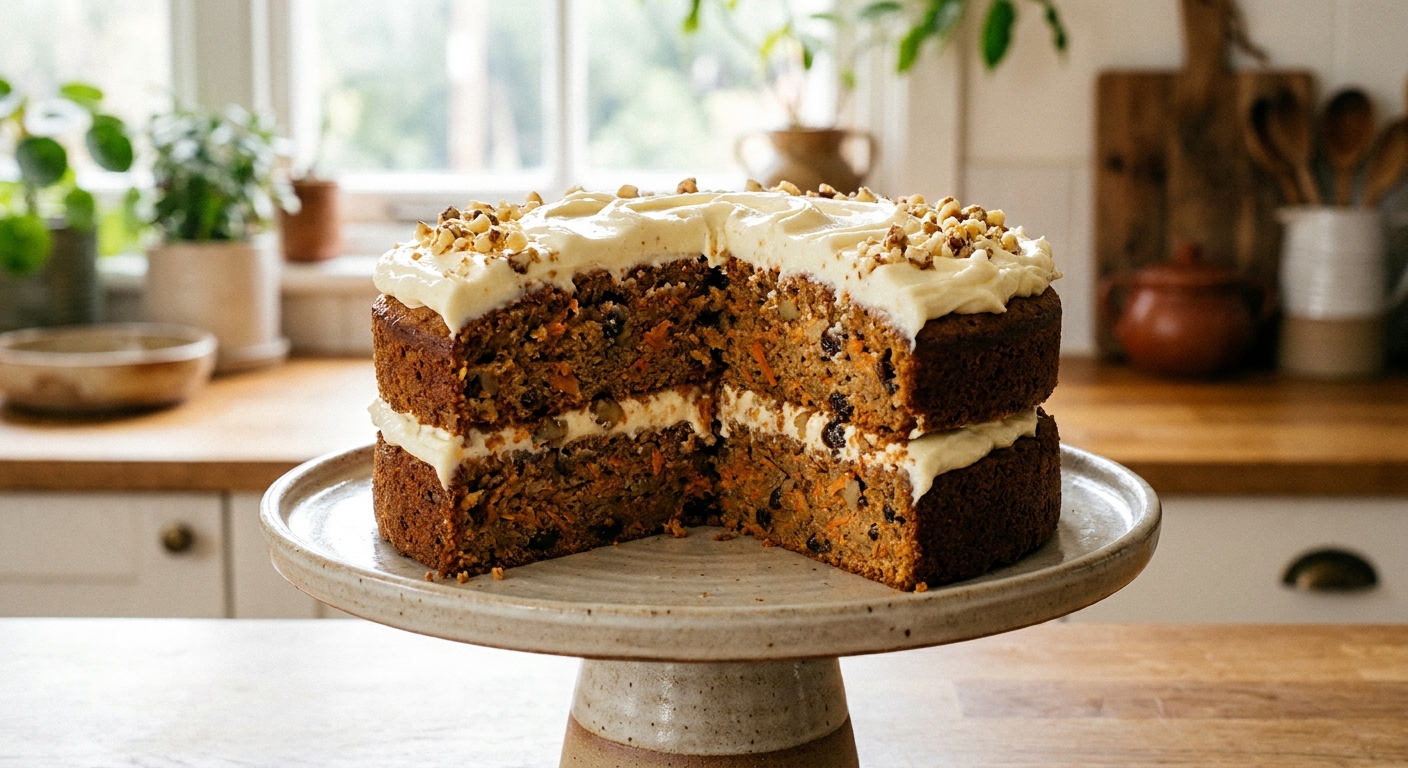
Carrot cake has a very specific kind of comfort to it. Not the fussy, perfect kind. The cozy kind that smells like cinnamon and brown sugar, stays tender for days, and makes people hover near the kitchen like they can sense you are about to slice it.
When I managed a bakery, carrot cake was one of those steady sellers that taught me a lot about home baking. It looks simple, but the details matter: how you shred the carrots, how much moisture they bring, and when you decide the cake is done. This version is the one I make when I want a dependable layer cake that still feels special enough for birthdays, potlucks, or messy Sunday dinners.

You will also notice this recipe gives you flexibility. Want it classic and smooth? Leave out the add-ins. Want it a little more textured and snacky? Add toasted nuts, raisins, or both. Either way, the goal is the same: a cake that is plush and fragrant, with that tangy frosting that makes every bite feel balanced.
Moisture and shredded carrots
For this recipe, I get the signature moisture from freshly shredded carrots, not carrot puree. Plenty of good carrot cakes use applesauce, pineapple, or puree. Here I am after that classic crumb where the carrot melts into the batter instead of pushing the cake toward a softer, denser feel.
I am looking for fine, feathery shreds that disappear as it bakes. A box grater gets you there, but a food processor with a shredding disk is fast and consistent if you are making layers.
If you shred too coarsely, you can end up with noticeable strands and little pockets around them instead of a tight, even crumb.
Carrots vary a lot. Some are juicy, some are a little dry, and the difference shows up in the crumb. The trick is simple: shred, then lightly blot. You are not wringing the carrots out bone-dry. You are just removing the obvious surface wetness so the batter is consistent and the cake bakes through evenly.
If you have ever had a carrot cake come out dense, the usual culprits are overmixing once the flour goes in, heavy-handed measuring, or tired leaveners. The carrots get blamed a lot, but it is usually technique.
Pan size options
This batter works beautifully as a classic layer cake. My default is two 8-inch round pans for slightly taller layers, but you have options:
- Two 8-inch rounds: taller layers, slightly longer bake time.
- Two 9-inch rounds: a little wider and shorter, slightly shorter bake time.
- 9×13-inch pan: easiest for casual serving, bake time will change.
- Cupcakes: great for parties, check early and use the same doneness cues.
If you are switching pans, trust doneness cues over the clock. I lay out my go-to cues in the crumb test section below. And if your cakes dome a lot, it is often an oven that runs hot or pans on different rack positions. Rotate the pans once during baking if your oven has hot spots.
A crumb test that works
I rely on a toothpick or thin skewer inserted into the center. For carrot cake, I do not want it to come out perfectly dry. I want a few moist crumbs clinging to it, but no wet batter. If you wait for totally dry, you are more likely to overbake and lose that tender texture.
Another cue: gently press the center. If it springs back instead of leaving an indentation, you are in a good place. If you like an extra data point, many carrot cakes land somewhere around 200 to 205°F in the center when fully baked, but I still treat the crumb test as the final call.
Frosting clean layers
Carrot cake is forgiving, but cream cheese frosting is not. If the cake layers are even slightly warm, the frosting will soften, slide, and turn glossy.
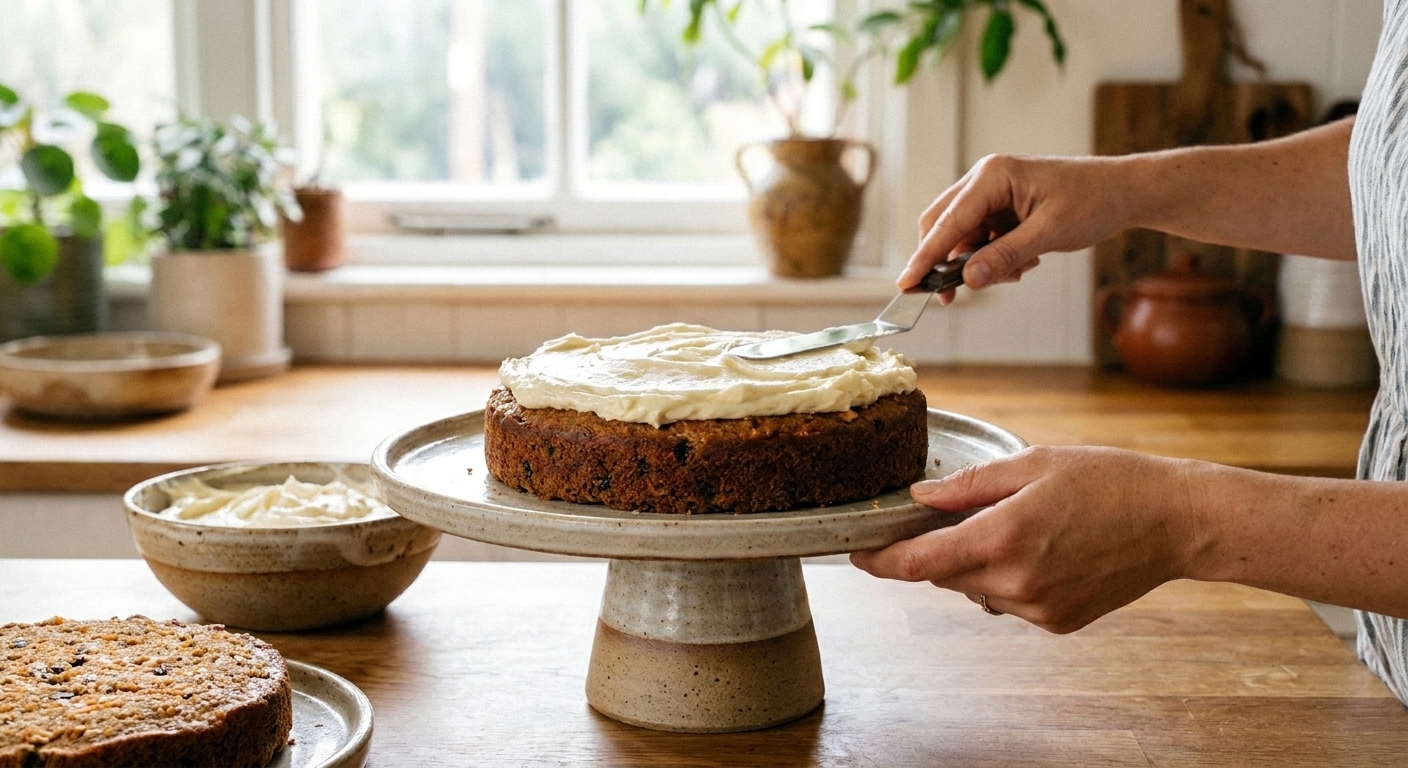
My rule: cool completely, at least room temperature all the way through. If you have time, chill the layers for 20 to 30 minutes before frosting. It makes stacking calmer and cleaner.
If your frosting starts to feel loose while you are working, stop and chill it. Ten to fifteen minutes in the refrigerator will usually bring it back to a spreadable, stackable consistency.
One practical note, since cream cheese frosting comes with rules: keep the finished cake covered in the refrigerator, and let slices sit out briefly before serving so the crumb softens. If you are serving it at a party, I would not leave it out for long stretches. If it is going to linger, it belongs back in the fridge.
Why this recipe works
- Shredded carrots melt into the batter as it bakes, giving moisture and tenderness without needing any puree in this particular version.
- Warm spices like cinnamon and a touch of ginger deepen the flavor so the cake tastes like more than just sweet carrots.
- Oil plus eggs keeps the crumb soft for days and makes the cake less fussy than an all-butter sponge.
- Blotting the carrots helps control extra water so the layers bake evenly and slice neatly.
- Cooling completely before frosting keeps cream cheese frosting thick, tangy, and stable between layers.
Ingredient notes
Carrots
Use fresh carrots and shred them yourself. Pre-shredded carrots are often thick and dry, and they do not disappear into the crumb the same way. A box grater works, but a food processor shredding disk makes quick work of it. After shredding, blot lightly with a clean towel or paper towels.
Flour
All-purpose flour is ideal here. Measure by spooning into the measuring cup and leveling off so you do not pack in extra flour.
Spices
Cinnamon is the backbone. Ginger adds warmth. Nutmeg is optional but lovely. If your spices smell dusty or faint, replace them. Carrot cake leans hard on spice aroma.
Oil
A neutral oil like canola, vegetable, or avocado oil gives a moist, even crumb. Olive oil can be tasty but can also dominate, so I avoid it unless it is very mild.
Brown sugar
Brown sugar brings moisture and a deeper, caramel note. Light or dark both work. Dark is a little more molasses-forward.
Nuts and raisins
Optional, but classic. If using nuts, toast them first for better flavor and a cleaner crunch. If using raisins, you can soak them in hot water for 10 minutes, then drain and pat dry for softer bites.
Cream cheese
Use full-fat brick-style cream cheese. Tub-style spreads tend to be too soft and can make the frosting loose.
Equipment you will need
- Two 8-inch or two 9-inch round cake pans
- Parchment paper for lining the pan bottoms
- Mixing bowls
- Whisk and rubber spatula
- Box grater or food processor with shredding disk
- Fine-mesh sieve (optional for sifting dry ingredients)
- Toothpick or thin skewer for the crumb test
- Wire rack for cooling
- Hand mixer or stand mixer for frosting
- Offset spatula or butter knife for spreading frosting
Pro tips
- Line the pans. Grease, parchment on the bottom, then grease again. Carrot cake is tender and you want easy release.
- Blot, do not squeeze. If your carrots are dripping wet, blot them. If they are dry, skip it. The goal is consistency.
- Do not overmix once flour is in. Mix just until no dry streaks remain for a softer crumb.
- Rotate your pans halfway through baking if your oven has hot spots.
- Cool completely, then frost. If you are in a hurry, chill the layers and keep the frosting cool too.
- Crumb coat for neat slices. Spread a thin layer of frosting over the whole cake, chill 15 minutes, then do your final coat.
Substitutes that work
- Nuts: Swap walnuts for pecans, or leave them out entirely.
- Raisins: Use golden raisins, chopped dates, or dried cranberries.
- Spices: If you are missing ginger or nutmeg, you can use more cinnamon. The cake will still be good, just a little less layered.
- Buttermilk: If using buttermilk in the recipe, you can make a quick substitute by mixing milk with a little lemon juice or vinegar and letting it sit for a few minutes.
- Frosting texture: If your cream cheese frosting is too soft, chill it before frosting the cake. A little extra powdered sugar can help, but chilling is usually the cleaner fix.
Variations
- Carrot cake with pineapple: Add crushed pineapple that has been very well drained. It adds sweetness and moisture, so drain thoroughly to avoid a soggy cake.
- Extra-spiced: Add a pinch of cloves or allspice for a bolder spice profile.
- Cupcakes: Bake in lined muffin tins and use the same crumb test, checking early.
- Single-layer snack cake: Bake in a 9×13-inch pan and frost the top only.
- Textured finish: Press toasted nuts onto the sides or top of the frosted cake for crunch and a bakery look.
Serving ideas
- Serve slightly chilled for the cleanest slices, or let slices sit 10 minutes at room temperature for the softest crumb.
- Top each slice with a few toasted nuts or a small pinch of cinnamon.
- Pair with coffee, chai, or black tea for that cozy spice-on-spice moment.
- For birthdays, add candles and keep the decoration simple. Carrot cake does not need much to feel celebratory.
Storage and reheating
Refrigerator
Because of the cream cheese frosting, store the frosted cake covered in the refrigerator. It keeps well for several days.
Serving after chilling
For the best texture, let slices sit at room temperature briefly so the crumb softens and the frosting loses its fridge-firm edge.
Freezer
You can freeze unfrosted cake layers tightly wrapped. Thaw overnight in the refrigerator, then bring to room temperature before frosting.
Common mistakes
- Using pre-shredded carrots: They are usually too thick and dry, which can make the cake less tender.
- Skipping pan prep: Without parchment, these tender layers love to stick.
- Overbaking: Wait for a few moist crumbs on the skewer, not a totally dry stick.
- Frosting warm layers: Cream cheese frosting will melt and slide. Cool the layers completely first.
- Overmixing the batter: Once flour goes in, mix gently and stop as soon as it is combined.
FAQ
Do I need to squeeze the water out of the carrots?
Usually no. I only blot very juicy carrots to remove surface moisture. You want the carrots moist, just not dripping wet.
Can I make carrot cake ahead?
Yes. Bake the layers, cool completely, wrap well, and refrigerate overnight or freeze longer. Frost the next day for an easy, low-stress assembly.
Why did my cream cheese frosting turn runny?
The most common causes are warm cake layers, over-softened cream cheese or butter, or using spreadable tub-style cream cheese. Chill the frosting and use brick-style cream cheese for the best structure.
How do I know the layers are done without drying them out?
Use the crumb test: a toothpick should come out with a few moist crumbs, not wet batter. Also look for a springy center and edges that start to pull away from the pan.
Can I bake this in a 9×13-inch pan instead of layers?
Yes. It becomes a simple snack cake. Start checking early and rely on the same doneness cues.
The recipe
Classic Carrot Cake
A warmly spiced shredded-carrot layer cake with optional nuts or raisins and a thick, tangy cream cheese frosting.
- Prep
- 25 minutes
- Cook
- 30 to 35 minutes
- Total
- 1 hour 30 minutes
- Yield
- 12 slices
Ingredients
- 2 1/2 cups (300 g) all-purpose flour
- 2 tsp baking powder
- 1 tsp baking soda
- 1 tsp fine salt
- 2 tsp ground cinnamon
- 1 tsp ground ginger
- 1/4 tsp ground nutmeg (optional)
- 1 cup (200 g) granulated sugar
- 1 cup (200 g) packed light or dark brown sugar
- 1 cup (240 ml) neutral oil (canola, vegetable, or avocado)
- 4 large eggs, room temperature
- 2 tsp vanilla extract
- 3 cups (about 300 g) finely shredded carrots, lightly blotted if very wet
- 1 cup (120 g) chopped walnuts or pecans, toasted (optional)
- 3/4 cup (110 g) raisins (optional)
- Cream cheese frosting
- 12 oz (340 g) full-fat brick cream cheese, cool
- 1/2 cup (113 g) unsalted butter, softened
- 3 1/2 to 4 cups (420 to 480 g) powdered sugar, sifted if lumpy
- 1 tsp vanilla extract
- Pinch of salt
Instructions
- Prep the oven and pans: Heat oven to 350°F (175°C). Grease two 8-inch or two 9-inch round cake pans. Line the bottoms with parchment, then grease again. Lightly flour the sides and tap out excess.
- Mix dry ingredients: In a large bowl, whisk together flour, baking powder, baking soda, salt, cinnamon, ginger, and nutmeg (if using).
- Mix wet ingredients: In a second large bowl, whisk granulated sugar, brown sugar, oil, eggs, and vanilla until smooth and slightly lighter in color.
- Combine: Add the dry ingredients to the wet ingredients and fold with a spatula just until no dry streaks remain.
- Add carrots and optional add-ins: Fold in shredded carrots. Fold in toasted nuts and raisins, if using.
- Bake: Divide batter evenly between pans and smooth the tops. Bake until the centers spring back and a toothpick inserted in the center comes out with a few moist crumbs but no wet batter, 30 to 35 minutes (start checking at 28 minutes if using 9-inch pans).
- Cool completely: Cool cakes in pans for 10 minutes, then run a thin knife around the edges and turn out onto a wire rack. Peel off parchment and cool completely before frosting.
- Make the frosting: Beat cream cheese and butter until smooth and creamy. Add powdered sugar gradually, beating until thick and spreadable. Beat in vanilla and a pinch of salt. If the frosting feels soft, chill 15 to 20 minutes before using.
- Assemble: Place one fully cooled layer on a plate or cake stand. Spread an even layer of frosting over the top. Add the second layer. Frost the top and sides. For cleaner results, apply a thin crumb coat, chill 15 minutes, then finish frosting.
- Slice: Chill the frosted cake 20 to 30 minutes for the neatest slices, then cut with a sharp knife, wiping the blade between slices.
Notes
Carrot moisture: If your shredded carrots look visibly wet, blot them briefly. Do not squeeze them dry.
Pan choice: Two 8-inch pans make taller layers. Two 9-inch pans bake a bit faster. Use the crumb test to decide doneness.
Frosting stability: Use brick-style cream cheese, not spreadable tub cream cheese. Always frost only after the layers are completely cool.
Optional add-ins: Nuts and raisins are both optional. If using nuts, toasting them adds a richer flavor and a less raw texture.