
When I managed a bakery, we saved every scrap of good flavor. If there was a tray of deeply toasted nuts or a corner of cheese that could be grated into something great, we used it. That habit followed me home, especially on busy nights when I want something that tastes intentional without a second trip to the store.
Pumpkin seed pesto is one of my favorite little “pantry miracles.” It leans on pepitas instead of a huge bundle of basil, but you still get that garlicky, cheesy, olive-oil gloss that makes dinner feel complete.
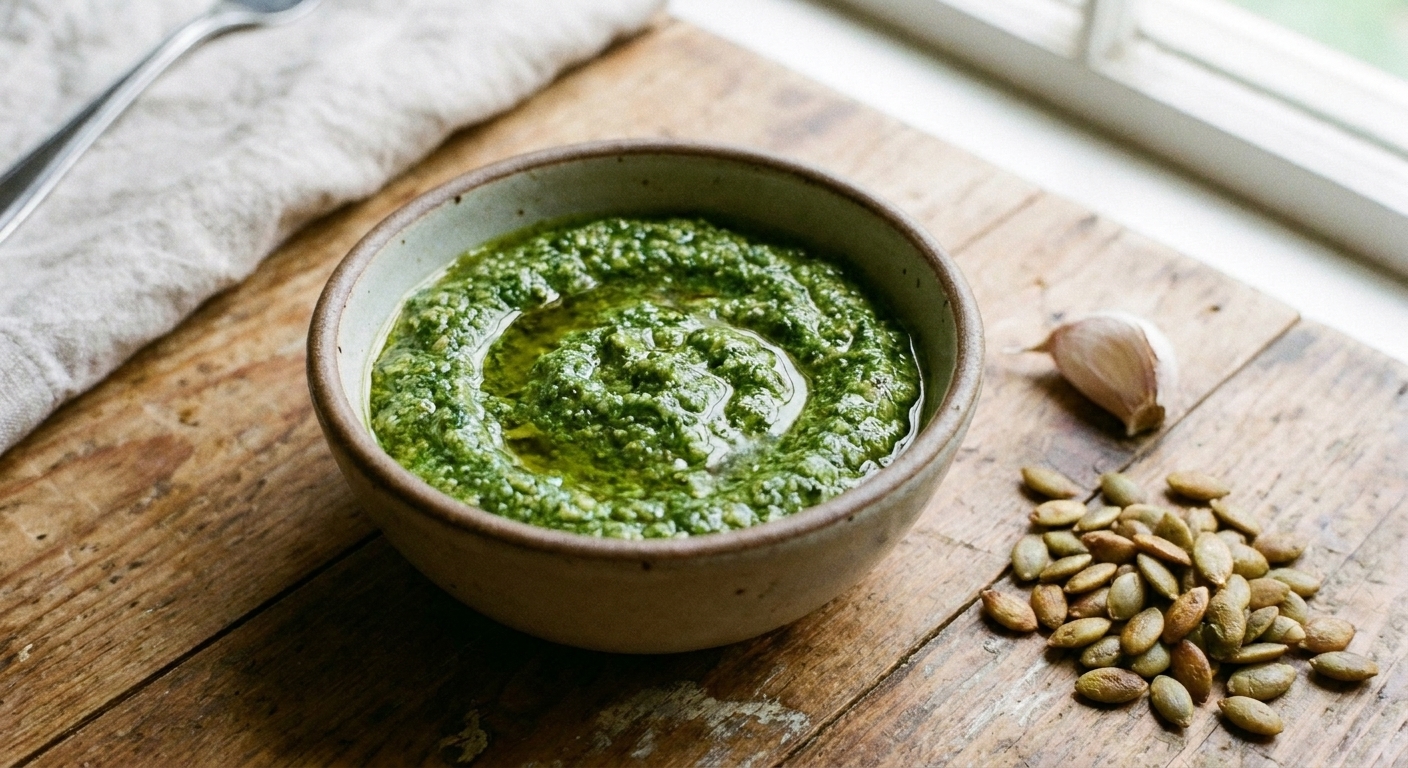
The key is to toast the pumpkin seeds just until they smell nutty and look slightly darker, not browned and bitter. Then you blend with garlic, Parmesan, and enough oil to make the pesto loose and spoonable, not thick like seed butter. I’m always looking for that texture where it holds soft peaks on a spoon but slowly relaxes, the way a classic basil pesto does.

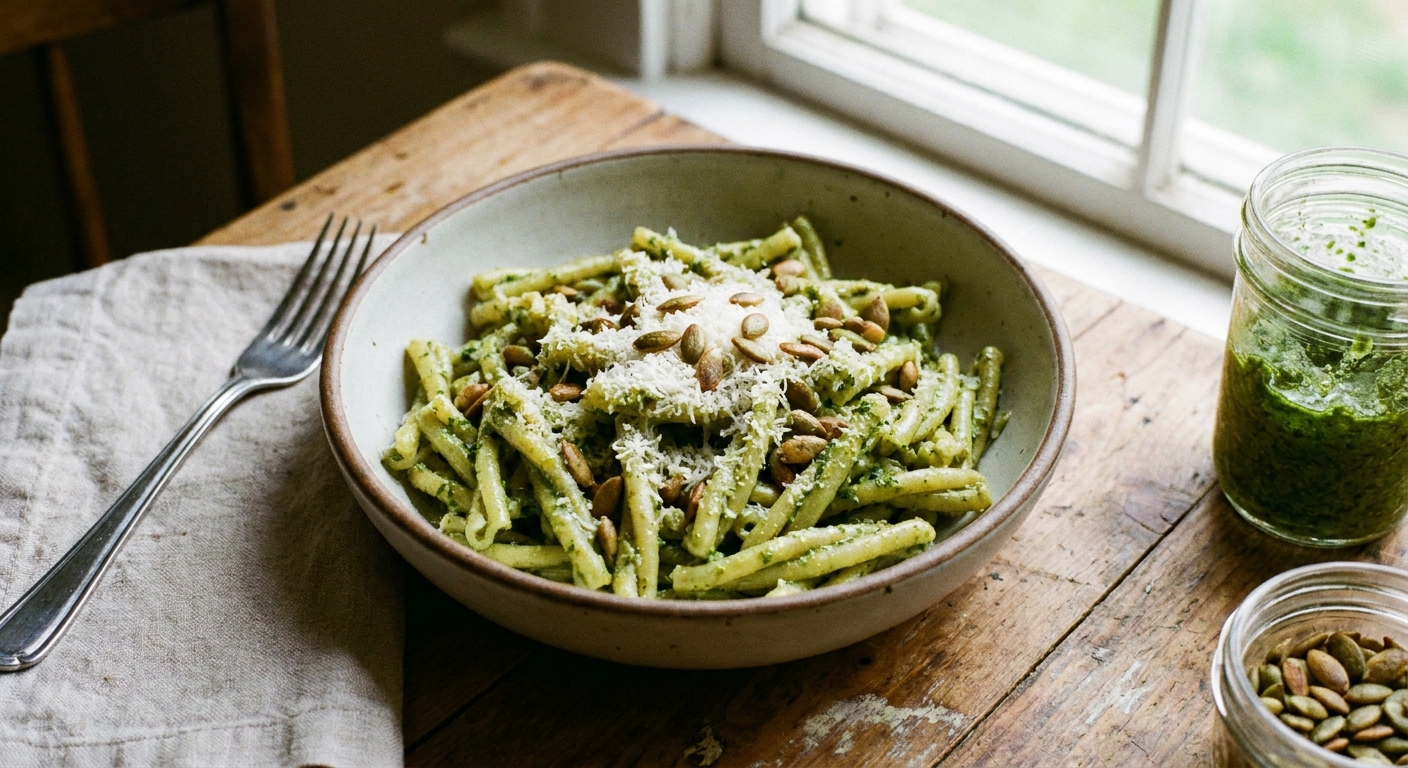
In real life, I use it three ways: tossed with hot pasta and a splash of pasta water, smeared on roasted sweet potatoes, or thinned into a quick dressing for grain bowls. A squeeze of lemon can brighten the whole thing, and a pinch of chile is never a bad idea.
It’s also a smart move if you have half a bag of pepitas lingering in the pantry and you want them to taste like something special. And if you make it ahead, it keeps well. Press it into a jar, smooth the top, and float a thin layer of olive oil over the surface before you refrigerate it to help protect the color and flavor.
Why this recipe works
- Toasting builds flavor fast: A short toast wakes up the pepitas’ nutty, almost buttery notes and makes the pesto taste deeper without adding extra ingredients.
- The oil ratio keeps it sauce-like: Using enough olive oil (and adding it gradually) prevents that dry, pasty “seed butter” texture and gives you a pesto that actually coats pasta.
- Cheese does double duty: Parmesan adds salty punch and helps emulsify the mixture into a cohesive, spoonable sauce.
- Blending in stages controls texture: Grinding the seeds first, then streaming in oil, gets you a pesto with tiny, pleasant flecks instead of a greasy puree.
Ingredient notes
Pepitas (pumpkin seeds)
Use shelled pumpkin seeds, often sold as pepitas. Raw or roasted both work, but if they are already roasted and salted, keep the toast very brief and reduce added salt. Fresh pepitas should smell clean and nutty, not waxy or paint-like.
Toast level
Toast over medium heat, stirring often, until the seeds look slightly darker and you smell a strong nutty aroma. They may start to pop. Pull them off the heat before you see real browning. Over-toasted pepitas can turn bitter and make the pesto taste harsh.
Garlic
One clove gives a gentle kick. Two cloves makes it more classic pesto intensity. If you are sensitive to raw garlic bite, you can briefly toast the clove (unpeeled) in the dry skillet for a couple minutes, then peel and use.
Cheese
Parmesan is the classic choice. Pecorino Romano is saltier and sharper. For best texture, grate it finely so it incorporates instead of clumping.
Olive oil
Extra-virgin olive oil gives the best flavor. For texture, think of oil as the “volume knob” that turns ground seeds into sauce. A helpful starting point is about 1/2 cup oil per 1 cup pepitas, then adjust. If your pesto looks like thick, glossy paste that holds its shape like frosting, it needs more oil and or a splash of water or lemon juice.
Lemon juice (optional but recommended)
A little acid makes the pesto taste brighter and also loosens the texture slightly. Add to taste.
Equipment you will need
- Small skillet: for toasting pepitas evenly.
- Food processor: easiest for controlling texture. A blender works too, but you may need to stop and scrape more often.
- Rubber spatula: for scraping down the sides so the mixture blends evenly.
- Microplane or fine grater: for fluffy, fast-melting Parmesan.
- Jar with a tight lid: for fridge storage.
Pro tips
- Let the seeds cool a bit: Warm seeds are fine, but piping hot seeds can encourage the mixture to turn overly thick and oily as it sits.
- Grind first, then stream oil: Pulse pepitas until they look like coarse sand, add garlic and cheese, then drizzle oil with the machine running until it becomes a spoonable sauce.
- Watch the “seed butter” danger zone: If you blend too long with too little oil, the mixture can seize into a thick paste. Fix it by adding more oil 1 tablespoon at a time, pulsing between additions.
- Use a pasta-water finish: When tossing with pasta, add pesto off the heat, plus a few tablespoons of hot pasta water. It turns glossy and coats every noodle.
- Texture cue to aim for: The pesto should look like a thick, rustic sauce with tiny flecks of seed and cheese. It should slowly slide off a spoon. If it sits in a stiff mound, loosen it.
Substitutes that work
- No Parmesan: Use Pecorino Romano, aged Manchego, or a mix of any hard aged cheese you like.
- No olive oil: A neutral oil works in a pinch, but you lose that peppery olive finish. If using neutral oil, add lemon juice and a pinch of salt to boost flavor.
- No fresh garlic: Use a small pinch of garlic powder, then adjust. Start light.
- Nut-free pesto option: This is already nut-free, but always double-check packaging if allergies are a concern.
- Want it greener: Blend in a handful of parsley or baby spinach. It changes the flavor slightly but keeps the pesto bright and vibrant.
Variations
- Herby pepita pesto: Add a handful of cilantro for a Mexican-inspired vibe, or parsley for a more Italian feel.
- Spicy pepita pesto: Add red pepper flakes or a small piece of jalapeño.
- Smoky pepita pesto: Add a pinch of smoked paprika and pair with roasted squash or sweet potatoes.
- Creamy pepita pesto: Blend in 1 to 2 tablespoons Greek yogurt for a tangy, creamy sauce. Use right away for best texture.
Serving ideas
- Pasta: Toss with spaghetti, penne, or orecchiette. Add pasta water to loosen and finish with extra cheese.
- Roasted vegetables: Spoon over roasted cauliflower, carrots, or Brussels sprouts.
- Sheet pan dinner helper: Use as a finishing sauce for roasted chicken thighs or salmon.
- Sandwich spread: Use instead of mayo on turkey, roasted veggie, or mozzarella sandwiches.
- Grain bowls: Thin with a splash of water or lemon juice and drizzle over farro, quinoa, or rice with beans and greens.
Storage and reheating
Fridge
Store pumpkin seed pesto in a jar or airtight container in the refrigerator for up to 5 days. For best color and freshness, smooth the top and pour a thin layer of olive oil over the surface to reduce oxidation, then seal.
Texture after chilling
Pesto thickens in the fridge. That is normal. To bring it back to a spoonable sauce, stir in olive oil a teaspoon at a time, or a splash of warm water if you want it lighter.
Freezing
You can freeze it in small portions (an ice cube tray works nicely). Thaw in the fridge overnight, then stir well and refresh with a little oil and lemon.
Common mistakes
- Toasting too dark: Browned pepitas can taste bitter. Stop toasting when they smell deeply nutty and look slightly darker, not when they are browned.
- Not enough oil: The pesto turns into thick seed paste. Add more oil gradually until it is loose and glossy.
- Blending too long: Over-processing can push it toward a butter-like texture. Pulse in short bursts and stop when it is sauce-like with small flecks.
- Adding pesto to scorching-hot pasta on the burner: High heat can dull the flavor and make cheese clump. Toss off heat and use pasta water to emulsify.
- Forgetting salt balance: Pepitas and cheese vary in saltiness. Taste at the end and adjust with salt, lemon, or a tiny bit more cheese.
FAQ
How do I know my pesto is not turning into pumpkin seed butter?
Look for a spoonable, glossy sauce that slowly relaxes. If it forms a stiff mound, looks dry around the edges, or feels paste-like on the tongue, it needs more oil and possibly a splash of water or lemon juice. Pulse as you add liquid so it emulsifies instead of separating.
Can I make pumpkin seed pesto without basil?
Yes. This version is designed to work without basil. If you want a greener, more herb-forward flavor, add parsley, cilantro, or a handful of spinach.
Can I use salted roasted pepitas?
You can. Toast them very lightly (or skip toasting entirely if they already taste deeply roasted), and taste before adding any extra salt.
Why did my pesto taste bitter?
The two most common causes are over-toasted seeds or an olive oil that is very peppery and intense. Next time, toast less, and consider using a milder extra-virgin olive oil.
How much pesto should I use per pound of pasta?
A good starting point is 1/2 to 3/4 cup pesto per 1 pound pasta, then loosen with pasta water until it coats the noodles the way you like.
The recipe
Pumpkin Seed Pesto
A nutty, garlicky pepita pesto blended with Parmesan and olive oil into a spoonable sauce for pasta, vegetables, and sandwiches.
- Prep
- 10 minutes
- Cook
- 5 minutes
- Total
- 15 minutes
- Yield
- Makes about 1 cup
Ingredients
- 1 cup raw pepitas (shelled pumpkin seeds)
- 1 to 2 garlic cloves, peeled
- 1/2 cup finely grated Parmesan cheese, plus more to serve
- 1/2 cup extra-virgin olive oil, plus more as needed to loosen
- 2 tbsp lemon juice (optional, to taste)
- 1/4 tsp kosher salt, plus more to taste
- 2 tbsp water, as needed to loosen (or use hot pasta water when tossing with pasta)
- Pinch of red pepper flakes (optional)
Instructions
- Toast the pepitas. Add pepitas to a dry skillet over medium heat. Toast, stirring often, until they smell deeply nutty and turn slightly darker, 3 to 5 minutes. They may pop a bit. Remove from the pan so they do not keep cooking.
- Cool briefly. Let the toasted pepitas cool for about 5 minutes so the pesto blends smoothly and does not turn greasy.
- Grind the seeds. Add pepitas to a food processor and pulse until they look like coarse sand, stopping to scrape down the bowl as needed.
- Add flavor builders. Add garlic, Parmesan, salt, and red pepper flakes (if using). Pulse until the garlic is fully chopped and the mixture looks evenly crumbly.
- Stream in the oil. With the processor running, drizzle in the olive oil slowly. Stop and scrape once or twice. The pesto should turn glossy and cohesive.
- Adjust to a sauce texture. Check the consistency. It should be spoonable and slowly slide off a spoon. If it is thick like paste, add 1 to 2 tablespoons more oil, pulsing between additions. For a lighter pesto, add 1 tablespoon water at a time until it loosens.
- Finish and taste. Pulse in lemon juice (if using). Taste and adjust with more salt, lemon, or Parmesan.
- Serve. Toss with hot pasta off the heat, adding splashes of hot pasta water until glossy, or spoon over roasted vegetables. Top with extra Parmesan and a sprinkle of pepitas if you like.
Notes
- Toast level matters: Stop when pepitas smell nutty and look slightly darker, not browned.
- Oil ratio guide: Start with about 1/2 cup olive oil per 1 cup pepitas, then add more if the pesto is thick or paste-like.
- Storage tip: Press pesto into a jar and cover the surface with a thin layer of olive oil before refrigerating to help prevent browning.