
I keep pepitas (hulled pumpkin seeds) in my pantry the way some people keep chocolate chips: always, and usually with no specific plan. They are a crunchy salad topper one minute, the thing I throw into granola the next time I make it. But my favorite way to use them is the one that feels almost like kitchen magic: turning toasted pumpkin seeds into a silky, green-gold butter with little more than a food processor and a few minutes of faith.
Pumpkin seed butter has a deep, roasted flavor that tastes like “grown-up peanut butter,” but it is naturally nut-free. If you are making it for an allergy-aware kitchen, it is still worth checking the pepitas bag for allergen statements and shared-equipment notes, because cross-contact can happen in processing facilities. And since allergies are personal and complicated, always follow your household’s guidance. Nut-free does not automatically mean allergy-safe.
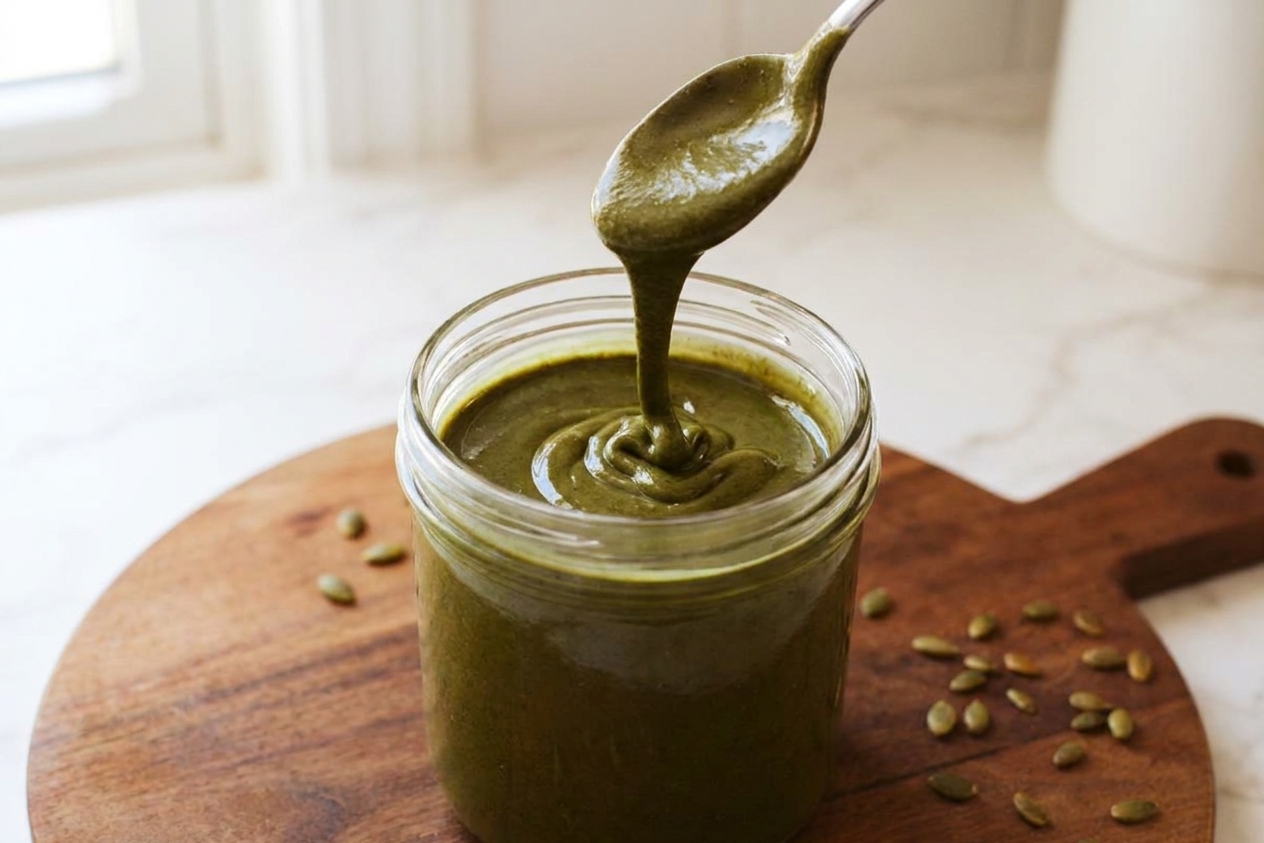
It is also one of those recipes where the biggest secret is simply not stopping too early. There is a moment where the ground seeds look dry and stubborn, like they will never become creamy. Keep going. After the paste warms up and the natural oils release, it shifts into a glossy, loosening butter that drips off a spoon in slow ribbons and spreads without tearing your toast.

In this recipe, I will walk you through the toast level that gives the best flavor without scorching the seeds, how long to run a food processor or blender, and a couple of simple ways to loosen the butter if your batch stays thicker than you want. I will also cover salting, optional sweeteners, and the storage rules I follow so a homemade jar stays fresh.
Why this recipe works
- Toasting first deepens flavor and helps the seeds release oil more readily as they warm in the processor.
- Processing long enough lets friction heat the seeds, which is what transforms gritty meal into glossy butter.
- Scraping the bowl keeps the grind even so you do not end up with a mix of powder and paste.
- Adding salt at the end gives you better control and keeps the butter from tasting flat.
Ingredient notes
Pepitas (hulled pumpkin seeds)
Use hulled pumpkin seeds, usually labeled pepitas. They can be raw or already roasted. If they are already roasted and salted, skip the toasting step or do just a quick warm-up toast, and adjust salt carefully.
Salt
I like fine sea salt because it dissolves quickly. Start small and build. Pumpkin seeds have a naturally rich flavor, and a little salt makes it taste more buttery.
Oil (optional)
In an ideal world, pepitas become creamy with no added oil. In real weeknight kitchens, seed freshness and machine strength vary. A teaspoon or two of a neutral oil can help you reach a more drippy, spoonable texture.
- Neutral: avocado, grapeseed, canola
- Flavorful: mild olive oil (it will taste like it)
Sweetener (optional)
If you want a sweet spread, powdered sugar dissolves fastest. Honey and maple syrup work too, but add them only once the butter is already smooth.
Equipment you will need
- Food processor (best for most home kitchens). A 7 to 14 cup processor is ideal.
- High-speed blender (works, but you must stop and scrape often). Use a tamper if your blender has one.
- Rimmed baking sheet for toasting
- Spatula for scraping down the bowl
- Clean jar with a tight lid for storage
Pro tips
- Toast until fragrant, not dark. Spread pepitas in a single layer so they toast evenly. You are looking for a warm, nutty smell and a few lightly golden seeds, not a deep brown roast.
- Let seeds cool slightly, but not completely. Warm seeds jump-start the creamy stage. Hot seeds can trap steam in a jar later, so cool 5 to 10 minutes before processing if they are piping hot.
- Process in stages. Run 1 to 2 minutes, scrape, repeat. You are aiming for a warm, glossy paste that loosens.
- Watch the sound. Early on, the machine sounds loud and gravelly. As it turns creamy, it often gets quieter and smoother.
- To loosen without watering it down, add oil a teaspoon at a time. Adding water can cause seizing and it increases spoilage risk.
Substitutes that work
- Sunflower seeds: Swap 1:1 for a similar nut-free butter. Toast level matters even more because sunflower seeds can taste bitter if over-toasted.
- Hemp hearts: You can blend a few tablespoons in for extra creaminess, but the flavor shifts grassy.
- Salted pepitas: Use them, but skip added salt until the very end and taste first.
Variations
Sweet cinnamon
Add cinnamon and a touch of maple syrup after the butter turns smooth. (Do not add sweeteners too early or you can slow the emulsifying.)
Chocolate
Add cocoa powder and a little powdered sugar once smooth. If it thickens, loosen with a teaspoon of oil.
Spicy savory
Add chili powder, smoked paprika, and a pinch of garlic powder. This is incredible on roasted sweet potatoes.
Serving ideas
- Swirl into oatmeal with sliced banana
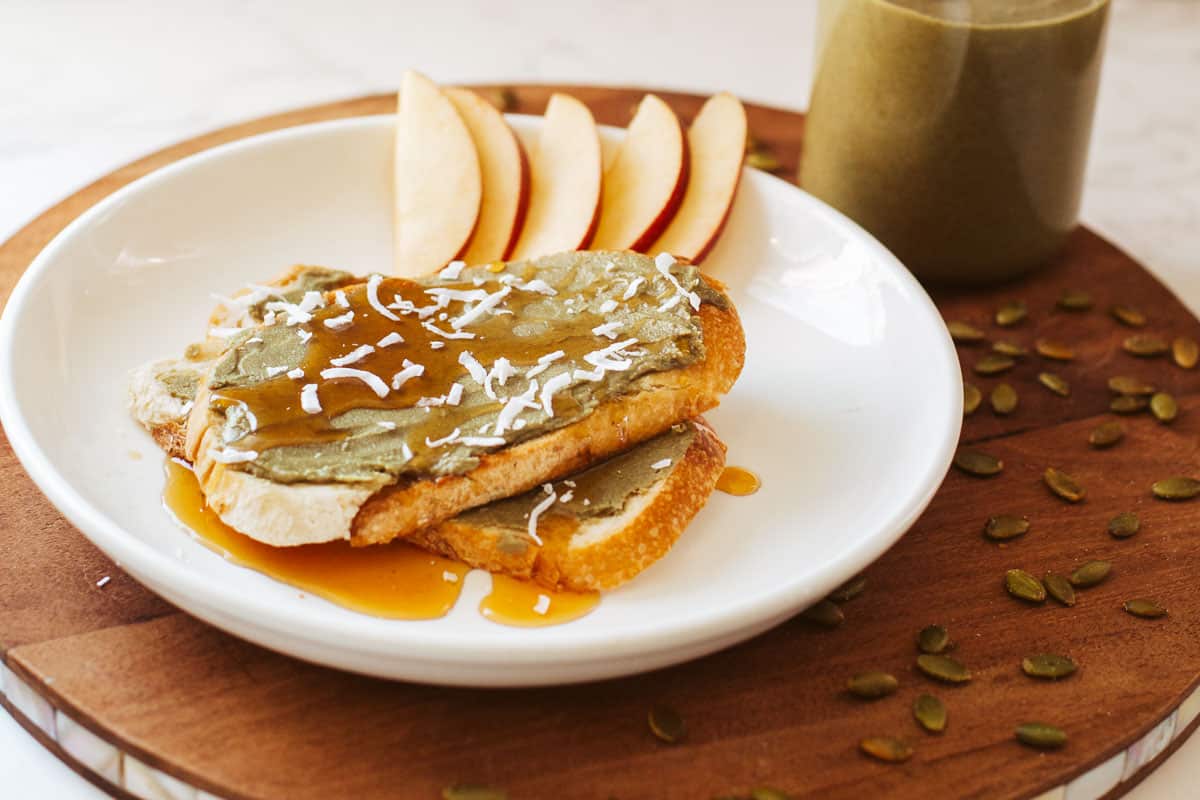
- Spread on toast with honey and flaky salt
- Use as a base for a quick sauce with lime juice, soy sauce, and warm water for noodles
- Stir into yogurt with berries
- Make nut-free lunchbox sandwiches with jam
- Blend into smoothies for a creamy, protein-rich boost
Storage and reheating
Jar storage
Transfer the butter to a clean, dry jar with a tight lid. For best freshness, refrigerate. The butter will firm up when cold, but it should still be spreadable after a few minutes at room temperature.
How long it lasts
- Refrigerator: about 3 to 4 weeks for best flavor
- Freezer: up to 3 months (thaw overnight in the fridge)
Oil separation
Natural separation is normal. Just stir it back together. If it feels very stiff straight from the fridge, let it sit at room temperature 10 to 15 minutes, then stir.
Food safety note
Use a clean spoon each time and keep water and crumbs out of the jar. Moisture is what shortens the life of homemade seed butters.
Common mistakes
- Stopping at the crumbly stage. If it looks like meal or wet sand, it needs more time. The shift to glossy butter can happen suddenly.
- Over-toasting. Pepitas can taste bitter if they get scorched or very dark, and that bitterness concentrates once you grind them into butter. Ovens, pan color, and whether your seeds were already roasted all affect how quickly this happens.
- Not scraping the bowl. The paste can ride up the sides and never fully smooth out unless you scrape.
- Adding liquid to loosen it. Water can make seed butter seize and it increases spoilage risk. Use oil instead, a teaspoon at a time.
- Overheating the machine. If the bowl feels uncomfortably hot or you catch a hot-motor smell, give the processor a short break, then continue. Warm is helpful. Overheated is not.
FAQ
Why is my pumpkin seed butter not getting smooth?
Most often, it just needs more time. Seeds go through stages: crumbs, clumpy paste, thick ball, then glossy butter. If you have been processing for a while and it is still stiff, your seeds may be very dry or your machine may be struggling. Scrape well, keep going, and add 1 teaspoon oil to help it along.
Food processor or blender: which is better?
A food processor is usually easier because it has more surface area for the seeds to circulate. A high-speed blender can work, but you will need to stop and scrape often, and it helps to have a tamper.
Do I have to toast the pepitas?
No, but the flavor is noticeably better with a light toast. Toasting also helps the oils release, which makes the butter feel creamier.
What does pumpkin seed butter taste like?
It is deeply nutty and roasted, a little earthy, and less sweet than peanut butter. Think of it as somewhere between tahini and a mild nut butter, with a beautiful green color.
Is pumpkin seed butter nut-free?
It is made from seeds, not tree nuts or peanuts, so it is naturally nut-free. If you are dealing with severe allergies, check the packaging for shared-facility statements and choose pepitas processed in a nut-free facility when needed. Keep in mind that seed allergies exist too, so always follow your household allergy guidance.
The recipe
Pumpkin Seed Butter
A smooth, glossy pumpkin seed butter made by toasting pepitas and processing them until the natural oils release into a spoonable, drippy spread.
- Prep
- 5 minutes
- Cook
- 8 minutes
- Total
- 20 minutes
- Yield
- About 1 cup
Ingredients
- 2 cups (about 10 oz) pepitas (hulled pumpkin seeds), preferably raw and unsalted
- 1/4 to 1/2 tsp fine sea salt, to taste
- 1 to 3 tsp neutral oil (optional, to loosen), such as avocado or grapeseed
Instructions
- Toast the pepitas: Preheat the oven to 350°F (175°C). Spread pepitas in an even layer on a rimmed baking sheet. Toast for 6 to 10 minutes, stirring once halfway through, until fragrant and just starting to turn lightly golden in spots. Do not let them get very dark.
- Cool briefly: Let the pepitas cool on the pan for 5 to 10 minutes. They should be warm, not steaming hot.
- Start processing: Add pepitas to a food processor. Process for 1 minute. The seeds will turn into a coarse meal.
- Scrape and keep going: Scrape down the bowl and process again for 1 to 2 minutes. The mixture will look crumbly, then start clumping.
- Process to glossy: Continue processing in 1 to 2 minute bursts, scraping as needed, until the butter turns smooth and glossy and begins to loosen. This usually takes 6 to 10 minutes total processing time in a food processor. The finished texture should be thick but spoonable, with slow drips off a spoon. If the bowl starts to feel uncomfortably hot to the touch or you smell the motor heating up, stop and let the machine rest for 2 to 3 minutes, then continue.
- Season: Add 1/4 teaspoon salt and process 10 seconds. Taste and add more salt if needed.
- Loosen if desired: If you want a drippier butter, add oil 1 teaspoon at a time, processing 15 to 20 seconds between additions, until it reaches your preferred consistency.
- Jar it up: Transfer to a clean, dry jar and let cool completely before sealing. Store in the refrigerator and stir before using if any natural separation occurs.
Notes
Texture cue: If your mixture looks like damp sand or a stiff, crumbly paste, keep processing. The shift to glossy butter often happens suddenly once the seeds warm up.
Blender method: Use a high-speed blender only if you can stop and scrape frequently. Work in short bursts to avoid overheating the motor.
Optional add-ins: Once smooth, you can blend in 1 to 2 tsp honey or maple syrup, or 1/2 tsp cinnamon. Add-ins can thicken the butter, so loosen with a little oil if needed.