
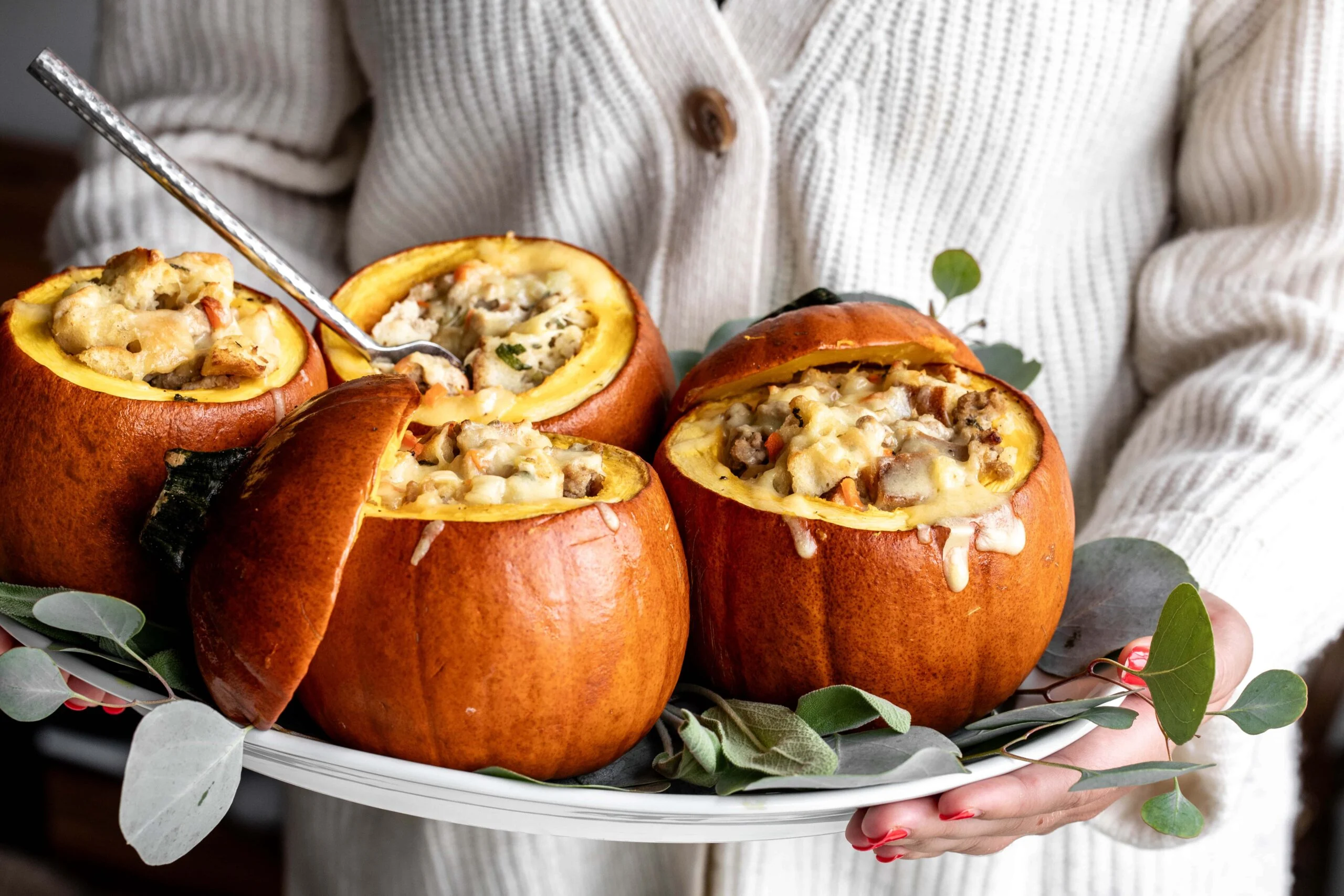
The first time I made a stuffed pumpkin, I was managing a bakery and had the kind of day where you want dinner to feel like a reward. I grabbed a squat little pumpkin at the market, treated it like a soup tureen you can eat, and crossed my fingers. What came out of the oven felt like a magic trick: a pumpkin that held its shape, walls soft enough to scrape with a spoon, and a steaming, savory filling that tasted like the best parts of stuffing and risotto had a cozy meeting.
This is that idea, made weeknight realistic. You are basically building a hearty filling, packing it into a hollowed pumpkin, and letting the pumpkin roast until it is tender inside but still sturdy enough to carry to the table. When you scoop, you pull a little pumpkin flesh into each portion, which makes the whole thing feel rich without needing cream.
A quick heads-up on timing: roast time depends on how thick your pumpkin walls are, how tightly you pack the filling, and whether the stuffing goes in warm or straight from the fridge. I use the clock as a guide, then trust the knife test. Once it comes out, a short rest helps everything settle so serving is less splashy and more scoopable.

Choosing a pumpkin
In general, skip the big jack-o'-lantern types for this. They tend to be watery and stringy, and the walls often get flimsy before the inside becomes pleasantly tender. Some will work in a pinch, but you are playing on hard mode.
- Best choice: sugar pumpkin, also sold as pie pumpkin. Look for one that feels heavy for its size with a hard, unblemished rind.
- Also great: winter squash like kabocha or red kuri. These tend to be sweeter and denser and hold their shape beautifully.
- Size guidance: a 3- to 4-pound pumpkin is the sweet spot for a filling that cooks through at the same time the walls turn tender.
One more practical detail: choose a pumpkin with a flatter bottom so it sits steadily in the oven and on the table.
Stuffing moisture
Think moist, not soupy. Your filling continues to steam inside the pumpkin, and the pumpkin itself releases moisture as it roasts. If your stuffing starts out runny, you will end up with a puddle and a filling that tastes diluted.
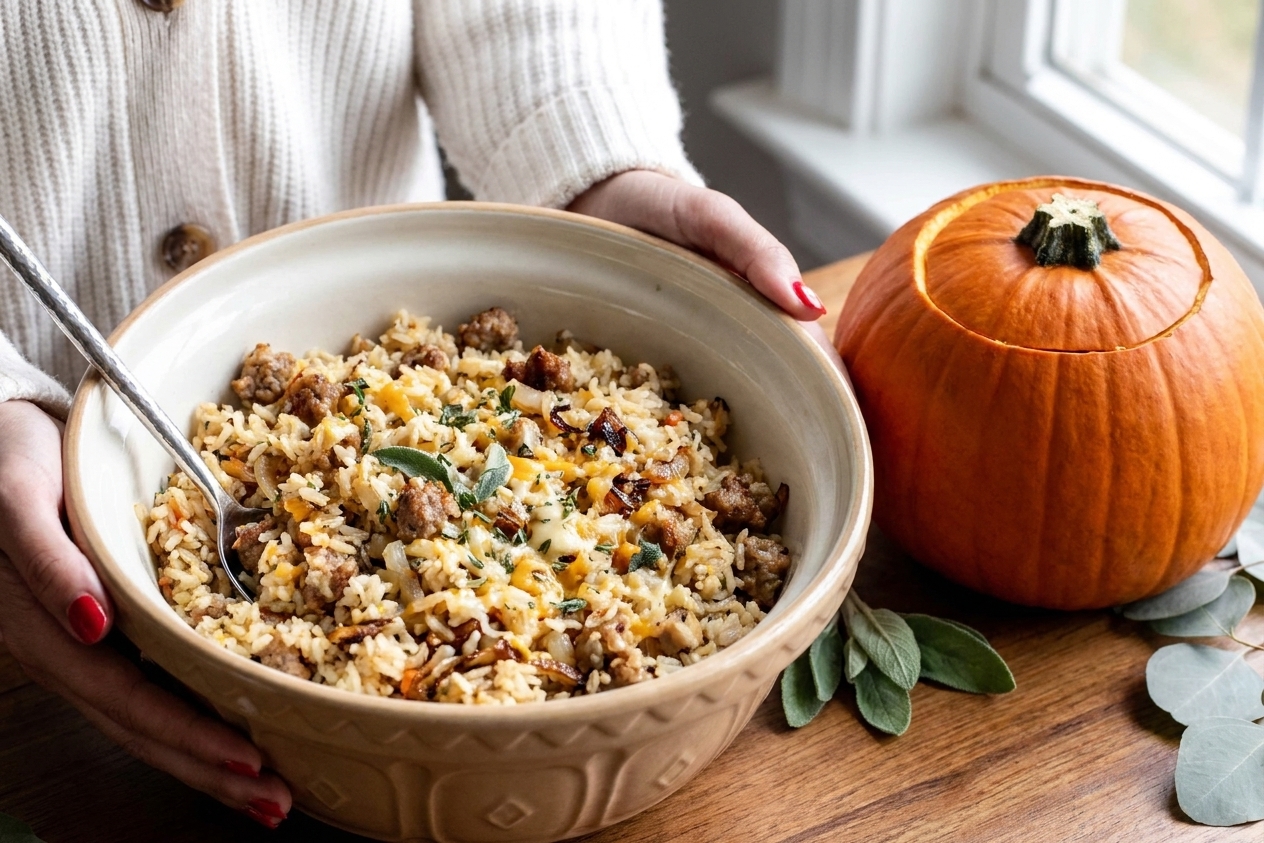
For this recipe, the rice is cooked until just tender, then mixed with sautéed aromatics and enough broth to keep it plush. When you spoon it into the pumpkin, it should mound up and hold its shape, kind of like a thick pilaf. If it looks shiny-wet or pools liquid at the bottom of the bowl, cook it a minute longer to evaporate, or stir in a handful of plain, unseasoned breadcrumbs to soak up the excess.
Roast time cues
Stuffed pumpkin timing is more about the pumpkin walls than the clock, but here is what tends to be reliable in a home oven. Start checking on the early end if your pumpkin has thinner walls, your filling went in hot, or you did not pack it very tightly. Start checking later if the walls are thick or the filling is cold from the fridge.
- At 375°F: plan for about 75 to 105 minutes for a 3- to 4-pound pumpkin. Start checking around 70 minutes.
- At 400°F: plan for about 60 to 90 minutes. Start checking around 55 minutes.
You are looking for three signs of doneness:
- The tip of a paring knife slides into the pumpkin wall with little resistance, like testing a baked potato.
- The flesh near the opening scrapes easily with a spoon but the shell is still holding its bowl shape.
- The filling is hot in the center. If you have a thermometer, I like 165°F in the middle for meat-containing fillings like this sausage version.
If the pumpkin is getting tender but the top of the filling looks pale, remove the pumpkin lid for the last 10 to 15 minutes so the surface can brown. If the outside of the pumpkin seems to be browning too fast, tent it loosely with foil and keep roasting.
My favorite way to serve this is family-style: bring the whole pumpkin to the table, then scoop stuffing and pumpkin together so everyone gets both in every spoonful.
Why this recipe works
- The pumpkin lid traps steam. Keeping the lid on for most of the roast gently steams the walls so they turn tender without drying out or splitting.
- Par-cooked rice keeps the texture right. Starting with cooked rice means the filling stays fluffy and savory instead of turning gummy or underdone while the pumpkin finishes.
- Controlled moisture prevents soupiness. The filling is deliberately moist but thick, so when the pumpkin releases its own juices you still end up with a cohesive, spoonable stuffing.
- Uncovering at the end adds browning. A short lid-off finish gives you that toasty top that tastes like classic holiday stuffing, even on a random Tuesday.
Ingredient notes
Pumpkin: Use a sugar pumpkin or kabocha in the 3- to 4-pound range. If your pumpkin is larger, you can still use it, but expect the walls to take longer to tenderize. If it is much smaller, reduce filling slightly so you can close the lid.
Sausage: Italian sausage brings built-in seasoning. Mild is cozy, hot is bold. If you use a very lean sausage, add a little extra olive oil so the aromatics do not scorch.
Rice: I like a long-grain white rice for fluffiness, or brown rice for nuttier flavor. If using brown rice, cook it fully before mixing, since it will not soften much more inside the pumpkin.
Broth: Chicken broth adds depth, veggie broth works well too. Avoid adding extra beyond what the recipe calls for unless your mixture is truly dry.
Cheese: Parmesan adds salt and savoriness. Gruyere or sharp white cheddar are also wonderful if you want more melty richness.
Herbs: Sage and thyme are the classic pumpkin friends. Dried works, but if you have fresh, it really perfumes the whole pumpkin.
Equipment you will need
- Sharp chef’s knife
- Large spoon for scraping seeds
- Large skillet
- Medium saucepan with lid (for cooking rice)
- Rimmed baking sheet or roasting pan
- Foil (optional, for tenting)
- Instant-read thermometer (optional but helpful)
Pro tips
- Cut a wide lid. A larger opening makes stuffing easier and gives you more room to scoop servings without cracking the rim.
- Season the pumpkin interior. Salt and pepper inside the cavity makes the pumpkin flesh taste like part of the dish, not just the container.
- Do not pack the filling too tightly. A gentle pack helps it heat through evenly. Overpacking can make the center heat slowly.
- Keep the pumpkin stable. If it wobbles, crumple a ring of foil and nestle it around the base in the roasting pan so it stays upright.
- Know your finish. Lid on for tenderness, lid off at the end for browning. If you only remember one thing, it is that.
Substitutes that work
- Turkey sausage instead of pork: Works great. Add a tablespoon of olive oil if it is very lean.
- Cooked farro or barley instead of rice: Use 3 cups cooked grains and reduce added broth slightly, since they hold moisture differently.
- Mushrooms instead of sausage: Sauté 12 ounces chopped mushrooms until deeply browned, then proceed. Add 1 teaspoon smoked paprika or soy sauce for extra savoriness.
- Breadcrumbs instead of some rice: For a more traditional stuffing vibe, replace 1 cup cooked rice with 1 cup fresh breadcrumbs and add an extra splash of broth if needed.
- Dairy-free: Skip the cheese and add 2 tablespoons nutritional yeast plus an extra pinch of salt.
Variations
- Sausage and apple: Add 1 diced apple when you sauté the onion and celery for a sweet-savory balance.
- Southwest style: Use chorizo, stir in 1 cup black beans, add cumin and chili powder, and top with pepitas after roasting.
- Vegetarian fall harvest: Use mushrooms, add dried cranberries and toasted walnuts, and finish with a drizzle of balsamic.
- Bready stuffing version: Use 5 to 6 cups cubed day-old bread in place of rice. Add broth gradually until the bread is moist but not slumping, then stuff and roast.
Serving ideas
- Serve with a bright salad like arugula with lemon and shaved Parmesan to cut the richness.
- Add a simple green vegetable on the side, like roasted Brussels sprouts or sautéed green beans with garlic.
- Put out a spoon and a sharp knife at the table so you can scoop filling and also shave off strips of pumpkin flesh as you go.
- If you want a sauce, a quick pan gravy is lovely, but honestly a drizzle of good olive oil over each serving is all it needs.
Storage and reheating
Refrigerate: Scoop leftovers out of the pumpkin and store filling and pumpkin flesh together in an airtight container for up to 4 days.
Reheat: Microwave in 60 to 90 second bursts, stirring between, until hot. Or warm in a covered baking dish at 350°F until heated through, adding a splash of broth if it seems dry.
Freezing: The filling freezes better than the pumpkin flesh. Freeze the stuffing mixture for up to 2 months. Thaw overnight in the fridge before reheating.
Common mistakes
- Using a carving pumpkin: They tend to be watery and can turn stringy. Choose sugar pumpkin, kabocha, or red kuri for better texture.
- Making the filling too wet: Remember the pumpkin releases moisture. Aim for moist and thick, not loose.
- Undercooking the pumpkin walls: If the shell feels firm, keep roasting. The pumpkin should be tender enough to scrape easily with a spoon.
- Overbrowning the outside: If the rind darkens quickly, tent with foil and lower the oven temperature slightly.
- Overfilling so the lid will not sit: Leave about 1 inch of headspace so steam can circulate and the lid fits back on.
FAQ
Do you eat the pumpkin bowl?
Yes. That is the best part. When you scoop servings, scrape some of the tender pumpkin flesh into each portion. The outer skin is usually not pleasant to eat, so I treat it like the peel on a baked squash and leave it behind.
How do I know the pumpkin is done without a thermometer?
Use a paring knife. Poke the thickest part of the wall near the base. If it slides in with little resistance, like a baked sweet potato, it is ready. Then scrape with a spoon. If the flesh lifts easily, you are good.
Can I prep this ahead?
You can make the filling up to 2 days ahead and refrigerate it. Stuff the pumpkin right before roasting. Cold filling can add 10 to 15 minutes to the bake time, so plan accordingly.
What if the filling is hot but the pumpkin walls are still firm?
Cover the top again with the pumpkin lid or foil and keep roasting. The walls are the slow part. If needed, lower the oven to 350°F so the outside does not overbrown while the inside tenderizes.
Can I use bread stuffing instead of rice?
Absolutely. Just keep the mixture moist but not soggy before stuffing. Bread drinks liquid fast, so add broth gradually and stop when the cubes feel hydrated but still have structure.
The recipe
Savory Stuffed Pumpkin
A whole roasted pumpkin stuffed with savory rice, sausage, herbs, and cheese. Roast it with the lid on until the walls are tender and scoopable, then serve straight from the pumpkin for a cozy, edible centerpiece.
- Prep
- 25 minutes
- Cook
- 1 hour 20 minutes
- Total
- 1 hour 45 minutes
- Yield
- 6 servings
Ingredients
- 1 sugar pumpkin (about 3 to 4 lb), with a sturdy stem if possible
- 2 tsp kosher salt, divided
- 1 tsp black pepper, divided
- 1 tbsp olive oil, plus more as needed
- 1 lb Italian sausage (mild or hot), casings removed if using links
- 1 medium yellow onion, diced
- 2 celery ribs, diced
- 3 garlic cloves, minced
- 1 tbsp chopped fresh sage (or 1 tsp dried)
- 2 tsp fresh thyme leaves (or 3/4 tsp dried)
- 1 1/2 cups uncooked long-grain white rice
- 3 cups low-sodium chicken broth or vegetable broth, plus more as needed
- 1/2 cup grated Parmesan cheese
- 1/3 cup chopped fresh parsley
- 1/2 cup toasted pecans or walnuts (optional)
Instructions
- Heat the oven and prep the pan. Arrange a rack in the lower third of the oven. Heat to 375°F. Set a rimmed baking sheet or roasting pan nearby.
- Prep the pumpkin. Wash and dry the pumpkin. Using a sharp knife, cut a lid around the stem at a slight angle so it will sit back in place. Scoop out seeds and stringy bits. Season the cavity with 1 tsp kosher salt and 1/2 tsp black pepper.
- Start the rice. Rinse the rice until the water runs mostly clear. In a medium saucepan, bring 3 cups broth to a boil. Stir in the rice, cover, reduce heat to low, and cook until the liquid is absorbed and the rice is just tender, 15 to 18 minutes. Remove from the heat and let stand, covered, 5 minutes. Fluff with a fork.
- Brown the sausage. While the rice cooks, heat 1 tbsp olive oil in a large skillet over medium-high heat. Add sausage and cook, breaking it into chunks, until browned and cooked through, 6 to 8 minutes. Transfer sausage to a plate, leaving drippings in the skillet.
- Sauté aromatics. Reduce heat to medium. Add onion and celery to the skillet. Cook until softened and lightly golden, 6 to 8 minutes. Add garlic, sage, and thyme and cook 30 seconds, just until fragrant.
- Mix the stuffing. In a large bowl, combine cooked rice, sausage, onion mixture, Parmesan, parsley, and nuts if using. Taste and season with remaining 1 tsp salt and remaining 1/2 tsp pepper, adjusting to your sausage saltiness. The mixture should be moist but not soupy. If it seems dry, add broth 1 to 2 tablespoons at a time. If it seems wet or shiny-loose, let it sit 5 minutes, then stir and reassess, or add a small handful of plain breadcrumbs if you have them.
- Fill the pumpkin. Spoon the stuffing into the pumpkin, packing it gently and leaving about 1 inch of headspace. Put the lid back on.
- Roast. Set the pumpkin on the baking sheet or in the roasting pan. Roast until the pumpkin walls are tender when pierced with a paring knife and the filling is hot in the center, 75 to 105 minutes depending on pumpkin size and thickness.
- Brown the top if needed. If you want more color on the stuffing, remove the pumpkin lid and roast 10 to 15 minutes more. If the outside of the pumpkin is browning too quickly at any point, tent loosely with foil.
- Rest and serve. Let rest 10 minutes. Bring the pumpkin to the table. Scoop servings that include both stuffing and some tender pumpkin flesh from the inside walls.
Notes
Pumpkin choice: Sugar pumpkin, kabocha, and red kuri hold their shape best. Avoid large carving pumpkins, which tend to be watery and stringy.
Make-ahead: Prepare the filling up to 2 days ahead and refrigerate. Stuff and roast just before serving. Cold filling may add 10 to 15 minutes to the roast.
Doneness cue: The pumpkin is ready when a paring knife slides into the thickest part of the wall easily and the flesh scrapes off with a spoon.