
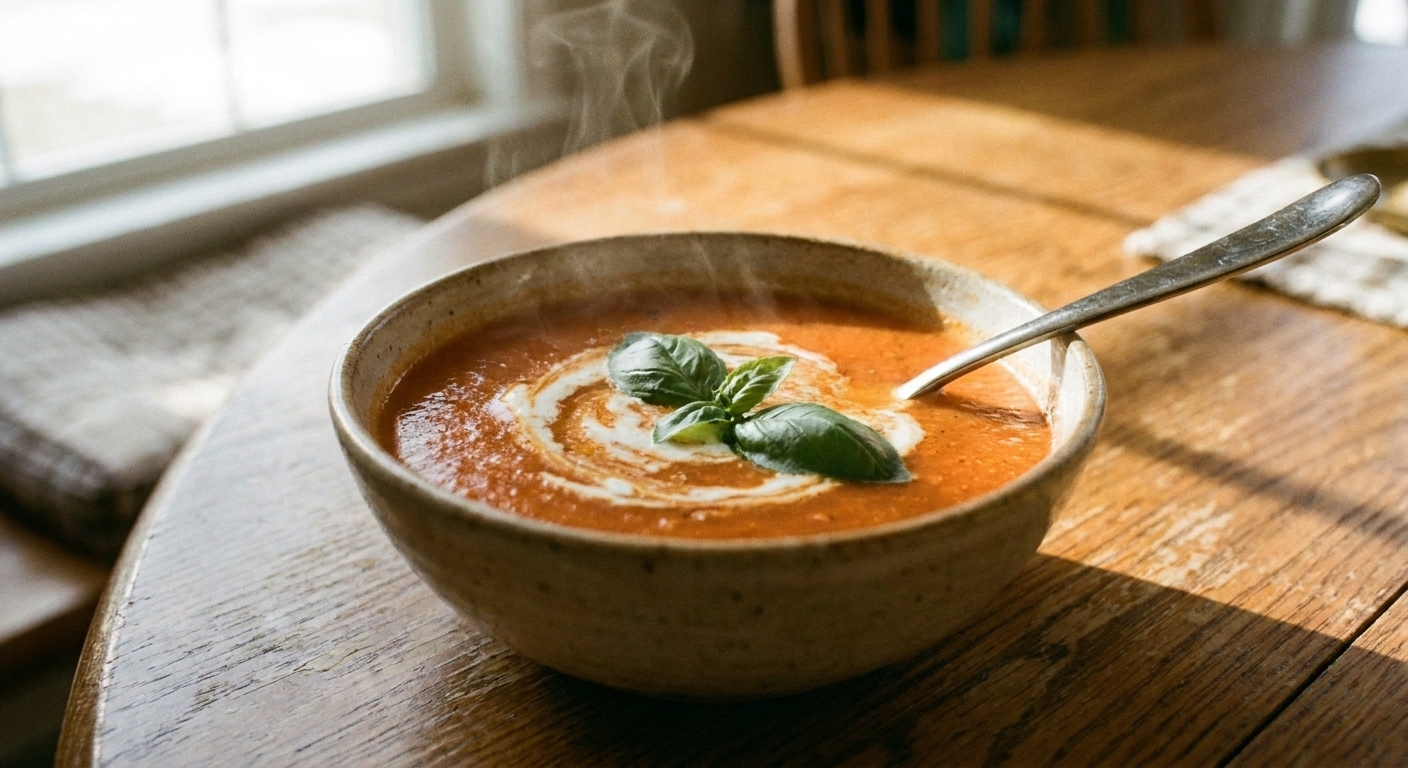
Tomato soup looks simple, but it has a few sneaky ways of turning on you. Too sharp and acidic. Too flat and sweet. Or worst of all, you add cream and it turns grainy and separates right in front of you.
This is the version I make when I want comfort food that still tastes like I tried. It starts with aromatics, builds body with tomatoes, then gets blended until silky. The cream goes in at the end, below a simmer, so it usually stays smooth. Heavy cream helps here too, but if your tomatoes are very acidic or you use lower fat dairy, it can still try to break if the soup gets too hot.

I also want you to feel confident adjusting as you go, because tomatoes vary a lot. Some are sweet. Some are aggressively tangy. This soup is meant to be tasted and nudged into balance with a few small moves like an extra pinch of salt, a little butter for roundness, a tiny pinch of sugar if it is screamingly sharp, or a slightly longer simmer to let everything mellow.
If you are nervous about curdling, here is the whole trick: keep the soup from boiling once dairy is involved, and do not shock it with fridge-cold cream. Let the bubbling stop, then stir in room temperature cream slowly and warm it gently. If you want extra insurance, temper the cream first by stirring in a ladle of hot soup, then pour that mixture back into the pot.
If your soup tastes a little too sharp, do not panic. You are usually one small pinch of sugar, one knob of butter, or a few extra minutes of simmering away from a perfectly rounded bowl.
Choosing tomatoes
Canned tomatoes: For weeknights, canned whole peeled tomatoes are my favorite because, in my experience, they often taste a little more rounded than many crushed options. You also control the texture when you blend. Fire-roasted canned tomatoes are great if you want a subtle smoky edge. If you want a clean, classic tomato flavor, I would skip heavily seasoned cans that already have garlic, basil, or extra flavorings mixed in.
Fresh tomatoes: Use ripe, flavorful tomatoes. Roma and plum tomatoes make a thicker soup with less water. Juicy slicing tomatoes work too, but you may need a little longer simmer to reduce and concentrate.
Why this recipe works
- Aromatics first: Cooking onion and garlic in fat builds a savory base so the soup tastes rich even before the cream.
- Simmer, then blend: A short simmer smooths out canned flavors or concentrates fresh tomatoes, and blending creates that classic silky texture.
- Acid and sweetness are adjustable: Tomatoes are naturally acidic. A small amount of sugar, carrot, or a touch of butter can round the flavor without making it taste sweet.
- Cream goes in below a simmer: Keeping the soup from boiling when you add dairy dramatically reduces the chance of curdling and splitting.
Ingredient notes
Tomatoes
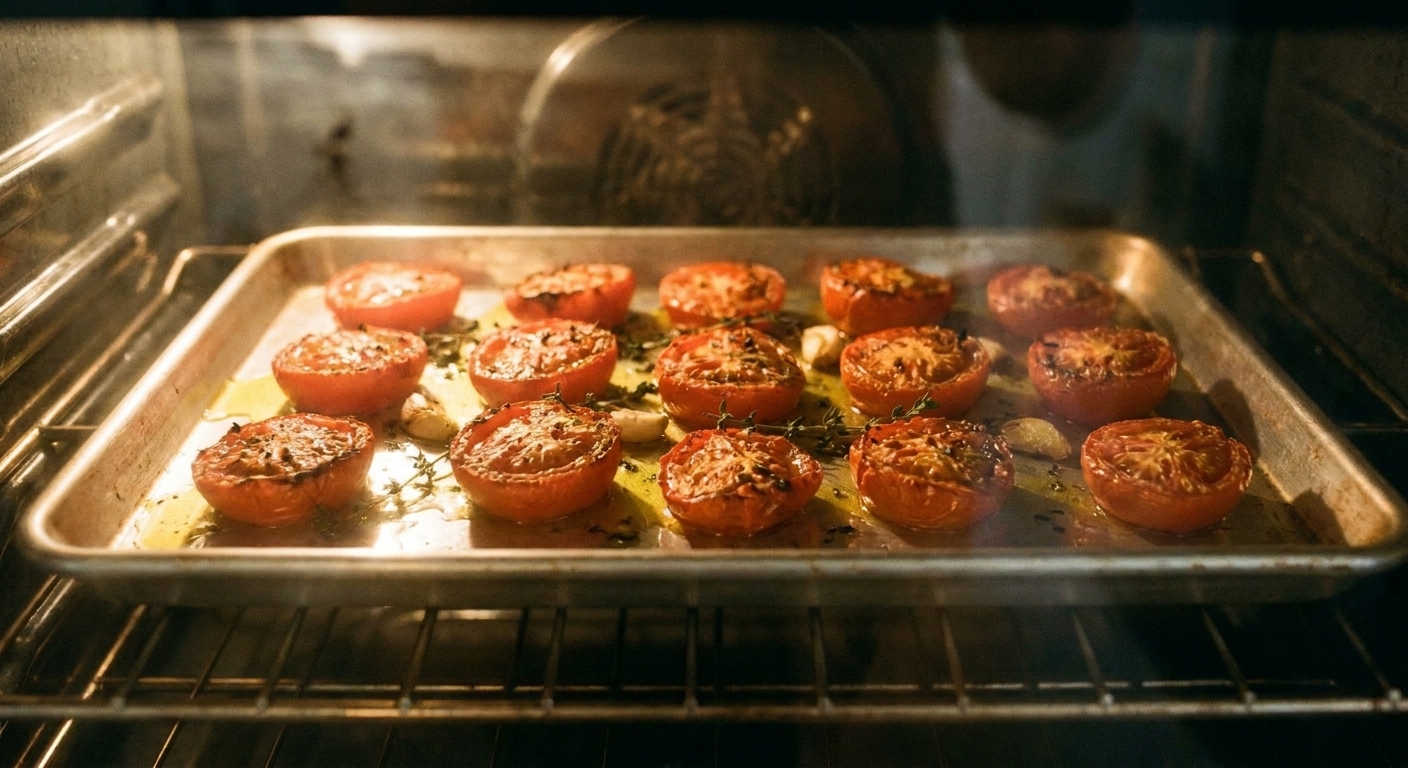
Use canned whole peeled tomatoes for the easiest, most consistent results. If using fresh, roasting them first adds depth and drives off extra water.
Aromatics
Onion and garlic are the backbone. If you have them, a small carrot adds gentle sweetness that helps tame acidity naturally.
Stock or water
Vegetable or chicken stock adds more savoriness, but water still works. If you use water, you may want a slightly bigger pinch of salt and a little extra simmer time.
Cream
Heavy cream is the most stable choice. Half-and-half works, but it is more likely to split if the soup is too hot or very acidic. For a lighter option, try whole milk and be extra strict about keeping the soup off a boil when you add it.
Butter and sugar
These are not just “extras.” A little butter rounds harsh acidity. A pinch of sugar can make tomato taste more like tomato, especially with very tangy canned tomatoes.
Acid (optional)
It sounds counterintuitive, but sometimes a tiny splash of vinegar or lemon at the end makes tomato flavor pop. Only do this if the soup tastes dull, not if it already tastes sharp.
Equipment you will need
- Large pot or Dutch oven
- Blender (standard blender) or immersion blender
- Chef’s knife and cutting board
- Wooden spoon or heat-safe spatula
- Fine mesh strainer (optional, for ultra-smooth soup)
If you use a standard blender, blend hot soup in batches and vent the lid. Steam expands fast and can force the lid off if you seal it tightly.
Pro tips
- Blend for longer than you think: An extra 30 to 60 seconds makes the texture noticeably silkier.
- Want diner-style smooth? Strain after blending. You will catch seeds and bits of skin for a super-velvety finish.
- Balance the flavor in this order: Salt first, then butter, then a pinch of sugar if needed. Taste after each adjustment.
- How to add cream without splitting: Turn off the heat. Let the soup stop bubbling completely. Stir in room temperature cream slowly. Then warm gently.
- Temper if you are nervous: Stir a ladle of hot soup into the cream in a measuring cup, then pour that mixture back into the pot.
- Keep reheating gentle: Once dairy is in, avoid boiling. Aim for steaming, not rolling bubbles.
Substitutes that work
- No cream? Use half-and-half, whole milk, or evaporated milk. For non-dairy, use unsweetened cashew cream, oat cream, or full-fat coconut milk (coconut adds flavor).
- No stock? Water works. Add a touch more salt and consider a small pat of butter for richness.
- No onion? Use a couple of sliced scallions or a pinch of onion powder, added while simmering.
- No garlic? Skip it, or use a small pinch of garlic powder.
- Need it thicker? Simmer uncovered to reduce, or blend in a small piece of bread for body.
Variations
- Roasted tomato soup: Roast fresh tomatoes with onion and garlic until caramelized, then simmer briefly with stock and blend.
- Smoky tomato soup: Add a pinch of smoked paprika or use fire-roasted canned tomatoes.
- Spicy tomato soup: Add red pepper flakes with the aromatics, or finish with a swirl of chili oil.
- Herby tomato soup: Simmer with basil stems or a bay leaf, then remove before blending. Finish with fresh basil.
- “Creamy” without dairy: Blend in a drained can of white beans or a handful of soaked cashews. You get body and silkiness with no cream at all.
Serving ideas
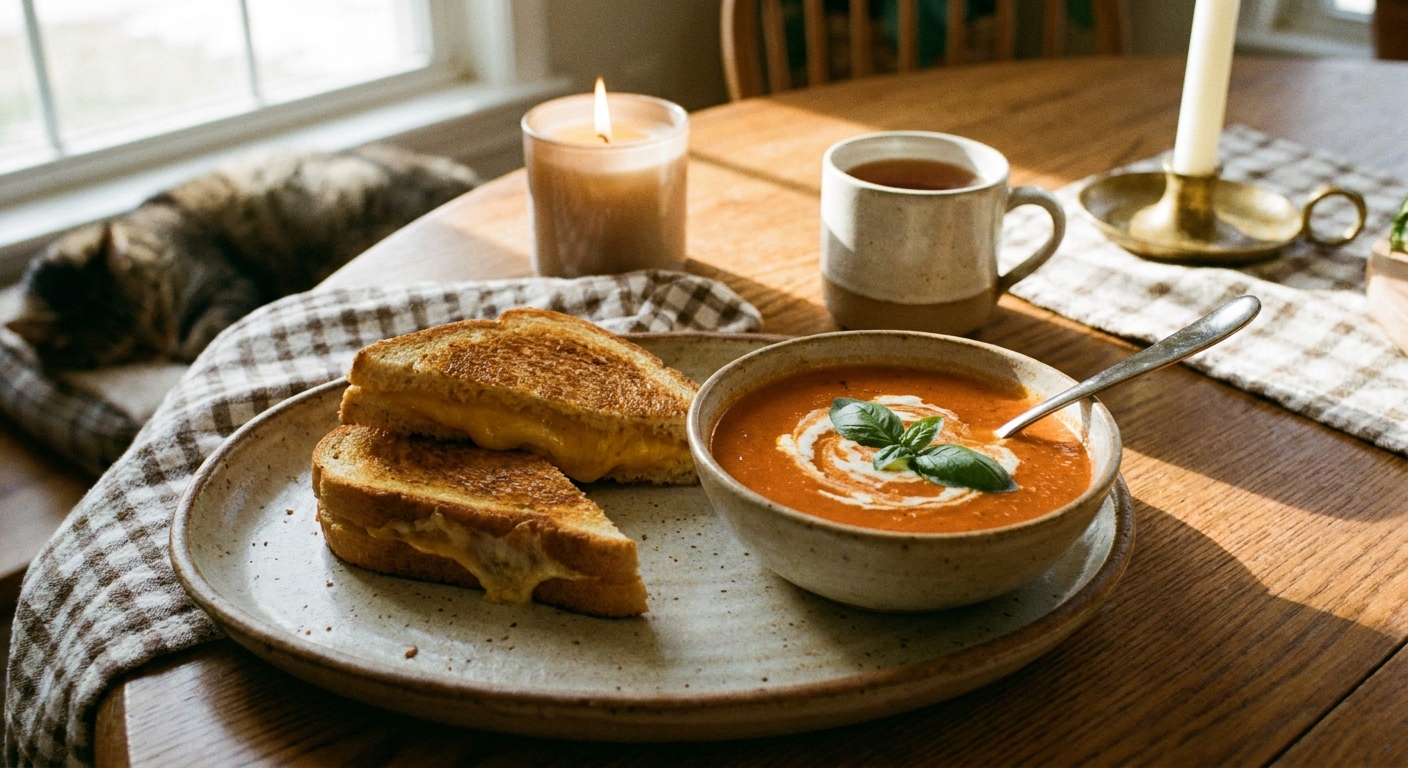
- Grilled cheese, of course. Sharp cheddar, mozzarella, or whatever is in the fridge.
- Garlic toast or a thick slice of crusty bread for dunking.
- Top with a drizzle of cream, olive oil, or basil pesto.
- Add crunchy croutons, crushed crackers, or roasted chickpeas.
- Make it a meal with a simple green salad and a salty vinaigrette.
Storage and reheating
Refrigerator
Store cooled soup in an airtight container for up to 4 days.
Freezer
For best texture, freeze the soup before adding cream, up to 3 months. Thaw in the fridge overnight, reheat gently, then stir in cream off the heat.
Reheating
Warm over medium-low heat, stirring often. Once the soup contains cream, avoid boiling to prevent splitting. If it thickens in the fridge, loosen with a splash of stock or water.
Common mistakes
- Boiling after adding cream: The most common cause of curdling. Keep it at a gentle steam.
- Not tasting for balance: Tomatoes vary. Season and adjust at the end so you do not lock in a too-tangy soup.
- Under-blending: If it tastes fine but feels a little gritty, blend longer or strain.
- Adding cold cream straight from the fridge: Temperature shock can encourage splitting. Let it sit out for 10 to 15 minutes, or temper it.
- Using very low-fat dairy: Skim milk and light cream separate more easily. If you want lighter, use whole milk and keep the heat low.
FAQ
How do I fix tomato soup that is too acidic?
Start with salt. Then add a tablespoon or two of butter for roundness. If it is still sharp, add sugar a pinch at a time. You can also simmer uncovered a bit longer to mellow the acidity.
Why did my cream split in tomato soup?
Usually either the soup was boiling, the cream was very cold, you used a low-fat dairy, or the soup was very acidic. Turn off the heat, let the bubbling stop, then stir in room temperature cream slowly. Reheat gently and avoid boiling once the dairy is in.
Can I make it with fresh tomatoes?
Yes. Roast or simmer them until they break down and some water cooks off, then blend. Fresh tomato soup often needs a little extra salt and a longer simmer to concentrate flavor.
Do I need sugar?
Not always. Some tomatoes are naturally sweet. Use sugar as a small adjustment, not a requirement. Carrot and onion also add sweetness in a more subtle way.
How do I make it extra smooth?
Blend thoroughly, then strain through a fine mesh strainer. It is optional, but it gives you that ultra-silky restaurant texture.
The recipe
Creamy Tomato Soup
A cozy, velvety tomato soup made with canned or fresh tomatoes and aromatics, blended smooth and finished with cream off the heat so it stays silky, not split.
- Prep
- 15 minutes
- Cook
- 30 minutes
- Total
- 45 minutes
- Yield
- 4 to 6 servings
Ingredients
- 2 tbsp olive oil
- 1 medium yellow onion, diced
- 1 small carrot, peeled and diced (optional but recommended)
- 3 cloves garlic, minced
- 2 tbsp tomato paste
- 1 tsp kosher salt, plus more to taste
- 1/2 tsp black pepper
- 1 (28 oz) can whole peeled tomatoes with juices, or 2 1/2 to 3 lb ripe fresh tomatoes, chopped
- 2 cups vegetable or chicken stock, plus more as needed
- 1 tsp sugar, optional and to taste
- 1/2 cup heavy cream, at room temperature
- 2 tbsp unsalted butter (optional, for extra roundness)
- 1 to 2 tsp balsamic vinegar or lemon juice (optional, for brightness)
- Fresh basil or chives, for serving (optional)
Instructions
- Sweat the aromatics. In a large pot or Dutch oven, warm the olive oil over medium heat. Add the onion (and carrot, if using) and cook, stirring occasionally, until softened and translucent, 8 to 10 minutes.
- Add garlic and tomato paste. Stir in the garlic and cook 30 seconds. Add the tomato paste and cook, stirring constantly, until it darkens slightly and smells toasty, about 1 minute.
- Add tomatoes and simmer. Add the canned tomatoes with their juices (or fresh chopped tomatoes), salt, and pepper. Use your spoon to break up whole tomatoes. Pour in the stock and bring to a gentle simmer. Cook uncovered, stirring occasionally, for 15 to 20 minutes to meld flavors and slightly reduce.
- Blend until smooth. Turn off the heat. Blend the soup with an immersion blender until very smooth. If using a standard blender, work in batches and vent the lid. For an ultra-silky soup, strain through a fine mesh strainer back into the pot (optional).
- Adjust thickness and seasoning. If the soup is thicker than you like, add a splash of stock and stir. Taste and adjust with more salt and pepper as needed.
- Balance the acidity. If the soup tastes sharp, stir in the butter (if using) and taste again. Add sugar a pinch at a time only if needed. Simmer 2 to 3 minutes if you want the flavors to round out further.
- Add cream off the boil. Make sure the soup is not bubbling. With the heat off, slowly stir in the room temperature heavy cream. Return the pot to low heat just until the soup is steaming. Do not boil.
- Finish and serve. Taste one last time. If the soup tastes a little flat, stir in 1 to 2 teaspoons balsamic vinegar or lemon juice (optional). Serve hot, topped with herbs if you like.
Notes
- To prevent curdling: Keep the soup below a simmer when adding cream. If your cream is cold, temper it by whisking a ladle of hot soup into the cream first, then stir the mixture back into the pot.
- Fresh tomato option: If your fresh tomatoes are very juicy, simmer a little longer to concentrate. Roasting them first adds deeper flavor.
- Make-ahead tip: For the best freezer results, freeze the soup before adding cream. Thaw, reheat gently, then add cream off the heat.