
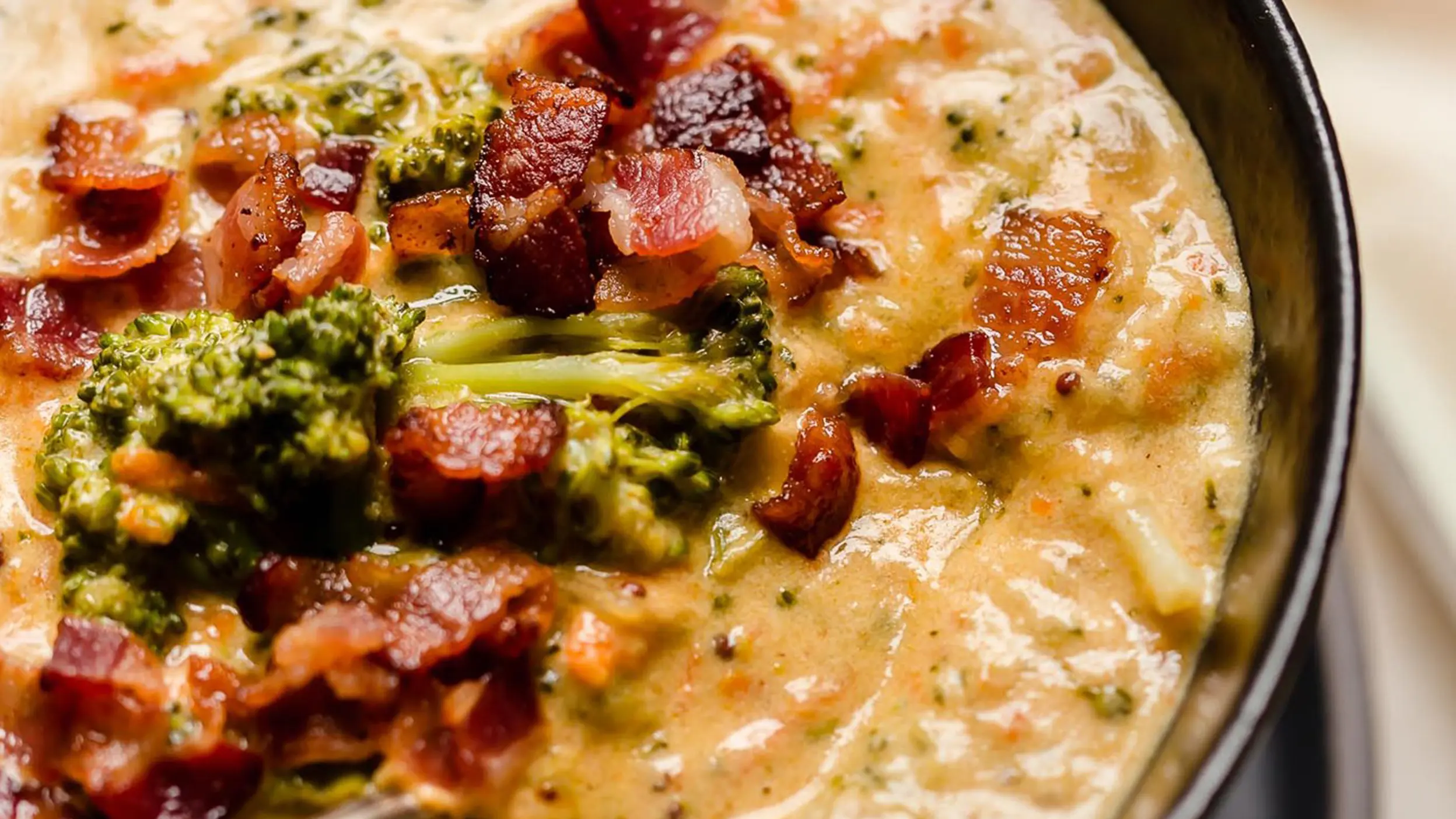
Broccoli cheddar soup is one of those dinners that feels like a warm blanket, but it can be surprisingly fussy. Too much heat and the cheddar can turn grainy. Too much simmer time and the broccoli turns into olive-green mush. Too little thickener and the whole thing can end up feeling like cheesy milk.
This version is my weeknight, one-pot answer: a gentle roux thickener for a smooth base, then broccoli added late so it stays bright and pleasantly tender. It is the same logic I learned managing a bakery. A few degrees and a few minutes can be the difference between silky and split.

If you have ever had broccoli cheddar soup break on you, do not worry. Often it happens when the soup gets too hot after the cheese goes in, or when the cheese is added too quickly. It can also be nudged in the wrong direction by very aged cheese, pre-shredded cheddar that tends to melt less smoothly because it is drier and coated to prevent clumping, a very low-fat dairy base, or extra acidity. I will show you when to turn the heat down, what kind of cheddar behaves best, and how to blend just enough for that classic creamy texture without sacrificing actual broccoli pieces.
What to expect
- Texture: silky cheese base with tender broccoli florets and a little body from the roux
- Flavor: sharp cheddar forward, lightly sweet from sautéed onions and carrots, savory from broth
- Difficulty: easy, but with one rule: keep the heat low once the cheese goes in
Why this recipe works
- A simple roux thickens without starchy grit. Cooking flour in butter for a minute or two removes the raw taste, then the liquid goes in gradually so the base turns smooth and cohesive.
- Cheddar is added off the boil. Cheese proteins tighten and squeeze out fat when overheated, which is what creates graininess. Pulling the pot off direct heat and stirring in handfuls helps keep the emulsion stable.
- Broccoli goes in late. Broccoli keeps its color and texture when it is cooked gently for a short time. If you simmer it from the beginning, it will turn dull and soft before the soup is even finished.
- Partial blending makes it creamy without baby food vibes. Blending a portion of the soup thickens naturally and creates that classic velvety feel while leaving some florets intact for real bite.
Ingredient notes
Broccoli
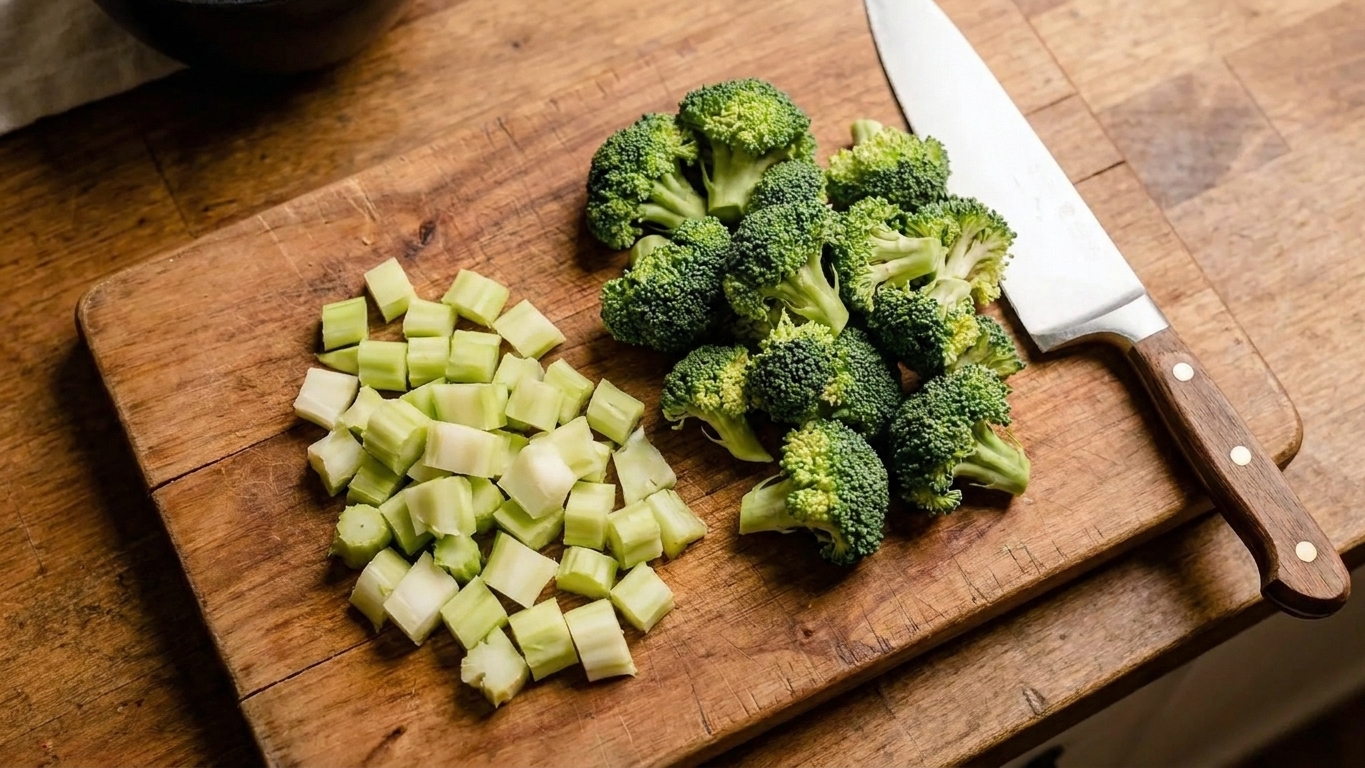
Fresh broccoli gives the best texture. Cut florets into bite-size pieces, and do not throw away the stems. Peel the tough outer layer and dice the tender core. It adds broccoli flavor without turning the soup into a pile of overcooked florets.
Cheddar
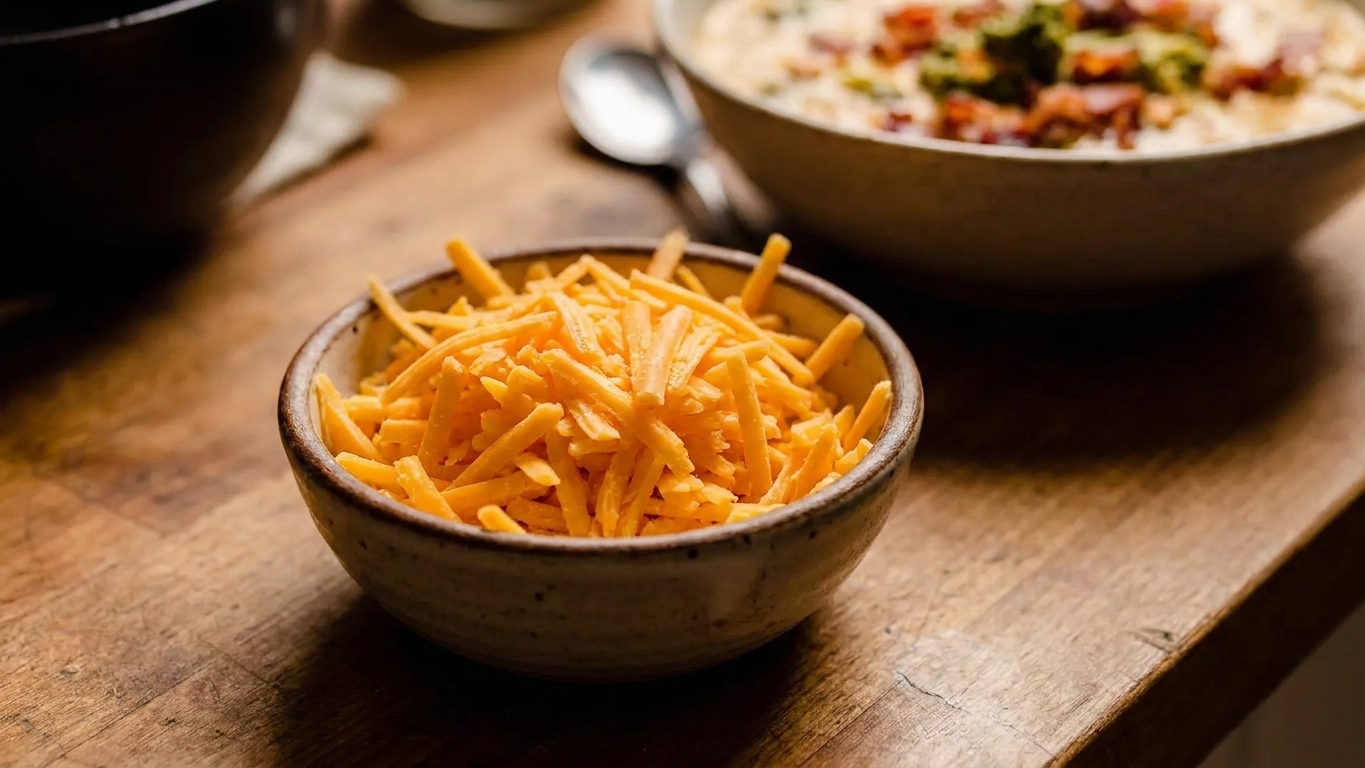
Use sharp cheddar for flavor, and shred it yourself if you can. Pre-shredded cheese is usually coated to prevent clumping and tends to be a bit drier, which can make it melt less smoothly and contribute to a slightly grainy texture. If pre-shredded is what you have, it will still work, just melt it more slowly and keep the heat extra gentle.
Dairy base
A mix of milk and a little cream makes a lush, smooth soup. You can go all milk for a lighter feel, but avoid very low-fat milk, which is more likely to look thin and can curdle if overheated.
Broth
Chicken broth adds savory depth, but vegetable broth is great too. If your broth is very salty, hold back on added salt until the end.
The thickener
The thickener here is a butter and flour roux. It is reliable, neutral tasting, and it thickens the soup in a way that supports the cheese instead of fighting it.
Equipment you will need
- Large heavy-bottomed pot or Dutch oven: helps prevent scorching and keeps heat steady
- Wooden spoon or silicone spatula: for scraping the bottom while thickening
- Whisk: for smoothing the roux base as liquid goes in
- Immersion blender: easiest for partial blending, but a countertop blender works too
- Box grater: for shredding cheddar (optional, but highly recommended)
Pro tips
How to melt cheddar smoothly
- Turn the heat down before the cheese goes in. Aim for steaming hot, not bubbling.
- Add cheese in small handfuls. Stir until each addition melts before adding more.
- Use freshly shredded cheese when possible. It melts cleaner and smoother.
- Do not boil after adding cheese. If you need to reheat, use low heat and stir often.
Keep broccoli tender
- Add broccoli near the end. Cook just until bright green and fork-tender.
- Cut florets evenly. Small florets overcook while big ones stay crunchy.
- Blend only part of the soup. Blend the base, not the whole pot, unless you truly want it completely smooth.
Smooth base every time
- Add liquid gradually to the roux. A little at a time plus whisking prevents lumps.
- Let the soup thicken before judging it. It will continue to thicken as it simmers, then again as it cools slightly.
Substitutes that work
- No cream: use more whole milk. The soup will be slightly lighter but still creamy from the roux and cheese.
- Gluten-free: use a 1:1 gluten-free flour blend designed for thickening sauces, and keep simmering gentle. Texture can vary by brand.
- No carrots or celery: you can skip them. The soup will be a bit less sweet and aromatic but still delicious.
- Cheddar alternatives: use a blend of cheddar plus a little Monterey Jack for extra smoothness. Avoid very aged, crumbly cheddars, which are more prone to breaking.
- Vegetarian: choose vegetable broth and skip any meat-based add-ins.
Variations
Extra hearty
Add diced cooked potatoes, small pasta, or a can of drained white beans. Keep the heat gentle once the cheese is in.
Smoky
Stir in a pinch of smoked paprika and top bowls with crisp bacon or smoked almonds.
Spicy
Add a pinch of cayenne or a few dashes of hot sauce at the end. Spices bloom better early, but hot sauce is easiest to adjust at the finish.
Ultra-smooth
Blend the soup fully, then add a small handful of tiny florets at the end for 3 to 4 minutes so you still get some broccoli texture.
Serving ideas
- Classic: serve with toasted crusty bread or a warm baguette for dunking
- Cozy lunch: pair with a simple green salad with a tangy vinaigrette
- Soup night: set out toppings like extra shredded cheddar, croutons, sliced scallions, and black pepper
- In a bread bowl: if you are feeling nostalgic, this soup was made for it

Storage and reheating
Refrigerator
Store cooled soup in an airtight container for up to 4 days.
Reheating
Reheat gently on the stovetop over low heat, stirring often. If it looks too thick, add a splash of milk or broth. Avoid boiling, which can make the cheese turn grainy.
Freezing
Cheese soups can separate after freezing because dairy emulsions are delicate. You can freeze it, but expect a slight texture change. If you do, thaw overnight in the fridge and reheat very gently, whisking well to bring it back together.
Common mistakes
- Boiling after the cheese is added: the fastest route to grainy soup. Keep it at a bare simmer or lower.
- Using pre-shredded cheddar and dumping it all in at once: it tends to clump and melt unevenly. Add slowly, off the heat if needed.
- Overcooking the broccoli: add it late and cook just until tender.
- Skipping seasoning until the end: season in layers. A little salt with the vegetables helps build flavor, then adjust after the cheese is in.
- Not whisking the roux base: lumps happen when flour meets liquid too quickly. Whisk while you pour and it stays smooth.
FAQ
Why did my broccoli cheddar soup turn grainy?
Most often it is because the soup got too hot after the cheese went in, the cheese was added too quickly, or both. Turn the heat to low or remove the pot from the burner, then add cheddar gradually while stirring. Pre-shredded cheese and very low-fat dairy can also make graininess more likely.
Can I use an immersion blender in the pot?
Yes, and it is my favorite way to control texture. Blend briefly, then stop and check. You want creamy, not completely puréed unless that is your goal.
How do I thicken broccoli cheddar soup?
A butter and flour roux is the most reliable. If your soup is still thinner than you want, let it simmer gently a few extra minutes before adding cheese, or blend a bit more of the soup base.
What is the best cheddar for soup?
Sharp cheddar gives you the most flavor. Mild cheddar melts smoothly but can taste flat. Very aged, crumbly cheddar can be more prone to breaking, so blend it with a younger sharp cheddar if that is what you have.
How do I keep the broccoli bright green?
Add broccoli near the end and cook it only until tender. Also avoid hard boiling, which can dull the color and overcook it fast.
The recipe
Broccoli Cheddar Soup
Creamy stovetop broccoli cheddar soup with a smooth, velvety cheese base and tender broccoli florets that stay bright and not mushy.
- Prep
- 15 minutes
- Cook
- 30 minutes
- Total
- 45 minutes
- Yield
- 6 servings
Ingredients
- 4 tablespoons unsalted butter
- 1 medium yellow onion, finely chopped
- 2 medium carrots, peeled and diced small
- 2 ribs celery, diced small
- 2 cloves garlic, minced
- 1/4 cup all-purpose flour
- 3 cups low-sodium chicken broth or vegetable broth
- 2 cups whole milk, plus more as needed
- 1 cup heavy cream
- 4 cups broccoli florets, cut into bite-size pieces
- 1 cup diced broccoli stems (peeled first), optional
- 1 teaspoon Dijon mustard (optional, for depth)
- 1/2 teaspoon kosher salt, plus more to taste
- 1/4 teaspoon black pepper, plus more to taste
- 1/8 teaspoon ground nutmeg (optional)
- 12 ounces sharp cheddar cheese, freshly shredded (about 3 cups), divided
Instructions
- Sauté the vegetables. In a large heavy-bottomed pot or Dutch oven, melt the butter over medium heat. Add the onion, carrots, and celery. Cook, stirring occasionally, until the vegetables are softened and the onion looks translucent, 6 to 8 minutes. Add the garlic and cook 30 seconds, just until fragrant.
- Make the roux. Sprinkle the flour over the vegetables. Stir constantly until the flour is fully moistened and smells lightly toasty, 1 to 2 minutes.
- Add liquids gradually and thicken. While whisking or stirring steadily, slowly pour in the broth. Add the milk and cream and stir well. Bring the mixture to a gentle simmer, stirring and scraping the bottom of the pot, until slightly thickened, 5 to 8 minutes.
- Blend part of the base (optional but recommended). Turn off the heat. Use an immersion blender to blend the soup briefly right in the pot, 10 to 20 seconds, to smooth it slightly while leaving plenty of texture. If using a countertop blender, blend a portion carefully and return it to the pot.
- Cook the broccoli gently. Return the soup to a gentle simmer over medium-low heat. Add the broccoli florets and diced stems, if using. Cook until the broccoli is bright green and fork-tender, 4 to 7 minutes, stirring occasionally.
- Season. Stir in the Dijon mustard, salt, pepper, and nutmeg, if using. Reduce heat to low.
- Melt in the cheddar without graininess. Remove the pot from the heat for 1 minute so it stops bubbling. Add the shredded cheddar in small handfuls, stirring until each addition melts before adding the next. Do not let the soup boil after the cheese is added.
- Adjust and serve. Taste and add more salt and pepper if needed. If the soup is too thick, stir in a splash of milk. Serve hot, topped with the remaining cheddar.
Notes
- Shred your own cheese: It melts more smoothly than pre-shredded cheese and helps prevent graininess.
- Heat control is everything: If the soup starts bubbling after the cheese goes in, lower the heat immediately and stir.
- Texture control: For a chunkier soup, skip blending. For a smoother soup, blend longer before adding broccoli, or blend more after the broccoli is tender.