
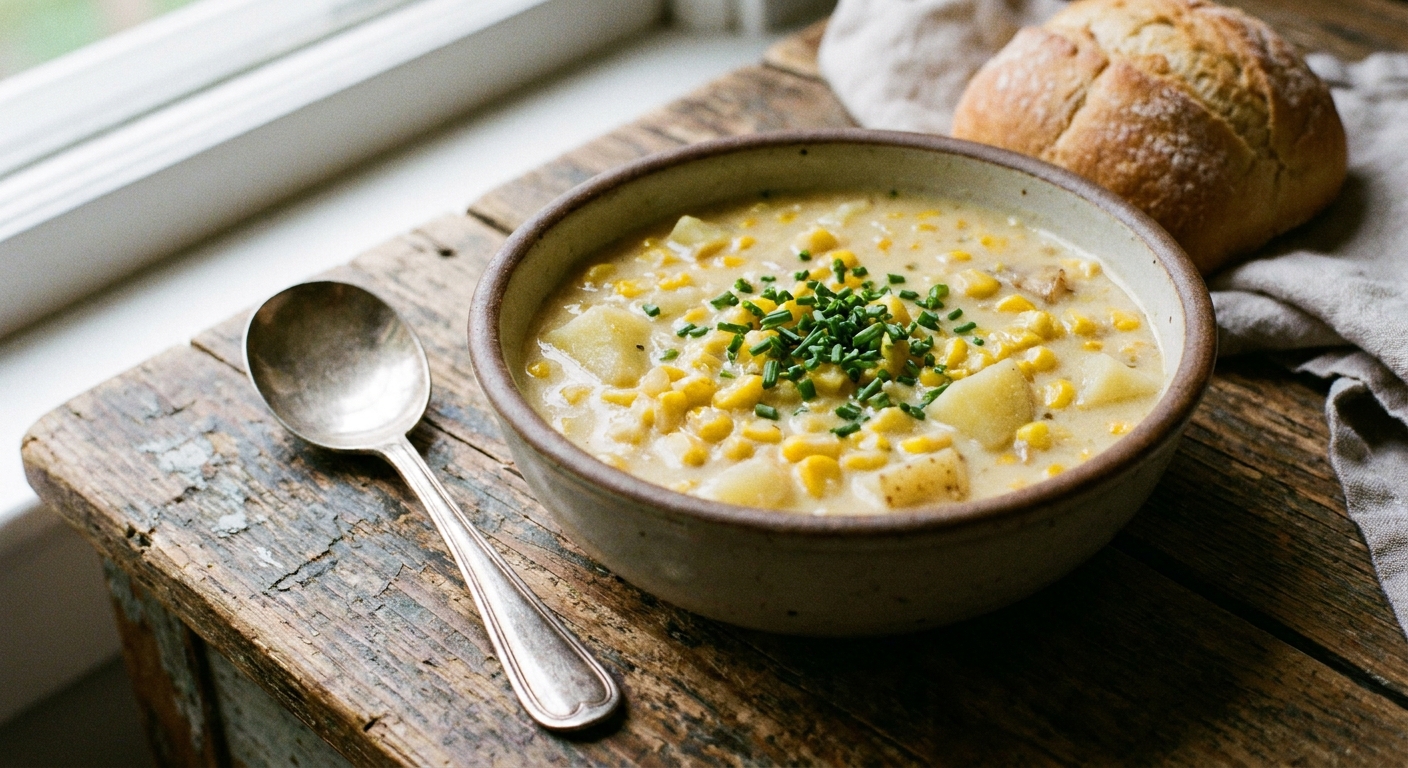
I have a soft spot for corn chowder because it feels like the best parts of a farmer’s market tucked into a bowl. Sweet corn, a little onion, tender potatoes, and that creamy, milky broth that somehow tastes richer than the ingredient list suggests.
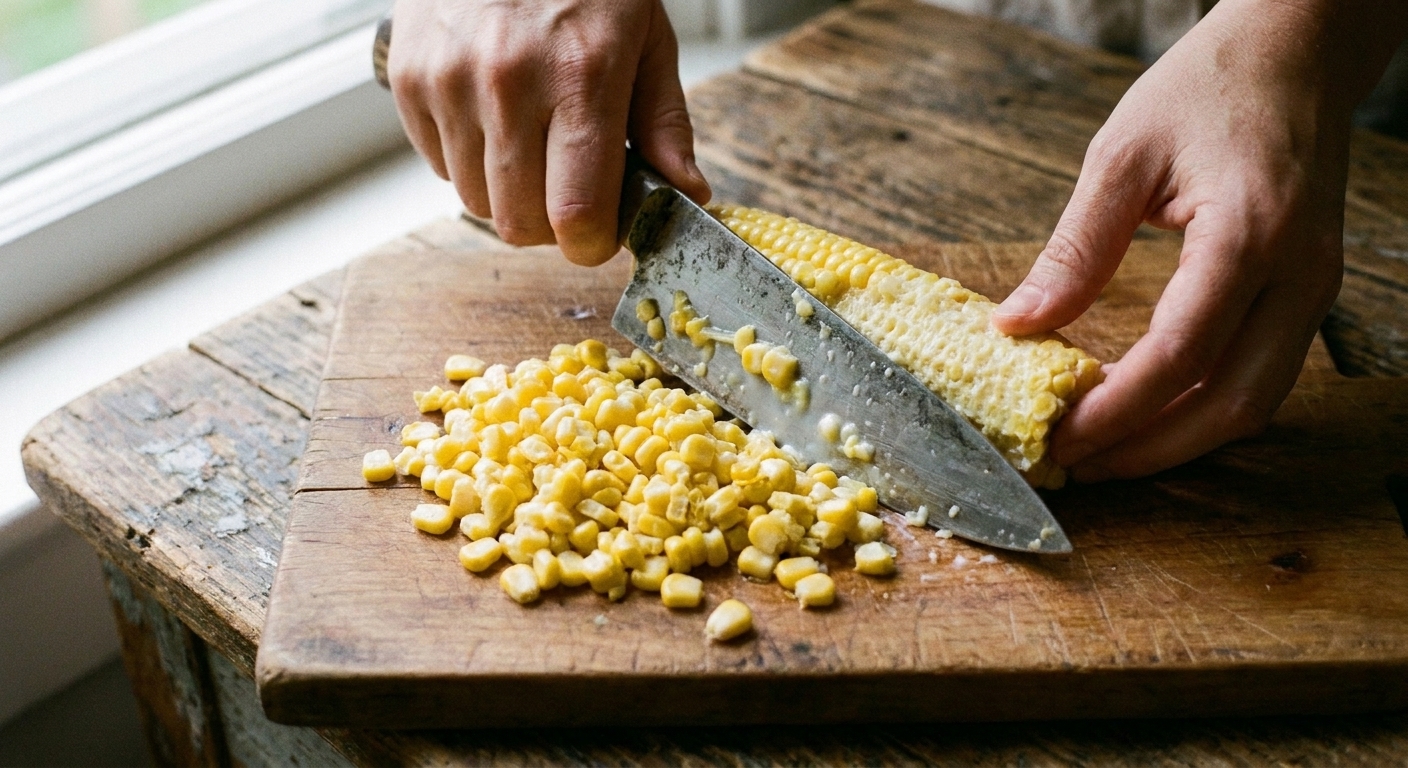
The biggest difference between “nice soup” and “oh wow, what did you do?” chowder is what you do with the cobs. After you cut the kernels off, do not toss the cobs. Scrape them. That milky corn “pulp” clinging to the cob adds starch and corn milk that helps thicken the broth and intensifies the corn flavor, without needing a lot of cream or flour.

Potatoes matter too, and it is not just the size. A high-starch potato can go pasty if it is overcooked or stirred too aggressively, especially in a chowder that simmers for a while. I like Yukon Golds (or other waxier potatoes) because they turn creamy and still hold their shape. I also stick to a medium dice so the potatoes go tender right as the corn stays sweet.
This recipe is designed to be flexible. Use fresh corn when you can, frozen when you cannot, and pantry-friendly extras like bacon, herbs, or a pinch of smoked paprika when you want to change the flavor profile. The goal stays the same: sweet corn flavor, gentle creaminess, and a chowder you can happily reheat without it turning stodgy.
If you are making this for guests or meal prep, it helps to know that chowder thickens as it cools. I always finish it a little looser than I think I want, then let it sit for a couple of minutes. That rest is the difference between creamy and too thick.
Why this recipe works
- Scraping the cobs builds body naturally. The corn milk and starch from the cob add thickness and deep corn flavor without relying on lots of flour or heavy cream.
- Potato choice and size are chosen for texture. Waxy potatoes like Yukon Gold go creamy without falling apart, and a medium dice keeps the pieces distinct.
- Gentle heat protects sweetness. Corn tastes sweetest when it is warmed through, not boiled hard for a long time. A steady simmer keeps the corn bright.
- A portion is blended for silkiness. Blending a couple of ladlefuls thickens the chowder while keeping plenty of whole kernels and potato pieces for texture.
Ingredient notes
Corn: Fresh corn is best when it is in season. Choose ears with tight green husks and moist, pale silk. Frozen corn is a great backup. If you use frozen, you can still get extra corn flavor by simmering a few stripped cobs if you have them, otherwise add a small splash of milk and blend a bit more for body.
Corn cobs: After you cut the kernels off, run the back of your knife down the cob to collect the milky pulp. It looks messy and that is the point. Stir it into the pot with the kernels.
Potatoes: Yukon Golds are my favorite here because they turn creamy without getting mealy. Russets work too, but they break down faster and can make the chowder feel heavier, so keep the simmer gentle and do not over-stir.
Milk and cream: Whole milk makes a classic, cozy broth. A small amount of cream adds luxury, but you do not need much if you use the corn pulp and the blend trick.
Onion and aromatics: Yellow onion gives sweetness. Add celery if you like a more traditional chowder base, and garlic if you want extra savoriness.
Broth: Chicken broth adds depth, vegetable broth keeps it vegetarian. Avoid very salty broth since chowder reduces slightly as it simmers.
Equipment you will need
- Large heavy-bottomed pot or Dutch oven
- Sharp chef’s knife and a sturdy cutting board
- Microplane or knife for garlic (optional)
- Wooden spoon or heatproof spatula
- Ladle
- Immersion blender (preferred) or a countertop blender for blending a small portion
Pro tips
- Cut kernels cleanly. Stand the ear upright in a wide bowl and slice downward. You catch the kernels and most of the corn milk in one place.
- Scrape after cutting. Use the back of the knife and press firmly. You are not being rough, you are extracting flavor.
- Simmer, do not boil. A hard boil can make dairy more likely to separate and can dull the corn’s sweetness.
- Blend only a portion. Two to three ladles blended and stirred back in thickens beautifully while keeping chowder texture.
- Finish with restraint. Once it tastes balanced, stop cooking. Overcooking corn is the easiest way to lose that fresh sweetness.
- Salt at the end. Broth reduces and potatoes absorb seasoning. Final seasoning after simmering is more accurate.
Substitutes that work
- Frozen corn for fresh: Use the same amount by weight or volume. Add it closer to the end so it stays sweet.
- Leek for onion: Use the white and light green parts, well washed. Leek makes a softer, sweeter base.
- Dairy-free option: Use unsweetened plain oat milk or unsweetened soy milk plus a little olive oil or dairy-free butter for richness. Avoid sweetened milks.
- Gluten-free thickening: Skip flour if using any, and rely on corn pulp plus blending a portion. It is naturally thick.
- Broth swap: Vegetable broth works well. If your broth is very strong, dilute with a little water so it does not overpower the corn.
Variations
- Bacon corn chowder: Render chopped bacon first, sauté the onion in the drippings, and finish with crispy bacon on top.
- Southwest-style: Add a pinch of cumin, a pinch of smoked paprika, and a chopped jalapeño with the onion. Finish with lime.
- Herby summer chowder: Stir in fresh basil or chives at the end and add a handful of cherry tomatoes, halved.
- Extra-veg: Add diced red bell pepper or zucchini. Sauté them with the onion so they soften without turning mushy.
- Seafood-friendly base: Keep the base mild and add cooked shrimp or flaky white fish at the very end just to warm through.
Serving ideas
- Top with chopped chives, scallions, or a little cracked black pepper.
- Serve with a simple green salad with a sharp vinaigrette to balance the creaminess.
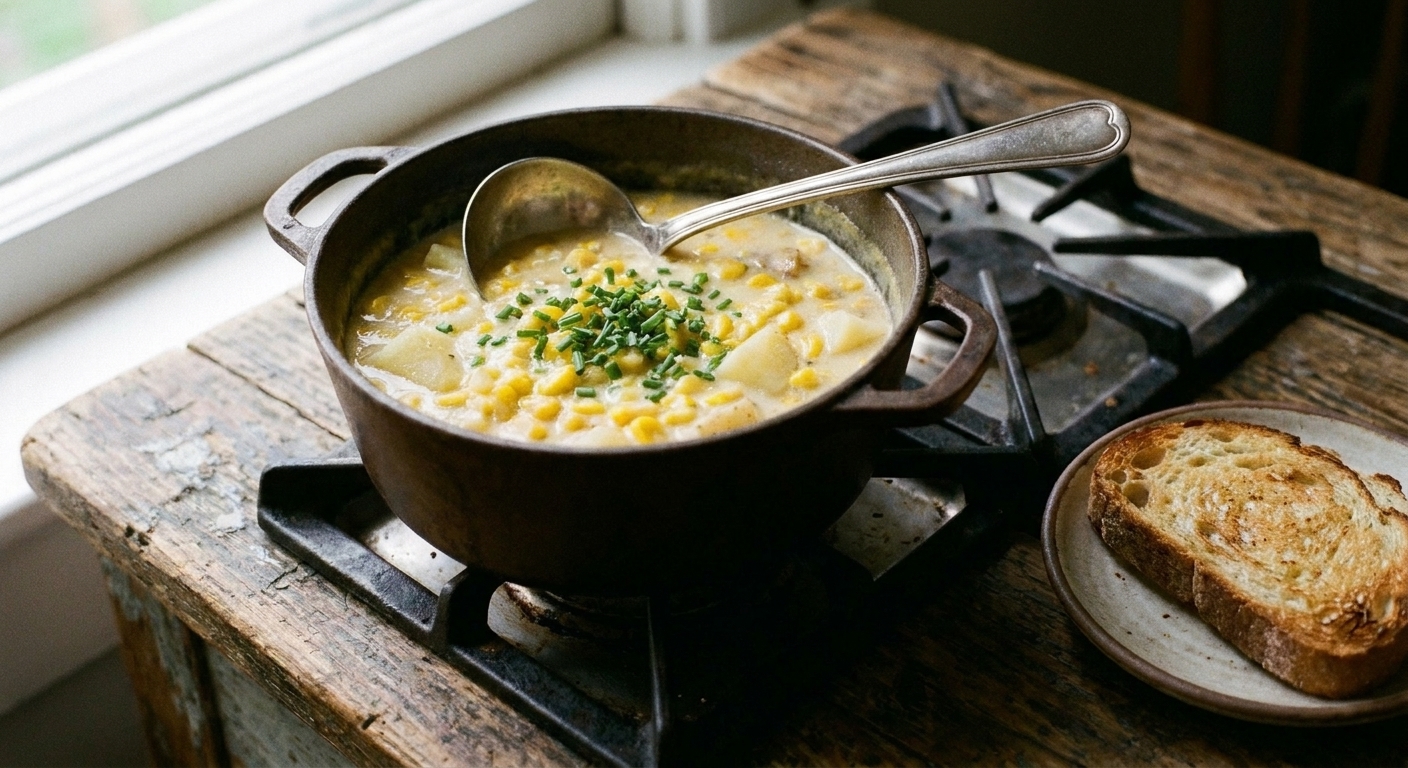
- Add something crunchy: toasted bread, oyster crackers, or tortilla strips.
- For a heartier bowl, pair with a grilled cheese or a tomato sandwich when tomatoes are in season.
Storage and reheating
Refrigerator: Store in an airtight container for up to 4 days. Chowder thickens as it sits, so do not be surprised if it looks tighter the next day.
Reheating: Reheat gently on the stove over medium-low, stirring often. Add a splash of milk or broth to loosen to your preferred consistency. Avoid boiling, which can dull the corn flavor and risk separating the dairy.
Freezing: You can freeze corn chowder, but dairy and potatoes can change texture after thawing. If you plan to freeze, consider making it with milk only (less cream), and reheat slowly while whisking. Freeze up to 2 months for best quality.
Common mistakes
- Cutting potatoes too small: Tiny dice can dissolve and make the chowder feel gummy, especially if you stir a lot. Aim for a medium dice so pieces stay distinct.
- Using very starchy potatoes and stirring hard: Russets plus lots of stirring can turn the broth pasty. If you use russets, be gentle and keep a steady simmer.
- Boiling hard after adding dairy: Keep it to a gentle simmer for a stable, silky broth.
- Overcooking the corn: Corn goes from sweet to flat if it cooks too long. Add corn when potatoes are nearly tender.
- Over-blending: Blending the whole pot turns chowder into corn-potato puree. Blend only a portion for the best texture.
FAQ
How do I make corn chowder thicker without flour?
Scrape the cobs for the milky corn pulp and stir it in. Then blend a couple of ladlefuls of chowder and stir it back into the pot. Those two steps add a lot of body without flour.
Why did my chowder turn gluey?
Usually it is a mix of potato starch (especially with high-starch potatoes), overcooking, and stirring too aggressively, plus the chowder reducing too much. Next time, use a waxier potato like Yukon Gold, keep the simmer gentle, stir just enough to prevent sticking, and add a splash of broth or milk if it tightens.
Can I use canned corn?
You can, but it is sweeter in a different way and a little softer. Drain it well, add it near the end just to warm through, and consider blending a bit more for body since you will not have fresh cobs to scrape.
What is the best potato for chowder?
Yukon Gold is my go-to because it turns creamy and holds its shape. Russets work, but they break down faster, so keep the heat gentle and avoid over-stirring.
How do I keep corn chowder tasting sweet?
Do not boil it hard, and do not cook the corn longer than needed. Add corn when potatoes are almost tender, then simmer briefly to finish.
The recipe
Corn Chowder
A creamy, sweet corn chowder with tender potatoes and onion, thickened naturally by scraping the corn cobs and blending a small portion for a silky, spoonable finish.
- Prep
- 20 minutes
- Cook
- 30 minutes
- Total
- 50 minutes
- Yield
- 6 servings
Ingredients
- 6 ears fresh corn (or 4 to 5 cups corn kernels, fresh or frozen)
- 3 tablespoons unsalted butter (or olive oil)
- 1 medium yellow onion, finely chopped
- 2 celery ribs, finely chopped (optional)
- 2 cloves garlic, minced (optional)
- 1 1/2 teaspoons kosher salt, plus more to taste
- 1/2 teaspoon freshly ground black pepper, plus more to taste
- 1 pound Yukon Gold potatoes, peeled if desired, cut into 1/2-inch cubes
- 4 cups low-sodium chicken or vegetable broth
- 2 cups whole milk
- 1/2 cup heavy cream (optional, for extra richness)
- 1 bay leaf (optional)
- 2 tablespoons chopped chives or scallions, for serving (optional)
Instructions
- Prep the corn. Shuck the corn. Cut the kernels off the cobs into a large bowl. Then use the back of your knife to firmly scrape down each cob to collect the milky corn pulp. Add that pulp to the bowl with the kernels. Set aside.
- Sauté the base. In a large pot or Dutch oven over medium heat, melt the butter. Add the onion (and celery, if using) and cook, stirring occasionally, until softened and fragrant, 6 to 8 minutes. Add the garlic (if using) and cook 30 seconds more.
- Add potatoes and broth. Stir in the salt, pepper, and potatoes. Pour in the broth and add the bay leaf (if using). Bring to a gentle simmer, then reduce heat to maintain a steady simmer. Cook until the potatoes are almost tender, 10 to 12 minutes.
- Add corn, then simmer briefly. Stir in the corn kernels and scraped corn pulp. Simmer until the potatoes are fully tender and the corn is heated through and still sweet, about 5 to 7 minutes.
- Thicken without turning it gluey. Turn off the heat. Use a ladle to scoop out about 2 to 3 cups of chowder (aim for a mix of corn and potatoes). Blend until smooth with an immersion blender in a tall container, or carefully in a countertop blender. Stir the blended portion back into the pot.
- Add dairy gently. Stir in the milk and the cream (if using). Return the pot to low heat and warm just until steaming, 2 to 4 minutes. Do not boil.
- Season and serve. Remove the bay leaf. Taste and add more salt and pepper as needed. Serve hot, topped with chives or scallions if you like.
Notes
Potato size: A 1/2-inch dice is the sweet spot. Smaller pieces can break down faster, especially if you stir a lot, and make the chowder feel pasty.
Fresh vs frozen corn: If using frozen corn, add it at the same point as fresh but keep the simmer on the shorter side. You are warming it through, not cooking it to death.
Consistency after chilling: Chowder thickens in the fridge. Reheat gently with a splash of milk or broth to loosen.
No blender option: You can mash some potatoes against the side of the pot with a spoon. It will not be as silky, but it still thickens nicely.