
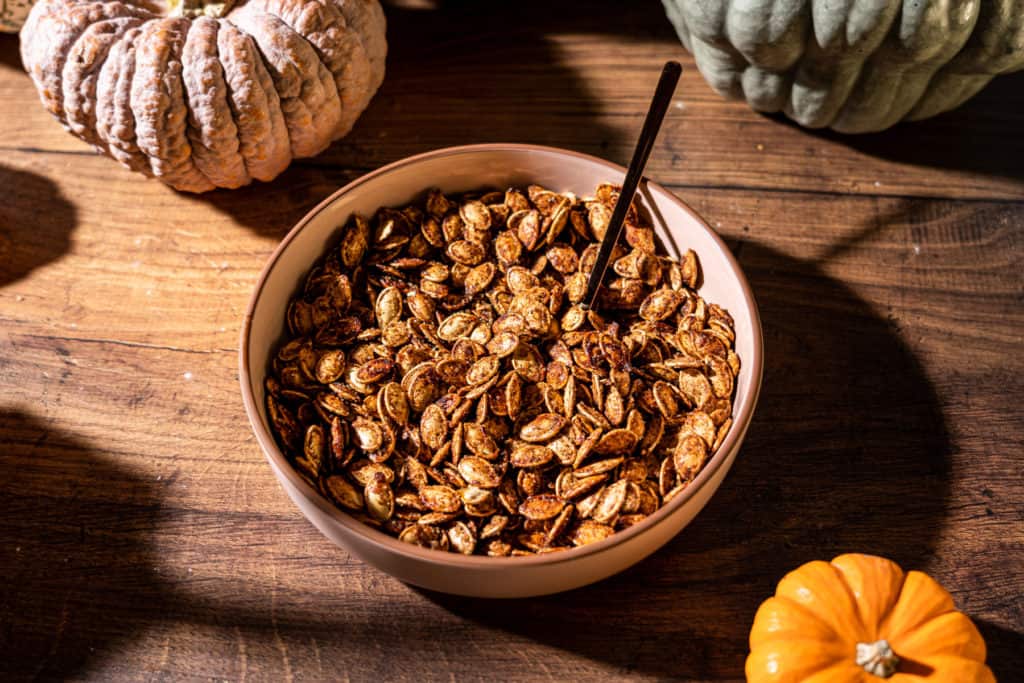
Every fall, I end up standing at my sink with a slippery pumpkin in one hand and a handful of wet seeds in the other, thinking: do I really have to fuss with these shells? The good news is you usually do not. The more honest news is that you might want to, depending on the seed and how you plan to eat it.
Yes, pumpkin seed shells are edible
The white outer layer on many pumpkin seeds is called the hull or shell. It is edible for most people, and you will find plenty of snacks made from whole, in-shell pumpkin seeds.
What the hull adds is mostly texture and fiber. What it can also add is toughness. So the question is less “Is it safe?” and more “Is it pleasant in my mouth, and will it work in this recipe?”

Whole seeds vs pepitas
Whole pumpkin seeds (with shells)
These are the seeds you scoop from most carving pumpkins and many eating pumpkins. They usually have a white or off-white hull.
- Best for: roasting for crunchy snacks, topping soups and salads when you do not mind a hearty crunch
- Texture: can range from crisp to stubbornly chewy depending on the seed and roast
Pepitas (hulled pumpkin seeds)
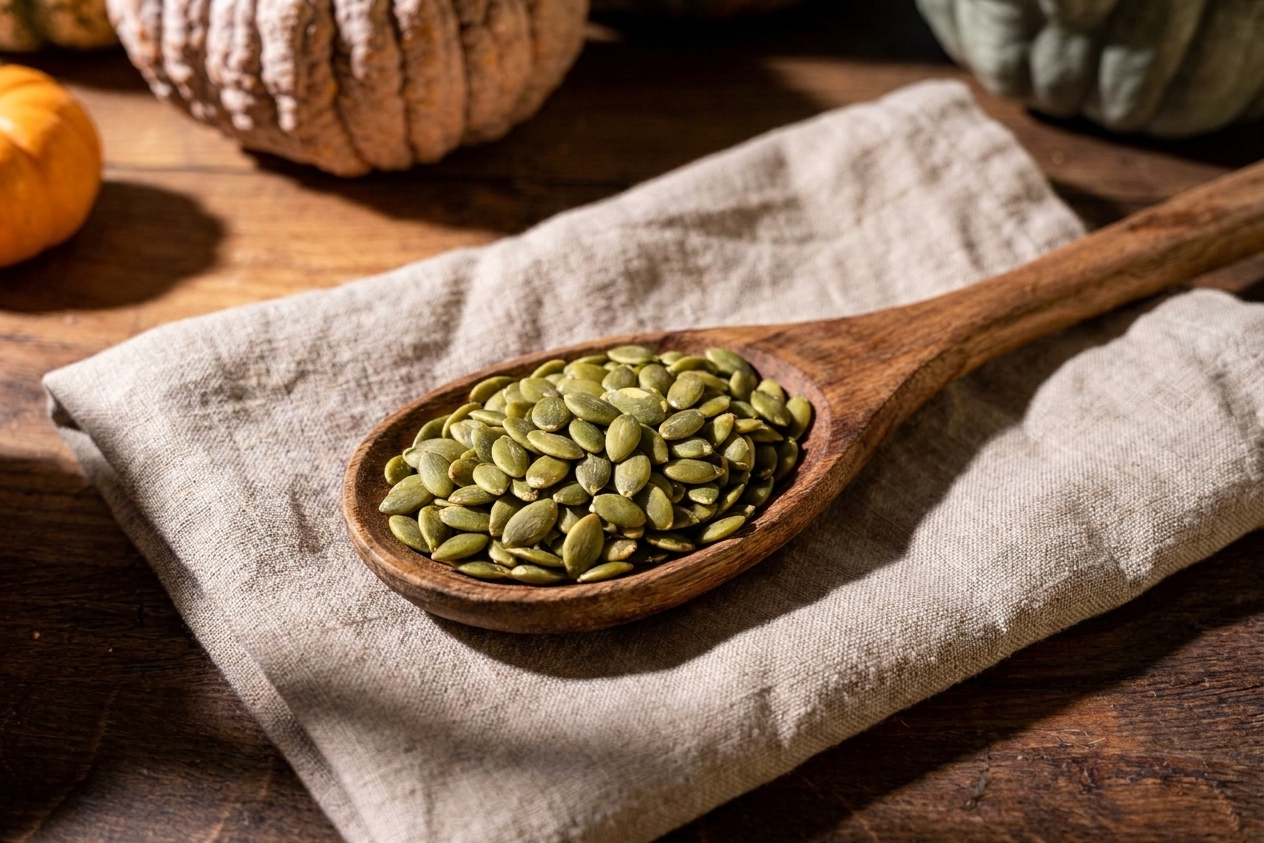
Pepitas are pumpkin seeds with the hull removed. They are typically green, flatter, and more tender. Most store-bought “pepitas” are already hulled.
- Best for: pesto, salsa macha style crunch, granola, baking, smooth sauces (like pumpkin seed mole-style sauces), and sprinkling on anything when you want an easy bite
- Texture: more delicate, easier to chew, easier to blend
Fiber and texture
The hull is largely insoluble fiber. That is not a bad thing. Fiber helps you feel full and supports digestion. But it also explains why shells can feel:
- Chewy: especially if the seeds are large, very fresh, or not roasted long enough
- Scratchy: if the hull dries out but does not fully crisp, it can feel papery or sharp at the edges
- Hard to blend: hulls do not break down smoothly in a food processor, so they can leave gritty bits in sauces and spreads
If you have ever eaten a handful of roasted seeds and thought, these are delicious but my jaw is working overtime, that is the hull talking.
Roasted vs raw
Roasted (or toasted) in-shell seeds
Roasting is what makes most in-shell pumpkin seeds enjoyable. A hot oven drives off moisture so the hull can crisp instead of staying leathery.
For the best crunch, make sure the seeds are thoroughly dried after rinsing, then roast long enough to fully dehydrate and toast. Underdone seeds are where you get that bendy, stick-in-your-teeth shell.
Raw in-shell seeds
Raw pumpkin seed shells are edible, but they are usually the least pleasant version. They tend to be tough and chewy, and they are not a great choice if you have dental sensitivity.
If you want to snack raw, hulled pepitas are typically the better option.
When to remove the shell
Here are the moments when I reach for pepitas or remove hulls on purpose.
- When making sauces, dips, or pestos: you will get a smoother result without hulls.
- When baking: hulls can turn distractingly hard in muffins, cookies, and quick breads. Pepitas fold in more nicely.
- For kids (and anyone who dislikes “pokey” crunch): pepitas are easier to chew.
- If you have dental work, jaw pain, or trouble chewing: avoid in-shell seeds. Go hulled, or chop seeds before eating.
- If the seeds are very large and thick-hulled: some varieties simply roast up tougher than others.
When shells are fine
In-shell seeds shine when the goal is crunchy, salty snacking.
- Roasted pumpkin seeds as a snack: the hull gives that classic crackly crunch.
- On soups and salads: especially creamy soups where you want contrast.
- On roasted vegetables: the chew and crunch read as “toasty” and intentional.
My personal rule: if I am going to chew the seeds as themselves, shells are fine. If I want the seeds to disappear into something, I choose pepitas.
Do your seeds have hulls?
If you are scooping seeds from a pumpkin at home, you are almost always dealing with unhulled, in-shell seeds. You can crack and peel hulls one by one, but it is fussy and not very practical for a normal weeknight kitchen.
If you want hull-free seeds without the work, buy pepitas (hulled pumpkin seeds). Some pumpkins, often called “naked-seeded” varieties, naturally produce hull-less seeds, but they are not the standard carving pumpkin most of us bring home.
Tips for better texture
- Dry them well: after rinsing, pat very dry and let air-dry a bit. Water is the enemy of crispness.
- Do not overcrowd the pan: seeds need space so steam can escape.
- Roast until crisp, not just “warm”: if they bend instead of snap, keep going a few more minutes.
- Let them cool: they crisp up as they cool, like toasted nuts.
- Try a lower, longer roast if they keep turning chewy: gentler heat can dry the hull more evenly.
FAQ
Are pumpkin seed shells hard to digest?
They are mostly fiber, so they can be harder to break down than the inner seed. Many people tolerate them just fine, but if you are sensitive to high-fiber foods or you eat a large amount quickly, they can cause bloating or discomfort.
Are roasted pumpkin seed shells sharp?
They can be if the seeds are not fully crisped or if the hull is particularly thick. Proper roasting usually solves this, and chopping the seeds before sprinkling on food helps too.
Is the “white part” the shell?
Yes. On most common pumpkin seeds, the white outer layer is the hull. Pepitas are the green inner seed with that hull removed.
If I hate the shells, what should I buy?
Look for bags labeled pepitas or hulled pumpkin seeds. They toast beautifully and are naturally tender.
If you are snacking, shells are usually fine. If you are blending, baking, or feeding picky eaters, pepitas make life easier.