
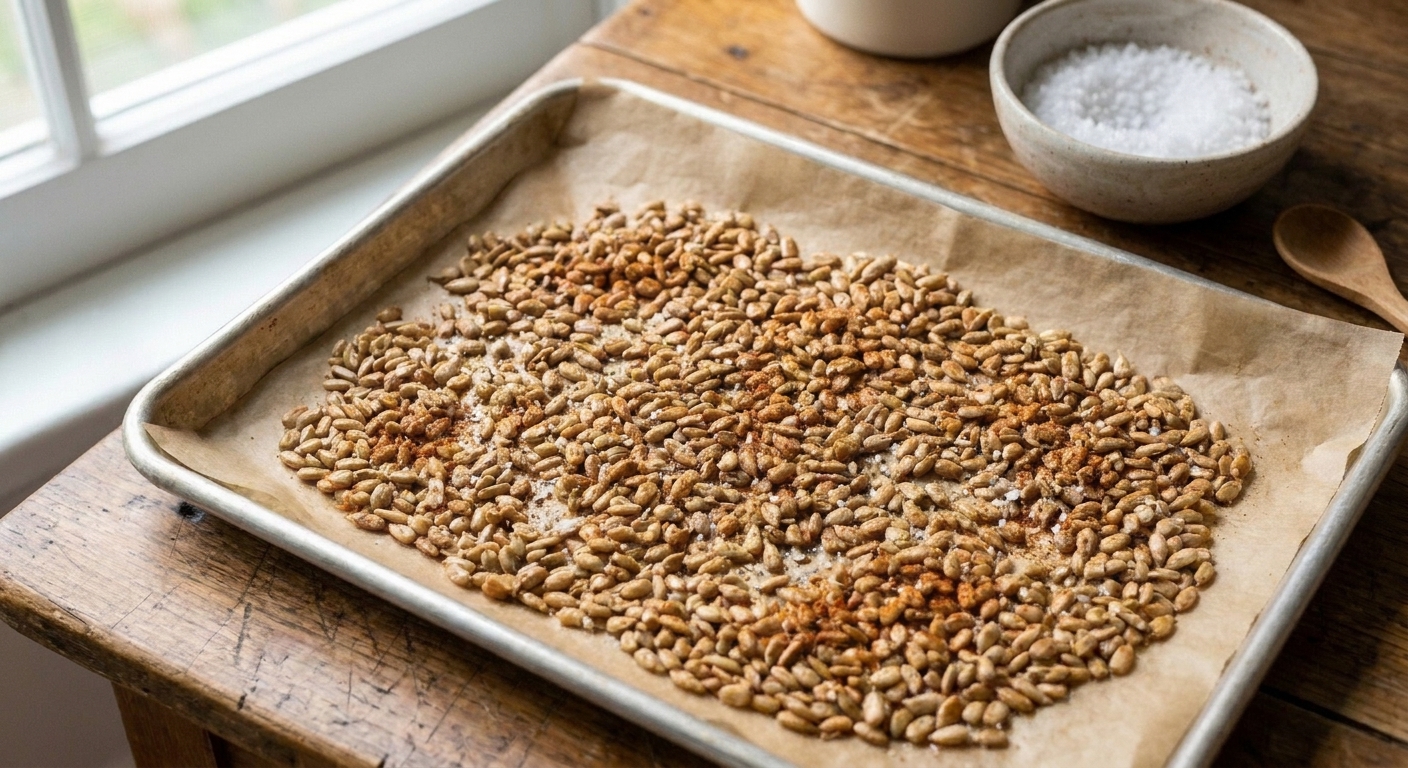
Sunflower seeds are one of those ingredients I keep buying with good intentions, then they sit in the back of the pantry until I need a last-minute salad topper. When you roast them yourself, though, they stop being an afterthought and become the thing you “taste test” every time you walk through the kitchen.
The goal: crisp, evenly toasted kernels that taste nutty and warm, not pale and chewy, and not bitter from overbaking. The difference is mostly technique, and a few small things can make a big impact depending on your oven and the seeds themselves. A little oil helps the seasoning cling and tends to encourage browning. A moderate oven temperature gives you a wider margin for error. And stirring once or twice during roasting keeps the seeds from toasting in little hot spots.

If you are starting with raw, shelled (hulled) kernels, you are in the sweet spot. Pull them when they turn light golden and you smell that toasted, nutty aroma, then let them cool on the pan so they finish crisping up.
I also like this recipe because it is a quiet workhorse. Toss the seeds onto a chopped salad for crunch, sprinkle them over creamy soups, fold them into grain bowls, or pack them as a nut-free alternative for snacking. (If allergies are a concern, it is always worth checking labels for shared-facility or cross-contact statements.) Once you know what to look for, you can roast a batch without hovering, but you will still be close enough to catch the moment they turn from “warm” to “wow.”
Why this recipe works
- A measured amount of oil coats the kernels so they brown evenly and seasonings stick instead of falling to the bottom of the bowl.
- Moderate oven heat toasts the seeds through without scorching their delicate edges, which can happen fast at higher temperatures.
- A predictable stir schedule redistributes seeds from the hotter outer edges of the pan to the center so you do not end up with half pale, half dark.
- Clear doneness cues (color plus smell) prevent over-roasting. Sunflower seeds go from golden and nutty to bitter in a surprisingly short window.
- Cooling on the pan lets residual heat finish the toast gently and helps the seeds crisp as they cool.
Ingredient notes
Shelled sunflower seeds
Use raw, shelled kernels (sometimes labeled “hulled”). Roasted and salted seeds can be re-crisped, but they brown faster and can easily get too dark.
Oil
You only need 1 teaspoon oil per cup of seeds. Neutral oils like avocado, grapeseed, canola, or light olive oil all work. A small amount is enough to help browning without making the seeds feel greasy.
Salt
Fine salt distributes most evenly. If you only have kosher salt, crush it between your fingers before tossing so it clings better.
Optional seasonings
Add dry spices after tossing with oil so they coat evenly. If you are using something sugary (like cinnamon sugar), keep the oven on the lower end and watch closely since sugar can darken quickly.
Equipment you will need
- Rimmed sheet pan
- Parchment paper (optional, for easier cleanup)
- Mixing bowl
- Spatula or spoon for stirring
- Airtight jar or container for storage
Pro tips
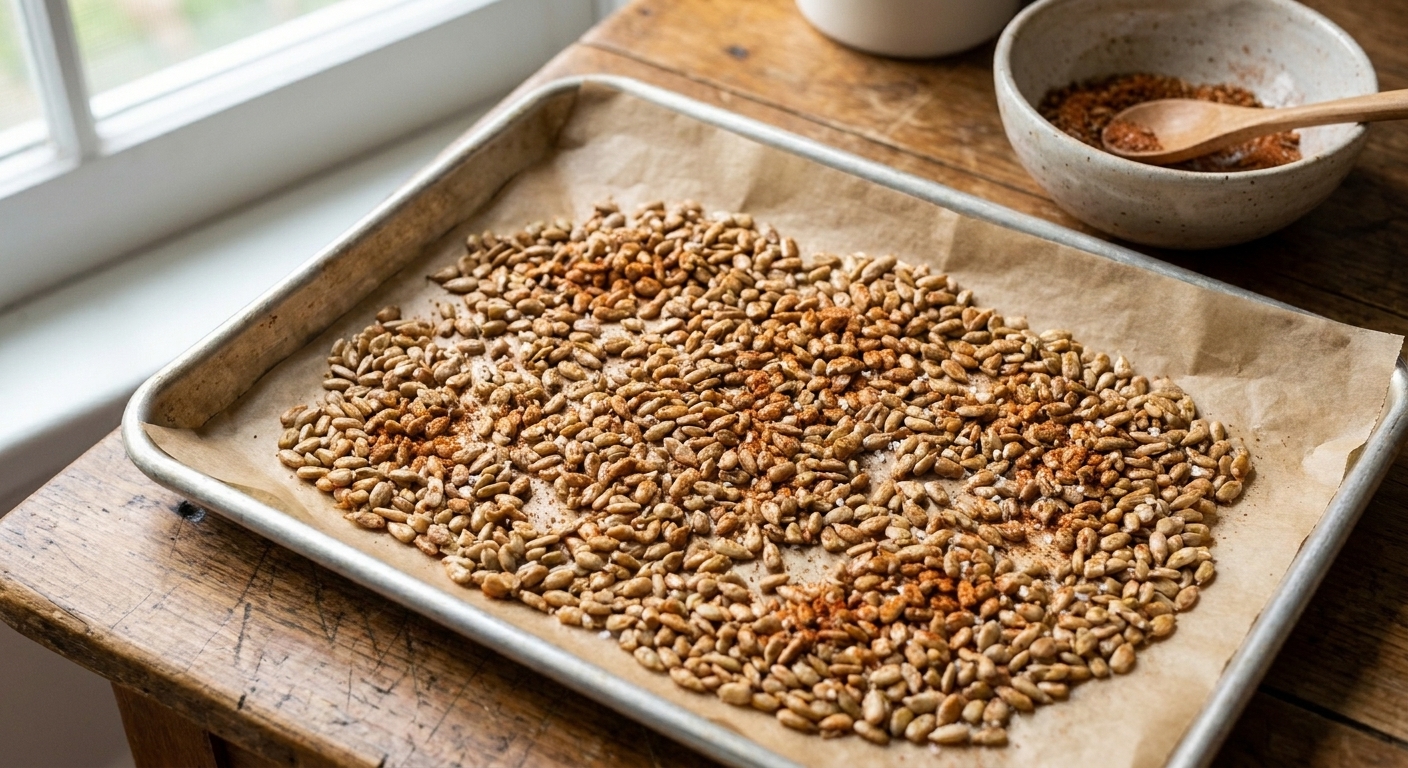
- Spread in a single layer. If the seeds are piled up, they steam and stay a little chewy. Use a larger pan if needed.
- Stir on schedule, not on vibes. Set a timer for the first stir, then again for the second. Even a quick shuffle makes a big difference.
- Use your nose. When they are close, you will smell a warm, nutty aroma. If you smell sharp, toasty bitterness, they are already moving past ideal.
- Pull them when they are light golden. They keep cooking from residual heat. I take them out when most seeds are pale gold with a few deeper golden ones.
- Salt timing matters. Salt before roasting for all-over seasoning, then taste and add a pinch more after cooling if needed.
Substitutes that work
- No oil: You can dry-roast the seeds, but seasoning will not cling as well and browning can be a little patchy. Reduce the roasting time slightly and stir diligently.
- Different salt: Swap fine salt for kosher salt using a slightly larger pinch, then adjust to taste after cooling.
- Seasoning swaps: Any dry spice blend works. Think chili powder, smoked paprika, curry powder, ranch seasoning, or za’atar. If the blend contains salt, reduce added salt at first.
Variations
Smoky paprika
Add 1/2 teaspoon smoked paprika and a pinch of garlic powder per cup of seeds.
Chili-lime
Add 1/4 teaspoon chili powder plus fine zest from 1/2 lime after roasting (zest after, so it stays bright).
Cinnamon sugar
Use 1 teaspoon sugar plus 1/4 teaspoon cinnamon per cup of seeds, and reduce salt to a tiny pinch. Watch closely during the final minutes because sugar browns fast.
Everything-style
Toss with an everything bagel seasoning blend after oiling. Go easy on added salt since most blends are already salty.
Serving ideas
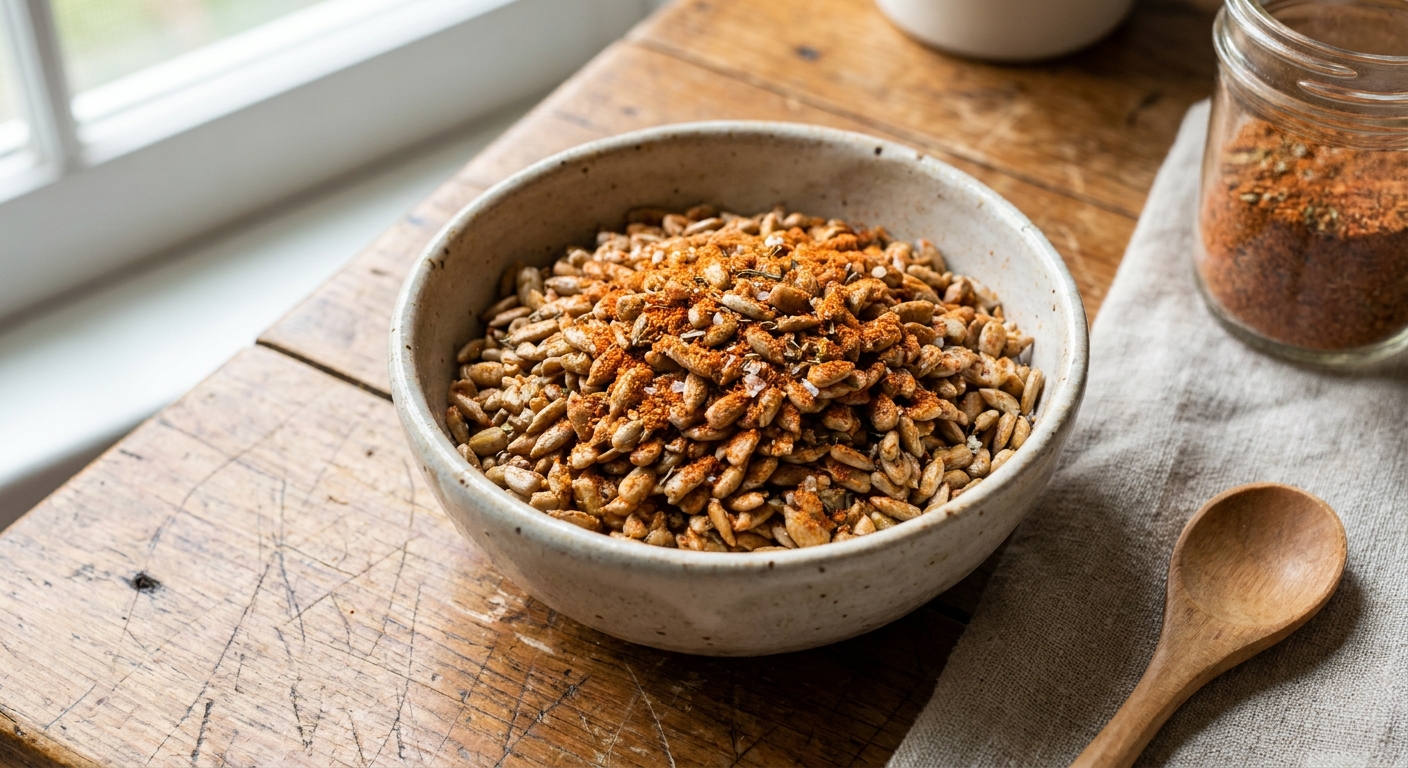
- Salads: Sprinkle over chopped salads, kale Caesar, or tomato cucumber salad for crunch.
- Soups: Top creamy tomato, butternut squash, or potato leek soup like you would croutons.
- Grain bowls: Add to rice bowls, quinoa bowls, or lentil bowls for texture.
- Breakfast: Stir into oatmeal, yogurt, or chia pudding for a nutty bite.
- Snacking: Pack in small containers for lunchboxes. They are a great nut-free alternative in many settings, but always follow your school or workplace allergy guidelines.
Storage and reheating
How to keep them crunchy
Crunch is all about keeping moisture out. Let the seeds cool completely, then store them in an airtight container.
- Room temperature: Store in a tightly sealed jar or container for up to 1 week for best crunch.
- Longer storage: For longer than a week, refrigerate or freeze to protect flavor. Let them come to room temperature before using so condensation does not soften them.
- If they soften: Re-crisp in a 300°F oven for 3 to 5 minutes, then cool completely again.
Important: Do not cap the jar while the seeds are still warm. Trapped steam is the fastest way to lose that crisp bite.
Common mistakes
- Roasting too hot: Sunflower seeds are small and can scorch quickly. Moderate heat gives you more control.
- Skipping the stir: The outer edges of the pan toast faster. Stirring keeps browning even.
- Overcrowding the pan: A thick layer leads to steaming and uneven toasting.
- Waiting for deep brown: If you wait until they are dark, they can taste bitter. Pull at light golden and nutty-smelling.
- Storing before fully cool: Warm seeds create condensation, which softens them fast.
FAQ
How do I know when roasted sunflower seeds are done?
Look for a light golden color on most kernels and smell for a warm, nutty aroma. If the seeds smell sharp or bitter, they are going too far. They will crisp more as they cool.
Can I roast sunflower seeds without oil?
Yes. They will still toast, but they may brown less evenly and seasonings will not stick as well. Stir on schedule and check early.
Why did my sunflower seeds turn out chewy?
Usually it is either overcrowding (they steam) or under-roasting. Spread them thinner next time, and let them cool completely before judging crispness.
Can I use already roasted salted sunflower seeds?
You can, but treat it as a quick re-toast. Start checking a few minutes early since they are already roasted and can darken fast.
The recipe
Roasted Sunflower Seeds
Shelled sunflower seeds roasted until crisp and lightly golden, then seasoned for easy snacking and salad crunch.
- Prep
- 5 minutes
- Cook
- 10 to 14 minutes
- Total
- 20 minutes
- Yield
- About 1 cup
Ingredients
- 1 cup raw shelled sunflower seeds
- 1 teaspoon neutral oil (avocado, grapeseed, canola, or light olive oil)
- 1/4 teaspoon fine salt, plus more to taste
- Optional: up to 1/2 teaspoon spice blend (smoked paprika, chili powder, garlic powder, curry powder, etc.)
Instructions
- Heat the oven to 325°F. Line a rimmed sheet pan with parchment paper if you like for easier cleanup.
- In a bowl, toss the sunflower seeds with the oil, salt, and any optional spices until the seeds look evenly coated.
- Spread the seeds on the sheet pan in a single, even layer.
- Roast for 5 minutes, then remove the pan and stir well, bringing seeds from the edges toward the center.
- Return to the oven and roast for 4 minutes, then stir again.
- Roast for 1 to 5 minutes more, checking closely at the end, until the seeds are light golden and smell nutty and toasted. (They can go from perfect to bitter quickly.)
- Remove from the oven and let the seeds cool completely on the pan. They will crisp as they cool. Taste and add a tiny pinch more salt if needed.
Notes
Doneness cue: Pull the seeds when most are pale golden and you can smell a warm, nutty aroma as you open the oven. If they are getting deep brown, they are likely heading toward bitter.
For extra crisp: Make sure the seeds are in a single layer and let them cool fully before storing.