
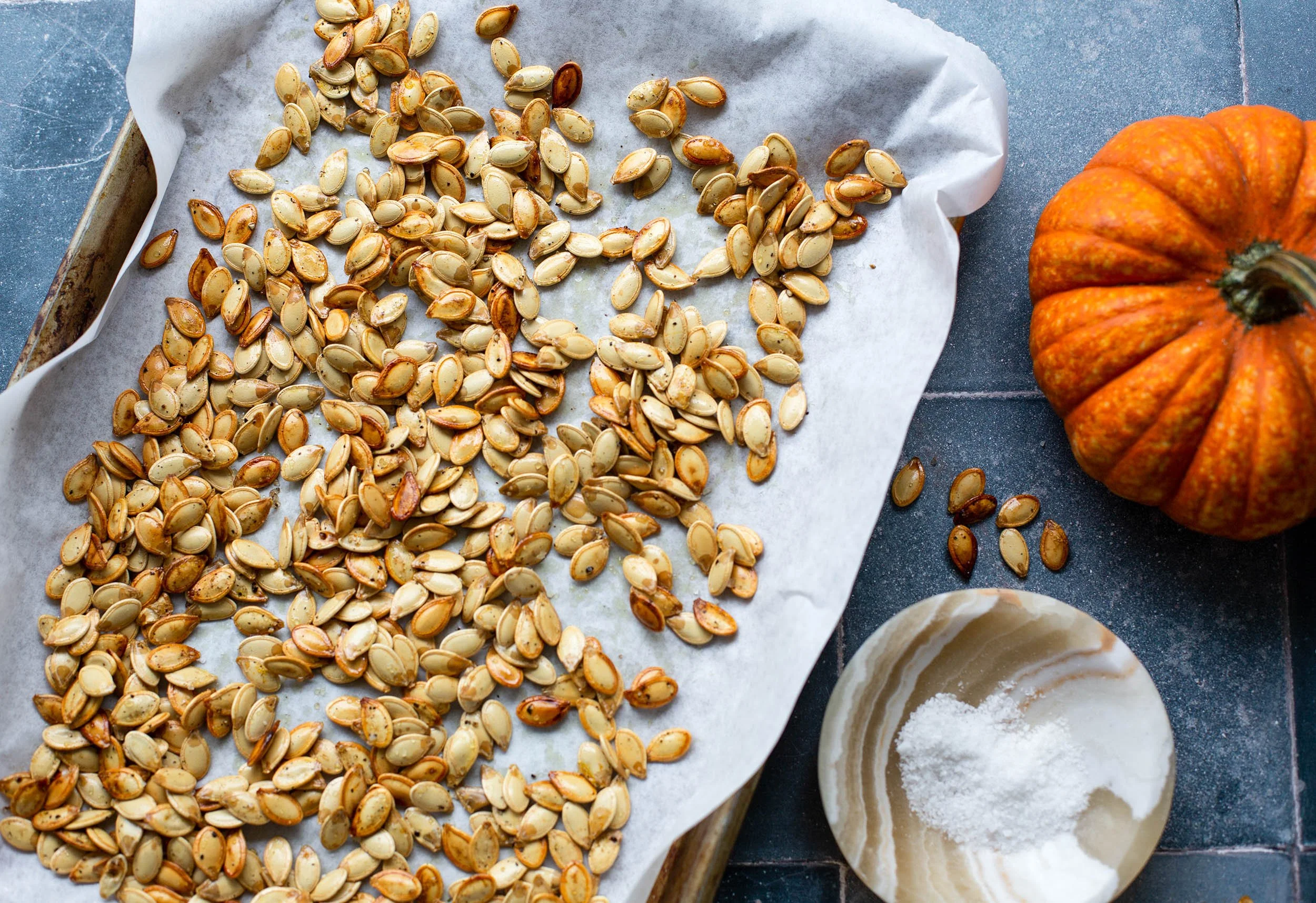
If you have ever stood over a sheet pan “just testing one more” roasted pumpkin seed, you already know their superpower: they taste snacky and satisfying in a way that chips rarely do. The good news is that pumpkin seeds are also legitimately nutrient-dense. They bring protein, minerals like magnesium and zinc, fiber, and mostly unsaturated fats to the table.

That said, the healthfulness depends on how much you eat and how they are prepared, especially when salt, sugar, or oil enter the chat. Let’s break it down in plain language.
Pumpkin seeds 101
There are two common forms you will see:
- Shell-on pumpkin seeds: the whole seed, often roasted from carving pumpkins. You can eat the shell if it is roasted until crisp, but it is more fibrous and a little harder to digest for some people.
- Pepitas: the green kernels (no shell), typically from varieties grown for hulled seeds. Many store-bought “pumpkin seeds” are pepitas, and most nutrition labels refer to the kernels.
Nutrition varies slightly between shell-on and pepitas, and it varies a lot more once you add oil and heavy seasoning. The numbers below are best thought of as typical estimates for plain kernels.
Calories per ounce
One ounce of pumpkin seed kernels is about 28 grams, or roughly 2 to 3 tablespoons depending on size. For plain, dry-roasted pepitas, a typical nutrition label looks like:
- Calories: about 160
- Protein: about 8 grams
- Fat: about 14 grams (mostly unsaturated)
- Carbs: about 4 grams
- Fiber: about 2 grams
Why it feels easy to overdo: pumpkin seeds are compact. A “casual handful” can turn into 2 ounces fast, especially when you are snacking straight from the bag. That is not a moral failing. It is just physics.
Kitchen reality tip: If you want pumpkin seeds as a healthy everyday snack, portion them into a small bowl first. The flavor stays the same, but your serving size stays intentional.
Protein
Pumpkin seeds are not a complete replacement for a chicken breast or a block of tofu, but they are impressive for a snack. In practical terms:
- A 1 ounce serving gives about 8 grams of protein, which helps with fullness.
- Because they also contain fat and a bit of fiber, they tend to “stick” longer than pretzels or crackers.
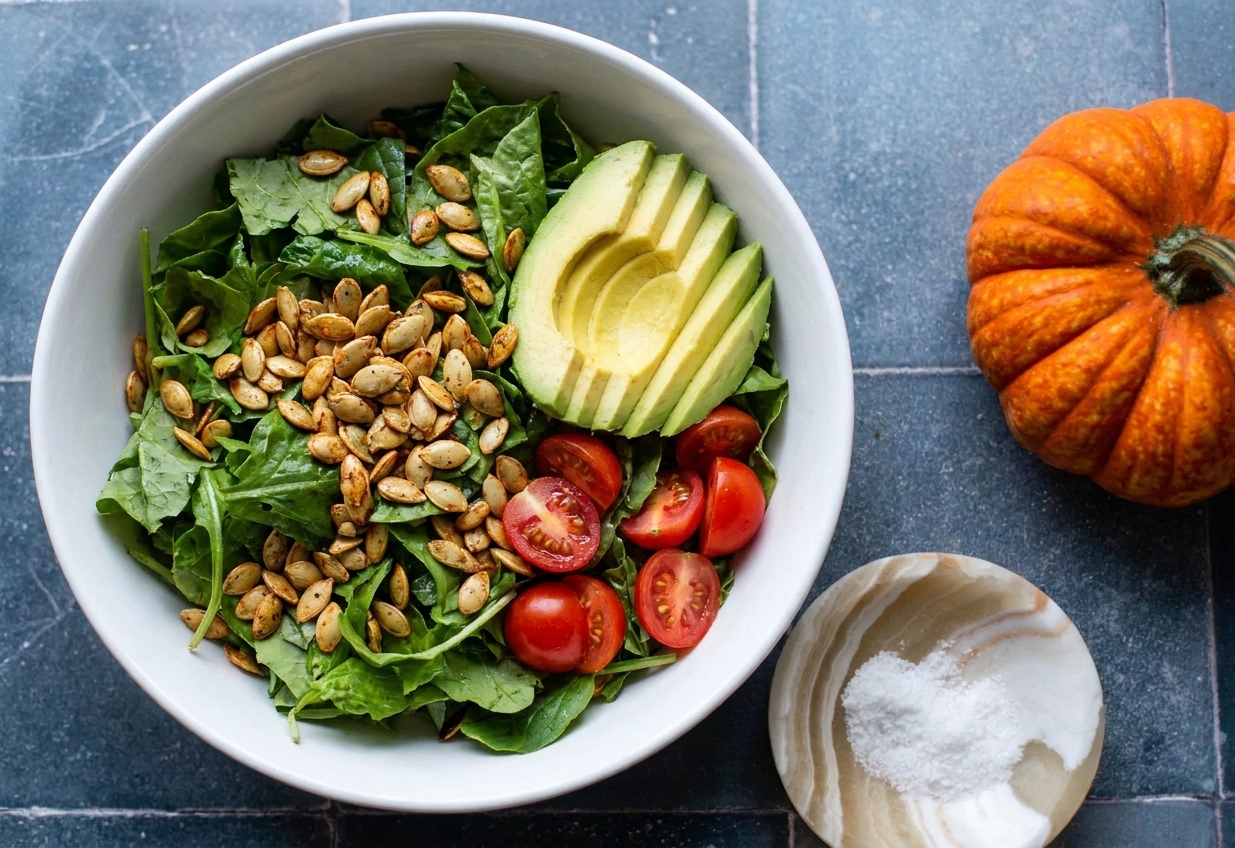
Easy ways I use them for a protein bump: sprinkle over soups, fold into oatmeal, or toss onto salads instead of croutons.
Magnesium
If there is one nutrient pumpkin seeds are famous for, it is magnesium. Magnesium is involved in hundreds of body processes, including muscle and nerve function, energy production, and supporting normal blood pressure.
Depending on the brand and whether the seeds are hulled, 1 ounce of pepitas often lands around 150 to 170 mg of magnesium, which is roughly 35 to 40% of the Daily Value. That is why they get the “headline mineral” title so often.
Other minerals pumpkin seeds commonly contribute:
- Zinc (immune support, wound healing)
- Iron (oxygen transport in the blood)
- Phosphorus and manganese
Fiber
Pumpkin seeds do contain fiber, but they are not the highest-fiber food in the pantry. For plain pepitas, about 2 grams of fiber per ounce is typical. Shell-on seeds can have a bit more fiber overall because you are eating the outer hull, but they can also be tougher on sensitive stomachs.
If you are eating pumpkin seeds for digestive benefits, they shine most when paired with other fiber-rich foods:
- Stir into yogurt with berries
- Sprinkle onto roasted vegetables
- Add to salads with beans or lentils
Healthy fats and antioxidants
Pumpkin seeds are naturally rich in unsaturated fats (the kinds we generally want more of), along with plant compounds that act as antioxidants.
Two notes that matter in real-life eating:
- They are energy-dense, so portions add up quickly.
- They can go rancid if stored warm for too long. Keep them in a cool pantry, or refrigerate or freeze if you buy in bulk.
Serving size
For most people, a sensible everyday serving is:
- 1 ounce (28 g) as a snack
- 1 to 2 tablespoons as a topping (salads, soups, oatmeal)
If you are watching sodium, saturated fat, or added sugar, the best move is to treat flavored varieties like a “sometimes food” and keep plain or lightly salted seeds as your regular option.
Quick sodium reality check: some seasoned seeds are only lightly salted, others are not. Check the label for sodium per serving, and remember that it doubles fast if your “serving” becomes two.
And if you are feeding kids, pumpkin seeds can be a great crunchy add-on, but whole seeds may be a choking risk for young children (many safety guidelines flag nuts and seeds for kids under 4). When in doubt, choose thinner pepitas and serve them mixed into softer foods.
Does roasting change nutrition?
Roasting changes pumpkin seeds in two main ways: drying them out and added ingredients.
1) Drying concentrates them by volume
When you roast seeds, they lose water and get crisp. If you compare by volume (like a cup or a handful), roasted seeds can seem “more intense” nutritionally because you can fit more seeds into the same space.
If you compare by weight (1 ounce), the calories and macros are usually in the same neighborhood whether the seeds are raw or dry-roasted. The biggest differences you will see on labels are often brand-to-brand variation and whether the product is oil-roasted.
2) Oil and seasoning can change the numbers
- Oil-roasted: can bump calories and fat, depending on how much oil is absorbed.
- Heavily salted: raises sodium quickly.
- Sweet or spicy-sweet coatings: add sugar and sometimes more calories than you expect.
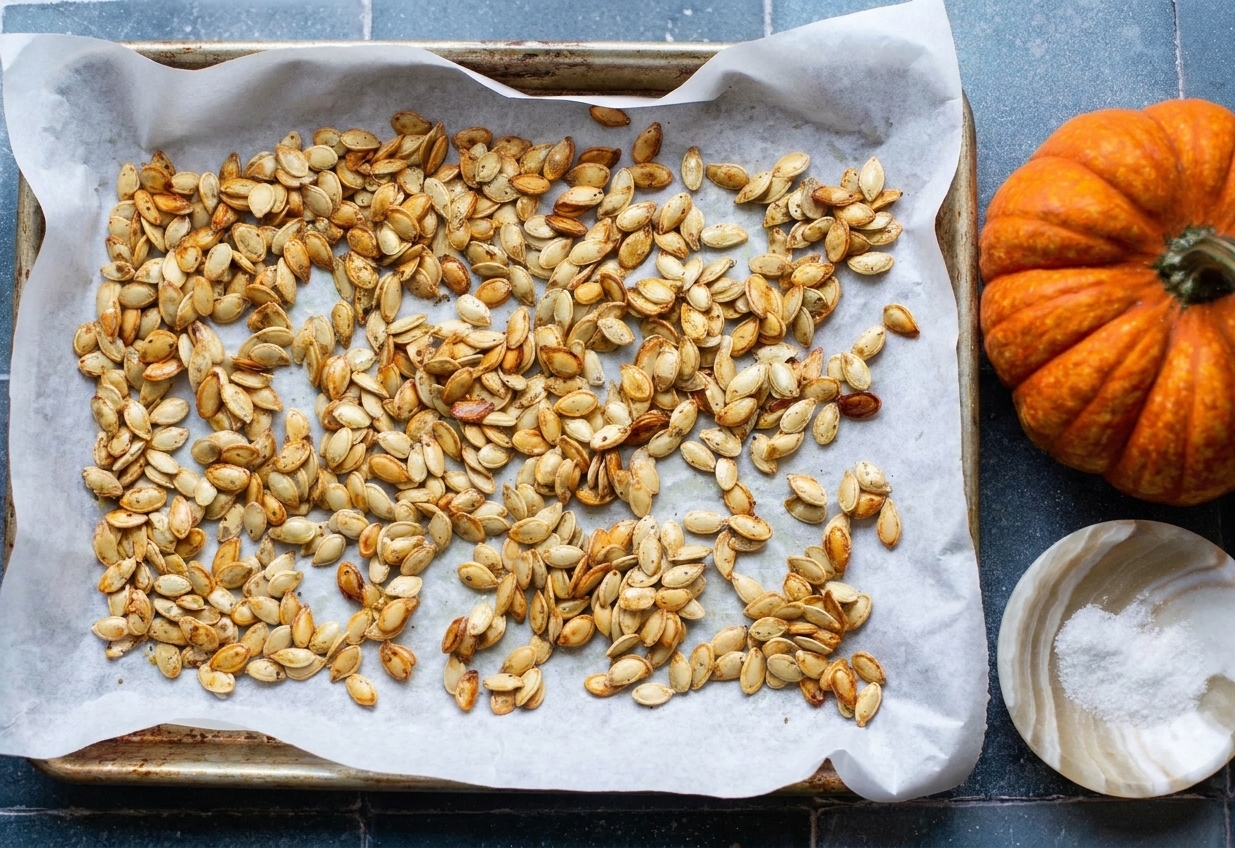
If you roast at home, you control this. You can dry-roast (no oil) or use a minimal amount of oil, then season with spices, citrus zest, or a light hand with salt.
Who should be cautious?
Pumpkin seeds are healthy for most people, but a few situations call for a little extra awareness:
- Seed allergies: Rare, but real. If you have a known seed allergy, check with your clinician before adding them.
- Digestive sensitivity: A large portion, especially of shell-on seeds, can feel rough on the gut. Start with a small serving and see how you feel.
- Low-sodium needs: Choose unsalted or lightly salted options and use the label as your guide.
- Calorie goals: Measure once or twice until your eyes learn what 1 ounce looks like.
Best ways to eat them
- Keep it simple: dry-roasted or lightly oil-roasted with salt and pepper.
- Go savory: chili powder, smoked paprika, cumin, garlic powder, or nutritional yeast.
- Add crunch to meals: soups, salads, grain bowls, roasted veggies, or tacos.
- Blend: grind into a pesto-style sauce with herbs, olive oil, and lemon.
Quick FAQ
Are pumpkin seeds healthy for weight loss?
They can be. Pumpkin seeds are filling because they combine protein, fat, and a bit of fiber. The key is portion size, since they are energy-dense. Aim for about 1 ounce as a planned snack or 1 to 2 tablespoons as a topping.
Are roasted pumpkin seeds healthier than raw?
Neither is automatically “healthier.” Roasting can make them easier to snack on and digest for some people. What matters more is whether they are oil-roasted and heavily salted.
Do pumpkin seeds have a lot of magnesium?
Yes. Pumpkin seeds are one of the more magnesium-rich snack foods, and a small serving can contribute a meaningful amount toward daily needs.
Are pumpkin seeds high in fiber?
They have some fiber, but they are not a top fiber source. Think of them as a protein and mineral powerhouse that also adds a little fiber.
The bottom line
Yes, pumpkin seeds are healthy for most people. They are a nutrient-dense snack with solid protein, standout magnesium, and mostly unsaturated fats. The healthiest approach is to keep serving sizes realistic, watch sodium and sugary coatings, and remember that roasting itself is not the enemy. It is usually the extra oil and heavy seasoning that changes the nutritional picture.
If you want the best of both worlds, roast a batch at home and keep a small jar on the counter for sprinkling. A tablespoon here and there adds crunch and nutrition without turning snack-time into an accidental meal.