
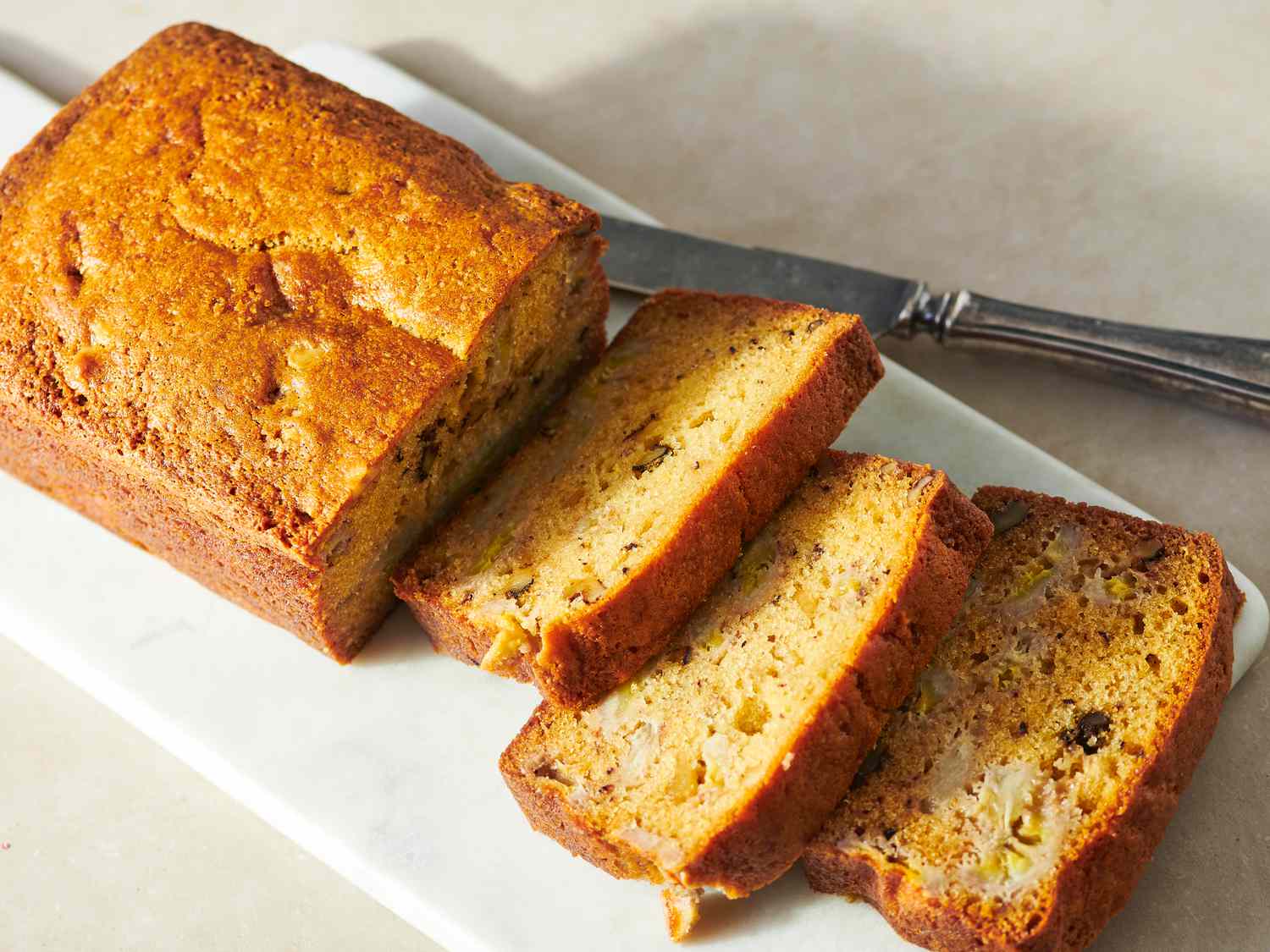
Banana bread is one of those recipes that feels like a small act of care. You take a few tired bananas that look past their prime, and you turn them into something that makes the whole kitchen smell like home. This version is my go-to when I want a loaf that feels wholesome without tasting like a compromise. Think deep banana flavor, a plush crumb, and slices that stay moist even on day three.
I managed a bakery for years, and the best “moist” quick breads all have a few things in common: enough banana, a little tang and richness, not too much mixing, and just the right bake. We’ll do all of that here with approachable, pantry-friendly ingredients.

Why it stays moist
Moisture isn’t luck. It’s a chain of small choices that add up. Here is what’s doing the heavy lifting in this loaf:
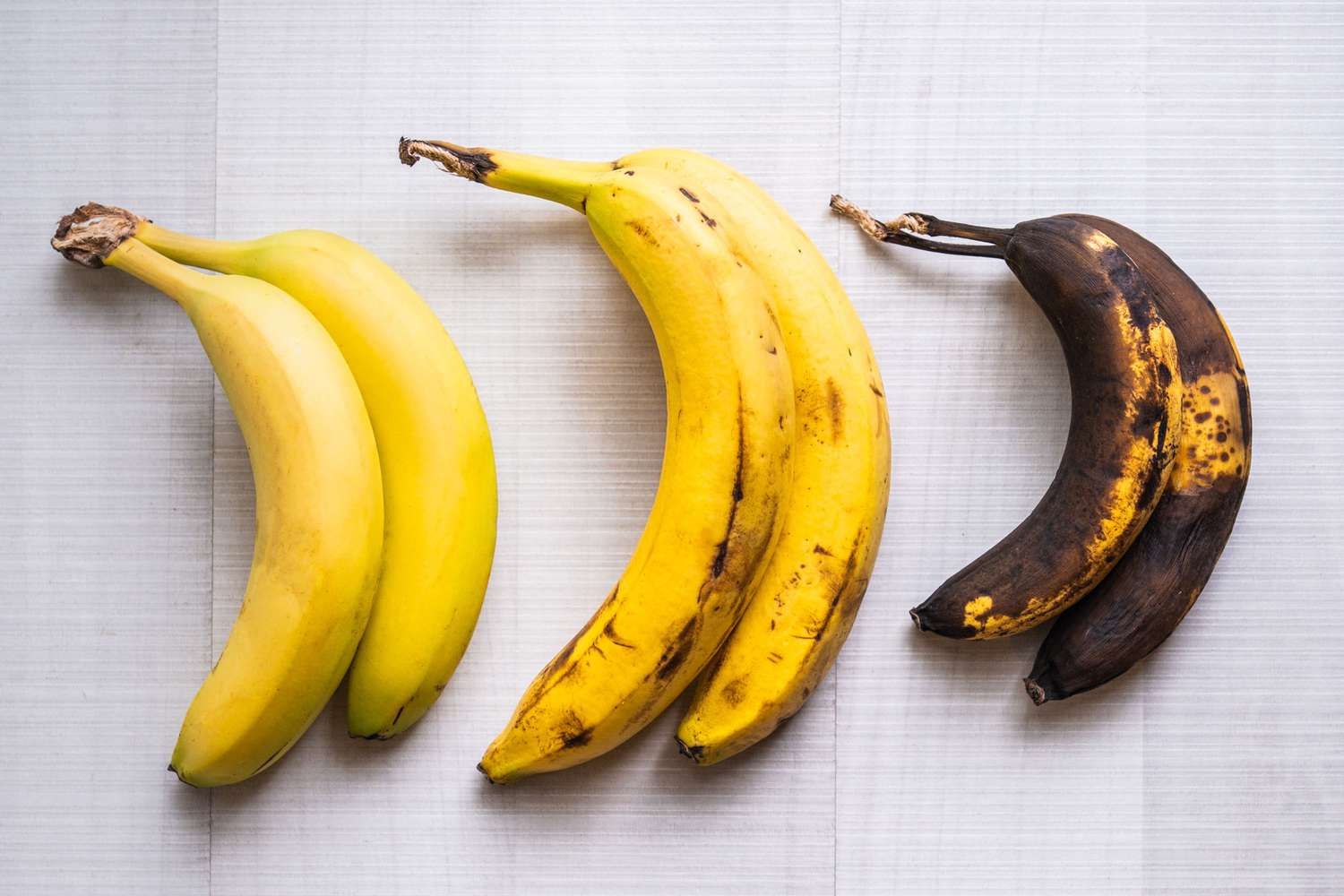
- Very ripe bananas: The darker the peel, the better. More sweetness and a softer mash means more moisture and flavor.
- Yogurt (or kefir or sour cream): Adds moisture, richness, and a gentle tang that supports a tender crumb.
- A blend of whole wheat and all-purpose flour: Whole grains bring a wholesome, nutty depth, but we keep enough all-purpose flour for lift and tenderness. (In the recipe below it’s a roughly 60/40 split: 1 cup all-purpose and 3/4 cup whole wheat.)
- Oil plus a little butter: Oil keeps quick breads soft for days. Butter adds that bakery-style aroma and flavor.
- Brown sugar: It holds onto moisture better than white sugar and adds a light caramel note.
One more secret that sounds almost too simple: do not overbake . Banana bread that goes “just a few more minutes” too long is the fastest route to dry slices.
Ingredients (and swaps)
This recipe is meant to flex with what you have. I will list the ideal choices first, then the substitutions that still work beautifully.
What you’ll need
- Bananas: About 1 1/2 cups mashed (340g), usually 3 large very ripe bananas. If yours are smaller, use 4. Measuring the mash is more reliable than counting bananas.
- Flour: Whole wheat flour plus all-purpose flour (see recipe card for exact amounts, plus optional weights).
- Leavening: Baking soda, plus a little baking powder for extra lift.
- Salt and cinnamon: Salt makes the banana taste louder. Cinnamon makes it cozy.
- Eggs: For structure and a tender set.
- Brown sugar: Light or dark both work.
- Neutral oil: Avocado, canola, or grapeseed.
- Butter: Melted. Optional, but I love what it adds.
- Plain yogurt: Regular or Greek. Full-fat gives the richest, most tender result, but low-fat works too.
- Vanilla: Always worth it.
Smart substitutions
- All whole wheat flour: You can do it, but the loaf will be a bit denser. If you go all whole wheat, I recommend white whole wheat for a softer texture.
- Gluten-free: Use a 1:1 gluten-free baking blend (with xanthan gum). Expect a slightly more delicate crumb, and let it cool fully before slicing.
- No yogurt: Swap in sour cream, kefir, or buttermilk. In a pinch, you can make a quick “buttermilk” by adding 1 tablespoon lemon juice or vinegar to 1 cup milk, then letting it sit 5 minutes. (For this recipe’s 1/3 cup dairy, use 1 teaspoon acid plus 1/3 cup milk.)
- Less sugar: You can reduce the sugar by 1/4 cup (50g) without major texture changes. Reduce more than that and the loaf may bake up drier and less tender.
- Egg-free: Try 2 flax eggs (2 tablespoons ground flaxseed mixed with 5 tablespoons water, rest 10 minutes). The loaf will be slightly more fudge-like, still tasty.
- Very thick Greek yogurt: If it’s extremely thick, loosen it with 1 to 2 teaspoons milk so it blends in easily.
Technique tips
1) Mash well, do not puree
You want a mostly smooth mash with a few small lumps. Those lumps melt into tender pockets of banana. A full puree can make the loaf feel a bit gummy in some kitchens, especially when paired with extra-wet bananas or a slightly underbaked center.
2) Mix gently
Once flour hits liquid, gluten starts forming. Stir just until you stop seeing dry flour. A few streaks are fine, they will hydrate as the batter rests and bakes.
3) Rest the batter 5 to 10 minutes (optional)
This is optional, but helpful. It lets the whole wheat flour absorb moisture, which means a more tender slice and fewer dry edges.
4) Use the right pan
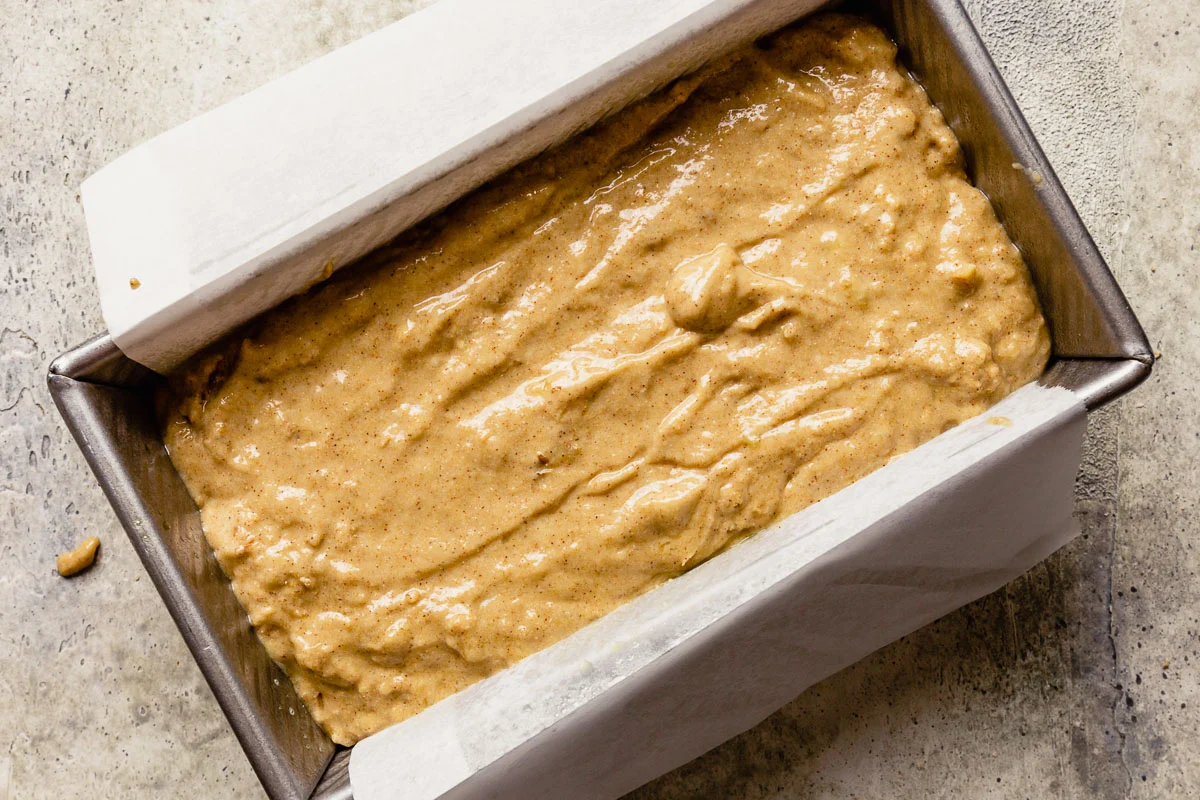
A standard 9 x 5-inch loaf pan is ideal. If you use an 8 1/2 x 4 1/2-inch pan, the loaf will be taller and may need a longer bake. Lining with parchment makes lifting the loaf out easy and keeps the sides from getting overbrowned.
5) Know what done looks like
Look for a deep golden top with a crack down the center. A toothpick should come out with moist crumbs, not wet batter. If you like numbers, the center typically reads about 200 to 205°F (93 to 96°C) on an instant-read thermometer.
Wholesome mix-ins
Banana bread is basically a blank canvas for whatever you want to use up. A few favorites that feel nourishing and still taste like a treat:
- Chopped walnuts or pecans: 1/2 to 3/4 cup.
- Dark chocolate chips: 1/2 cup for “just enough.”
- Unsweetened shredded coconut: 1/3 cup for a lightly toasty vibe.
- Blueberries: 1 cup, tossed with 1 teaspoon flour first to reduce sinking.
- Seeds: 2 tablespoons hemp hearts or chia stirred into the batter, or sesame on top for crunch.
My bakery-manager habit: if you add mix-ins, hold back a tablespoon and sprinkle it over the top so the loaf looks pretty with zero extra effort.
Moist Banana Bread Recipe
Ingredients
- Nonstick spray or a little oil, for the pan
- About 1 1/2 cups mashed very ripe banana (340g), from 3 large bananas (or 4 small)
- 2 large eggs
- 1/2 cup packed brown sugar (about 100g)
- 1/4 cup neutral oil (55g)
- 2 tablespoons melted unsalted butter (28g), optional but recommended
- 1/3 cup plain yogurt (80g), regular or Greek
- 2 teaspoons vanilla extract
- 1 cup all-purpose flour (120g)
- 3/4 cup whole wheat flour, preferably white whole wheat (90g)
- 1 teaspoon baking soda
- 1/2 teaspoon baking powder
- 3/4 teaspoon fine salt
- 1 teaspoon ground cinnamon
- Optional mix-ins: 1/2 cup chopped walnuts or 1/2 cup dark chocolate chips
Instructions
- Heat the oven: Preheat to 350°F. Lightly grease a 9 x 5-inch loaf pan and line it with parchment, leaving a little overhang on the long sides for easy lifting.
- Mash the bananas: In a large bowl, mash the bananas until mostly smooth with a few small lumps.
- Mix the wet ingredients: Whisk in the eggs, brown sugar, oil, melted butter (if using), yogurt, and vanilla until well combined.
- Add the dry ingredients: Sprinkle the all-purpose flour, whole wheat flour, baking soda, baking powder, salt, and cinnamon over the wet mixture. Use a spatula to fold gently just until you no longer see dry flour.
- Fold in mix-ins: If using nuts or chocolate, fold them in with a few gentle turns, just until distributed.
- Bake: Scrape the batter into the prepared pan and smooth the top. Bake 50 to 65 minutes, tenting loosely with foil at about the 40-minute mark if the top is browning quickly. The loaf is done when a toothpick inserted near the center comes out with moist crumbs, not wet batter. (Optional: check for about 200 to 205°F / 93 to 96°C in the center.)
- Cool: Let cool in the pan for 15 minutes, then lift out using the parchment and cool completely on a rack before slicing. (I know. Waiting is hard. But it sets the crumb and keeps slices from crumbling.)
Notes
- For extra banana flavor: Add an additional 1/2 banana (about 1/4 cup mashed) and reduce yogurt by 2 tablespoons to keep the batter balanced.
- If your loaf sinks in the middle: It is often underbaked, but it can also happen with overmixing, too much leavening, or an extra-wet batter (very watery bananas, heavy mix-ins, or too much banana). Next time, bake a bit longer and check the center with the toothpick test or temperature.
- Make it more “dessert”: Sprinkle the top with 1 tablespoon turbinado sugar before baking for a crackly, bakery-style crust.
- Flour measuring tip: If you are not using a scale, spoon flour into your measuring cup and level it off. Scooping straight from the bag packs in extra flour and can dry out the loaf.
Storage and freezing
Keep it moist
Once completely cool, wrap the loaf tightly in plastic wrap or store slices in an airtight container. I like to add a paper towel under the slices to absorb excess surface moisture so the crust does not get sticky.
- Room temperature: 3 to 4 days.
- Refrigerator: Up to 1 week, but the fridge can dry it slightly. Warm slices briefly to bring back the tender texture.
Freezing
Banana bread freezes like a dream.
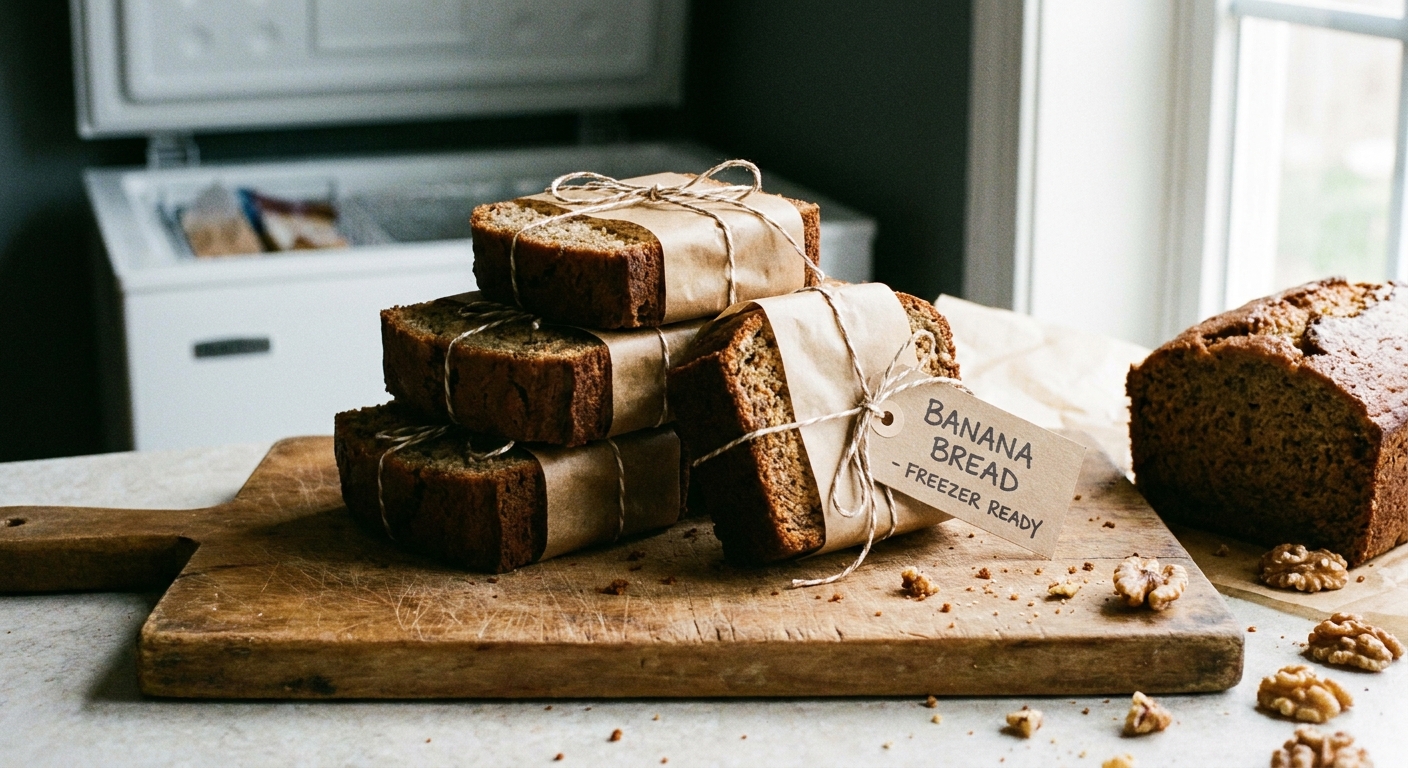
- Freeze the whole cooled loaf wrapped tightly, then placed in a freezer bag, up to 3 months.
- Or freeze slices, separated with parchment, so you can grab one at a time.
- Thaw at room temperature or warm gently in a toaster oven.
Troubleshooting FAQ
Why is my banana bread dry?
The most common causes are overbaking, measuring too much flour, or not enough banana. If you can, weigh your flour (or spoon it into the measuring cup and level it off). Also check your oven temperature with an inexpensive oven thermometer if dryness keeps happening.
Why did it sink in the middle?
Usually underbaking, sometimes too much banana or mix-ins, and occasionally expired leavening. Overmixing and an overly sugary batter can also contribute. Bake until the center tests with moist crumbs and the loaf feels set when gently pressed on top.
Can I make this into muffins?
Yes. Divide batter into a lined 12-cup muffin tin (fill about 3/4 full) and bake at 350°F for 18 to 24 minutes.
Can I use frozen bananas?
Absolutely. Thaw completely, then drain off and discard a tablespoon or two of excess liquid if they seem very watery. Mash and proceed as usual.
How ripe is ripe enough?
If the peels are heavily speckled or mostly brown and the bananas smell sweet, you are perfect. If they are still yellow and firm, the bread will be less flavorful. If you need to ripen bananas quickly, place them (peel on) on a sheet pan and bake at 300°F for 15 to 25 minutes, until the peels are very dark (nearly black), then cool and use.
If you take only one tip with you, let it be this: banana bread is done when the center is set but still tender. Trust moist crumbs on the toothpick. That is where the magic lives.