
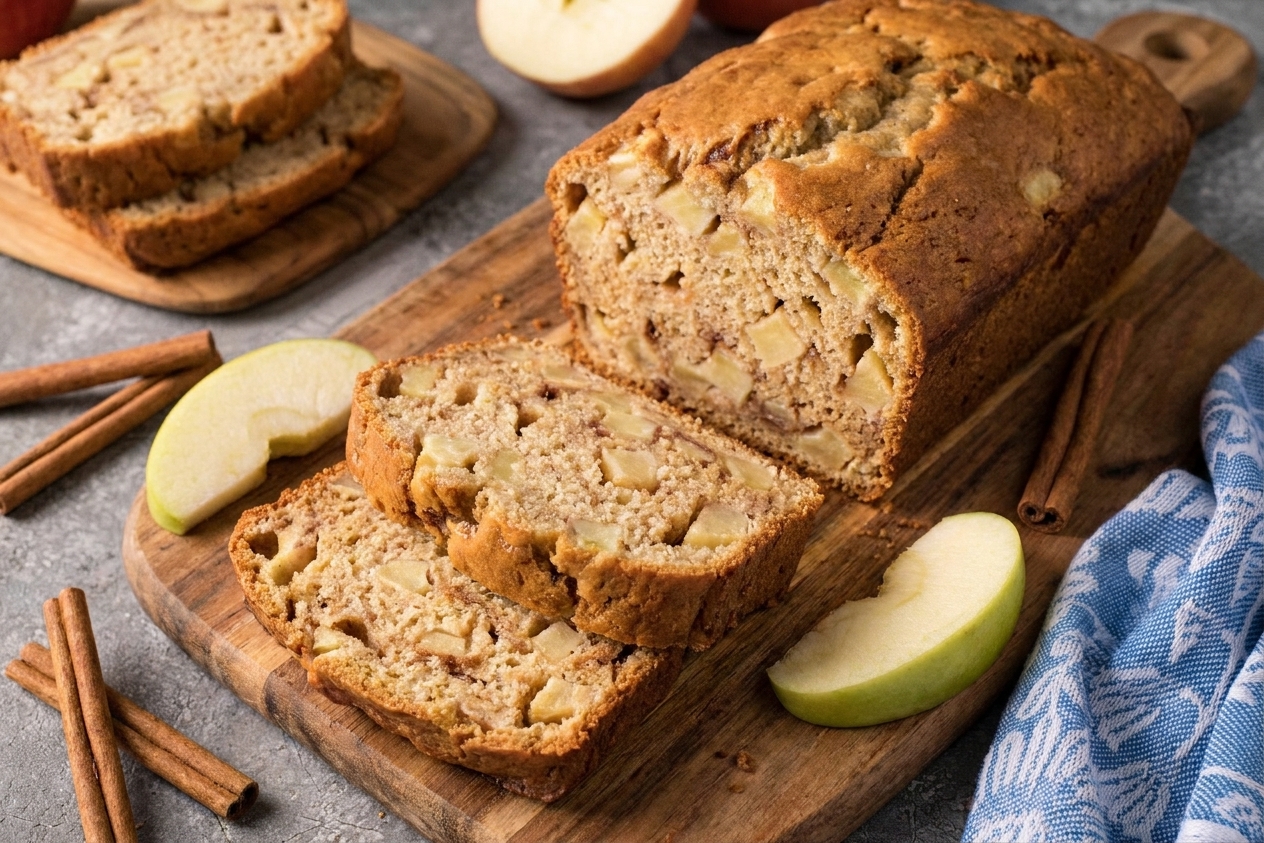
In my old bakery days, quick breads were the quiet heroes. They made the whole place smell like comfort, they sliced cleanly for the case, and they forgave you if you were a little tired and a little distracted. This apple cinnamon quick bread is my home-kitchen version of that same feeling: one bowl for dry, one bowl for wet, and a loaf pan that turns a couple of apples into a tall, fragrant loaf that feels like a hug.
The goal here is diced apple in the crumb, not applesauce bread and not a wet, sunken center. Apples are juicy, which is wonderful, but that extra water can tip a loaf from tender to soggy if you do not plan for it. So we do three small things that make a big difference: choose apples that hold their shape, lightly toss the diced apples with flour so they are more likely to stay suspended instead of sinking, and bake until the very center is truly done.

You will get a loaf with a cinnamon-sugar style warmth, a soft, fine crumb, and little pockets of apple that stay distinct instead of melting into mush. It is the kind of slice that feels just as right with morning coffee as it does as a not-too-sweet dessert after dinner.
What to expect
- Texture: tender and moist, with diced apples throughout and a clean slice once cooled.
- Flavor: cinnamon-forward with caramel notes from brown sugar, plus a gentle apple sweetness.
- Skill level: very doable, even if you do not bake often.
Why this recipe works
- Apples that hold their shape: Using a firmer baking apple means you are more likely to get defined apple pieces instead of apples that disappear into the batter.
- Moist, not soggy: Coating the diced apples in a bit of flour helps them distribute evenly and can reduce wet pockets. Baking to the correct internal doneness helps the crumb set so the center is less likely to turn gummy.
- Balanced fat and acid: Oil keeps the loaf tender for days, while a touch of yogurt or sour cream adds richness and a little acidity to keep the crumb soft and fine.
- Gentle mixing: Quick bread gets tough when overmixed. Folding just until the flour disappears keeps it plush.
Ingredient notes
Best apples for quick bread
If you want pieces of apple that stay intact after a long bake, reach for firm, crisp apples. My favorites here are Honeycrisp, Pink Lady (Cripps Pink), Granny Smith, and Braeburn. They keep their shape and give you that pleasant bite in each slice.
Apples that tend to soften faster, like McIntosh or very ripe Gala, can still work, but the apple pieces will melt into the crumb more and can contribute to a wetter interior.
Flour
All-purpose flour is perfect. Measure by spooning into the cup and leveling, or use a scale if you have one. Too much flour dries the loaf. Too little can make it sink.
Spices
Cinnamon is the headline, but a pinch of nutmeg makes it taste bakery-warm. If you love a deeper spice profile, a little cardamom is lovely.
Yogurt or sour cream
This is one of my favorite quick bread tricks. It adds moisture without making the batter watery. Use full-fat if you can for the most tender crumb.
Vanilla and salt
Do not skip the salt. Apple-cinnamon baked goods can taste flat without it. Vanilla rounds everything out.
Equipment you will need
- Standard 9 x 5-inch loaf pan
- Mixing bowl for dry ingredients and mixing bowl for wet ingredients
- Whisk and flexible spatula
- Measuring cups and spoons (or a kitchen scale)
- Cooling rack
- Toothpick or thin skewer for doneness checks
- Instant-read thermometer (optional but very helpful for the center)
Pro tips
How to keep apple quick bread from turning soggy
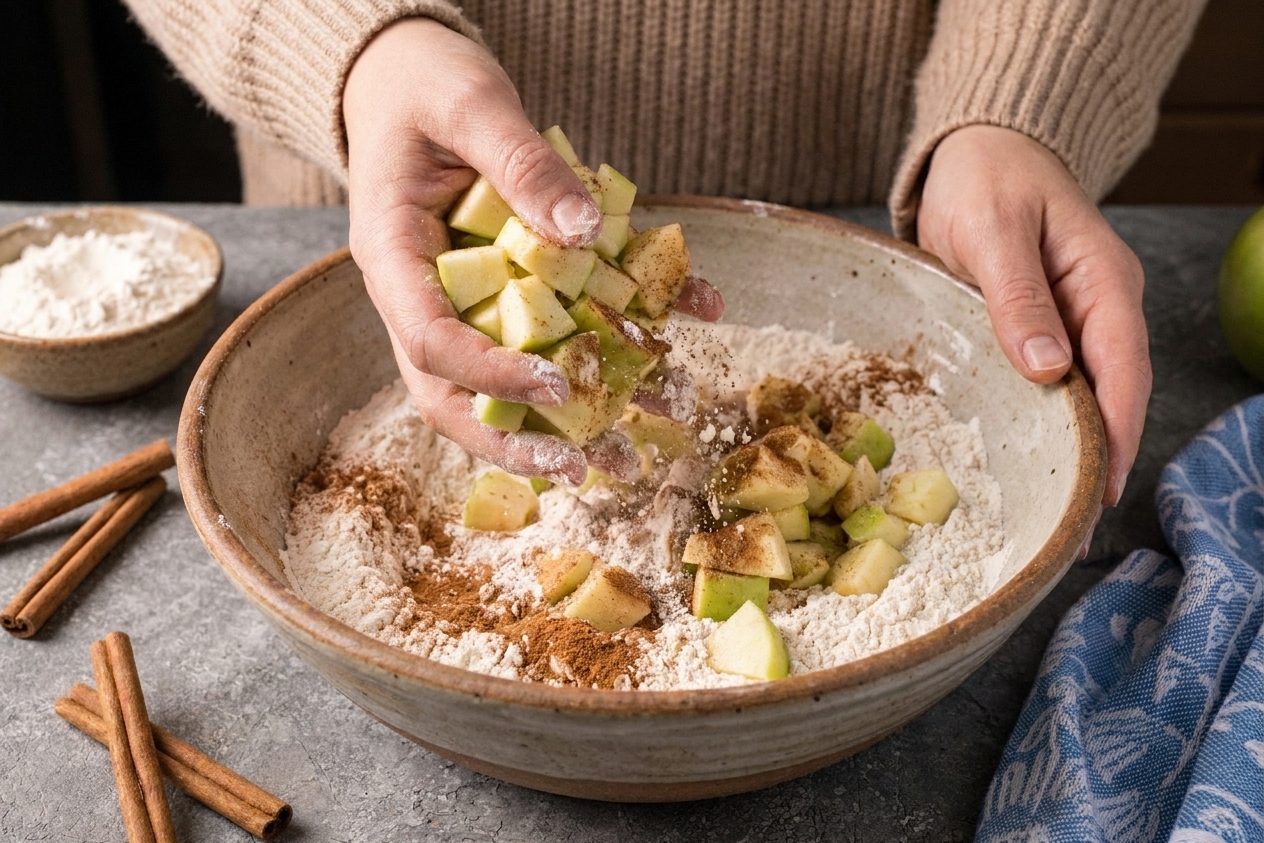
- Dice small and consistent: Aim for 1/4-inch cubes. Big chunks release more juice into a single spot and can create wet pockets.
- Pat the apples dry: If your apples seem very juicy after dicing, blot them with a paper towel before adding them to the batter.
- Toss apples with flour: A tablespoon or two of flour from the measured amount coats the apple surfaces and helps absorb some surface moisture.
- Do not underbake: The center needs time. If the top is browning too quickly, tent loosely with foil for the last 15 to 20 minutes.
Center doneness test
Use a two-part check:
- Visual: The loaf should look set in the center, not shiny or jiggly, and the top should spring back when gently pressed.
- Probe: Insert a toothpick or skewer into the very center. You want a few moist crumbs, not wet batter. If you have an instant-read thermometer, the center is typically done around 200 to 205°F.
Let the loaf cool in the pan for about 15 minutes, then turn it out to a rack. Cooling finishes the set and keeps the bottom from steaming and getting damp.
Substitutes that work
- Yogurt or sour cream: Use either one. If you are in a pinch, buttermilk can work, but the batter will be looser so expect a slightly more delicate crumb.
- Oil: Neutral oil like canola, vegetable, or avocado oil is ideal. Melted butter can replace some or all of it for more buttery flavor, but the loaf may firm up a bit more when cool.
- Brown sugar: Swap in white sugar if needed. You will lose a little caramel depth, but the loaf will still be delicious.
- Flour: A 1-to-1 gluten-free all-purpose blend can work, but choose one designed for baking. Let the batter rest 10 minutes before baking to hydrate the starches.
Variations
Mix-ins
Keep mix-ins to about 1/2 to 3/4 cup total so the loaf stays sturdy and bakes through.
- Nuts: chopped walnuts or pecans add crunch.
- Dried fruit: raisins or dried cranberries are sweet and chewy.
- Chocolate: a handful of mini chocolate chips turns it into a treat loaf.
Swirl option
For a cinnamon ripple, mix a few tablespoons of sugar with cinnamon and sprinkle half over the batter in the pan, add the rest of the batter, then sprinkle the remaining cinnamon sugar on top. Drag a butter knife through once or twice for a gentle swirl.
Extra apple-forward
Replace a portion of the diced apples with finely grated apple. It perfumes the crumb, but keep it modest or the loaf can get too wet.
Serving ideas
- Breakfast: toasted slice with butter, or a smear of cream cheese.
- Dessert: warm slice with vanilla ice cream or whipped cream.
- Snack: plain, with hot tea, especially on chilly afternoons.
If you want neat slices, cool completely before cutting. If you want that cozy warm slice, let it cool at least 45 minutes so it does not crumble.
Storage and reheating
Room temperature
Store the completely cooled loaf tightly wrapped or in an airtight container at room temperature for 2 to 3 days. If your kitchen is humid, place a paper towel in the container to absorb excess moisture.
Refrigerator
You can refrigerate it for up to 5 days, but quick bread tends to dry out in the fridge. If you do refrigerate, wrap it well and warm slices before serving.
Freezer
Freeze the loaf (whole or sliced) for up to 2 months. Wrap in plastic wrap, then foil. Thaw at room temperature. For slices, a quick toast brings back the best texture.
Reheating
- Toaster: best for slices, crisp edges and warm center.
- Microwave: 10 to 15 seconds per slice for a soft, warm bite.
Common mistakes
- Cutting while hot: This compresses the crumb and can make the center seem gummy. Let it cool.
- Overmixing: Stirring too much builds gluten and makes a tough loaf. Fold just until you do not see dry flour.
- Too-large apple chunks: Big pieces can sink and create wet pockets. Keep the dice small and even.
- Underbaking: A browned top is not the same as a baked center. Tent with foil and keep going until the center test passes.
- Storing before fully cool: Trapped steam leads to a damp, soggy bottom. Cool completely, then wrap.
FAQ
Do I need to peel the apples?
Not strictly, but I recommend peeling for the most tender, even crumb. Apple skins can curl and create chewy bits in the slice.
Why did my apples sink to the bottom?
Usually the dice was too large, the batter was overmixed and loosened, or the apples were not lightly coated with flour. Tossing the apples with a bit of flour and keeping pieces small helps a lot.
Can I use applesauce instead of diced apples?
You can, but it becomes a different loaf and it is easier to overdo the moisture. If you want that apple-speckled look and bite, stick with diced apples.
How do I know the center is done if my toothpick keeps hitting apple?
Aim for a spot between apple pockets and check a couple of places in the center line. An instant-read thermometer makes this much easier. Look for about 200 to 205°F in the center.
Can I make this into muffins?
Yes. Portion into a lined muffin pan and bake at the same temperature, checking early. Muffins finish faster, so start checking around the 18 to 22 minute mark, depending on your pan and oven.
The recipe
Apple Cinnamon Quick Bread
A tender loaf-pan apple cinnamon quick bread with diced apples in every slice. Built to stay moist without turning soggy, with simple doneness cues so the center bakes through beautifully.
- Prep
- 20 minutes
- Cook
- 55 to 70 minutes
- Total
- 1 hour 25 minutes to 1 hour 40 minutes
- Yield
- 1 loaf (about 10 slices)
Ingredients
- 2 cups all-purpose flour (260 g)
- 1 1/2 tsp baking powder
- 1/2 tsp baking soda
- 1 tsp ground cinnamon
- 1/4 tsp ground nutmeg (optional)
- 1/2 tsp fine salt
- 2 large eggs, room temperature
- 3/4 cup packed light brown sugar (150 g)
- 1/4 cup granulated sugar (50 g)
- 1/2 cup neutral oil (120 ml), such as canola or vegetable
- 1/2 cup plain yogurt or sour cream (120 g)
- 1/3 cup milk (80 ml)
- 2 tsp vanilla extract
- 2 cups peeled, diced apples (about 2 medium apples, 1/4-inch dice)
- 1 tbsp all-purpose flour (taken from the measured flour above), for tossing apples
- Optional topping: 1 tbsp granulated sugar mixed with 1/2 tsp cinnamon
Instructions
- Heat the oven to 350°F. Line a 9 x 5-inch loaf pan with parchment paper (leave overhang as handles) and lightly grease the pan and parchment.
- In a medium bowl, whisk together 2 cups flour, baking powder, baking soda, cinnamon, nutmeg (if using), and salt.
- Peel and dice the apples into 1/4-inch cubes. Blot with a paper towel if they look very wet. Toss the diced apples with 1 tablespoon flour (from the measured flour) until lightly coated.
- In a large bowl, whisk the eggs, brown sugar, and granulated sugar until smooth and slightly lighter in color, about 30 seconds.
- Whisk in the oil, then whisk in the yogurt (or sour cream), milk, and vanilla until fully combined.
- Add the dry ingredients to the wet ingredients. Fold gently with a spatula just until you no longer see dry flour.
- Fold in the flour-coated apples, mixing just enough to distribute them evenly.
- Scrape the batter into the prepared loaf pan and smooth the top. If using the optional topping, sprinkle it evenly over the surface.
- Bake for 55 to 70 minutes, tenting loosely with foil if the top browns too quickly during the last 15 to 20 minutes. The loaf is done when the center looks set and a toothpick inserted into the center comes out with moist crumbs, not wet batter. For the most reliable check, the center should read about 200 to 205°F on an instant-read thermometer.
- Cool in the pan for 15 minutes. Lift the loaf out using the parchment, then cool completely on a rack before slicing for the cleanest crumb.
Notes
Best apples: Honeycrisp, Pink Lady, Granny Smith, and Braeburn hold their shape well in the loaf.
Preventing sogginess: Keep the apple dice small, blot very juicy apples, toss with flour, and do not underbake. Cool completely before wrapping.
Mix-ins: Add 1/2 to 3/4 cup chopped nuts, raisins, dried cranberries, or mini chocolate chips. If adding mix-ins, keep the apple amount the same so the loaf does not get overloaded.
Pan size note: A smaller pan can cause overflow and a longer bake time. If using an 8 1/2 x 4 1/2-inch pan, you may have a bit of extra batter. Fill the pan about 2/3 to 3/4 full.