
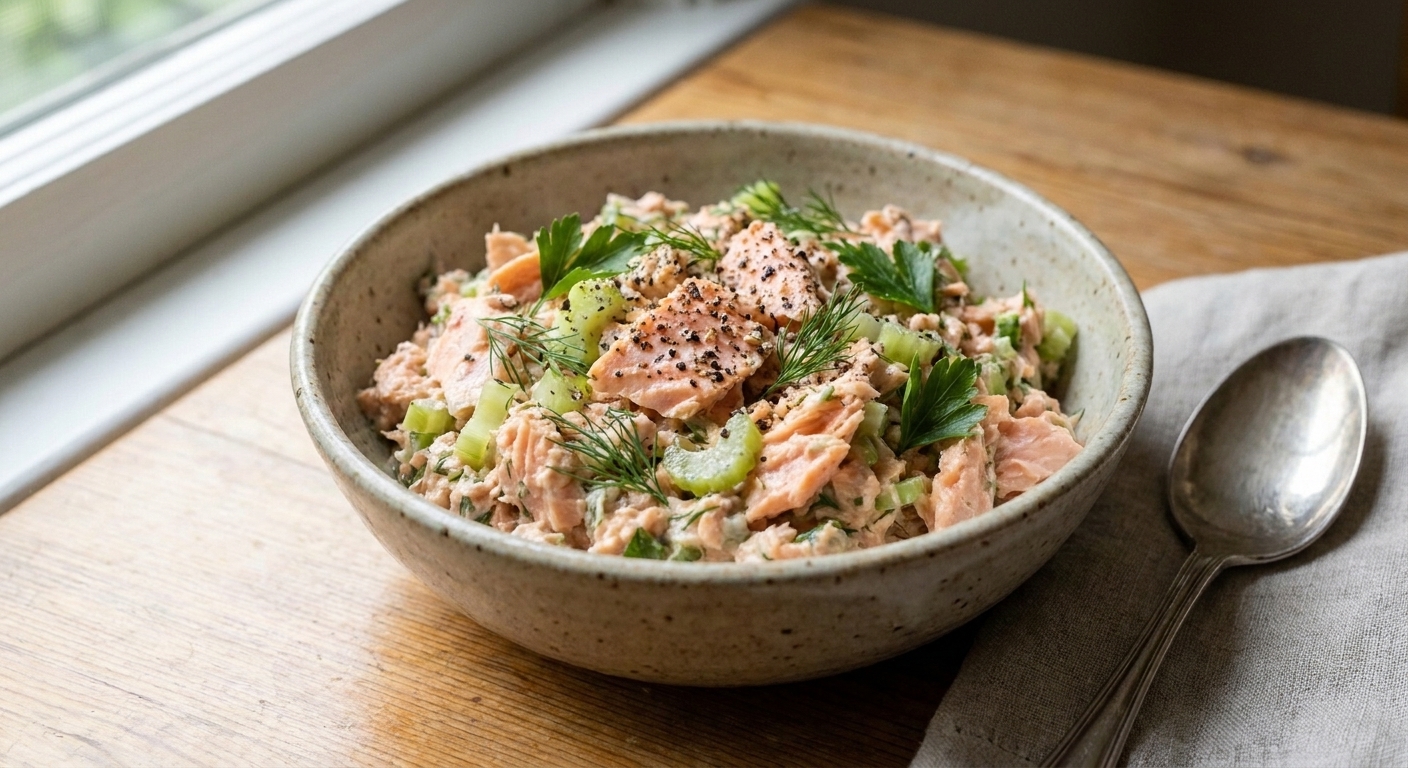
When I managed a bakery, “lunch” often meant whatever I could eat in two bites between oven timers. This is the kind of salad I wish I’d leaned on more back then: canned salmon, something creamy, something crunchy, and enough lemon and herbs to make it taste fresh, not fishy.
The key is treating canned salmon like an ingredient, not a finished product. Drain it well, flake it to the size you want, and season it in layers. I like to hit the salmon with a pinch of salt and a squeeze of lemon first, then fold in the creamy base and finish with Dijon, herbs, and black pepper. Then let it chill for a bit so the celery relaxes, the herbs bloom, and the whole bowl tastes like it belongs in a really good sandwich shop.

I keep this firmly in the cold salad lane. No breadcrumbs, no eggs for binding, no pan-frying. Just a simple, satisfying sandwich salad you can make in minutes and scoop onto toast whenever hunger shows up.
What it tastes like
Think of it like tuna salad’s brighter cousin: rich and creamy, with clean salmon flavor, crisp celery, and a fresh herb lift. Lemon and mustard give it a gentle tang, and a few minutes in the fridge makes everything taste more unified and less sharp.
What goes in it
My default mix is simple: well-drained canned salmon, diced celery, chopped dill (or dill and parsley), a spoonful of Dijon, and enough mayo and or Greek yogurt to make it creamy. If you like a little bite, add a small amount of minced red onion or scallion.
Mayo or yogurt, your call
Mayo gives you classic deli-salad richness. Plain Greek yogurt makes it lighter and tangier. My favorite “best of both worlds” move is using mostly yogurt with a spoonful of mayo for roundness. Whatever you choose, start with less than you think, then add more after you mix and taste.
Flake size matters
If you want a salmon salad that feels hearty in a sandwich, keep the flakes bigger. If you want it more spreadable for crackers, break it down smaller. I like a mix: larger flakes for texture, with a little finer flaking where the creamy dressing can cling.
Make-ahead chill
This salad is good right away, but it is best after at least 20 to 30 minutes in the fridge. That little rest time softens the bite of raw onion (if you use it), lets the herbs perfume the dressing, and gives you a thicker, more scoopable texture for sandwiches.
Canned salmon notes
If your canned salmon includes skin and bones, you can remove them for a smoother salad. The bones are usually soft enough to mash in, too, if you do not mind the look and want to keep things simple. Either way, drain it thoroughly so your salad stays creamy, not watery.
Why this recipe works
- Draining first prevents watery salad. Removing excess liquid and pressing gently keeps the dressing creamy instead of runny.
- Controlled flaking gives you the texture you want. Bigger flakes eat like a meal, smaller flakes spread like a dream.
- Layered seasoning beats bland canned fish. Lemon, mustard, herbs, salt, and pepper wake up salmon without masking it.
- A short chill improves both flavor and structure. The mixture thickens slightly and tastes more balanced.
Ingredient notes
Canned salmon
Use boneless and skinless if you want the simplest prep. If your can includes skin and bones, you can remove them for a milder look and texture, or mash the soft bones in if you are comfortable with it. Either way, drain very well.
Mayo or Greek yogurt
Mayo is classic and rich. Plain Greek yogurt is tangier and lighter. If using yogurt, choose full-fat for the creamiest result.
Celery
Dice it small so every bite gets crunch without feeling chunky. If your celery is stringy, peel the outside lightly with a vegetable peeler first.
Herbs
Dill is the most natural match with salmon, but parsley and chives work beautifully too. Use what you have, just keep it fresh.
Lemon
Fresh lemon juice brightens the whole bowl. If you have it, a little lemon zest adds a clean citrus aroma.
Mustard
Dijon adds gentle tang and helps the dressing taste more finished. You can use whole grain mustard for extra texture.
Equipment you will need
- Fine-mesh strainer or the can lid for draining
- Medium mixing bowl
- Fork for flaking and mixing
- Chef’s knife and cutting board
- Measuring spoons
Pro tips
- Drain like you mean it. After pouring off the liquid, press the salmon gently in a strainer for 10 to 15 seconds. Less water equals better texture.
- Pick your flake style before you add dressing. Flake first, then stir in the creamy base so you do not accidentally over-mash.
- Season in two rounds. Add a little salt and lemon, mix, taste, then adjust after it has chilled. Cold foods often need a final pinch of salt.
- Keep the add-ins small. Finely diced celery and onion make it easier to pile into a sandwich without bits falling out.
- Want it less fish-forward? Add a little more lemon, dill, and black pepper, plus a tiny pinch of sugar or honey to round the edges.
Substitutes that work
- No celery: Use finely chopped cucumber (seeded), diced pickles, or a little chopped fennel for crunch.
- No red onion: Use sliced scallions or chives. You can also soak chopped onion in cold water for 5 minutes, then drain to mellow it.
- No Dijon: Use yellow mustard for a more classic lunchbox vibe, or skip it and add an extra squeeze of lemon.
- No fresh herbs: Use a smaller amount of dried dill or dried parsley. Dried is stronger, so start with a pinch and build.
- More tang without extra mayo: Stir in a teaspoon of capers or chopped cornichons.
Variations
- Salmon salad with capers: Add 1 to 2 teaspoons capers and a little extra lemon.
- Spicy salmon salad: Add hot sauce, a pinch of cayenne, or a spoonful of sriracha. A little smoked paprika is great too.
- Pickle-forward deli style: Add 1 to 2 tablespoons finely chopped dill pickles, plus a splash of pickle brine.
- Avocado salmon salad: Replace part of the mayo or yogurt with mashed avocado. Eat within a day for best color.
- Herby green goddess feel: Use a mix of parsley, chives, and a little tarragon if you have it.
Serving ideas
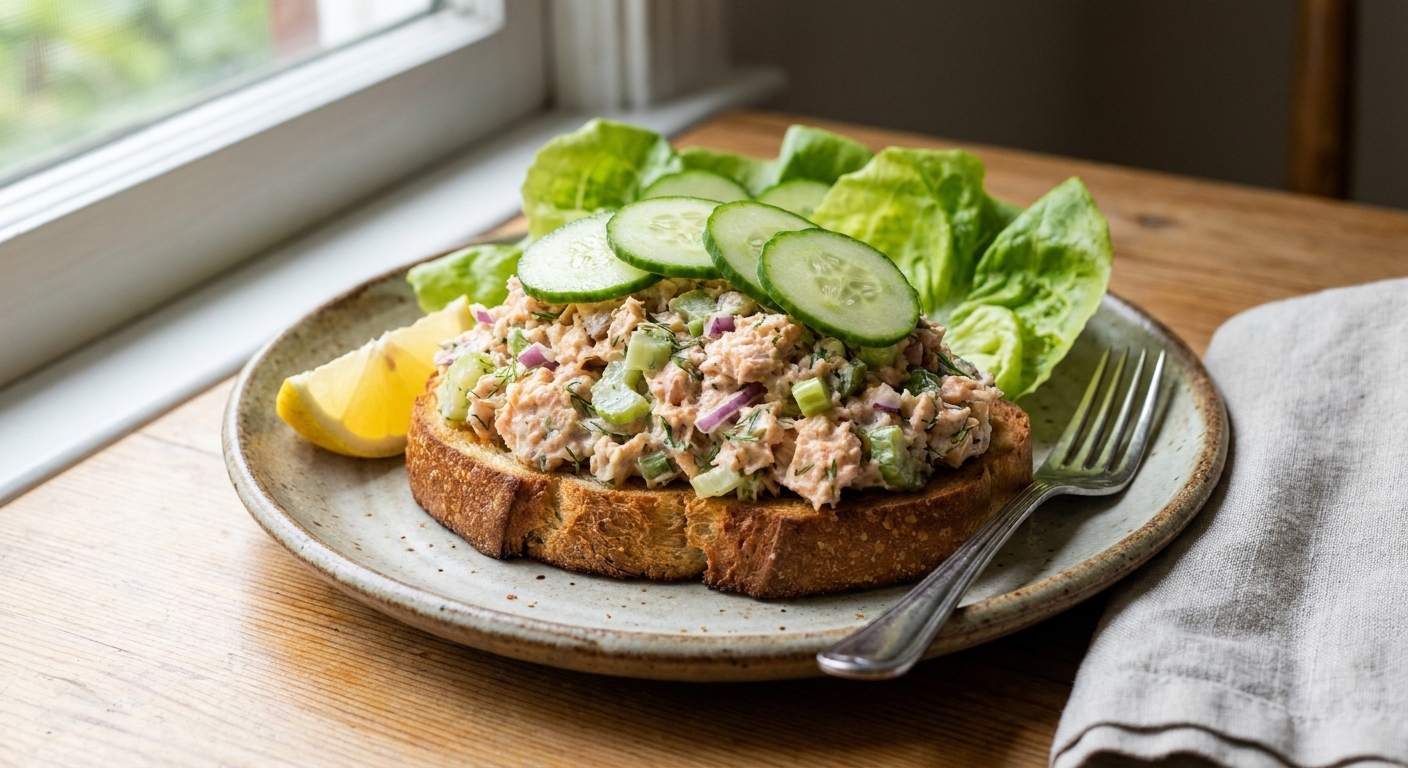
- Classic sandwich: Pile onto toasted bread with lettuce and thinly sliced cucumber.
- Bagel situation: Serve on a toasted bagel with tomato and extra dill.
- Wrap: Add spinach or arugula and roll into a tortilla or lavash.
- Crackers or rye crisps: Perfect for snack plates and quick lunches.
- Stuffed tomatoes or avocado halves: A neat, no-bread option that still feels satisfying.
Storage and reheating
Refrigeration
Store in an airtight container in the refrigerator and eat within 3 to 4 days.
Make-ahead
You can make it a day ahead. In fact, it often tastes better after a longer chill. If it thickens too much, stir in a teaspoon of mayo, yogurt, or lemon juice to loosen it.
Freezing
I do not recommend freezing. Mayo and yogurt-based salads tend to separate and get watery after thawing.
Common mistakes
- Not draining the salmon enough. Extra liquid makes the salad watery and dilutes the seasoning.
- Over-mashing the fish. If you mix aggressively, the salad can turn paste-like. Fold gently to keep nice flakes.
- Under-seasoning. Salmon can handle more salt, pepper, and lemon than you think. Taste and adjust.
- Skipping the chill. Even 20 minutes in the fridge makes the flavor rounder and the texture more scoopable.
- Big dice on crunchy add-ins. Large celery or onion chunks make sandwiches messy and overpower the salmon.
FAQ
Do I need to remove the skin and bones from canned salmon?
It depends on what you bought. Many cans are already boneless and skinless. If yours has skin and bones, you can remove them for a cleaner look and texture. Some people mash the soft bones in because they break down easily. Either way is fine, just aim for a texture you enjoy.
Why does my salmon salad taste fishy?
Fishy flavor usually comes from not enough acid or seasoning, or from a can that is older or lower quality. Add more lemon juice, black pepper, and herbs. A small spoonful of Dijon helps too. Also, drain well so you are not tasting the packing liquid.
Can I use yogurt only?
Yes. Use plain Greek yogurt for the best texture. Taste and adjust salt, since yogurt’s tang can make the salad seem less seasoned at first.
How do I keep it from getting watery?
Drain the salmon thoroughly and keep juicy add-ins minimal. If you add cucumber or pickles, dice them small and blot them dry first. Chilling also helps the salad thicken slightly.
Is this meant to be cooked like salmon patties?
No. This is a cold, creamy salad for sandwiches and wraps, not a mixture meant for binding and frying.
The recipe
Canned Salmon Salad
A fast, creamy canned salmon salad with celery, herbs, lemon, and Dijon. Mix it in minutes, then chill for the best flavor and texture. Perfect for sandwiches, wraps, and snack plates.
- Prep
- 10 minutes
- Cook
- 0 minutes
- Total
- 40 minutes
- Yield
- 4 servings
Ingredients
- 2 (6-ounce) cans salmon, drained very well (boneless and skinless preferred)
- 1/3 cup mayonnaise and/or plain Greek yogurt (see notes)
- 1/2 cup celery, finely diced (about 1 to 2 ribs)
- 2 tablespoons red onion, finely minced (optional)
- 2 tablespoons fresh dill, chopped (or 1 tablespoon dill plus 1 tablespoon parsley)
- 1 tablespoon fresh lemon juice, plus more to taste
- 1 teaspoon Dijon mustard
- 1/2 teaspoon kosher salt, plus more to taste
- 1/4 teaspoon black pepper, plus more to taste
- Optional: 1 teaspoon lemon zest
Instructions
- Drain the salmon. Pour off the liquid. For best texture, tip the salmon into a fine-mesh strainer and press gently for 10 to 15 seconds to remove excess moisture.
- Flake to your preferred size. Add salmon to a medium bowl. Use a fork to break it into flakes. Keep the flakes larger for a hearty sandwich salad, or flake smaller for a more spreadable texture.
- Mix the dressing. Add the mayonnaise and/or yogurt, celery, red onion (if using), dill, lemon juice, Dijon, salt, pepper, and lemon zest (if using). Fold gently until evenly combined.
- Taste and adjust. Add more lemon juice, salt, pepper, or herbs to taste. If you want it creamier, stir in another spoonful of mayo or yogurt.
- Chill. Cover and refrigerate for at least 20 to 30 minutes so the flavors meld and the texture thickens slightly.
- Serve. Pile onto toast, tuck into a sandwich or wrap, or serve with crackers and sliced vegetables.
Notes
Mayo vs. yogurt: Use all mayo for classic richness, all Greek yogurt for a lighter tang, or a mix of both. If you are unsure, start with 1/4 cup and add more after mixing.
On bones and skin: If your canned salmon contains skin or bones, remove them for a smoother salad, or mash the soft bones in if you are comfortable with the texture.
Make-ahead: This salad is even better after a longer chill. If it thickens too much in the fridge, loosen with a teaspoon of yogurt, mayo, or lemon juice.