A curated list of fast, nutritious, family-approved dinners you can get on the table in 30 minutes or less, with flexible swaps and time-saving tips.
recipes
7 Kitchen Hacks to Cut Dinner Prep Time in Half

Elena Martinez
Elena Martinez is a former bakery manager turned full-time food writer and recipe developer. With over a decade of experience translating professional culinary techniques into approachable home cooking, she believes that a great meal doesn't require a culinary degree or expensive ingredients.
Created September 21, 2026
Last updated September 21, 2026
Some nights, the hardest part of cooking is starting. You're hungry, everyone's hungry, and somehow the cutting board feels like a personal insult. I've managed a bakery, cooked on busy lines, and fed a whole table of family with one burner and a questionable pan. The secret isn't “working faster.” It's setting yourself up so dinner practically cooks itself.
These are the seven hacks I reach for when I need a real, noticeable difference in prep time. Pick two to try this week. You'll feel it immediately.
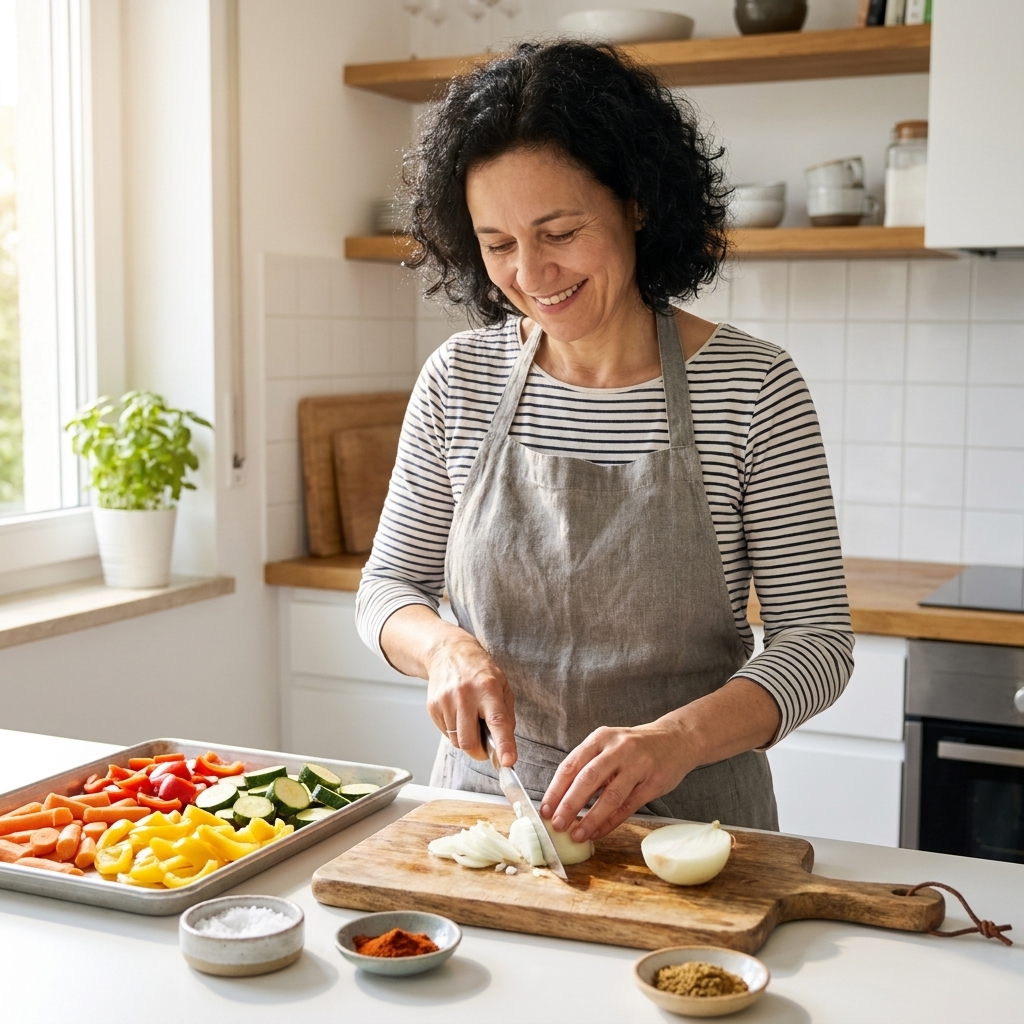
1) Set up a 3-zone prep station
This is the smallest change with the biggest payoff. Before you touch a knife, make three zones:
- Zone 1: Clean space for cutting and mixing.
- Zone 2: Scrap bowl for peels, stems, and wrappers.
- Zone 3: “Done” tray for chopped ingredients.
A scrap bowl keeps you from walking back and forth to the trash a dozen times. A “done” tray (a dinner plate or small sheet pan works) clears your board so you can keep moving without feeling buried.
Pro tip: If you're short on counter space, put the scrap bowl in the sink and the “done” tray on the stovetop (as long as the burners are off).
2) Chop in batches, not in order
Most recipes list ingredients top to bottom, but your knife doesn't care about order. Your time is saved when you batch similar tasks.
- All aromatics together: onion, shallot, garlic, ginger.
- All sturdy veg together: carrots, celery, peppers.
- All delicate herbs last: cilantro, parsley, basil (so they stay fresh and don't stick everywhere).
One concrete way to do it: peel all the onions, then dice them. Smash all the garlic, then mince it. Once your hands learn the rhythm of “onion mode,” you stop resetting your brain between ingredients. It's the same reason a bakery runs trays of the same cookie at once.
Quick safety note: If your meal includes raw meat, prep all produce first and keep meat (and its cutting board) for last.
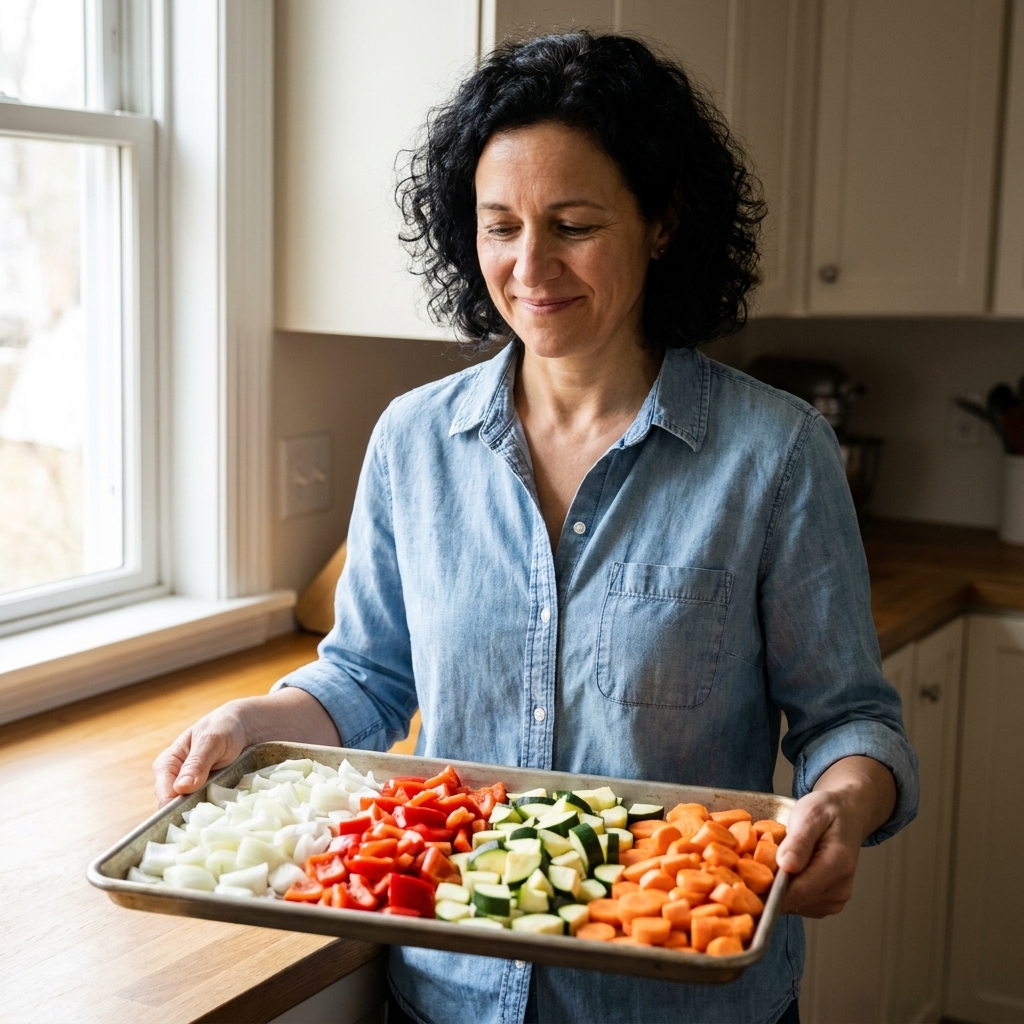
3) Use a sheet pan as your prep counter
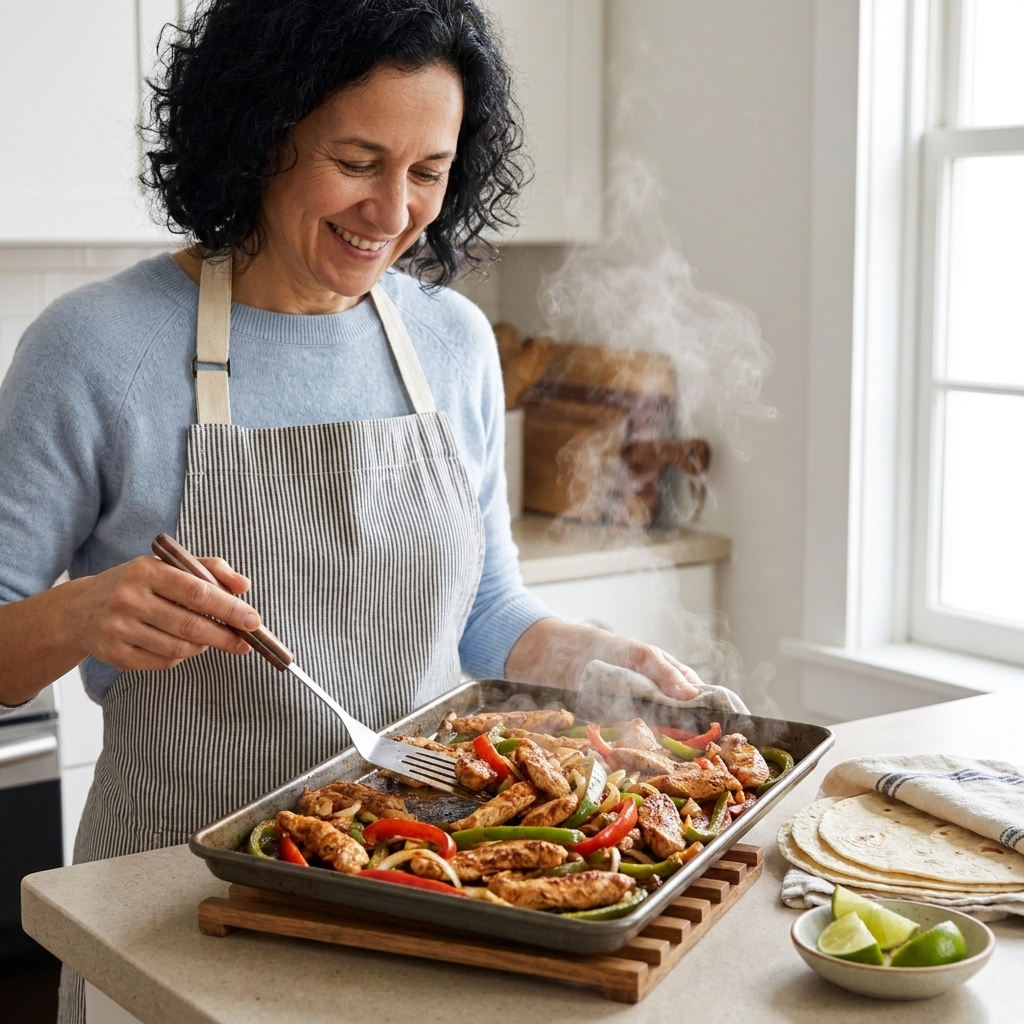
If you want one tool that makes you feel instantly more organized, it's a rimmed sheet pan. Put your chopped items on it as you go. The rim catches runaway slices and any drips, and you can lift the entire “prep project” and move it out of the way in one trip.
When it shines: stir-fries, fajitas, soups, sheet-pan dinners, and anything with lots of add-ins.
Bonus: You can prep on a sheet pan lined with parchment when you want faster cleanup. Just don't cut directly on the parchment unless you like chasing it around. Keep your cutting board underneath.
No sheet pan? Use a large dinner plate, a casserole dish, or even a big bowl as your “done” zone.
4) Let heat do the work
Not everything needs a perfect dice. When you're short on time, choose cooking methods that break food down for you.
- Quick sauté + smash: Slice mushrooms or zucchini roughly, then let them cook down and “smash” a bit with your spatula.
- Roast and stir: Smaller chunks of cauliflower, sweet potato, or broccoli get tender relatively quickly at high heat (425°F). If you keep pieces big, plan on more time, especially for sweet potato.
- Simmer and shred: Chicken thighs can simmer in sauce or broth, then shred with two forks right in the pot once they're very tender and cooked through.
This isn't laziness. It's smart texture planning. You're changing the texture target, not cutting corners on doneness. A rustic cut often tastes better because you get a mix of caramelized edges and tender centers.
5) Keep a “flavor kit” ready
When dinner feels slow, it's usually because flavor building takes time. So I keep a few ready-to-go “flavor kits” in my kitchen that can be mixed and matched:
- All-purpose sauté base: minced garlic + grated ginger (store-bought paste works too).
- Weeknight sauce starter: soy sauce + honey or brown sugar + rice vinegar or lemon.
- Soup helper: Better-than-bouillon or bouillon cubes + a can of tomatoes.
- Finishers: pesto, salsa verde, harissa, chili crisp, or even a good jarred marinara.
How this cuts time: you stop measuring ten separate things for a sauce. You also avoid the “it tastes flat” spiral that leads to more chopping, more simmering, more time.
Real-life substitution: No fresh herbs? Add a squeeze of lemon or a splash of vinegar at the end. Acid wakes up flavors as effectively as a handful of parsley.
6) Cook two components at once
Parallel cooking is where the minutes magically appear. The rule: pair a hands-off item with a hands-on item.
- Hands-off: rice, pasta, roasted vegetables, baked chicken, simmering beans.
- Hands-on: quick sauté, sauce, chopping garnish, assembling salad.
Example: Start rice or pasta water first. While it heats and cooks, you make the main. When your carb is done, the rest is usually ready to plate.
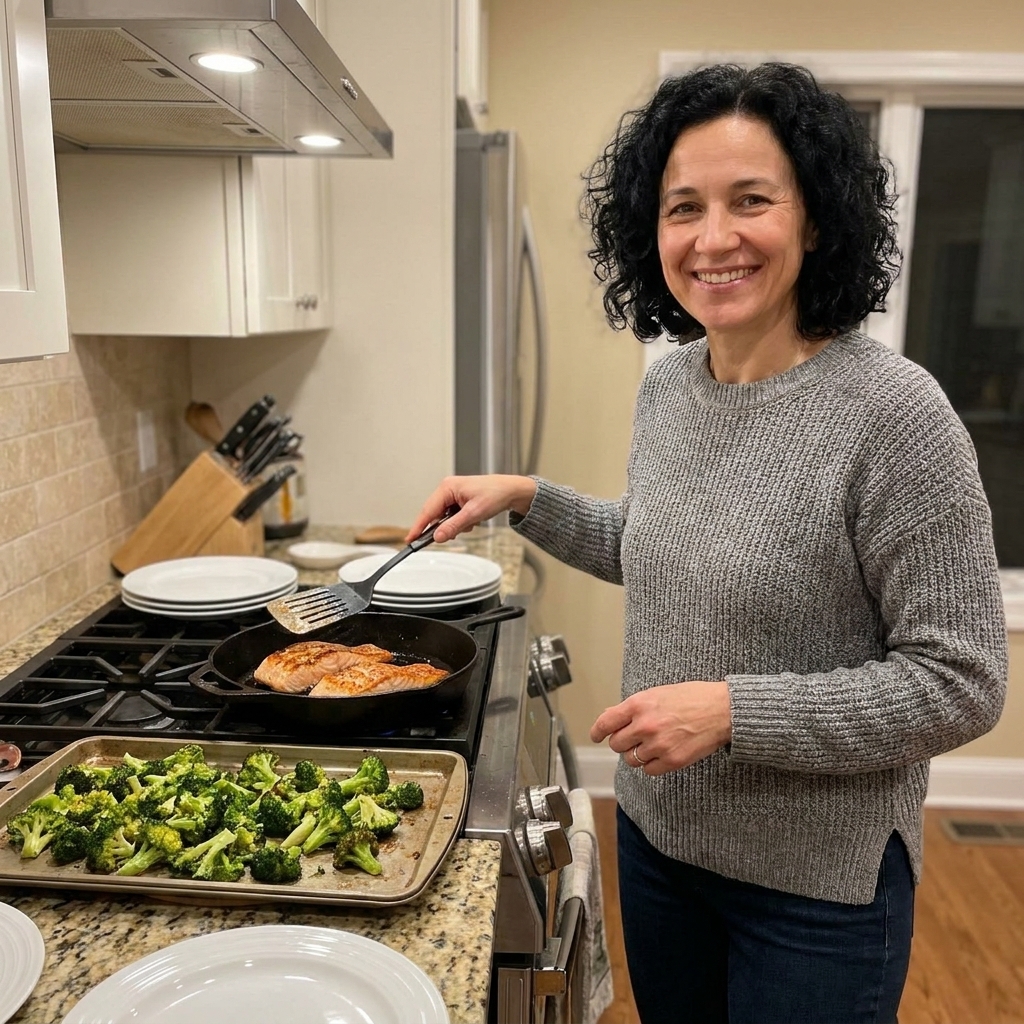
My weeknight favorite: Roast broccoli at 425°F while you pan-sear salmon or chicken cutlets. Everything finishes within the same 15 to 20 minute window, and you only had to actively cook one thing.
7) Pre-prep once, then “ingredient hop”
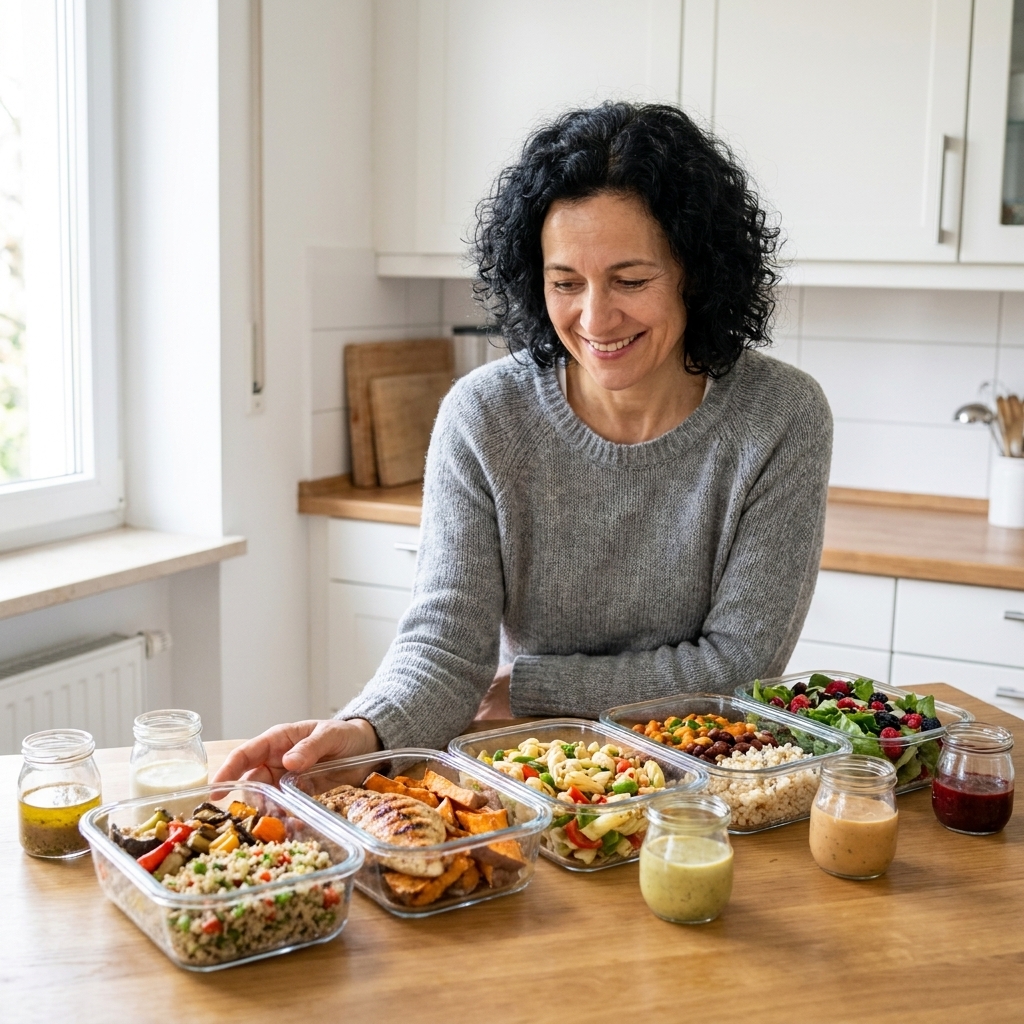
This is the hack that makes leftovers feel intentional instead of sad. Choose one or two building blocks to prep when you've got a little breathing room, then use them in different dinners.
High-impact building blocks
- Cook once: a pot of rice or quinoa, roasted chicken thighs, a tray of mixed vegetables, a batch of lentils.
- Prep once: sliced onions and peppers, washed greens, a jar of vinaigrette, shredded cheese.
How to “ingredient hop” (3 quick examples)
- Roasted chicken becomes tacos (night 1), a salad topper (night 2), then soup with broth + frozen veg (night 3).
- Roasted vegetables become grain bowls, omelet filling, or blended into a pasta sauce with a splash of cream or broth.
- Cooked rice becomes fried rice in about 10 to 15 minutes if it's cold and dry from the fridge.
Storage note: Spread hot grains on a plate or sheet pan to cool quickly, then refrigerate promptly. For food safety, get rice into the fridge within 2 hours (sooner is better), and don't let it hang out warm on the counter.
Quick setup: 10-minute routine
If you only have ten minutes right now, do this. It makes tomorrow's dinner noticeably faster.
- Put a sheet pan, scrap bowl, and cutting board where you'll use them.
- Wash and dry greens or herbs (wrap in a paper towel, store in a container).
- Slice one onion and one bell pepper.
- Stir together one easy sauce: soy sauce + honey + vinegar (store in a jar).
That's it. You just bought yourself a head start on stir-fry, fajitas, grain bowls, salads, and quick noodles.
Troubleshooting
Your knife feels like it's fighting you
A sharp knife is a time-saving tool. If you've got a honing steel, use it to realign the edge and perk the knife up. If it's truly dull, it needs sharpening. Also, stabilize your cutting board with a damp towel underneath.
You're washing tools mid-cook
Try to reuse one knife and one board for all produce first, then switch to raw meat last. For meat, a dedicated plastic cutting board (or a rimmed tray) is more reliable than parchment. Either way, wash with hot soapy water after, and sanitize if needed.
You always forget something and have to stop cooking
Read the recipe once, then pull everything out. I call it “touch every ingredient.” If it's in your hand, you won't forget it in the pantry.
One last permission slip
Dinner doesn't have to be a production to be good. If a bag of pre-chopped slaw mix gets you to homemade fish tacos on a Tuesday, that's a win. If jarred sauce plus a handful of sautéed mushrooms makes pasta feel like you tried, you did.
Pick one hack tonight and text me in spirit from your kitchen: “I actually had time to sit down.” That's the goal.