
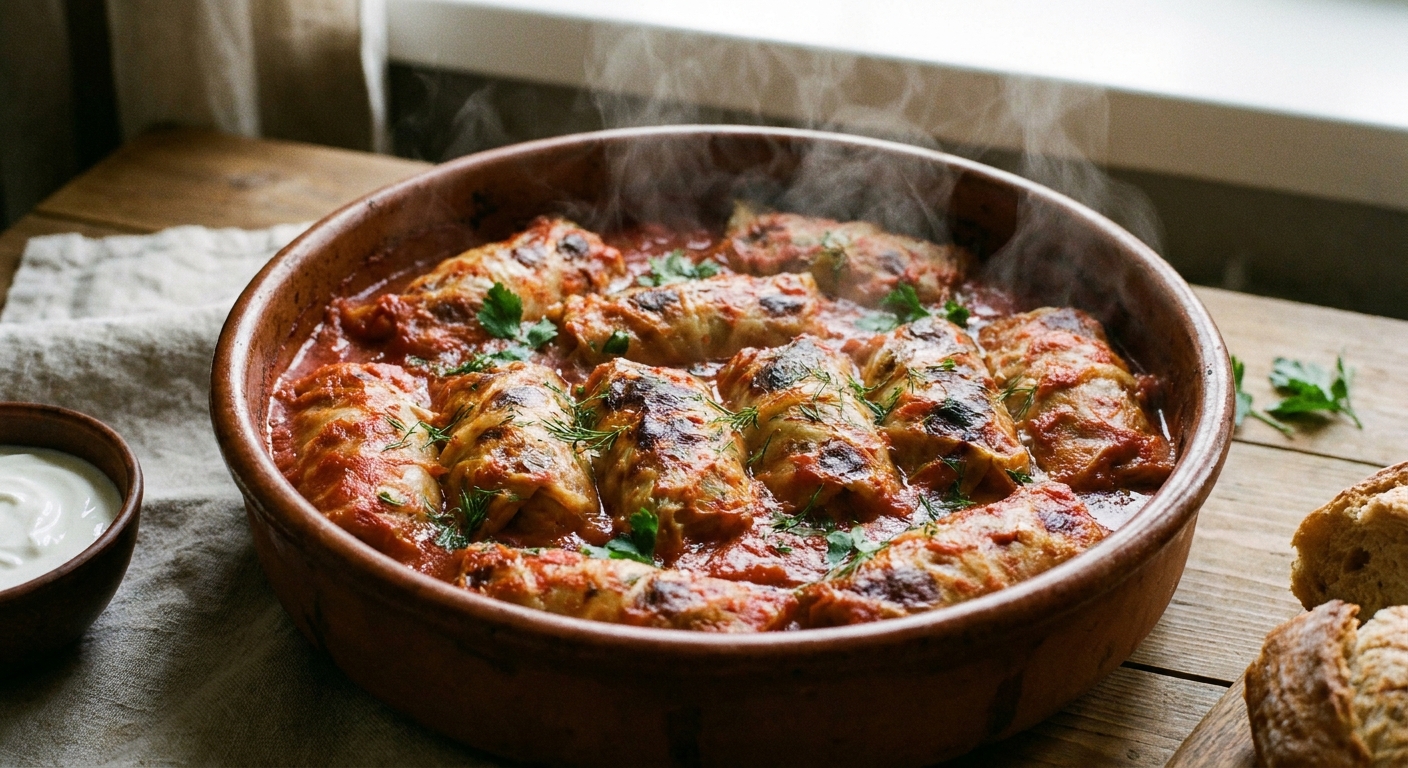
Stuffed cabbage rolls will always feel a little magical to me: one humble head of cabbage turns into a whole pan of tidy parcels, each one packed with a savory beef-and-rice filling and soaked in tomato sauce. They look like a project, but once you learn the core-and-blanch, peel-as-you-go trick, the rest is just steady, cozy simmering.
I first learned to make them in a loud, multi-generational kitchen where “a recipe” was mostly a set of hand motions. The big lesson was not perfection; it was patience. You blanch the leaves until they bend without tearing, you roll them snug like a sleeping bag, and you give them enough sauce to braise instead of bake dry. Do that, and stuffed cabbage becomes weeknight doable, especially if you treat it like a two-step recipe: prep and roll now, then cover and refrigerate overnight and simmer the next day.

What to expect
- Flavor: savory, lightly sweet from cabbage and tomato, with a gentle garlic-onion backbone.
- Texture: fork-tender cabbage wrapped around a juicy filling, with rice that can finish cooking in the braise if you use uncooked rice and keep a steady, gentle simmer.
- Difficulty: medium, but very forgiving once you get the leaf pliability right.
The three things that make or break cabbage rolls
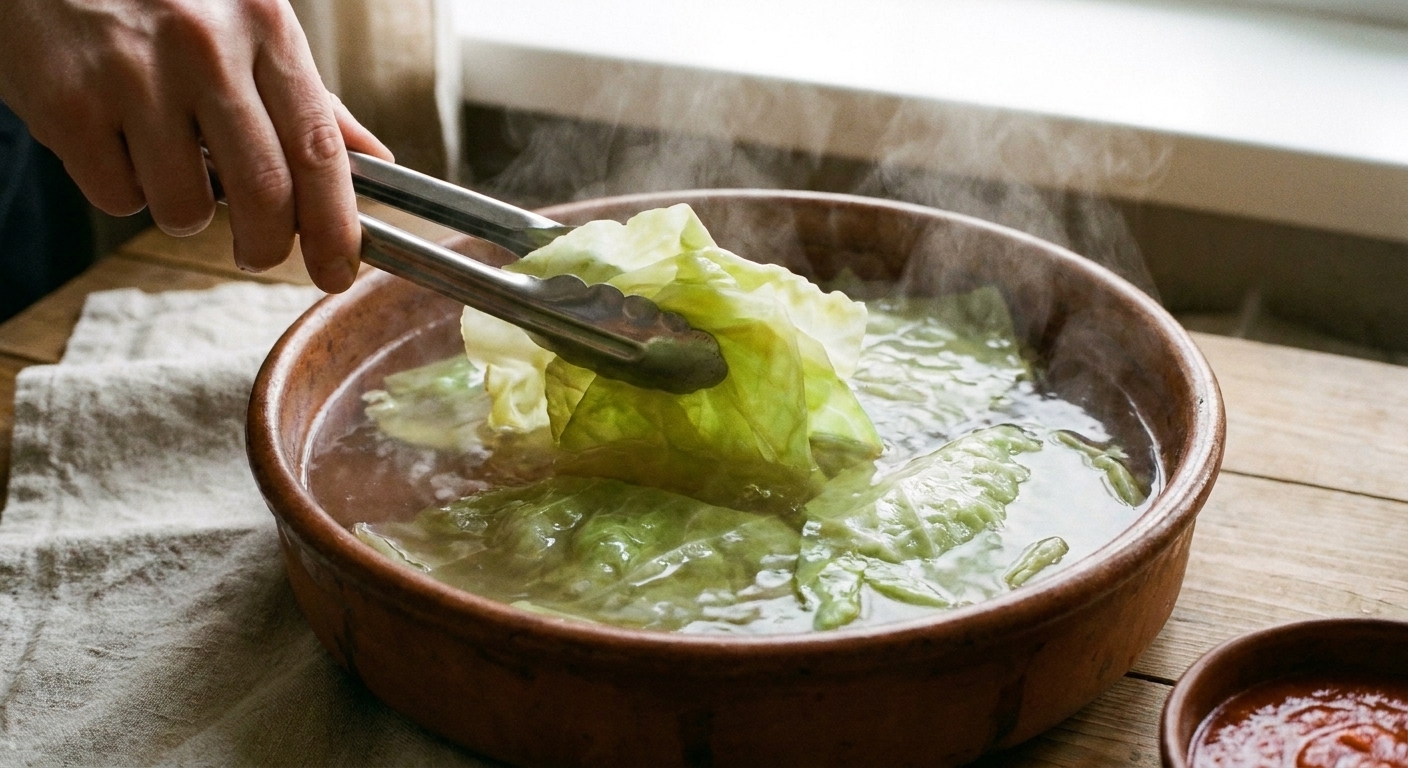
1) Leaf prep: Your goal is bendy, not mushy. If the leaves still crack at the thick rib, they need another minute in the blanching water. One more small move helps a lot, too: shave the raised rib near the base with your knife so the leaf folds without splitting (do not cut it out completely).
2) How tightly to roll: Snug enough to hold together, loose enough to allow the rice to expand. Think “secure burrito,” not “overstuffed suitcase.”
3) Sauce level and simmer time: Cabbage rolls want a braise. I aim for sauce that comes about halfway to two-thirds up the sides of the rolls, then a gentle simmer until the cabbage is tender and the filling is cooked through. If your family makes them fully submerged, that works too, but keep the heat low so they do not boil hard.
Why this recipe works
- Blanching makes the leaves flexible. A quick dip in simmering water relaxes the cabbage so it wraps without splitting.
- Rice finishes cooking in the braise. Using uncooked rice lets it absorb flavorful sauce as the rolls simmer, keeping the filling tender instead of dense.
- Snug packing prevents unrolling. Arranging the rolls seam-side down and tightly in the pot keeps them secure as they bubble.
- Gentle heat keeps everything juicy. A low simmer, not a hard boil, cooks the filling evenly and prevents tough cabbage.
Ingredient notes
- Green cabbage: Classic, sturdy, and easy to peel into large leaves. Choose a heavy head with tightly packed leaves.
- Ground beef: An 80 to 85 percent lean grind gives you moisture and flavor. Very lean beef can taste dry unless you add extra fat or moisture.
- Uncooked white rice: Long-grain white rice is the most forgiving here. It cooks through in the sauce without going gummy.
- Onion and garlic: They season the filling and perfume the whole pot as it simmers.
- Tomato sauce: A simple tomato-forward braise keeps things approachable. If you love a sweet-sour style, see the variations section for an easy swap.
- Egg: Helps bind the filling so it slices and serves cleanly.
Equipment you will need
- Large pot or Dutch oven (for blanching the cabbage and braising the rolls)
- Tongs (for pulling leaves from hot water)
- Large bowl (for mixing filling)
- Chef’s knife and cutting board
- 9x13-inch baking dish or wide braising pan with a lid (or foil)
Pro tips
- Make the cabbage easier to peel: Cut out the core first. As the cabbage blanches, the outer leaves loosen and peel away cleanly.
- Trim the thick rib, do not remove it entirely: Shave down the raised rib with your knife so the leaf folds easily, but keep the leaf intact for strength.
- Roll snug, not tight: Fold the sides in, then roll up. If you crank down hard, the rice can swell and split the roll.
- Pack the pot: Rolls should fit like puzzle pieces. A tight fit prevents floating and unraveling.
- Keep the simmer gentle: Look for small, lazy bubbles. A rapid boil can make cabbage tough and squeeze juices out of the filling.
- Check doneness the smart way: Cabbage should cut easily with a spoon edge, and the filling should reach 160°F for beef if you like using a thermometer.
Substitutes that work
- Ground turkey or chicken: Works well. Add 1 tablespoon olive oil to the filling to keep it juicy.
- Brown rice: Use only if par-cooked first. Brown rice needs longer than the cabbage wants to simmer.
- Tomato sauce swap: Crushed tomatoes plus a splash of broth makes a slightly more textured braise.
- No egg: You can skip it. The filling will be a little looser but still tasty. Pack and roll carefully.
- Gluten-free: Naturally gluten-free as written, just verify any canned tomato products are certified if needed.
Variations
- Sweet-sour sauce: Stir 2 to 3 tablespoons brown sugar and 1 to 2 tablespoons apple cider vinegar (or lemon juice) into the tomato sauce. Taste and adjust until it hits that tangy-sweet spot.
- More herb-forward: Add chopped fresh dill or parsley to the filling, and a pinch of caraway to the sauce if you like that old-world vibe.
- Smoky: Add 1 teaspoon smoked paprika to the sauce, or tuck a few thin slices of smoked sausage between rolls while they braise.
- Extra-vegetable filling: Finely chop mushrooms and sauté them with the onion until browned, then cool and add to the meat mixture.
Serving ideas
- Mashed potatoes or buttered egg noodles to catch extra sauce
- Crusty bread for swiping the plate clean
- A crisp cucumber salad or simple green salad to balance the richness
- Sour cream or plain Greek yogurt on the side for a cool, tangy finish
Storage and reheating
- Refrigerate: Store cooled cabbage rolls in an airtight container with plenty of sauce for up to 4 days.
- Freeze: Freeze rolls in sauce in a freezer-safe container for up to 3 months. Thaw overnight in the fridge for best texture.
- Reheat: Warm gently in a covered pan with a splash of water or extra tomato sauce over low heat until hot throughout. You can also microwave in a covered dish, stopping to spoon sauce over the top so they do not dry out.
Common mistakes
- Leaves tearing while you roll: They were not blanched long enough, or the rib was not trimmed down. Put the leaf back in hot water for another minute and try again.
- Rolls unwrapping in the pot: They were rolled too loosely, placed seam-side up, or the pot was not packed snugly. Arrange seam-side down and keep them close together.
- Dry filling: Meat was too lean, simmer was too hard, or there was not enough sauce. Choose slightly fattier beef and keep the braise gentle with sauce coming halfway to two-thirds up the rolls.
- Crunchy rice: Simmer time was too short or heat was too low to maintain a steady gentle bubble. Keep the pot covered and simmer until the filling is cooked through.
FAQ
Do I have to boil the whole cabbage first?
Boiling the whole head is the easiest, most beginner-friendly method because the leaves loosen gradually. You can also blanch individual leaves, but separating them raw is more likely to tear.
How much sauce should I add?
Add enough sauce so it comes about halfway to two-thirds up the sides of the rolls. You are aiming for a braise: the bottoms simmer in sauce while the tops steam and soften under the lid.
How tight should cabbage rolls be?
Snug. Roll them like a burrito: filling tucked in, sides folded, seam underneath. If they are wrapped extremely tight, the rice can expand and split the leaf.
How long do cabbage rolls need to simmer?
Typically 60 to 90 minutes at a gentle simmer, depending on cabbage thickness and roll size. They are done when the cabbage is very tender and the filling is cooked through.
Can I make them ahead?
Yes. You can roll and refrigerate them covered in sauce up to a day ahead, then simmer when ready. They also reheat beautifully, which is why I love them for leftovers.
The recipe
Stuffed Cabbage Rolls
Blanched cabbage leaves wrapped around a seasoned beef-and-rice filling, then gently braised in tomato sauce until tender.
- Prep
- 35 minutes
- Cook
- 1 hour 15 minutes
- Total
- 1 hour 50 minutes
- Yield
- 6 servings (about 12 rolls)
Ingredients
- 1 large green cabbage (about 2.5 to 3 pounds)
- 1 tablespoon kosher salt, plus more for blanching water
- 1 tablespoon olive oil
- 1 large yellow onion, finely chopped (about 1 1/2 cups), divided
- 3 cloves garlic, minced, divided
- 1 pound ground beef (80 to 85% lean recommended)
- 1/2 cup uncooked long-grain white rice, rinsed and drained
- 1 large egg
- 1 teaspoon sweet paprika
- 1/2 teaspoon black pepper
- 2 cups tomato sauce
- 1 (14.5-ounce) can diced tomatoes
- 1 cup beef broth (or water)
- 1 tablespoon brown sugar (optional, for a slightly sweeter sauce)
- 2 tablespoons lemon juice or apple cider vinegar (optional, for sweet-sour balance)
- 2 tablespoons chopped fresh parsley, for serving (optional)
Instructions
- Prep the cabbage. Bring a large pot of salted water to a gentle boil. With a small knife, cut a cone-shaped wedge around the cabbage core and remove it. Lower the whole cabbage into the pot (core-side down first helps). Cover and simmer 5 to 8 minutes, using tongs to peel off leaves as they loosen. Transfer leaves to a tray to cool. You will want about 12 large leaves.
- Trim the ribs. On each cooled cabbage leaf, use a knife to shave down the thick raised rib near the base so the leaf folds easily. Do not cut all the way through.
- Start the sauce base. In a Dutch oven or wide pot (or a deep 9x13-inch baking dish if finishing in the oven), heat olive oil over medium heat. Add half the chopped onion and half the minced garlic. Cook 3 to 5 minutes until softened.
- Build the sauce. Stir in tomato sauce, diced tomatoes, and broth. Add brown sugar and lemon juice or vinegar if using. Bring to a gentle simmer, then turn off the heat. Taste and adjust salt as needed. You want a pleasantly seasoned sauce since it will flavor the rice as it cooks.
- Make the filling. In a large bowl, combine ground beef, remaining onion, remaining garlic, rice, egg, paprika, kosher salt, and black pepper. Mix with clean hands or a fork just until evenly combined, keeping it light so the filling stays tender.
- Roll the cabbage. Working with one leaf at a time, place it rib-side up. Spoon about 1/4 cup filling near the base (less if the leaf is small). Fold the sides in, then roll up snugly into a compact log. Place seam-side down.
- Arrange and add sauce to the right level. Spoon a little sauce into the bottom of your pot or baking dish. Nestle rolls tightly in a single layer (or two snug layers if needed), seam-side down. Pour sauce over the top until it comes about halfway to two-thirds up the sides of the rolls. They do not need to be fully submerged.
- Braise until tender. Cover with a lid (or tightly with foil). Simmer very gently over low heat for 60 to 90 minutes, keeping small bubbles in the sauce. Check once or twice to ensure it is not boiling hard. Rolls are done when the cabbage is very tender and the filling is cooked through (160°F in the center if using a thermometer).
- Rest and serve. Let the rolls rest 10 minutes off the heat so they set up. Spoon sauce over each serving and finish with parsley if you like.
Notes
Oven option: Instead of stovetop simmering, bake covered at 350°F for 75 to 90 minutes, until cabbage is very tender and filling is cooked through.
Leaf size varies: If your cabbage leaves are small, make more rolls with less filling per leaf. If they are huge, you may get 10 to 11 rolls instead of 12.
Make ahead: Assemble rolls in sauce, cover, and refrigerate up to 24 hours. Simmer or bake as directed, adding 10 to 15 minutes if starting cold.
Nutrition
Nutrition information is not provided for this recipe.