
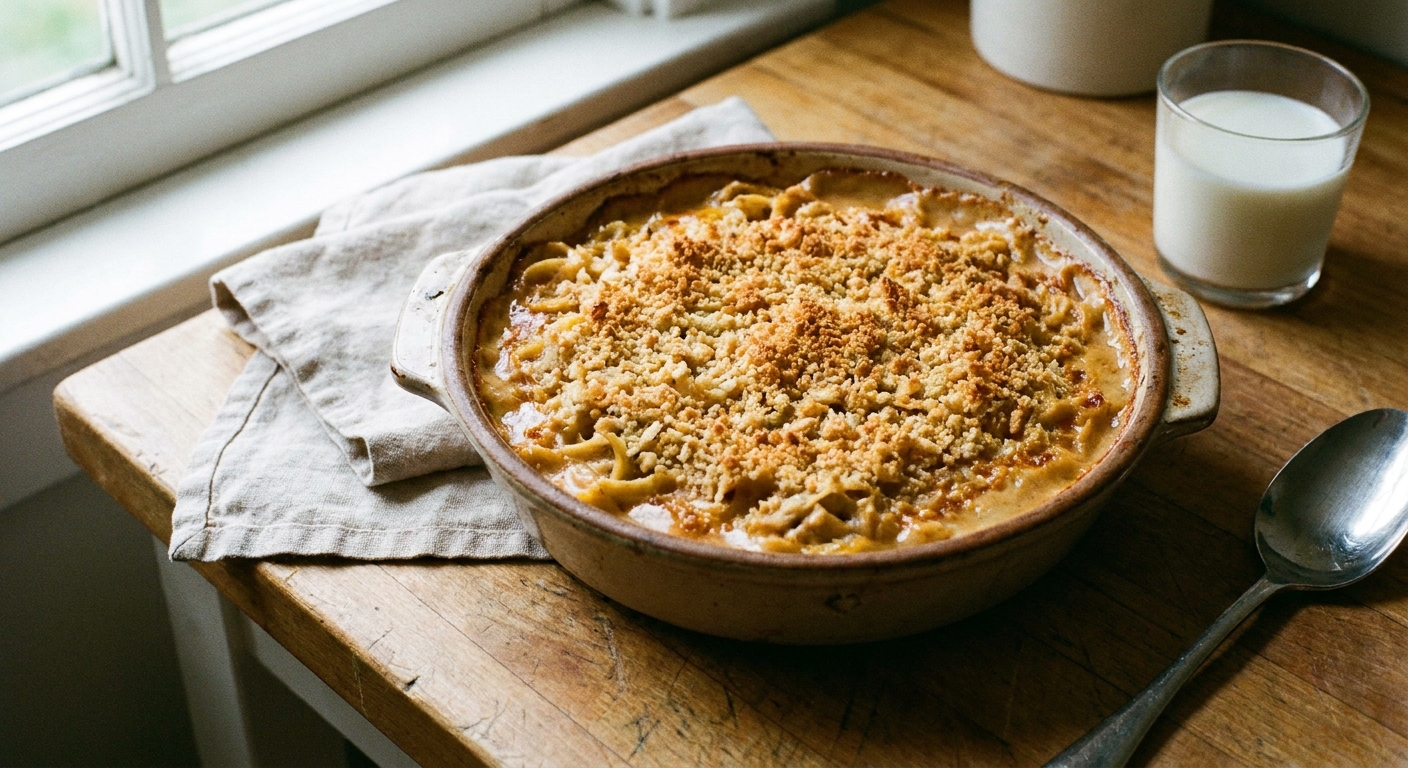
There are a handful of dinners that feel like a warm sweater, and tuna noodle casserole is at the top of my list. In the kind of busy, multi-generational kitchen I grew up in, this was the type of meal that could stretch, feed everyone, and still feel like you did something special. It is humble, yes, but when you nail the details, it can be seriously good.
My version sticks to the classic spirit: egg noodles, tuna, peas, and a creamy sauce. The big difference is that I treat the sauce like it matters. I build a quick roux so the casserole sets up instead of turning soupy, and I season it until it tastes well-salted and savory before it ever hits the oven. I also keep the noodles just shy of done so they finish perfectly as everything bakes together.

The topper is my favorite part. Crushed buttery crackers tossed with melted butter turn into an even, toasty crust that makes every scoop feel a little celebratory. Bake until you see bubbling around the edges and the top turns crisp and browned, then let it rest for about 10 minutes. That short pause helps the sauce settle so you get creamy servings that hold together neatly, depending on how thick your sauce is and how long you bake.
A quick note on confidence builders: drain the tuna very well, and do not bother thawing the peas. Frozen peas warm through in the oven without turning dull or waterlogged.
What to expect
This casserole is creamy and savory with little pops of sweetness from peas and a crunchy, browned top. It is not fussy, but it rewards you for paying attention to three things: noodle doneness, sauce thickness, and letting it rest before serving.
A comfort promise
If you have ever had tuna casserole that was bland, watery, or mushy, you are not alone. The fixes are simple: slightly undercook the noodles, make a sauce that is thick enough to cling to a spoon, and bake until you see active bubbling around the edges. I will walk you through those cues so you can trust what you see and not just the timer.
Why this recipe works
- Slightly undercooked noodles finish in the oven. Boiling the egg noodles to just under al dente keeps them tender, not blown out, after baking.
- A roux-based sauce sets up. Butter and flour thicken the milk and broth into a creamy sauce that holds the casserole together once it rests.
- Seasoning happens before baking. Tasting the sauce on the stove means the whole dish is flavorful, not just creamy.
- A buttery cracker topping browns fast. Crushed crackers give you an even layer of crunch and color without drying out the filling.
- Resting time matters. Ten minutes out of the oven lets the sauce thicken and the casserole slice into squares that hold.
Ingredient notes
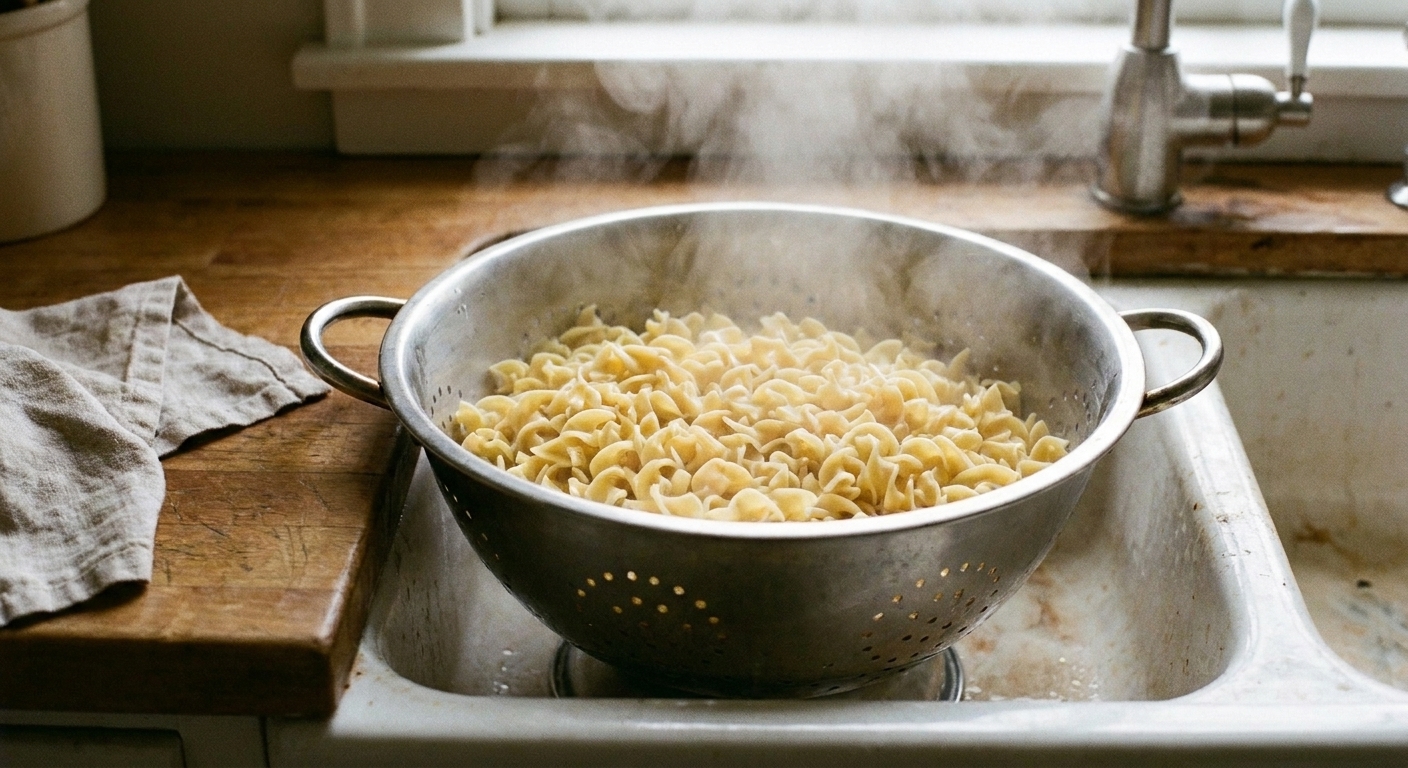
Egg noodles: The classic choice. Cook them 1 to 2 minutes less than the package says for al dente. They should feel flexible but still have a faint bite.
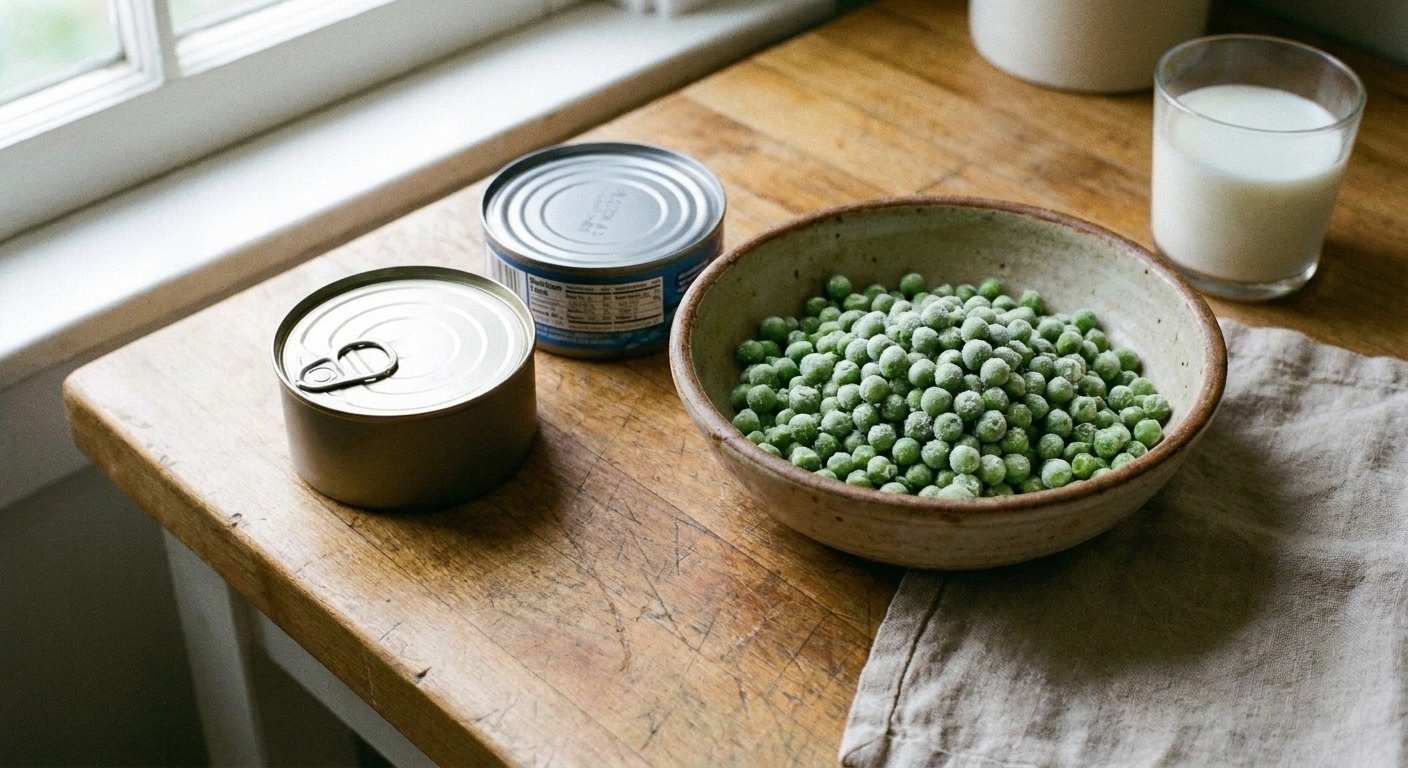
Tuna: Use canned tuna packed in water for a cleaner flavor and easier seasoning control. Drain it well so the filling stays creamy, not watery.
Peas: Frozen peas are perfect. No need to thaw. They warm through as the casserole bakes and keep their sweet snap.
Milk and broth: Using mostly milk with a little broth keeps the sauce creamy but not heavy. If you only have milk, that is fine too.
Cheddar (optional but recommended): A modest amount adds savory depth without turning this into mac and cheese. Sharp cheddar gives you the most flavor per ounce.
Crackers: Buttery round crackers or any similar rich, crisp cracker work well. Crush them into small, uneven crumbs so you get both crunch and coverage.
Equipment you will need
- Large pot for boiling noodles
- Colander
- Large skillet or saucepan for the creamy sauce
- Whisk
- Rubber spatula or wooden spoon
- 9x13-inch baking dish or a similar 3-quart casserole dish
- Small bowl for mixing the cracker topping
Pro tips
- Stop the noodles early. When you bite one, it should be mostly tender with a tiny firm center. That last bit disappears in the oven.
- Watch the sauce thickness. You want it thick enough that it coats the back of a spoon and a finger swipe leaves a clean line.
- Drain tuna thoroughly. Press the lid into the can and tip out as much liquid as possible. Extra water can thin the sauce.
- Season in layers. Salt the pasta water, then season the sauce, then do a final taste check after mixing the filling.
- Bake for the cues, not just time. Look for bubbling at the edges and a browned, crisp top.
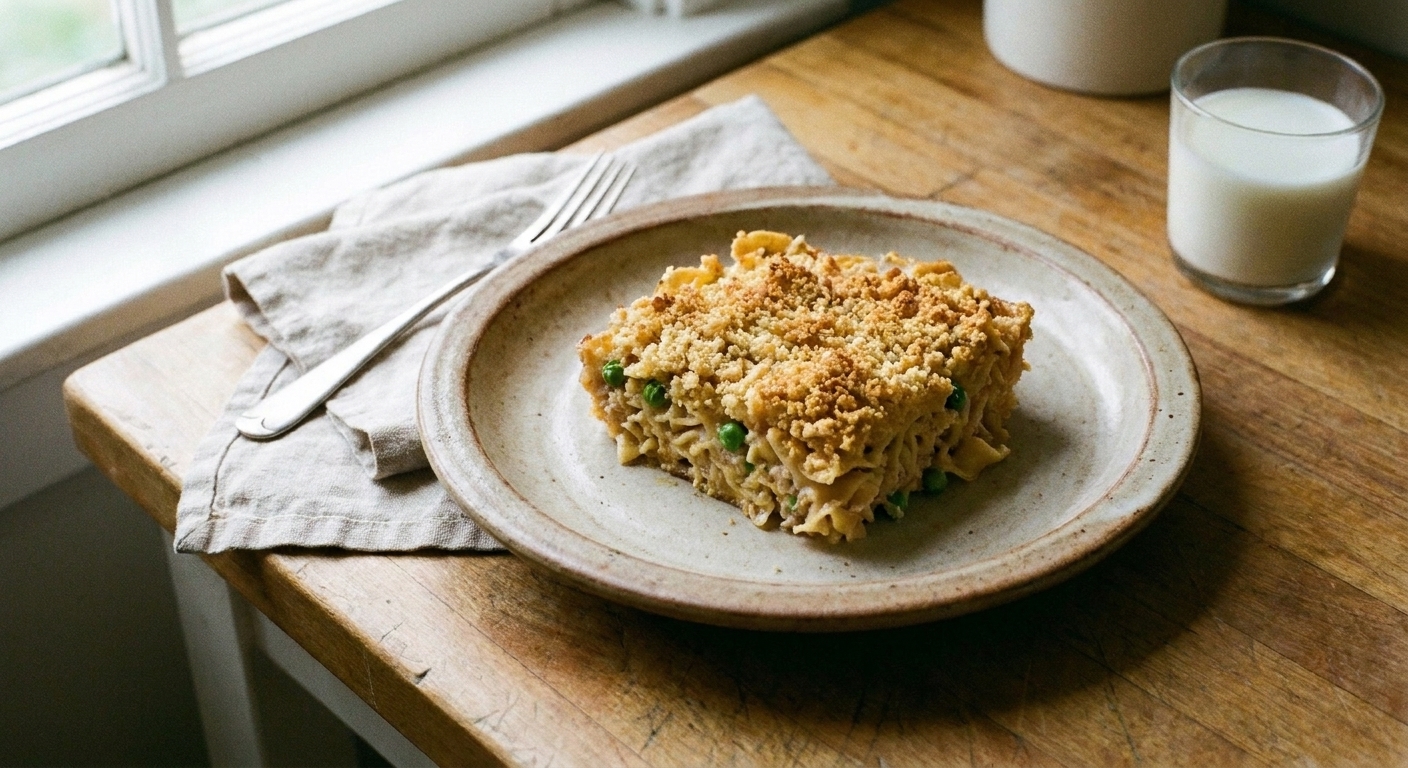
- Rest before cutting. Ten minutes makes the difference between a loose scoop and squares that hold together.
Substitutes that work
- No egg noodles: Use rotini, shells, or bowties. Keep the same rule: boil just shy of al dente.
- No broth: Use all milk, or use water plus an extra pinch of salt.
- No crackers: Use panko breadcrumbs tossed with butter, or crushed potato chips for a salty crunch.
- No peas: Try chopped steamed broccoli, sautéed mushrooms, or thawed frozen mixed vegetables.
- Dairy swap: Use unsweetened plain oat milk and a dairy-free butter alternative. Choose a sturdy plant milk, not something very sweet.
Variations
- Extra-crispy top: Add 2 tablespoons grated Parmesan to the cracker crumbs for deeper browning.
- Old-school pantry version: Replace part of the milk with a small amount of cream for a richer sauce.
- Lemony tuna casserole: Add 1 to 2 teaspoons lemon zest to the sauce and finish with a squeeze of lemon at the table.
- Herby: Stir in chopped parsley or dill after the sauce comes off the heat.
- Spicy: Add a pinch of cayenne or a few dashes of hot sauce to the sauce.
Serving ideas
- A simple green salad with a tangy vinaigrette to cut the creaminess
- Steamed green beans with a little butter and black pepper
- Roasted broccoli or Brussels sprouts for a crisp, toasty side
- Sliced tomatoes with salt and olive oil when they are in season
Storage and reheating
Refrigerate: Cool completely, then cover and refrigerate for up to 4 days.
Freeze: This freezes well. Wrap the dish tightly or portion into airtight containers and freeze for up to 2 months. Thaw overnight in the refrigerator for best texture.
Reheat: For the best topping crunch, reheat in a 350°F oven until warmed through. If the casserole seems dry, splash a little milk around the edges before reheating. The microwave works for quick lunches, but the topping will soften.
Common mistakes
- Overcooking the noodles: If they are fully tender before baking, they can turn mushy in the oven. Shave off 1 to 2 minutes.
- Sauce too thin: If the sauce looks like soup in the pan, it will bake up loose. Simmer a little longer until it coats a spoon.
- Skipping the rest: Straight-from-the-oven casserole is still loosening and settling. Resting helps it slice cleanly.
- Underseasoning: Creamy dishes mute salt. Taste the sauce and adjust before mixing everything together.
- Not draining tuna: Excess liquid can waterlog the filling and dull flavor.
FAQ
Can I make tuna noodle casserole ahead of time?
Yes. Assemble it (including the topping), cover, and refrigerate up to 24 hours. Bake straight from the fridge, adding a few extra minutes, and keep an eye on the bubbling edges and browned top.
Why is my tuna casserole watery?
The most common reasons are sauce that did not thicken enough, tuna not drained well, or noodles that released extra water. Make sure the sauce coats a spoon before combining, and drain the tuna thoroughly.
How do I get the top crispy without drying out the casserole?
Use a buttered cracker topping and bake until the edges bubble. If the top browns too fast, loosely tent with foil for the last few minutes.
Should I use tuna in oil or water?
Either works, but tuna in water is easier to control and keeps the casserole from feeling greasy. If you use oil-packed tuna, drain it well and consider reducing the butter slightly in the topping.
Can I add cheese?
Absolutely. A little sharp cheddar in the filling adds savory depth. I like it as an accent, not the whole personality.
The recipe
Tuna Noodle Casserole
A classic baked tuna noodle casserole with tender egg noodles, creamy sauce, peas, and a buttery cracker topping. Bake until the edges bubble and the top browns, then rest so it slices into neat squares.
- Prep
- 20 minutes
- Cook
- 30 minutes
- Total
- 50 minutes
- Yield
- 8 servings
Ingredients
- 12 oz egg noodles
- 2 (5 oz) cans tuna in water, well drained and flaked
- 1 1/2 cups frozen peas
- 4 tbsp unsalted butter, divided
- 1 small yellow onion, finely chopped
- 2 cloves garlic, minced
- 1/4 cup all-purpose flour
- 2 cups milk
- 1 cup chicken or vegetable broth
- 1 tsp Dijon mustard
- 1/2 tsp kosher salt, plus more as needed
- 1/2 tsp black pepper
- 1/2 cup shredded sharp cheddar (optional)
- 1 cup crushed buttery crackers
Instructions
- Heat the oven: Arrange a rack in the middle of the oven and preheat to 375°F. Lightly butter a 9x13-inch baking dish.
- Cook the noodles just shy of al dente: Bring a large pot of well-salted water to a boil. Add the egg noodles and cook 1 to 2 minutes less than the package directions for al dente. Drain well.
- Start the creamy sauce: In a large skillet or saucepan over medium heat, melt 2 tablespoons of the butter. Add the onion and cook until softened, 4 to 5 minutes. Add the garlic and cook 30 seconds, stirring.
- Make a roux: Sprinkle the flour over the onions and stir constantly for 1 minute to cook off the raw flour taste.
- Whisk in liquids and thicken: Slowly whisk in the milk and broth until smooth. Add the Dijon mustard, salt, and pepper. Bring to a gentle simmer, whisking often, and cook until the sauce thickens enough to coat the back of a spoon, 3 to 5 minutes.
- Combine the filling: Off the heat, stir in the drained tuna, frozen peas, and cheddar (if using). Add the drained noodles and fold until everything is evenly coated. The mixture should look creamy and saucy, not soupy.
- Assemble: Scrape the mixture into the prepared baking dish and spread into an even layer.
- Top with crackers: In a small bowl, melt the remaining 2 tablespoons butter. Stir in the crushed crackers until evenly moistened, then sprinkle the topping evenly over the casserole.
- Bake: Bake until the edges are actively bubbling and the top is browned and crisp, 25 to 30 minutes.
- Rest, then slice: Let the casserole rest for 10 minutes before serving so it sets up and can be cut into squares that hold together.
Notes
Noodle doneness: If your noodles are fully tender before baking, the casserole can turn soft. Aim for just-under al dente.
Sauce thickness cue: If you drag a finger across the back of a spoon and the line stays clean, you are in the right zone.
Make-ahead: Assemble and refrigerate up to 24 hours, then bake at 375°F until bubbly and browned. Add a few extra minutes if baking cold from the fridge.